
FUE Hair Transplant in Rohini, Delhi
FUE — follicular unit extraction — takes hair from the donor area one small group at a time, with a punch well under a millimetre across. It is carried out at our Rohini clinic by registered medical practitioners. Whether it suits you depends less on the technique than on how much your donor area can spare, and that is measured before any graft count is given.
- Carried out at the Rohini clinic
- Dot scars rather than a linear scar
- Donor density measured first
- Home the same day
Rohini Clinic
Request a call back
Talk to the Rohini clinic about an FUE hair transplant
Leave your number and the clinic will call you during opening hours (Mon–Sat: 10:00 AM – 06:00 PM · Sun: 09:00 AM – 05:00 PM) to arrange a consultation. Prefer to message? WhatsApp the clinic. Not ready to talk? Estimate a graft range first.
The technique
How FUE Extraction Works
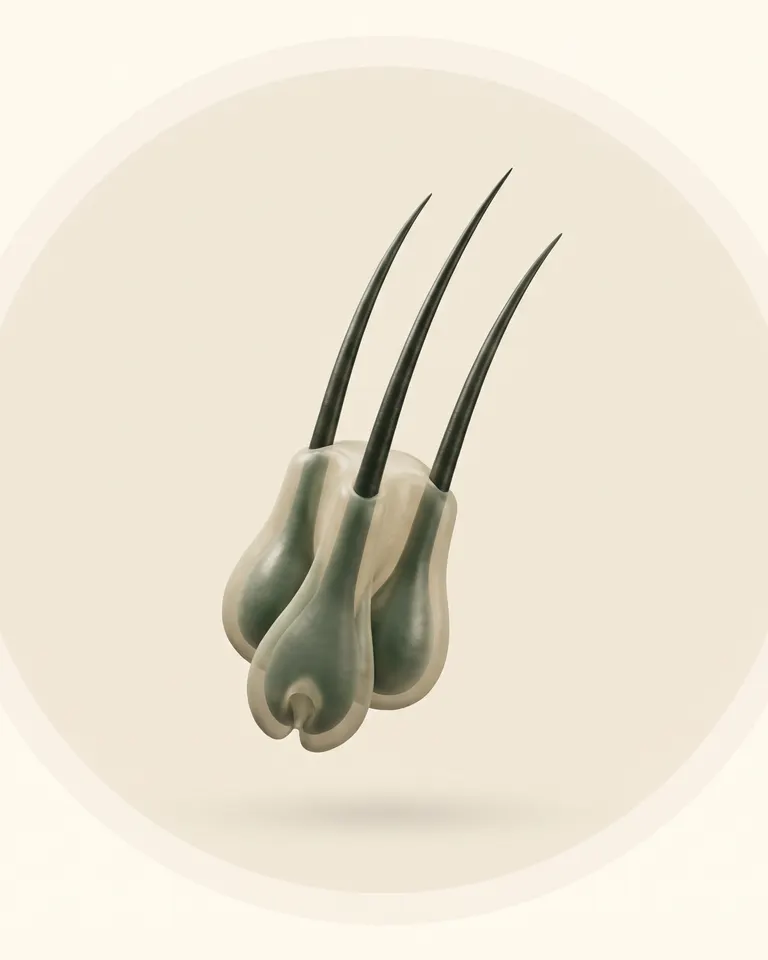
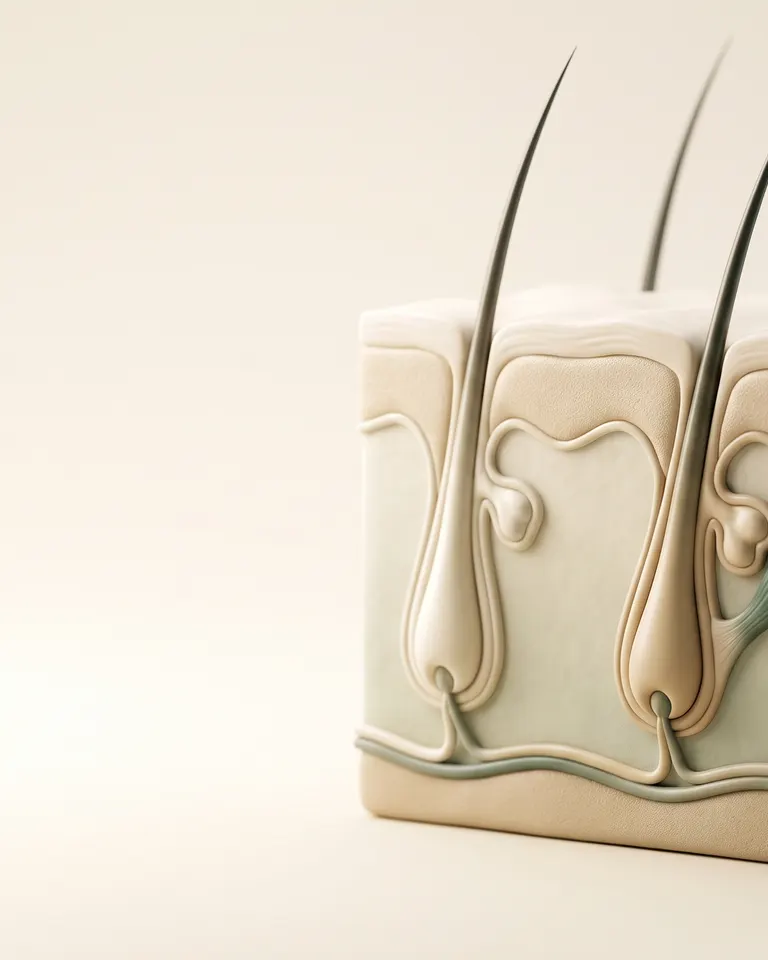
Hair grows in natural groups of one to four hairs, called follicular units. In FUE each unit is freed with a fine circular punch and lifted out whole. Punch size and depth are matched to your hair and the angle it leaves the skin, because a follicle cut during extraction may not grow.
The units are sorted under magnification, then set into recipient sites made at the angle and direction of the surrounding hair. In DHI the extraction is the same and only this last step differs: see DHI hair transplant in Rohini, or the wider picture on hair transplant in Rohini.
Graft or hair? A graft is one follicular unit; a hair is one strand. Two thousand grafts may carry roughly 4,000 to 5,000 hairs, so always ask which unit a quote is in.
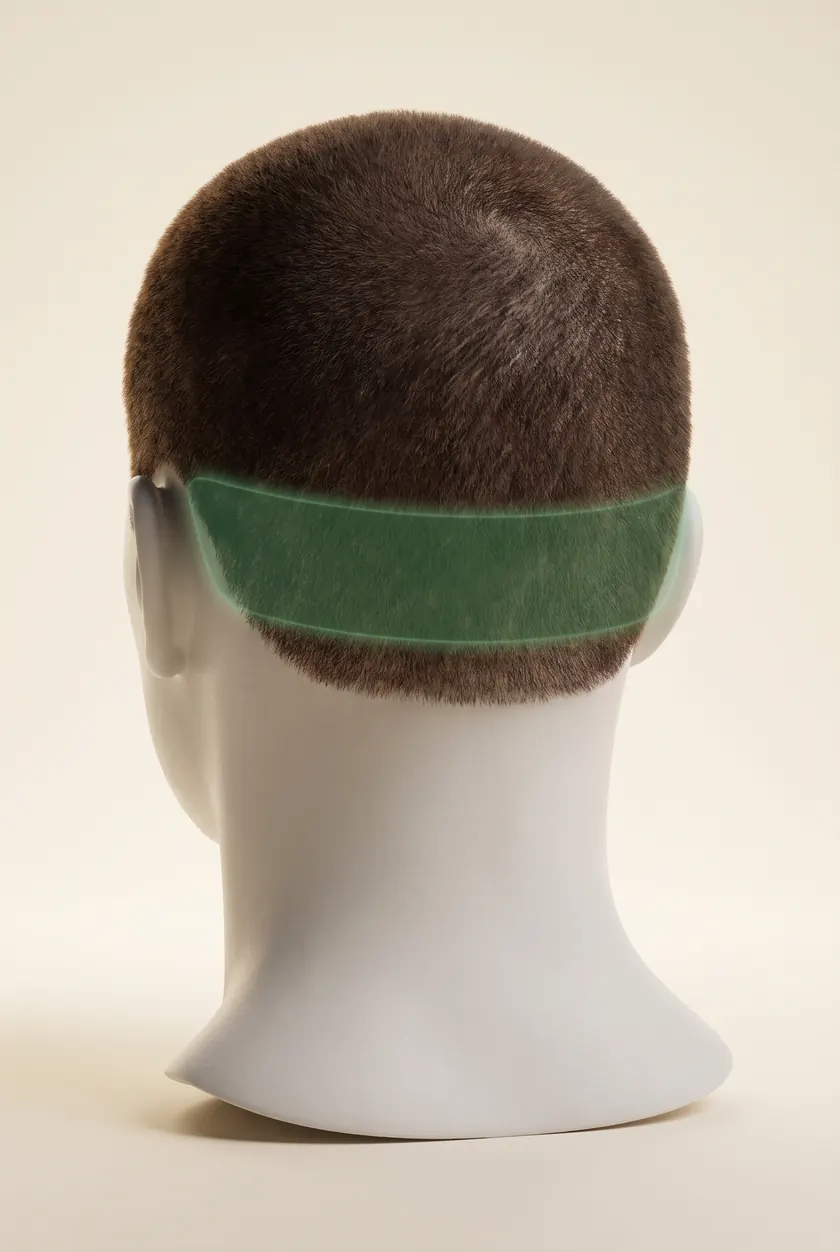
- The harvest is spread across the back and sides, so the donor stays even
- Units are kept in a holding solution until they are placed
- Single hairs for the hairline, larger units behind it
The donor area, accurately
Dot Scars and Shaving: What FUE Leaves Behind
FUE does leave scars — many small ones instead of one line. Each extraction heals as a pale round dot, usually under a millimetre across, scattered through the donor area.
At most hair lengths
Spread evenly, the dots sit among the remaining hair and are hard to see, even when it is fairly short. They have usually faded by three to four months.
Shaved to the skin
The dots can show as faint speckling. If you keep a skin fade or a shaved head, say so at the consultation so it is part of the plan.
What makes them obvious
Clustered extraction, or too many grafts from too small an area. That is a planning failure rather than a feature of FUE, and it cannot be undone.
What is trimmed, and why
The donor area
Trimmed to a short, even length so the punch can follow each follicle beneath the skin. This is needed in every FUE.
The thinning area
Whether it is trimmed depends on your case, and is agreed at the consultation rather than on the day.
Unshaven options
Possible for smaller sessions, but slower and not right for every plan. See unshaven hair transplant in Rohini.
The ceiling on FUE
Donor Limits and Over-harvesting
Hair at the back and sides is generally resistant to pattern loss, which is why it is used. But there is only so much of it, and extracted follicles do not grow back.
Three questions for any FUE quote: is the number in grafts or hairs, how was it arrived at, and what will be left in the donor afterwards? More in what a donor area can and cannot cover.
The same numbers drive the cost, which is quoted in writing after the assessment: see FUE cost in Rohini below.
- Over-harvesting, too many grafts or from too concentrated an area, leaves the donor visibly thin with obvious dots, and donor hair cannot be put back
- Session size is set by donor supply, scalp laxity and how you manage a long day; where one large session is too much, staging protects the donor
- Pattern loss usually continues, so part of the donor is held back rather than all spent on the hairline now
Candidacy
Who FUE Suits — and Who It Does Not
A general guide only: suitability is decided once your scalp and donor area have been examined at the Rohini clinic. The six-question hair loss self-assessment can help you describe your pattern before you book.
If FUE is not right for you yet, hair fall treatment in Rohini or PRP in Rohini may come first, and the question can be revisited once the loss has settled.
Choosing a technique
FUE or DHI: Which Placement Fits Where
Extraction is the same in both, so the choice is about placement. Many plans combine them, and the reasoning for yours is written into the estimate. FUE vs DHI compares the two in more depth.
FUE placement usually fits
- Several zones covered in one session
- The crown and mid-scalp, where coverage matters more than angle
- Larger graft numbers
- Short hair at the sides — dots hide better than a line
- Filling gaps left by an earlier procedure
DHI placement may fit better
- The first rows of a hairline
- Temples, where hair lies at sharp angles
- Adding grafts between existing hair
- Small sessions with minimal trimming
Day and follow-up
FUE at the Rohini Clinic
FUE is a day case under local anaesthetic, and every stage below takes place at the Rohini clinic. Results vary between patients, and no clinic can promise a particular density.
-

Step 01
Donor assessment
Your pattern of loss is examined and your donor density measured before any graft count is given.
-

Step 02
A written plan
A mapped graft count, the reasoning for FUE, DHI or both, and the cost in writing. You are not asked to book a date on the day.
-
Step 03
Procedure day
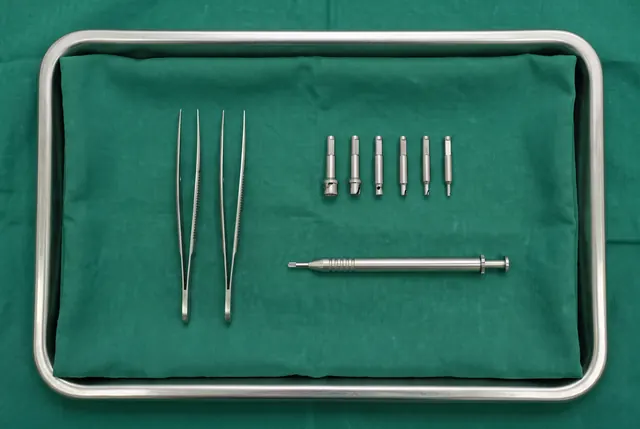
Smaller sessions take a few hours; larger ones run through most of the day, with breaks. You go home the same day.
-

Step 04
Healing and reviews
Crusts and pinpoint donor scabs in week one, when washing is taught and the first review is at Rohini. Shedding in weeks 2–4, new growth from months 3–4, and the result judged at 10–12 months against standardised photographs.
Cost guidance
FUE Cost in Rohini: What Decides It
There is no fixed price for FUE, because no two plans use the same number of grafts. Cost is broadly the graft count multiplied by a per-graft rate, plus what the estimate includes, and it is given to you itemised and in writing after the donor assessment.
Graft count
Sessions
Your hair
Supporting treatment
Ask whether any FUE quote is in grafts or hairs, and how the number was reached; why hair transplant quotes vary explains the difference it makes. The graft calculator gives a starting range. Instalment options through third-party lenders may be available — ask at the consultation, and read how medical EMI works first.

Meet the doctor
Dr. Nyra, MBBS, MD (Dermatology)
Owner & Chief Consultant, DenceSpot Clinic
MBBS from Dr. D. Y. Patil Medical College and an MD in Dermatology, followed by three years of clinical work in Germany — two at Bio Hair Clinic and one at St. Georg Klinikum Eisenach.
Treatment at the Rohini clinic is carried out by registered medical practitioners. Every doctor at DenceSpot is listed below with their qualifications.
Qualification
MBBS, MD (Dermatology)
Training
3 years, Germany
Specialisation
Dermatology
Visit the Rohini clinic
Visit Our Rohini Clinic
FUE consultations, procedures and follow-up reviews take place at the Rohini clinic in North-West Delhi, seven days a week.
- Address
- 6, Dividing Road, near DDA Market, Pocket 3, Sector 5, Rohini, New Delhi, Delhi, 110085
- Phone
- +91 95406 99152
- Hours
- Mon–Sat: 10:00 AM – 06:00 PM · Sun: 09:00 AM – 05:00 PM
Rohini, Delhi
Other Treatments at Our Rohini Clinic
Every treatment below is carried out at the Rohini clinic, and each starts with an examination and a written plan. See the Rohini clinic page for directions and hours.
Hair transplant
PRP and non-surgical hair treatment
Hair fall and scalp
Beard and eyebrow
Rohini, Delhi
Book an FUE Assessment in Rohini
Bring your questions and your medication list. Your donor area is measured, you get a straight view of whether FUE suits your pattern of loss, and a written plan with a mapped graft count if it does — with no pressure to book a date on the day.

DenceSpot Clinic · Rohini, Delhi
Hair Treatments in Rohini, Delhi
Hair Transplant 15
- Hair Transplant in Delhi
- FUE Hair Transplant in Delhi
- DHI Hair Transplant in Delhi
- DHI Hair Transplant in Rohini
- Unshaven Hair Transplant in Delhi
- Unshaven Hair Transplant in Rohini
- Hairline Transplant in Delhi
- Hairline Transplant in Rohini
- Crown Hair Transplant in Delhi
- Crown Hair Transplant in Rohini
- Hair Transplant for Women in Delhi
- Hair Transplant for Women in Rohini
- Hair Transplant Repair in Delhi
- Hair Transplant Repair in Rohini
- Hair Transplant Cost in Rohini
Hair Transplant Doctors 2
Beard & Eyebrow Transplant 5
PRP & Non-Surgical Hair Treatment 11
- Hair PRP Treatment in Delhi
- Hair PRP Treatment in Rohini, Delhi
- PRP Hair Treatment Cost in Rohini
- GFC Treatment in Delhi
- GFC Treatment in Rohini
- Hair Mesotherapy in Delhi
- Hair Mesotherapy in Rohini
- Hair Microneedling in Delhi
- Hair Microneedling in Rohini
- Hair LED Therapy in Delhi
- Hair LED Therapy in Rohini
Address, timings and every treatment at the clinic: Hair & Skin Clinic in Rohini, Delhi