Skip to content

DenceSpot Clinic, Rohini, Delhi

Mon–Sat · 10:00 – 20:00 +91 95406 99152

Rohini · North-West Delhi

Hairline Transplant in Rohini, Delhi

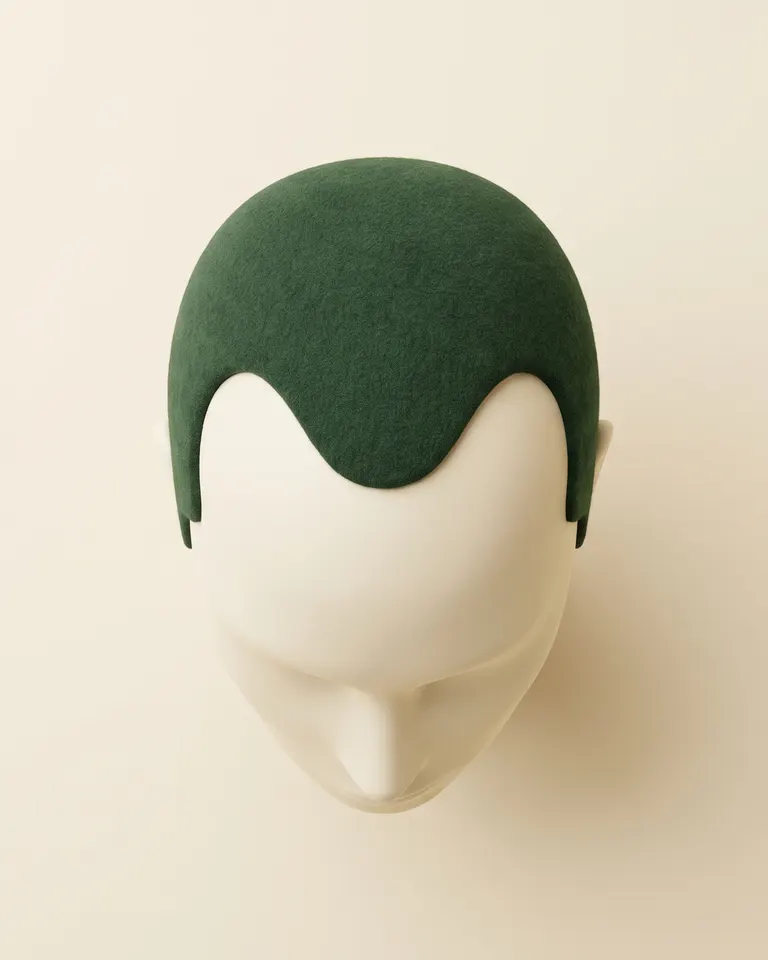
A hairline transplant rebuilds the front of the scalp, and the temples where that makes sense, with hair from your own donor area. At our Rohini clinic your proposed line is marked on your forehead and you approve it, looking in a mirror, before a single graft is removed. It is drawn for the face you will have in twenty years rather than the one you had at eighteen.
  • Line drawn and agreed in a mirror
  • Single hairs along the front edge
  • Planned around loss still to come
  • Carried out at the Rohini clinic
AI-generated illustration: a white mannequin head seen from above, with green felt hair receding at both temples, on a cream background

Rohini clinic

+91 95406 99152

Mon–Sat · 10:00 – 20:00Sunday · closed

Request a call back

Talk to the clinic about a hair transplant

Leave your number and the clinic will call you during opening hours (Mon–Sat · 10:00 – 20:00) to arrange a consultation. Prefer to message? WhatsApp the clinic. Not ready to talk? Estimate a graft range first.
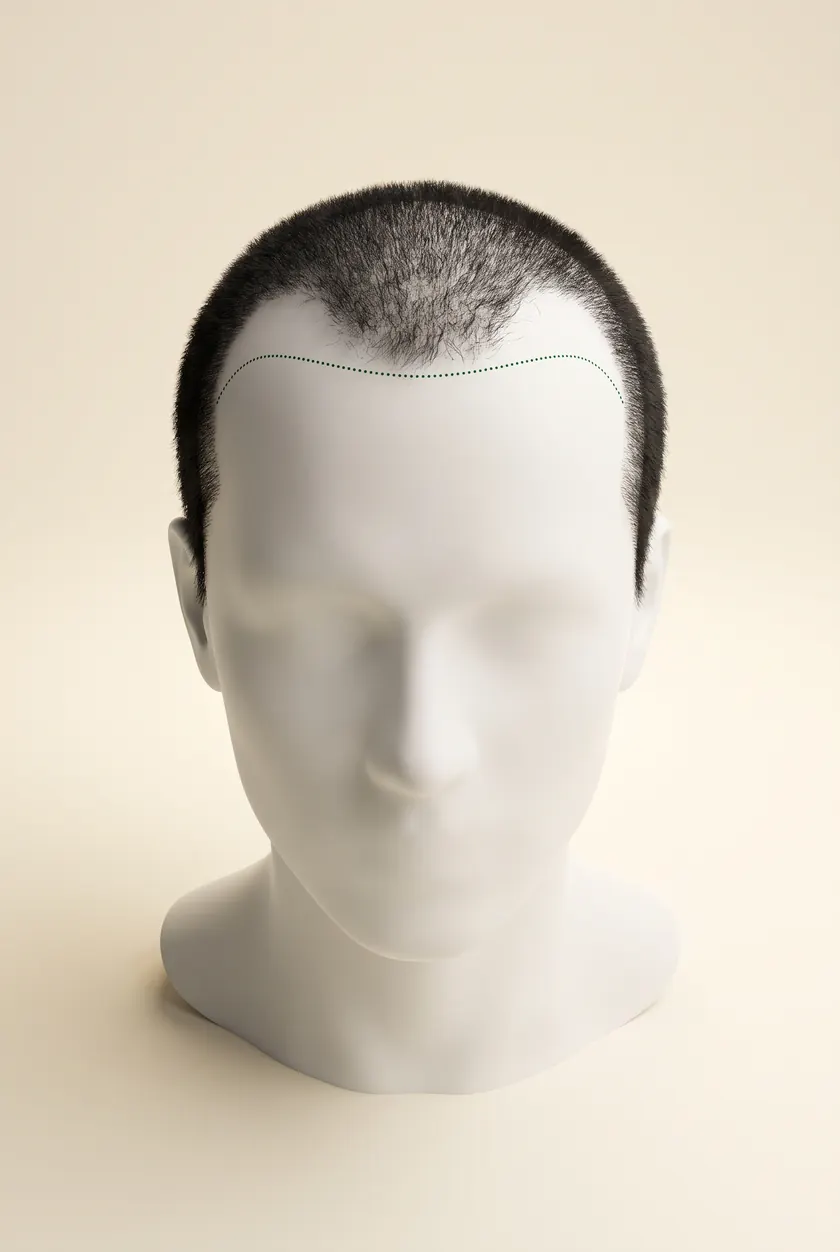
AI-generated illustration: a mannequin head seen from the front, with short hair and a planned hairline drawn in pencil

Design first

Why the Line Matters More Than the Graft Count

The extraction in a hairline case is the same as in any transplant. What sets it apart is that the front is seen face on, in daylight, by everyone you talk to.

Graft numbers can be added to later. A line placed too low cannot simply be raised: the only remedy is removing hairs one at a time, which is slow and does not always leave the skin as it was.

The whole process is set out on hair transplant in Rohini, and the clinic page has hours and directions to the Rohini clinic.

  • Drawn on your forehead and agreed in a mirror
  • A slightly higher line can be lowered later
  • A line that starts too low has no such option

Position

Choosing an Age-Appropriate Position

Most men’s hairlines move back a little during their twenties and then settle. That settled, mature line is an ordinary adult feature, not the start of pattern loss, and it is what the drawing aims for.

Judged on your face

Reference points such as where the forehead turns from vertical to horizontal guide the drawing. They are a starting point, not a formula.

Drawn sitting upright

With your eyebrows relaxed and a mirror in front of you. A line drawn while you lie back sits differently once you stand.

Asymmetry allowed for

Few faces are symmetrical, and a geometrically even line often looks subtly wrong on a face that is not.

Why a low line is a common regret: it can look fine at twenty-five. At forty-five the hair behind it has thinned while the line has stayed put, leaving a dense strip in front of sparse scalp.

The front edge

Single Hairs, Irregular Spacing, the Right Angle

Whether a transplanted hairline reads as your own is decided mostly in its first few millimetres.

Single-hair grafts in front

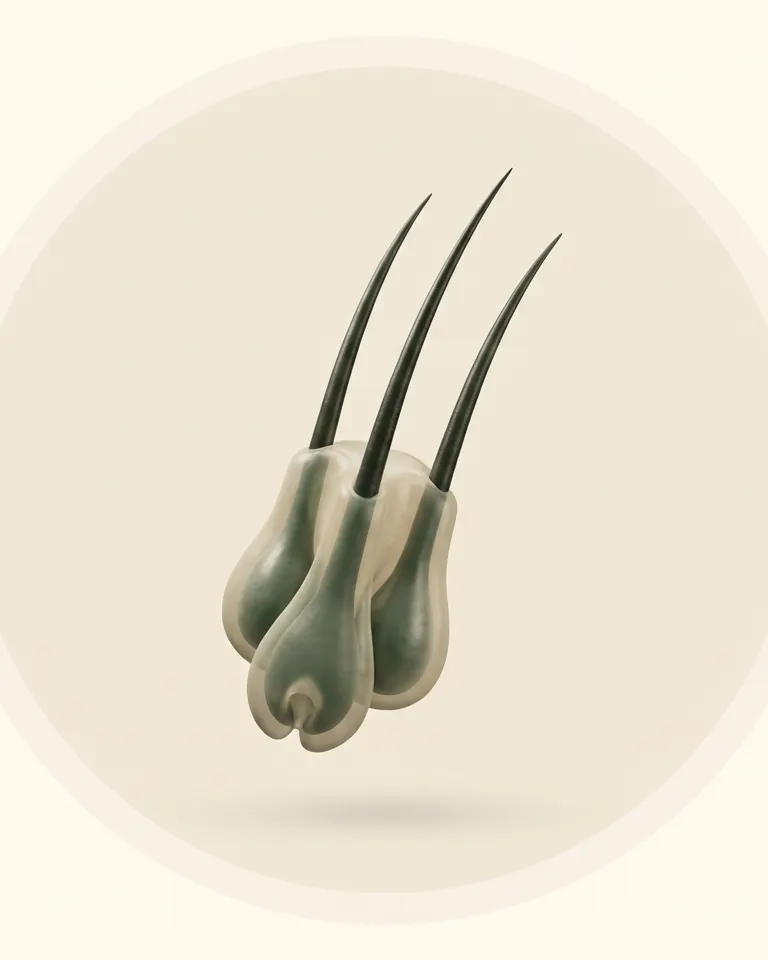
Follicular units hold one to four hairs. Only single-hair units go along the front edge, two-hair units behind them, larger units further back. Two hairs from one point at the edge read as a tuft.

A soft transition

Density builds over roughly a centimetre, with a few isolated hairs just ahead of the line, rather than starting at full density in a single row.

Irregular on purpose

Small mounds and shallow bays across the width, and two sides that do not mirror each other exactly. A smooth arc from temple to temple looks constructed.

Angle and direction

Frontal hair lies forward, close to the skin. The angle is fixed as each site is made; hair set too steeply stands up, and no styling fixes it.

Dark, coarse hair against brown skin shows each hair individually, which argues for a wider transition zone and more single-hair grafts at the edge. Our article on how a transplanted hairline is designed goes into this in depth.

Temples

Rebuilding the Temples, or Leaving Them

The temple points frame the face, and their loss is part of what makes a hairline look older. Rebuilding them is among the most demanding parts of the work.

Why temples are difficult

  • The hair there is fine
  • It lies at very sharp angles
  • Growth runs backwards and downwards
  • Any error shows clearly in profile

Why some people leave them

Temple work spends donor hair that could add density across the front third, where it does more for how you look face on. Where loss is still moving, keeping the temples recessed is often the wiser choice.

Implanter placement gives fine control at sharp angles, which is why it is often used here: see DHI hair transplant in Rohini.
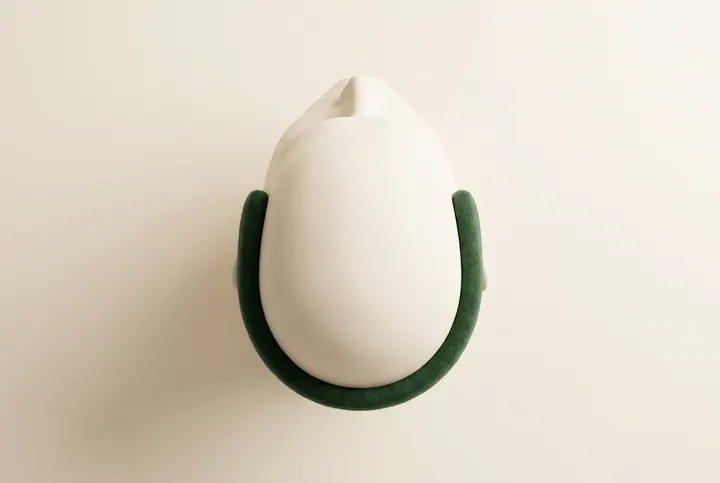
AI-generated illustration: a mannequin head seen from above, with green felt hair left only at the sides and back

Planning ahead

Planning for Loss That Has Not Happened Yet

Transplanted follicles generally keep the character of the donor hair. The hair behind them does not, and it can keep thinning with age.

If the front is rebuilt while the hair just behind it is still thinning, the result is a strip of transplanted hair with a growing gap at its back. Donor hair is a one-off supply, and using all of it on the front leaves nothing if loss later reaches the vertex — see crown hair transplant in Rohini.

Medicines are usually continued for the hair behind the line; minoxidil and finasteride in India explains the common options.
  • Expected: swelling, crusting, numbness, temporary shedding
  • Uncommon: infection and poor growth
  • Lasting: a badly placed line. Results vary.
AI-generated illustration: a sculpted model of a follicular unit with three hairs, on a cream background

Timing

When It Is Better to Wait

Age alone does not decide it; whether the loss is still moving does. Where it is, the loss is treated medically first, through hair fall treatment in Rohini, and the hairline is reassessed once the pattern has settled.

Knowing where you sit on the Norwood scale of male hair loss helps frame that conversation.

  • Fast loss not yet brought under control
  • Thinning that began only recently, in your early twenties
  • A small donor area with extensive loss expected
  • A firm wish for an adolescent hairline

Candidacy

Who a Hairline Transplant Suits — and When It Waits

A general guide only: suitability is decided once your hairline, the hair behind it and your donor area have been examined at the Rohini clinic. The six-question hair loss self-assessment can help you describe your pattern before you book.

Situations in which a hairline transplant usually suits, may suit or should wait, with the reason for each — a general guide, not a diagnosis
Your situationHairline transplant, and why
Temple recession that has settled into a clear shape Usually suits. The line can be drawn against loss that has stopped moving, with donor hair kept in reserve.
Loss still moving fast, or thinning that began only recently Not yet. It is treated medically first, and the hairline is reassessed once the pattern has settled.
A wish for the hairline you had as a teenager Not as asked. A mature position is drawn instead. It can be lowered later if loss stays settled; a line placed too low cannot simply be raised.
Plenty of donor hair, with loss that may reach the crown Usually suits, with a reserve. Part of the donor is held back so the vertex is not left without grafts later.
A small donor area with extensive loss expected Usually does not. Spending the donor on the front could leave nothing for loss still to come.
Recessed temples on their own Discuss first. Temple hair is fine and lies at sharp angles, and temple work uses grafts the front may need. While loss is moving, leaving the temples is often the advice.
A woman with a naturally high hairline Considered selectively. After a medical workup, if the front of the scalp is stable and the donor can spare the hair. A female line is drawn lower and rounder.
An earlier hairline that looks too low, harsh or tufted Assessed as a repair. Softening with single hairs, or removing misplaced grafts, depends on what the donor can still give.
Active alopecia areata, or an untreated cause such as low iron Not yet. The cause is investigated and treated first.

An earlier hairline that needs correcting is covered on hair transplant repair in Rohini, and a woman’s hairline on hair transplant for women in Rohini.

At the Rohini clinic

From Drawing to a Settled Hairline at Rohini

Consultations, procedures and reviews take place at the Rohini clinic and are carried out by registered medical practitioners.

  1. AI-generated illustration: a dermatoscope and notepad on a wooden desk

    Step 01

    Assessment and drawing

    History, donor density and medicines first. Then the line is drawn on your forehead, checked in a mirror and adjusted until you both agree; photograph it and look again a week later.
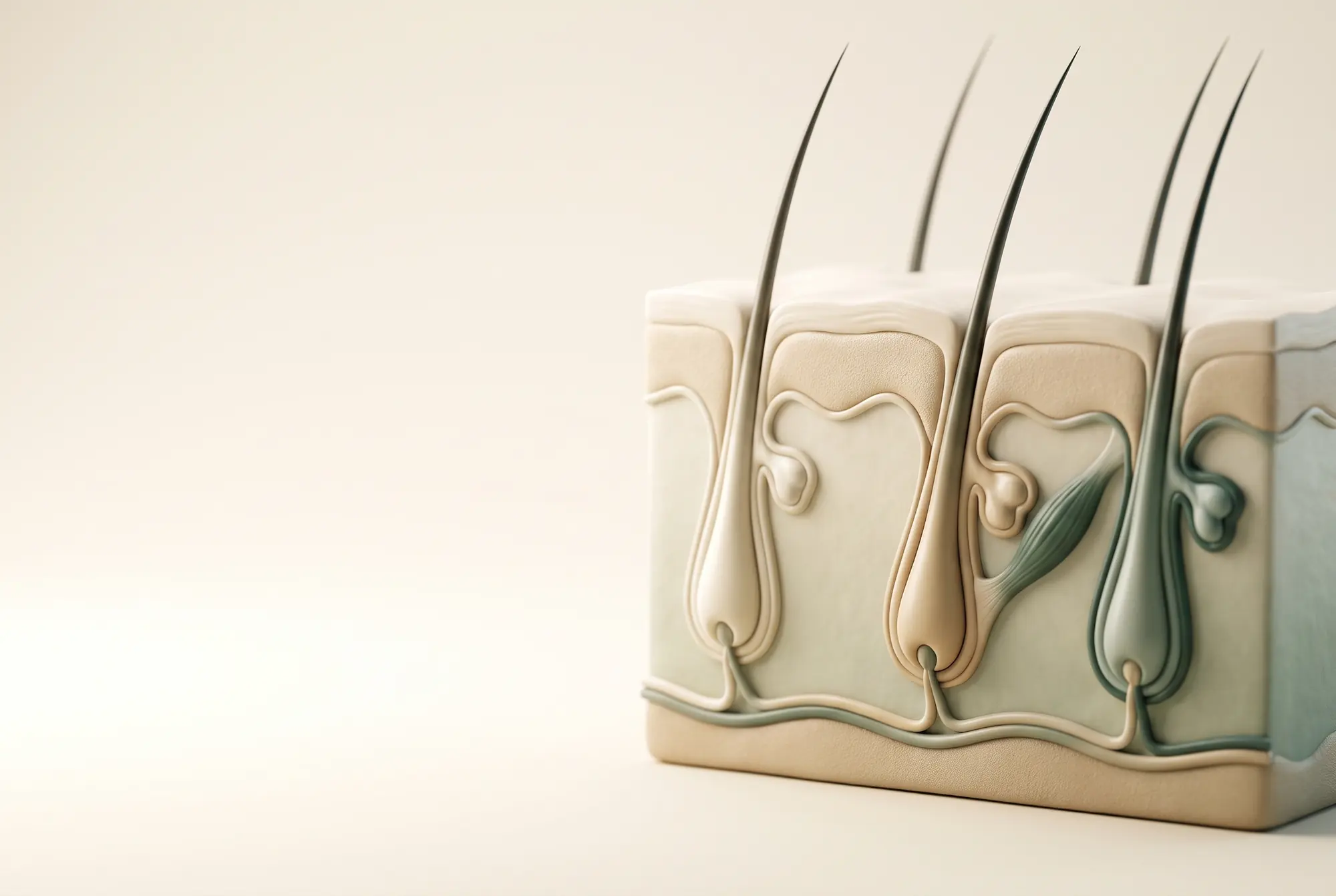
  2. AI-generated illustration: a sculpted cross-section of scalp skin with hair follicles and their roots

    Step 02

    Procedure day

    Extraction and sorting under magnification, then single hairs along the edge and larger units behind. A day case under local anaesthetic.

  3. AI-generated illustration: a desk calendar with review dates circled

    Step 03

    Healing and reviews

    Crusts and forehead swelling early on; no caps or helmets until cleared. New growth from three to four months, settled at about ten to twelve.

Cost guidance

Hairline Transplant Cost in Rohini: What Decides It

There is no set fee, because the cost follows the line agreed in the mirror. A frontal line alone needs far fewer grafts than a line with temples and density built further back. You receive an itemised written estimate after your assessment, before any date is booked.

The drawing

The front line alone, or line and temples

Density behind it

How far back the line is built up

Your donor area

What it can give, and what is kept back

Technique and sessions

FUE, DHI or both; one sitting or two

Ask whether any quote is in grafts or hairs, and how the number was reached. The graft calculator gives a starting range. Instalment options through third-party lenders may be available — ask at the consultation, and read how medical EMI works first.

Hair transplant cost in Rohini, worked through

Choosing your dates

Recovering in Delhi

A new hairline faces the city head-on for the first fortnight. General practicalities; your written aftercare comes first.

  • Sun: the front catches it first, so shade the hairline for the first few weeks
  • Summer sweat: let it dry rather than wiping across the grafts
  • The smog season: an ear-loop mask, kept from riding up towards the hairline
  • Helmets drag over the front as they go on, so plan cabs until a review clears one

More in hair transplant recovery in Delhi.

Who you will see

Doctors at DenceSpot Clinic

Treatment at the Rohini clinic is carried out by registered medical practitioners. Every doctor at DenceSpot is listed below with their qualifications.

Dr. Nyra

MBBS, MD (Dermatology)

FAQs

Hairline Transplant in Rohini: Questions Answered

General patient education. The right position for your own line is worked out in person, with a pen and a mirror.

Ask on WhatsApp
Is the hairline procedure carried out at the Rohini clinic?

Yes. Hairline transplants are carried out at the Rohini clinic in North-West Delhi by registered medical practitioners. The design consultation, the drawing on the day, the procedure and the follow-up reviews all take place there.

Can my hairline go back to where it was in my teens?

Rarely. An adolescent line can look ordinary at twenty-five and out of place at forty-five, once the hair behind it has thinned. A mature position is drawn instead; it can be brought lower in a later session if your loss stays settled and your donor area allows, whereas a line placed too low cannot simply be raised.

I am in my twenties. Should I have a hairline transplant now?

Age alone does not decide it; whether the loss is still moving does. Early loss that is still progressing is usually treated medically first, because a line placed while the hair behind it is receding leaves a strip of transplanted hair with a gap opening up behind it. The hairline is reassessed once the pattern has settled.

Should my temples be rebuilt as well?

Sometimes. The temples matter to how a face reads, but the hair there is fine and lies at very sharp angles, and the work uses grafts the front of the scalp may need. Where loss is still progressing, leaving the temples recessed is often the advice.

How many grafts will my hairline take?

That depends on the agreed drawing. A frontal line alone needs far fewer grafts than a line plus temples plus density built further back. The number is counted from your mapped plan, not quoted from a photograph; the graft calculator gives a rough starting range.

FUE or DHI for a hairline?

Both are used, and the choice matters less than the design. Implanter placement gives fine control at sharp angles, which is why it is often used at the front edge and temples; FUE placement into pre-made sites is efficient over larger areas. See DHI in Rohini and FUE in Rohini.

Will people be able to tell I have had it done?

That depends mainly on the design, and no outcome can be promised. Angle, direction, irregularity and restraint at the front decide it far more than the technique or the graft count. Work that gets noticed was usually placed too low, too straight or too densely at the very edge.

Will the new hairline last?

Transplanted follicles keep the character of the donor hair and generally persist. The hair behind them can keep thinning with age, which is why the design allows for future loss and medical treatment usually continues. No clinic can promise a particular density.

How long does the procedure take, and do I go home the same day?

It scales with the graft count. Smaller sessions take a few hours; larger ones run through most of the day, with breaks for food and rest. It is a day case under local anaesthetic, so you go home the same day. Eat beforehand, bring your medicines list, and arrange a lift or a cab rather than a two-wheeler.

When can I go back to work, wear a cap or ride with a helmet?

Most people return to desk work within a few days, though crusts at the front and some forehead swelling show for the first week or so. Caps and helmets wait until a review clears them, and then only loose-fitting ones. Full gym training usually resumes at around three to four weeks, and the new hairline is kept out of direct sun for the first few weeks.

When will my hairline look like itself?

Transplanted hairs commonly shed in weeks two to four while the follicles stay in place. Fine new hair appears from around three to four months, uneven at first, and the hairline is judged at about ten to twelve months against your review photographs. Results vary between patients.

Can a hairline done elsewhere be corrected?

Sometimes. It may be possible to soften a harsh edge with single hairs placed in front of it, and occasionally to remove grafts that sit in the wrong place. Correction is slower and more limited than getting the design right the first time, and it depends on what the donor area can still give. See hair transplant repair in Rohini.

What does a hairline transplant cost in Rohini?

There is no set fee. Cost follows the agreed drawing: the front line alone or line and temples, how far back density is built, what your donor area can give, the technique and the number of sessions. The estimate is itemised and in writing after your assessment; hair transplant cost in Rohini shows how a graft count becomes a figure. Instalment options through third-party lenders may be available — ask at the consultation, and see payment and EMI options.

Can I send photographs on WhatsApp before booking?

Yes. Front-on and side photographs of your hairline and temples, plus one of the back of your head, sent on WhatsApp to +91 95406 99152, help the appointment start from the right questions. The line itself is drawn only in person, on your forehead. The clinic is open Mon–Sat · 10:00 – 20:00 (Sunday · closed).

Is the Rohini clinic convenient for me?

The clinic is in North-West Delhi near the Outer Ring Road, which makes it convenient for North and North-West Delhi — Rohini, Pitampura, Shalimar Bagh and Prashant Vihar among them. Hours and a map link are on the clinic page.

Further reading

Further Reading

Plain-language articles on hair loss and its treatment. Each article shows its own author and review details.

Hair transplant

Is There a Right Age for a Hair Transplant?

Why surgery in your early twenties carries particular risks, what a stable pattern of loss means, and why age matters less than donor supply and future loss.

· 8 min read

Visit the clinic

Visit Our Rohini Clinic

Hairline consultations, the drawing, the procedure and every follow-up review take place at the Rohini clinic in North-West Delhi, Monday to Saturday.

Rohini, Delhi

See Your Hairline Drawn Before You Decide

Come in and have the line marked on your own forehead. You get an honest view of where it belongs at your age, what your donor area can support and whether now is the time, plus a written plan — with no pressure to book a date on the day.

AI-generated illustration: sunlight and leaf shadows on an ivory wall with a potted plant

Book a consultation

Request a call back

Leave your details and the clinic will call you to confirm a consultation time.

We use your name, phone number, chosen treatment, preferred clinic and date, and message only to contact you about this enquiry, and record the date, time, page and your IP address with it. It reaches the clinic by email (Google) and WhatsApp (Meta), whose services may process it outside India, and is kept for 12 months. You can withdraw consent at any time.

For adults 18+. Not for emergencies — call 112. A request is not a confirmed appointment.

CallWhatsAppBook