Graft calculator

A Graft Range, and Why It Is Not Your Graft Number

This tool gives you a ballpark from your pattern of loss, which is useful for budgeting and for sanity-checking a quote. It cannot give you your actual number, because that depends on your donor density — and no calculator can measure that. Here is the honest version of both.

  • A range, not a false-precision figure
  • Adjusts for treatment area and hair type
  • States plainly what it cannot account for
  • No details required to use it
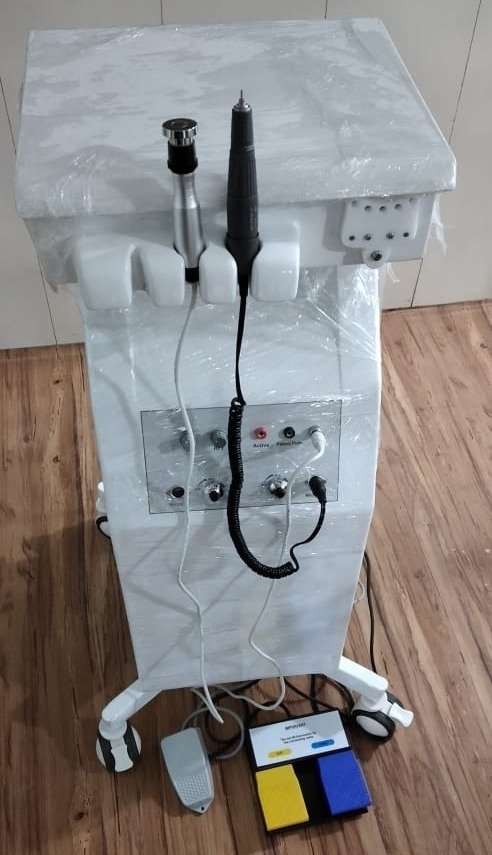
Densitometry and mapping equipment used to measure donor density at DenceSpot Clinic, Gurugram

Reviewed by

Dr. Nyra

MBBS, MD (Dermatology) · Owner & Chief Consultant, DenceSpot Clinic

The tool

Estimate a Graft Range

Four questions. Nothing is stored, nothing is sent anywhere, and you do not need to give us any details to use it.

1. Which pattern is closest to yours?

Male pattern stages. If your loss is diffuse rather than patterned, this tool will not describe it well.

2. Which areas would you want treated?

Treating less costs fewer grafts, and the front usually returns more visible benefit per graft than the crown.

3. How would you describe your hair?

Coarser hair covers more scalp per hair, so it needs fewer grafts for the same visual density.

4. How much does your hair contrast with your scalp?

Dark hair on pale skin shows scalp more readily, so it needs more grafts to look dense.

Typical range for this pattern

grafts, as a broad guide

What this number does not know

  • Your donor density. The most important variable, and the one that decides whether the range above is even available to you.
  • Your future loss. A sensible plan holds grafts back for loss that has not happened yet.
  • Your scalp laxity and health. Both affect what can safely be harvested and placed.
  • Whether surgery suits you at all. Unstable loss and active scalp conditions are treated first.
Get a measured number Ask about your case

The real calculation

How a Graft Number Is Actually Reached

The calculator above works forwards, from the size of the problem. A clinic works backwards, from what your donor area can safely give — and that is the direction that produces a usable plan.

Donor density is measured directly, not estimated. It varies substantially between people, and two men with visually identical recession can have donor areas that support very different numbers. This is the single reason no honest figure can be produced from a photograph, and it is the reason this page keeps saying so.

The recipient area is then mapped rather than eyeballed, so the number reflects a measured surface rather than an impression. The pattern is staged, and its likely progression is considered — because grafts spent today are not available for the crown that opens up in ten years.

Only then does a number appear, and it is frequently lower than the calculator's range. That is usually the plan being sensible about your donor rather than being ungenerous.

What gets measured

  • Donor density at the back and sides
  • The recipient area, mapped
  • Scalp laxity and skin condition
  • Hair calibre, curl and colour contrast
  • Pattern stage and likely progression

And the constraint

Your donor has to last your lifetime. The safe number is what it can spare with something held in reserve, not what the bald area could absorb.

Taking more than that thins the donor visibly and permanently. See donor area limits.

A distinction worth knowing

Grafts Are Not Hairs

This trips people up constantly when comparing quotes, and it is worth getting straight before you compare anything.

A graft is a follicular unit

Hair does not grow as separate strands. It grows in natural groupings of one to four hairs, and a graft is one of those groupings moved intact.

So graft counts are not comparable

Two thousand grafts averaging two hairs each is a very different amount of hair from two thousand averaging three. Ask what average hairs per graft a quote assumes.

And single-hair work counts differently again

Hairlines and eyebrow work use single-hair grafts deliberately. Comparing those counts against a scalp quote is comparing different units.

The practical use of this page

Sanity-checking a quote you already have

If a quote sits far above the range here, ask how the number was calculated and what donor density was measured. An inflated count costs money and spends hair you cannot replace.

If it sits well below, that is often a clinic being appropriately careful with your donor, or covering a smaller area than you assumed, or planning to stage the work. Ask, rather than assuming it is a worse plan.

Either way the useful move is the same: ask for the basis. Our guide to why quotes vary goes through the mechanics.

Dr. Nyra — professional portrait

Who performs and reviews this treatment

Dr. Nyra, MBBS, MD (Dermatology)

Owner & Chief Consultant, DenceSpot Clinic

Qualified MBBS from Dr. D. Y. Patil Medical College, and holds an MD in Dermatology. Three years of clinical work in Germany followed — two at Bio Hair Clinic and one at St. Georg Klinikum Eisenach — before establishing DenceSpot in Gurugram.

Why a clinic publishes a calculator and then spends the page undermining it: patients arrive with numbers from online tools and from clinics that produced them without an examination, and those numbers anchor expectations before anyone has measured anything. A range is genuinely useful for budgeting and for spotting a quote that is wildly out of line. It becomes harmful the moment it is mistaken for a plan, because the variable it cannot see — how much the donor can safely give — is the one that decides everything.

Qualification

MBBS, MD (Dermatology)

Training

3 years, Germany

Specialization

Dermatology

Meet Your Doctor

Medically reviewed by Dr. Nyra · last reviewed August 2026

FAQs

Graft Number FAQs

General patient education. Your own number comes from measurement at an assessment, not from this page.

Ask on WhatsApp
How accurate is a graft calculator?

It gives you an order of magnitude, not a plan. It works from the pattern of loss alone, and the single most important variable in a real graft number is your donor density, which cannot be estimated online. Treat the output as a range to help you budget and sanity-check a quote, not as a figure to hold anyone to.

Why can it not just tell me my number?

Because two people with visually identical recession can have very different donor supplies, and the safe graft count follows from what the donor can spare rather than from what the bald area would like. Any figure produced without that measurement is arithmetic, not a plan.

What is the Norwood scale?

A standard classification of male pattern hair loss, running from minimal recession through to extensive loss with only a band of hair remaining at the sides and back. It gives clinicians a shared vocabulary for describing a pattern. Our guide to the Norwood scale explains each stage.

Does this work for women?

Not well. The Norwood scale describes male pattern loss, and female hair loss is usually diffuse rather than following those stages. More importantly, women frequently have a treatable underlying cause and are often not surgical candidates at all. Start at women's hair loss treatment instead.

What is a graft, and is it the same as a hair?

No, and this distinction matters when comparing quotes. A graft is a follicular unit, the natural grouping in which hair grows, and it contains anywhere from one to four hairs. Two quotes for the same graft number can therefore deliver noticeably different amounts of hair.

Why does hair calibre change the number?

Because coarser hair covers more scalp per hair. Someone with thick, coarse hair achieves the appearance of density with fewer grafts than someone with fine hair, for the same area. Curl helps too, and a low contrast between hair colour and skin tone helps considerably.

The calculator gave a number higher than my quote. What does that mean?

It could mean your donor cannot support the full number and the clinic is planning sensibly, or that the plan covers a smaller area than you assumed, or that it is staged. Ask them to explain the basis. A lower number is not automatically a worse plan.

The calculator gave a number lower than my quote. Should I be worried?

It is worth asking about. Ask specifically how the graft number was calculated and what donor density was measured. An inflated count costs money and spends donor hair you cannot replace, so a clear explanation matters more than the number itself.

Can I have as many grafts as I want?

No. The limit is what your donor area can safely give across your lifetime, not what the recipient area could accept. Taking more than the donor can spare thins it visibly and permanently, and there is no way to reverse it.

Should the whole number be done in one session?

Not always. Larger plans are frequently staged across two procedures, which protects the donor and often produces a better long-term result. Whether staging suits you is a decision made at assessment.

Does the calculator account for future hair loss?

It cannot, and this is one of its more significant limitations. A sensible surgical plan reserves donor supply for loss that has not happened yet. A number based on today's pattern alone can be an overestimate of what should be spent now.

How do I get an actual number?

By being examined. Donor density is measured directly, the recipient area is mapped, your pattern is staged and its likely progression considered, and the number comes out of that. You then receive it in writing as part of an itemised estimate.

Does a bigger graft number mean a better result?

No, and assuming so is how people are sold inflated counts. The right number is the one your donor can support, placed well, in the area that matters most. More grafts placed badly, or taken from a donor that could not spare them, is a worse outcome.

How much will that many grafts cost?

Cost follows the graft number, but we do not publish a per-graft rate, because a rate multiplied by an unexamined count is exactly the arithmetic this page is warning you about. See our cost guide for how pricing actually works.

Visit the clinic

Get Your Donor Area Measured in Gurgaon

Assessment, mapping and surgery all happen at our Sector 39 clinic in Gurugram, with the same doctor throughout. Patients travel to us from across Gurugram and neighbouring parts of South Delhi.

Address
1123, Sector 39 Road, Jharsa, C Block, Sector 39,
Gurugram, Haryana 122003
Hours
Mon–Sat · 10:00 – 20:00Sunday · closed
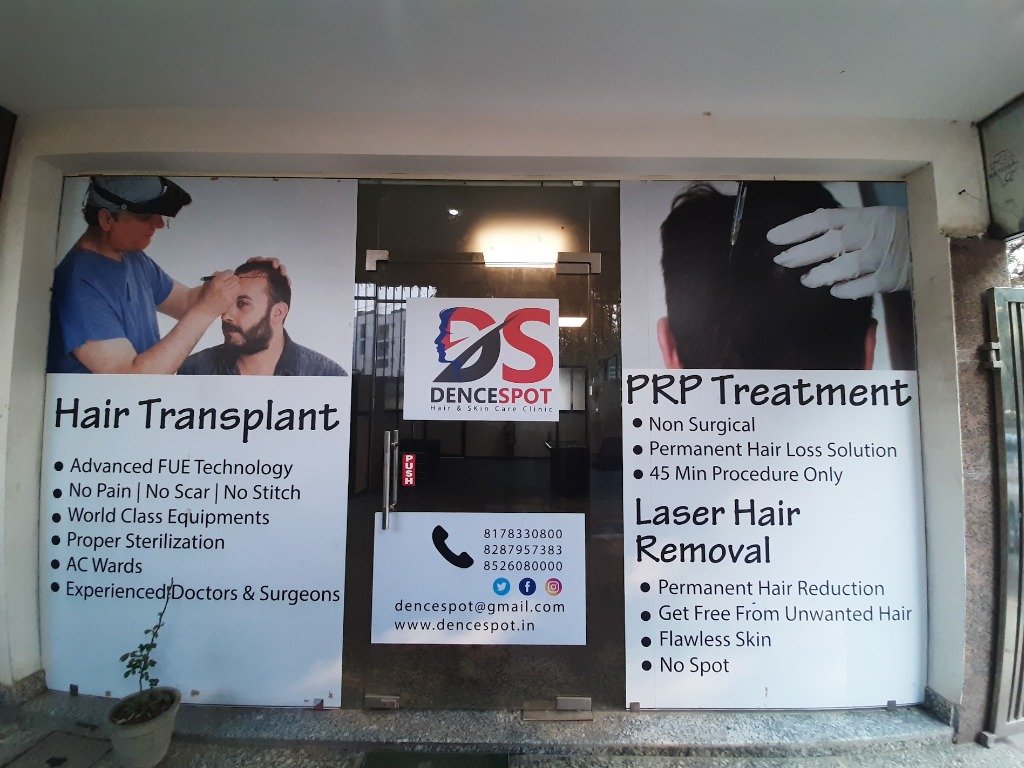
DenceSpot Clinic shopfront on Sector 39 Road, Jharsa, Gurugram, showing the hair transplant and PRP treatment signage

Getting here

  • Sector 39 Road in Jharsa, opposite Medanta – The Medicity. The clinic is on the main road, so any driver or ride-hail app can be given the Medanta gate as the landmark.

Next step

Swap the Estimate for a Measured Number

Come in and have your donor density measured and the recipient area mapped. You will leave with a graft number that reflects what your scalp can actually support, in writing, with no pressure to book a date on the day.

Suitability is determined after clinical assessment. This page is patient education and does not constitute medical advice.

Quick enquiry

Your details are used only to arrange your consultation.

Call WhatsApp