Beard transplant in Gurgaon

Beard Transplant in Gurgaon for a Fuller, Natural Beard Line

A beard transplant moves your own scalp follicles into patchy cheeks, a thin jawline, a gappy moustache or a scarred area. What separates a beard that reads as yours from one that reads as work done is the angle: facial hair lies far flatter against the skin than scalp hair, and every graft has to be set to match it. The doctor who designs your beard on your own face is the doctor who places the grafts.

  • Beard mapped on your face before anything is quoted
  • Single-hair grafts along every visible border
  • FUE and DHI performed at the clinic
  • Gurugram · Mon–Sat · 10:00 – 20:00
Beard design being drawn on a consented patient's face, or beard graft placement in progress

Performed & reviewed by

Dr. Nyra

MBBS, MD (Dermatology) · Owner & Chief Consultant, DenceSpot Clinic

Doctor-led consultation

Assessed and designed by the treating doctor.

Angle-matched placement

Each graft set to the flat lie of facial hair.

Density that suits a beard

Beards are not scalps — over-packing shows.

Donor spent carefully

Beard grafts come out of a lifetime supply.

Written plan & follow-ups

Estimate in writing, reviews already scheduled.

The basics, plainly

What Is a Beard Transplant?

A beard transplant takes follicles from the back and sides of your scalp and places them into the beard area — cheeks, jawline, chin, moustache, sideburns, or a scar that will not grow hair. It is the same extraction technique used for a scalp hair transplant in Gurgaon. What changes completely is the design.

Scalp hair stands up from the skin. Facial hair lies almost flat against it, and the direction shifts across the face — sweeping down the cheek, fanning outward along the jaw, pointing inward under the chin, downward across the upper lip. Recipient sites have to be made to match that lie zone by zone. Grafts placed at a scalp angle stick out, and no amount of trimming hides it.

Density is the second difference. A natural beard is far less dense than a scalp, and the borders — the cheek line, the moustache edge, the sideburn — are made of single hairs, not clusters. Over-packing a beard produces the tufted, doll-like look people recognise instantly, and it spends donor hair that cannot be replaced.

Once healed, the transplanted hairs behave like the scalp hair they came from. They keep growing, so they need trimming. They can be shaved, shaped and grown out normally.
Close-up of beard graft placement showing the acute facial angle

In one line

Scalp hair, relocated to your face and set to grow the way a beard grows. The extraction is routine; the angle and the density are where the result is won or lost.

Zone by zone

Areas a Beard Transplant Can Treat

Most cases are not “a beard” — they are one or two specific zones that never filled in. Each has its own angle, its own density target and its own difficulty.

Most requested

Patchy cheeks

Bare or thin patches high on the cheek, often with a strong moustache and chin below them. Filling the gap so it blends into existing growth is the commonest reason men come in.

Definition

Cheek line & jawline

Building a clean upper border across the cheek and carrying density down the jaw. The cheek line is the most visible edge on a beard, so it is drawn on your face and agreed before a graft is placed.

Connection

Moustache & goatee

Thin upper-lip growth, a gap between moustache and chin, or a goatee that will not close. Upper-lip hair points sharply downward and the skin is mobile, so it is placed with particular care.

Framing

Sideburns

Rebuilding or extending sideburns, including cases where a previous scalp procedure left the temple and sideburn out of proportion with each other.

Camouflage

Scars in the beard area

Grafting into a stable scar — surgical, accidental, burn or cleft-lip repair — so growing hair breaks up the line. Scar tissue has a poorer blood supply, so expectations and graft survival are discussed openly first.

Selected cases

Full beard reconstruction

Building a beard where there is very little native growth. It is the largest ask on the donor area, is often staged across sessions, and is only planned where scalp donor supply genuinely allows it.

Suitability

Who May Consider a Beard Transplant?

Beard growth is largely genetic and settles with age, which is why this is usually a straightforward decision once two things check out: your facial growth has stopped changing, and your scalp donor area can afford the grafts.

Suitability is decided after examination, not from a photograph.

Book an assessment

Patchy or uneven growth

Beard hair that comes in thick in some zones and barely at all in others, leaving a beard that never looks even however long it is grown.

Naturally sparse density

Growth that is present everywhere but too thin to hold a shape — a beard that reads as stubble no matter how long it is left.

Scars and gaps

A stable scar or a permanently bare area within the beard that you would rather cover with growing hair than with a shorter cut.

Shaping and definition

A beard that grows well but sits badly — a cheek line too low, a weak jaw border, sideburns out of proportion after a previous procedure.

Gender-affirming facial hair

Facial hair as part of masculinising treatment, planned alongside your existing medical care and usually after hormone therapy has had time to show what grows on its own.

When we say wait

Facial hair still filling in with age, active alopecia areata or an unsettled skin condition in the beard area, a scar that has not matured, keloid-prone skin, or a donor area that cannot spare the grafts. In those cases treatment or time comes first.

Techniques

Beard Transplant Techniques

Both techniques take grafts the same way. They differ in how each graft is put into the face — which, on a beard, is the part that matters. The choice is made zone by zone, and a single case often uses both.
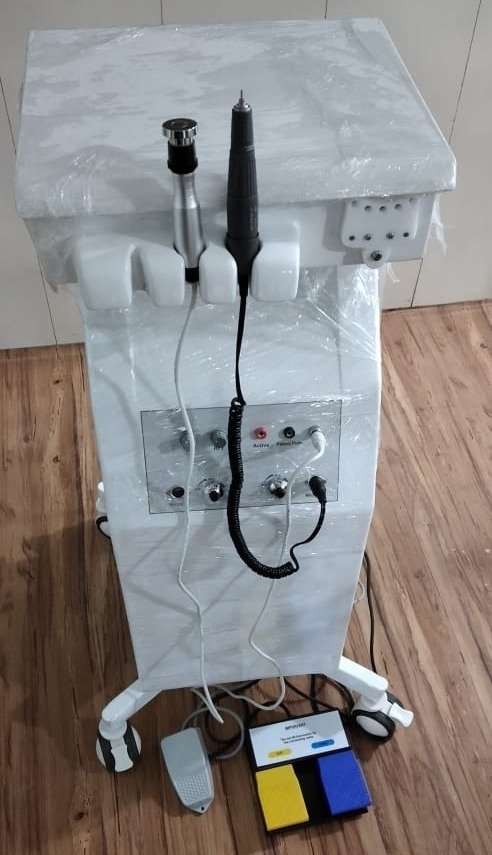
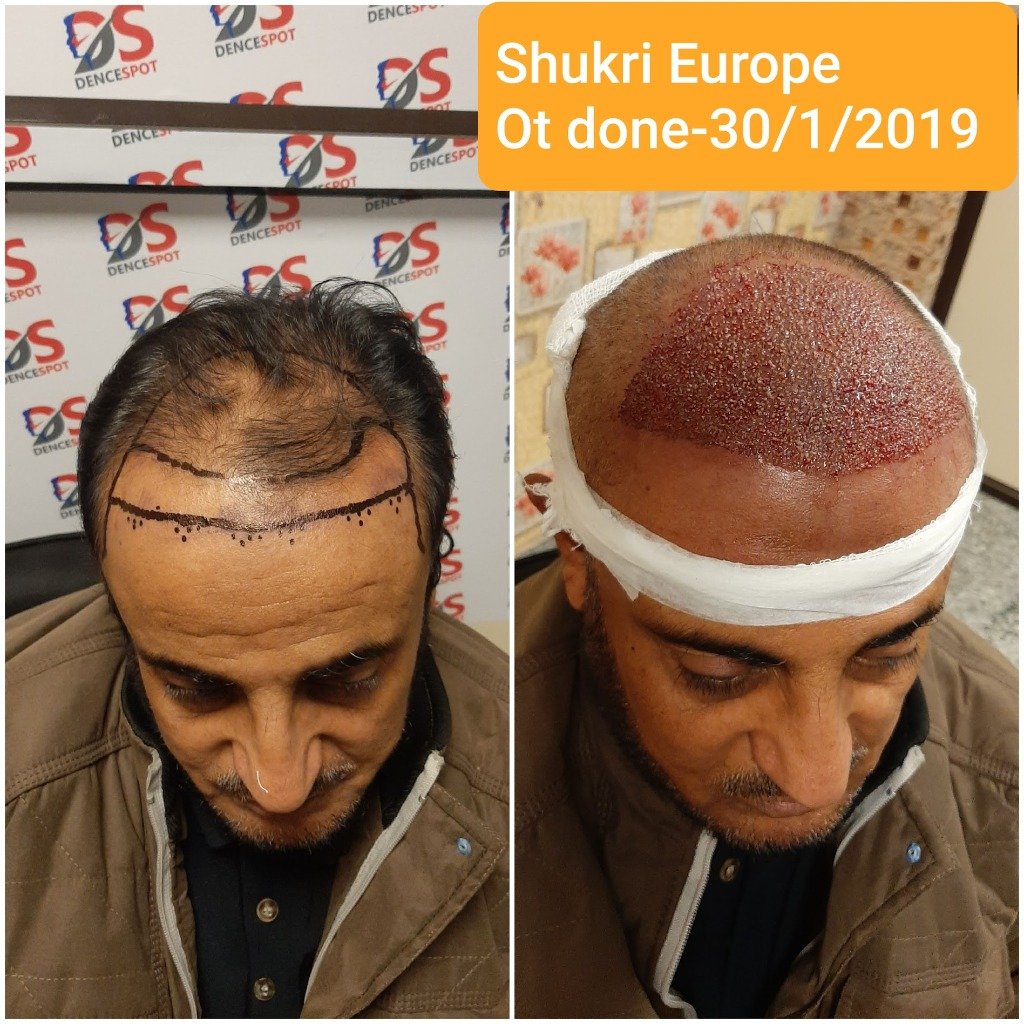
FUE extraction from the occipital donor area — clinical photo

FUE Beard Transplant

Individual follicular units are removed one at a time from the back and sides of the scalp with a small punch, leaving dot-sized marks that settle into the surrounding hair. Recipient sites are then made across the beard at the correct angle and direction for each zone, and the grafts are placed into them.

Making the sites first lets the doctor set the entire pattern — angle, direction, spacing — and review it as a whole before placement begins. It is efficient across larger areas such as cheeks and jawline.

DHI implanter pen placing a graft along the cheek border

DHI Beard Transplant

Extraction is the same. Placement is not: each graft is loaded into a fine implanter and set into untouched skin in one action, so the depth, angle and direction are fixed at the moment of placement rather than by a pre-made site.

That control is worth most along the visible edges — the cheek line, the moustache border, the sideburn — where hairs sit almost flat and a degree or two of error is noticeable at conversational distance.

Neither one is universally better

Any clinic that sells one technique as the answer for every beard is selling equipment, not a plan. The reasoning behind your recommendation is explained at the consultation and written into the estimate.

A note on “DHT”

Some clinic pages advertise a “DHT beard transplant”. DHT is dihydrotestosterone, a hormone involved in hair loss — not a surgical technique. The technique meant is DHI, direct hair implantation.

Step by step

Your Beard Transplant Journey

From the first appointment to the review at a year. Every stage happens at the Sector 39 clinic with the same doctor.

01

Consultation

What you want from your beard, and what is realistic.

02

Facial hair assessment

Existing growth mapped zone by zone; skin checked.

03

Donor evaluation

What the scalp can safely give, now and later.

04

Beard design

Borders drawn on your face; you approve them in a mirror.

05

Procedure

Day case under local anaesthetic; home the same day.

06

Recovery & aftercare

Written instructions on washing, trimming and shaving.

07

Progress reviews

Photographed at set intervals through the first year.

On the day

How Does a Beard Transplant Work?

1

Design and marking

The agreed borders are redrawn on your face and checked with you sitting upright in natural light — a beard drawn on a reclined patient sits wrong when they stand up. Photographs are taken for your record.

2

Preparation

The donor strip of scalp is trimmed short and both donor and beard areas are anaesthetised locally. The injections are the uncomfortable part; after that the areas are numb.

3

Extraction

Follicular units are removed individually from the donor area. For a beard, single-hair units are separated out under magnification and reserved for the borders, where clusters would be visible.

4

Site creation

In an FUE case, recipient sites are made at the angle and direction of each zone — sweeping down the cheek, out along the jaw, in under the chin, down across the upper lip. In a DHI case this happens at the moment of placement instead.

5

Implantation

Grafts are placed one by one, singles at the edges and larger units kept to the interior where density is wanted. The pattern is deliberately irregular; a ruled edge is what makes a transplanted beard obvious.

6

Discharge and aftercare

You go home the same day with written instructions, medication where prescribed, and your first review already booked. Someone should drive you.

Beard design marked on a consented patient before surgery

Plan the week around it

A beard transplant is not concealable the way a scalp procedure is under a cap. Small crusts sit on the face for roughly the first week. Most patients book time when they are not client-facing.
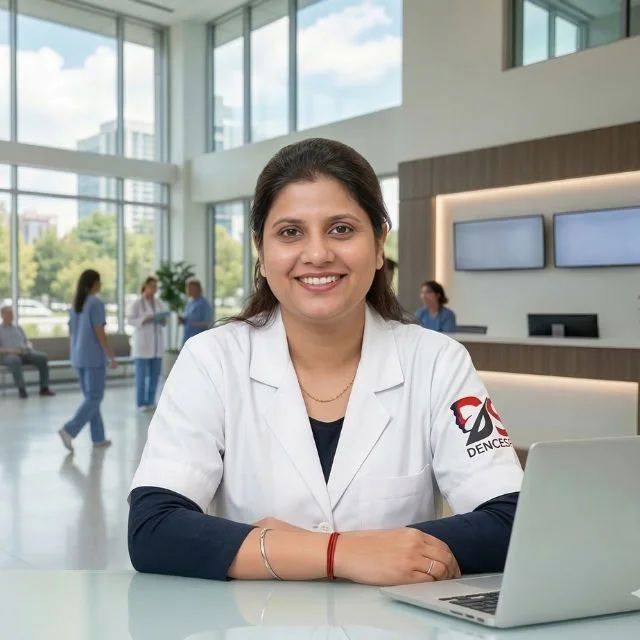
Dr. Nyra — professional portrait

Who performs and reviews this treatment

Dr. Nyra, MBBS, MD (Dermatology)

Owner & Chief Consultant, DenceSpot Clinic

Qualified MBBS from Dr. D. Y. Patil Medical College, and holds an MD in Dermatology. Three years of clinical work in Germany followed — two at Bio Hair Clinic and one at St. Georg Klinikum Eisenach — before establishing DenceSpot in Gurugram.

Why a doctor should assess a beard, not a counsellor: patchy facial hair can be alopecia areata rather than genetics, and grafting into an active patch wastes grafts. Skin conditions in the beard area need treating first. And the donor arithmetic — beard grafts versus a scalp you may want covered at forty-five — is a medical judgement, not a sales one.

Qualification

MBBS, MD (Dermatology)

Training

3 years, Germany

Specialization

To be confirmed

Registration

To be confirmed

Meet Your Doctor

Medically reviewed by Dr. Nyra · last reviewed August 2026

Cost guidance

Beard Transplant Cost in Gurgaon

Cost follows the plan, and the plan follows the assessment. A patchy-cheek correction and a full beard reconstruction are different procedures with very different graft counts, so we publish the factors that move the number and give you an itemised estimate in writing afterwards.

Zones being treated

Cheeks, jaw, moustache, chin, sideburns

Number of grafts

Counted from the mapped design, not estimated

Existing growth

How much native hair the plan can build on

Technique

FUE, DHI, or both across different zones

Complexity

Scar tissue, repair work, staged sessions

Supporting treatment

Any medical therapy planned alongside

A word of caution about “per graft, starting from” pricing: a low rate applied to an inflated graft count costs more than an honest quote. Ask how the graft number was arrived at, and what is included — anaesthesia, medication, follow-up reviews.

Full beard cost breakdown

Get a Personalized Treatment Estimate

Send clear photos of your cheeks, jawline and chin in daylight on WhatsApp, or request a call back. You will get an assessment appointment — not a sales pitch.

Recovery & results

What Generally Happens After a Beard Transplant

A general guide to the phases most patients describe. Your own timeline, and when you may trim or shave, is set by your doctor at your reviews.

Phase 1

First week

Tiny crusts around each graft, redness and some facial swelling. No touching, picking or shaving. Washing begins only when and how you are instructed.

Phase 2

Crusts clear, hairs shed

Crusting settles over the following weeks and the transplanted hairs commonly fall out while the follicles stay in place. Expected, not a failure.

Phase 3

New growth

Fine new hairs typically appear from around three to four months, unevenly and often finer than the surrounding beard at first.

Phase 4

Density and texture build

Coverage fills in through the middle months and the hairs coarsen toward beard character. Progress is documented photographically at each review.

Phase 5

Longer-term result

A fuller picture around ten to twelve months. Where a case was staged, or density in one zone needs topping up, a small second session is planned from here.

When can I shave?

Trimming with scissors or a guarded trimmer is usually permitted before a razor is, and both are cleared by your doctor at a review rather than by a date on a website. Shaving too early disturbs grafts that are not yet secure.

Individual outcomes vary

Your doctor will give personalized guidance based on your treatment. The timelines here are general patient education, not a promise of results, and no density or growth rate is guaranteed.

Honest risks

Risks and Limitations You Should Hear First

A beard transplant is minor surgery on the most visible part of your body. These are discussed at the consultation and again on consent; they are listed here so you can think about them before you come in.

Folliculitis and ingrown hairs

Small inflamed spots around new hairs are more common in the beard than the scalp. Usually short-lived and treatable, occasionally needing medication.

Swelling, redness, bruising

Facial swelling in the first days is normal and settles. It is on your face, which is why the week is planned around it.

Numbness or tingling

Temporary altered sensation in the donor or beard area is common and usually resolves over weeks to months.

Donor-area marks

FUE leaves small dot scars across the donor scalp. Usually hidden by surrounding hair but visible at very short clipper lengths.

Uneven density or shock loss

Not every graft survives, and existing beard hair around the grafted zone can temporarily shed. Some cases need a planned top-up session.

Texture and colour difference

Scalp hair is often finer and sometimes a different shade from native beard hair. It blends for most patients but the difference can remain noticeable in some.

Poor angling is not fixable quickly

A beard placed at the wrong angle bristles instead of lying flat, and correcting it means further surgery. This is the argument for taking design time seriously.

Keloid and skin-condition risk

Keloid-prone skin, active acne, an unsettled skin condition or active alopecia areata in the beard area may mean deferring or declining surgery.

Tell your doctor about diabetes, thyroid disease, bleeding disorders, isotretinoin use, blood thinners and any history of keloid scarring at the consultation. Some of these change the plan; some change the timing; none of them are reasons to leave anything out.

FAQs

Beard Transplant FAQs

Answers are general patient education. Anything specific to your beard, your donor area or your medical history is answered at the assessment.

Ask on WhatsApp
What is a beard transplant?

A procedure that moves your own follicles from the back and sides of the scalp into the beard area — cheeks, jawline, chin, moustache or sideburns — placed at the flat angle and the direction facial hair grows in each zone. It redistributes hair you already have rather than creating new hair.

Where does the donor hair come from?

Almost always the back and sides of your own scalp, because that hair is generally resistant to the hormonal process behind pattern hair loss. In selected cases hair from under the chin or the neck can be used. Donor hair from another person is not used.

Am I a suitable candidate?

Typically someone whose facial hair pattern has settled, who has enough scalp donor supply to spare, whose beard-area skin is healthy, and who has realistic expectations about density. Active alopecia areata, an unsettled skin condition, an immature scar or a limited donor area mean treatment or time comes first. Candidacy is decided after examination.

How many grafts does a beard transplant need?

It depends entirely on the zones being treated, how much native growth is already there and the density being aimed for. Filling a couple of patches is a very different number from building a full beard, and both are mapped zone by zone at the assessment against what the donor area can safely give. Any figure offered before an examination is a guess, not a plan.

Is a beard transplant painful?

The local anaesthetic injections are the uncomfortable part; the procedure itself is not typically painful. Mild soreness, tightness and facial swelling for a few days afterwards is normal and managed with prescribed medication. Pain tolerance varies between patients.

How long does the procedure take?

It scales with graft numbers. A limited patch correction takes a few hours; a larger beard reconstruction runs through most of the day with breaks. It is a day-case procedure — you go home the same day.

How long is the recovery, and how visible is it?

Most people return to desk work within a few days, but unlike a scalp procedure this one is on your face and cannot be covered by a cap. Small crusts sit around each graft for roughly the first week and settle over the weeks after. Plan the timing around anything client-facing.

When can I shave or trim my beard again?

Trimming is usually cleared before shaving with a razor is, and both are cleared by your doctor at a review rather than on a fixed schedule — it depends on how the grafts have healed. Shaving too early can disturb grafts that are not yet secure.

When will I see results?

Transplanted hairs commonly shed within the first weeks while the follicles remain in place. New growth usually begins around three to four months, with a fuller picture at roughly ten to twelve months. Growth is uneven early on and texture improves as the hairs mature.

Is a beard transplant permanent?

Transplanted follicles keep the characteristics of the donor area and generally persist, and because they came from the scalp they keep growing and need trimming. Native beard hair around them can still change with age. No clinic can guarantee a specific density or a permanent outcome.

Will it look natural?

That is decided by three things: the angle each graft is set at, single-hair grafts along every visible border, and a density target that matches a real beard rather than a scalp. Get those right and the result reads as your own beard. Get the angle wrong and it bristles — which is why the design is agreed before surgery rather than improvised during it.

How much does a beard transplant cost in Gurgaon?

Cost depends on the zones treated, graft numbers, technique, complexity and any supporting treatment, so we quote after the assessment rather than publishing a headline price. You receive an itemised written estimate before booking a date. Our beard transplant cost guide explains what moves the number.

Can a beard transplant cover acne scars or a surgical scar?

Grafting into stable scar tissue is possible and is done for surgical, accidental, burn and cleft-lip scars. Scar tissue has a poorer blood supply than normal skin, so graft survival can be lower and a second session is more often needed. The scar must be mature, and expectations are set explicitly before booking.

Does it work for alopecia areata patches in the beard?

Not while the condition is active — patches can regrow on their own with medical treatment, and grafts placed into an active patch can be lost. Alopecia areata is treated and observed first, and surgery is only considered where the condition has been stable for a sustained period. See alopecia areata treatment.

Can beard hair be used for a scalp transplant instead?

In selected cases, yes — beard hair is coarser than scalp hair and is generally used as a supplementary donor source for density in the crown or in repair work, not for a hairline. It is assessed individually, and it means accepting extraction marks in the beard area.

Can I have a beard transplant and a hair transplant together?

Sometimes, but both draw on the same donor area, so it is a question of arithmetic rather than scheduling. Where donor supply is limited, the two are prioritised over time — and if covering your scalp later matters more to you, that is said before the beard is planned, not afterwards. See hair transplant in Gurgaon.

What happens during the consultation?

History and medication review, examination of the beard area and the scalp donor area, mapping of existing growth zone by zone, the design drawn on your face for you to approve, photographs for your record, and a written plan covering technique, approximate graft number, timeline and cost factors.

Visit the clinic

Beard Transplant Clinic Serving Gurgaon

Consultations and procedures both take place at our Sector 39 clinic in Gurugram, which keeps the whole journey — assessment, design, procedure day and every follow-up — with the same doctor and the same team. Patients travel to us from across Gurugram and neighbouring parts of South Delhi.

Address
1123, Sector 39 Road, Jharsa, C Block, Sector 39,
Gurugram, Haryana 122003
Hours
Mon–Sat · 10:00 – 20:00Sunday · by appointment only
Google Maps embed / static map of the clinic location
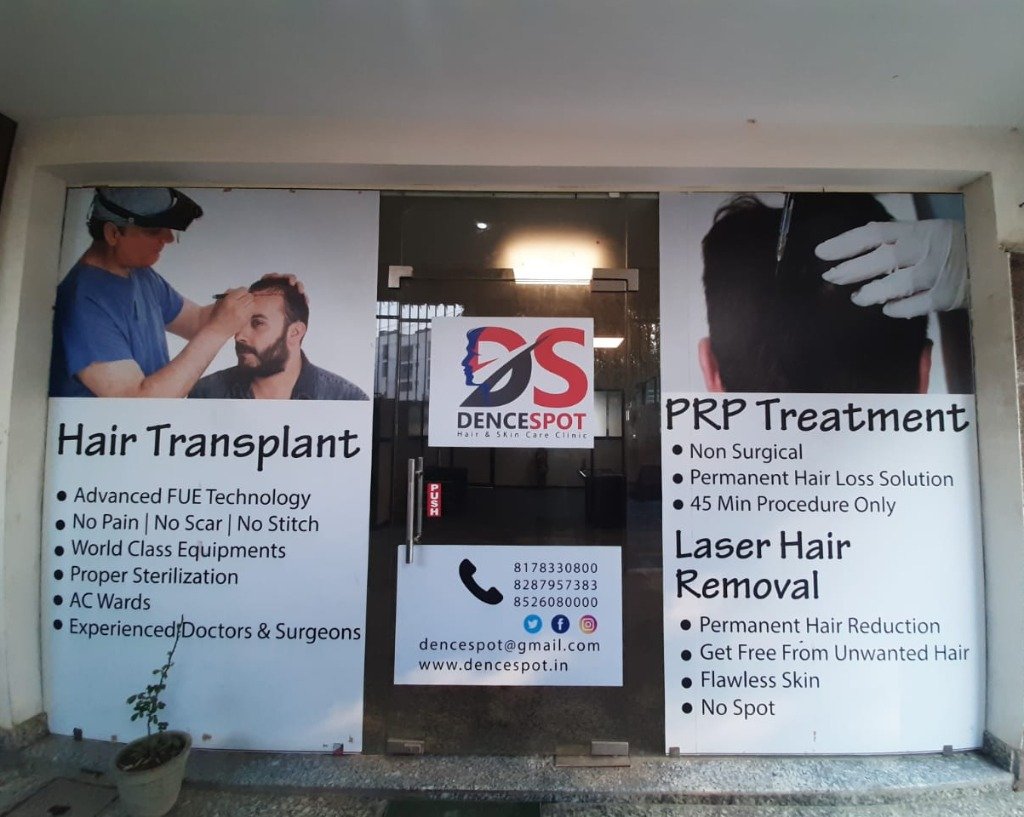
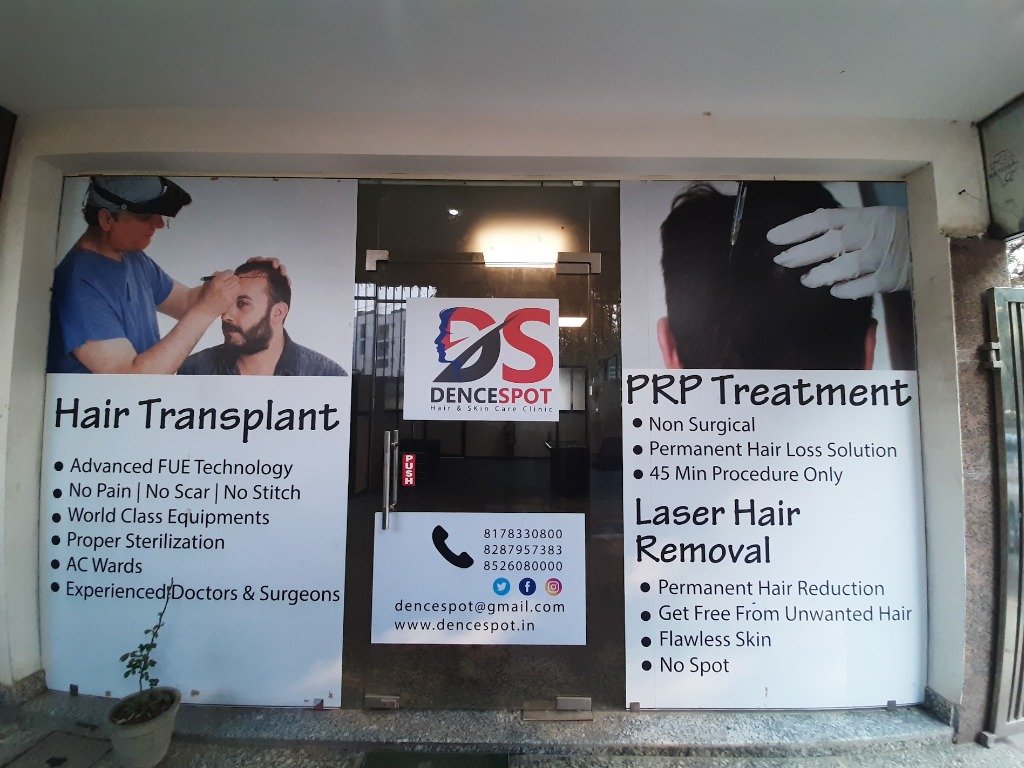
Clinic exterior with signage

Getting here

  • opposite Medanta – The Medicity — confirm wording with the clinic
  • Nearest metro and walking time — to confirm
  • Parking guidance — to confirm

Next step

Take the First Step Toward the Beard You Want

Bring your questions and your concerns. You will get a clinical assessment, a beard design drawn on your own face, an honest view of whether a transplant is appropriate for you, and a written plan if it is — with no pressure to book a date on the day.

Suitability is determined after clinical assessment. This page is patient education and does not constitute medical advice.

Quick enquiry

Your details are used only to arrange your consultation.

Call WhatsApp