DHI Hair Transplant in Gurgaon for Hairlines and Detail Zones
DHI is not a different way of taking hair out — extraction is the same as FUE. What changes is placement: each graft is loaded into a fine implanter and set in one action, giving close control of depth, angle and spacing. That control is worth most exactly where it is hardest to fake, along the hairline.
- Each graft set at a controlled angle and depth
- No pre-made incisions in the recipient area
- Suited to hairlines, temples and detail work
- Gurugram · Mon–Sat · 10:00 – 20:00
Performed & reviewed by
Dr. Nyra
MBBS, MD (Dermatology) · Owner & Chief Consultant, DenceSpot Clinic
Implanter placement
Depth, angle and direction set in one action.
Built for hairlines
Where irregularity and angle decide the result.
Short time out of body
Grafts go from extraction to placement quickly.
No linear scar
Same donor healing as FUE — dots, not a line.
Told when FUE is better
Large crowns are usually not a DHI job.
The basics, plainly
What Is a DHI Hair Transplant?
DHI stands for direct hair implantation. It describes the placement stage of a hair transplant, not the whole procedure. Follicular units are extracted from the donor area exactly as they are in FUE — individually, with a fine punch, leaving dot healing rather than a line.
The difference comes next. In a conventional FUE, recipient sites are made first across the whole area, and grafts are then placed into those waiting sites. In DHI, each graft is loaded into a hollow implanter — a pen-like instrument with a fine needle tip — and the surgeon makes the site and delivers the graft in one motion. Depth, angle, direction and spacing are all set at that moment, graft by graft.
Two practical consequences follow. Control is finer, which matters most in the first few rows of a hairline where hairs emerge at very shallow angles and any uniformity reads as artificial. And each graft spends less time outside the body between extraction and placement.
The trade-off is throughput. Loading implanters one graft at a time is slower than placing into pre-made sites, so DHI generally suits defined areas rather than very large sessions, and it usually costs more per graft. Where a whole crown needs covering, conventional FUE placement is often the better use of both time and money.
In one line
DHI is a placement method, not a separate operation. Extraction, healing and growth timelines are the same as FUE — the control over angle and depth is what you are paying for.
Suitability
Who DHI Suits
DHI earns its extra time and cost in some cases and not others. Being told which one you are is more useful than being sold the newer-sounding option.
Hairline design
The frontal rows, where single-hair grafts must sit at shallow angles with deliberate irregularity. This is where implanter control shows most clearly.
Temples and temporal points
Very fine, acutely angled hair where getting the direction wrong is immediately visible. Small graft numbers, high precision.
Refining existing density
Adding grafts between hairs that are already there, where pre-made sites risk damaging what still grows.
Women’s frontal restoration
Where shaving is unacceptable and the work is concentrated along a parting or frontal line, DHI can often be done with minimal trimming.
Small, defined sessions
A few hundred to a couple of thousand grafts in one region, where precision matters more than raw coverage speed.
Correcting an artificial hairline
Softening a line placed too straight or too low elsewhere, working around existing grafts without disturbing them.
What you are actually paying for
What the Implanter Changes, and What It Does Not
DHI is marketed hard in Gurgaon, often as though it were a categorically better operation. It is a placement technique with real advantages in specific places. Here is the honest split.
| Stage | Conventional FUE | DHI |
|---|---|---|
| Extraction | Fine punch, one follicular unit at a time. | Identical. This is where the “DHI is a different operation” claim falls down. |
| Recipient sites | All made first, then grafts placed into them. | No separate step — the implanter makes the site and delivers the graft together. |
| Angle and depth control | Set when the site is made; good in skilled hands. | Set per graft at the moment of placement. The genuine advantage, and it is worth most in the front rows. |
| Speed and session size | Faster placement; better suited to large multi-zone coverage. | Slower per graft. Large crowns become a long and expensive way to get the same coverage. |
| Donor scar, healing, growth | Dot healing; shedding then regrowth from three to four months. | The same. DHI does not shorten recovery or speed up growth, whatever the advertising says. |
A note on “DHT hair transplant”
Some clinic pages advertise a “DHT hair transplant”. DHT is dihydrotestosterone — the hormone involved in pattern hair loss, not a surgical technique. The technique meant is DHI, direct hair implantation. If a page selling you surgery cannot keep the two apart, that tells you something.
On “unshaven DHI”
DHI does make it easier to work without shaving the recipient area, which is why it is often advertised that way. The donor still needs trimming for extraction, though, and unshaven work is slower and practical only for smaller graft numbers. What is realistic in your case is decided at the consultation, not promised in advance.
Why here
Why Have DHI Done Here?
You are told when not to have it
If your case is a large crown, we will say conventional FUE placement gives you the same coverage for less time and less money. DHI is recommended where it earns its cost.
Hairline drawn before you lie down
Position, shape and irregularity agreed with you sitting upright with a mirror. Implanter precision is worthless behind a badly designed line.
The doctor holds the implanter
Placement is the stage that decides how natural the result looks. It is not handed to a technician while the doctor moves on.
Graft handling timed
Extraction and placement are run so grafts spend as little time out of the body as practical, and holding conditions are consistent through the session.
Priced per plan, in writing
You are told the graft number, the per-graft difference against FUE and what it buys you, before you book a date.
Reviewed on photographs
Standardised angles and lighting at fixed review points, so hairline density is assessed against a record.
Start to finish
Your DHI Journey
Seven stages, in the order you will experience them.
Consultation
History, medication review, and what you want the hairline to do.
Scalp & donor exam
Density and calibre measured, pattern staged, baseline photographs.
Technique decision
Whether DHI, FUE placement or a combination fits your zones and budget.
Hairline design
Drawn on your face, sitting upright, checked in a mirror and approved.
Written plan
Graft number, technique per zone, timeline and itemised cost.
Procedure day
Extraction, loading and implanter placement under local anaesthetic.
Reviews to 12 months
Shedding, regrowth and hairline density tracked photographically.
On the day
How a DHI Procedure Works
The first half of the day is identical to FUE. The difference is in how the grafts go in.
Design and consent
The hairline is drawn while you sit upright and checked in a mirror before anything begins. With DHI the line is executed graft by graft, so agreeing it first matters more, not less.
Donor trim and anaesthesia
The donor area is trimmed so the punch can follow each follicle, then anaesthetised locally. How much of the recipient area is trimmed depends on the plan agreed with you.
Extraction
Follicular units are removed one at a time with a fine punch, spread across the donor so density stays even. Identical to FUE.
Sorting and loading
Grafts are sorted by hair count under magnification, then loaded individually into implanters — single-hair units for the front rows, multi-hair units for behind.
Implanter placement
Each graft is placed in one action that sets site, depth, angle and direction together. The front rows go in at shallow angles with deliberate irregularity so the line does not read as a row.
Aftercare and discharge
The donor is dressed, medication and written aftercare issued, washing explained, and the first review booked. You go home the same day.
Before the day
- Bring your full medication list, including supplements.
- Stop alcohol and avoid blood thinners as instructed.
- Confirm the shaving plan in advance so there are no surprises.
- Eat properly — DHI sessions run long by nature.
- Wear a shirt that buttons rather than a pullover.
Recovery & results
What Happens After DHI
Recovery after DHI follows the same course as FUE, because the donor and the biology are the same. A general guide to the phases most patients describe.
Crusting settles
Small crusts around each placed graft and pinpoint healing in the donor. Washing starts as instructed; most people are back at desk work within a few days.
Shedding
Placed hairs commonly fall while the follicles stay in place. Expected. DHI does not avoid this phase, whatever you may have read.
New growth
Fine hairs begin to appear along the treated zones, unevenly at first. A new hairline looks patchy at this stage and is not yet judgeable.
The line fills in
Density builds and hairs coarsen. Irregularity that looked odd early on starts reading as natural as surrounding hairs mature.
The real result
A fair assessment of the hairline and its density. Non-transplanted hair behind it keeps thinning on its own schedule.
Individual recovery and growth vary. DHI does not shorten recovery, guarantee higher graft survival or produce faster growth than well-executed FUE — claims to the contrary are marketing. Timelines here are general patient education, not a promise of results.

Who performs and reviews this treatment
Dr. Nyra, MBBS, MD (Dermatology)
Owner & Chief Consultant, DenceSpot Clinic
Qualified MBBS from Dr. D. Y. Patil Medical College, and holds an MD in Dermatology. Three years of clinical work in Germany followed — two at Bio Hair Clinic and one at St. Georg Klinikum Eisenach — before establishing DenceSpot in Gurugram.
Why the design matters more than the instrument: an implanter gives you control over the angle of every graft, which is genuinely valuable — and completely wasted behind a hairline drawn in the wrong place. The commonest reason a transplant looks obviously done is not the tool used to place the grafts. It is a line set too low or too straight for the face it sits on, which no amount of precision can rescue later.
Qualification
MBBS, MD (Dermatology)
Training
3 years, Germany
Specialization
Dermatology
Cost guidance
DHI Hair Transplant Cost in Gurgaon
DHI usually carries a higher per-graft rate than conventional FUE, because loading and placing each graft individually takes more chair time and more instruments. Whether that premium is worth paying depends on which zones you are treating — which is a clinical question, not a sales one.
Number of grafts
Counted from the mapped plan, not estimated
Zones treated
Hairline and temples versus broad crown coverage
Technique mix
Whole-case DHI or DHI at the front with FUE behind
Shaving approach
Unshaven and partial-shave work takes longer
Session structure
One session or staged, and how long each runs
Supporting treatment
Medical therapy or PRP running alongside
Be careful with clinics that price DHI as a premium product and then recommend it for everything. If DHI is the answer to every case regardless of where the loss is, the recommendation is about the price list rather than your scalp. A combined plan — DHI at the front, FUE placement behind — is often the sensible answer and is usually cheaper than either sold whole.
Working through the numbers first? See our full breakdown of hair transplant cost in Gurgaon, including what changes the per-graft rate.
Get a Personalized Treatment Estimate
Send photos of the front, crown and donor area on WhatsApp, or request a call back. You will get an assessment appointment — not a sales pitch.
Send photos on WhatsApp Request an estimate by formYour details are used only to arrange your consultation.
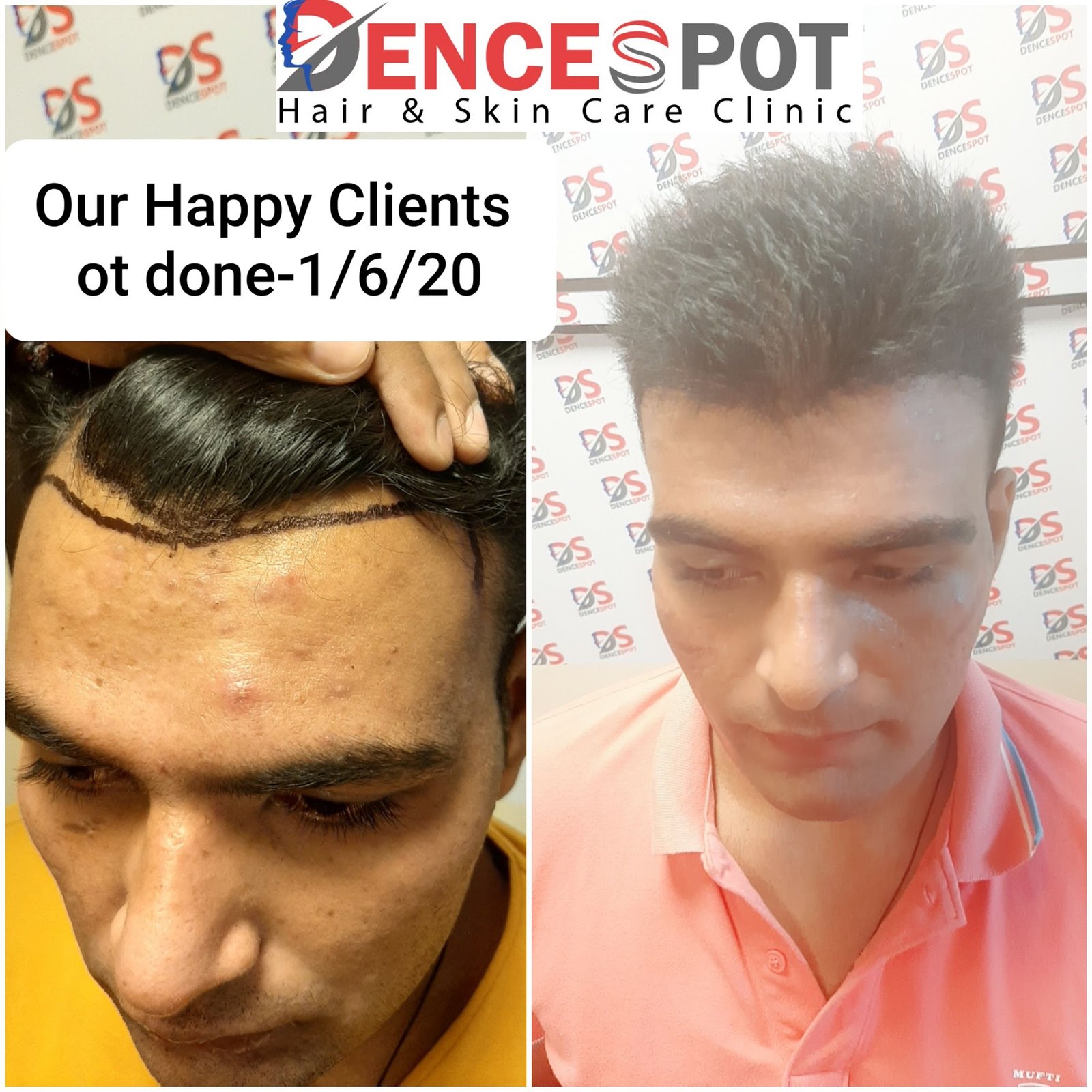
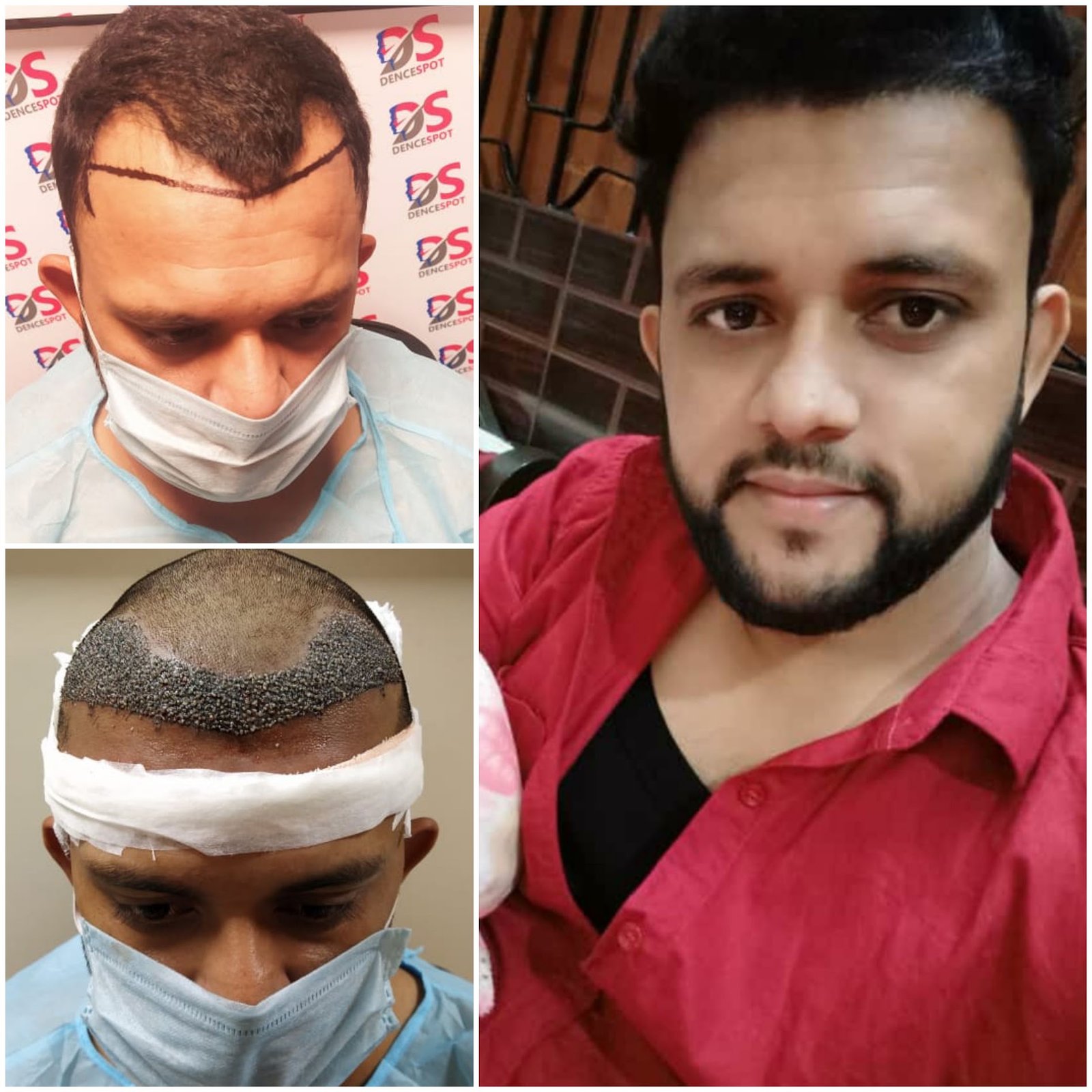
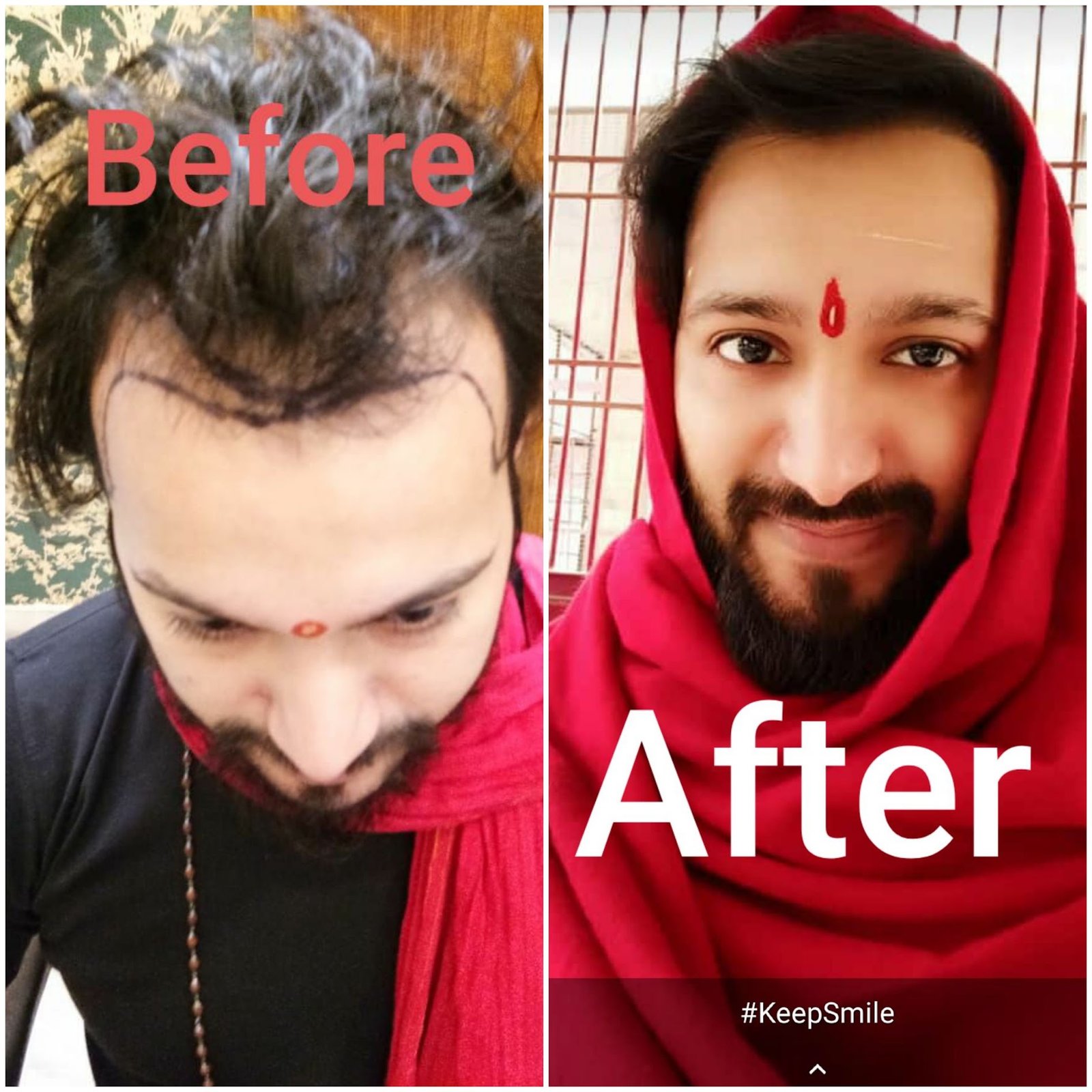
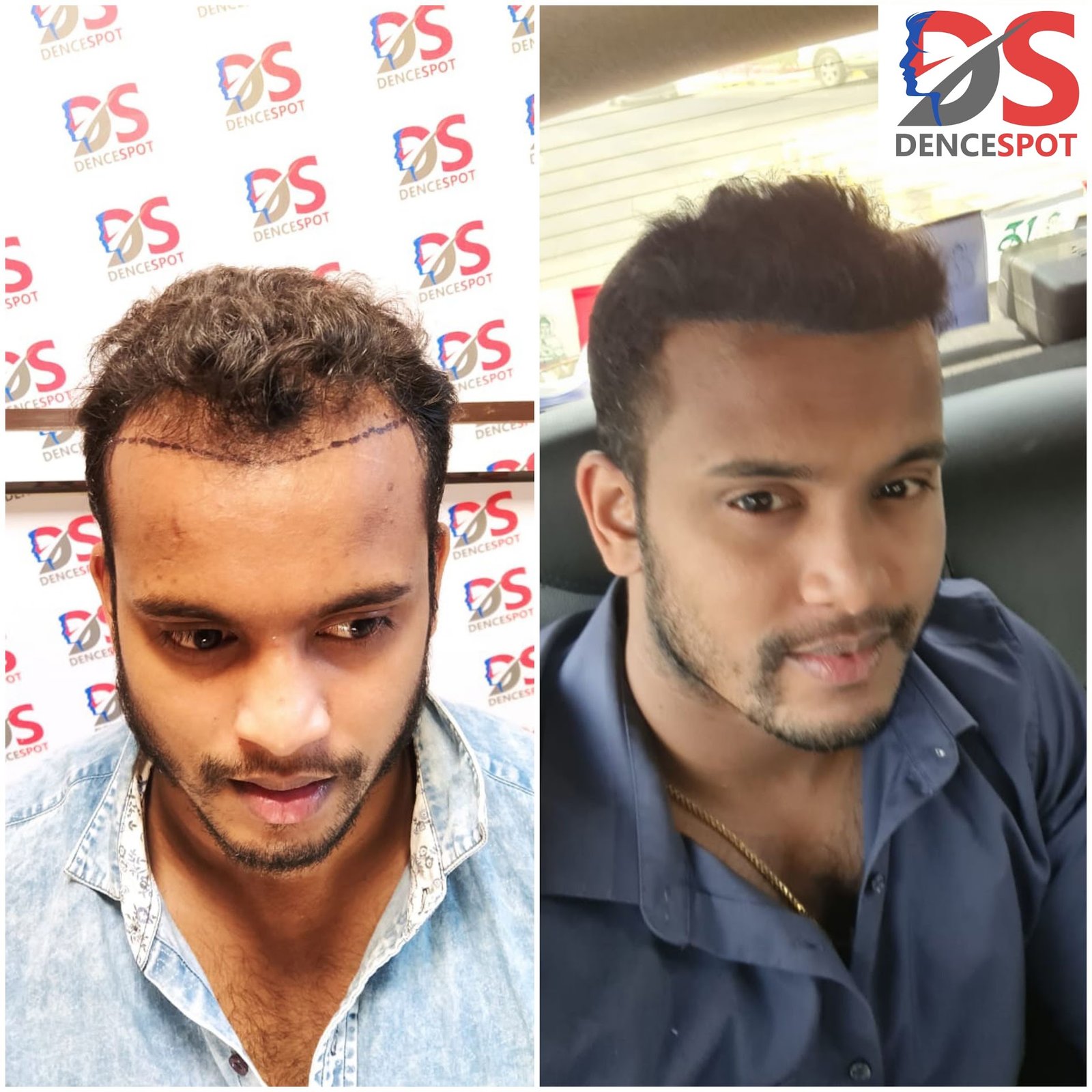
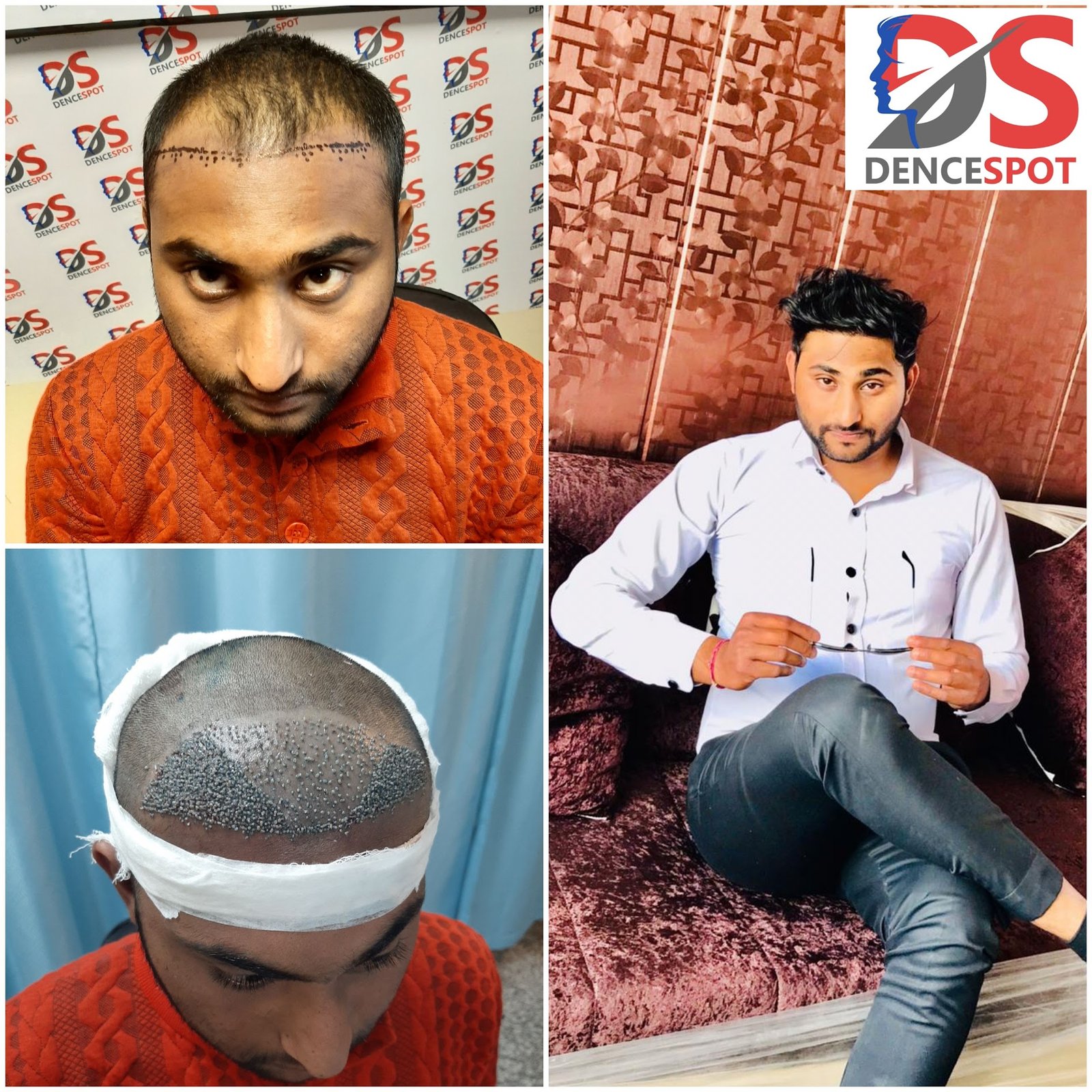
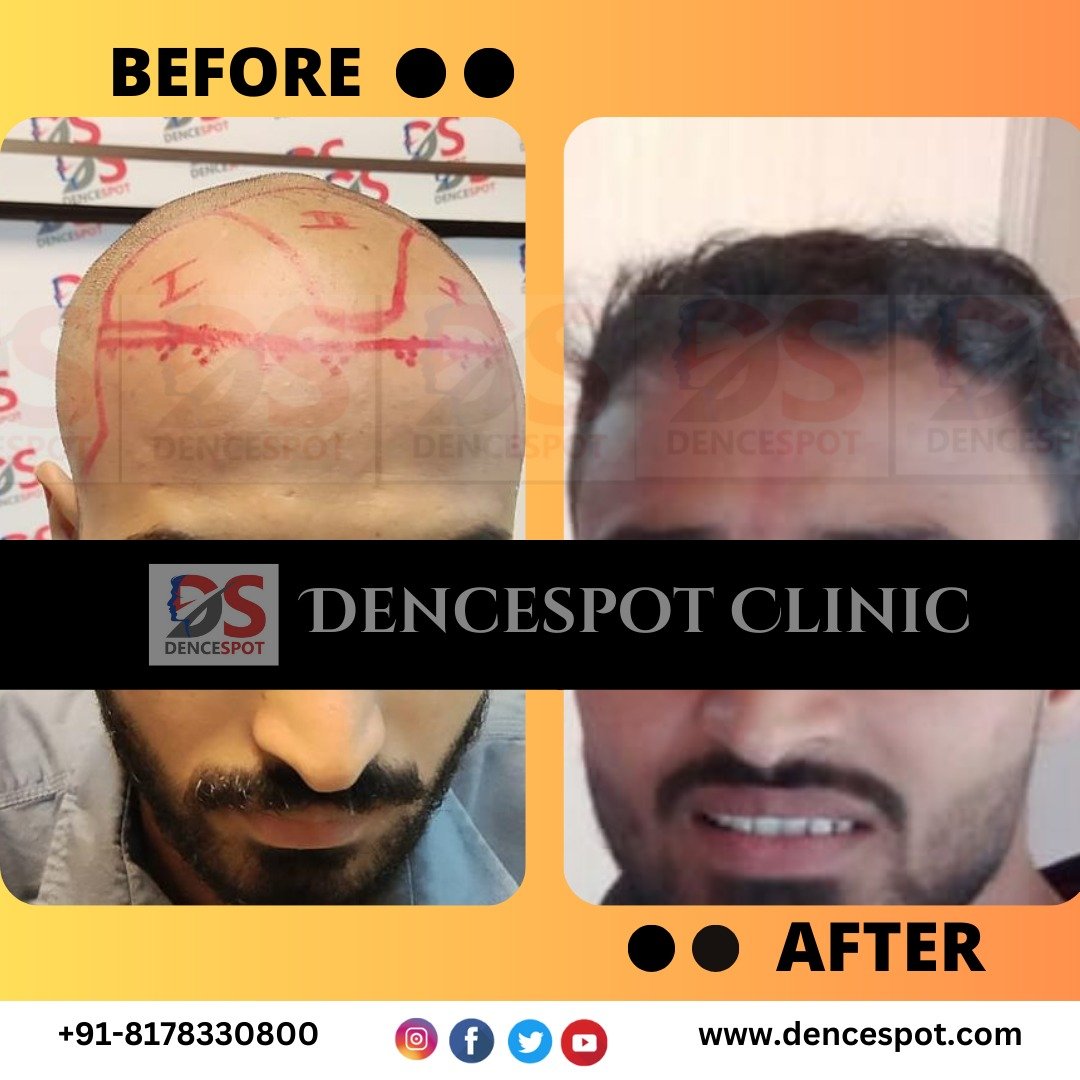
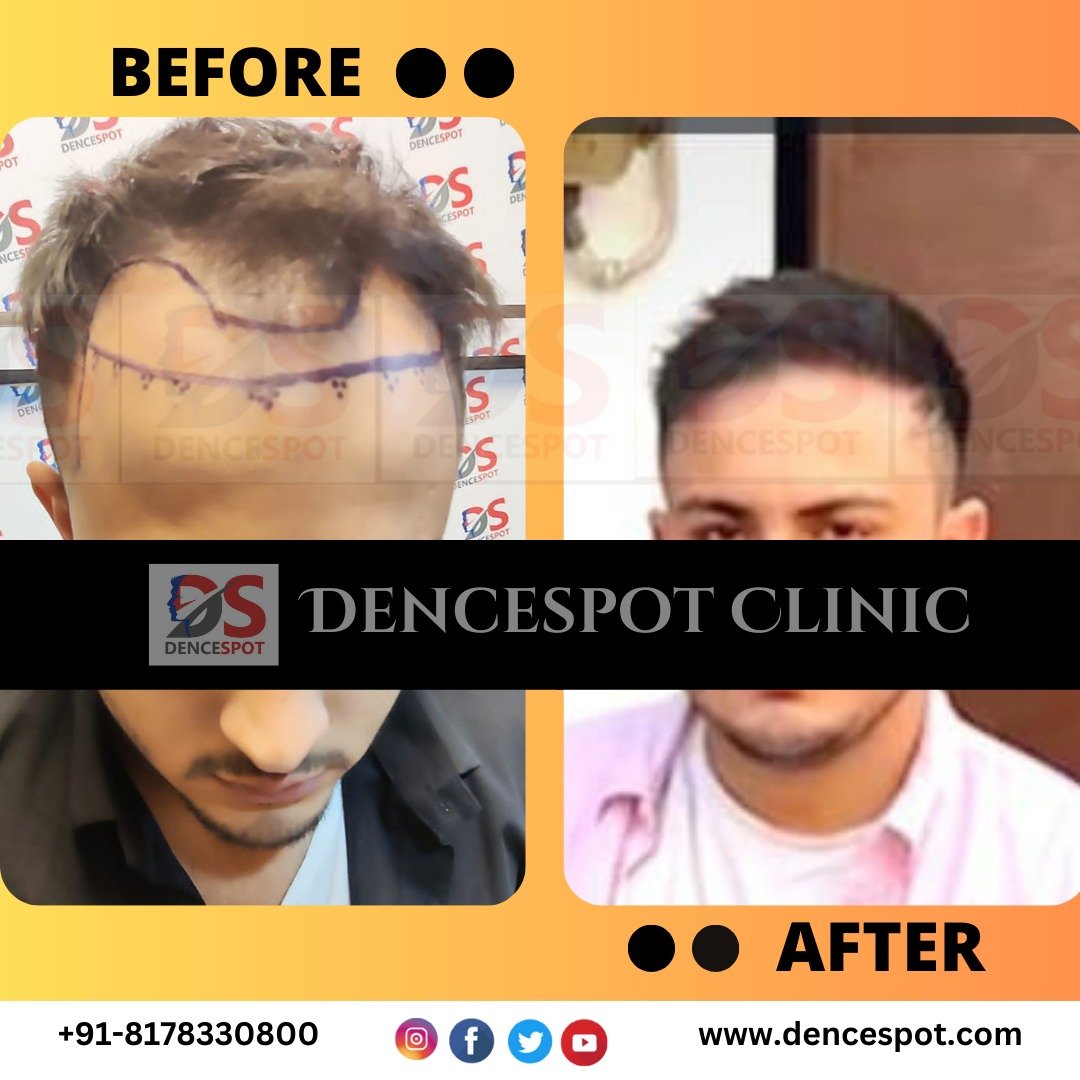
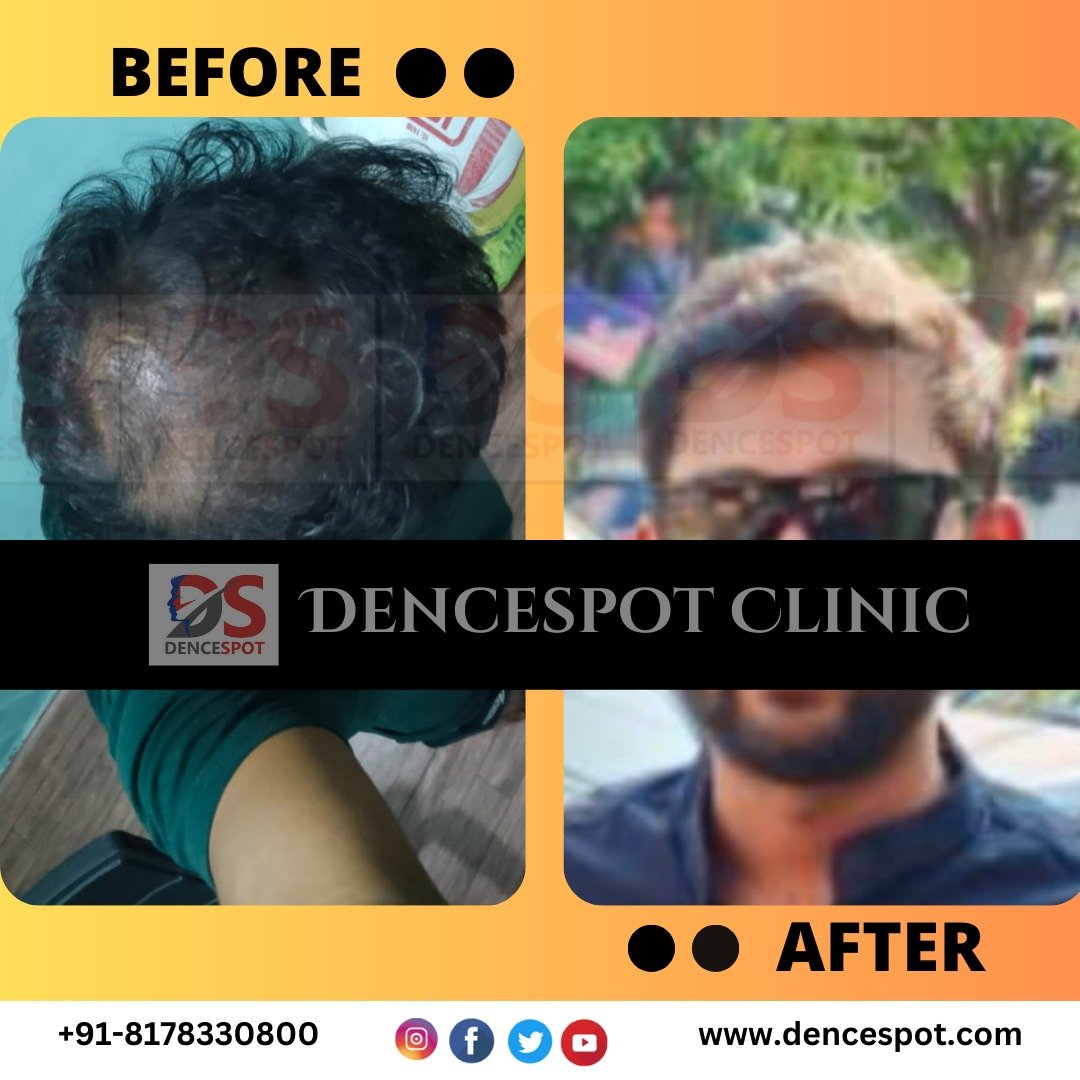
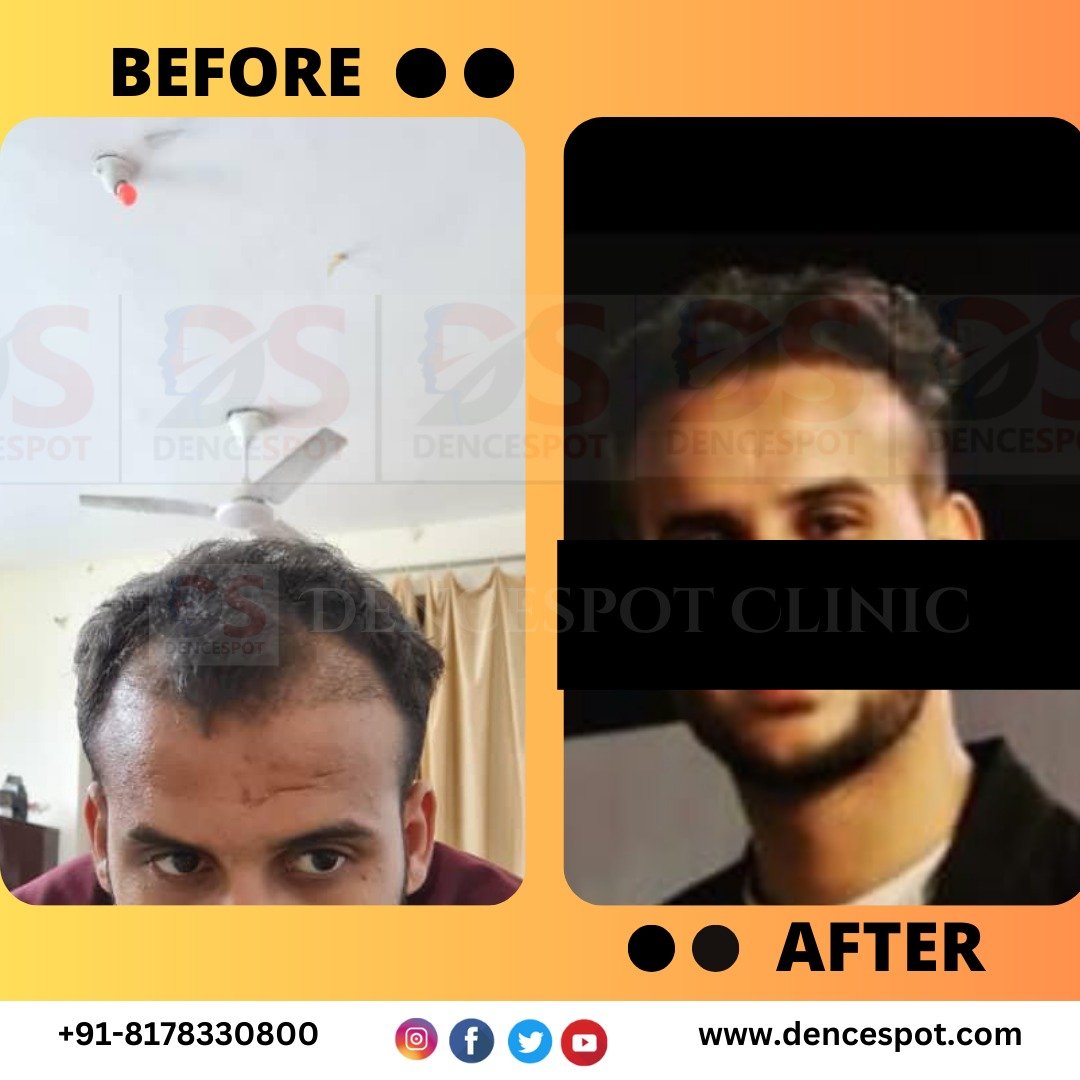
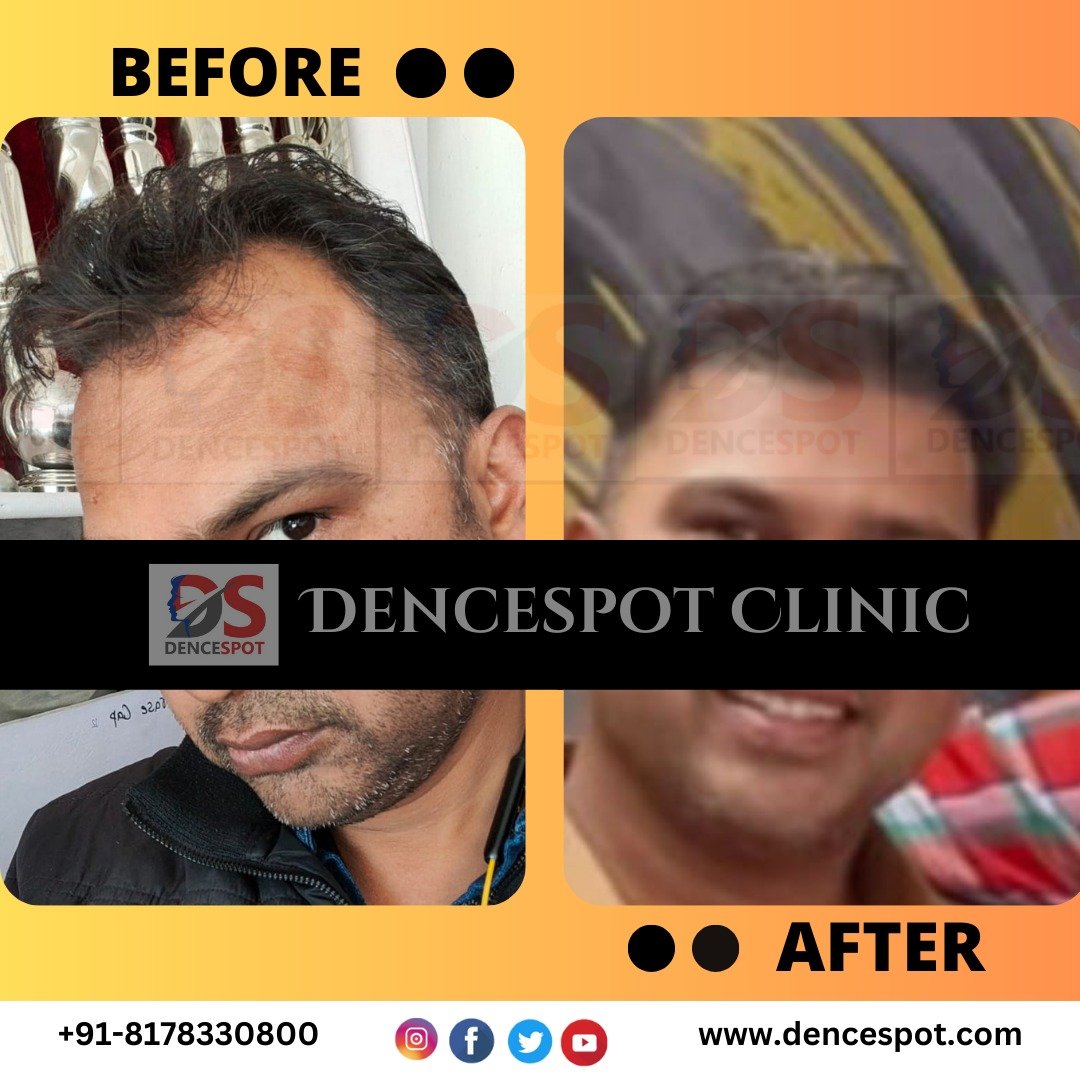
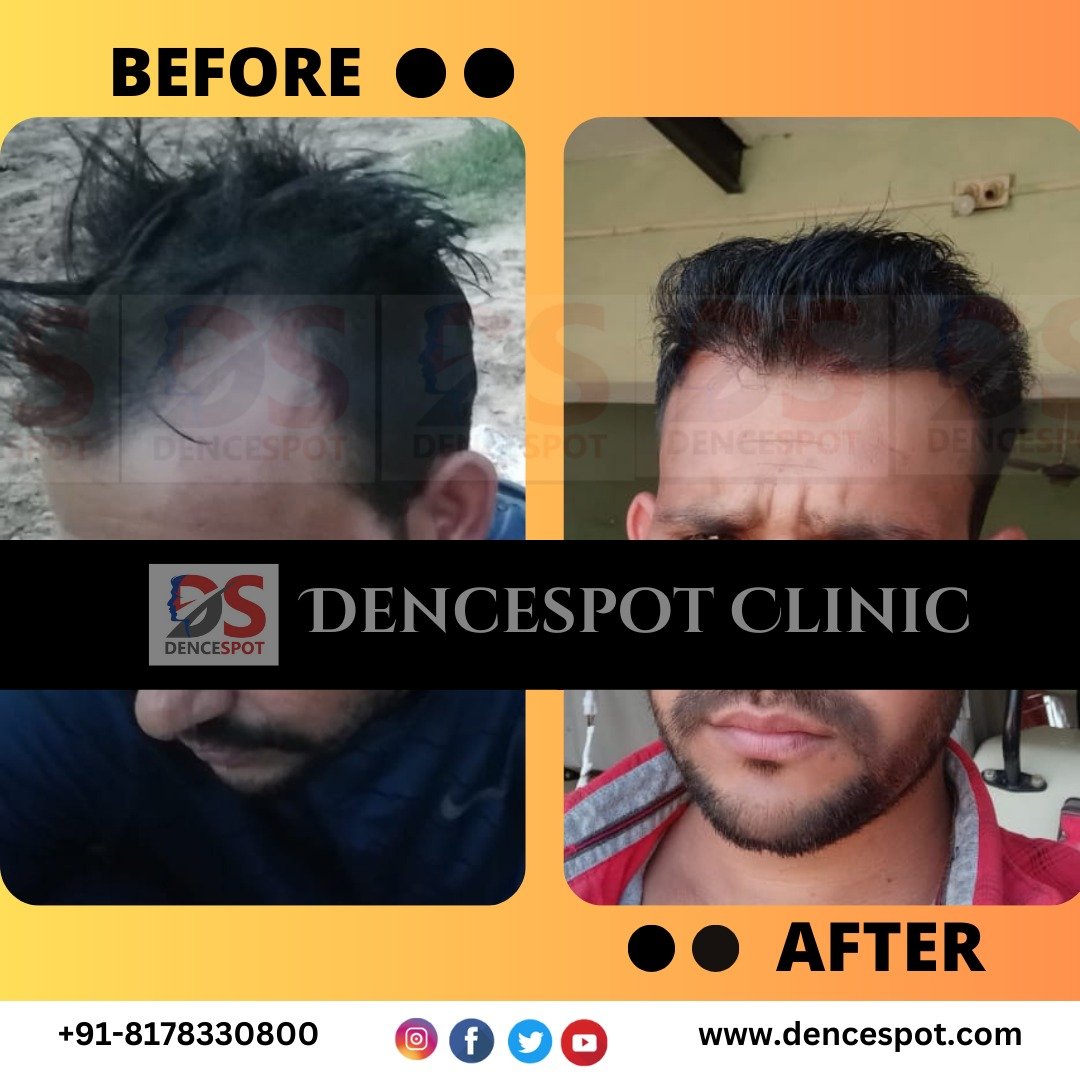
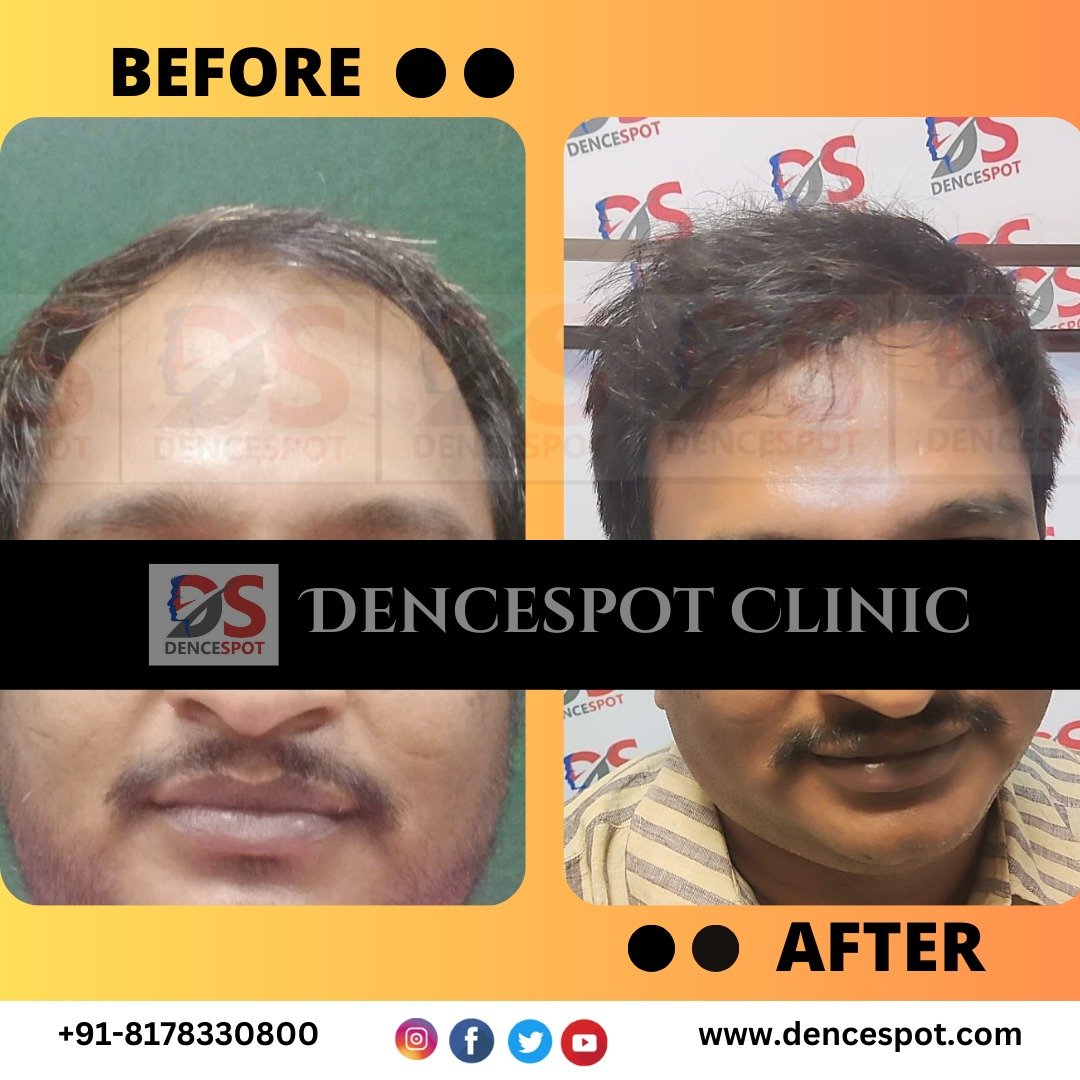
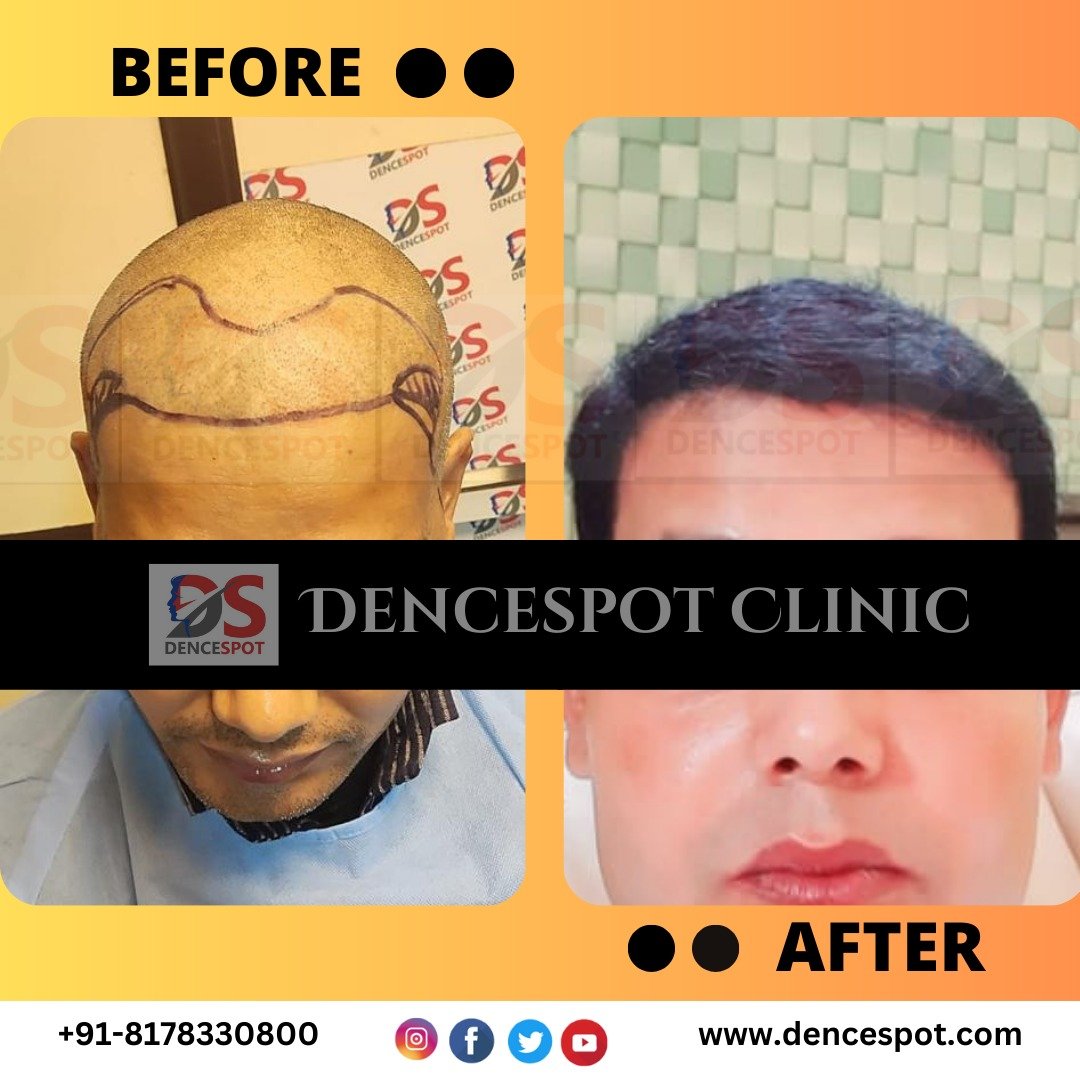
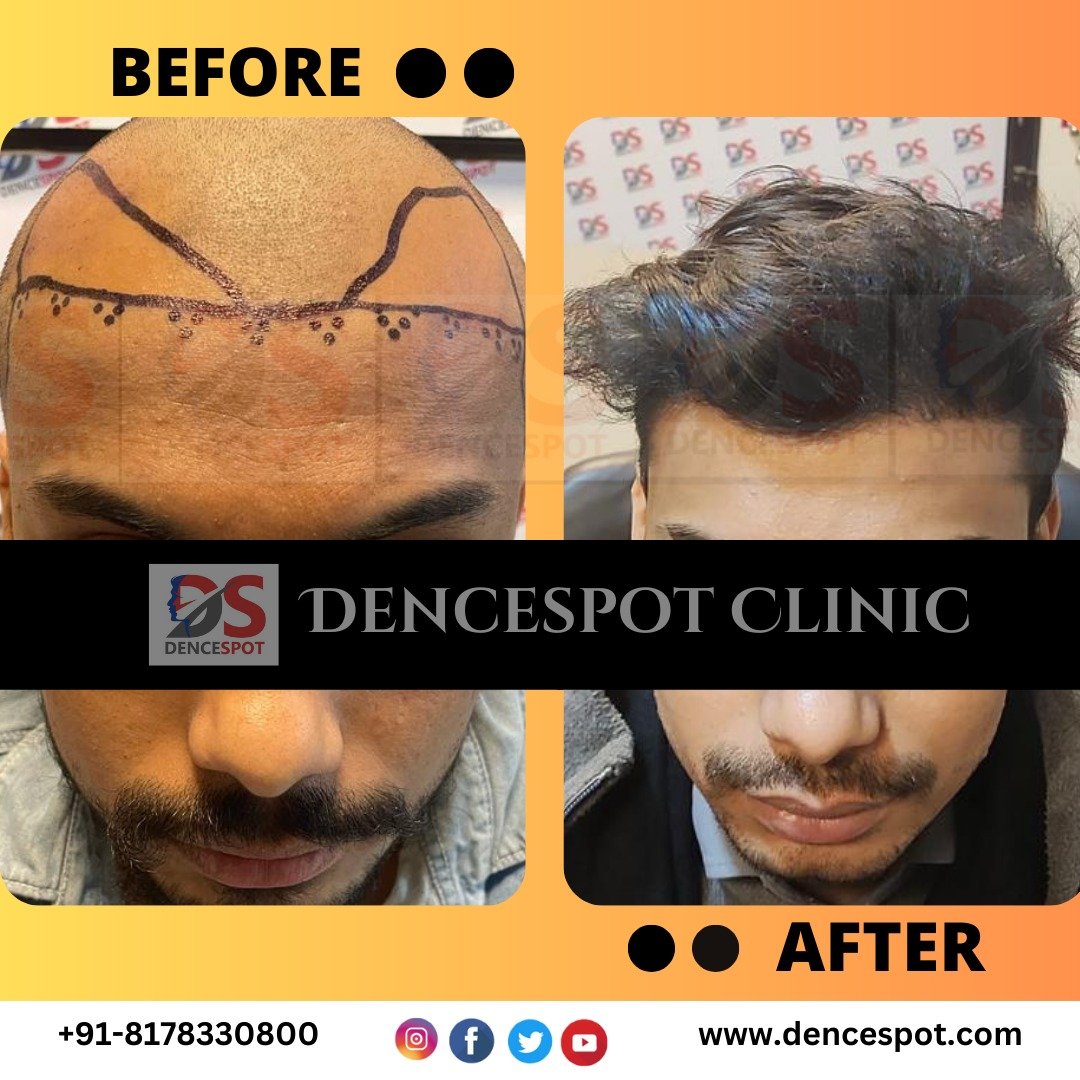
Before & After Hair Transplant Cases in Gurgaon
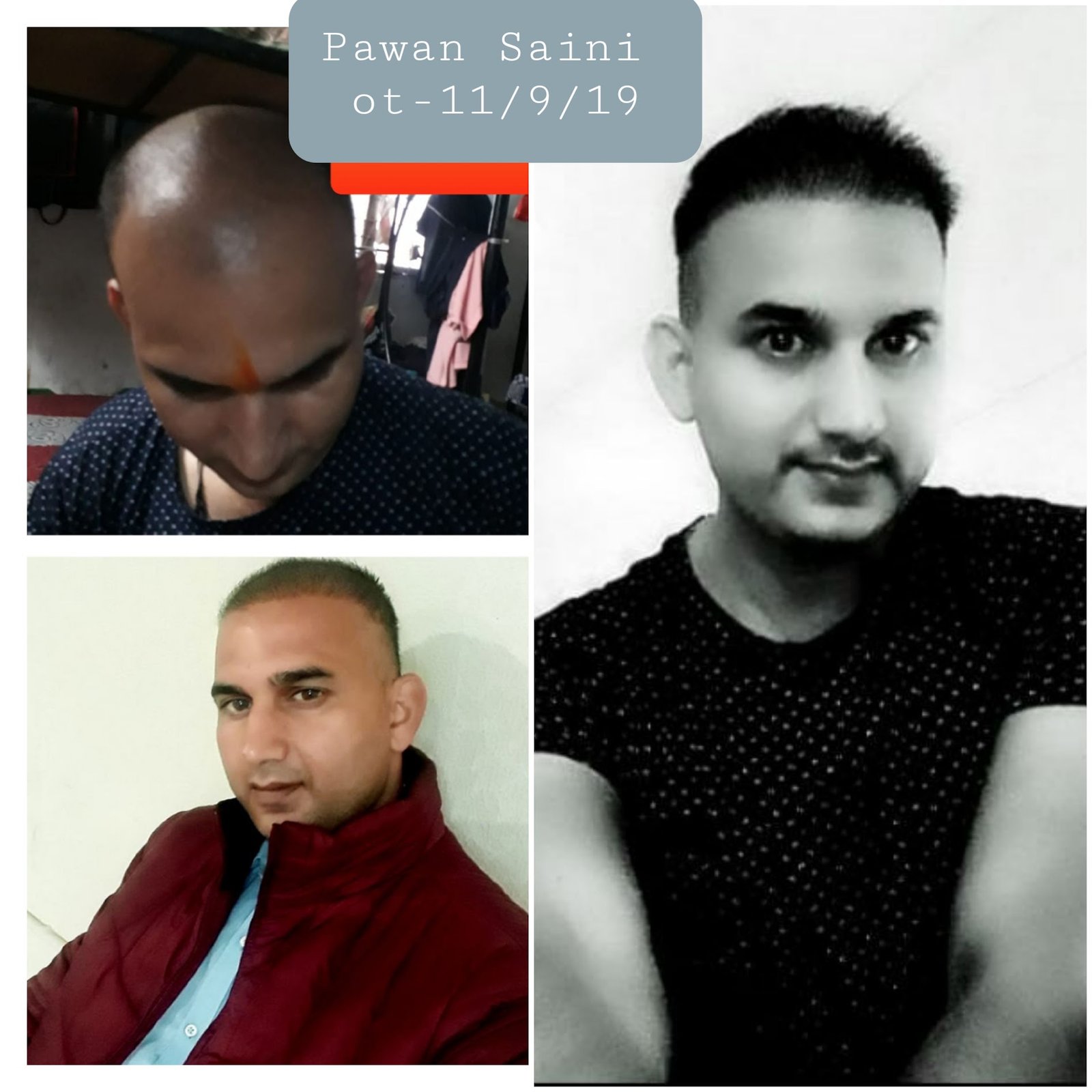
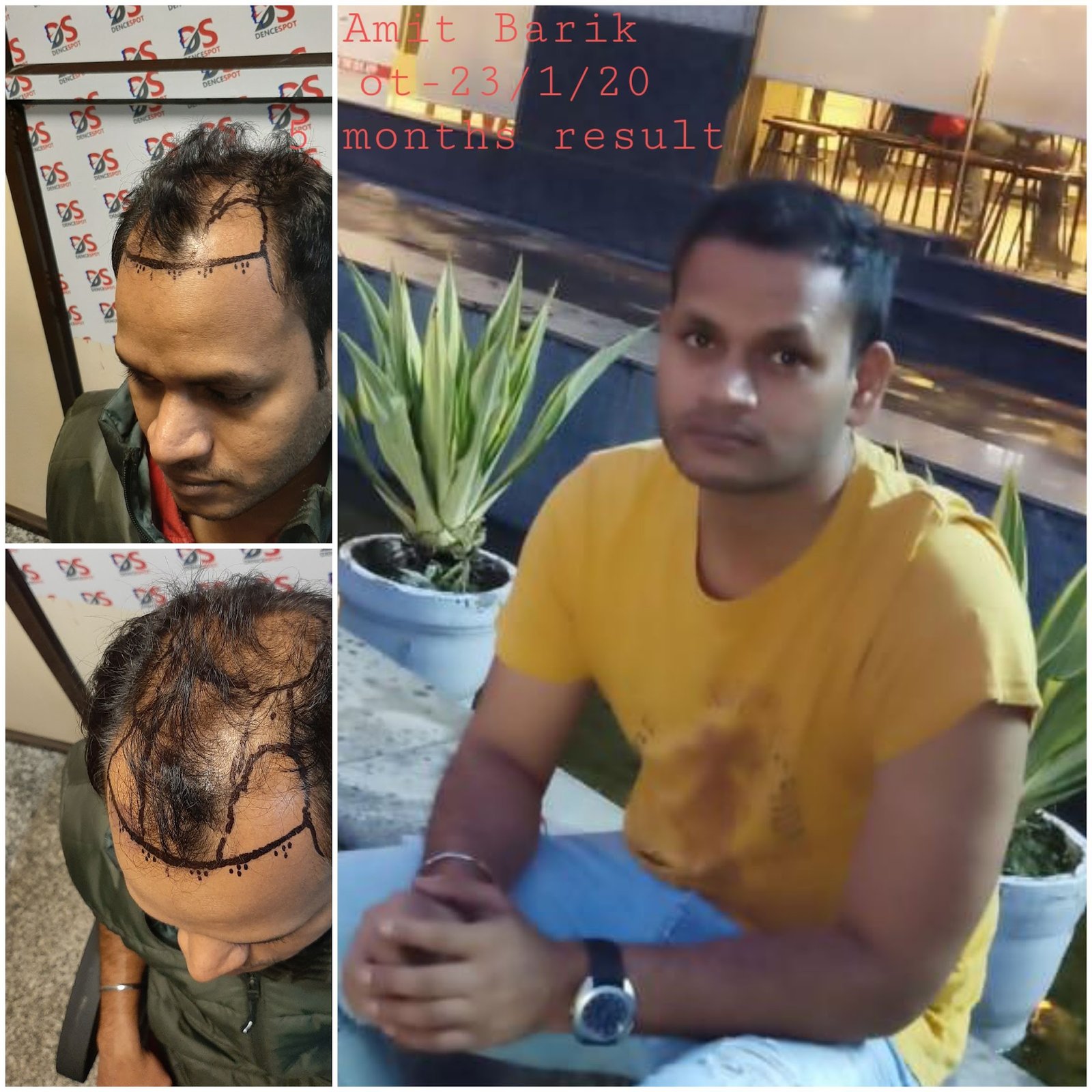
Consented photographs, with the hair never digitally altered, from patients treated personally by Dr. Nyra at DenceSpot Clinic, Sector 39 Gurugram. Results vary between patients, and hair restoration is judged at ten to twelve months.
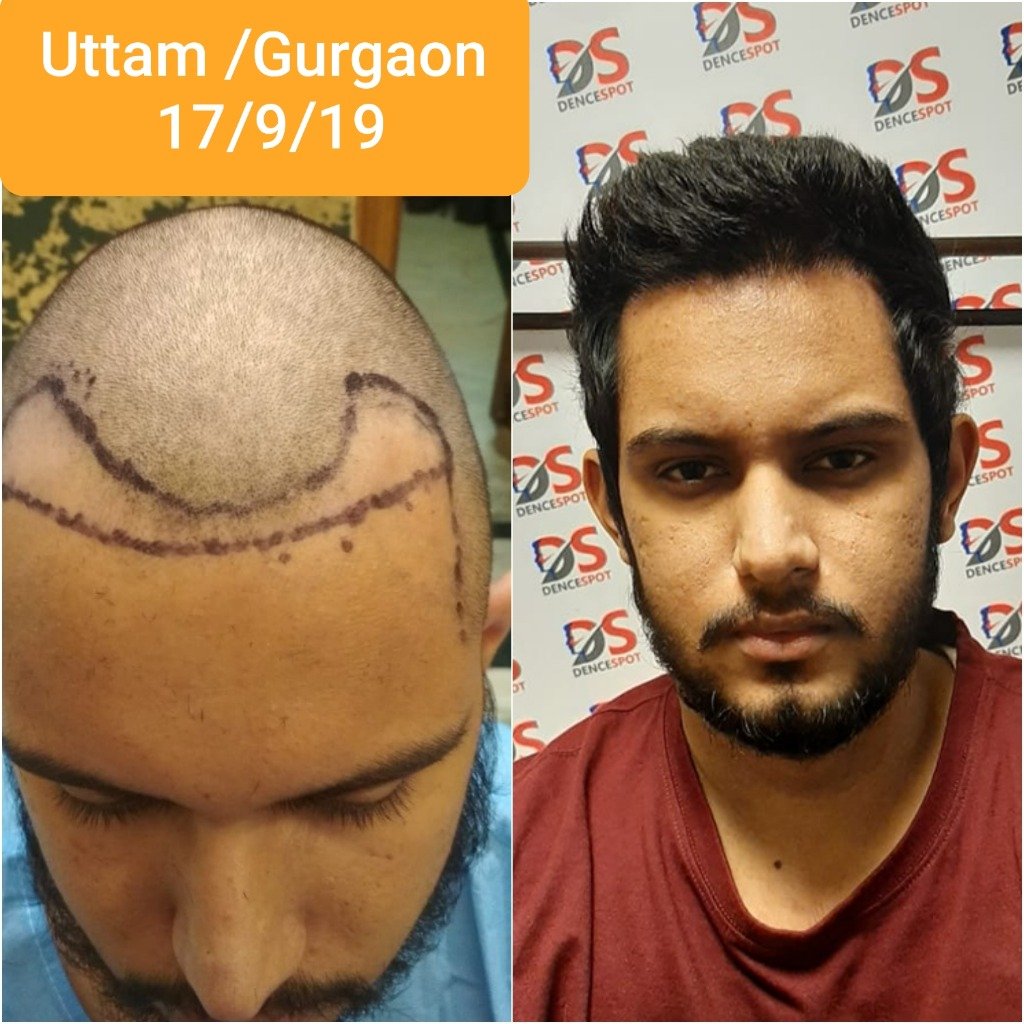
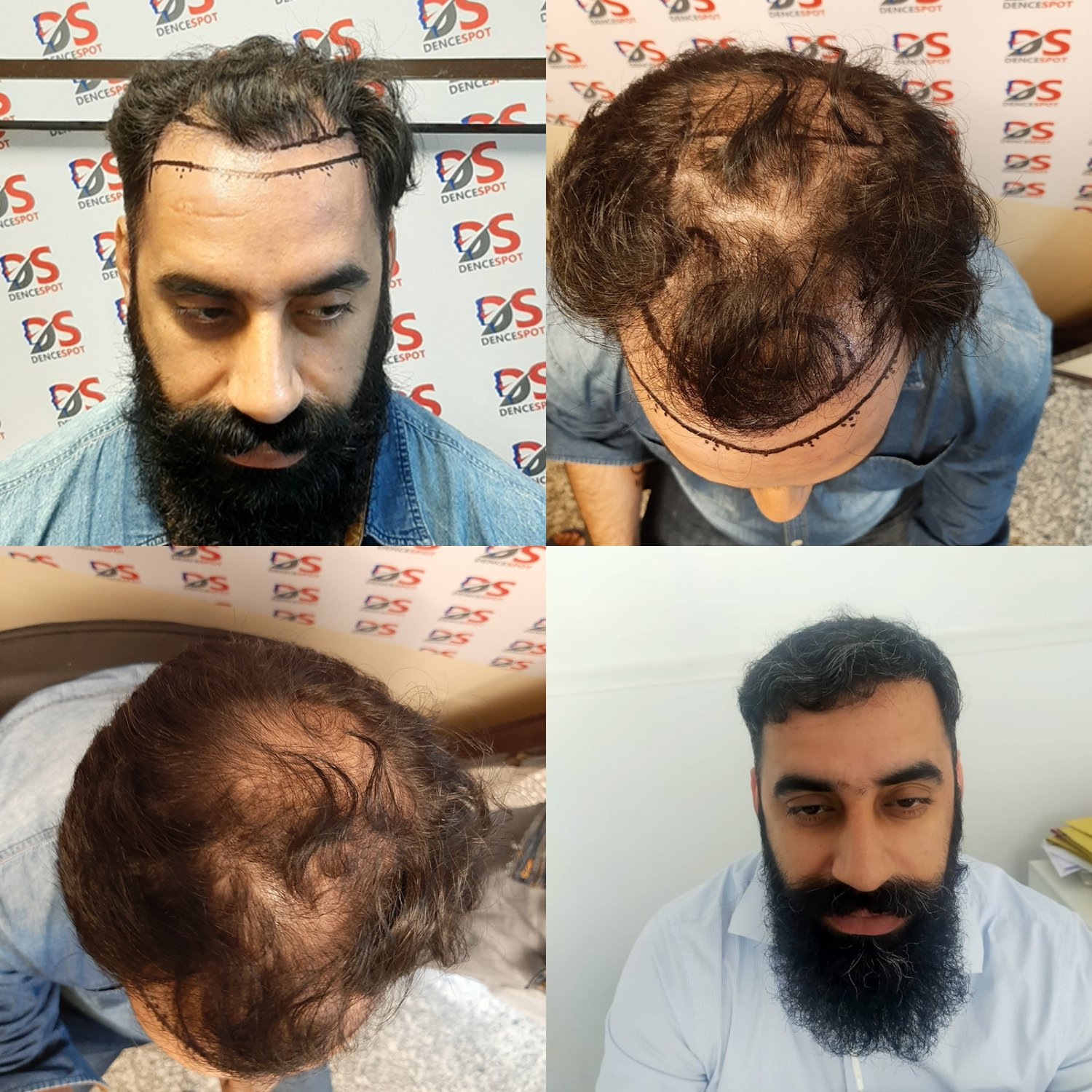
Uttam — Hairline & Temple Restoration
Receding hairline & frontal scalp completely restored with age-appropriate hairline design and dense graft placement.
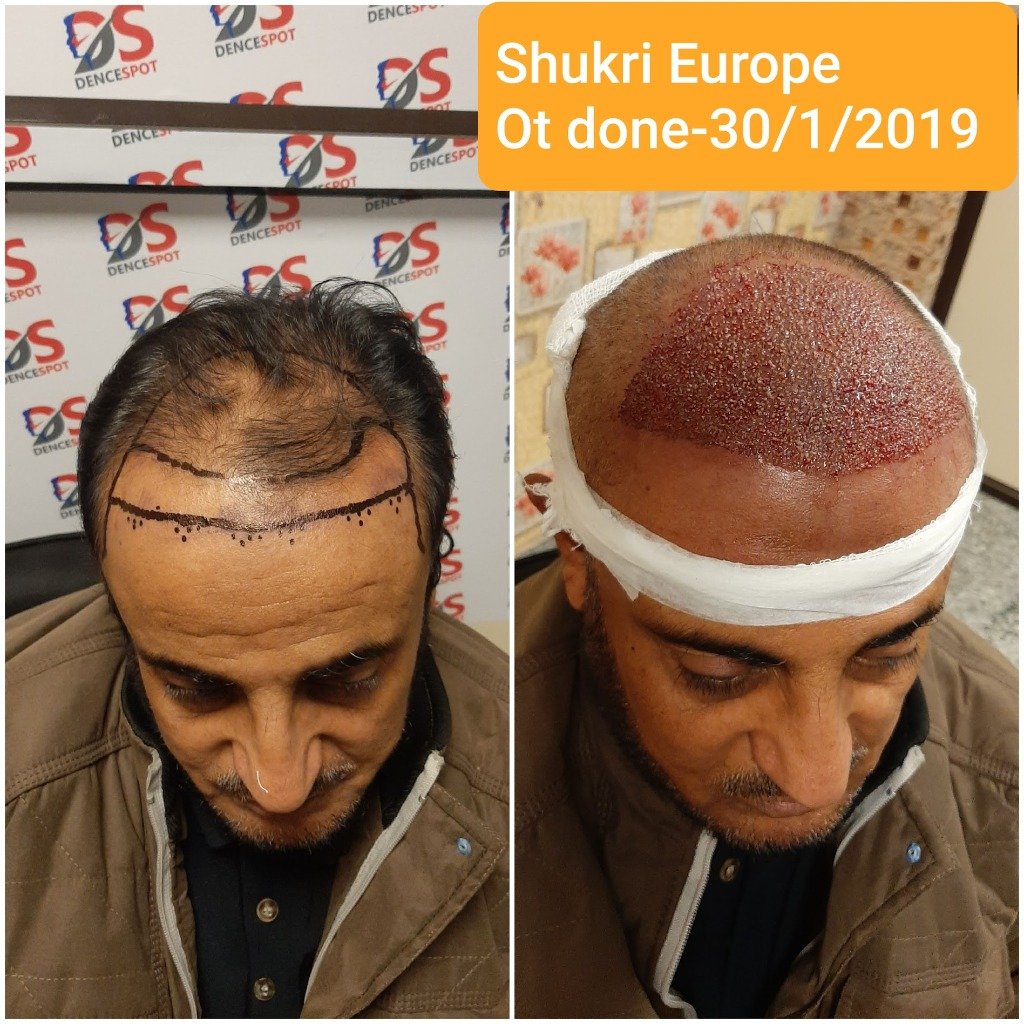
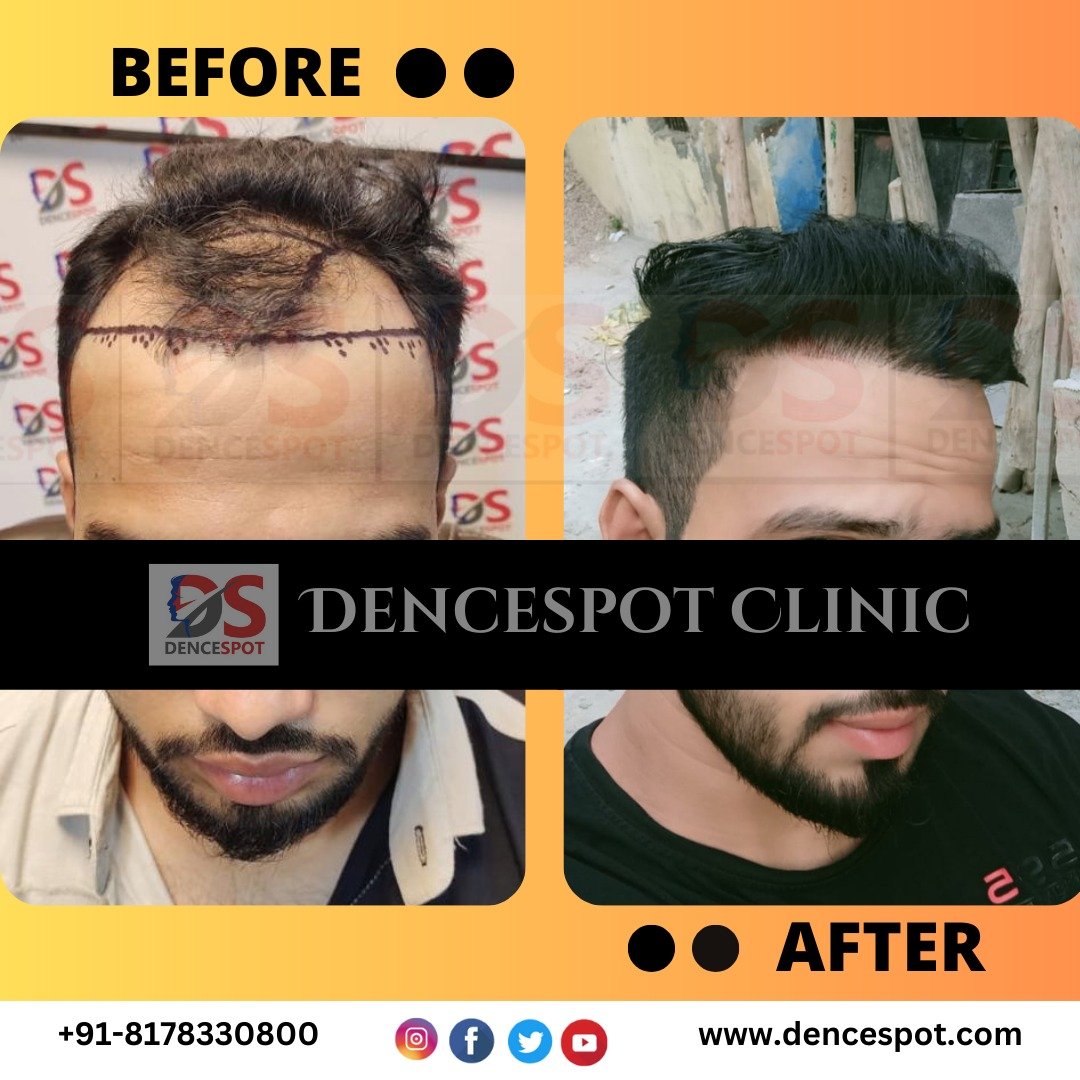
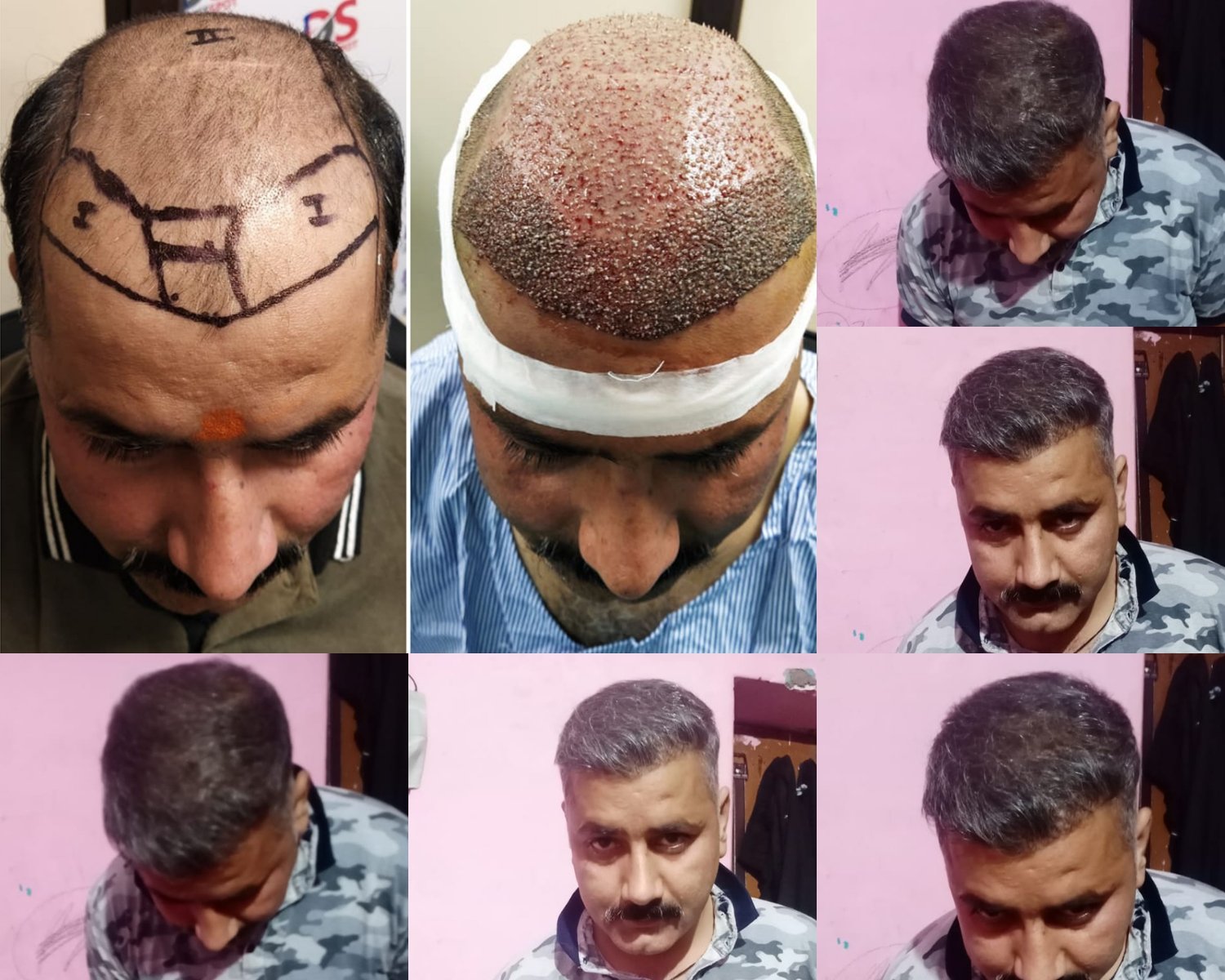
Shukri — Frontal Zone, Procedure Day
Hairline design and 2,800 grafts photographed immediately after placement. Growth is judged at ten to twelve months, so this shows the work, not the outcome.
Visit the clinic
DHI Hair Transplant at Our Gurgaon Clinic
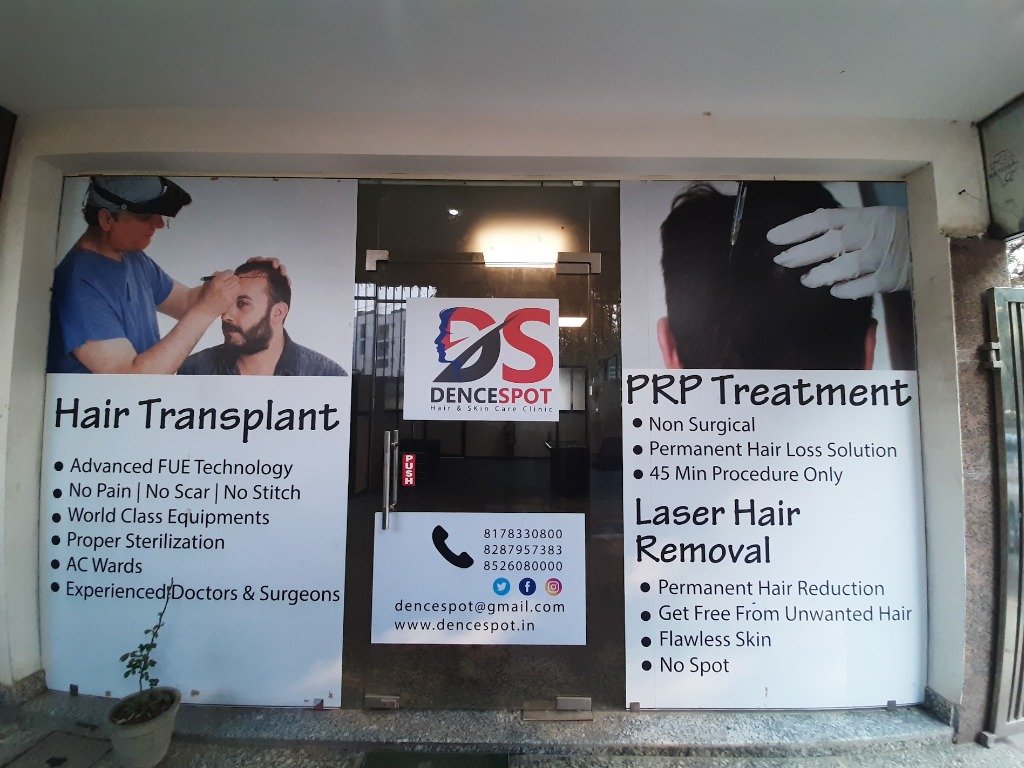
Consultation, procedure and every follow-up happen at our Sector 39 clinic in Gurugram, with the same doctor placing the grafts as designed the hairline. Patients travel to us from across Gurugram and neighbouring parts of South Delhi.
- Address
- 1123, Sector 39 Road, Jharsa, C Block, Sector 39,
Gurugram, Haryana 122003 - Phone
- +91 81783 30800
- Message +91 81783 30800
- dencespot@gmail.com
- Hours
- Mon–Sat · 10:00 – 20:00Sunday · closed
Getting here
Next step
Get an Honest Answer on Whether DHI Is Worth It for You
Bring your questions and your medication list. You will get a donor assessment, a hairline drawn on your own face, and a straight recommendation on whether DHI, FUE or a combination fits your case — including what the difference actually costs.
Suitability is determined after clinical assessment. This page is patient education and does not constitute medical advice.
Quick enquiry