Recovery guidance

Hair Transplant Aftercare & Recovery Timeline

Two timelines run at once after a hair transplant, and confusing them is what causes most of the worry. Looking normal again takes about ten to fourteen days. Seeing the result takes nine to fifteen months. Almost everything patients panic about happens in the gap between the two.

This page sets out what happens week by week, how the first wash is done, why transplanted hair falls out around week three, what to avoid and for how long, and the specific signs that mean you should call the clinic rather than wait.

  • Written aftercare instructions before you leave
  • First wash demonstrated, not just described
  • Follow-up reviews scheduled through the first year
  • A number to call if something concerns you
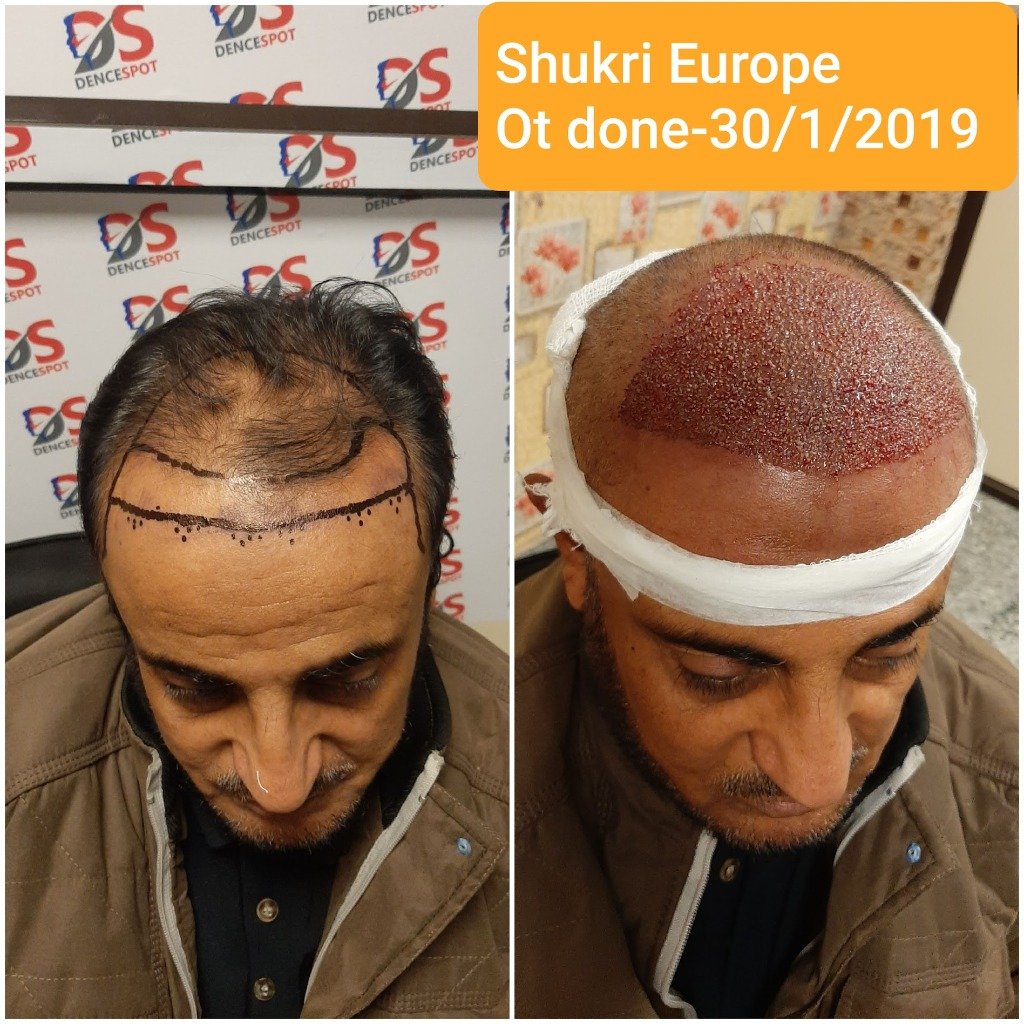
Recipient area at the day-five review, crusting clearing

Medically reviewed by

Dr. Nyra

MBBS, MD (Dermatology) · Owner & Chief Consultant, DenceSpot Clinic

The first 48 hours

The Only Part That Is Genuinely Fragile

For the first two days, transplanted grafts are held in place by nothing more than early clot formation. They can be dislodged — by a pillow, a towel, a hat pulled off carelessly, or scratching in your sleep. After roughly ten days they are secure and effectively cannot be knocked out. Everything restrictive about early aftercare exists to cover that first window.

1

Sleep propped up

Roughly 45 degrees, on your back, for the first few nights. This is the single most effective thing you can do to limit forehead swelling, which peaks around day three and is the most common visible after-effect.

2

Do not touch

No scratching, no rubbing, no checking with your fingertips. Itching is normal as healing starts and is managed with the saline spray you are given, not with your hands.

3

Keep it boring

No exertion, no bending at the waist, no alcohol, no smoking. Raised blood pressure over freshly placed grafts is the thing to avoid, and it is easier to avoid than to correct.

Swelling is not a complication. Forehead and occasionally around-the-eye swelling is common from about day two, peaks near day three and settles over the following few days. It looks alarming and is almost always uneventful. Sleeping elevated and cold compresses on the forehead — never on the grafts are the usual measures. Swelling that spreads or is still worsening after around day four is different, and warrants a call.

Week by week

The Recovery Timeline

General patient education. Your own instructions take priority over anything on this page — protocols legitimately differ between clinics, and yours is written for your procedure.

Hair transplant recovery timeline by phase, with what happens and what to avoid
When Phase What is happening Avoid
Day 0 – 2 The critical window Grafts are held only by early clot formation and are genuinely dislodgeable. Swelling of the forehead is common and peaks around day three. Sleep propped up. Touching or scratching the recipient area, bending, any exertion
Day 3 – 5 First wash Crusting forms around each graft. The first wash is usually done at the clinic or demonstrated to you, because technique matters more here than at any other point in recovery. Direct shower pressure on the recipient area, rubbing, picking crusts
Day 6 – 10 Crusts clear Crusting lifts gradually with gentle washing. Most people are comfortable returning to desk work within this window. The donor area is typically settling by now. Gym, swimming, hats that grip, sun on the recipient area
Week 2 – 4 Shedding phase Transplanted shafts shed. This is expected and is not graft loss — the follicle stays and re-enters a growth cycle. It is the point at which most patients worry, and the point at which nothing has gone wrong. Judging the result, starting anything not agreed with the doctor
Month 2 – 4 The quiet months Little visible change. Follicles are in a resting phase before regrowth. Some patients see temporary thinning of surrounding native hair, which recovers. Comparing yourself to other people's month-three photographs
Month 4 – 8 Growth becomes visible New hair emerges, initially fine and often lighter in colour. It thickens and takes on normal texture over the following months. Density builds unevenly at first. Assessing final density — it is not there yet
Month 9 – 15 Final result Density and calibre mature. The crown typically lags the hairline by several months. Where a second staged session was planned, it is assessed around this point.

Month three is where people give up hope. There is genuinely almost nothing to see between roughly month two and month four — the follicles are resting before they regrow. Nearly every patient who contacts us convinced the procedure has failed does so in this window, and in nearly every case the answer is that it is proceeding exactly as expected. Judge the result at twelve months, from photographs, not in a mirror at week fourteen.

The first wash

How to Wash Your Hair After a Hair Transplant

The first wash is usually around day three to five, and at DenceSpot it is either done at the clinic or demonstrated to you before you attempt it yourself. It is the step most often got wrong at home, because the instinct is to treat it like a normal shower. It is not one.

Pour, do not spray

Water cupped or poured gently over the recipient area. Never direct shower pressure onto grafts.

Dilute the shampoo

Mixed with water in a cup, applied by dabbing with the flat of the hand — not worked in with fingertips.

No rubbing, no circles

Downward dabbing only. The donor area can be handled slightly more normally than the recipient area.

Pat dry, air dry

Blot with a clean towel or let it air dry. No rubbing, no hairdryer heat on the grafts.

Daily, once started

Gentle washing continues daily. It is what lifts crusting safely over the following days.

Let crusts go on their own

Picking a crust can take the graft with it. They lift by themselves with gentle washing, generally by day ten.

Why technique matters here

Between day three and day ten the graft is anchored but not yet secure. Mechanical force — shower pressure, fingertip friction, a picked crust, a towel rubbed across the recipient area — is the realistic way a graft is lost at this stage. Infection is rare. Handling is the risk.

This is also why the first wash is demonstrated rather than described. Reading it and doing it are different things, and the cost of getting it wrong is measured in grafts.

⚠ Clinic protocol — sign-off required

Exact first-wash day, the shampoo specified, and the saline spray schedule are set by the clinic's own post-operative protocol. [CONFIRM] with Dr. Nyra and replace the general guidance above with the DenceSpot protocol before publishing.

Restrictions

What to Avoid, and For How Long

Realistic timings for the questions patients actually ask. These are general ranges — your own clearance comes at your follow-up reviews, and depends on how your healing has gone.

Post-operative restrictions after a hair transplant and typical timings
ActivityTypical timing
Touching the recipient area Until told otherwise, typically ~10 days
Hair washing First wash as directed, usually day 3 – 5
Desk work / return to office Commonly 5 – 10 days, depending on visibility
Driving Once off any sedating medication
Gym, running, heavy lifting Usually around 3 – 4 weeks
Swimming — pool or sea Usually around 4 weeks
Alcohol Avoid for the first several days
Smoking Avoid — it impairs healing and graft perfusion
Direct sun on the recipient area Cover or shade for the first few weeks
Hats and helmets Only loose-fitting, and only once cleared
Hair colour, chemical treatment Typically deferred around 4 weeks or more
Clippers or razor on the recipient area Scissors only until cleared; discuss at review

Smoking is the one worth singling out. It constricts the small vessels that perfuse a newly placed graft, at precisely the point that perfusion decides whether the graft survives. It is the modifiable factor with the clearest bearing on your result, and it is worth stopping well before the procedure rather than only after it.

Shedding

Why Your Transplanted Hair Falls Out

Somewhere between week two and week six, the hair that was transplanted sheds. Nearly every patient finds this alarming, and nearly every patient is fine.

01

The shaft goes, the follicle stays

What sheds is the visible hair shaft. The follicle that was transplanted remains in place and enters a resting phase before producing new hair.

02

It is expected, not a failure

This is a normal part of the transplant cycle and happens to the overwhelming majority of patients. Its absence is not better; its presence is not worse.

03

Shock loss is separate

Surrounding native hair can also shed temporarily from the trauma of surgery. It typically recovers over the following months, and is more noticeable where native coverage was still good.

If you are in week three, looking at hair on your pillow and wondering whether you have wasted your money: this is the expected part. The useful thing to do is photograph it at the same angle each month and bring the photographs to your review.

Warning signs

When to Call the Clinic

Complications after a hair transplant are uncommon. These are the specific signs that should not be waited out — if any of them appear, telephone the clinic rather than sending a message and waiting for a reply.

  • Fever, or spreading redness and warmth around the grafts

  • Pus, or discharge with an odour, from either area

  • Pain that increases after the first few days rather than settling

  • Bleeding that does not stop with ten minutes of gentle pressure

  • Swelling that spreads or does not begin to settle after about day four

  • A graft that has visibly come away

Reach the clinic

For anything on this list, call. For routine questions during recovery — itching, a crust, whether you can wear a hat — WhatsApp is usually the fastest route.

WhatsApp the clinic

Mon–Sat · 10:00 – 20:00
Sunday · by appointment only

Your follow-up schedule

Reviews are scheduled from the start and run through the first year, because that is the period over which the result forms. Progress photography is taken at the same angle and lighting each time, so change is measured rather than guessed at.

The full treatment journey

FAQs

Recovery Questions, Answered

General patient education. Your own post-operative instructions take priority over anything here.

Ask on WhatsApp
How long does recovery from a hair transplant take?

There are two separate timelines and confusing them causes most of the anxiety. Social recovery — looking unremarkable to other people — is generally around 10 to 14 days once crusting has cleared. Cosmetic result takes far longer: visible growth from roughly month four, and mature density between nine and fifteen months, with the crown usually the last area to fill in.

When can I wash my hair after a hair transplant?

The first wash is normally around day three to five, and it is either done at the clinic or demonstrated to you first. It is not a normal shower. Water is poured or gently cupped over the recipient area rather than sprayed at it, shampoo is applied diluted and by dabbing rather than rubbing, and nothing is scrubbed. Follow the instructions you were given rather than a video from a different clinic — protocols legitimately differ.

Why is my transplanted hair falling out?

Because it is supposed to. Between roughly week two and week six, the transplanted shafts shed while the follicle remains in place and enters a resting phase before regrowth. This is called shedding or effluvium and it is an expected part of the process, not a failed transplant. It is the single most common reason patients contact the clinic in a panic, and in almost every case the answer is that recovery is proceeding normally.

What is shock loss?

Temporary shedding of existing native hair around the treated area, caused by the trauma of surgery. It typically recovers over the following months. It is more noticeable in patients who still had significant native hair in the recipient zone, and it is worth expecting rather than being surprised by. Discuss it before the procedure if the recipient area still has meaningful coverage.

When can I go back to the gym?

Usually around three to four weeks for full training, with light walking much earlier. The concern is raised blood pressure and sweating over healing grafts, plus anything that risks knocking the recipient area. Contact sport and anything involving a helmet needs specific clearance. Your own timeline is set at your follow-up, not by a general guide.

How should I sleep after a hair transplant?

Propped up at roughly 45 degrees for the first few nights, using extra pillows or a recliner. This reduces forehead swelling, which is the most common visible after-effect and peaks around day three. Sleep on your back and keep the recipient area off the pillow. Many patients use a travel pillow to stop themselves rolling over.

When will I see results?

Expect very little for the first three months — that is normal and not a sign of failure. New growth generally becomes visible from around month four, arrives fine and often lighter in colour, and thickens over the following months. Most of the change happens between months six and twelve, and the crown typically trails the hairline by several months.

Will there be scars?

Every surgical technique leaves some mark. FUE and DHI leave small punctate marks across the donor area that are generally not visible at normal hair length, though they can show if the head is shaved very short. FUT leaves a linear scar along the donor strip, concealed at moderate hair length. Healing varies between individuals, and anyone with a history of keloid or hypertrophic scarring should raise it before booking.

Can I wear a hat after a hair transplant?

Not immediately, and not a tight one. Anything that grips, rubs or is pulled on and off over the recipient area risks dislodging grafts in the early period. Once cleared — commonly around ten days, though confirm with the clinic — a loose hat that sits without contact on the grafts is generally acceptable, and is a reasonable way to manage sun exposure.

When can I cut my hair?

Scissors over the recipient area are usually acceptable once healing is complete, but clippers and razors need clearance because of the risk to grafts that are still settling. The donor area is generally more forgiving and can often be trimmed sooner. Ask at your follow-up rather than assuming — it depends on how your healing has progressed.

Do I need to take medication after the procedure?

Most patients are prescribed a short course covering pain relief, swelling and infection risk, plus specific washing instructions. Some are also advised on longer-term supporting therapy — such as topical or oral treatment — to protect the native hair that was not transplanted. That is a separate clinical decision, discussed on its own merits, and it is not compulsory.

What if the result looks uneven?

Density genuinely does arrive unevenly, and an area that looks patchy at month six frequently fills by month twelve. That is why assessment happens at the twelve-month review with same-angle, same-lighting photography rather than in a bathroom mirror at month five. If density is still short of plan at that review, what happens next should already be written into your original plan.

When should I contact the clinic urgently?

Fever, spreading redness or warmth, pus or discharge with an odour, pain that worsens after the first few days instead of settling, bleeding that will not stop with ten minutes of gentle pressure, or swelling that spreads rather than settling after around day four. These are uncommon, but none of them should be waited out. Call rather than message.

How many follow-ups will I have?

Reviews are scheduled from the start and run through the first year, because that is the period over which the result actually forms. Progress photography is taken at the same angle and lighting each time so change is measured rather than guessed at. Follow-up is included in your estimate — see hair transplant cost in Gurgaon.

Dr. Nyra — professional portrait

Who performs and reviews this treatment

Dr. Nyra, MBBS, MD (Dermatology)

Owner & Chief Consultant, DenceSpot Clinic

Qualified MBBS from Dr. D. Y. Patil Medical College, and holds an MD in Dermatology. Three years of clinical work in Germany followed — two at Bio Hair Clinic and one at St. Georg Klinikum Eisenach — before establishing DenceSpot in Gurugram.

Recovery is where a transplant is won or lost after the surgery is over. Aftercare instructions at DenceSpot are written, the first wash is demonstrated rather than described, and follow-up reviews are scheduled from the outset — because the result forms over twelve months, not over twelve days.

Qualification

MBBS, MD (Dermatology)

Training

3 years, Germany

Specialization

To be confirmed

Registration

To be confirmed

Meet Your Doctor

Medically reviewed by Dr. Nyra · last reviewed August 2026

Next step

Questions About Your Recovery?

Whether you are three days post-procedure or three months in and worried nothing is happening, send a photo on WhatsApp or call the clinic. Recovery questions are answered by the doctor who performed the procedure.

Suitability is determined after clinical assessment. This page is patient education and does not constitute medical advice.

Quick enquiry

Your details are used only to arrange your consultation.

Call WhatsApp