Hair Transplant in Gurgaon (Gurugram), Planned After a Clinical Assessment
Every case starts with a clinical assessment of your hair loss and donor area. From there the hairline is planned on your own face, the technique is chosen to fit your scalp — not the other way round — and consultations and procedures are carried out by registered medical practitioners at the clinic in Sector 39, opposite Medanta – The Medicity. Aftercare and follow-up reviews are part of the plan, not an afterthought.
- Doctor-led consultation and planning
- Donor area assessed before any plan
- FUE and DHI performed at the clinic
- Gurugram · Mon–Sat · 10:00 – 20:00
Gurugram Clinic
Request a call back
Talk to the clinic about a hair transplant
Leave your number and the clinic will call you during opening hours (Mon–Sat · 10:00 – 20:00) to arrange a consultation. Prefer to message? WhatsApp the clinic. Not ready to talk? Estimate a graft range first.
3
Techniques performed here
FUE, DHI and FUT — chosen, not defaulted
12 mo
Follow-up reviews scheduled
Photographed at set intervals through the first year
These describe the clinic, not your outcome. Suitability is decided case by case after examination, and no density or timeline can be promised.
Doctor-led consultation
Personalized plan
Hairline planning
Technique to suit you
Written plan & follow-ups
The short answer
Hair Transplant in Gurgaon at a Glance
A hair transplant in Gurgaon moves your own follicles from the back and sides of the scalp into thinning areas, as a day case under local anaesthetic. At DenceSpot, in Sector 39 opposite Medanta – The Medicity, consultations and procedures are carried out by registered medical practitioners at the clinic. Most plans fall between about 800 and 4,500 grafts; new growth shows from three to four months and the result is judged at ten to twelve.
The rest of this page takes each of those numbers apart: which stage of loss needs how many grafts, who does what on the day, what the market charges, and when the honest answer is not to operate yet.
Performed by
Registered medical practitioners
Techniques
FUE and DHI, chosen per zone
Typical graft range
800 – 4,500+, by stage
Procedure
Day case, local anaesthetic
Back to desk work
Usually within a few days
Result judged at
10 – 12 months
How it is priced
Grafts × rate, quoted in writing
Where
Sector 39, opposite Medanta – The Medicity
The basics, plainly
What Is a Hair Transplant?
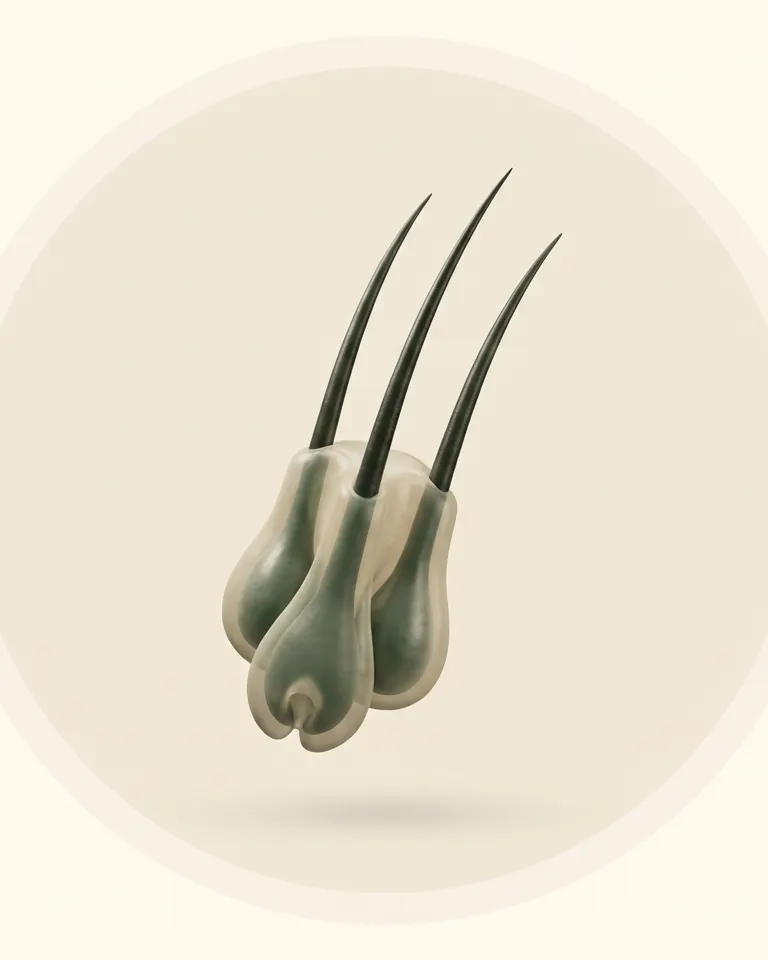
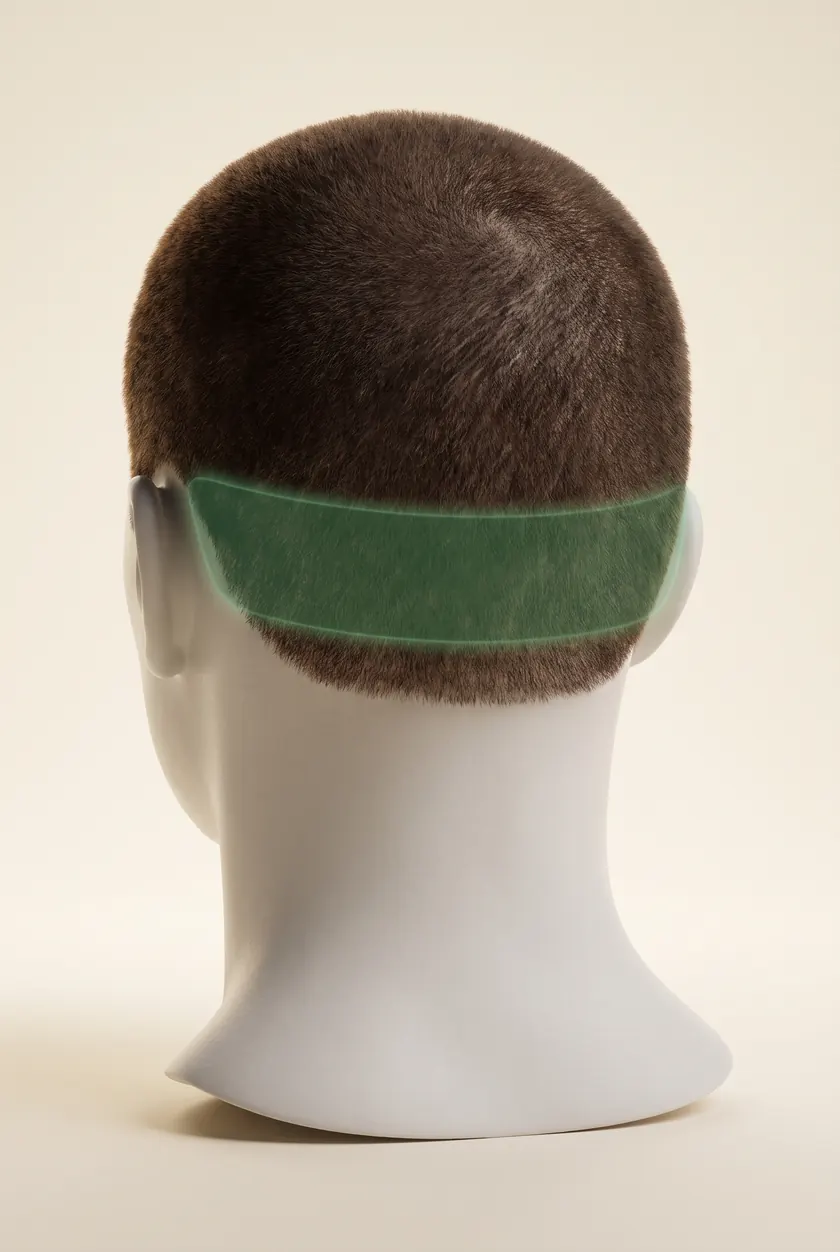
A hair transplant moves hair you already have into the areas where it has thinned. Follicles are taken from the back and sides of the scalp — the donor area — because that hair is generally resistant to the hormonal process behind pattern hair loss. They are separated under magnification and placed one by one at the angle and direction the surrounding hair grows; once healed, they are washed, cut and styled normally.
Two things decide how the result looks. The first is hairline design, judged against your face and your age rather than a template — see what makes a hairline look natural. The second is honest arithmetic: the donor area is a finite supply, so coverage is prioritised over your lifetime, not spent in one session. Our guide to what a donor area can and cannot cover works through it.
That is why nothing is quoted before an examination: two people with the same photograph can need very different plans. See our cost and graft guidance.
- It redistributes your own donor hair; it does not create new hair
- Donor supply, not marketing, sets the limit on what is achievable
- The hairline is drawn on your face and agreed first
Grafts by stage
Which Plan Fits Your Stage of Hair Loss?
Male pattern loss is staged on the Norwood scale. The bands below are general patient education — a place to start the conversation, not a quote. Two people at the same stage can need very different numbers because donor density, hair calibre and the amount of native hair still in place all differ.
Donor supply is the real ceiling
A healthy donor area can give a finite number of grafts over a lifetime. A plan that spends it all on the hairline at thirty leaves nothing for the crown at forty-five, which is why extensive loss is staged and why coverage — not full density — is the honest goal at Norwood VI–VII.
Work out your own range
The graft calculator gives a deliberately wide range by stage and zone, and our article on how many grafts you actually need explains what an examination measures that a photograph cannot.
When surgery waits
When We Advise Against a Hair Transplant — or Say Not Yet
A transplant spends donor hair that cannot be replaced, so the wrong operation is worse than none. These are the situations in which the recommendation is medical treatment, time, or a different procedure altogether. More on each in when a hair transplant is the wrong answer.
Loss still moving quickly
Grafts placed ahead of an unstable pattern are left stranded as the hair behind them recedes. Medical treatment first, then a conservative plan once the pattern settles.
Diffuse thinning everywhere
When the donor area is thinning too, there is no stable supply to move. That is a hair fall treatment question before it is a surgical one.
A donor that cannot cover the goal
If what you want exceeds what the donor can safely give, you are told at the consultation — along with what a realistic result would look like instead.
Active alopecia areata or scarring
Grafts placed into active disease can be lost. Alopecia areata and scarring alopecias are treated and observed first.
An untreated medical cause
Thyroid disease, low iron and some medications drive shedding that surgery does nothing for. See which blood tests matter.
Follicles still present and savable
Early thinning with miniaturising but living follicles is often better served by medication or PRP. See PRP or a hair transplant.
Techniques
Hair Transplant Techniques
All three move your own follicles. They differ in how grafts are taken and placed — and the right answer depends on your scalp, your donor area and how much coverage is needed.
FUE vs DHI vs FUT, Compared
Neither FUE nor DHI is universally better. The table above compares them; it does not rank them, because the ranking only exists once someone has examined your donor area. The reasoning behind your recommendation is explained at the consultation and written into the estimate — compare them yourself in our FUE vs DHI and FUE vs FUT guides, or read about no-shave hair transplants.
Who holds the instruments
Who Performs Each Step of Your Hair Transplant
India's regulator is clear about who may legally perform a hair transplant, yet who actually carries out each step is the question patients least often ask. Here is how the steps are divided at this clinic.
Ask every clinic on your shortlist, including this one, who performs each of these steps — by name and qualification. How to choose a hair transplant clinic covers the other answers worth hearing before you pay.
Step by step
How Does a Hair Transplant Work?
A day case under local anaesthetic that moves your own follicles from the donor area at the back and sides of the scalp into the thinning or bald areas. It redistributes the hair you already have rather than creating new hair, which is why donor supply sets the ceiling. Consultations, the procedure and follow-up reviews are carried out by registered medical practitioners at the Gurugram clinic.
-

Step 01
Consultation and assessment
What you want and what is realistic. History and medication review, then the scalp and donor area examined under magnification, the pattern staged and photographs taken for your record.
-

Step 02
Donor and hairline plan
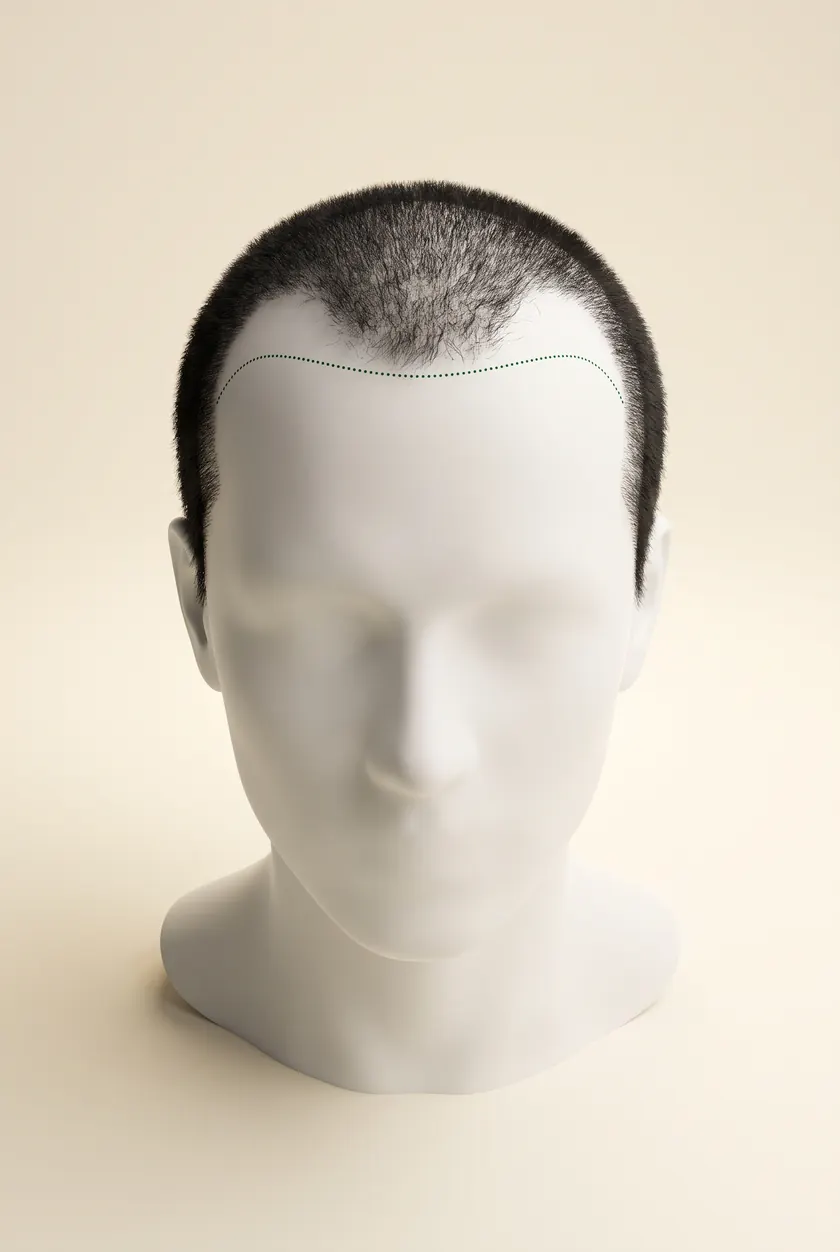
What the donor can safely give, now and later, is measured. The hairline is drawn on your head and approved by you sitting upright in a mirror, and grafts are mapped zone by zone.
-
Step 03
Procedure day
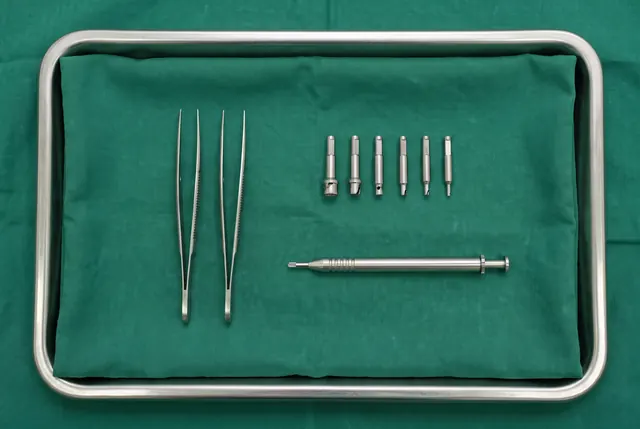
The donor is trimmed and numbed; the injections are the uncomfortable part. Follicular units are extracted and sorted, singles kept for the hairline, then placed at the angle of the surrounding hair in a deliberately irregular pattern.
-

Step 04
Recovery and reviews
Home the same day with written aftercare, medication where prescribed and your first review already booked. Progress is photographed at set intervals through the year.
Results
Hair Transplant Results: How They Are Judged
This page does not show before-and-after photographs or patient cases. India’s medical regulator does not permit doctors and clinics to advertise surgical results or display before-and-after photographs for promotion (National Medical Commission guidelines, October 2026), and another person’s photograph cannot tell you what your own donor area and pattern of loss will allow.
If you are shown photographs elsewhere, lighting, angle, hair length, styling and the time since the procedure all change what they seem to show. Our guide to reading before-and-after photos explains what to look for.
- Your progress is recorded in standardised photographs taken at your own reviews
- The result is judged at around ten to twelve months
- Outcomes vary between patients
Who you will see
Doctors at DenceSpot Clinic
Consultations and procedures are carried out by registered medical practitioners at the clinic. Every plan starts with a medical examination, because hair loss can have reversible causes and donor supply is finite.
Dr. Nyra
MBBS, MD (Dermatology)
Cost guidance
Hair Transplant Cost in Gurgaon
The number that moves the bill is graft count. Across the Norwood stages, plans generally run from around 800 grafts for early temple recession to 4,500 or more for extensive loss, usually staged across sessions — the full band-by-band breakdown is on the cost page. Two people at the same stage can still need very different numbers, because donor density and hair calibre differ.
There is no single price for a hair transplant, in Gurgaon or anywhere else. Cost follows the plan, and the plan follows the assessment. We publish the factors instead of a headline figure, and you receive an itemised estimate in writing with nothing added afterwards.
Number of grafts
Hair-loss stage
Donor density
Technique
Treatment complexity
Individual plan
Get a Personalized Treatment Estimate
Send photos of the front, crown and donor area on WhatsApp, or request a call back. You will get an assessment appointment — not a sales pitch.
What Gurgaon Clinics Advertise
Most patients arrive having seen other clinics' figures, so here is the market as it was advertised in September 2026. At those FUE rates, a 2,000-graft plan works out anywhere between ₹70,000 and ₹200,000 — which is exactly why the graft count matters more than the rate.
Market context, not our price list. Ranges as advertised on Gurgaon clinic and directory websites we reviewed in September 2026. They are not DenceSpot’s prices — ours are quoted in writing after assessment — and advertised figures often exclude consultation, blood tests, medication or maintenance. Ask any clinic what its figure includes.
Recovery & results
What Generally Happens After Treatment
A general guide to the phases most patients describe. Your own timeline is set by your doctor at your reviews — the full detail is in our aftercare guide and the month-by-month growth timeline.
Initial recovery
Tenderness, mild swelling and small crusts in the treated areas. Washing starts as instructed, and desk work usually resumes within a few days.
Early shedding
Transplanted hairs commonly shed while the follicles stay in place. This is expected, not a failed procedure — it is the single most misunderstood phase. See shedding and shock loss.
New growth
Fine new hairs typically appear from around three to four months, unevenly at first. Texture improves as they mature.
Progressive density
Coverage continues to build through the middle months. Progress is documented photographically at each review.
Longer-term result
A fuller picture around ten to twelve months. Non-transplanted hair can keep thinning, so medical treatment often continues alongside.
Individual recovery and hair-growth outcomes vary. Your doctor will provide personalized guidance based on your treatment, and timelines here are general patient education rather than a promise of results. Risks and side effects are set out in our guide to hair transplant side effects and risks.
Local conditions
Recovering in Gurgaon: Heat, Dust, Hard Water and the Commute
Standard aftercare sheets assume mild weather and a car. The first fortnight in Gurgaon rarely looks like that, so a few local realities are worth planning around before you pick a date. The detail is in recovering from a hair transplant in Gurgaon.
Borewell water is hard on hair shafts, not on follicles, and the first washes follow your written instructions exactly. The hard water myth is covered separately.
- Summer heat and sweat make the scalp harder to keep clean while crusts form: many patients book the cooler months, and those who cannot plan indoor days for the first week
- Construction dust and winter smog do not damage grafts directly but complicate keeping the area clean; when a loose covering is appropriate is set by your doctor, not the weather
- Helmets and anything that presses on the grafts wait until your doctor clears them, so if you ride to work, arrange other transport before the procedure date
Before you book anywhere
Questions to Ask Any Hair Transplant Clinic in Gurgaon
Including this one. A straight clinic answers each in a sentence.
Who performs extraction and placement — by name?
How was my graft number arrived at?
What is left in my donor for later?
What exactly does the price include?
What happens at twelve months if density is uneven?
Can any result be promised?
Visit the clinic
Visit Our Clinic in Sector 39, Gurugram
Consultations and procedures are carried out by registered medical practitioners at our Sector 39 clinic in Gurugram, where the assessment, procedure day and follow-up reviews all take place.
-
Our clinic
Gurugram Sector 39
- 1123, Sector 39 Road, Jharsa, C Block, Sector 39, Gurugram, Haryana 122003opposite Medanta – The Medicity
- Mon–Sat · 10:00 – 20:00Sunday · closed
- +91 81783 30800
Sector 39, Gurugram
Take the First Step Toward Hair Restoration
Bring your questions and your concerns. You will get a clinical assessment, an honest view of whether a hair transplant is appropriate for you, and a written plan if it is — with no pressure to book a date on the day.

The complete guide
Everything in Our Hair Transplant Guide
Each page below answers one question in depth — a technique, an area, a cost, a recovery stage.
Techniques
By area and patient
Cost and planning
Choosing and recovery
Supporting articles
- Is There a Right Age for a Hair Transplant?
- Hair Transplant With Diabetes or High Blood Pressure: What Changes
- Gym, Smoking and Alcohol After a Hair Transplant: When and Why
- A Second Hair Transplant: When It Makes Sense and What Limits It
- Recovering From a Hair Transplant in Delhi: Heat, Smog, Helmets and the Commute
- Why Hair Transplant Quotes in Delhi Differ, and How to Compare Them
- How Many Grafts Do You Actually Need, and Who Decides the Number
- FUE vs DHI: What Actually Differs, and Whether the Difference Matters for You
- FUE vs FUT: Scarring, Donor Yield and Why the Strip Method Still Exists
- Why Two Hair Transplant Quotes in Gurgaon Can Differ So Much
- Twelve Questions to Ask at a Hair Transplant Consultation in Gurgaon
- Who Is Legally Allowed to Perform a Hair Transplant in India
- The Hair Transplant Growth Timeline, Month by Month
- Your Donor Area Is a One-Time Budget: What It Can and Cannot Cover
- Is a Hair Transplant Permanent, or Will You Be Thin Again in Ten Years?
- Shedding and Shock Loss After a Hair Transplant: What Is Normal and What Is Not
- When a Hair Transplant Is the Wrong Answer, and Why a Clinic Should Say So
- What Makes a Hairline Look Natural, and Why Placement Matters More Than Graft Count
- Hair Transplant Side Effects and Risks: The Expected, the Uncommon and the Permanent
- Unhappy With a Previous Hair Transplant: What Repair Can and Cannot Fix
- How to Read a Hair Transplant Before-and-After Photo
- Hair Transplant Promises and Success Rates: What Those Claims Actually Mean
- The First 14 Days After a Hair Transplant, Day by Day
- Recovering From a Hair Transplant in Gurgaon: Heat, Dust, Helmets and the Commute
- The Norwood Scale Explained: Which Stage Are You, and What It Means