Hair Transplant Repair, With an Honest Account of the Limits
A transplant you regret can usually be improved. It can rarely be erased. What decides the difference is not skill or technique — it is how much donor hair the first clinic left you. You will be told which situation you are in before you are asked to commit to anything.
- Remaining donor supply measured first
- Realistic ceiling stated before you commit
- Staging planned rather than improvised
- Gurugram · Mon–Sat · 10:00 – 20:00
Assessed & performed by
Dr. Nyra
MBBS, MD (Dermatology) · Owner & Chief Consultant, DenceSpot Clinic
Donor measured, not assumed
What remains decides what is possible.
A stated ceiling
You hear the realistic best case, in writing.
Staged deliberately
Operated tissue is not pushed all at once.
Donor-sparing options first
Pigment can do what grafts cannot afford to.
No blame, no theatre
A factual account of where you stand.
Diagnosis
What Usually Goes Wrong
Unsatisfactory transplants tend to fail in a small number of recognisable ways. Identifying which one applies to you determines what correction is even possible.
A hairline placed too low
Common, and the hardest to undo. Grafts are permanent hair in permanent positions, so raising a line means removing hair, not repositioning it.
A hard, straight edge
No transition zone, no irregularity. Correctable by adding single hairs ahead of and between the existing line to break it up and soften it.
Pluggy or tufted grafts
Multi-hair grafts placed at the leading edge where single hairs belong. Often excised and the hair redistributed. One of the more rewarding repairs.
Wrong angle or direction
Hair that stands up or points the wrong way and cannot be styled down. Angle is fixed when the site is made, so correction means removing and re-placing.
Poor growth
A session where too much was attempted, or grafts were handled badly. Sometimes correctable by adding density, if the donor can still fund it.
Donor damage
A wide strip scar, visible dot scarring, or a donor thinned by over-harvesting. This is the constraint that governs everything else.
The governing constraint
Everything Depends on What Donor Hair Is Left
Repair surgery has no independent supply of hair. Every correction that adds density, softens a hairline or camouflages a scar spends grafts from a donor area that has already been drawn on once.
So the first measurement at a repair consultation is not of the problem. It is of the donor. If the first procedure used a modest number of grafts and the donor is still healthy, there is real room to work and the improvement can be substantial. If the donor has been heavily harvested, the ceiling drops sharply, and correction becomes about camouflage and redistribution rather than adding volume.
Over-harvesting deserves to be stated bluntly, because people are still being told otherwise. Donor hair that has been taken out cannot be put back. There is no procedure that regenerates it. Where a donor has been thinned too far, the honest plan is to reduce the visible contrast, protect what remains with medical treatment, and use the remaining grafts where they buy the most.
Good signs at assessment
- A modest graft number used the first time
- Donor density still measures well
- Extraction spread evenly across the donor
- The problem is design rather than volume
Signs the ceiling is lower
- A very large graft number already used
- Visible thinning or patchiness in the donor
- Extraction clustered in one part of the donor
- Multiple previous procedures
What repair involves
The Tools Available for Correction
Most repair plans combine several of these rather than relying on one.
Excision and redistribution
Misplaced or multi-hair grafts are removed from where they do damage — typically the leading edge of the hairline. The hair taken out can sometimes be re-implanted elsewhere, so it is not always lost. This is precise, slow work and it is what makes a pluggy hairline correctable.
Softening with single hairs
Single-hair grafts placed ahead of and between an existing hard line, irregularly, to build the transition zone the first procedure skipped. Frequently the highest-value part of a repair for the graft count it uses.
Grafting into scar tissue
Hair placed into a linear strip scar or into scarred recipient areas. Survival is lower than in healthy skin because the blood supply is poorer, so it is approached conservatively and often staged.
Adding density
Where growth from the first procedure was poor and the donor can fund it, further grafts are added into the existing area. Governed entirely by what the donor measurement allows.
Scalp micropigmentation
Pigment to reduce the contrast between hair and scalp. It disguises donor scarring, makes thin coverage read as denser, and blends a hard hairline — and it costs no donor hair at all, which is why it belongs in most repair plans.
Medical treatment
Protecting the native hair that remains, including in the donor. It does not correct the previous surgery, but it stops the surrounding picture getting worse while the correction is carried out.
The process
How a Repair Case Is Handled
Step 01
Full assessment
The previous record where you have it, examination of the transplanted area and the donor, and direct measurement of the donor density that remains.
Step 02
A stated ceiling
What can realistically be achieved, written down, along with what cannot. If the honest answer is limited improvement, that is what you are told.
Step 03
Staged plan
Usually more than one session, sequenced so previously operated tissue is not pushed too hard at once. The stages are agreed before the first one.
Step 04
Correction and review
Surgery, then the usual shedding and regrowth timeline, with photographic review before any further stage is confirmed.
Timing
Why We Usually Ask You to Wait a Year
People arrive for repair consultations at six months, distressed, convinced the result is final. Often it is not. A transplant is not mature until roughly twelve months, and hair that looks thin and patchy at six months can be substantially better at twelve.
Operating early risks two things: correcting a result that was still improving, and working into scalp that has not fully recovered from the first procedure. Neither serves you.
There are exceptions. Grossly misplaced grafts or an obviously wrong hairline position do not improve with time, and those cases are assessed on their own terms. But where the complaint is density or patchiness, waiting is usually the correct clinical advice even though it is not what anyone wants to hear.
If you are inside that window, come in anyway. An assessment now tells you whether you are looking at a genuine problem or an incomplete result, and that alone is worth having.
Bring with you
- The operative note from the first procedure
- The graft number and technique used
- Photographs from before the first surgery
- Your current medication list
Worth reading first
The month-by-month growth timeline — what a normal result looks like at each stage.
Hairline design — why position and transition matter so much.
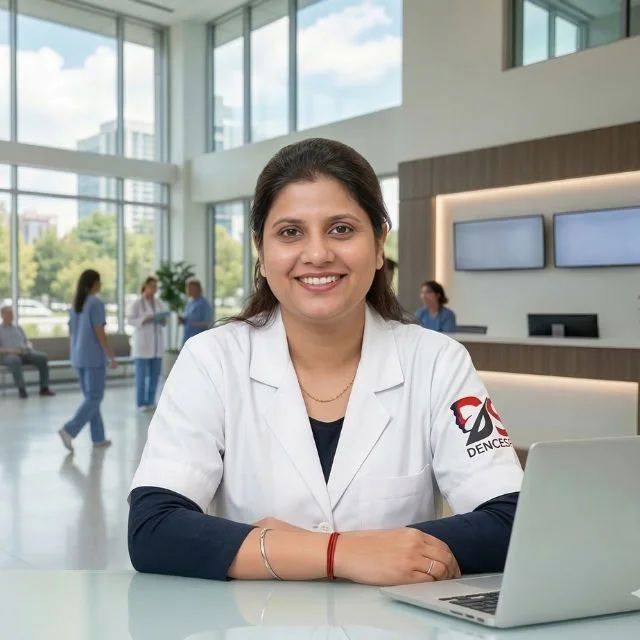
Who performs and reviews this treatment
Dr. Nyra, MBBS, MD (Dermatology)
Owner & Chief Consultant, DenceSpot Clinic
Qualified MBBS from Dr. D. Y. Patil Medical College, and holds an MD in Dermatology. Three years of clinical work in Germany followed — two at Bio Hair Clinic and one at St. Georg Klinikum Eisenach — before establishing DenceSpot in Gurugram.
Why repair consultations are run differently: someone arriving for corrective surgery has already been sold an outcome once. The most useful thing to give them is not enthusiasm but an accurate ceiling — what the remaining donor can fund, what excision can and cannot achieve, and where camouflage will do more than grafting. Some of those conversations end with a plan for a smaller intervention than the patient expected, and occasionally with advice that the honest answer is pigment rather than more surgery.
Qualification
MBBS, MD (Dermatology)
Training
3 years, Germany
Specialization
Dermatology
Cost guidance
Hair Transplant Repair Cost in Gurgaon
Repair is quoted only after examination, and repair estimates vary more between patients than first-time ones do, because the constraints differ so much from case to case.
What is being corrected
Softening a line differs greatly from rebuilding density
Excision work required
Removing and redistributing grafts is slow, precise work
Grafts available
Governed by the donor left after the first procedure
Number of stages
Repair is staged more often than a first transplant
Scarred tissue involved
Grafting into scar is slower and less predictable
Pigmentation alongside
Often part of the plan, and priced separately
Correcting a transplant generally costs more than getting it right the first time, because the same number of grafts takes longer to place well in a field that has already been operated on.
See the general cost guide and payment and EMI options.
Send Photos for an Initial View
Photograph the hairline in daylight from the front and from each side, the top of the head, and the donor area at the back with the hair lifted. Add your operative note if you have it.
Send photos on WhatsApp Book a repair consultationYour details are used only to arrange your consultation.
Visit the clinic
Corrective Hair Restoration at Our Gurgaon Clinic
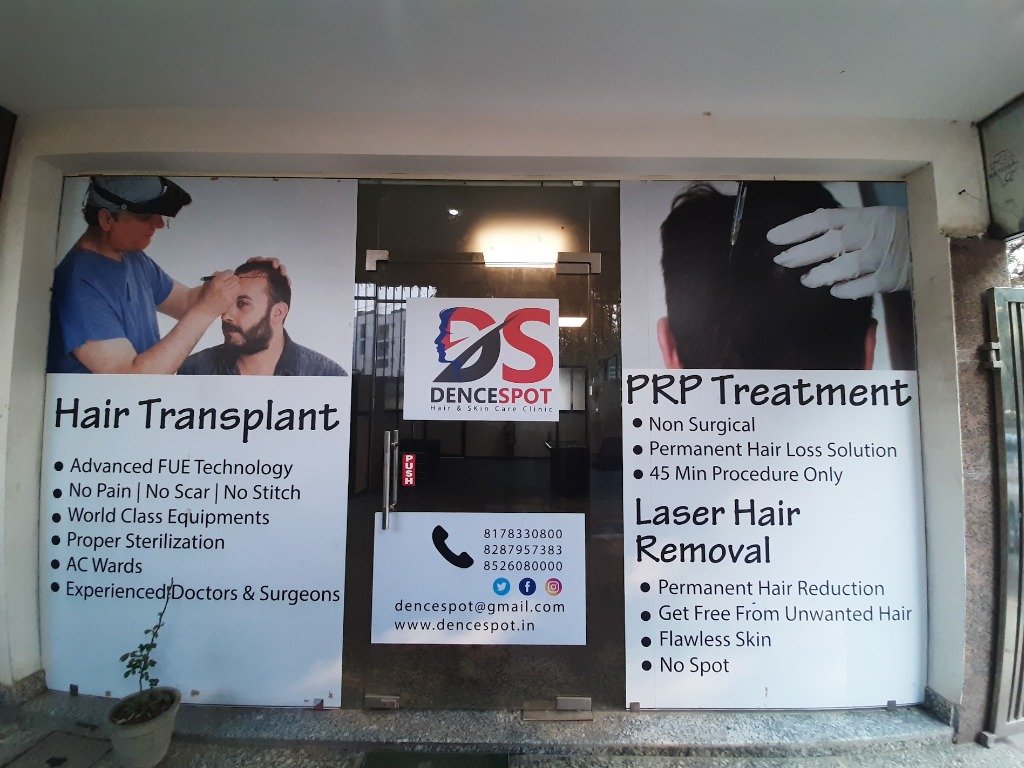
Assessment, correction and every follow-up happen at our Sector 39 clinic in Gurugram, with the same doctor throughout. Patients travel to us from across Gurugram and neighbouring parts of South Delhi.
- Address
- 1123, Sector 39 Road, Jharsa, C Block, Sector 39,
Gurugram, Haryana 122003 - Phone
- +91 81783 30800
- Message +91 81783 30800
- dencespot@gmail.com
- Hours
- Mon–Sat · 10:00 – 20:00Sunday · closed
Getting here
Next step
Find Out What Can Realistically Be Improved
Bring your operative note and any photographs from before the first procedure. You will get your remaining donor supply measured, a factual account of what went wrong, and a written plan with a realistic ceiling rather than a promise.
Suitability is determined after clinical assessment. This page is patient education and does not constitute medical advice.
Quick enquiry