A Hairline Designed for the Face You Will Have at Fifty
Every other decision in a hair transplant can be revisited. The hairline cannot. Put it in the wrong place and you carry that line for the rest of your life, through every stage of loss that follows. This page is about how the line is decided, and why we will sometimes tell you no.
- Line drawn on you and agreed in a mirror
- Single-hair transition zone at the leading edge
- Designed around future loss, not just today
- Gurugram · Mon–Sat · 10:00 – 20:00
Designed & performed by
Dr. Nyra
MBBS, MD (Dermatology) · Owner & Chief Consultant, DenceSpot Clinic
Drawn before consent
You see the line on your own face and approve it.
Irregular by design
No straight edges. Natural hairlines are broken.
Age-appropriate position
A mature line, not an adolescent one.
Planned for progression
Designed around the loss still to come.
Told if it is too early
Unstable loss is treated medically first.
The basics, plainly
What a Hairline Transplant Actually Involves
Mechanically, it is the same operation as any other transplant. Follicular units are taken from the permanent donor zone at the back and sides of the scalp, sorted under magnification, and placed into sites made across the frontal area. Whether that is done as FUE or DHI is a secondary question.
What separates a hairline case from the rest of the scalp is that it is looked at. Nobody examines your crown at conversational distance. Everybody sees your hairline, in daylight, from a metre away, for the rest of your life. That is why the design carries almost all of the risk and almost all of the reward.
The frontal hair also behaves differently. It grows at a sharp forward angle, close to the skin, fanning slightly. Grafts placed at the wrong angle stick up and refuse to sit with the rest of the hair no matter how it is styled. Angle is set site by site as the sites are made, and it cannot be corrected afterwards.
If you want the deeper explanation of how a natural line is constructed, our article on natural hairline design goes through it properly.
The one irreversible decision
Why we labour this point
Graft numbers can be added to in a second session. Density can be built up later. Medical treatment can be started at any time.
A hairline that was placed two centimetres too low cannot be raised. The grafts are living hair in permanent positions, and the only remedies are slow, partial and expensive.
So the line gets more consultation time than anything else, and it is drawn on your forehead and looked at in a mirror before you sign anything.
Design
The Four Decisions Behind Every Hairline
A hairline is not one line. It is a set of judgements that have to agree with each other and with your face.
Decision 01
Where the line sits
Height on the forehead, judged against your facial proportions and your age. This is the decision people most want to push and the one we push back on hardest. A line that flatters at twenty-eight can look conspicuous at forty-eight, when everything behind it has thinned.
Decision 02
What shape it takes
Straight across, gently rounded, or with the temporal recession most adult men keep. Shape has to suit the face and the pattern of loss. Erasing natural temporal recession entirely is a common way to make a face look wrong without anyone identifying why.
Decision 03
How softly it begins
The leading edge is built from single hairs, placed irregularly, with sentinel hairs scattered slightly ahead of the line. Behind that, grafts with more hairs build density. This transition is the difference between a hairline and a hedge.
Decision 04
Angle and direction
Frontal hair runs forward at an acute angle, and direction shifts across the temples where it sweeps backwards. Angle is fixed when the site is made. There is no styling fix for grafts placed at the wrong angle.
The classic regret
A low, straight, densely packed line
It is what people ask for and what a clinic competing on volume will happily deliver. It looks impressive in a photograph taken at twelve months. It ages badly, spends donor hair on the least defensible part of the scalp, and leaves nothing in reserve for the crown when the loss reaches it. Every element of it is permanent.
We would rather have the awkward conversation at consultation than build something you resent in fifteen years.
Suitability
When a Hairline Transplant Makes Sense
The best candidate has a pattern of loss that has settled, a donor area that can support the plan with something left over, and expectations that match what surgery can actually deliver.
Age matters, though not on its own. What matters is whether the loss is still moving. A hairline built while the hair behind it is still receding produces an island: a transplanted front row with a widening gap opening up behind it, and no good options left. Where loss is active, medical treatment comes first and surgery waits.
Donor supply is the other constraint. The frontal hairline is expensive in grafts and the donor is finite. Spending it all at the front, then needing the crown covered a decade later, is a trade people make without realising they are making it.
Generally a good candidate
- Loss that has been stable for some time
- Clear frontal recession with a healthy donor
- Realistic about a mature hairline position
- Willing to continue medical treatment
Reasons we will ask you to wait
- Rapid loss that has not been stabilised
- Very early loss in the early twenties
- Limited donor with extensive loss expected
- A fixed demand for an adolescent hairline
The process
From First Consultation to a Settled Hairline
Step 01
Assessment
Pattern staged, donor density measured, family history and progression considered, medication reviewed. Whether now is the right time is settled here.
Step 02
The line is drawn
Marked on your forehead, reviewed in a mirror, argued about if necessary, adjusted and agreed. The graft count follows from the agreed design.
Step 03
Procedure day
Extraction, sorting under magnification, then placement — single hairs across the transition zone, denser grafts behind. Day case, local anaesthetic.
Step 04
Growth and review
Shedding, regrowth from around three to four months, photographic reviews to roughly twelve months, with medical treatment continuing for the native hair.
Recovery and timeline
What Happens After a Hairline Procedure
Small crusts form around each graft along the new line and are visible for several days. Forehead swelling is common in the first few days after frontal work and settles on its own. The line is conspicuous during this period, which is worth planning around.
Then the transplanted hairs shed, usually within the first few weeks, and the hairline you could see disappears. The follicles remain. This phase is the one people find hardest, and it is entirely expected.
Regrowth generally begins around three to four months and comes through fine and uneven before it thickens. A hairline usually looks like itself at roughly ten to twelve months. Judging the edge at six months is judging it half-built.
Full instructions are in our recovery and aftercare guide, and you are given your own in writing.
Plan for
- Visible crusting along the line for days
- Forehead swelling in the first few days
- Shedding of the new hair within weeks
- No real verdict before ten to twelve months
Protect the result
- Follow the washing instructions exactly
- Keep the new line out of direct sun
- No caps or helmets until cleared
- Continue medical treatment as prescribed
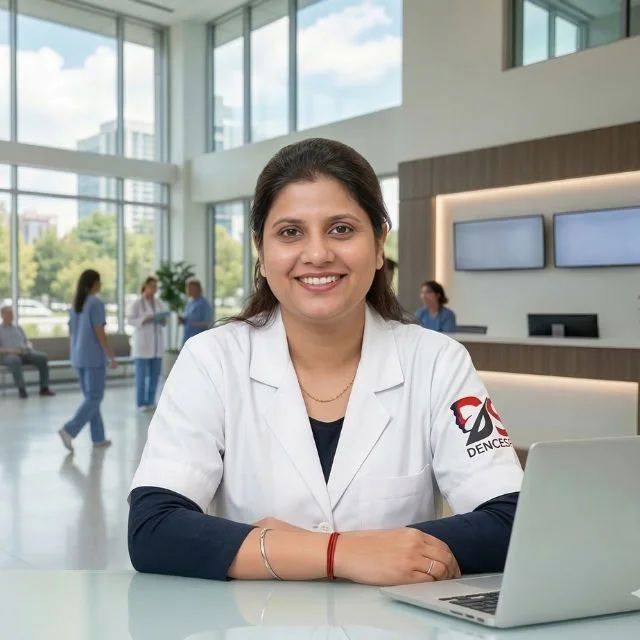
Who performs and reviews this treatment
Dr. Nyra, MBBS, MD (Dermatology)
Owner & Chief Consultant, DenceSpot Clinic
Qualified MBBS from Dr. D. Y. Patil Medical College, and holds an MD in Dermatology. Three years of clinical work in Germany followed — two at Bio Hair Clinic and one at St. Georg Klinikum Eisenach — before establishing DenceSpot in Gurugram.
Why the hairline is the part of this job worth being stubborn about: the technique is teachable and the extraction is routine. Judging where a line belongs on a particular face, at a particular age, with a particular pattern of loss still to come, is not. It is also the only part of the procedure a patient cannot buy their way out of later, which is why the line is drawn, discussed and agreed before consent rather than decided on the table.
Qualification
MBBS, MD (Dermatology)
Training
3 years, Germany
Specialization
Dermatology
Cost guidance
Hairline Transplant Cost in Gurgaon
The price follows the graft number, and the graft number follows the agreed design. Since the design is made on your head, a figure quoted before assessment is a guess. We publish the factors and give you an itemised estimate in writing.
Area being restored
Frontal line alone, or line plus temples
Depth behind the line
How far back density is being built
Donor density
What can be taken without compromising the donor
Technique
Placement method chosen for the case
Session structure
One session, or staged with the crown later
Supporting treatment
Medical therapy for the native hair behind the line
Be careful with quotes that get cheaper as the graft number rises. A hairline needs the right number of grafts placed well, not the largest number a donor can be pushed to give.
See the full hair transplant cost breakdown and payment and EMI options.
Get a Personalized Treatment Estimate
Send photos of your hairline from the front, from above and from each side on WhatsApp, or request a call back. You will get an assessment appointment, not a sales pitch.
Send photos on WhatsApp Request an estimate by formYour details are used only to arrange your consultation.
Before & After Hair Transplant Cases in Gurgaon
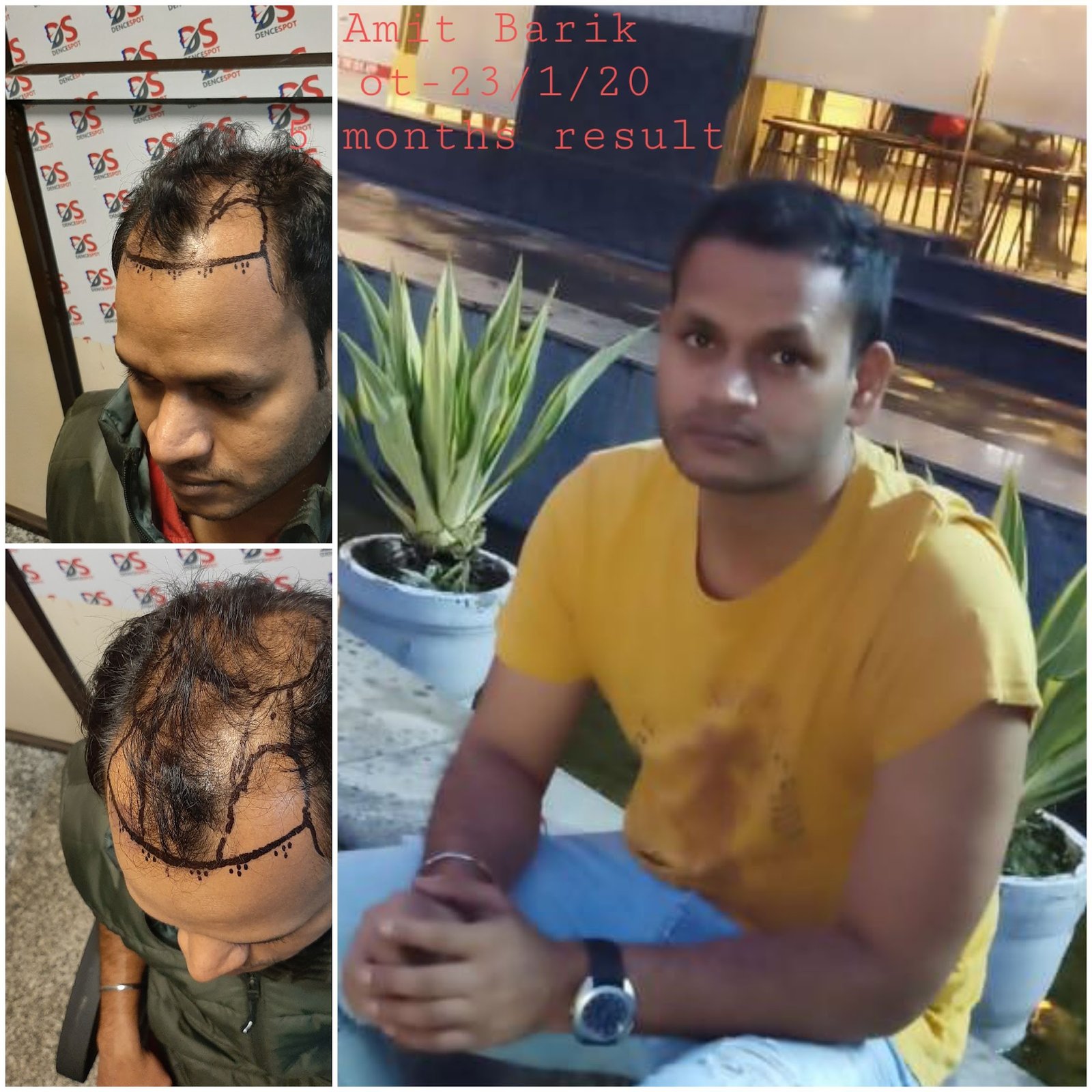
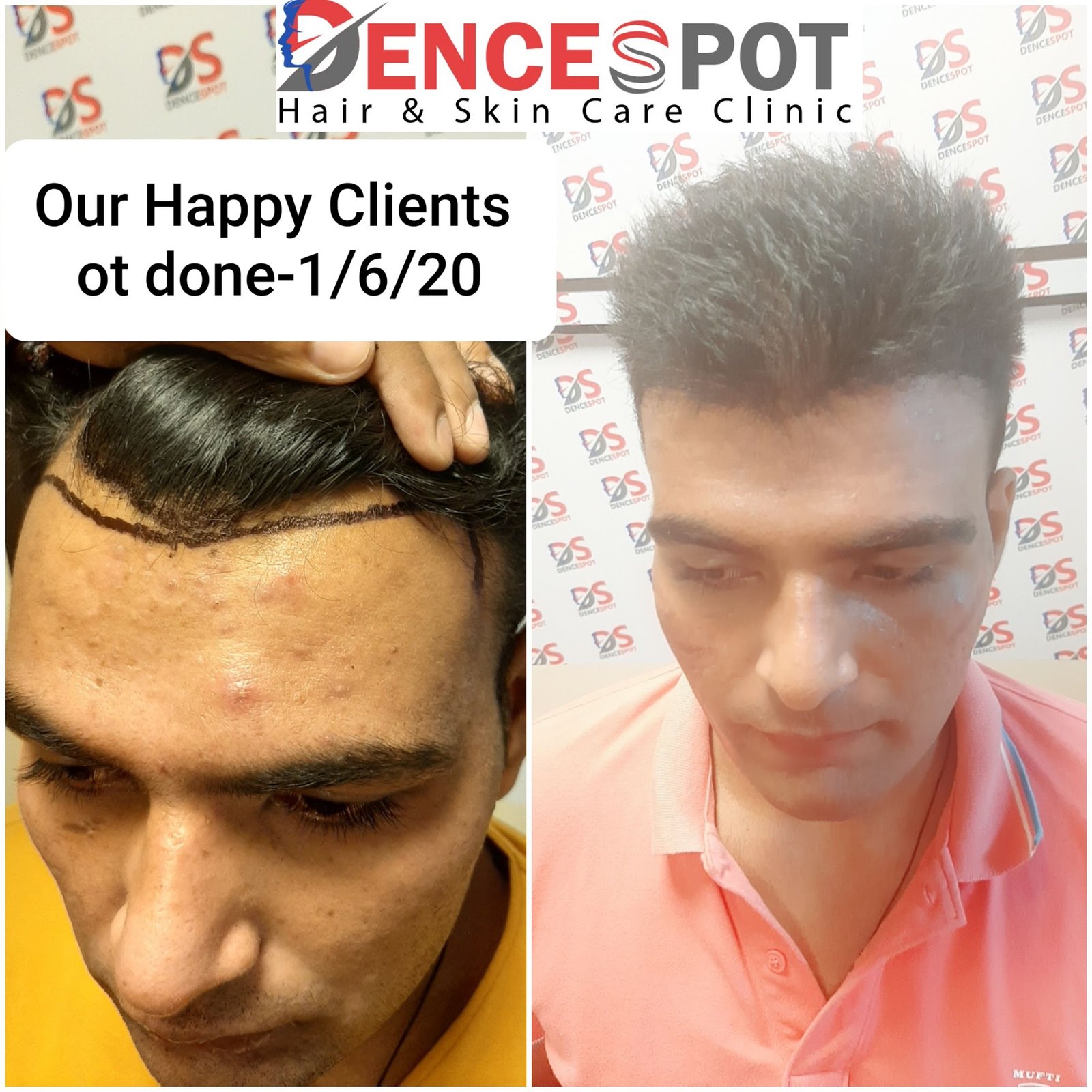
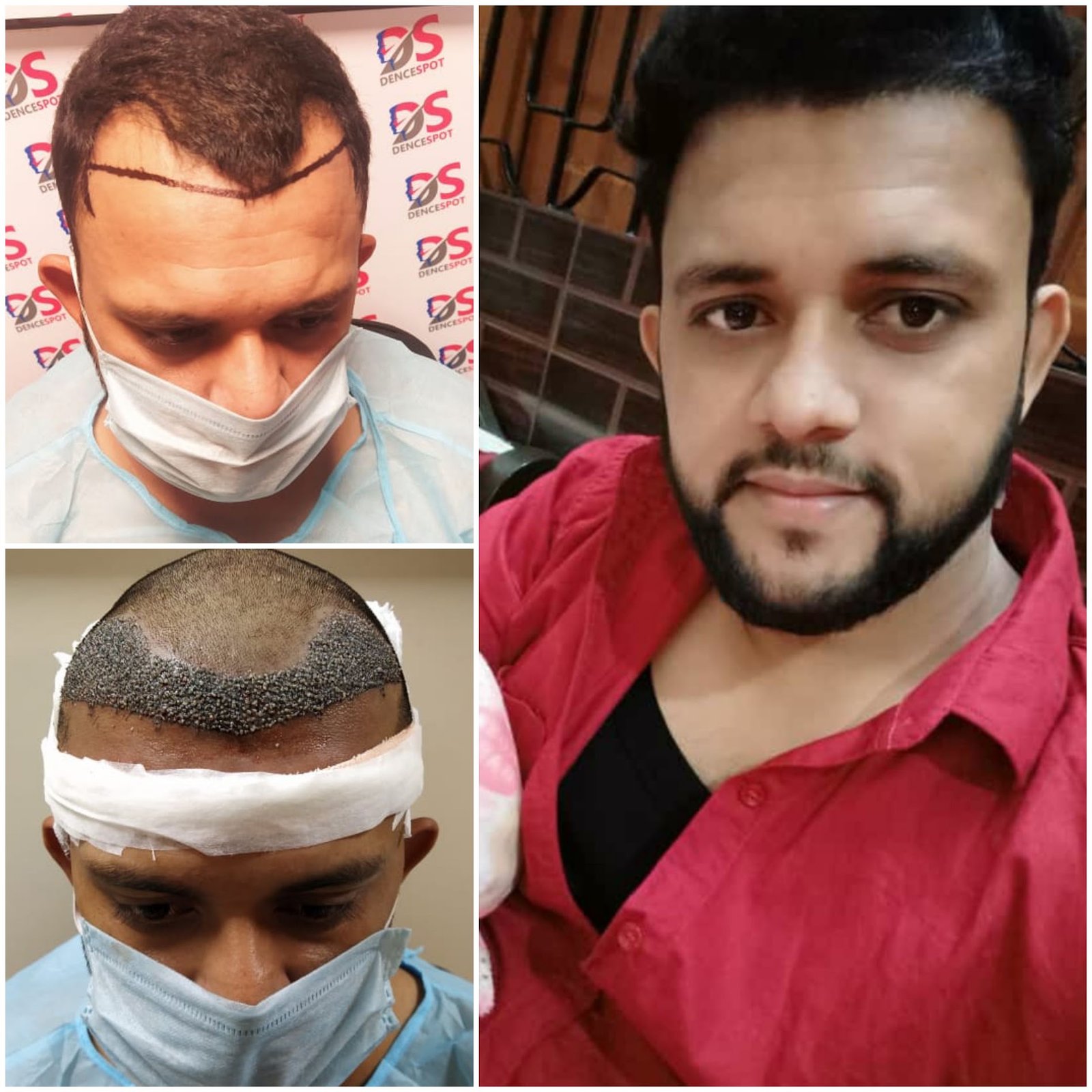
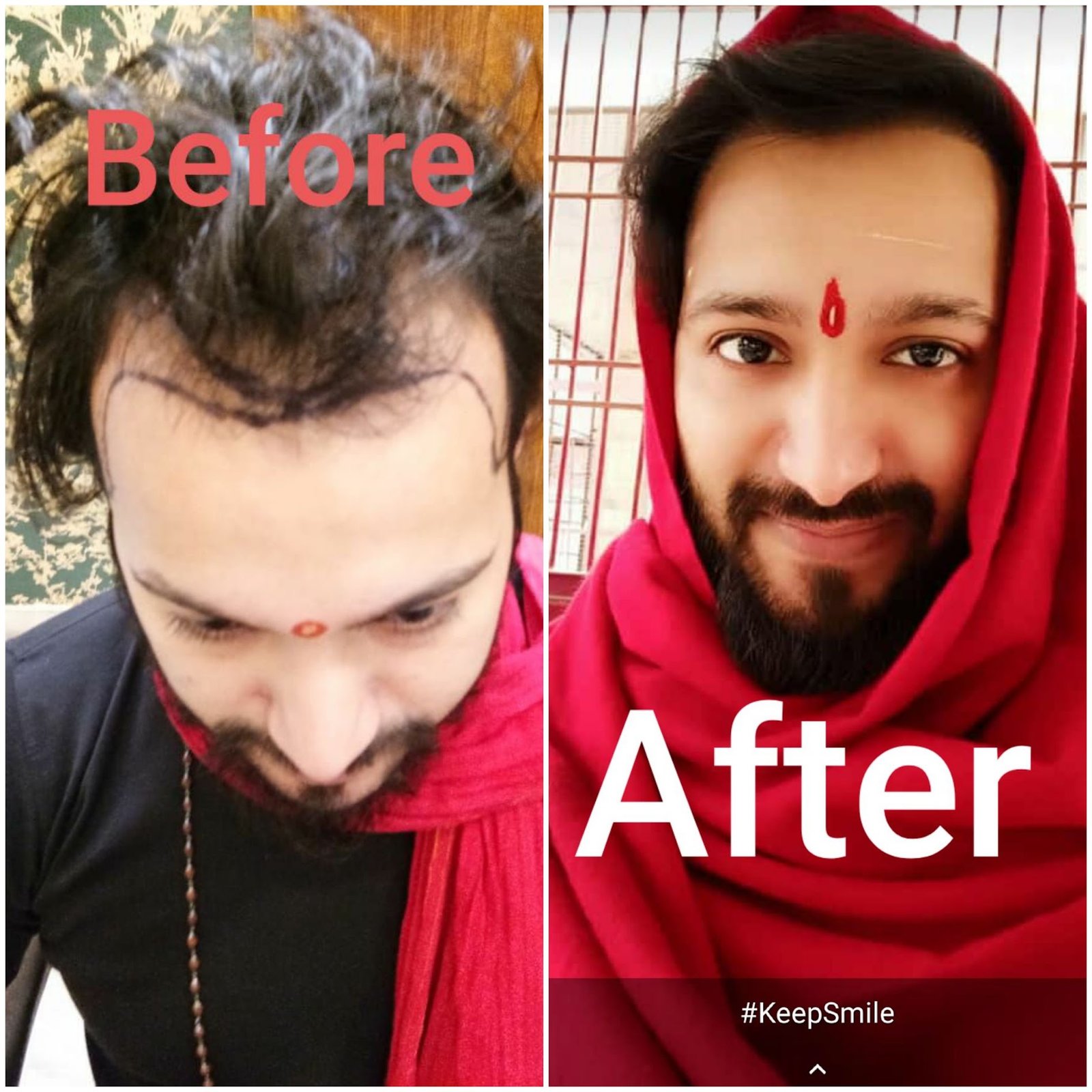
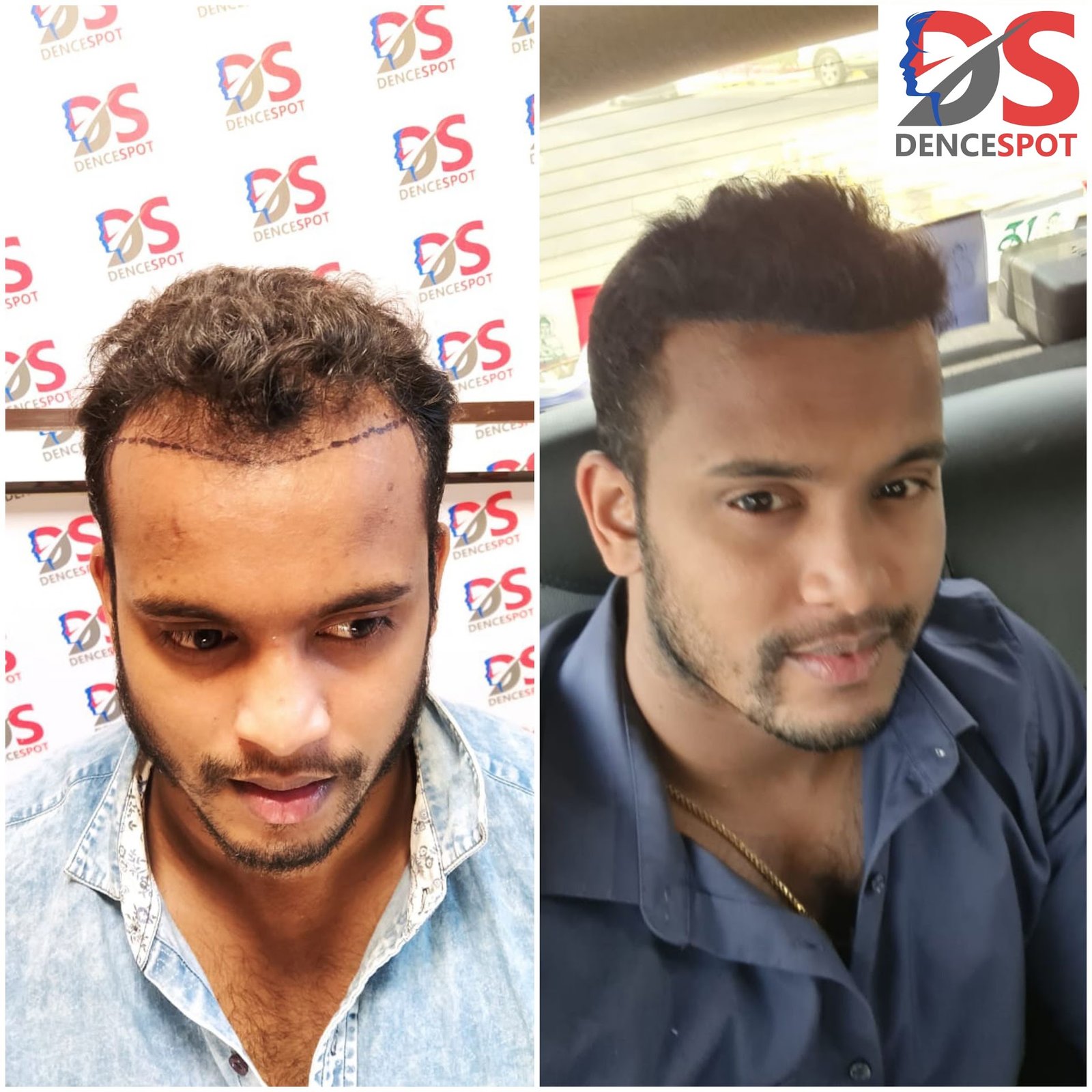
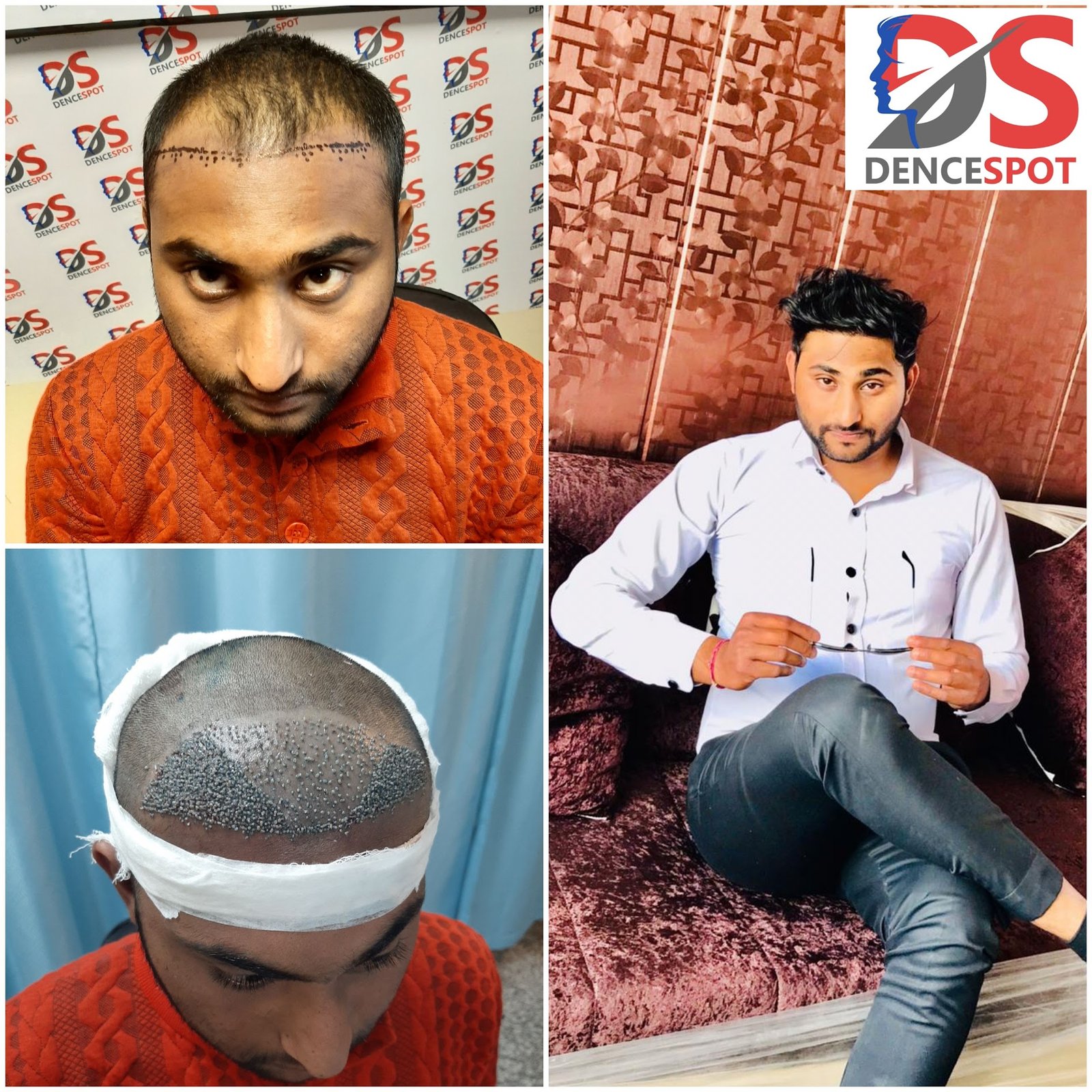
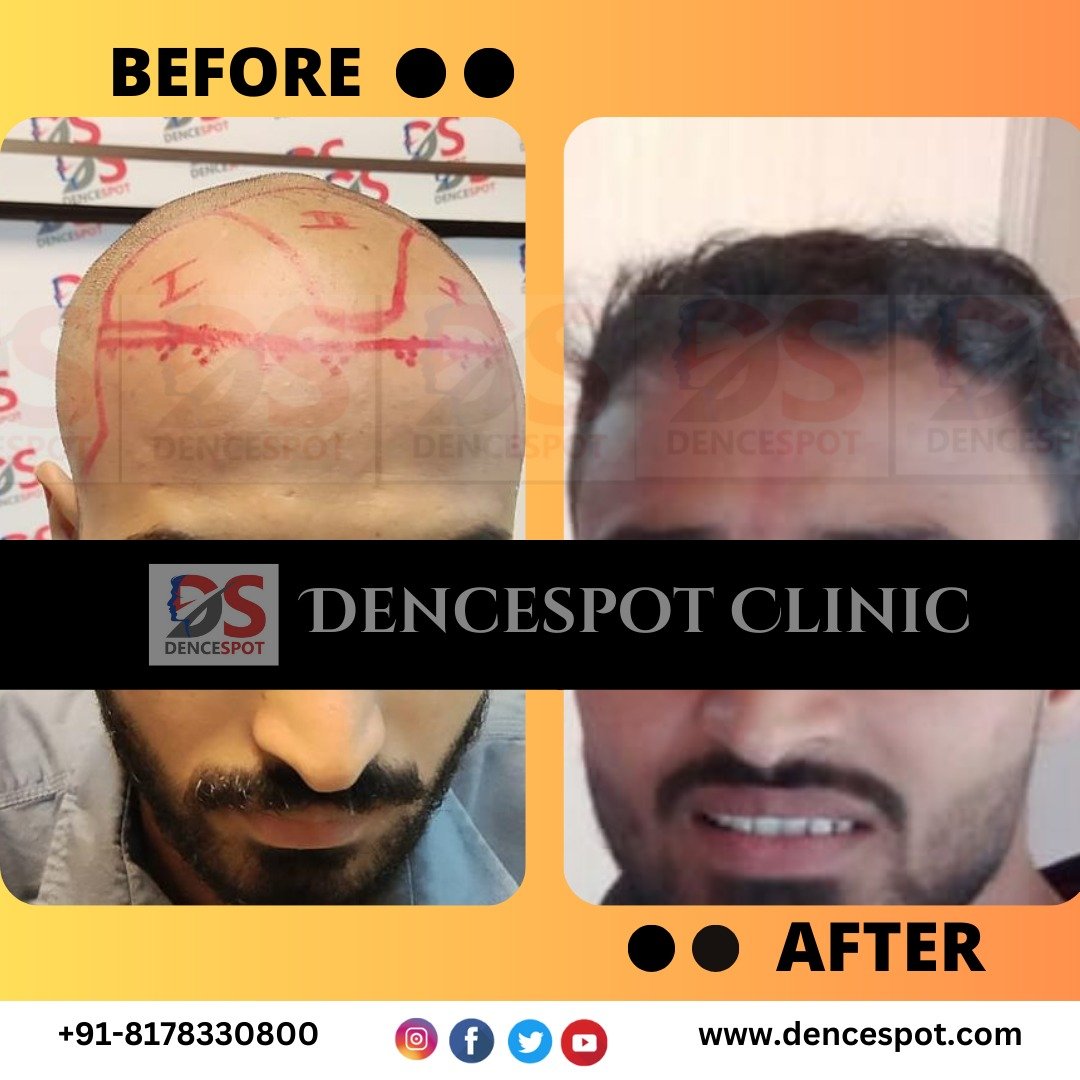
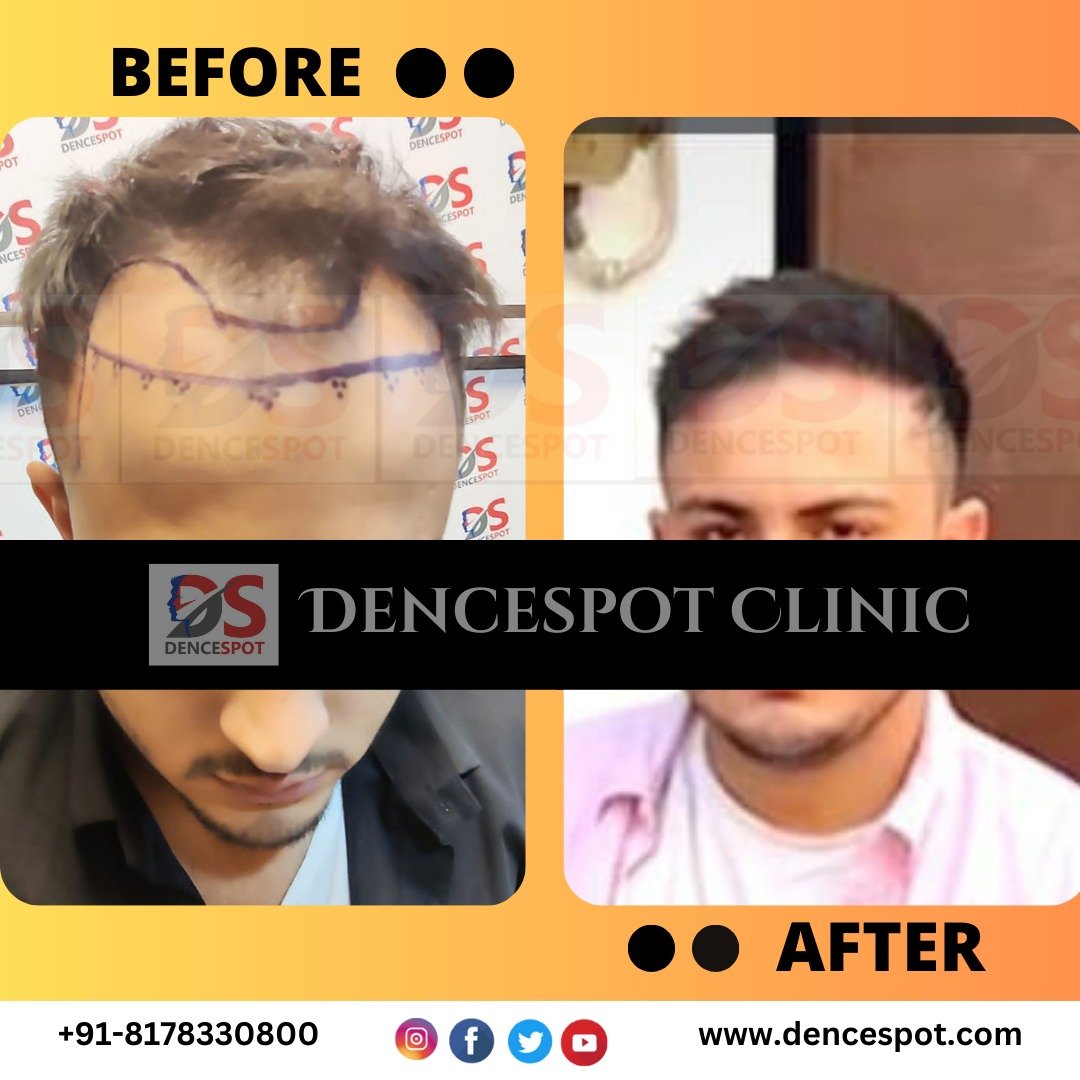
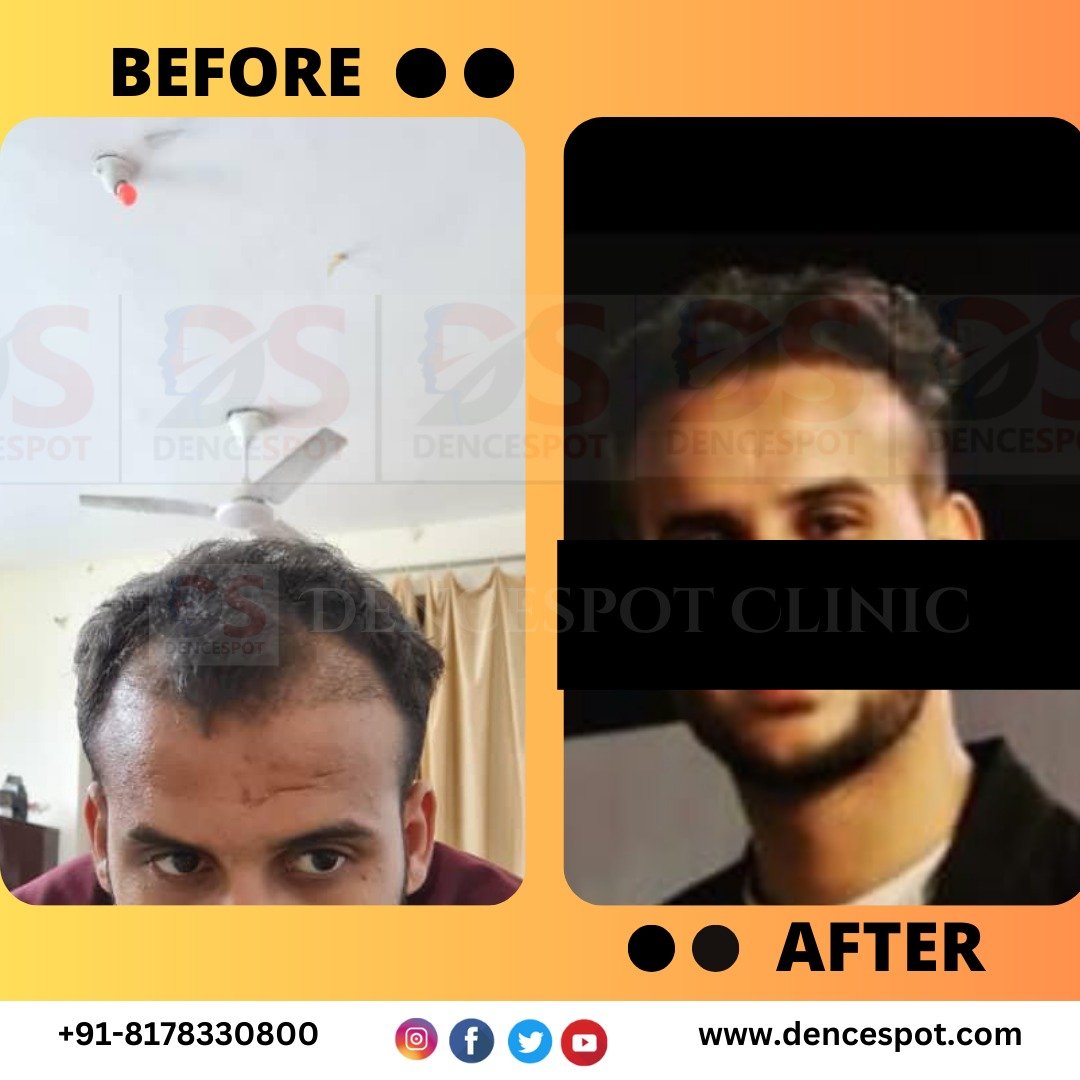
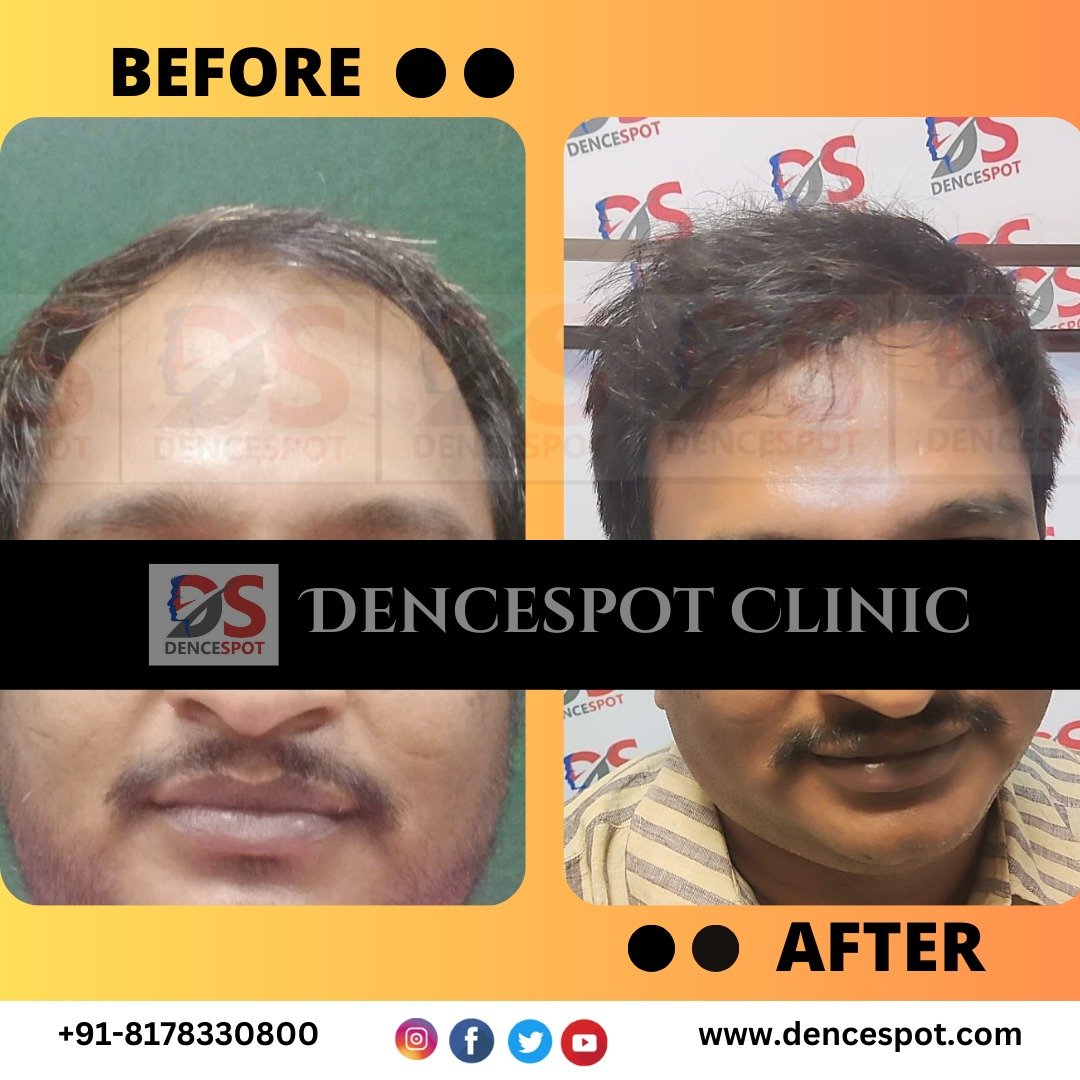
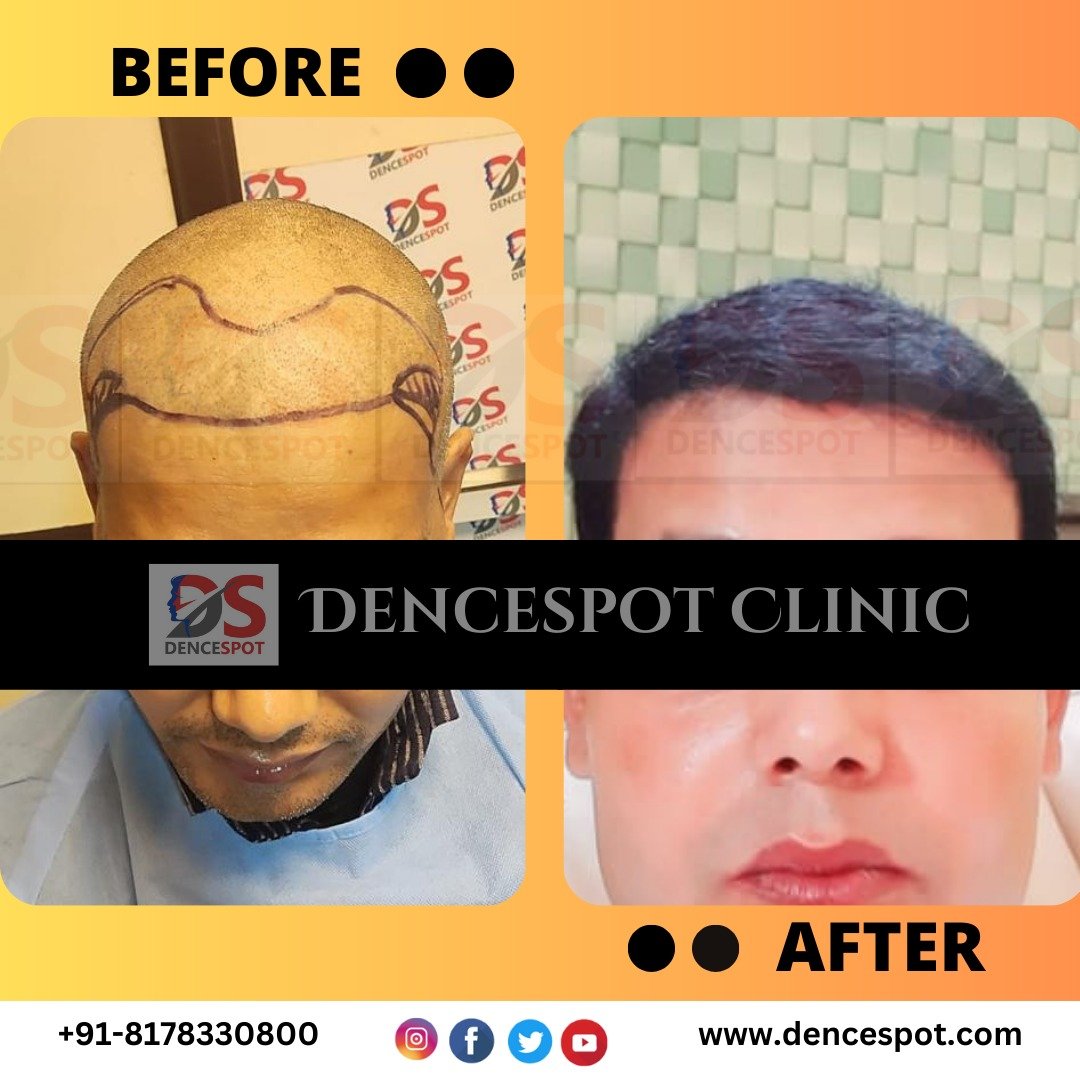
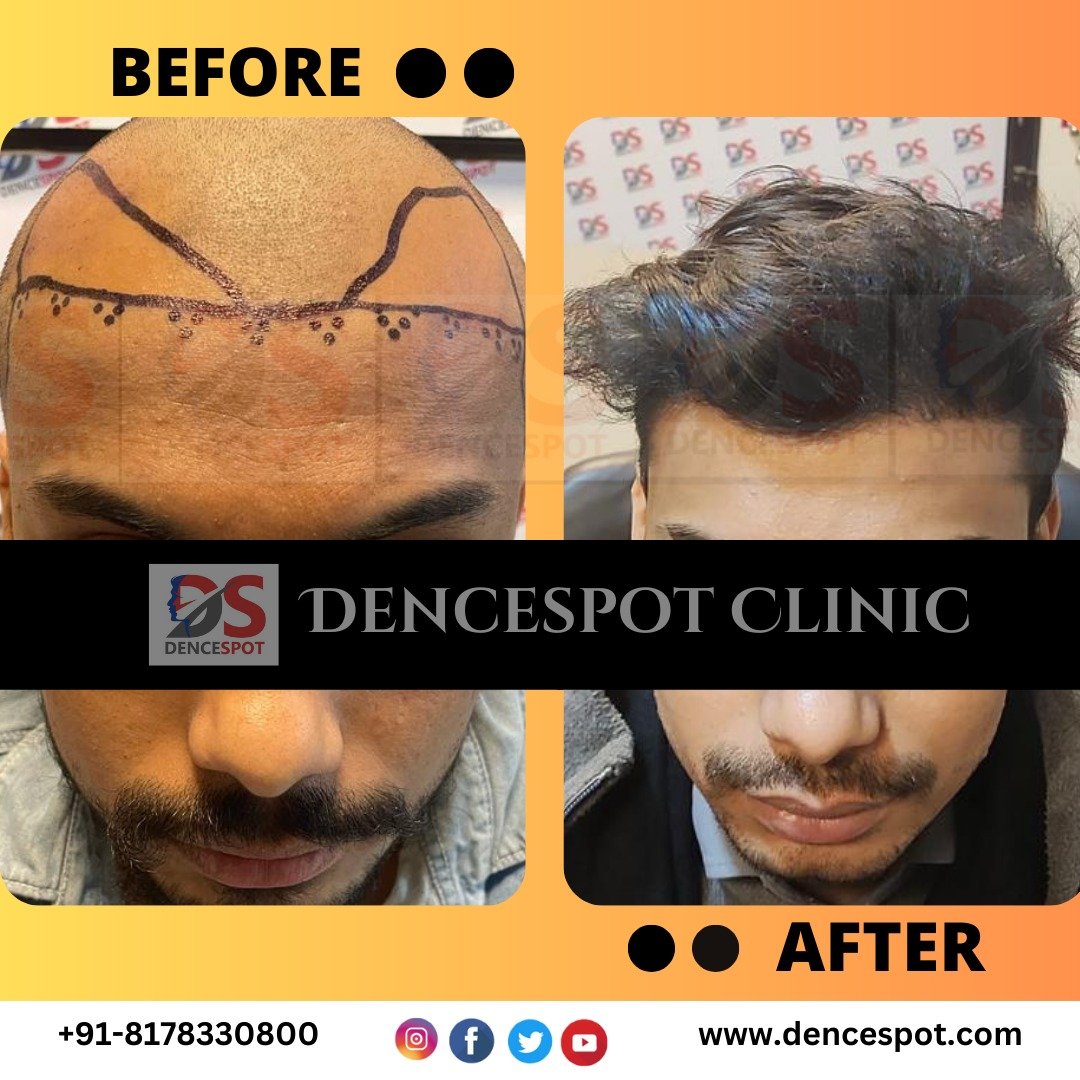
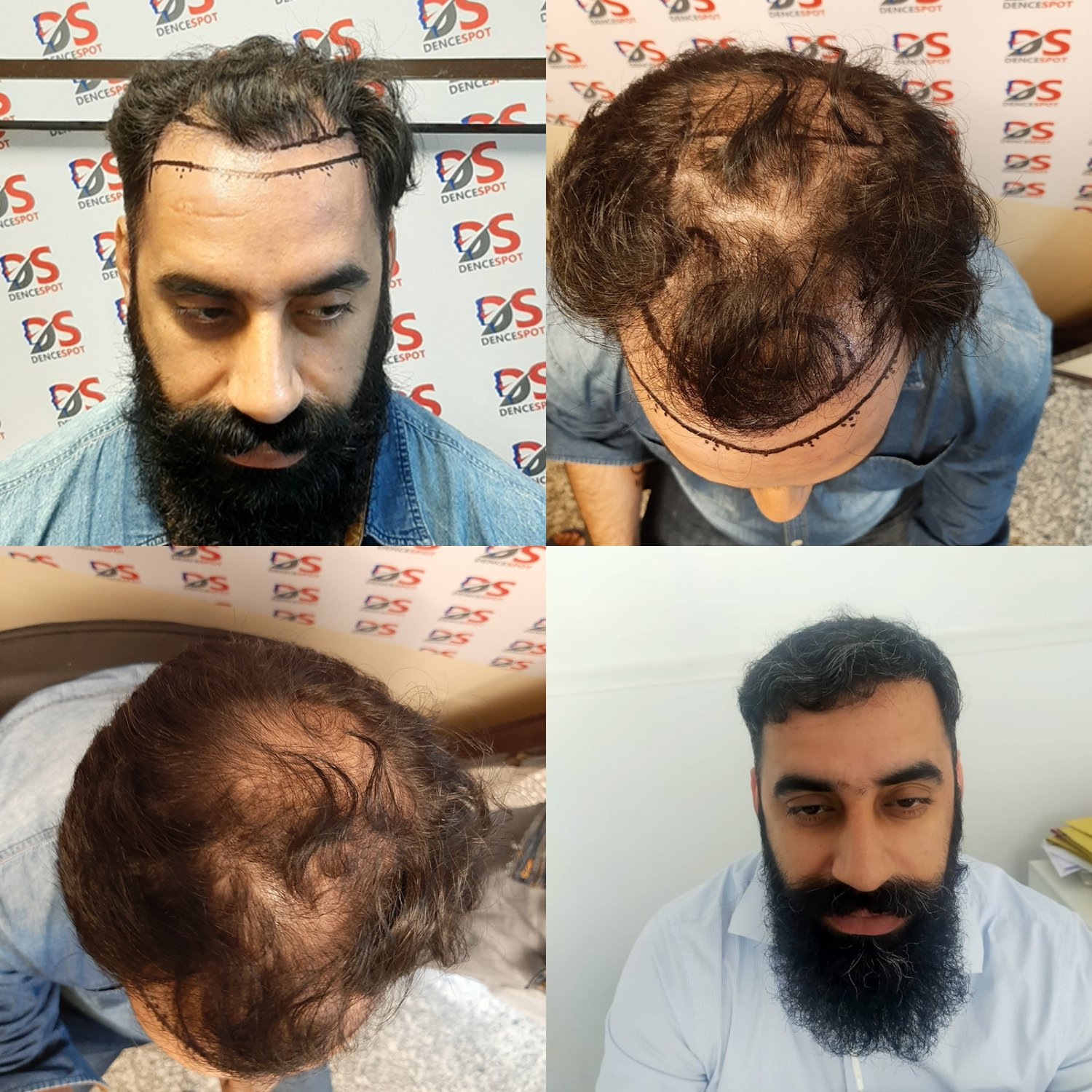
Consented photographs, with the hair never digitally altered, from patients treated personally by Dr. Nyra at DenceSpot Clinic, Sector 39 Gurugram. Results vary between patients, and hair restoration is judged at ten to twelve months.
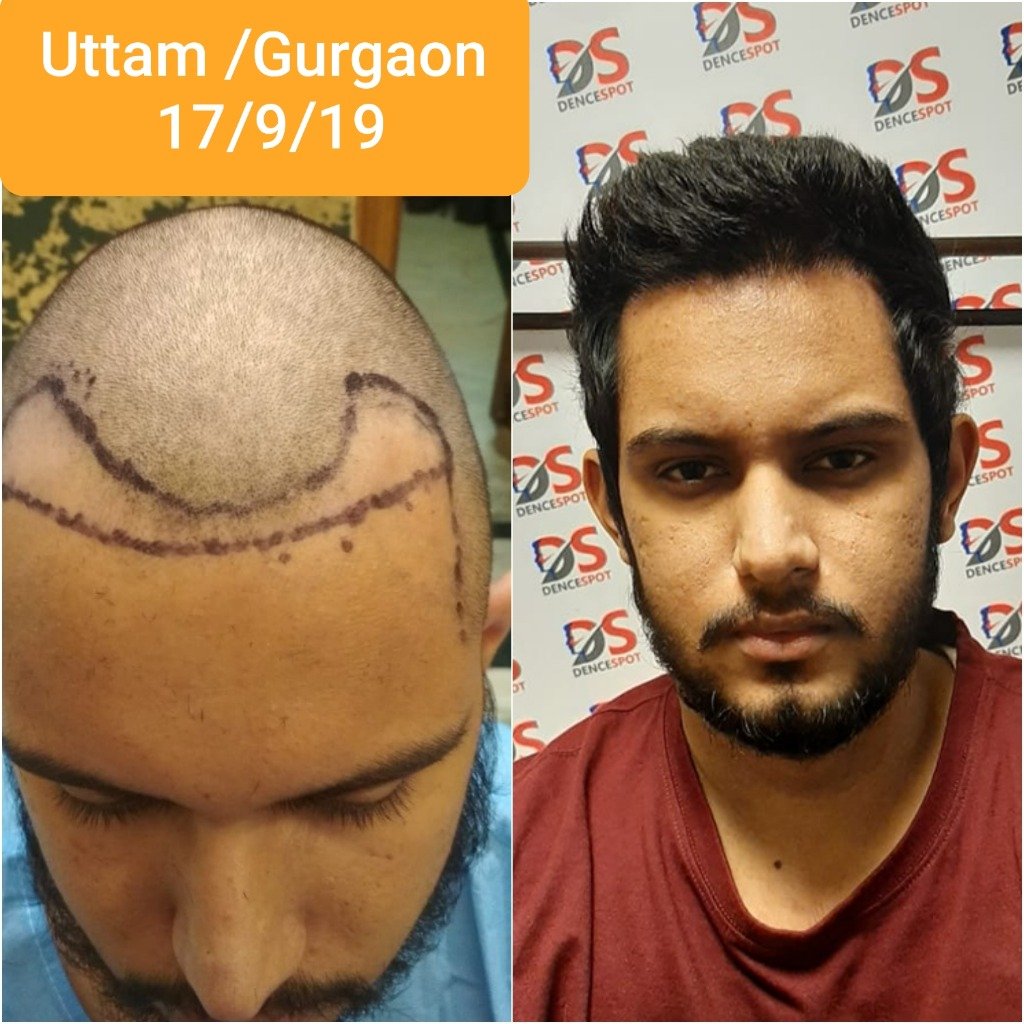
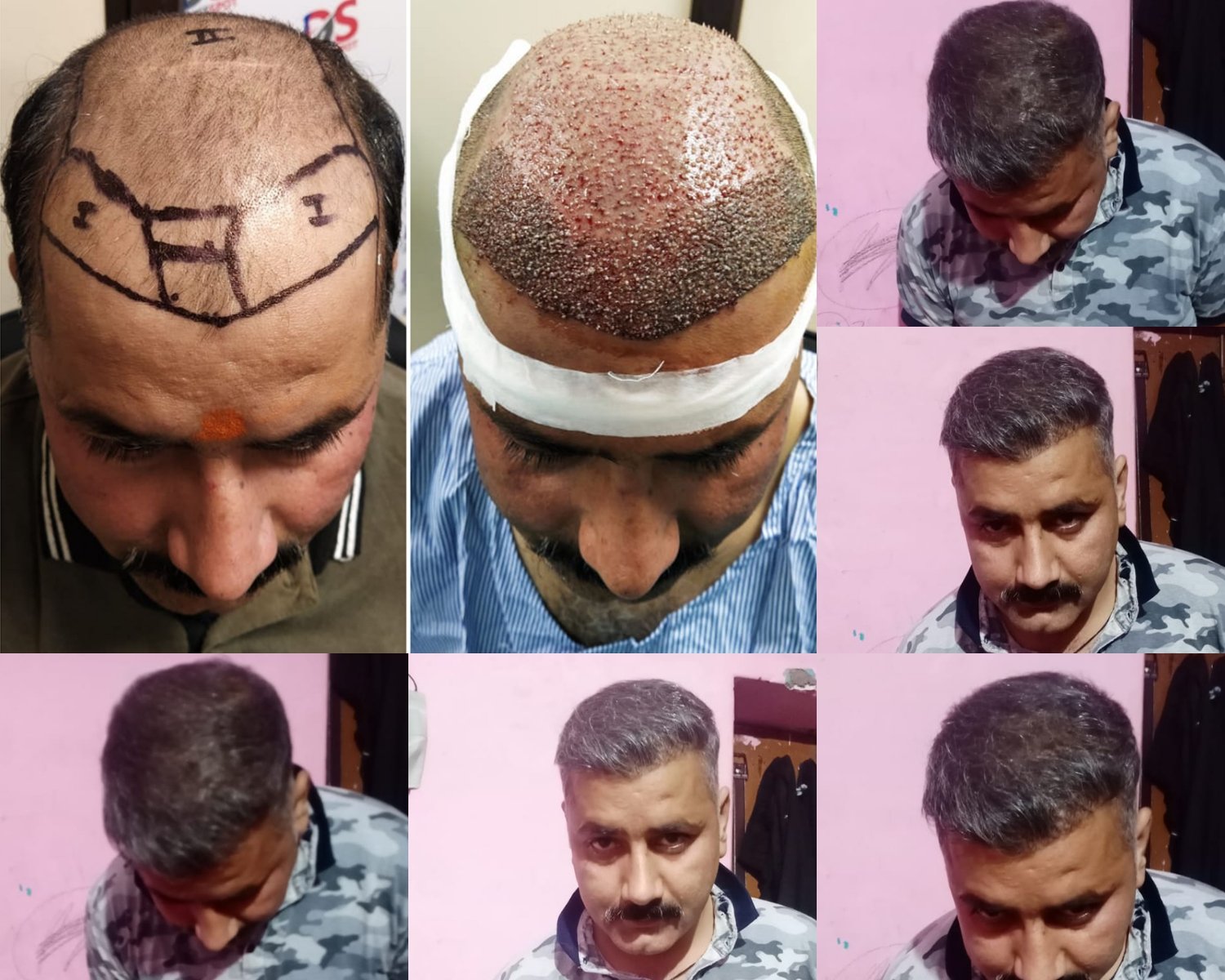
Uttam — Hairline & Temple Restoration
Receding hairline & frontal scalp completely restored with age-appropriate hairline design and dense graft placement.
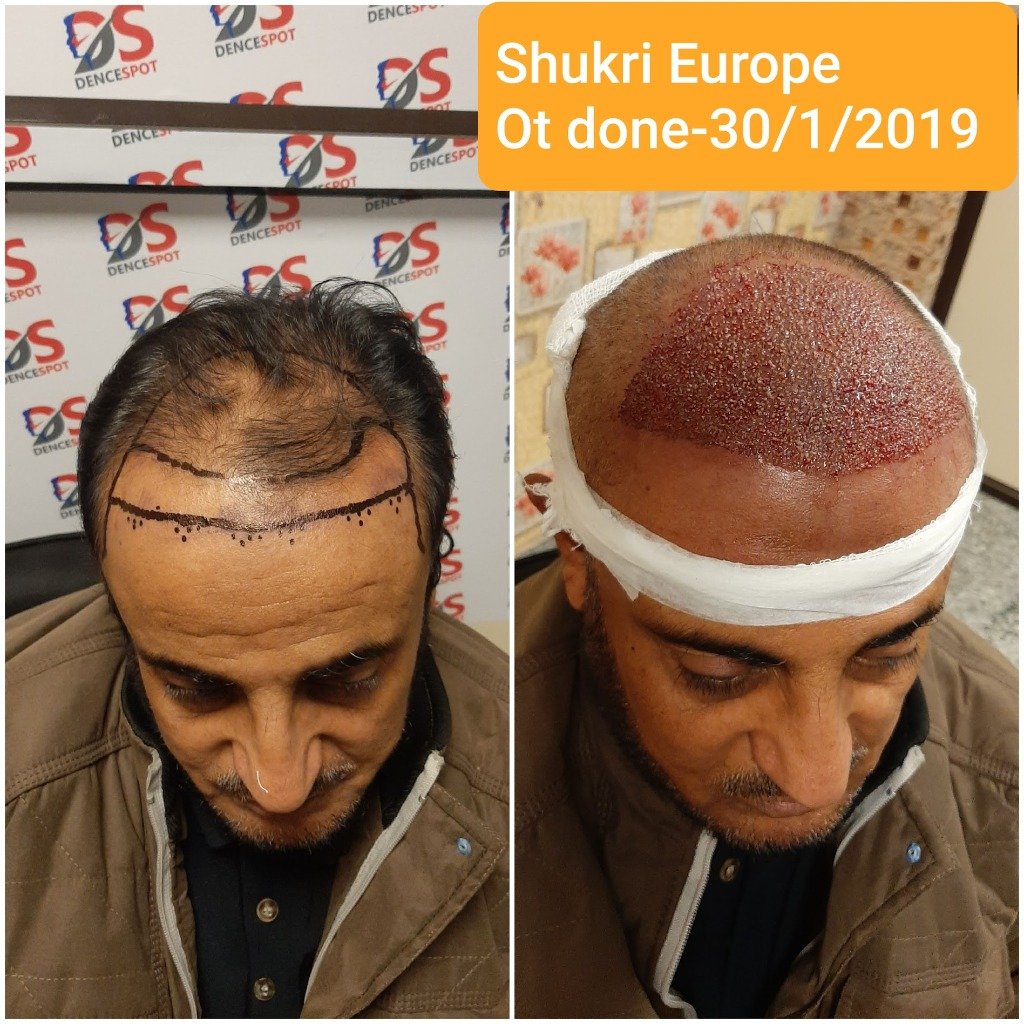
Shukri — Frontal Zone, Procedure Day
Hairline design and 2,800 grafts photographed immediately after placement. Growth is judged at ten to twelve months, so this shows the work, not the outcome.





Visit the clinic
Hairline Design and Surgery at Our Gurgaon Clinic
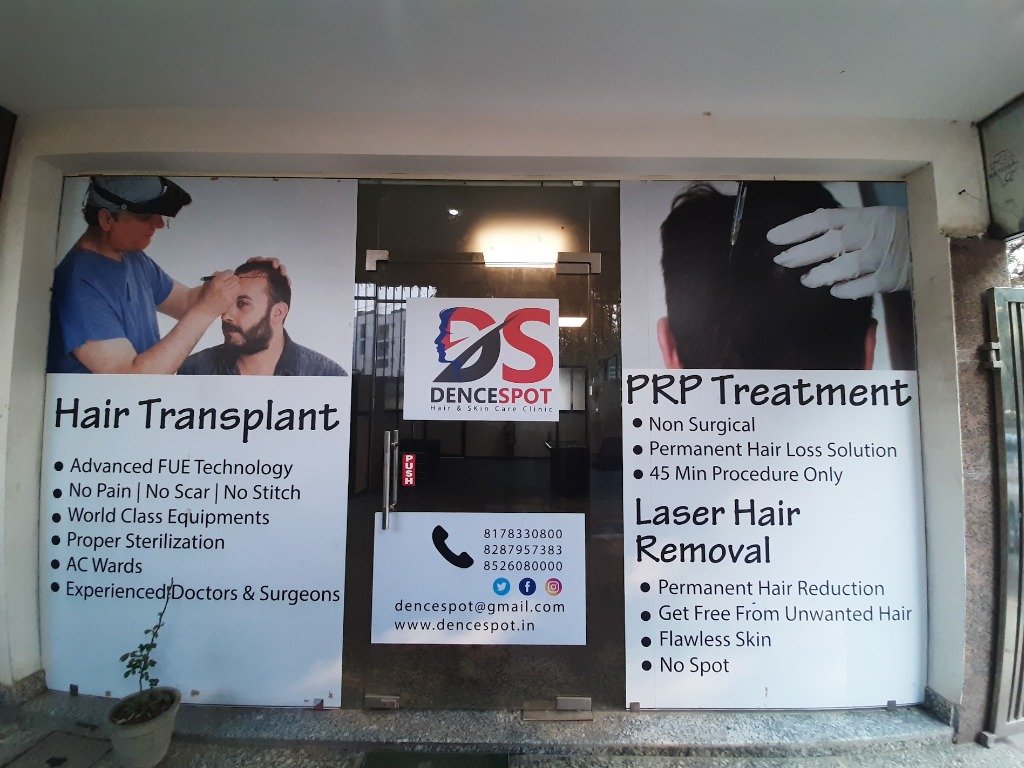
The consultation, the design, the procedure and every follow-up happen at our Sector 39 clinic in Gurugram, with the same doctor throughout. Patients travel to us from across Gurugram and neighbouring parts of South Delhi.
- Address
- 1123, Sector 39 Road, Jharsa, C Block, Sector 39,
Gurugram, Haryana 122003 - Phone
- +91 81783 30800
- Message +91 81783 30800
- dencespot@gmail.com
- Hours
- Mon–Sat · 10:00 – 20:00Sunday · closed
Getting here
Next step
See Your Hairline Drawn Before You Commit to It
Come in and have the line marked on your own forehead. You will get an honest view of where it belongs at your age and pattern of loss, what your donor can support, and a written plan — with no pressure to book a date on the day.
Suitability is determined after clinical assessment. This page is patient education and does not constitute medical advice.
Quick enquiry