FUE Hair Transplant in Gurgaon Without a Linear Donor Scar
FUE takes follicular units out of the donor area one at a time with a fine punch, so there is no strip and no linear scar. It is the technique most pattern hair loss is treated with. What decides whether it works for you is not the technique — it is how much your donor area can safely give.
- No linear scar — dot healing across the donor
- Day-case procedure under local anaesthetic
- Donor area mapped before any number is quoted
- Gurugram · Mon–Sat · 10:00 – 20:00
Performed & reviewed by
Dr. Nyra
MBBS, MD (Dermatology) · Owner & Chief Consultant, DenceSpot Clinic
Punch under magnification
Extraction judged graft by graft, not on autopilot.
No linear scar
Dot healing spread across the donor area.
Donor mapped first
What can safely be taken is measured, not guessed.
Home the same day
Local anaesthetic, day-case, you walk out.
Told if it is too early
Unstable loss is treated medically before surgery.
The basics, plainly
What Is an FUE Hair Transplant?
FUE stands for follicular unit extraction. Hair does not grow as single strands but in natural groupings of one to four hairs, called follicular units. In FUE, each of those units is removed from the donor area individually, using a punch typically well under a millimetre across, and every unit leaves a tiny round opening that heals as a pale dot rather than a line.
Those units are then sorted under magnification, kept in a holding solution, and placed into recipient sites made across the thinning area in the direction and angle the surrounding hair already grows. Once healed they behave exactly like the hair they came from — washed, cut and styled normally.
The donor area is the whole story. Hair at the back and sides of the scalp is generally resistant to the hormonal process behind pattern loss, which is why it is used, but it is a finite supply that has to last your lifetime. Take too much and the donor thins visibly, which cannot be undone. A responsible plan spends that supply across the areas that matter most to you, in the order that makes sense as the loss progresses.
This is why nothing sensible can be quoted from a photograph. Two people with identical-looking recession can have completely different donor density, and the plans that follow are not comparable.
In one line
FUE moves your own permanent hair; it does not create new hair. Donor supply, not technique, sets the ceiling on what is achievable.
Suitability
Who FUE Suits
FUE covers the broadest range of cases of the three techniques. These are the presentations it is most often the right answer for — confirmed only after examining your donor area.
Receding hairline
A defined, stable recession with enough donor behind it to rebuild the frontal third and keep something in reserve.
Crown thinning
The crown swallows grafts because of the way hair whorls there. It is treatable, but it needs an honest conversation about donor budget first.
Broad coverage in one session
Where several zones need work, FUE places grafts efficiently over a large area in a single day.
Short hairstyles
If you wear your hair very short or shave the sides, dot healing conceals far better than a linear scar would.
Repair and refinement
Softening a hairline that was placed too straight or too low elsewhere, or filling gaps left by an earlier procedure.
Stable, staged pattern loss
Loss that has settled into a recognisable pattern, in someone who understands that surrounding hair keeps thinning.
Read this before comparing quotes
A Graft Is Not a Hair — and That Is Where Quotes Go Wrong
This one distinction explains most of the price confusion in the Gurgaon market. It is worth two minutes.
Graft
One follicular unit — a natural grouping that contains anywhere from one to four hairs. It is what gets extracted and what gets placed. It is also the unit almost every clinic prices in.
Hair
A single strand. Two thousand grafts might carry anywhere from roughly 4,000 to 5,000 hairs depending on the donor — which is why some clinics quote hair counts instead. The number looks bigger. The transplant is the same size.
Three questions that make quotes comparable
“Grafts or hairs?”
If one clinic quotes 4,500 and another 2,000, they may be describing the same procedure. Always ask which unit the number is in.
“How was that count arrived at?”
A count should come from a zone-by-zone map of your scalp. A round number offered over the phone is a sales figure, not a plan.
“What is left for later?”
Pattern loss continues. A plan that empties the donor now leaves nothing for the recession you will have in ten years.
The cheapest per-graft rate applied to an inflated graft count is more expensive than an honest quote, and it costs donor hair you cannot get back. This is the single most useful thing to understand before you speak to any clinic — including this one.
Why here
Why Have FUE Done Here?
Donor budget, not a sales figure
Your donor is measured and mapped, and the graft number follows from it. If what you want is not supportable by what you have, you are told at the consultation, not on the day.
Hairline drawn on your face
Position, shape and deliberate irregularity judged against your features, your forehead and your age — not a template traced onto everyone.
Extraction judged graft by graft
Punch size and depth adapted to your hair calibre and skin as the session goes on, to keep transection down and the donor looking even.
Doctor-performed, not delegated
The doctor who assessed you does the extraction and site creation. You are told in advance exactly who does what.
Written, itemised estimate
The graft number, the technique, what is included and what is not — in writing, before you book a date. Nothing is added afterwards.
Reviews that are scheduled
Follow-up at fixed points with standardised photographs, so growth is judged against a record rather than memory.
Start to finish
Your FUE Journey
Seven stages, in the order you will experience them.
Consultation
History, medication review, and what you actually want the result to do.
Scalp & donor exam
Density, calibre and laxity measured; pattern staged; baseline photographs.
Graft mapping
Zone-by-zone count and a hairline drawn on your face for you to approve.
Written plan
Technique, graft number, timeline, cost and what is left in reserve.
Procedure day
Local anaesthetic, extraction, site creation and placement, with breaks.
First-week care
Washing taught in person, crusting settles, review before normal life resumes.
Growth reviews
Shedding, regrowth and density tracked photographically to twelve months.
On the day
How an FUE Procedure Works
A day case, start to finish. Larger sessions run through most of the day with proper breaks.
Design and consent
The hairline is drawn while you are sitting upright, checked in a mirror, and agreed before anything else happens. Nothing is redrawn once you are lying down.
Donor preparation
The donor area is trimmed to a uniform short length so the punch can follow each follicle accurately, then anaesthetised locally.
Extraction
Follicular units are removed one at a time with a fine punch. Punch size is matched to your hair, and the harvest is spread across the donor so density stays even rather than patchy.
Sorting under magnification
Grafts are separated by how many hairs each carries and held in solution. Single-hair units are set aside for the hairline; multi-hair units go behind, where density reads.
Recipient sites
Sites are made at the angle, direction and depth the surrounding hair grows. This step, more than extraction, is what makes a result look grown rather than planted.
Placement and discharge
Grafts are placed into the prepared sites, the donor is dressed, medication and written aftercare are issued, and you go home the same day.
Before the day
- Bring your full medication list, including supplements.
- Stop alcohol and avoid blood thinners as instructed.
- Eat a proper breakfast — it is a long day.
- Wear a shirt that buttons, not something pulled over the head.
- Arrange a lift home if you would rather not drive.
Recovery & results
What Happens After FUE
A general guide to the phases most patients describe after FUE. Your own timeline is set by your doctor at your reviews.
Crusts and dot healing
Small crusts around each graft and pinpoint scabbing across the donor. Washing starts as instructed. Most people return to desk work within a few days.
Shedding
Transplanted hairs commonly fall while the follicles stay put. Expected, and the most misunderstood phase — it is not a failed procedure.
New growth
Fine new hairs start to appear, unevenly at first and often finer than the final texture. Donor dots have usually faded by now.
Density builds
Coverage thickens and hair coarsens. This is the stretch where progress is easiest to see between photographs and hardest to judge in the mirror.
The real result
A fair assessment of what the procedure achieved. Non-transplanted hair keeps thinning on its own schedule, so medical treatment often continues alongside.
Individual recovery and growth vary. Transection, healing, donor characteristics and how closely aftercare is followed all affect the outcome. Timelines here are general patient education, not a promise of results, and no clinic can guarantee a specific density.

Who performs and reviews this treatment
Dr. Nyra, MBBS, MD (Dermatology)
Owner & Chief Consultant, DenceSpot Clinic
Qualified MBBS from Dr. D. Y. Patil Medical College, and holds an MD in Dermatology. Three years of clinical work in Germany followed — two at Bio Hair Clinic and one at St. Georg Klinikum Eisenach — before establishing DenceSpot in Gurugram.
Why the donor assessment matters more than the technique: FUE is often sold on the fact that it leaves no linear scar, which is true and largely beside the point. What determines whether you are happy in ten years is whether the donor was read correctly and spent sensibly. Over-harvesting is the one complication that cannot be revised.
Qualification
MBBS, MD (Dermatology)
Training
3 years, Germany
Specialization
Dermatology
Cost guidance
FUE Hair Transplant Cost in Gurgaon
There is no single price for FUE, in Gurgaon or anywhere else. Cost follows the plan and the plan follows the assessment, so we publish the factors rather than a headline figure and give you an itemised estimate in writing.
Number of grafts
Counted from the mapped plan, not estimated
Hair-loss stage
How much area needs coverage
Donor density
What can safely be harvested
Session structure
One session or staged across two
Hair characteristics
Calibre, curl and colour contrast all affect coverage
Supporting treatment
Medical therapy or PRP running alongside
A word of caution about “per graft, starting from” pricing: a low rate applied to an inflated graft count costs more than an honest quote, and the currency you overspend is donor hair. Ask any clinic how the graft number was arrived at, and what the price includes.
Working through the numbers first? See our full breakdown of hair transplant cost in Gurgaon, including what changes the per-graft rate.
Get a Personalized Treatment Estimate
Send photos of the front, crown and donor area on WhatsApp, or request a call back. You will get an assessment appointment — not a sales pitch.
Send photos on WhatsApp Request an estimate by formYour details are used only to arrange your consultation.
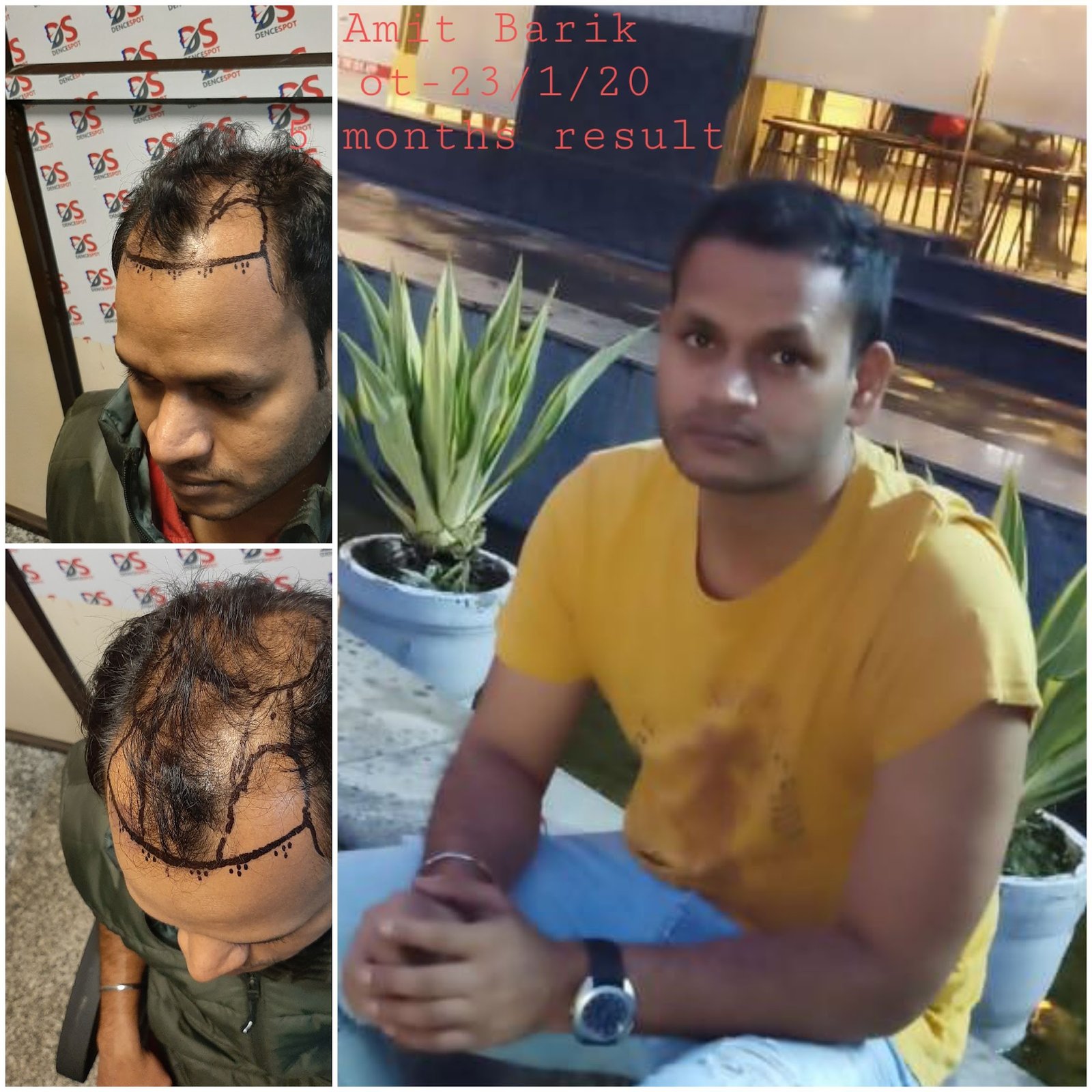
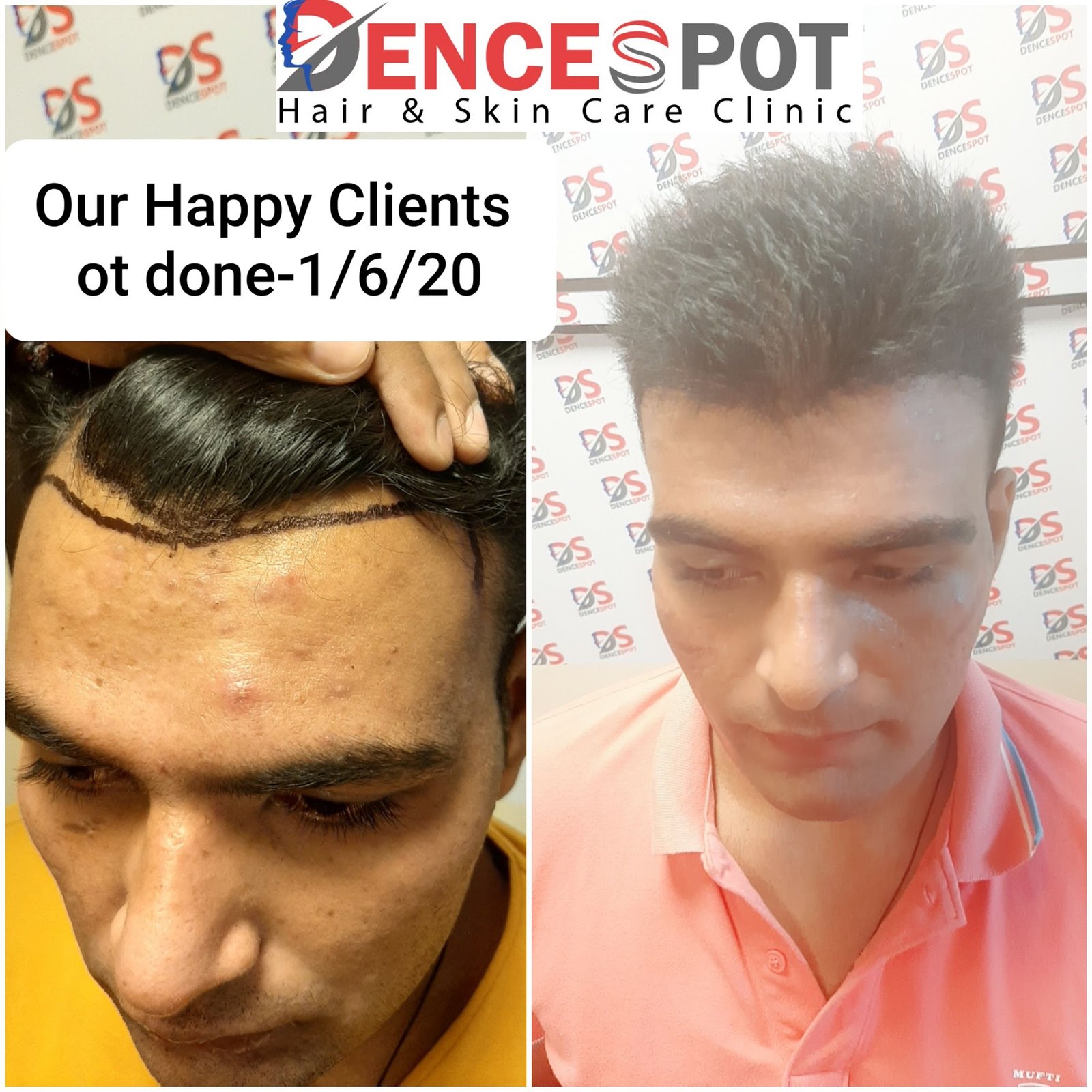
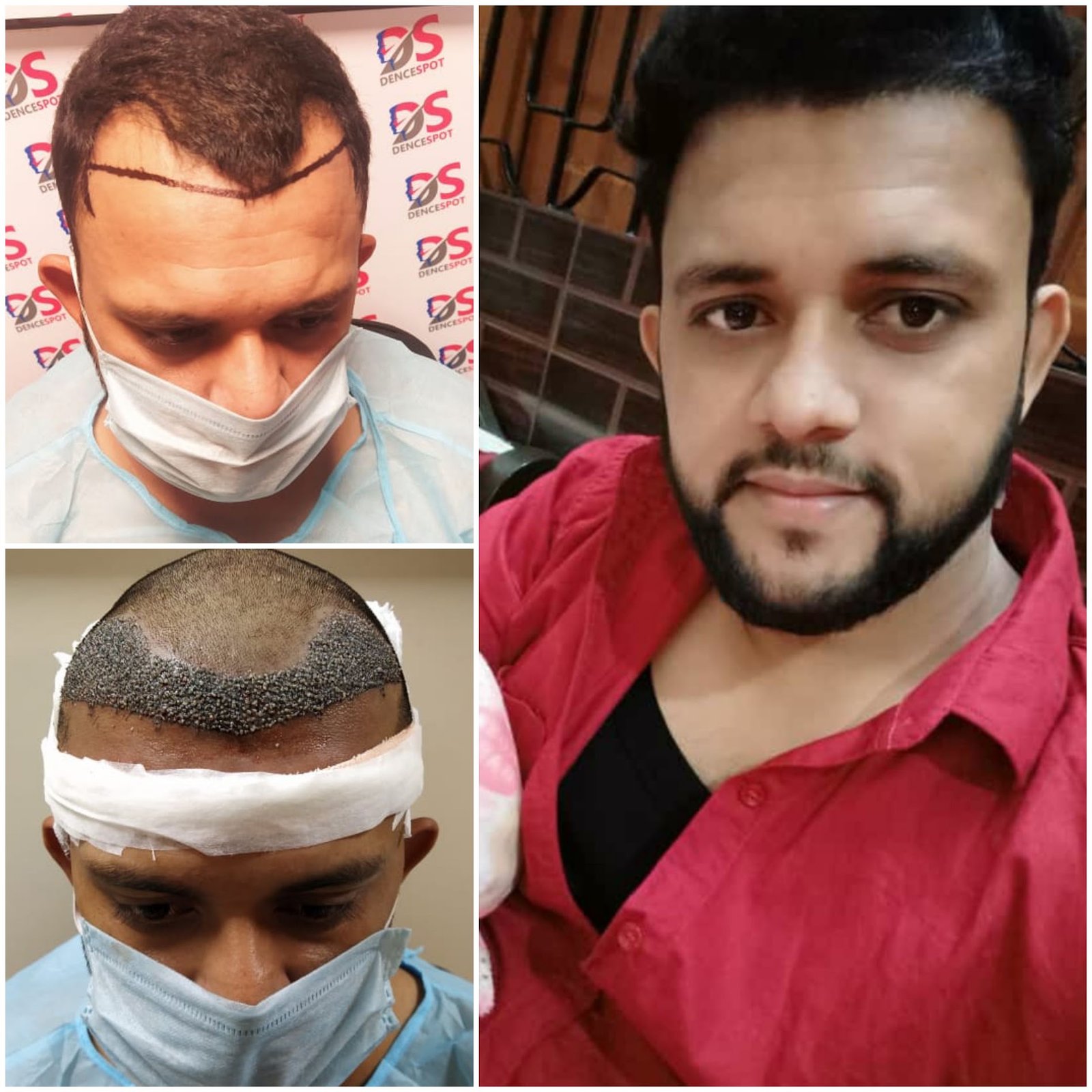
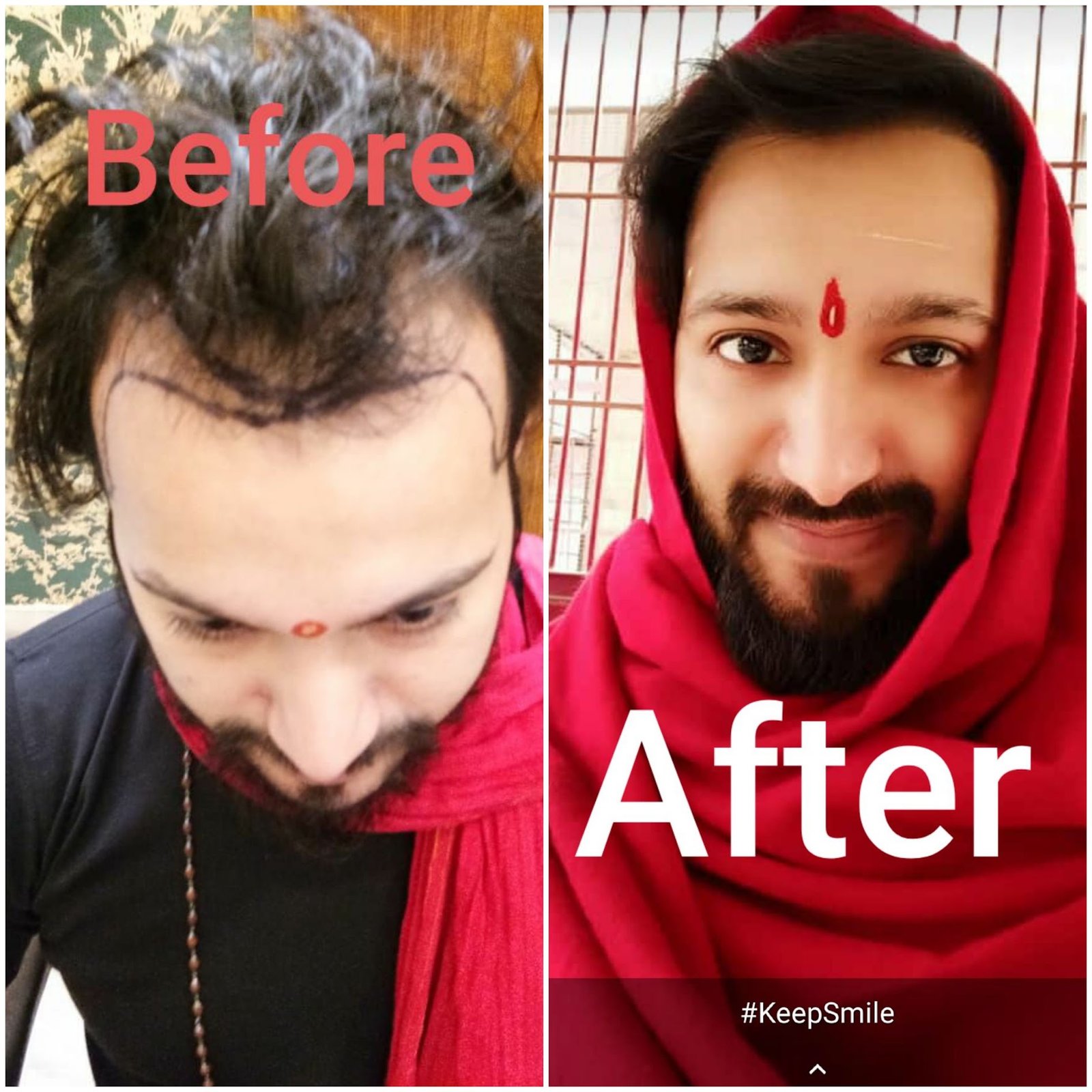
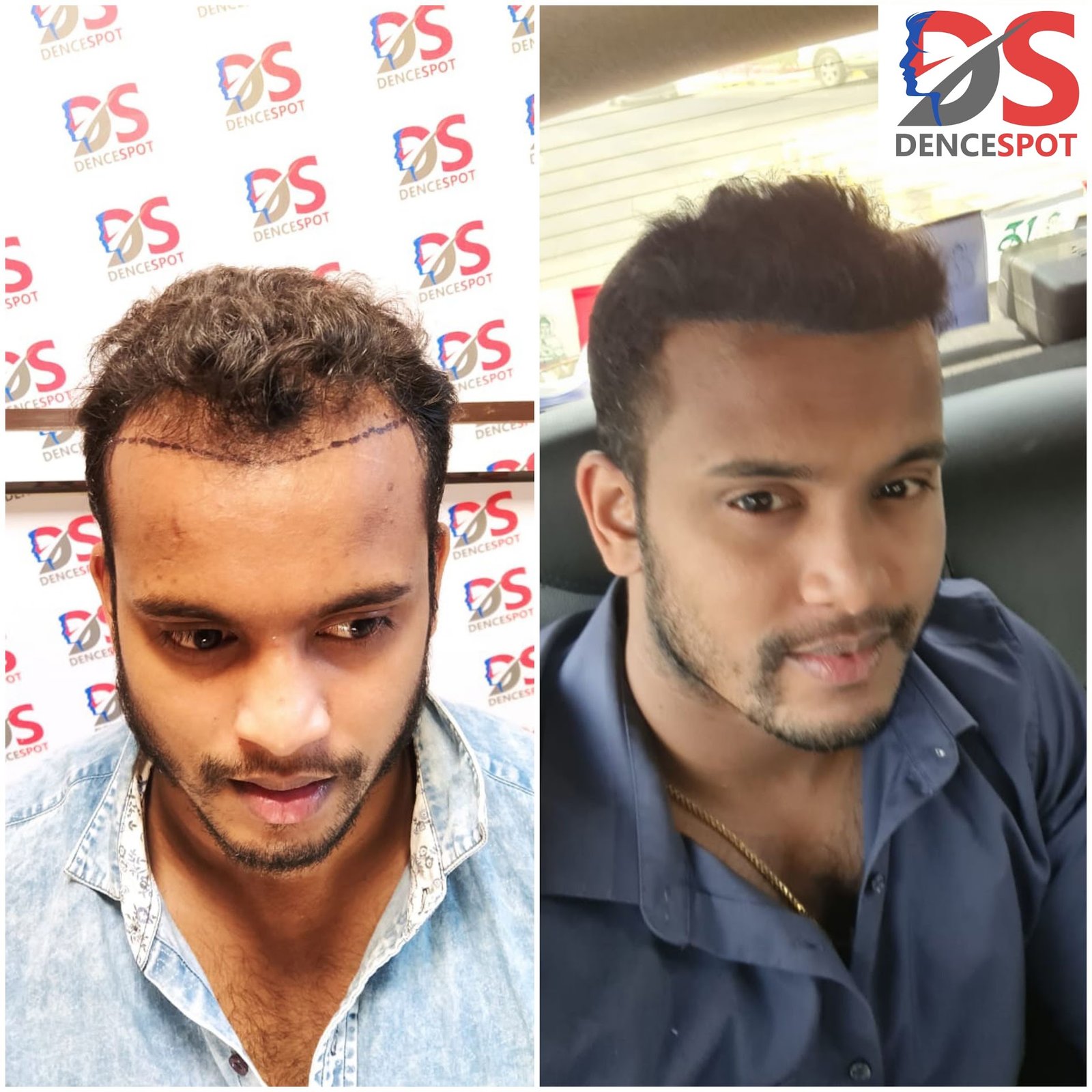
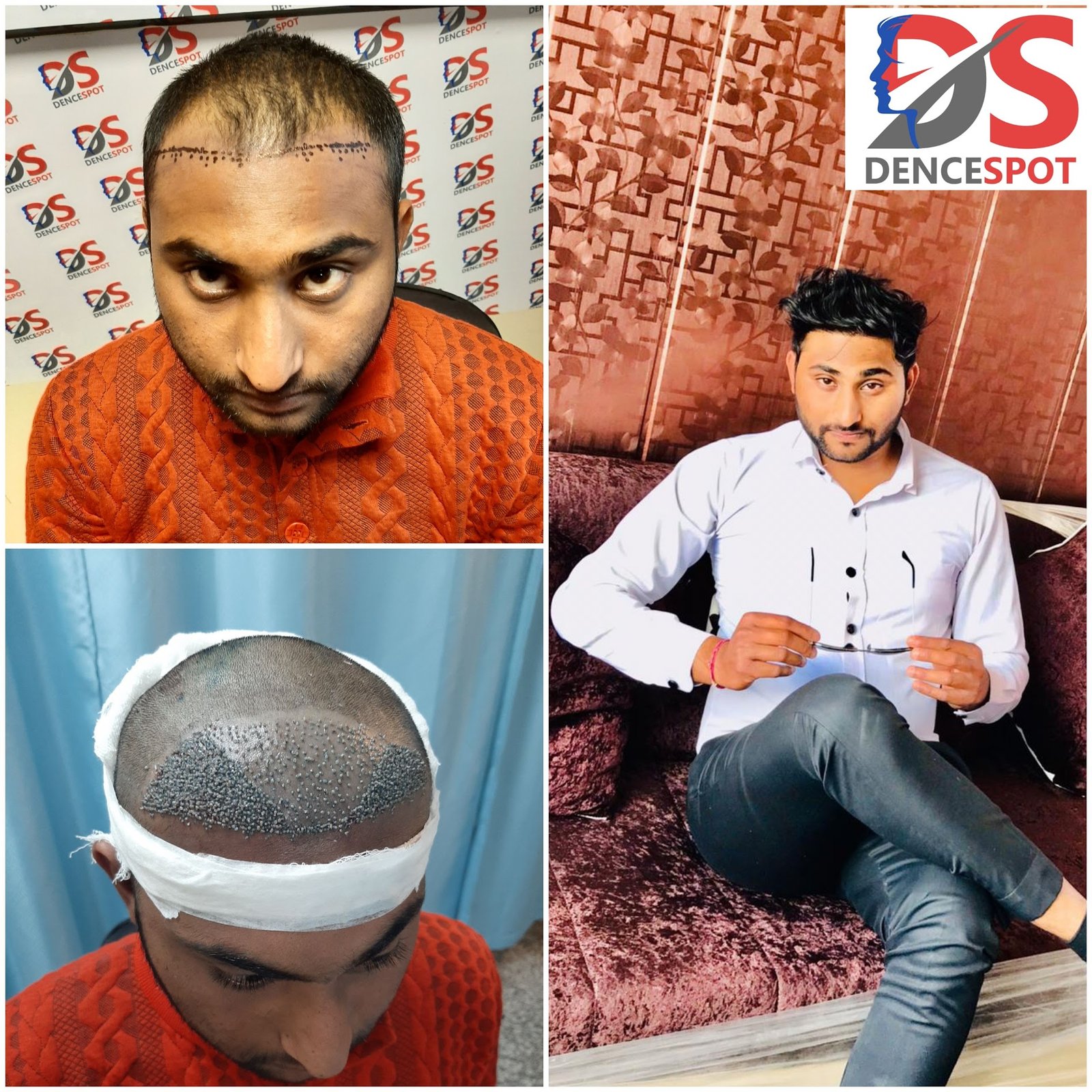
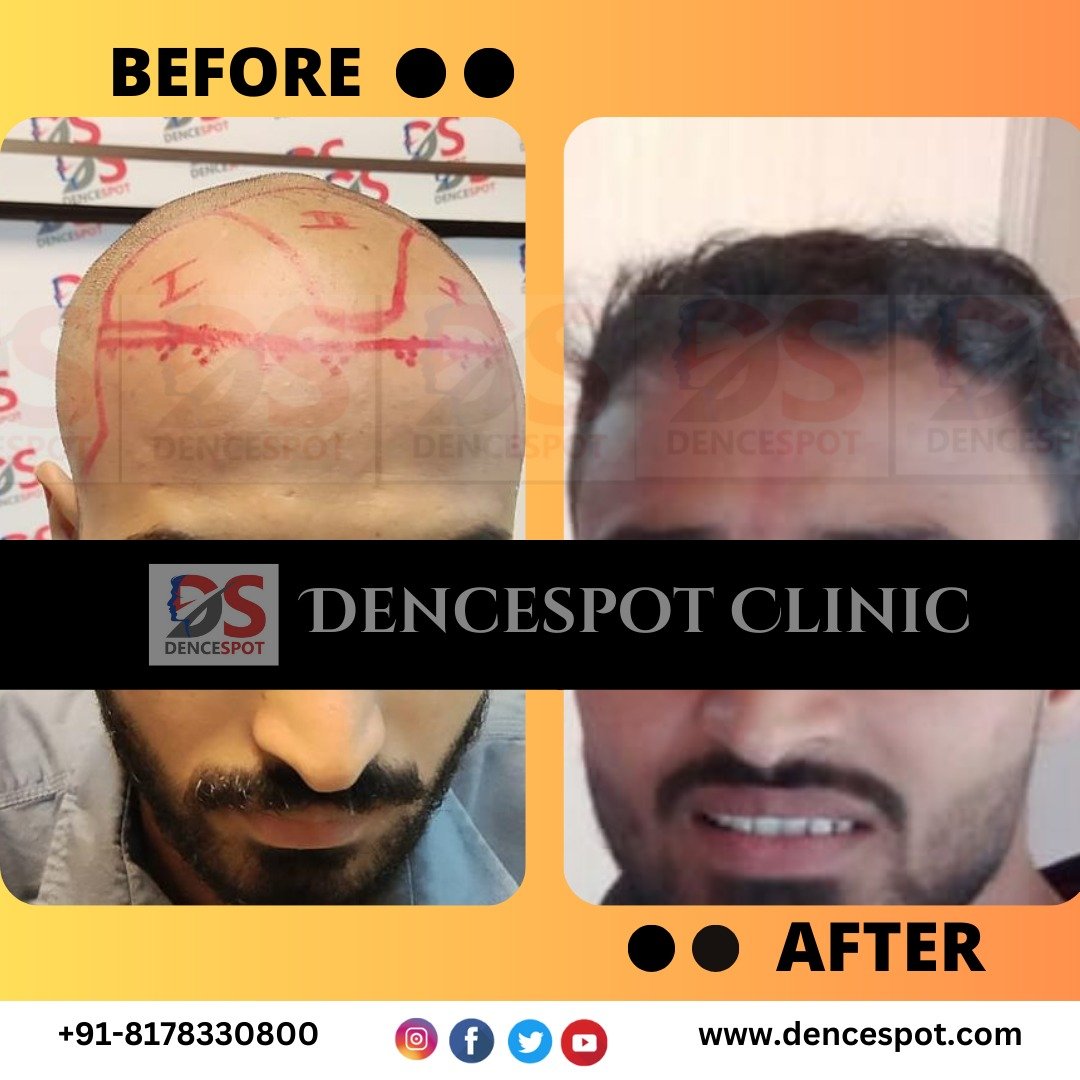
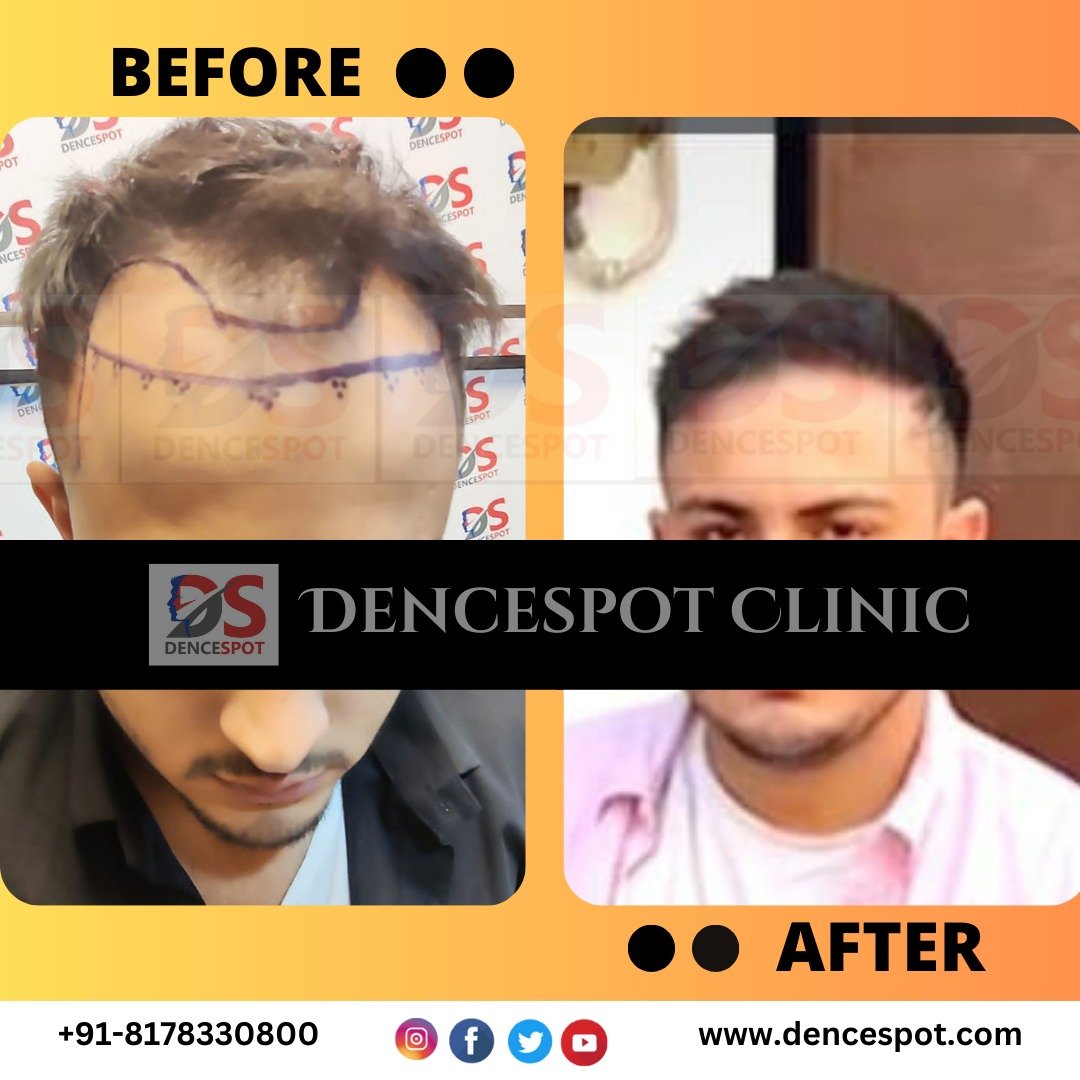
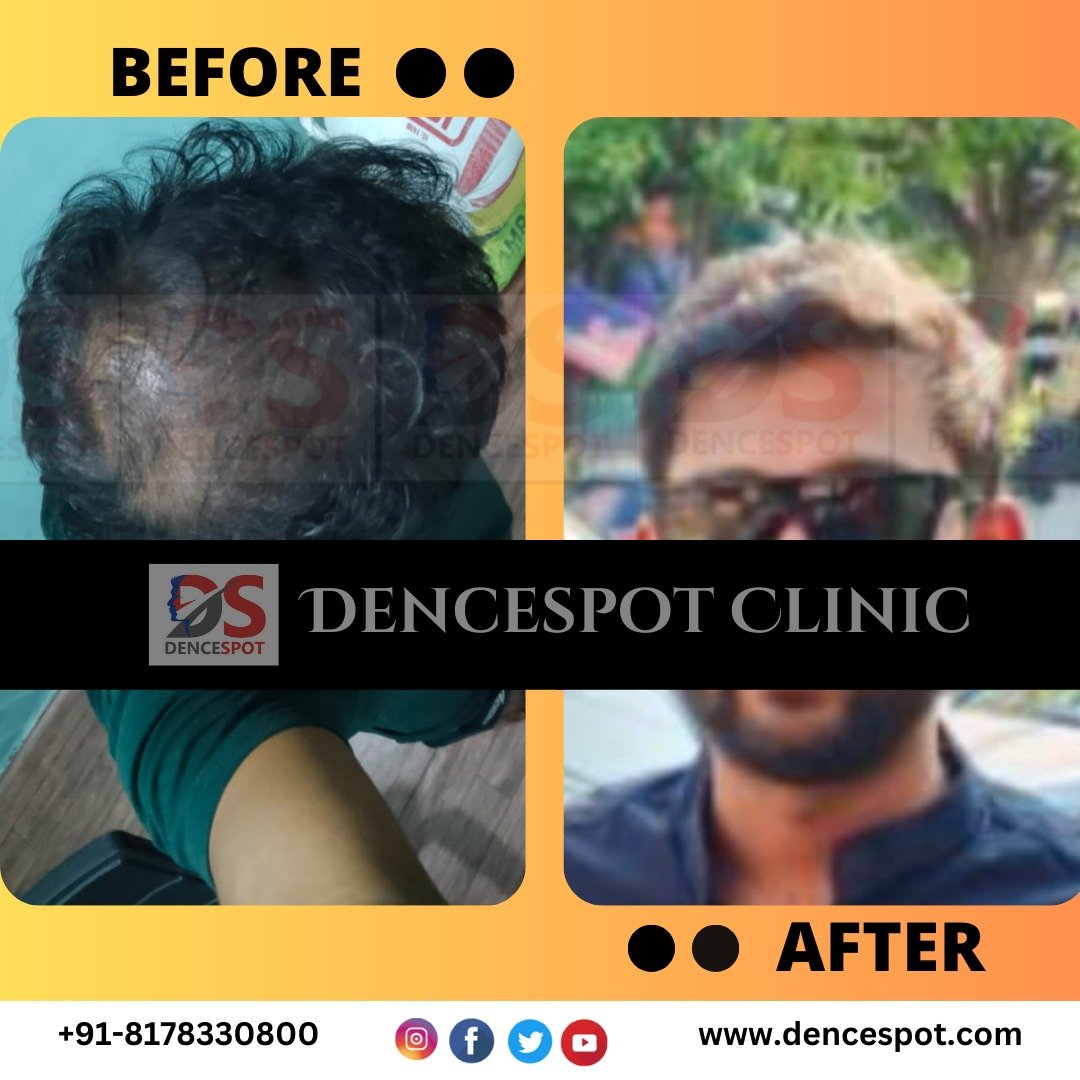
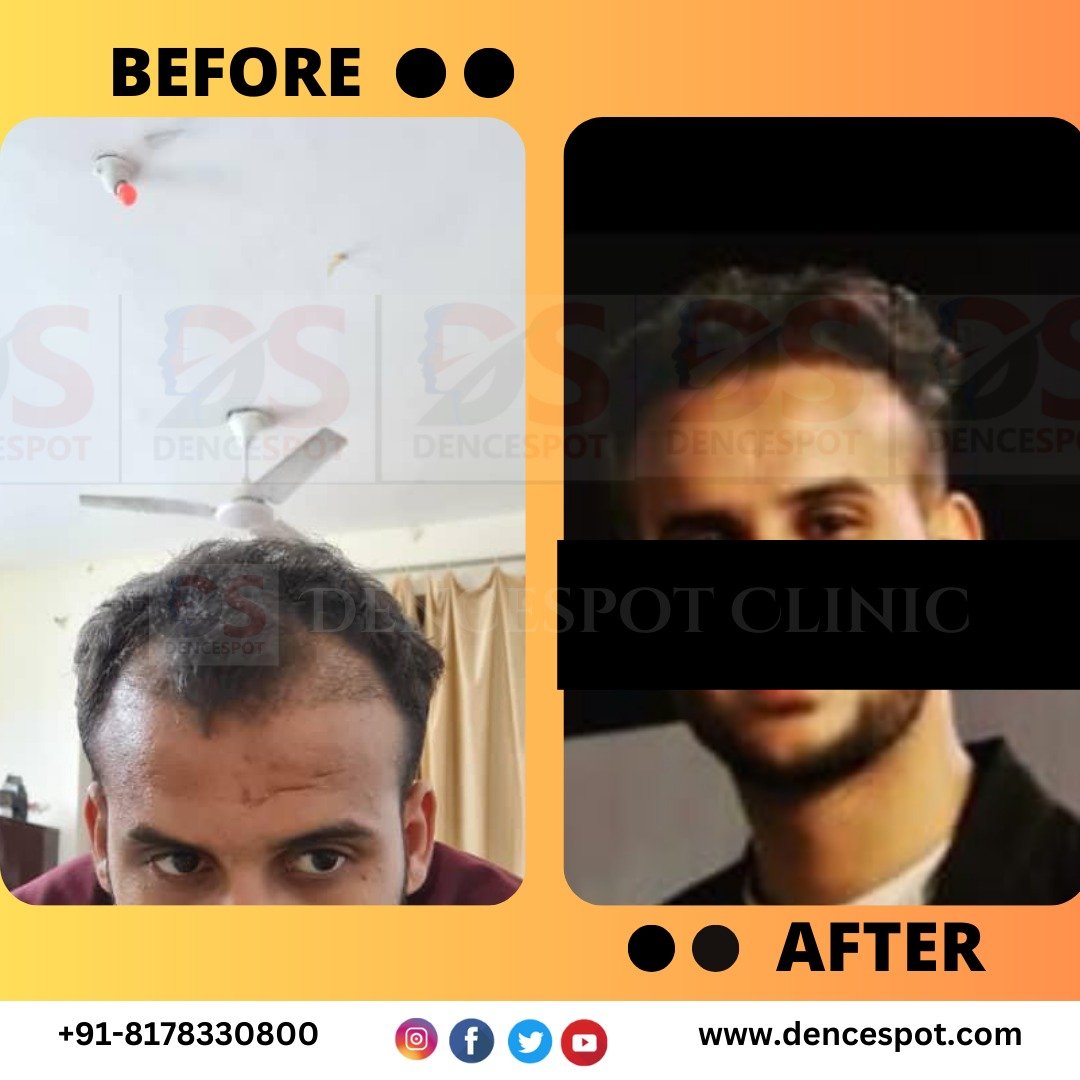
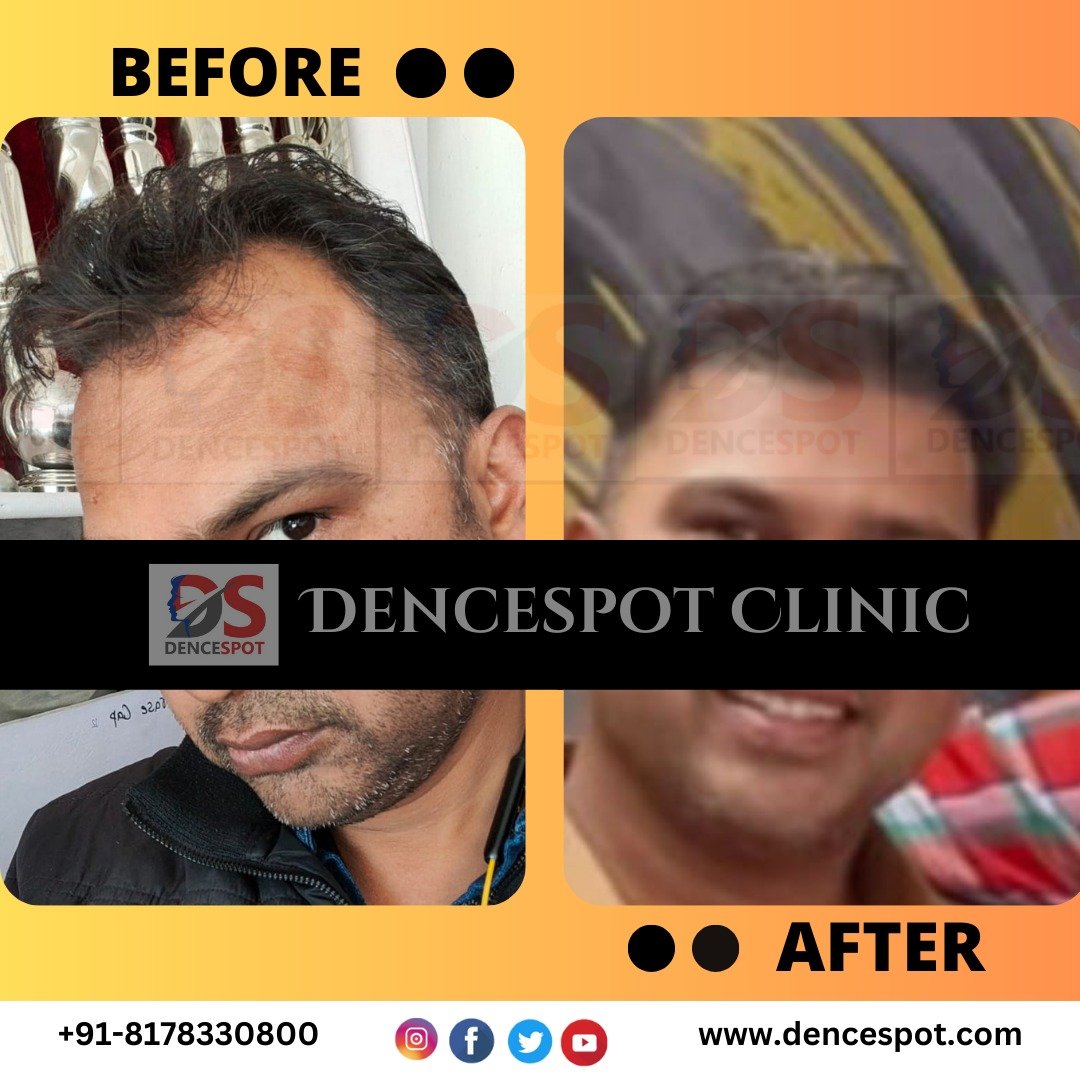
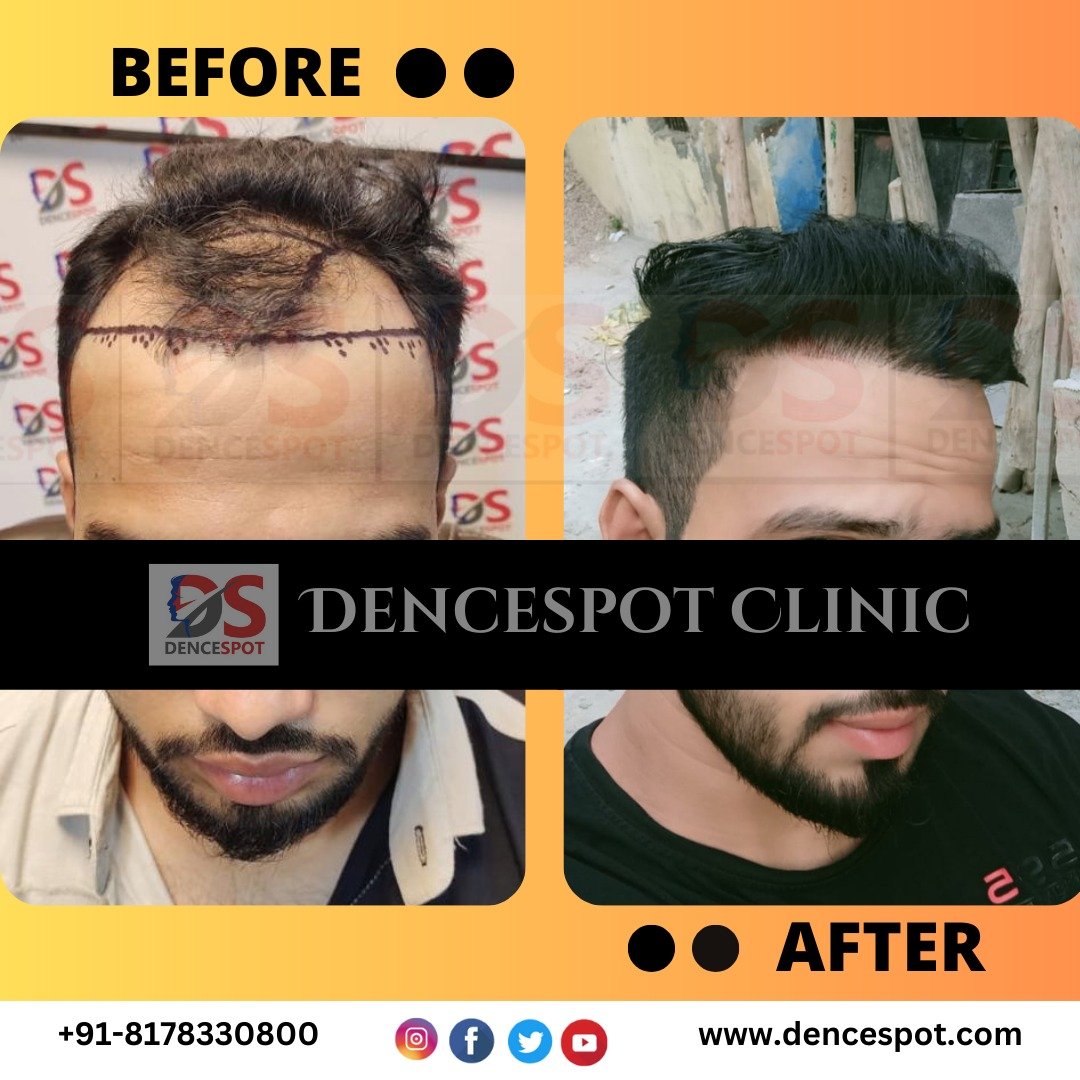
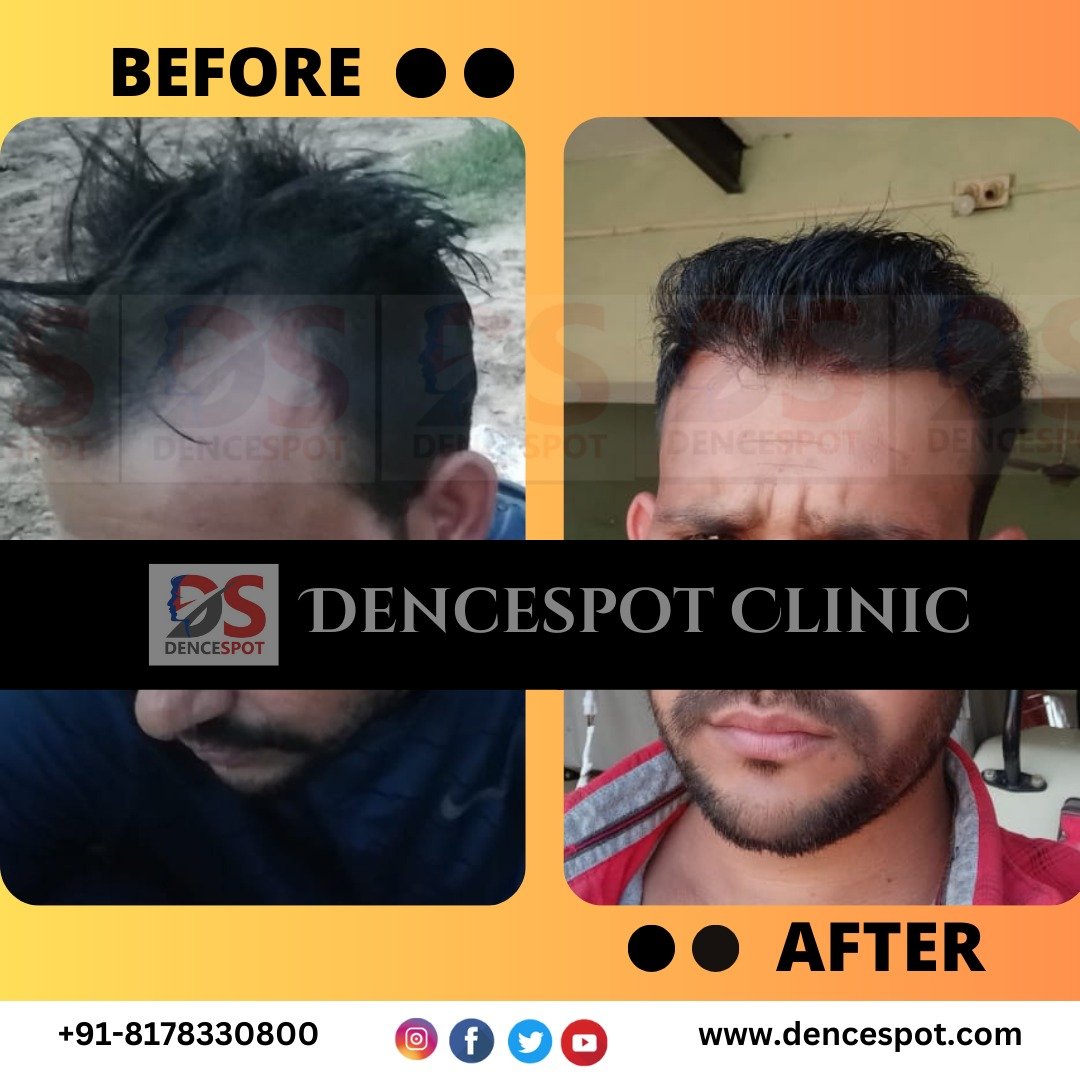
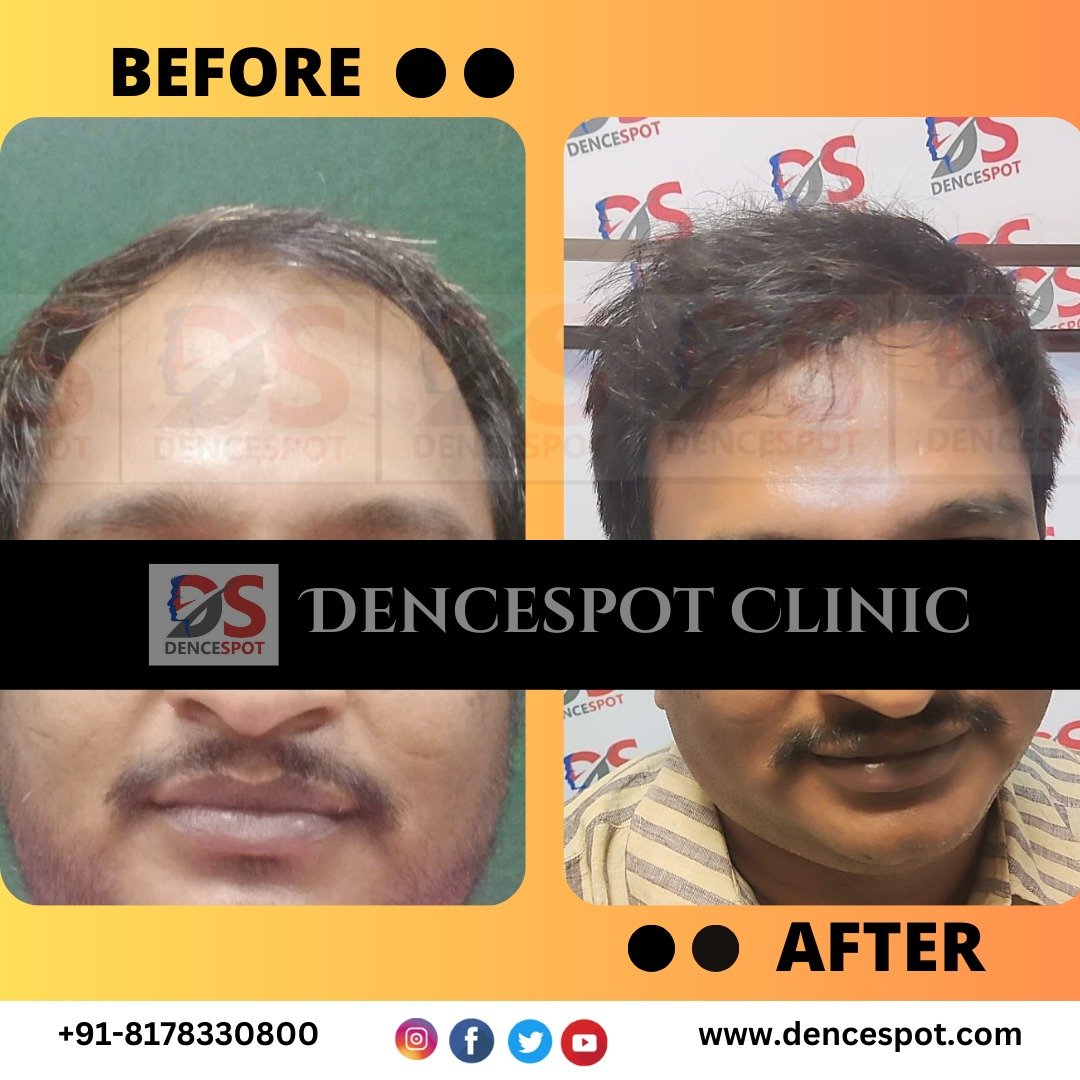
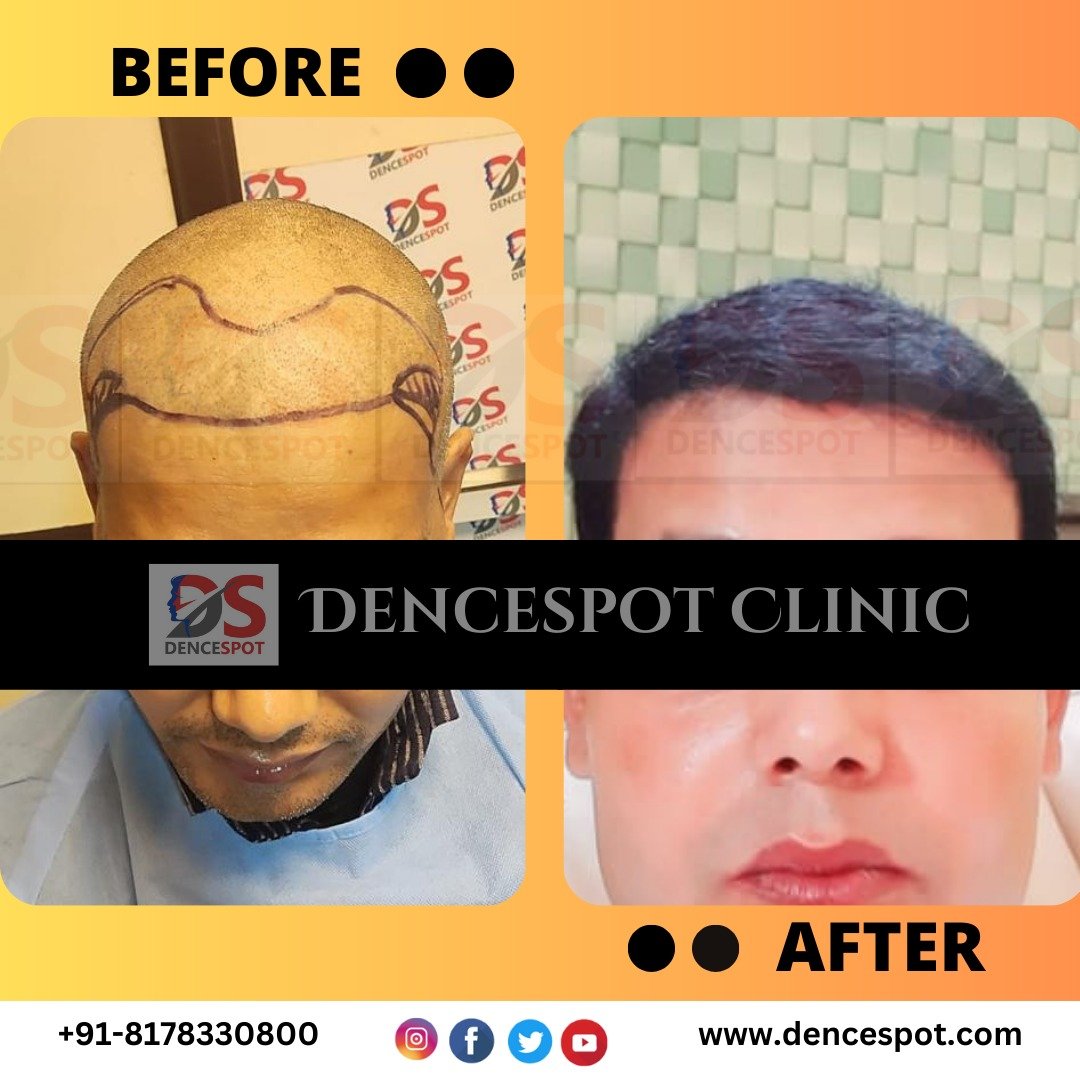
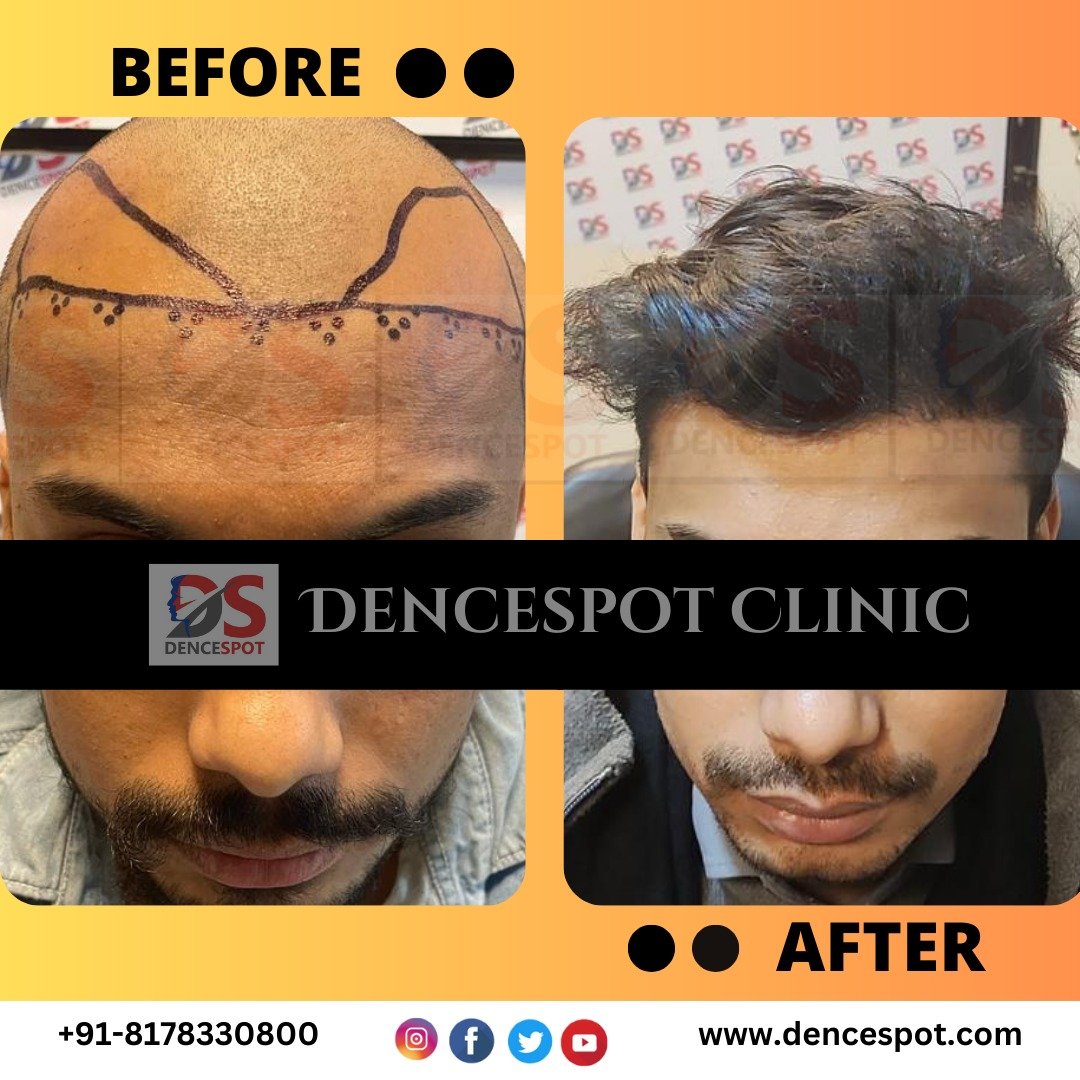
Before & After Hair Transplant Cases in Gurgaon
Consented photographs, with the hair never digitally altered, from patients treated personally by Dr. Nyra at DenceSpot Clinic, Sector 39 Gurugram. Results vary between patients, and hair restoration is judged at ten to twelve months.
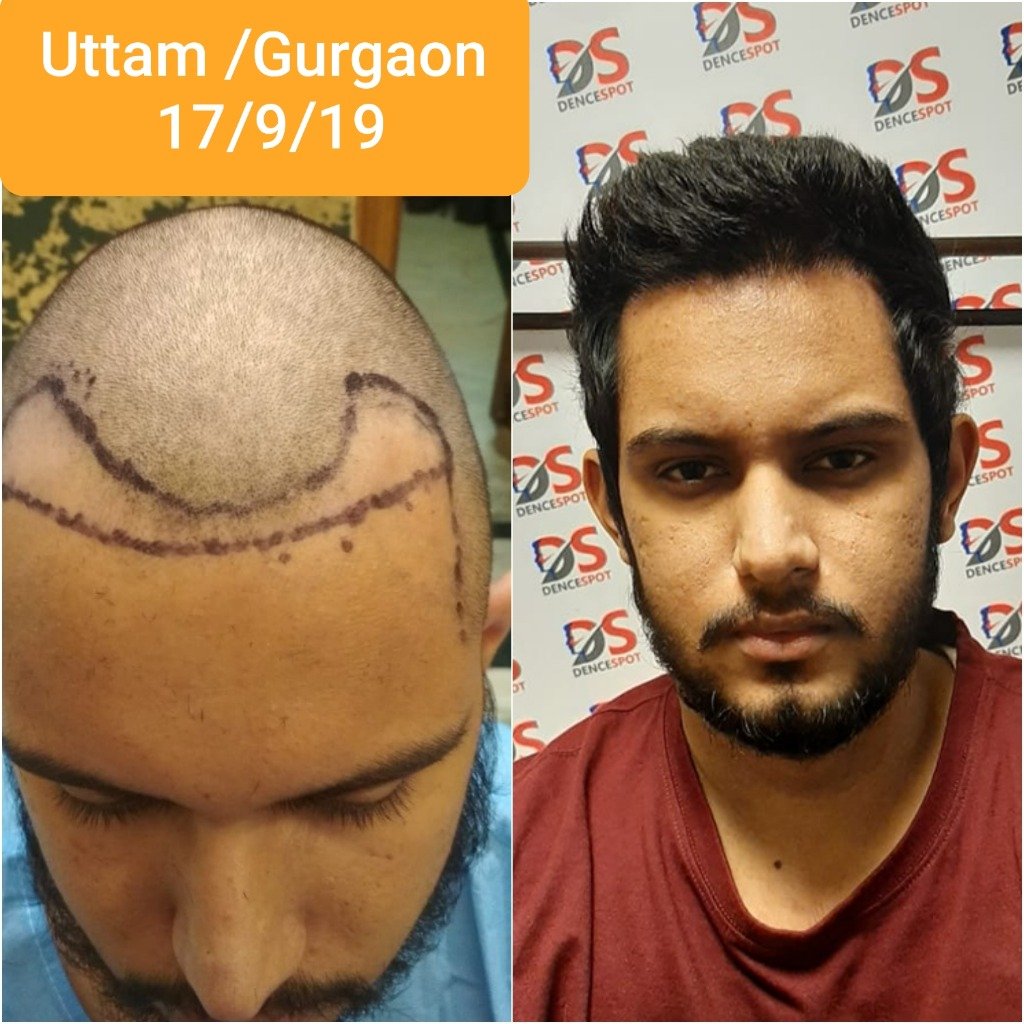
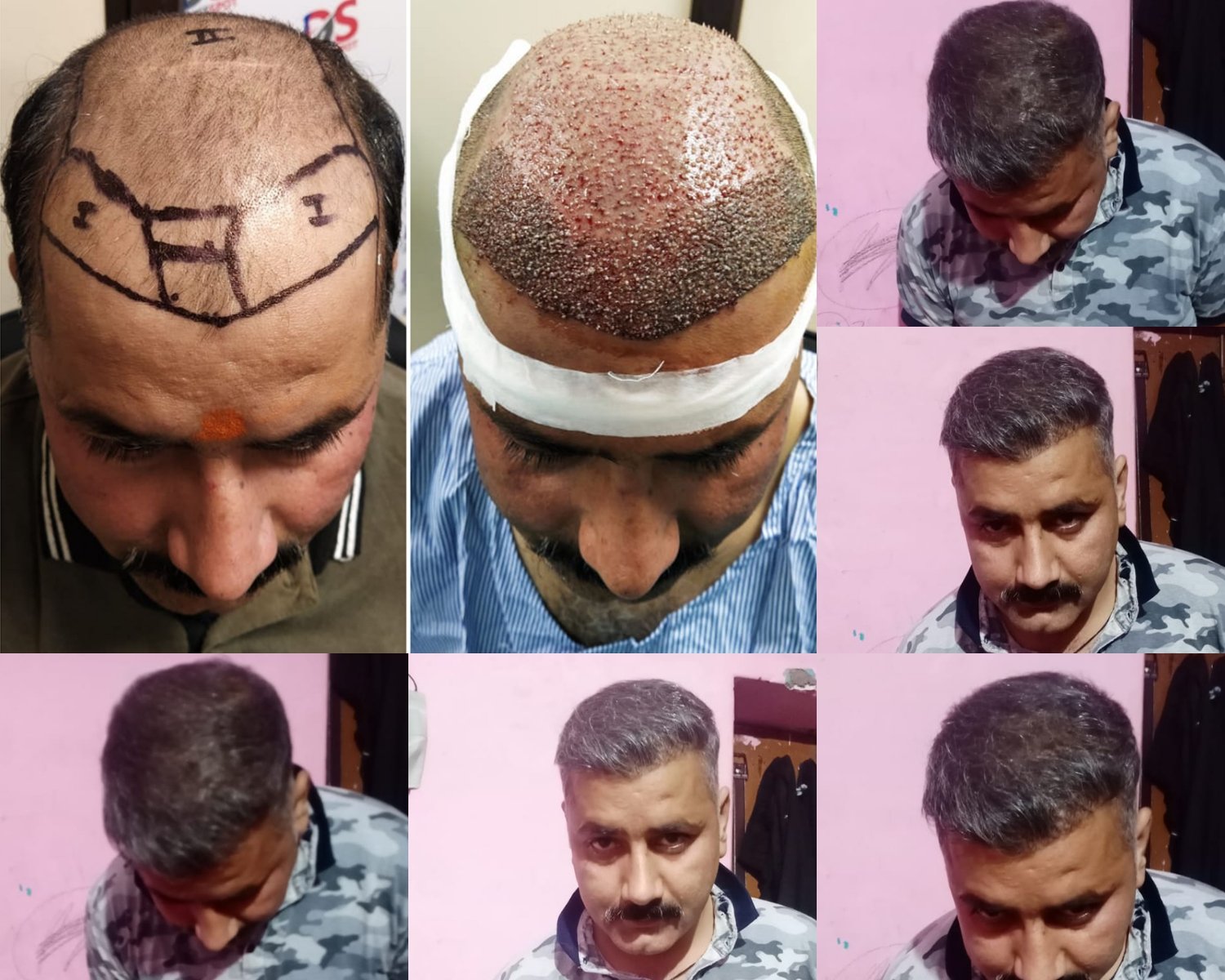
Uttam — Hairline & Temple Restoration
Receding hairline & frontal scalp completely restored with age-appropriate hairline design and dense graft placement.
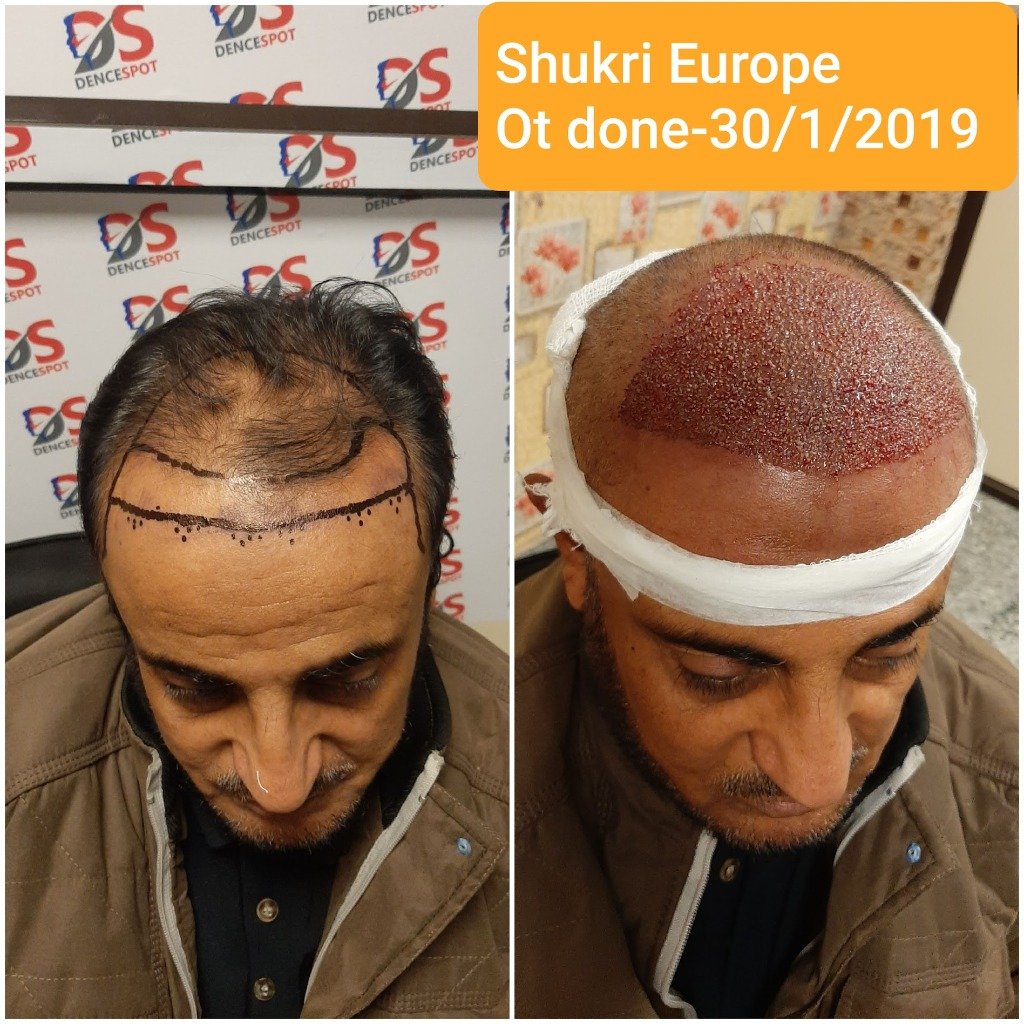
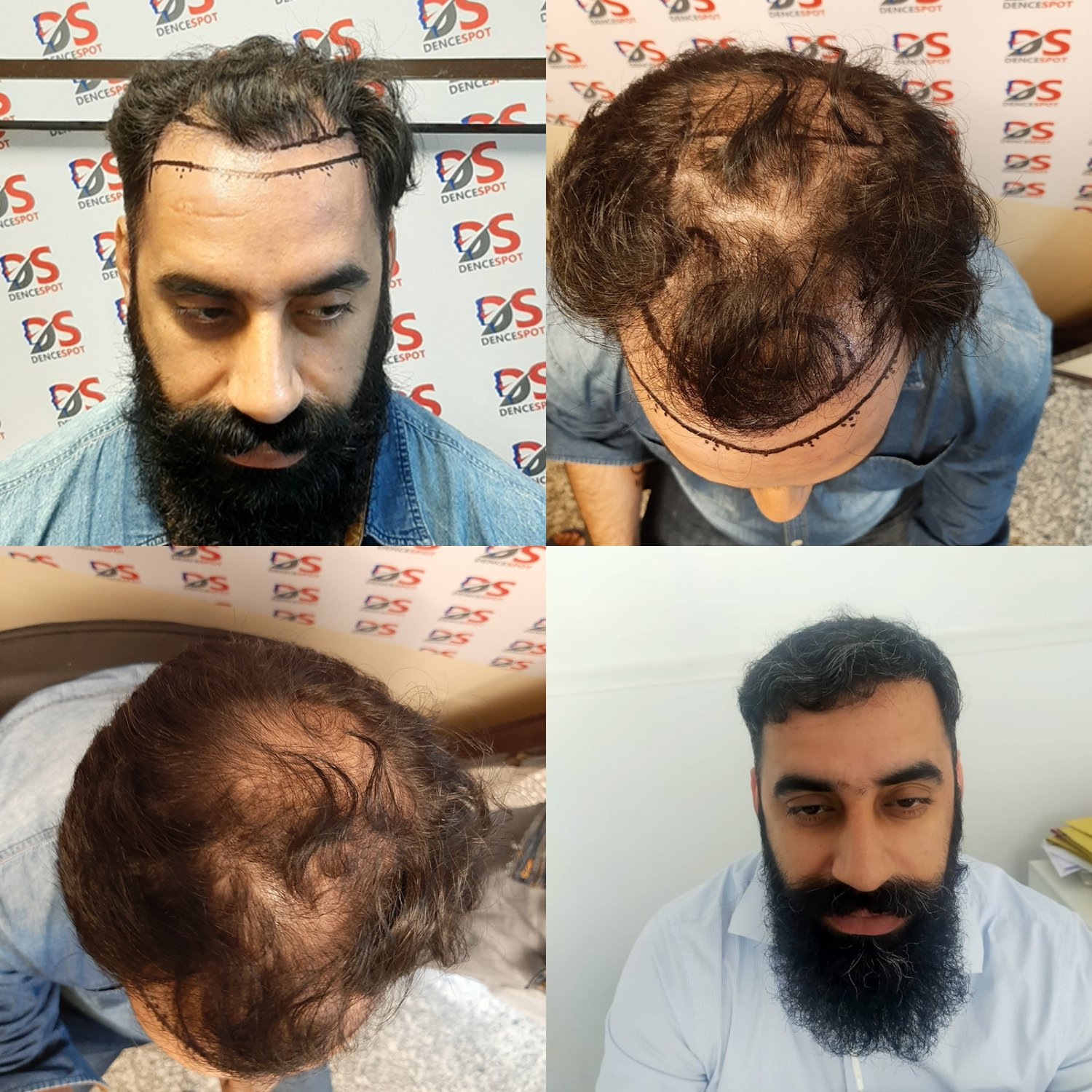
Shukri — Frontal Zone, Procedure Day
Hairline design and 2,800 grafts photographed immediately after placement. Growth is judged at ten to twelve months, so this shows the work, not the outcome.
Visit the clinic
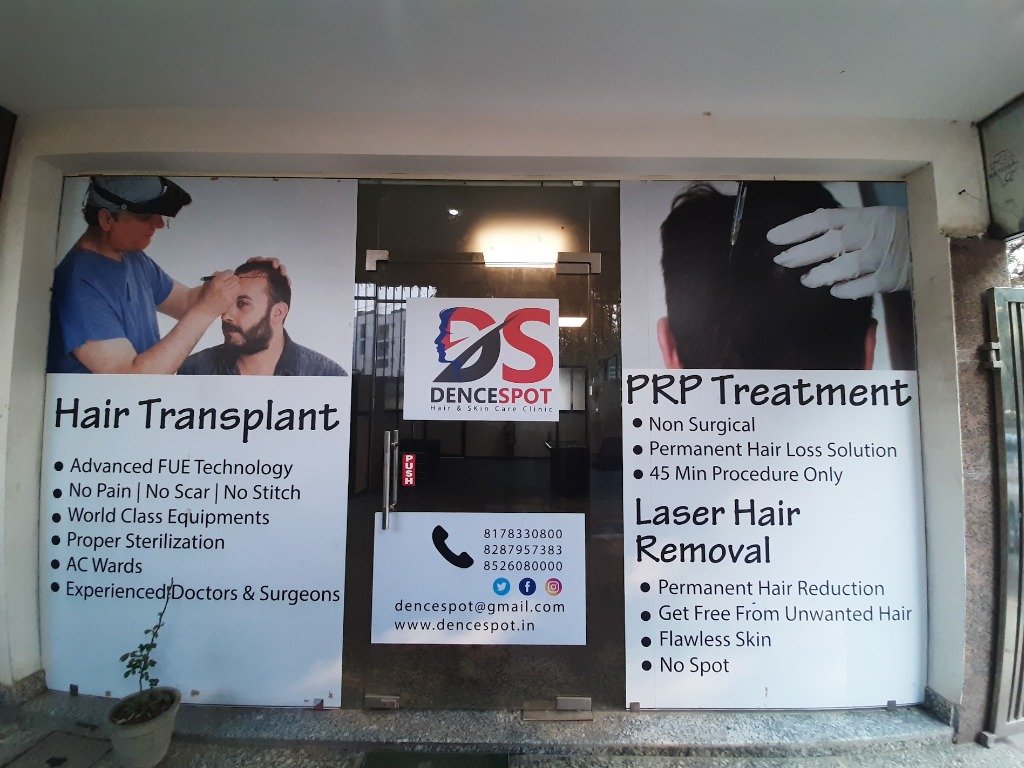
FUE Hair Transplant at Our Gurgaon Clinic
Consultation, procedure and every follow-up happen at our Sector 39 clinic in Gurugram, with the same doctor throughout. Patients travel to us from across Gurugram and neighbouring parts of South Delhi.
- Address
- 1123, Sector 39 Road, Jharsa, C Block, Sector 39,
Gurugram, Haryana 122003 - Phone
- +91 81783 30800
- Message +91 81783 30800
- dencespot@gmail.com
- Hours
- Mon–Sat · 10:00 – 20:00Sunday · closed
Getting here
Next step
Find Out What Your Donor Area Can Actually Support
Bring your questions and your medication list. You will get a donor assessment, an honest view of whether FUE is right for your pattern of loss, and a written plan with a mapped graft number if it is — with no pressure to book a date on the day.
Suitability is determined after clinical assessment. This page is patient education and does not constitute medical advice.
Quick enquiry