Eyebrow Transplant in Gurgaon, Designed Hair by Hair
An eyebrow transplant moves single hairs from the back of your scalp into the brow, one graft at a time, at the angle brow hair actually lies. The extraction is ordinary. Everything after it is not — direction changes three times across one brow, and the hair you gain will need trimming for the rest of your life.
- Single-hair grafts, placed individually
- Shape drawn and agreed before surgery
- Day-case procedure under local anaesthetic
- Gurugram · Mon–Sat · 10:00 – 20:00
Performed & reviewed by
Dr. Nyra
MBBS, MD (Dermatology) · Owner & Chief Consultant, DenceSpot Clinic
Shape drawn first
Agreed with you before a single graft is taken.
Single-hair grafts
Split under magnification, never placed in clumps.
Restraint over density
Over-packing is what makes a brow look done.
Home the same day
Local anaesthetic, no overnight stay.
Told if it is wrong for you
Active alopecia areata is a reason to wait.
The basics, plainly
What Is an Eyebrow Transplant?
Follicular units are extracted from the donor area at the back of the scalp, exactly as they would be for a scalp procedure. They are then separated under magnification into individual hairs, because a brow is built from single hairs — a two- or three-hair graft placed in a brow produces a tuft, and a tuft reads as surgery from across a room.
Each of those single hairs is then placed into its own tiny site in the brow. The site is made at an acute angle, close to flat against the skin, because that is how brow hair grows. Scalp hair stands away from the head; brow hair lies along it. Placing brow grafts at a scalp angle is one of the most common reasons a technically successful transplant still looks wrong.
Direction matters just as much as angle, and it is not constant. At the inner end of the brow, hairs sweep upward. Through the body they flatten and run outward. Towards the tail they angle downward. A brow is therefore not one design decision but a sequence of them, made site by site along its length.
The procedure is done under local anaesthetic as a day case. You are awake, it takes a few hours depending on the number of grafts, and you go home afterwards.
Before you read further
The trimming commitment
Native brow hair has a short growth cycle. It reaches brow length and stops on its own.
Transplanted hair comes from your scalp and keeps scalp behaviour. It does not stop. Most people trim every one to two weeks, and that does not end.
This is permanent, it is not a complication, and it is not something we can design around. If lifelong trimming is not something you want, say so at consultation and we will tell you honestly that this is not your procedure.
Suitability
Who an Eyebrow Transplant Suits
Brows go missing for very different reasons, and the reason decides whether surgery is sensible or premature. The assessment exists to establish which.
Long-term over-plucking
Years of plucking or threading can permanently damage follicles. Where hair has not returned after a long period on its own, it generally will not. This is a common and straightforward indication.
Naturally sparse brows
Some people simply have little brow hair and always have. There is nothing to treat medically, and grafting adds what was never there.
Trauma or surgical scars
Possible, but graft survival in scar tissue is lower because the blood supply is poorer. Usually approached conservatively and sometimes staged.
Burns
Assessed case by case. Depth and maturity of the burn scar decide feasibility, and the honest answer is sometimes no.
After chemotherapy
Brow hair very often returns on its own. Surgery is not considered until well after treatment ends and regrowth has been given proper time.
Thyroid-related loss
Thyroid disease classically thins the outer third of the brow. The thyroid is investigated and treated first, because the hair frequently recovers once the underlying problem does.
When we will tell you to wait
Active alopecia areata is a stop, not a caution
Alopecia areata is an autoimmune condition that attacks hair follicles, and it does not distinguish between the hair that was there and the hair you paid to move. Operating during an active phase risks losing the grafts and spending donor supply for nothing. It needs assessment, treatment and a sustained quiet period before surgery is even a conversation. If that is your diagnosis, the right first step is treating the alopecia areata, not booking a transplant.
The same principle applies to any active inflammatory skin disease in the brow area. Settle the condition, then consider surgery.
Design
The Shape Is Agreed Before Anything Is Taken
A brow is a facial feature, not a patch of coverage. Shape, arch position, thickness and where the tail ends all change how a face reads, and they are decided with you, drawn on, and looked at in a mirror before consent — not improvised on the day.
Symmetry is discussed honestly at this stage too. Faces are not symmetrical, brows rarely start symmetrical, and chasing perfect mirror-image brows usually produces a result that looks manufactured. The aim is a matched pair that belongs to your face.
Restraint is a design decision. It is tempting to ask for the fullest brow possible, and it is the wrong instinct. A natural brow is denser through the body and thins towards the tail, with a soft, slightly irregular edge. Filling that edge in solidly is exactly what makes work identifiable.
What the design fixes
- Where the brow begins at the inner end
- Arch height and where it peaks
- Thickness through the body
- Where and how the tail tapers out
- Direction of hair in each zone
- How the two brows relate to each other
What it will not do
Produce two identical brows, because faces are not symmetrical and identical brows look artificial.
Give a solid block of hair. A natural brow has a soft, irregular edge, and that irregularity is deliberate.
The process
From Consultation to Settled Brows
Step 01
Assessment
Why the brow hair is missing, what the skin is like, what your donor area can spare, and whether anything needs treating first.
Step 02
Design
Shape drawn on, reviewed in a mirror, adjusted and agreed. The graft number follows from the agreed design.
Step 03
Procedure day
Extraction, graft separation into single hairs under magnification, then placement. A few hours, local anaesthetic, home the same day.
Step 04
Growth and review
Shedding, then regrowth from around three to four months, reviewed with photographs until the shape settles.
Recovery
What the First Weeks Look Like
Tiny crusts form around each graft and are visible for several days. Swelling around the eyes is common in the first few days and settles on its own. Most people are comfortable being seen in public within about a week, though the brows will not look like the finished result for months.
The transplanted hairs usually shed within the first few weeks. This alarms people who were not warned about it. The follicle stays in place; only the hair shaft is lost, and it regrows.
Regrowth typically begins around three to four months and comes in unevenly at first. The shape generally settles across roughly eight to twelve months. Judging the result before then is judging it too early.
General recovery principles are covered in more depth in our recovery and aftercare guide, and your specific instructions are given to you in writing.
In the first days
- Crusting around each graft is expected
- Swelling around the eyes is common
- Do not rub, scratch or pick the area
- Sleep as instructed to limit swelling
Hold off on
- Brow makeup until you are told it is safe
- Threading, plucking or waxing the area
- Swimming, saunas and heavy sweating
- Anything that puts pressure on the brow
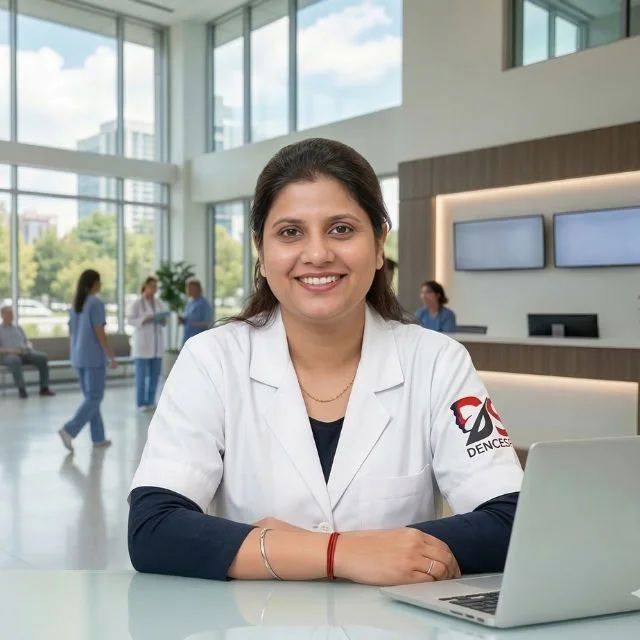
Who performs and reviews this treatment
Dr. Nyra, MBBS, MD (Dermatology)
Owner & Chief Consultant, DenceSpot Clinic
Qualified MBBS from Dr. D. Y. Patil Medical College, and holds an MD in Dermatology. Three years of clinical work in Germany followed — two at Bio Hair Clinic and one at St. Georg Klinikum Eisenach — before establishing DenceSpot in Gurugram.
Why this procedure is judged on restraint rather than volume: an eyebrow transplant is a small operation where almost every failure is a design failure, not a surgical one. Wrong angle, wrong direction, too much density, or operating on an autoimmune condition that was still active. The assessment is where those are caught, and it is why the shape is drawn and agreed before a single graft is taken.
Qualification
MBBS, MD (Dermatology)
Training
3 years, Germany
Specialization
Dermatology
Cost guidance
Eyebrow Transplant Cost in Gurgaon
There is no fixed price. The graft number comes out of the design you agree, and the design comes out of the assessment, so a figure quoted before either of those has happened is a guess. We publish the factors and give you an itemised estimate in writing.
Number of grafts
Taken from the agreed design, not a standard package
One brow or both
Partial correction differs substantially from a full rebuild
Condition of the skin
Scarred or burned skin is slower and less predictable work
Whether a second session is planned
Some cases are deliberately staged for a better result
Because brow grafts are single hairs, the count is not comparable with a scalp quote where grafts carry two to four hairs each. Comparing the two on price per graft is comparing different things.
For how pricing works across our procedures generally, see the hair transplant cost guide and payment and EMI options.
Get a Personalized Treatment Estimate
Send a clear, well-lit photo of each brow from the front and slightly to the side on WhatsApp, or request a call back. You will get an assessment appointment, not a sales pitch.
Send photos on WhatsApp Request an estimate by formYour details are used only to arrange your consultation.
Visit the clinic
Eyebrow Transplants at Our Gurgaon Clinic
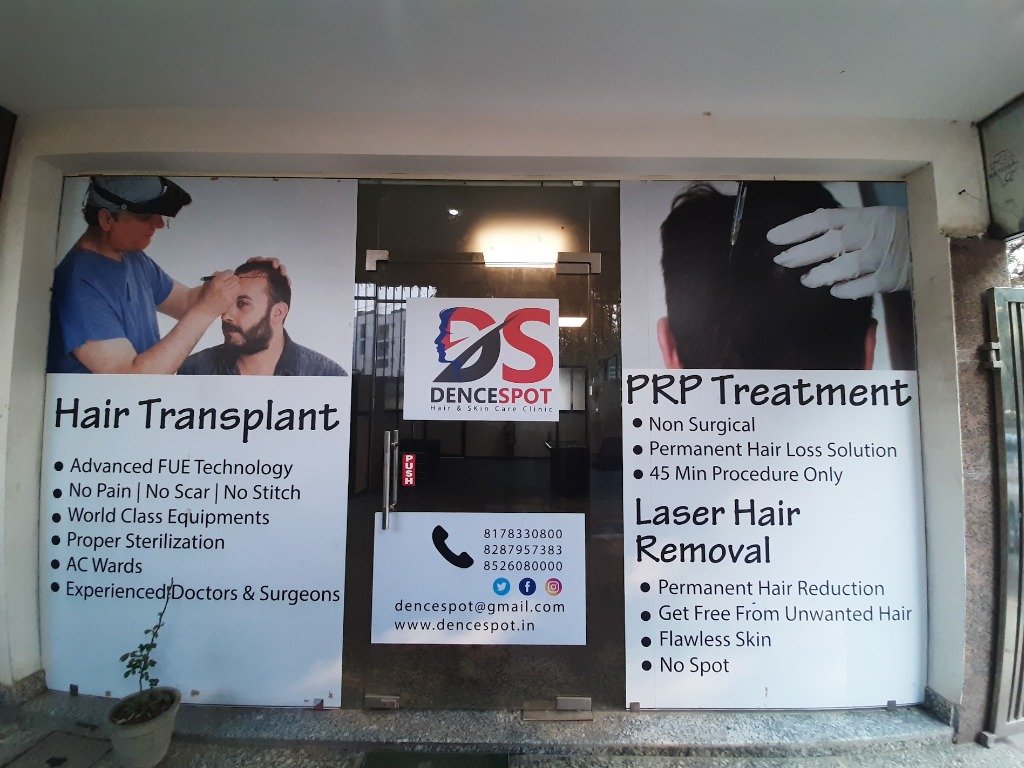
Design, procedure and every follow-up happen at our Sector 39 clinic in Gurugram, with the same doctor throughout. Patients travel to us from across Gurugram and neighbouring parts of South Delhi.
- Address
- 1123, Sector 39 Road, Jharsa, C Block, Sector 39,
Gurugram, Haryana 122003 - Phone
- +91 81783 30800
- Message +91 81783 30800
- dencespot@gmail.com
- Hours
- Mon–Sat · 10:00 – 20:00Sunday · closed
Getting here
Next step
Have Your Brow Shape Drawn Before You Decide
Come in and see the shape on your own face before committing to anything. You will get an honest view of whether grafting is right for the reason your brows are sparse, a clear explanation of the lifelong trimming, and a written plan if it is appropriate.
Suitability is determined after clinical assessment. This page is patient education and does not constitute medical advice.
Quick enquiry