Alopecia Areata Is a Condition, Not a Cosmetic Problem
It is an autoimmune disease in which the immune system attacks your hair follicles. It is not caused by anything you did, it is not a hair-care failure, and it is not treated with the procedures sold for ordinary hair loss. It needs diagnosing and managing properly.
- Diagnosed and managed by a dermatologist
- Screening for associated conditions where indicated
- No surgery offered while the disease is active
- Gurugram · Mon–Sat · 10:00 – 20:00
Assessed & treated by
Dr. Nyra
MBBS, MD (Dermatology) · Owner & Chief Consultant, DenceSpot Clinic
No surgery while active
Grafts can be attacked by the same process.
Diagnosed properly
Examined by a dermatologist, not photographed.
Screened where indicated
Associated autoimmune conditions checked.
Observation is valid
Limited disease sometimes regrows on its own.
Referred when needed
Extensive disease may need specialist care.
The condition
What Alopecia Areata Is
The immune system, which normally attacks infection, mistakenly targets hair follicles. The follicle is not destroyed in the way it is in scarring conditions — it is switched off — which is why regrowth remains possible and why the condition can come and go.
It typically presents as smooth, well-defined round or oval patches of complete hair loss appearing over a short period, usually without pain or itch. It most often affects the scalp, but the beard, eyebrows, eyelashes and body hair can all be involved. Nail changes sometimes accompany it, which is part of why the nails are examined.
There is a genetic component, and it occurs more frequently in people with a personal or family history of other autoimmune conditions. In most cases no specific trigger can be identified.
Two things are worth saying directly, because patients arrive having been told otherwise. It is not contagious. And it is not something you caused through diet, hair products, washing, or insufficient calm.
Terminology you may encounter
The names for extent
Alopecia areata — the condition generally, most often as discrete patches.
Alopecia totalis — complete loss of scalp hair.
Alopecia universalis — loss of hair across the body, including eyebrows and lashes.
These describe extent along a spectrum of the same condition. Greater extent generally carries a less predictable outlook.
The most important thing on this page
Why a Hair Transplant Is the Wrong Answer Here
People with alopecia areata are routinely sold hair restoration surgery. It is worth understanding exactly why that is a serious problem rather than a difference of clinical opinion.
The immune process does not care where hair came from
It attacks follicles. A follicle that was surgically relocated from the back of your head is still a follicle, and it can be targeted in exactly the same way as the hair that was lost.
Donor hair is finite and unrecoverable
Grafts taken from the donor area cannot be put back. Spending them inside an active autoimmune process risks losing both the transplanted hair and the supply that might have been useful later.
The disease is unpredictable
It can regrow spontaneously, and it can relapse. Operating during an active phase means intervening in something that may have improved on its own, and that may flare again regardless.
What this means in practice
We will decline to operate, and explain why
If you come to us for a transplant and the examination shows active alopecia areata, we will tell you and we will not proceed. That applies to the scalp, the beard and the eyebrows equally. The right first step is treating the condition.
It is not a lifetime exclusion. Where the condition has been assessed, treated and genuinely stable for a sustained period, surgery can be reconsidered cautiously and individually. It is not a promise, and it is not a reason to delay treating the disease now.
If another clinic has offered you surgery for active disease, ask them directly what happens to grafts placed into an autoimmune process. The answer should concern you.
Diagnosis
How It Is Established
The diagnosis is usually made clinically, on history and examination. The pattern is distinctive: smooth, sharply defined patches of complete loss, appearing over a short period, typically without inflammation or scarring of the skin.
History covers when it began, how it has progressed, whether there have been previous episodes, and any personal or family history of autoimmune conditions. Examination covers the scalp, and also the eyebrows, beard and nails, because involvement elsewhere changes the picture.
The examination also serves to exclude other causes of patchy loss, which matter because they are treated entirely differently — fungal infection of the scalp, traction, trichotillomania, and the scarring alopecias among them. Getting this distinction right is the whole point of being examined by a dermatologist rather than assessed from a photograph.
Screening bloods, thyroid function in particular, may be appropriate given the association with other autoimmune conditions. What is worth checking in your case depends on your history.
Bring with you
- When the patches appeared, and in what order
- Photographs from earlier in the episode
- Any previous episodes and how they resolved
- Family history of autoimmune conditions
- Your medication and supplement list
Conditions it is distinguished from
- Fungal infection of the scalp
- Traction alopecia
- Hair-pulling behaviour
- Scarring alopecias
Management
How It Is Treated
Treatment is decided by how extensive the disease is, how long it has been present, and your age and medical history. There is no single protocol, and this page describes categories rather than naming medicines, because these are individual prescribing decisions that some of the time require specialist supervision.
Observation with review
A legitimate option in limited patchy disease, which has a reasonable chance of regrowing on its own. It means active monitoring with photographs and scheduled review, not being sent away. Whether it suits you depends on extent, duration and how it is affecting you.
Topical and locally administered treatment
Treatments applied to or injected directly into affected patches are commonly used for limited disease. Suitability, frequency and duration are individual decisions made at consultation.
Treatment for extensive disease
More extensive presentations may require treatments given under specialist supervision with monitoring. Where that is what your case calls for, it is discussed openly, including onward referral where that is the right route.
Managing associated conditions
Where screening identifies an associated autoimmune condition such as thyroid disease, that is managed in its own right. It is part of treating the person rather than the patch.
Cosmetic and practical support
Camouflage, hairpieces and other practical measures are legitimate and often underdiscussed. They do not treat the disease, and for many people they matter a great deal while treatment takes its course.
What is not treatment
PRP is not an established treatment for alopecia areata. Neither is a hair transplant during active disease. Both are sold to people with this diagnosis, and neither addresses the condition.
Outlook
What Happens Next Is Genuinely Variable
This is the part where honesty matters most, because both false reassurance and fatalism are easy and both are unhelpful.
Limited patchy disease
Has a reasonable likelihood of regrowth, and may resolve without treatment. This is the most common presentation and the most favourable one.
Extensive or long-standing disease
Less predictable. Involvement of eyebrows, lashes and body hair, or disease present for a long period, generally carries a more uncertain outlook.
Relapse is recognised
Hair that regrows can be lost again in a future episode. That possibility is part of an honest conversation rather than a surprise later.
Nobody can tell you with certainty how your own case will behave. What can be done is establishing the diagnosis correctly, matching treatment to the extent of disease, monitoring it with photographs, and not spending your money or your donor hair on procedures that do not address an autoimmune condition.

Who performs and reviews this treatment
Dr. Nyra, MBBS, MD (Dermatology)
Owner & Chief Consultant, DenceSpot Clinic
Qualified MBBS from Dr. D. Y. Patil Medical College, and holds an MD in Dermatology. Three years of clinical work in Germany followed — two at Bio Hair Clinic and one at St. Georg Klinikum Eisenach — before establishing DenceSpot in Gurugram.
Why this page refuses a procedure it could easily sell: alopecia areata patients are unusually vulnerable commercially. The hair loss is often sudden, visible and distressing, and the obvious response is to look for a clinic that offers to put hair back. Grafting into an active autoimmune process risks the same immune attack on transplanted follicles, and the donor supply spent doing it cannot be recovered. Declining to operate, explaining exactly why, and treating the condition instead is not conservatism — it is the only defensible course.
Qualification
MBBS, MD (Dermatology)
Training
3 years, Germany
Specialization
Dermatology
Cost guidance
What Management Costs
Cost depends on the extent of disease and what treatment your case calls for. For limited patchy disease it is frequently far less than patients expect, because the appropriate management is consultation, monitoring and targeted treatment rather than a course of procedures.
Consultation and diagnosis
Where the condition is actually identified
Screening investigations
Where history and examination indicate them
Treatment for your extent of disease
Varies widely, and is discussed openly
Review appointments
Monitoring with photography over months
If you have been quoted for a hair transplant or a package of PRP sessions for alopecia areata, that is the clearest possible sign to seek a second opinion before paying anything.
Get It Diagnosed Properly
Send photos of the affected areas in daylight, including eyebrows or beard if involved, with a note of when the patches appeared and in what order.
Send photos on WhatsApp Book an assessmentYour details are used only to arrange your consultation.
Visit the clinic
Alopecia Areata Care at Our Gurgaon Clinic
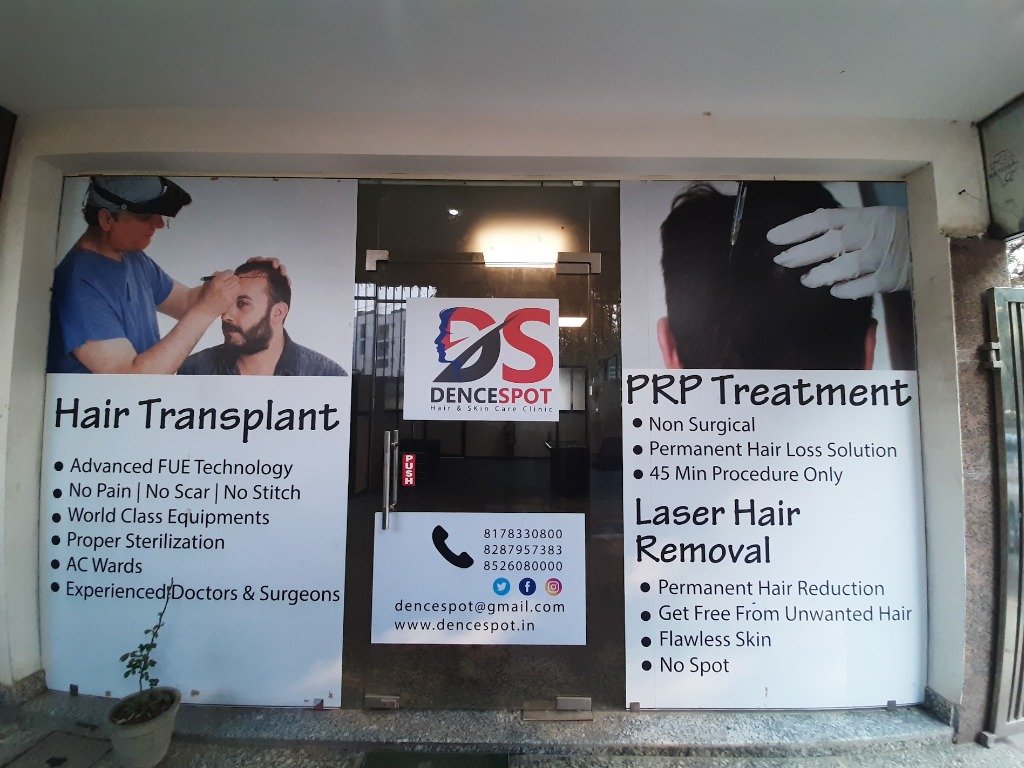
Diagnosis, treatment and every review happen at our Sector 39 clinic in Gurugram, with the same doctor throughout. Patients travel to us from across Gurugram and neighbouring parts of South Delhi.
- Address
- 1123, Sector 39 Road, Jharsa, C Block, Sector 39,
Gurugram, Haryana 122003 - Phone
- +91 81783 30800
- Message +91 81783 30800
- dencespot@gmail.com
- Hours
- Mon–Sat · 10:00 – 20:00Sunday · closed
Getting here
Next step
Get the Diagnosis Right Before Anyone Sells You a Procedure
Come in and have the patches examined properly. You will get a clinical diagnosis, screening where your history calls for it, a management plan matched to how extensive the disease is, and a straight answer about surgery.
Suitability is determined after clinical assessment. This page is patient education and does not constitute medical advice.
Quick enquiry