Hair loss self-assessment

Six Questions to Work Out What to Do Next

This will not tell you what you have. It will tell you which kind of problem your answers point towards, what to do about it, and what to bring to an appointment. Several routes it can give you end in "do not book surgery yet", which is rather the point of building it.

  • Nothing stored, nothing sent, no details needed
  • Points to a next step, not a diagnosis
  • Flags the answers that should delay surgery
  • Takes about a minute
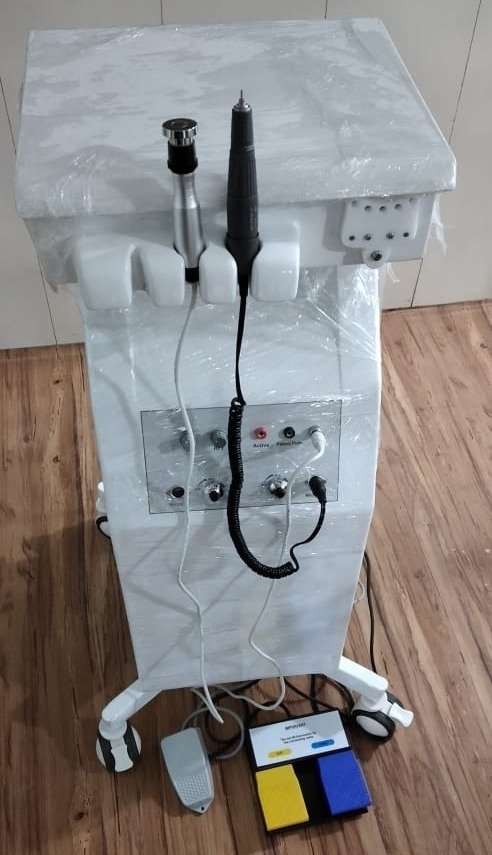
Scalp examination setup used for hair loss assessment at DenceSpot Clinic, Gurugram

Reviewed by

Dr. Nyra

MBBS, MD (Dermatology) · Owner & Chief Consultant, DenceSpot Clinic

The tool

Answer Six Questions

Everything runs in your browser. Nothing is transmitted to us and nothing is saved.

1. Are you male or female?
2. What does the loss actually look like?
3. How long has it been going on?
4. Did anything happen in the few months before it started?
5. How is your scalp itself?
6. Is anyone else in your family affected?
Your next step

    Book an assessment Ask on WhatsApp

    This tool is patient education and not a diagnosis. Suitability for any treatment is determined only after clinical assessment.

    Why this exists

    Most Hair Loss Mistakes Happen Before the Diagnosis

    People buy treatments before anyone establishes what is wrong. A course of injections for hair loss driven by iron deficiency. A transplant offered for an autoimmune condition. Months of shampoo while genuine pattern loss progresses quietly underneath.

    None of those are exotic cases. They are the ordinary result of an industry that sells procedures and a patient who reasonably wants the problem fixed rather than investigated.

    This tool exists to slow that down by one step. It cannot diagnose you, and it does not try to. What it can do is tell you when your answers point at something that needs investigating before anyone sells you anything, and give you the right questions to arrive with.

    If it tells you not to book surgery yet, that is not the tool being cautious for its own sake. Those routes exist because operating in those situations wastes donor hair that cannot be replaced.

    Bring to your appointment

    • Every medicine and supplement you take
    • Any recent blood test results
    • Photographs of your hair before the loss
    • When it started, and what else happened then

    Read next

    Hair fall treatment — how a diagnosis is reached.

    Women's hair loss treatment — the female differential.

    Graft calculator — if surgery is already on the table.

    How to choose a clinic — before you commit anywhere.
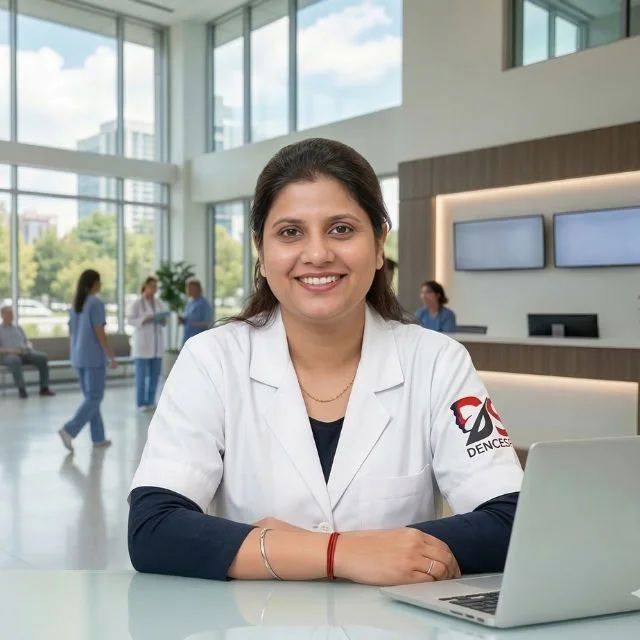
    Dr. Nyra — professional portrait

    Who performs and reviews this treatment

    Dr. Nyra, MBBS, MD (Dermatology)

    Owner & Chief Consultant, DenceSpot Clinic

    Qualified MBBS from Dr. D. Y. Patil Medical College, and holds an MD in Dermatology. Three years of clinical work in Germany followed — two at Bio Hair Clinic and one at St. Georg Klinikum Eisenach — before establishing DenceSpot in Gurugram.

    Why several of this tool's answers tell people not to book a procedure: the presentations that most need a doctor rather than a purchase are exactly the ones that look most alarming to the patient — patches appearing over weeks, sudden heavy shedding, a sore or scarring scalp. Those are the people most likely to be sold something quickly, and the ones for whom a wrong first step is most costly. A triage tool that only ever routed towards treatment would be a lead form with a quiz attached.

    Qualification

    MBBS, MD (Dermatology)

    Training

    3 years, Germany

    Specialization

    Dermatology

    Meet Your Doctor

    Medically reviewed by Dr. Nyra · last reviewed August 2026

    FAQs

    About This Assessment

    General patient education. Your diagnosis comes from examination and, where needed, investigation.

    Ask on WhatsApp
    Is this a diagnosis?

    No, and it is not designed to be. It points you towards the kind of problem your answers suggest and tells you what to do next. Hair loss is diagnosed by examining a scalp, taking a history and sometimes running blood tests, none of which a webpage can do.

    Are my answers stored or sent anywhere?

    No. Everything happens in your browser. Nothing is transmitted to us, nothing is saved, and you do not need to enter any personal details to use it. Closing the page discards it.

    Why does it ask when the loss started?

    Because timing is often the most useful diagnostic clue available. Shedding that began a few months after a birth, an illness, surgery, a crash diet or a period of severe stress points somewhere quite different from a hairline that has receded gradually over five years.

    Why does it ask about patches?

    Because well-defined patches of complete hair loss suggest something other than pattern baldness, and the distinction changes everything that follows. It is also the presentation where being sold a hair transplant does real harm.

    It told me to get blood tests. Which ones?

    That depends on your history and examination, which is why the tool does not list them. Iron studies and thyroid function come up frequently, with hormonal and other tests where indicated. What is worth checking in your case is decided at the consultation.

    It suggested my hair loss might recover on its own. Should I do nothing?

    Not nothing — get it assessed. Some shedding does recover, particularly after pregnancy, illness or a major stressor. But it is worth confirming that is what is happening and checking for anything else contributing, rather than assuming and losing months.

    I got a result pointing to pattern hair loss. What now?

    Get it confirmed by examination, because other things can look similar, and start treatment early if that is the diagnosis. Pattern hair loss is progressive, and the hair you keep is easier to hold onto than the hair you have already lost is to get back.

    Does this work for women?

    Yes, and the routing differs, because female hair loss has a wider differential and more frequently has a treatable cause. If you are a woman, the follow-on reading is women's hair loss treatment rather than the general pages.

    How much hair loss is normal?

    Shedding some hair daily is normal and varies between people. What matters more than counting is change — noticeably more than usual for you, over a defined period, or a visible change in your parting, hairline or density.

    Should I take supplements while I wait for an appointment?

    Test before you take. Supplements correct a deficiency if you have one and do very little if you do not, and some things are harmful in excess. Taking them before testing can also make a deficiency harder to interpret later.

    The tool says to see someone urgently. Why?

    Certain combinations — a painful, inflamed or scarring scalp, or sudden extensive loss — warrant prompt assessment rather than a booking in a few months. Some scalp conditions permanently destroy follicles if left, and time matters with those.

    Can I use this instead of a consultation?

    No. It is a way of arriving at a consultation better prepared, with a clearer sense of what to ask and what information to bring. It replaces guesswork, not examination.

    What should I bring to my appointment?

    A list of every medicine and supplement you take, any recent blood results, photographs showing how your hair looked before, and the dates — when it started and what else was happening around then.

    What if my answers do not fit any of the options?

    Then the tool is not describing your situation, which is a limitation of any questionnaire rather than a sign that nothing is wrong. Book an assessment and describe it in your own words.

    Visit the clinic

    Getting Assessed in Gurgaon

    Assessment, investigation and treatment all happen at our Sector 39 clinic in Gurugram, with the same doctor throughout. Patients travel to us from across Gurugram and neighbouring parts of South Delhi.

    Address
    1123, Sector 39 Road, Jharsa, C Block, Sector 39,
    Gurugram, Haryana 122003
    Hours
    Mon–Sat · 10:00 – 20:00Sunday · closed
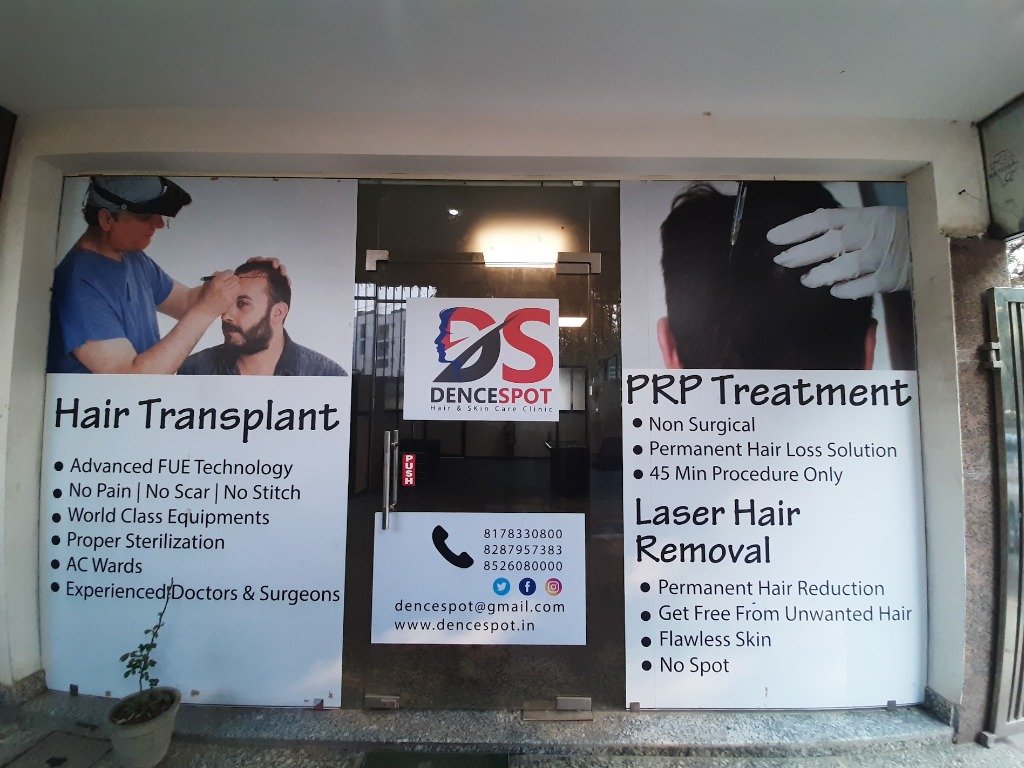
    DenceSpot Clinic shopfront on Sector 39 Road, Jharsa, Gurugram, showing the hair transplant and PRP treatment signage

    Getting here

    • Sector 39 Road in Jharsa, opposite Medanta – The Medicity. The clinic is on the main road, so any driver or ride-hail app can be given the Medanta gate as the landmark.

    Next step

    Turn the Guess Into a Diagnosis

    Bring your answers, your medication list and your timeline. You will get an examination, the investigations your case actually calls for, and a plan matched to the cause rather than to whatever we happen to offer.

    Suitability is determined after clinical assessment. This page is patient education and does not constitute medical advice.

    Quick enquiry

    Your details are used only to arrange your consultation.

    Call WhatsApp