Women's Hair Loss Is Diagnosed Before It Is Treated
Iron, thyroid, hormones, pregnancy, illness, medication, tension from hairstyles, and genuine pattern loss all cause hair to fall — and they are treated completely differently. Being handed a treatment before anyone has established which one you have is the most common thing that goes wrong here.
- Reversible causes investigated first
- Seen and examined by a dermatologist
- Baseline photographs, so progress is measurable
- Gurugram · Mon–Sat · 10:00 – 20:00
Assessed & treated by
Dr. Nyra
MBBS, MD (Dermatology) · Owner & Chief Consultant, DenceSpot Clinic
Investigated, not guessed
Bloods where indicated, before treatment starts.
A doctor examines you
Scalp and donor assessed directly.
Timeline taken seriously
When it started is often the key clue.
Progress photographed
Measured against a baseline, not a memory.
Told when to wait
Some shedding recovers without treatment.
The differential
What Actually Causes Hair Loss in Women
This list is the reason a diagnosis matters. Several of these resolve completely once identified, and none of them respond to a treatment aimed at a different one.
Iron deficiency
Low iron stores are a recognised contributor to shedding and are common with heavy periods, restricted diets or pregnancy. Straightforward to check and to correct.
Thyroid disease
Both underactive and overactive thyroid affect hair. The hair frequently improves once the thyroid is properly managed, which makes testing worthwhile.
Post-partum shedding
Common, usually beginning some months after delivery, and usually temporary. Patience and checking for anything else contributing beat aggressive treatment.
Telogen effluvium
A temporary cycle disturbance after illness, surgery, rapid weight loss or severe stress. It typically appears months after the trigger and usually recovers.
Hormonal conditions
PCOS and other hormonal states can drive thinning in a pattern distribution. Managed as conditions in their own right, not as a hair problem alone.
Female pattern hair loss
Genuine pattern loss, usually a widening parting and diffuse thinning over the top with the frontal line often preserved. Progressive, and managed rather than cured.
Traction alopecia
From sustained tension — tight braids, extensions, weaves, tightly pulled styles. Reversible early, permanent if left long enough.
Medication
A number of medicines can contribute. This is why the full medication and supplement list matters and why you should bring it.
Scalp conditions
Inflammatory and autoimmune conditions of the scalp, including alopecia areata and the scarring alopecias, need identifying because their treatment is entirely different.
The assessment
How a Diagnosis Is Actually Reached
The first appointment is about working out what you have. It is not a treatment-selection meeting, and it should not be.
It starts with history, and the timeline usually carries more information than anything else. When did it start? How quickly? Did anything precede it by a few months — a birth, an illness, surgery, a significant weight change, a period of real stress, a new medication? Telogen effluvium in particular declares itself through that gap, and it is missed when nobody asks.
Then your menstrual and hormonal history, your family history, everything you take including supplements, and what you have already tried.
Then examination. Whether the thinning is diffuse or localised, whether the parting has widened, the condition of the scalp itself, and direct measurement of density at the back and sides. That last one matters both diagnostically and because it decides whether surgery could ever be an option.
Investigations follow where the history and examination point. Iron and thyroid come up often; hormonal and other bloods where indicated.
Bring with you
- Every medicine and supplement you take
- Any recent blood results
- Photographs of your hair before the loss
- The dates, and what else was happening then
You leave with
- A working diagnosis, or the tests to reach one
- Baseline photographs on record
- A treatment plan matched to the cause
- An honest view on surgery, if you asked
Treatment
What Treatment Looks Like, by Cause
Because the diagnosis determines the treatment, there is no single protocol. These are the broad routes.
Correcting a deficiency
Where investigation shows low iron or another deficiency, correcting it properly and rechecking is the treatment. The hair often follows over months. This is done on the basis of a result, not on the basis of a guess.
Treating an underlying condition
Thyroid disease and hormonal conditions are managed as conditions, with the hair reassessed once they are controlled. Treating the hair alone while the condition runs is treating a symptom.
Waiting, deliberately
For post-partum shedding and much telogen effluvium, recovery is the expected course. The active work is excluding anything else contributing and reviewing rather than intervening.
Medical treatment for pattern loss
Where female pattern hair loss is the diagnosis, topical and prescribed treatment options exist and are discussed individually. Several are not appropriate in pregnancy or when trying to conceive, which is one reason they are prescribed rather than published.
Supportive treatments
Treatments such as PRP may be used to support existing hair alongside the main treatment. They support; they do not replace a diagnosis or a proven therapy.
Changing what pulls on your hair
Where traction is contributing, removing the tension is the single most important intervention, and it works far better early than late. Practical advice on styles, extensions and tension is part of the consultation.
On supplements
Test before you take
Hair supplements correct a deficiency if you have one and achieve very little if you do not. Taking them without knowing your iron, thyroid or vitamin status is guessing at a problem that can be measured, and some things are genuinely harmful in excess. The cheap, useful step is testing first.
The process
From First Appointment to Review
Step 01
History and examination
The timeline, your medication list, your hormonal history, and a direct look at your scalp and donor density.
Step 02
Investigation
Bloods where the history and examination point, to find anything reversible before treatment is chosen.
Step 03
A plan for your diagnosis
Treatment directed at the cause, with baseline photographs taken so the effect can actually be judged later.
Step 04
Review over months
Reassessed against the baseline images and repeat bloods where relevant, with the plan adjusted on evidence rather than impression.
Expectations
How Long This Takes, Honestly
Hair is slow, and that is the hardest part of treating it. A follicle responds over months, not weeks, so any treatment plan needs a horizon measured the same way.
Reduced shedding is usually the first thing to change and the first thing you will notice. Improvement in density comes later and is far harder to perceive day to day, which is exactly why baseline photographs matter. Comparing your hair in the mirror this morning to your memory of last year is not a measurement.
Where the cause is reversible, the outlook is genuinely good and the hair frequently recovers once the underlying problem is corrected. Where the diagnosis is female pattern hair loss, it is a progressive condition that is managed rather than cured, and treatment continues rather than finishing.
Both of those are worth knowing at the start, because they set completely different expectations about what the next year looks like.
Reasonable to expect
- Shedding to settle before density changes
- Progress measured in months
- Recovery where the cause is reversible
- Ongoing treatment where it is pattern loss
Treat with suspicion
- A treatment sold before a diagnosis
- Promises of results within weeks
- Large prepaid packages of sessions
- Supplements recommended without testing

Who performs and reviews this treatment
Dr. Nyra, MBBS, MD (Dermatology)
Owner & Chief Consultant, DenceSpot Clinic
Qualified MBBS from Dr. D. Y. Patil Medical College, and holds an MD in Dermatology. Three years of clinical work in Germany followed — two at Bio Hair Clinic and one at St. Georg Klinikum Eisenach — before establishing DenceSpot in Gurugram.
Why the first appointment is spent on history rather than treatment: a woman presenting with hair loss has a wide differential, and the most valuable diagnostic tool is usually the timeline. A shedding that began three months after a delivery, an illness or a crash diet is a different condition from a parting that has widened gradually over five years, and they need opposite responses — one needs patience and reassurance, the other needs long-term treatment. Getting that distinction right is worth more than any product, and it is the part most often skipped.
Qualification
MBBS, MD (Dermatology)
Training
3 years, Germany
Specialization
Dermatology
Cost guidance
What Treatment Costs
Because treatment follows diagnosis, cost varies widely — and for many women the answer is considerably less than they expected, because the treatment is correcting a deficiency rather than a course of procedures.
Consultation and examination
Where the diagnosis is actually made
Investigations
Bloods where the history indicates them
Medical treatment
Depends entirely on the diagnosis
Supportive treatments
Only where they add something to the plan
If a clinic sells you a package of sessions before establishing why your hair is falling, you are buying a procedure rather than a treatment. The diagnosis is the part worth paying for.
Start With an Assessment
Send photos of your parting from above, your hairline, and the back of your head, with a note of when the loss started and anything that happened a few months before.
Send photos on WhatsApp Book an assessmentYour details are used only to arrange your consultation.
Visit the clinic
Women's Hair Loss Care at Our Gurgaon Clinic
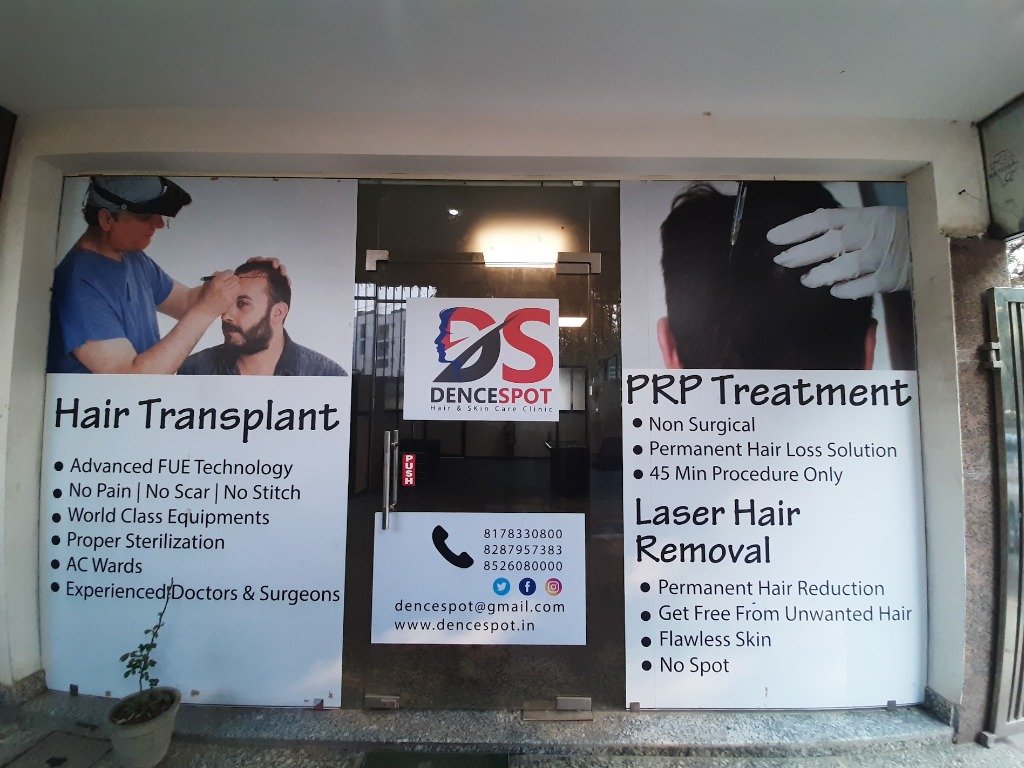
Assessment, investigation, treatment and every review happen at our Sector 39 clinic in Gurugram, with the same doctor throughout. Patients travel to us from across Gurugram and neighbouring parts of South Delhi.
- Address
- 1123, Sector 39 Road, Jharsa, C Block, Sector 39,
Gurugram, Haryana 122003 - Phone
- +91 81783 30800
- Message +91 81783 30800
- dencespot@gmail.com
- Hours
- Mon–Sat · 10:00 – 20:00Sunday · closed
Getting here
Next step
Find Out Why, Before You Treat Anything
Come in and have it properly investigated. You will get a history, an examination, the tests your case actually calls for, and a treatment plan matched to the diagnosis rather than to a package.
Suitability is determined after clinical assessment. This page is patient education and does not constitute medical advice.
Quick enquiry