PRP or a Hair Transplant: Which One Do You Actually Need?
PRP cannot regrow hair from bald skin and surgery does not stop shedding. How to tell which problem you have, and why the honest answer is sometimes neither yet.
Written and medically reviewed by Dr. Nyra, MBBS, MD (Dermatology)
Most people arrive at this question having already priced both, which sets the comparison up the wrong way round. PRP and a hair transplant are not a cheaper and a dearer option for the same problem. They act at different points in the life of a follicle, and what decides between them is the point your scalp has actually reached.
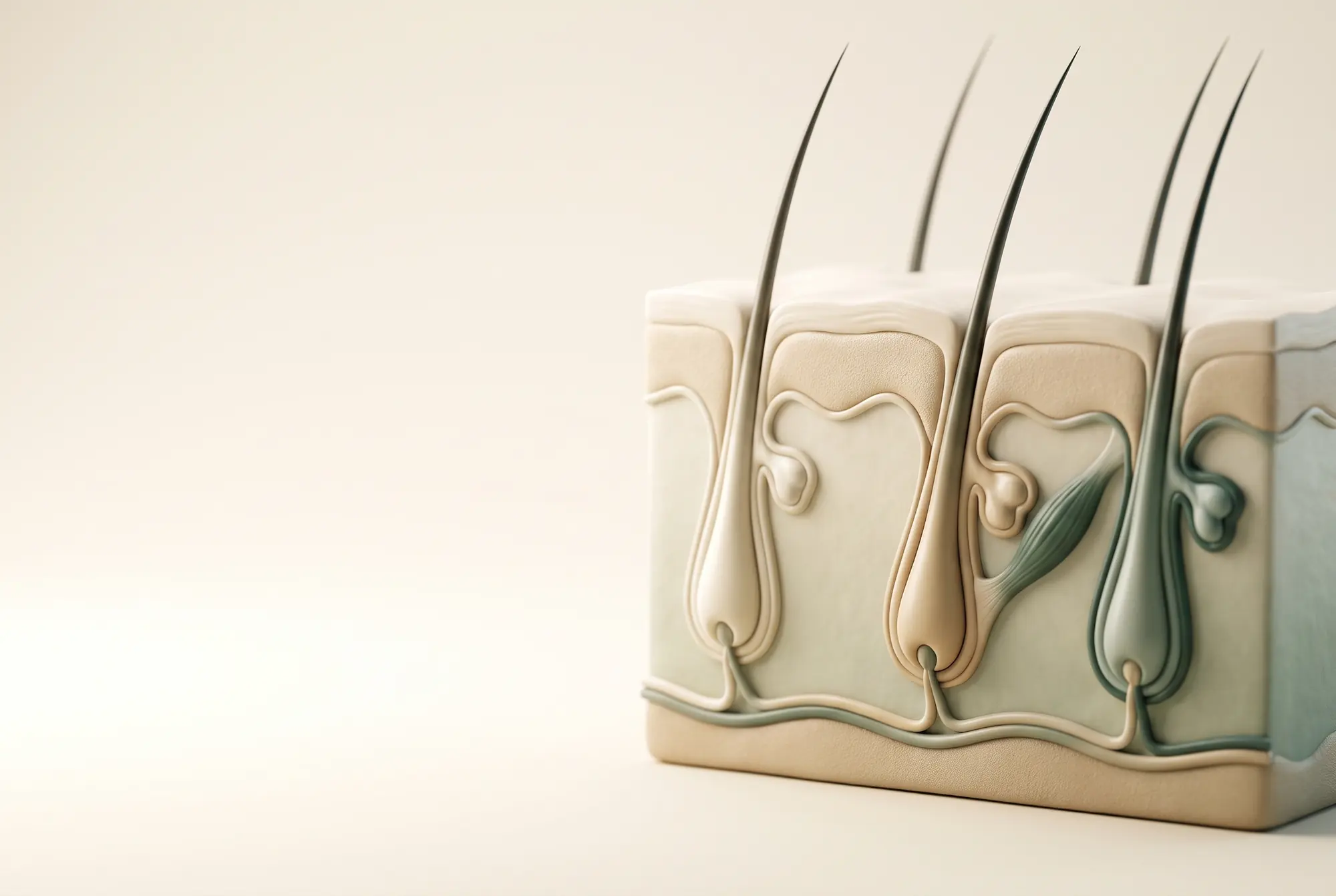
A follicle that is thinning is still there. A follicle that has gone is not. Nearly everything below follows from that one distinction, and it is the reason a clinic that offers you both without examining your scalp is guessing.
What PRP is asked to do
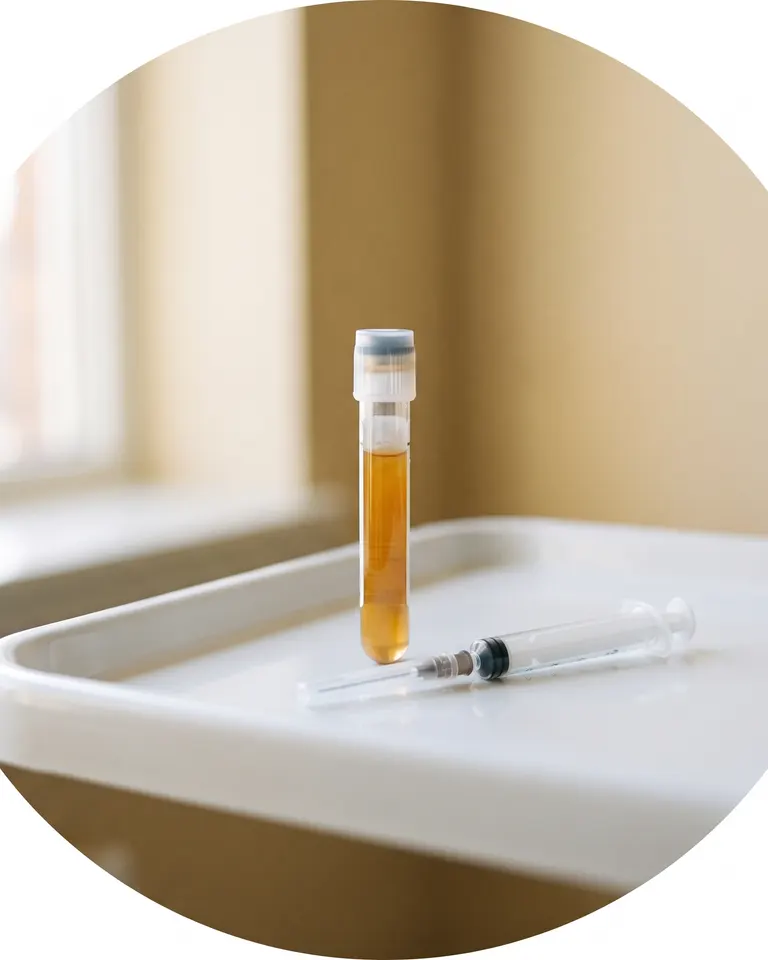
Platelet-rich plasma is made from your own blood. A sample is drawn, spun to concentrate the platelet fraction, and that fraction is injected into the thinning areas. Platelets carry growth factors, and the rationale is that delivering them into the scalp supports follicles that are struggling.
The word doing the work in that sentence is supports. PRP is asked to act on follicles that still exist and are miniaturising — producing a hair each cycle, but a progressively finer, shorter and less pigmented one, until eventually the hair is too fine to contribute anything visible. Miniaturisation is the central mechanism of pattern hair loss (DermNet: male pattern hair loss), and it is a gradual process, not a switch.
Where there is no follicle left, there is nothing for PRP to support. That is not a failure of the treatment; it is the boundary of what it is for. The PRP treatment page sets out how a course is structured, and what the published evidence does and does not show is worth reading before you commit to a course.
What a hair transplant does instead
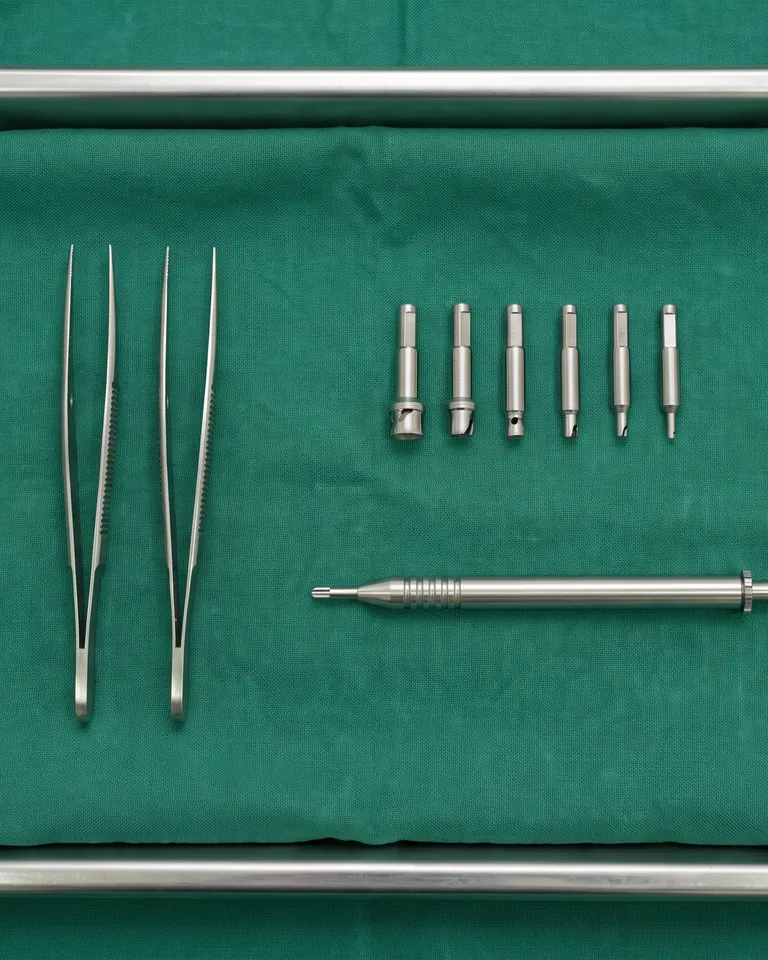
A transplant does not treat follicles. It moves them. Follicular units are taken from the back and sides, where hair is largely insensitive to the hormonal process driving pattern loss, and placed into areas where density has already gone. The relocated hair keeps the behaviour of where it came from, which is why it keeps growing in its new position.
This is redistribution, not creation. You do not end up with more hair than you started with — you end up with the same hair arranged differently, and the donor supply that funded the move is spent permanently. That is the whole argument of why the donor area behaves like a one-time budget, and it is why surgery is planned around a lifetime rather than a season. If you are weighing up the procedure itself, how a hair transplant is planned and performed covers the mechanics.
So a transplant answers a question PRP cannot touch: what to do about skin where the follicles are gone. And PRP answers one surgery cannot: what to do about follicles that are still alive but failing.
Neither one addresses what is driving the loss
This is the part that gets left out of most comparisons. Pattern hair loss is an inherited sensitivity of certain follicles to androgens. Injecting plasma does not alter that sensitivity. Neither does moving follicles around the scalp. The process carries on underneath both treatments, on its own timetable.
The practical consequence is that a transplant does not stop shedding elsewhere. Native hairs around the grafts stay on their original trajectory, which is why a result that looked complete at two years can look patchy at eight — the argument set out in whether a transplant is genuinely permanent. And PRP, if it helps, helps only for as long as it is continued. Neither is a cure, and a clinic describing either as one has told you something about the clinic.
How miniaturisation and complete loss are told apart
You cannot do this reliably in a mirror, and neither can a clinic from a photograph sent on WhatsApp. What an examination looks at:
- Hair shaft diameter under magnification. In an area that is miniaturising, hairs of very different thicknesses sit side by side. Uniform thickness suggests the area is not currently affected; wide variation suggests it is.
- Follicular openings. Trichoscopy can show whether openings are still present and occupied by fine hairs, or whether the skin has become smooth and empty. Empty skin is the point at which PRP stops being a sensible offer.
- Density counts across zones. Front, mid-scalp, crown and donor are counted separately, because the picture is rarely uniform and a plan has to be built zone by zone.
- A pull test and a look at the whole scalp. Diffuse shedding from everywhere behaves differently from patterned thinning, and mistaking one for the other changes everything that follows.
- Old photographs. What your hairline looked like three years ago is genuinely diagnostic, and no examination substitutes for it. Bring them.
Honesty about the limits here matters. Scalps rarely divide neatly into one category or the other. A crown can be bare at its centre and miniaturising at its edges, and the sensible answer for that scalp may involve both approaches in a sequence, or neither for the moment. This is also why a stage on the Norwood scale is a poor basis for a treatment decision — it describes shape, not follicular status.
What happens when PRP is bought for a bald crown
Very little, and that is predictable before the first needle. A patch of scalp that has been smooth for years has no follicles left to stimulate, so a course of injections into it spends several months and produces no change anyone can see.
Two things follow, and both are avoidable. The first is that the patient concludes PRP does not work, when the accurate conclusion is that it was the wrong treatment for that skin. The second is that the months spent were months in which the areas that were still miniaturising went untreated. That is the real cost, and it does not appear on any invoice.
If a clinic has offered you PRP for an area that has been bare for years, the questions in what to ask before paying for a course of PRP are the ones that expose it. The same applies to the newer injectables sold at higher prices: which product is better is a separate question from whether any injectable is indicated for your scalp at all.
Your own case
Bare skin, or follicles that are still there and failing?
That single question decides whether an injectable is worth your money or a waste of six months. It is answered by looking at your scalp under magnification, zone by zone, not by a stage number or a photograph.
Using PRP around a transplant
PRP is frequently offered alongside surgery, sometimes injected during the procedure and sometimes in the weeks afterwards. Three things are hoped for: that grafts settle and start growing more reliably, that post-operative shedding of native hair is reduced, and that the untransplanted hair between and behind the grafts is supported.
Those are reasonable hopes. They are not established facts. The published work is small in scale, preparation methods differ between clinics so results are hard to compare, and no standard protocol exists for dose or timing. If PRP around surgery is presented to you as something that improves graft survival by a stated amount, that number has been invented.
The honest framing is that it may help, the evidence for it is limited, and it is an optional addition rather than part of the operation. It is worth separating it from the shedding that is expected anyway — what normal post-transplant shedding looks like is a useful baseline, because otherwise any shedding gets read as PRP having failed.
The people who need neither procedure yet
This is the group most likely to be sold something, because they arrive worried and their scalps look alarming.
Active diffuse shedding
Hair coming out in handfuls from all over the scalp, usually two to three months after an illness, a surgery, a crash diet, childbirth or severe stress, is typically telogen effluvium — and it usually recovers without treatment once the trigger has passed (DermNet: telogen effluvium). Injecting or operating into an active shed treats the wrong problem. Telling temporary shedding apart from pattern loss is the first job.
An unstable or fast-moving pattern
A pattern that has visibly changed in the past year has not settled. Operating into it produces an island of transplanted hair with a widening gap around it, and this is one of the situations covered in when surgery is the wrong answer. Medical treatment and a review with fixed-angle photographs is the sensible sequence.
An untreated medical cause
Thyroid disease, iron deficiency, a new medication and several other conditions cause hair loss that responds to treating the condition rather than the hair (NHS: hair loss). Which tests are actually worth doing is set out in the blood tests that matter for hair fall. In women this investigation runs wider still and comes before any discussion of procedures, as the workup for female pattern hair loss explains.
Where medicines sit alongside either choice
Both procedures are usually planned alongside medical treatment, because medical treatment is the only part of the plan that acts on the process itself. That does not make it right for everyone. These are prescription medicines with side effects worth discussing properly, some of them relevant to fertility and pregnancy, and the decision belongs in a conversation with a doctor who has examined you and taken a history — not in a checkout flow. How minoxidil and finasteride are regulated in India covers what that conversation should include.
If you want the short version: find out what your scalp is doing before you choose between two treatments for different problems. An assessment of what is causing your hair fall answers that, and the clinic's doctors and their registration details are listed if you want to check them before you book.
PRP and hair transplant FAQs
What actually happens during a PRP session?
Blood is drawn from your arm, spun in a centrifuge to separate the platelet-rich fraction, and that fraction is injected across the thinning areas of the scalp. The injections sting; most people describe it as uncomfortable rather than painful, and a session usually takes under an hour including the spin time. You can drive home afterwards.
Are there people who should not have PRP at all?
Yes. A bleeding or platelet disorder, ongoing anticoagulant treatment, an active infection or inflamed skin over the injection area, and some blood cancers are all reasons to stop and reconsider. Pregnancy is usually a reason to defer. This is a medicines and medical history conversation, which is why the consultation covers your full history before anything is booked.
How much does a course of PRP work out at?
It depends on how many sessions are planned and whether maintenance follows, so a single figure quoted before examination is not meaningful. The breakdown of what drives treatment cost explains how the numbers are built, and payment and EMI options are set out separately.
Does PRP do anything for a patchy beard?
The published evidence for beard PRP is thinner than for the scalp, and a patchy beard in your early twenties is often still filling in on its own. Before injecting anything, it is worth reading whether a patchy beard should be waited out, because grafting or treating an unfinished beard can look wrong later.
Is PRP useful for alopecia areata?
Alopecia areata is an autoimmune condition, not androgen-driven thinning, and it has its own established treatments that should be tried first (DermNet: alopecia areata). PRP has been studied in it, but the evidence is limited and it is not a substitute for treating the underlying condition. Diagnosis comes first.
How long before you can tell whether PRP is doing anything for you?
Not from one session, and not from how the scalp feels. Standardised photographs taken before the first session and again at four to six months are the only honest comparison, because day-to-day shedding varies too much to read. What a realistic response looks like is covered in the evidence on PRP for hair loss.
Medical disclaimer. Information on this website is general patient education. It is not medical advice and does not create a doctor-patient relationship. Suitability, graft numbers and treatment plans are decided only after an in-person examination by a registered medical practitioner. Outcomes differ from person to person, and no particular outcome, density or timeline can be promised.
Related treatment
Considering prp & non-surgical treatment?
This article is patient education. What applies to your own case is decided after an examination — the treatment page sets out how that works, what it costs and what to expect.