Crown Hair Transplant in Gurgaon, Planned Around What It Costs You
The crown is the most expensive real estate on your scalp. It is circular, so it swallows grafts in every direction. It keeps expanding, so today's edge is not final. And it is where a clinic chasing a big graft number can spend your donor supply fastest. It is treatable, and it is worth planning properly.
- Whorl direction rebuilt site by site
- Told honestly if the front should come first
- Staging discussed before you start, not after
- Gurugram · Mon–Sat · 10:00 – 20:00
Performed & reviewed by
Dr. Nyra
MBBS, MD (Dermatology) · Owner & Chief Consultant, DenceSpot Clinic
Whorl rebuilt, not filled
Direction changes around the spiral, site by site.
Area mapped first
Coverage measured before a number is quoted.
Donor rationed
The crown never gets grafts the front will need.
Staging declared upfront
If a second session is likely, you hear it first.
Told if it is too early
An expanding crown in a young patient waits.
The basics, plainly
What Makes the Crown Different
The crown, or vertex, is the area at the back and top of the head where hair grows out from a central spiral called a whorl. Everywhere else on the scalp, hair broadly agrees on a direction. At the crown it does not — it radiates, and the direction of growth changes continuously as you move around the spiral.
That has a direct surgical consequence. Every recipient site has to be made at its own angle and its own direction, following the spiral. Grafts placed on one uniform angle across a crown produce a flat, brushed-down patch that catches the light wrongly and reads as artificial even to people who cannot name the problem.
The second difference is geometry. A receding hairline is a band, and a band of a given width takes a predictable number of grafts. A crown is a disc, and the graft requirement grows sharply as its diameter grows. Two patients whose crowns look similarly thin in a mirror can need very different numbers.
The third is that the crown moves. Vertex loss commonly keeps expanding for years. Whatever is grafted sits inside a boundary that is still travelling outwards, and a plan that ignores that produces an island of hair with a ring of scalp around it.
The blunt version
Why we ration crown work
Your donor area is finite and it has to last your lifetime. Every graft placed in the crown is a graft unavailable to the front later.
The front is what people see across a table. The crown is seen from above and behind, in overhead light, by fewer people, less often.
That is not an argument against treating it. It is an argument for treating it in the right order, with a number that leaves you something in reserve.
Planning
Crown First, or Front First?
This is the question most crown consultations actually turn on, and the answer is not the same for everyone.
The front usually comes first when
- You have loss at both the front and the crown
- Donor supply is limited relative to the loss
- The pattern is still progressing
- You are young and the crown is opening up
The frontal region frames the face and returns more visible benefit per graft. Securing it first is the conservative plan, and it keeps options open.
The crown is treated first when
- The crown is genuinely your only area of loss
- The frontal hairline is intact and stable
- Donor supply is good and loss has settled
- The crown is what actually bothers you
If the front is secure and the donor can support it, there is no reason to make you wait. The point is that it should be a decision, not a default.
A pattern worth recognising
The young patient with an opening crown
Crown loss that starts early tends to keep going, often for decades. Grafting the centre of an area that is still widening produces the worst available outcome: a patch of transplanted hair with a ring of new baldness around it, and a donor area already spent. Medical treatment to slow the process comes first, with surgery reconsidered once the pattern has declared itself.
If that is your situation, you will be told so. It is a less profitable answer and a better one.
Other routes
Options That Do Not Spend Donor Hair
Surgery is not the only way to improve how a crown looks, and for some people it is not the first thing to try.
Medical treatment is well established for vertex thinning and is often the first step where hair is thinning rather than gone. It also matters after surgery, because it acts on the native hair a transplant does not replace.
Scalp micropigmentation adds the appearance of density using pigment rather than follicles. In a region that consumes grafts this quickly, that is a genuine advantage — it can make a thinning crown read as fuller, or blend the edge of a grafted area, without touching your donor supply.
Supportive treatments such as PRP are used alongside medical therapy to support existing hair. They do not regrow a bald crown, and any clinic suggesting otherwise is overselling them.
Worth reading
Hair fall treatment — the medical route, and what it can hold onto.
Scalp micropigmentation — density without grafts, and its limits.
Hair PRP treatment — what it supports and what it does not do.
Hairline transplant — if the front is the priority.
A combination is common
Grafting the crown, pigment to blend the perimeter, and medical treatment to hold the surrounding native hair is a frequent plan. It uses less donor supply than surgery alone and ages better.
The process
From Consultation to Regrown Crown
Step 01
Assessment
Vertex mapped and measured, donor density checked, progression considered, and the order of treatment decided with you.
Step 02
Plan and staging
Graft number from the mapped area, whorl position identified, and any likely second stage stated in writing before you commit.
Step 03
Procedure day
Extraction, sorting under magnification, then radial site-making around the whorl and placement. Day case under local anaesthetic.
Step 04
Growth and review
Shedding, regrowth from around three to four months, photographic review to roughly twelve months, with medical treatment continuing.
Recovery and timeline
What to Expect Afterwards
Small crusts form around each graft and are visible for several days. The crown has one practical advantage over frontal work here: it is harder to see from the front, so the visible healing phase is less exposed for most people.
The transplanted hairs usually shed within the first few weeks while the follicles stay in place. Growth generally starts around three to four months and fills in through to roughly ten to twelve months.
Crowns often look sparser for longer than the front, because the same number of new hairs is spread across more area. That is not a sign of failure and it is worth being ready for.
Detailed guidance is in our recovery and aftercare guide, and you get your own instructions in writing.
Plan for
- Crusting across the crown for several days
- Shedding of the new hair within weeks
- Slower-looking fill than the front
- No verdict before ten to twelve months
Protect the result
- Keep the crown out of direct sun
- No caps or helmets until cleared
- Sleep as instructed in the first nights
- Continue medical treatment as prescribed

Who performs and reviews this treatment
Dr. Nyra, MBBS, MD (Dermatology)
Owner & Chief Consultant, DenceSpot Clinic
Qualified MBBS from Dr. D. Y. Patil Medical College, and holds an MD in Dermatology. Three years of clinical work in Germany followed — two at Bio Hair Clinic and one at St. Georg Klinikum Eisenach — before establishing DenceSpot in Gurugram.
Why the crown is where over-treatment does the most damage: it is the easiest region to sell a very large graft number for, because the area genuinely is large and the patient can see it is thin. The problem is that those grafts come out of a donor supply that has to cover the front for the next thirty years. Mapping the area, staging honestly, and sometimes recommending medical treatment instead is not caution for its own sake — it is what stops a good twelve-month photograph turning into a bad decade.
Qualification
MBBS, MD (Dermatology)
Training
3 years, Germany
Specialization
Dermatology
Cost guidance
Crown Hair Transplant Cost in Gurgaon
Crown cost tracks the graft number, and the graft number tracks the mapped area and your donor supply. Because the crown consumes grafts faster than the front, this is the region where an inflated count costs the most — in money and in donor hair.
Size of the bald area
Measured, not eyeballed from a photo
Density being aimed for
Coverage versus photographic fullness
Donor density
What can safely be taken, and what is reserved
One session or staged
Crown cases are staged more often than frontal ones
Hair characteristics
Calibre, curl and colour contrast all affect coverage
Supporting treatment
Medical therapy or pigment running alongside
If a quote for your crown is much larger than you expected, ask how the area was measured and what is being left in the donor for the front. Those two answers tell you most of what you need to know.
See the full hair transplant cost breakdown and payment and EMI options.
Get a Personalized Treatment Estimate
Send a photo taken from directly above the crown in good light, plus one from the front and one of the donor area, on WhatsApp. You will get an assessment appointment, not a sales pitch.
Send photos on WhatsApp Request an estimate by formYour details are used only to arrange your consultation.
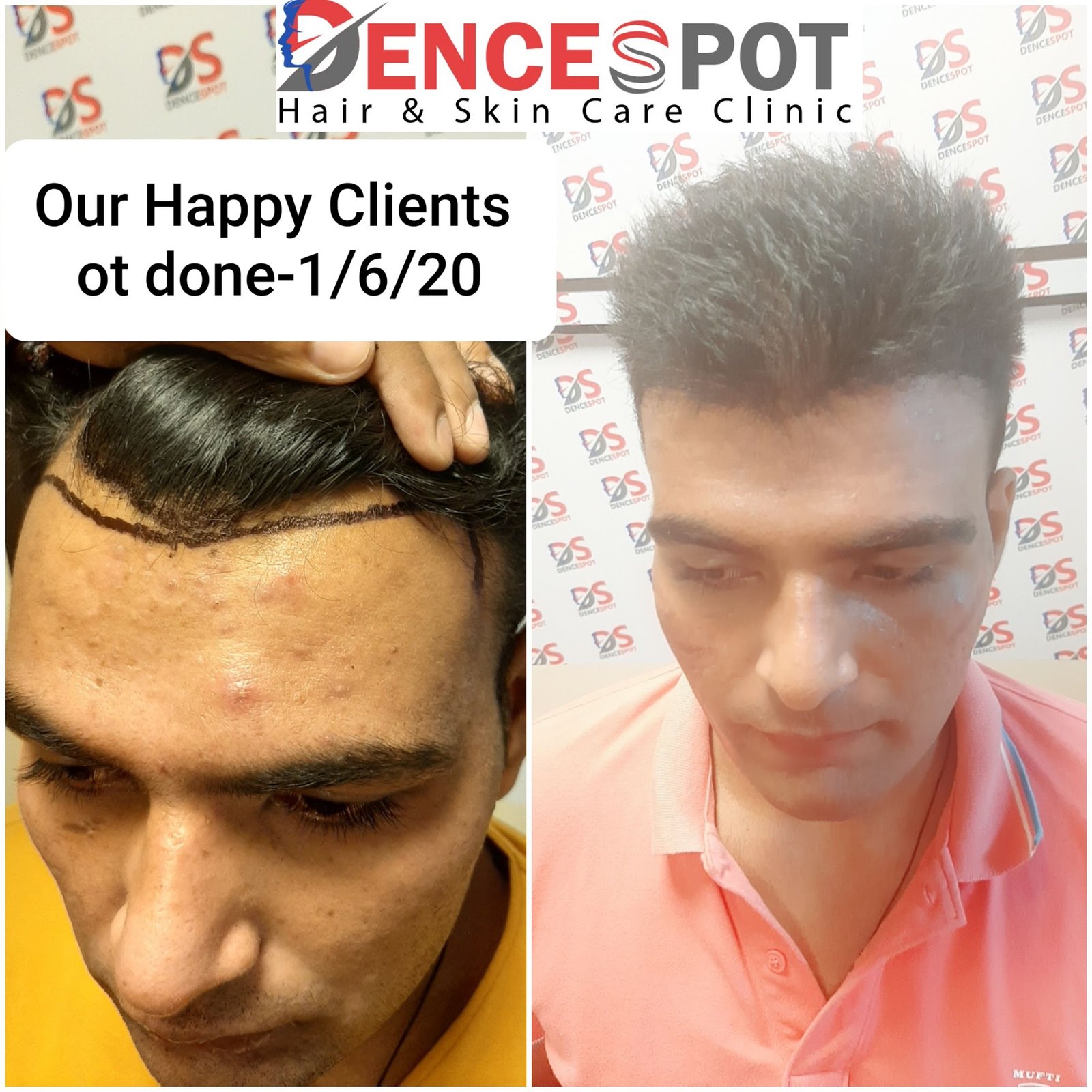
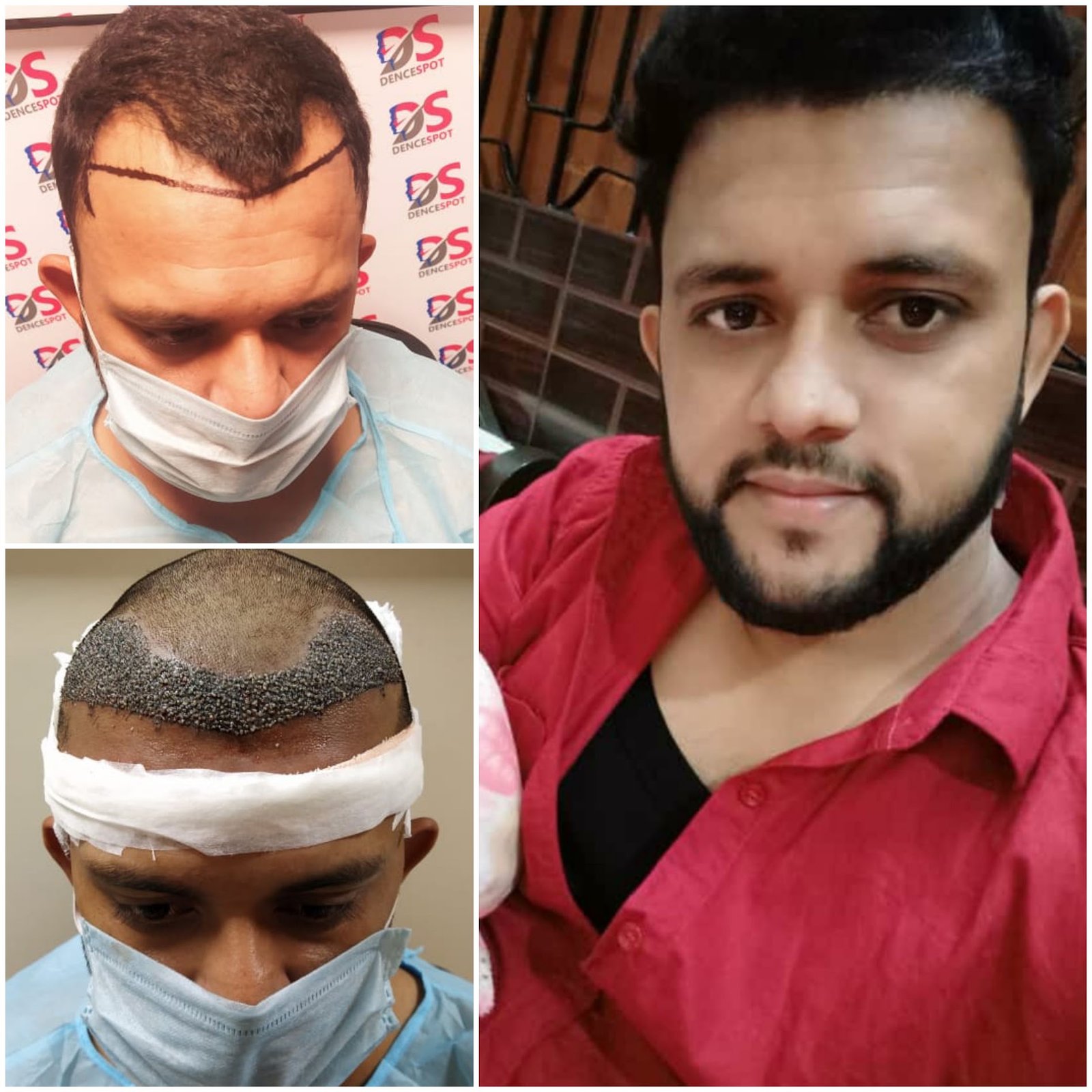
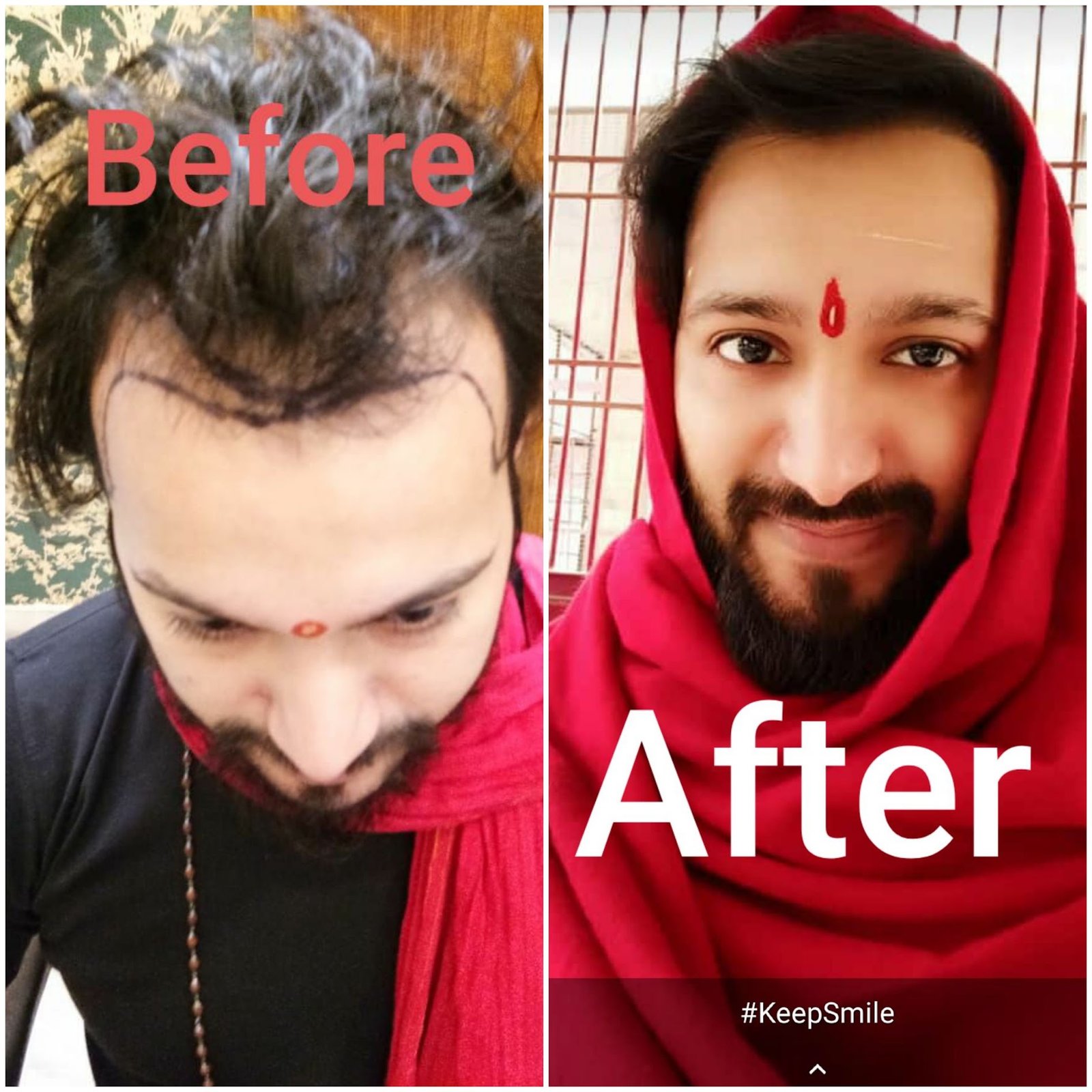
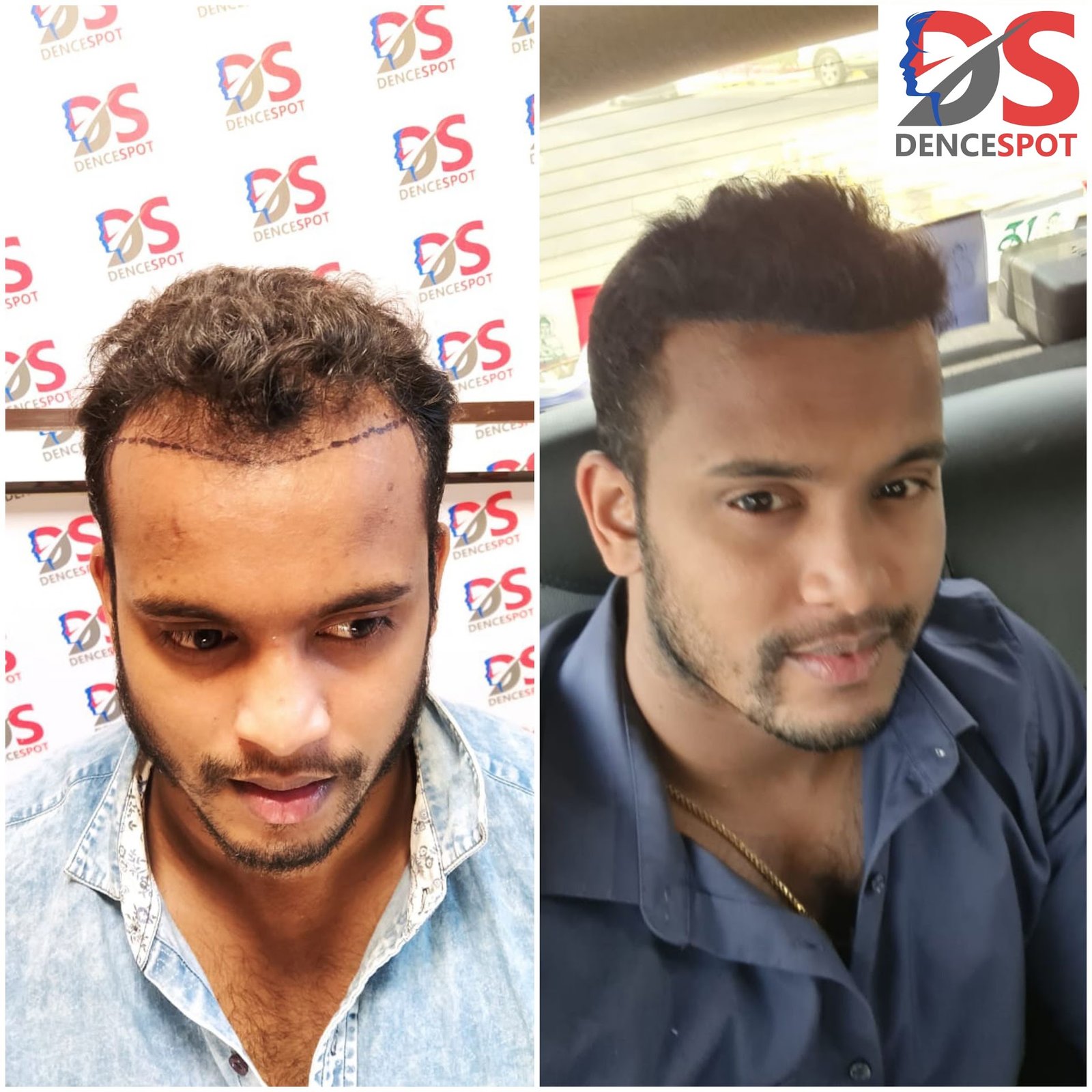
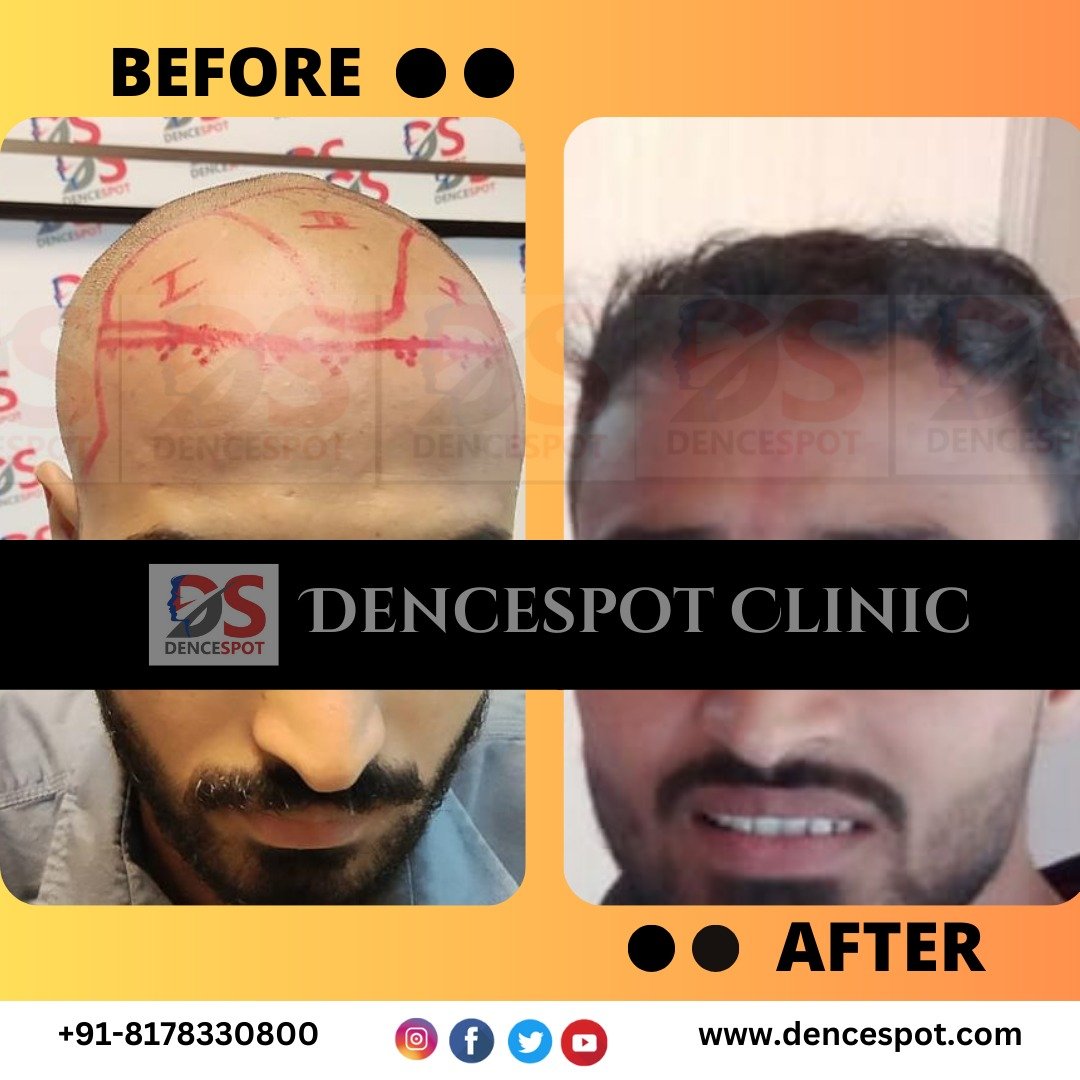
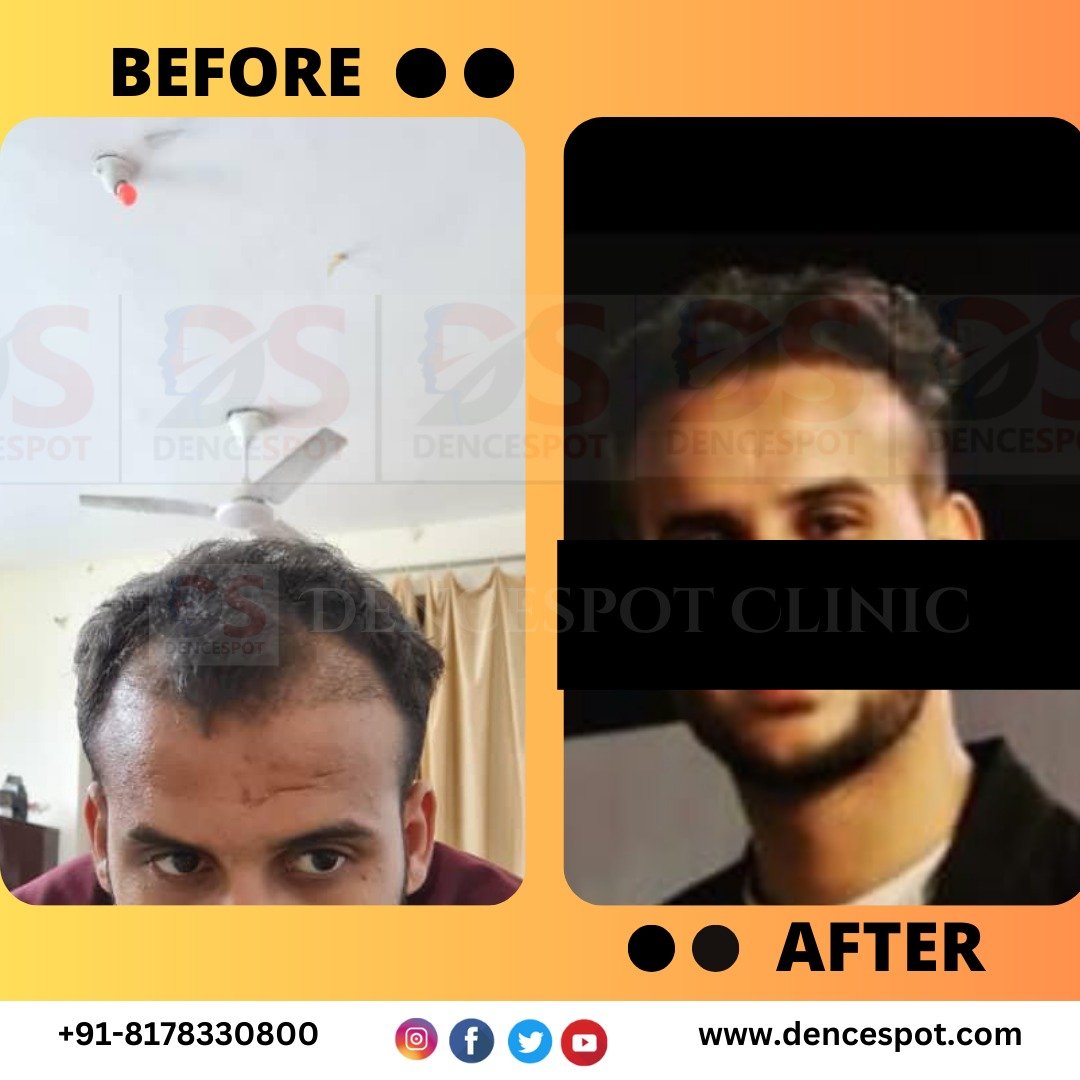
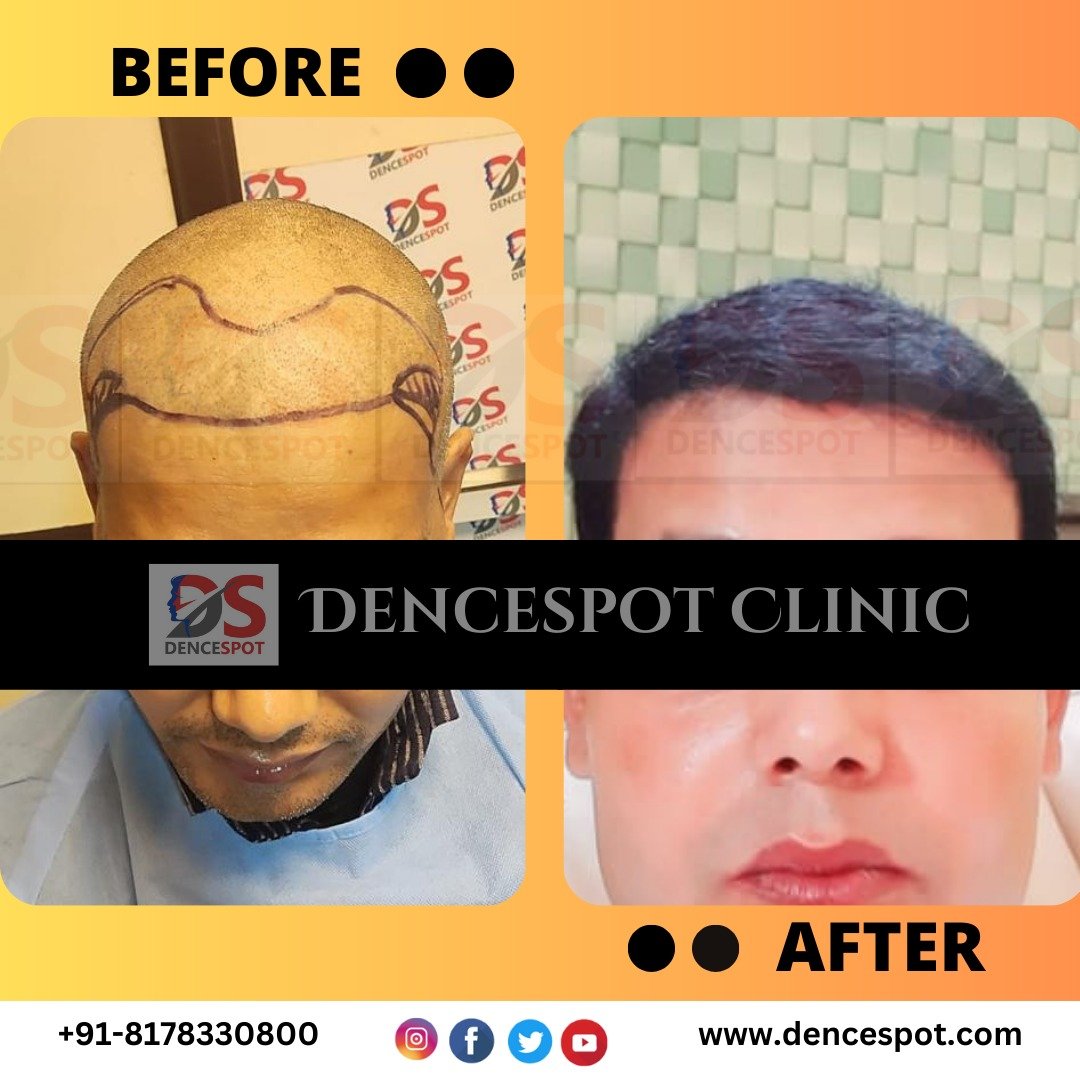
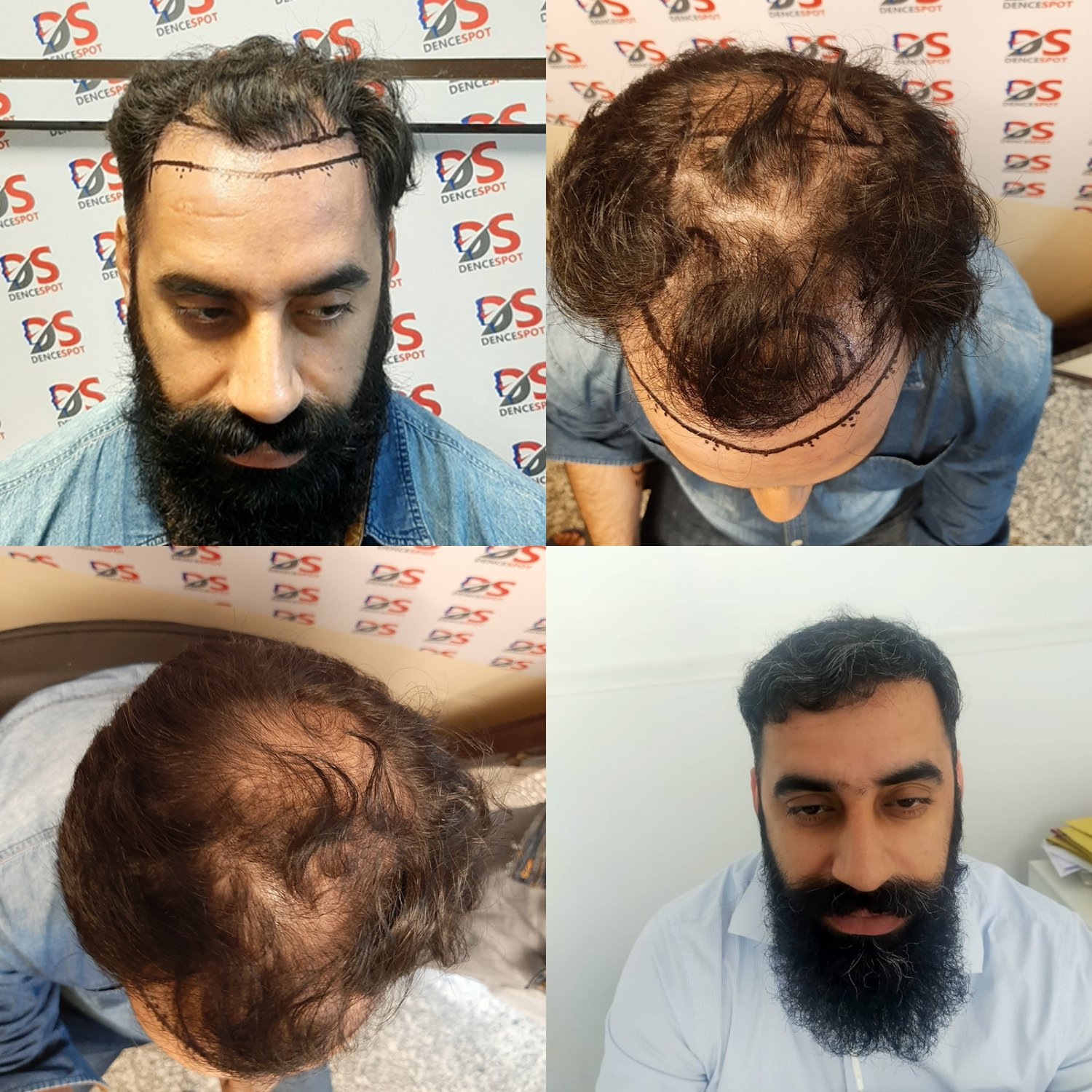
Before & After Hair Transplant Cases in Gurgaon
Consented photographs, with the hair never digitally altered, from patients treated personally by Dr. Nyra at DenceSpot Clinic, Sector 39 Gurugram. Results vary between patients, and hair restoration is judged at ten to twelve months.
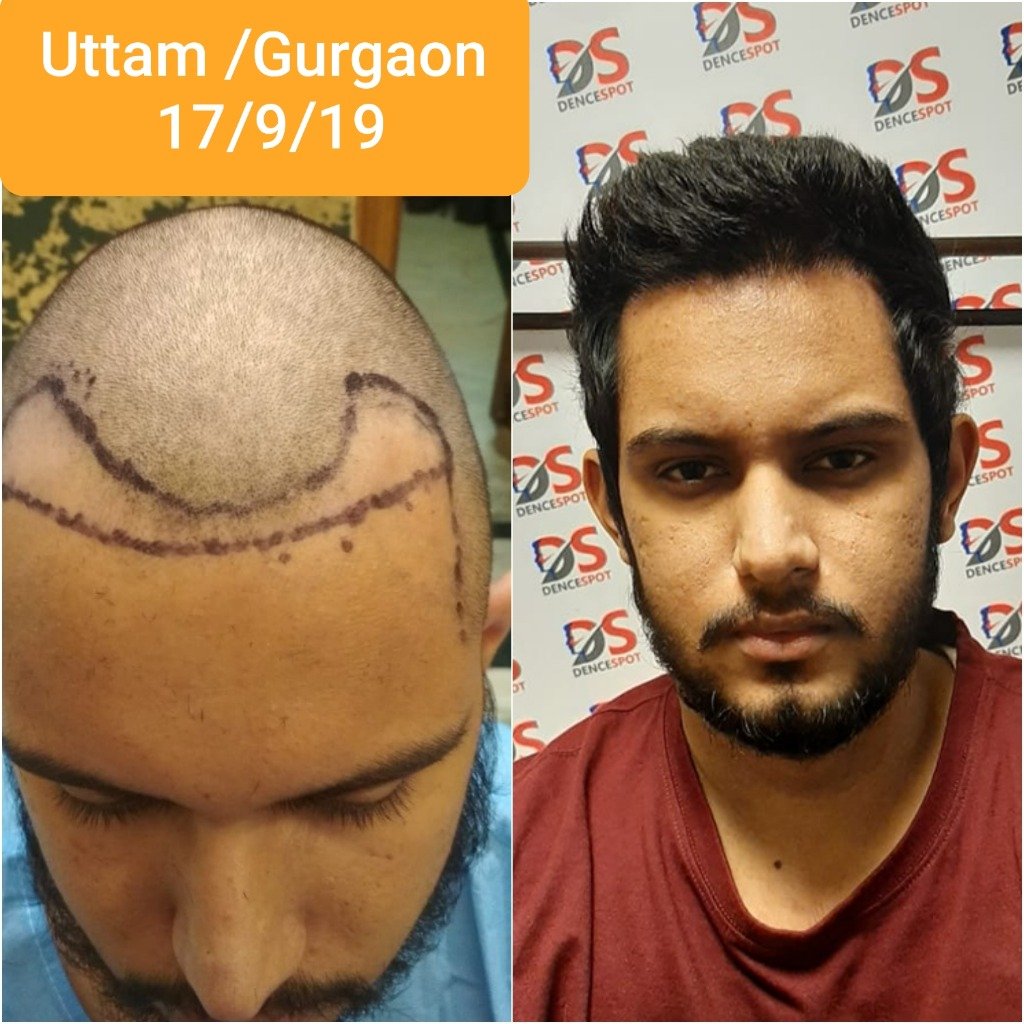
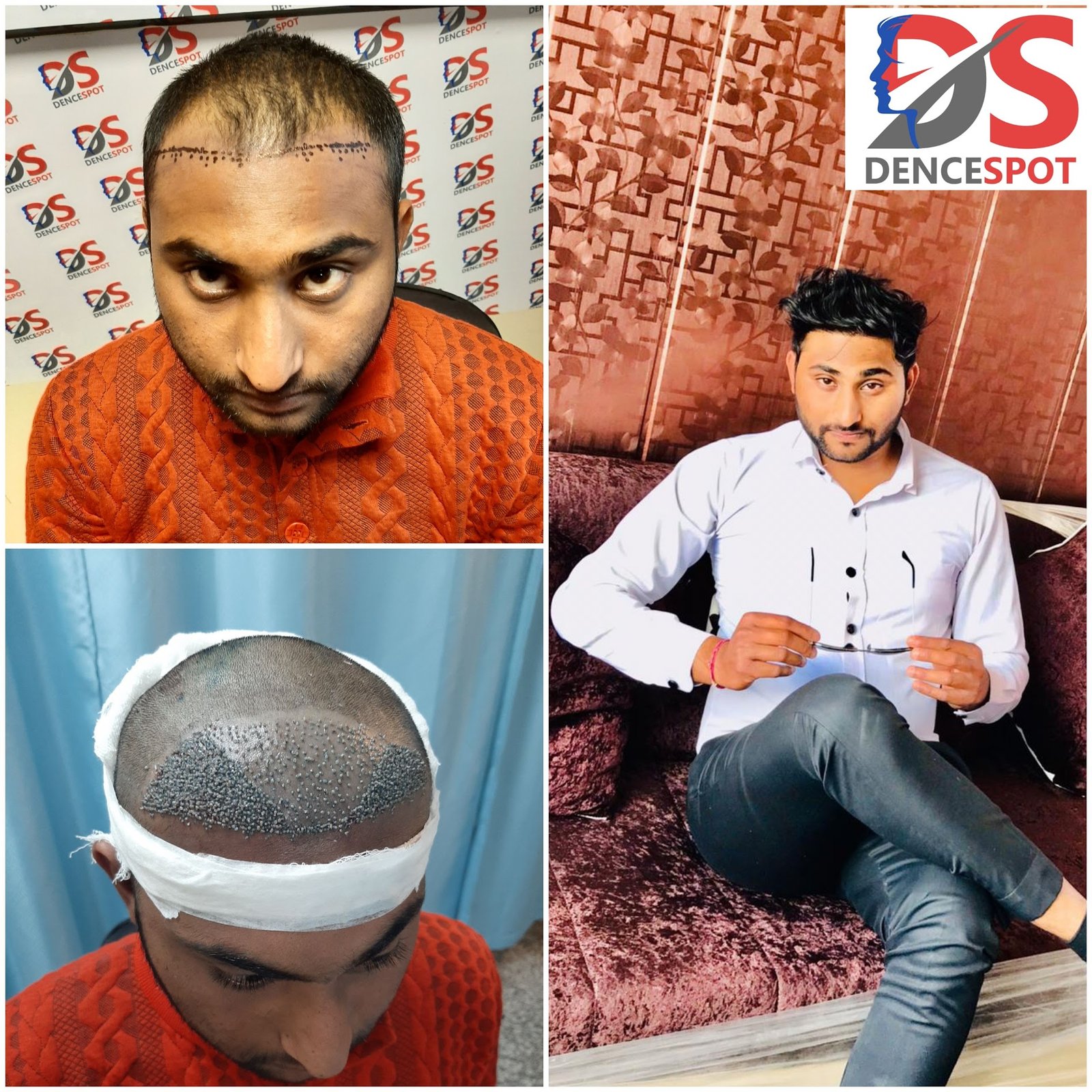
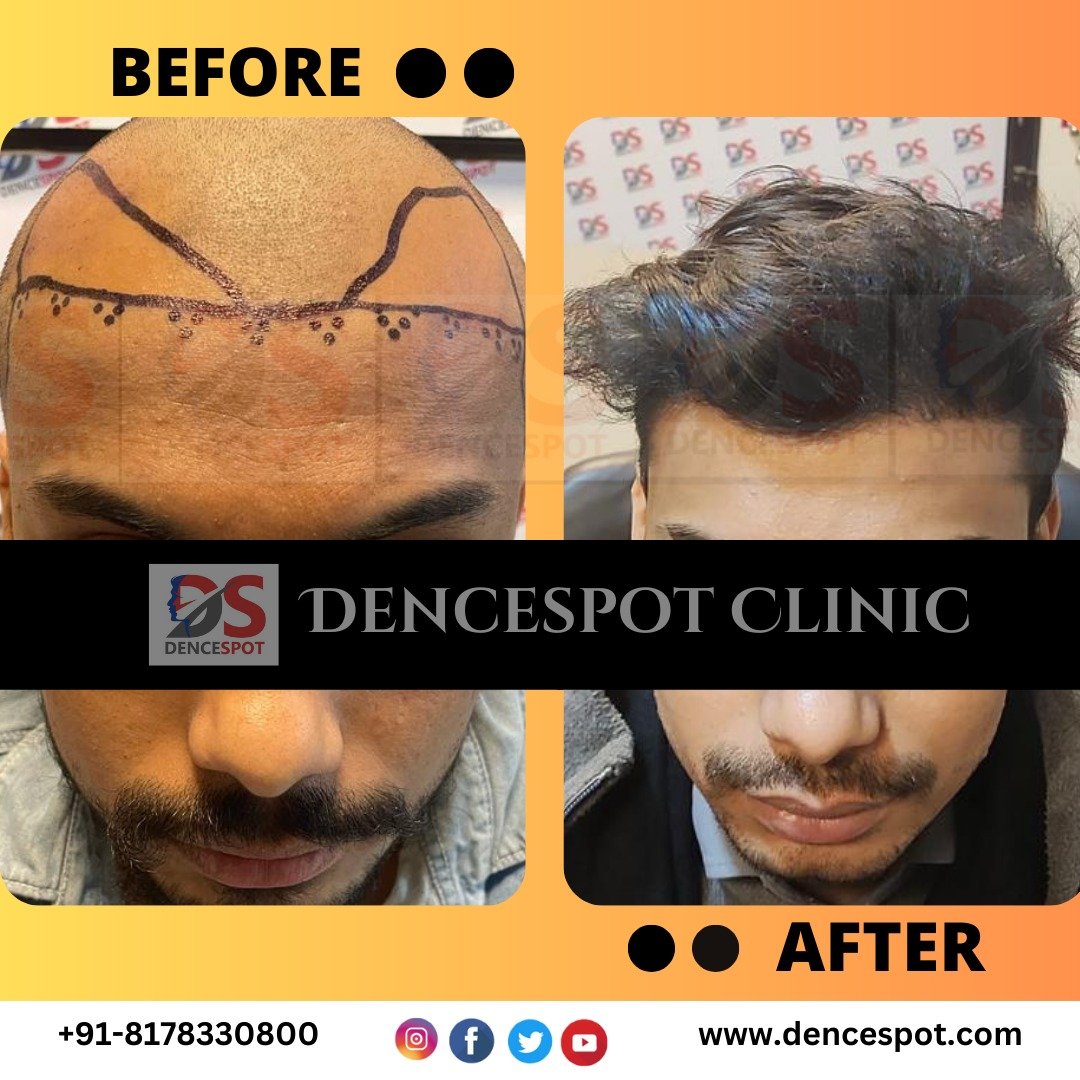
Uttam — Hairline & Temple Restoration
Receding hairline & frontal scalp completely restored with age-appropriate hairline design and dense graft placement.
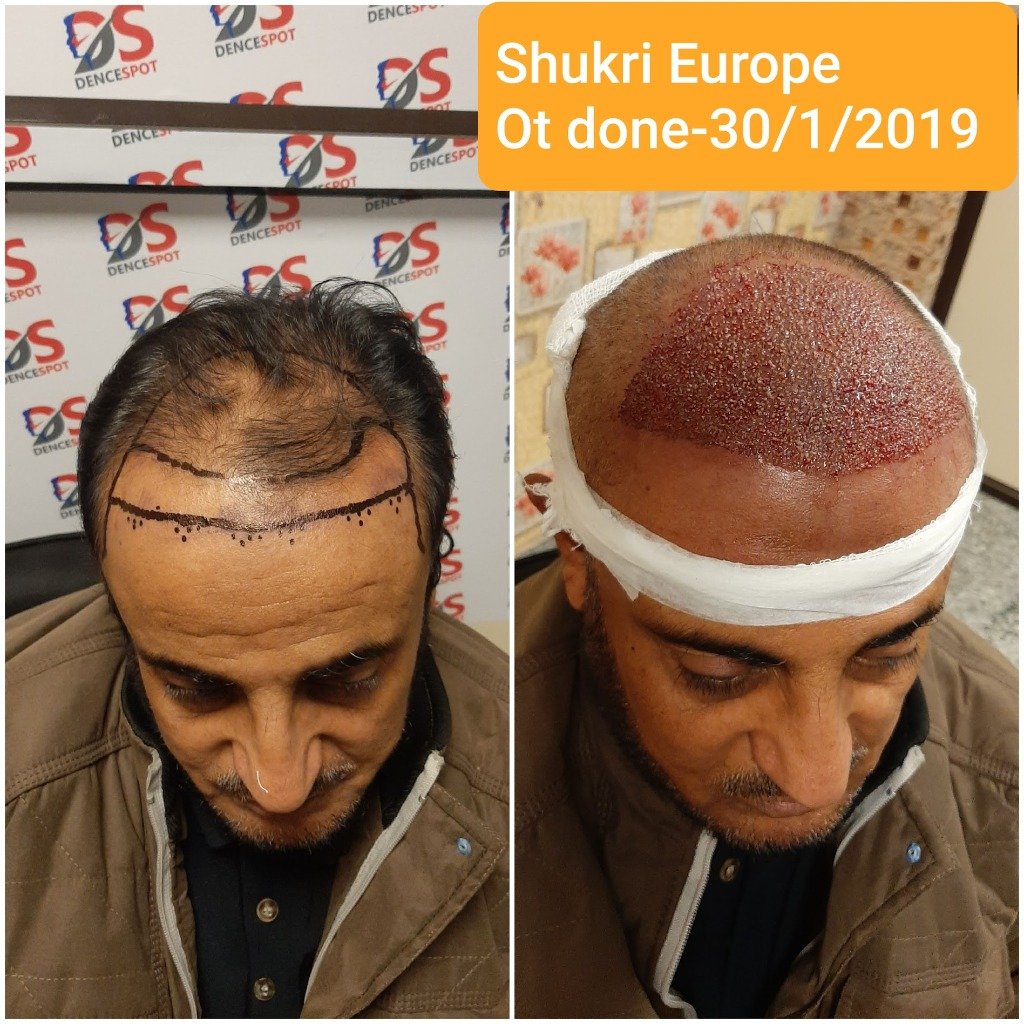
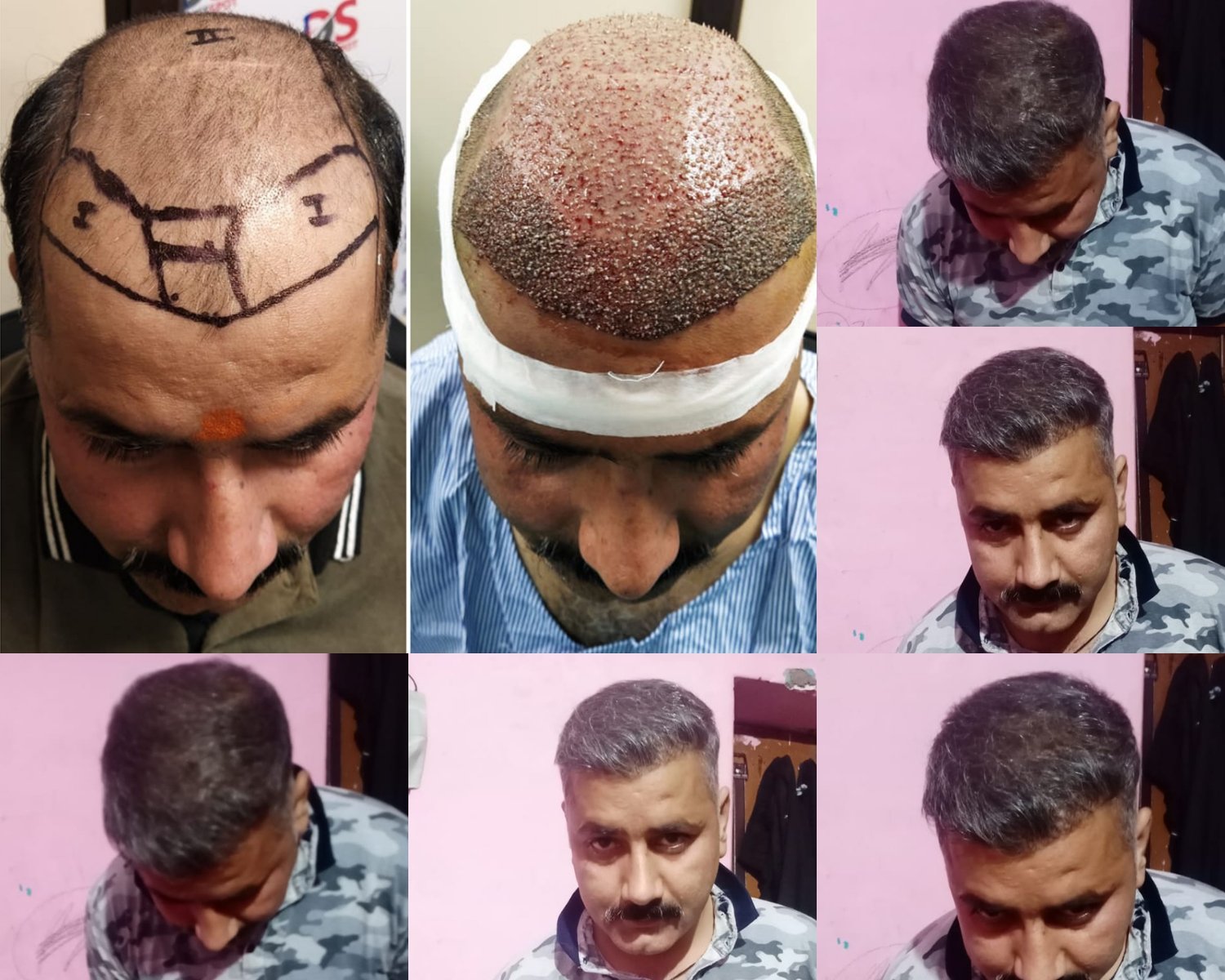
Shukri — Frontal Zone, Procedure Day
Hairline design and 2,800 grafts photographed immediately after placement. Growth is judged at ten to twelve months, so this shows the work, not the outcome.







Visit the clinic
Crown Restoration at Our Gurgaon Clinic
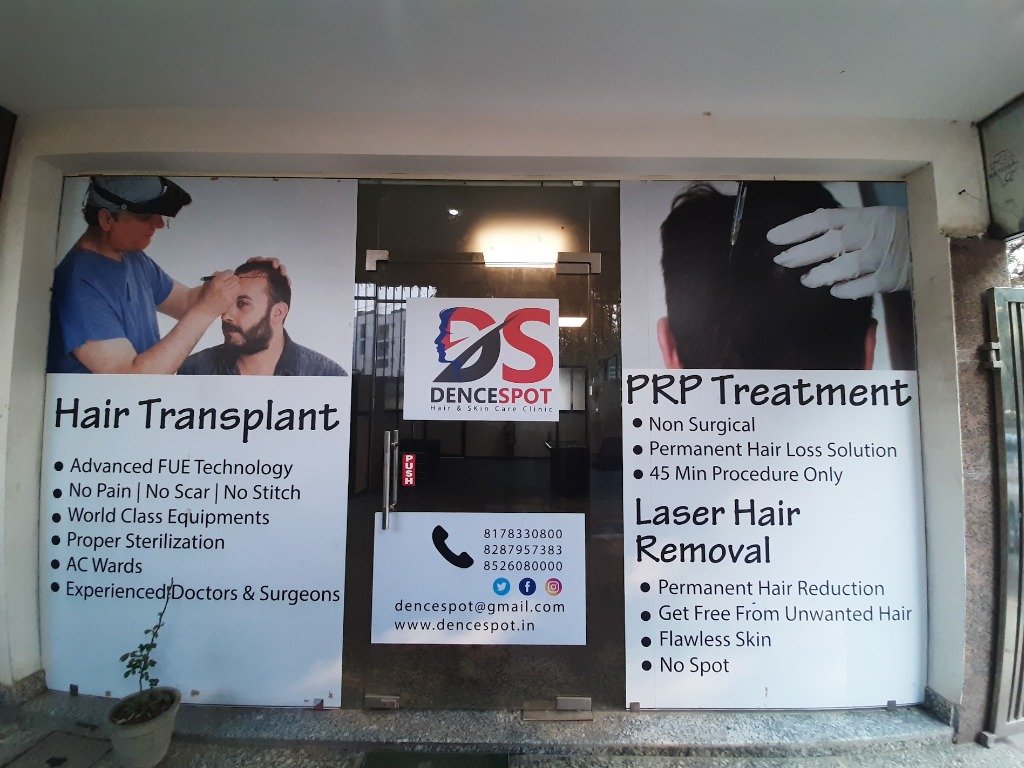
Assessment, mapping, surgery and every follow-up happen at our Sector 39 clinic in Gurugram, with the same doctor throughout. Patients travel to us from across Gurugram and neighbouring parts of South Delhi.
- Address
- 1123, Sector 39 Road, Jharsa, C Block, Sector 39,
Gurugram, Haryana 122003 - Phone
- +91 81783 30800
- Message +91 81783 30800
- dencespot@gmail.com
- Hours
- Mon–Sat · 10:00 – 20:00Sunday · closed
Getting here
Next step
Find Out What Your Crown Actually Needs
Come in and have the area measured rather than estimated. You will get an honest view of whether the crown should be treated now or after the front, what your donor can support, and a written plan that says clearly whether a second stage is likely.
Suitability is determined after clinical assessment. This page is patient education and does not constitute medical advice.
Quick enquiry