A Second Hair Transplant: When It Makes Sense and What Limits It
Why some people need a second session, how long to wait, how much donor supply is left, and when a second procedure is the wrong answer.
Written by the DenceSpot Clinic team
A second hair transplant makes sense when the area to be covered is too large for one session, when hair loss has continued behind the first result, or when more density is wanted and the donor area can still supply it. It should wait until the first result can be judged, which takes around twelve months, and longer for the crown. And it depends entirely on how much donor hair is left, which is why a second procedure is sometimes the wrong answer.
This article explains the usual reasons for a second session, how long to wait and why, how remaining donor supply is assessed, and the situations in which another operation would not help. It is general patient education; whether a second session suits you is decided at examination.
Why a second session happens
Second sessions fall into four broad groups, and they are not equally sensible.
A large area, staged deliberately
In extensive loss, the area to be covered can be larger than one session can safely treat. Grafts can be spread over more scalp or packed more densely into less, and the donor can give only so much at a time. A common plan is to restore the front of the scalp first, then decide later whether a second session goes to the mid-scalp, the crown, or nowhere. Staging also lets the first result guide the second.
Progressive loss behind the first result
A transplant does not stop pattern hair loss. Native hair behind and around the grafts can keep thinning (DermNet: male pattern hair loss), so a front that looked complete at one year can sit in front of a thinner mid-scalp five years later. A second session can follow that loss, provided the donor still has hair to give and the loss is being slowed with medical treatment rather than simply chased with grafts. It is a particular risk when the first procedure was done young, while the pattern was still moving, which is why the right age for a hair transplant has more to do with stability than birthdays.
A density top-up
Some people want more density in an area already treated, often because the first session spread its grafts over a large area. Adding grafts between existing ones is possible, but it is slower, careful work, because new sites have to avoid the grafts that grew. The visible gain can also look smaller than people expect, because coverage depends on hair calibre, colour against skin and hairstyle as much as on graft numbers.
Repair of an earlier procedure
Sometimes the second procedure is a correction: a hairline that is too low or too straight, grafts at the wrong angle, or visible donor scarring. That is a different kind of operation with its own limits, and hair transplant repair in Gurgaon and hair transplant repair in Rohini explain how it is assessed. Repair is usually harder than a first transplant, because operated skin has a poorer blood supply and the donor has already given once.
| Reason | What decides whether it makes sense |
|---|---|
| A large area, staged | Whether the first result and the remaining donor can fund the next area |
| Progressive loss | Whether the loss is being slowed medically, and whether a reserve remains for later |
| Density top-up | Whether the likely gain justifies the donor hair it would spend |
| Repair | What the problem is, whether time will improve it, and how much donor remains |
How long to wait, and why it takes about a year
The first result has to be finished before anyone can plan what to add to it. Transplanted hairs usually shed in the first weeks, regrowth starts slowly after about three months, and the new hairs arrive fine and uneven before they thicken. At six months a result can look patchy and still be on course; the month-by-month growth timeline sets out what is typical at each stage.
For that reason a recent review of complications after follicular unit extraction (FUE) states that secondary procedures or touch-ups should only be considered once final growth is achieved, typically around twelve months after surgery (review of FUE complications, Frontiers in Medicine). Operating earlier risks placing grafts into an area that was going to fill anyway, and spending donor hair you cannot replace.
- The hairline can usually be judged at around ten to twelve months.
- The crown is slower and often keeps improving to fifteen or eighteen months, so a crown session waits longer.
- The donor area needs to have healed and settled, and after a strip (FUT) procedure the scar needs time to mature before more is taken.
- Your native hair needs time to show where it is heading, ideally in photographs taken at the same angles from before the first session to the twelve-month review.
A second session also brings a second round of shedding, in the newly placed grafts and sometimes in the hair around them, so the same months of waiting apply again. Plan weddings and other photographed occasions around that.
How much donor supply is left
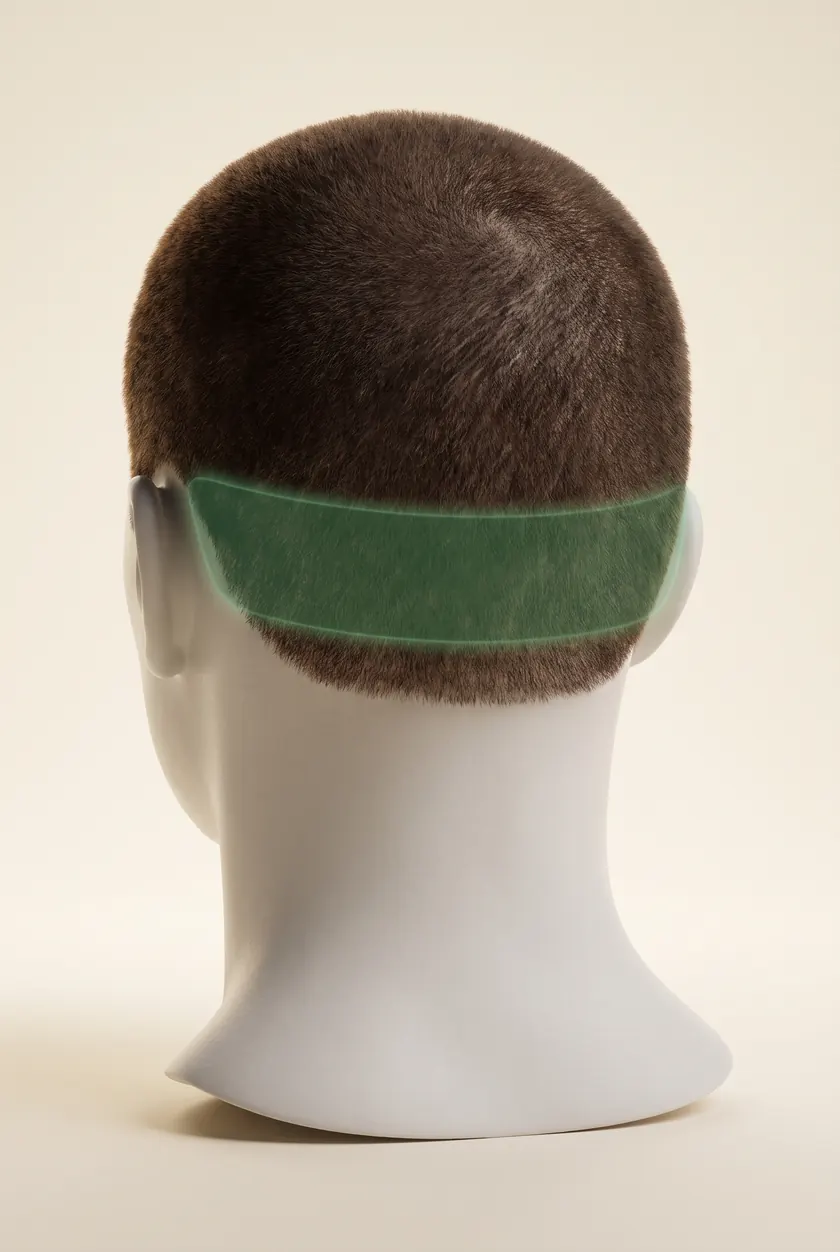
Donor hair does not grow back where it was taken, so every session draws on the same finite supply. Why the donor area is a one-time budget explains how that supply is measured. At an assessment for a second session, the questions are narrower:
- How much was taken the first time, and from where. The operative record, with the graft number and technique, is the starting point. Bring it if the first procedure was done elsewhere.
- How evenly it was taken. Extraction spread evenly across the safe zone leaves room between earlier sites. Clustered or over-dense extraction leaves patchy areas that cannot safely give more.
- What density remains. This is measured under magnification, alongside hair calibre and, after a strip procedure, how mobile the scalp still is.
- What must be held back. Loss still expected over the next fifteen years needs a reserve too.
There is no universal rule for how much a donor area can give in one sitting. The same review notes that many authors suggest limiting each session to between a tenth and a fifth of the donor area's baseline follicular unit density, because overharvesting is one of the most characteristic donor complications of FUE, and once donor depletion has occurred, the options for reconstruction are limited. Beard or body hair can supplement a thin scalp donor in some people, but it behaves differently, suits the mid-scalp and crown rather than a hairline, and does not replace scalp donor hair.
The hair transplant graft calculator gives a deliberately wide range by stage and area. For a second session it is only a starting point, because the limit is set by what remains in your donor area, not by the size of the area you would like covered.
When a second procedure is the wrong answer
A second operation is not always the next step, and sometimes it makes things worse. It is usually the wrong answer when:
- The first result is not finished. Before about twelve months, poor growth is often just early growth.
- Poor growth has not been explained. If grafts grew poorly, the reason matters first: an infection, a scalp condition such as a scarring alopecia mistaken for pattern loss, uncontrolled diabetes or smoking. Repeating the operation without dealing with the cause can repeat the result.
- The donor area is depleted. Taking more from a thinned donor makes the back of the head look patchy while adding little at the front. Scalp micropigmentation, which adds no hair but reduces the contrast between hair and scalp, can do more here without spending donor hair.
- Loss is moving fast and untreated. Grafting behind a receding front while native hair is still going quickly spends donor hair keeping pace with a process that medical treatment could slow.
- The goal is your original density. No number of sessions restores the density of a scalp that never lost hair. If the aim is your hair at twenty, more surgery will not reach it.
- The donor itself is thinning. In diffuse unpatterned loss the donor area miniaturises too, and grafts taken from it carry the thinning with them.
In several of these, the better plan is medical treatment for the native hair, camouflage, a different hairstyle, or simply time. Anyone recommending a second session should be able to explain why it is the right tool for your scalp, and what it will not achieve.
Your own case
Wondering whether a second session would add anything?
An examination looks at what the first procedure achieved, measures the donor density that remains, and tells you whether more surgery is possible and whether it is worth the donor hair it would use.
When to see a doctor
You do not need to wait for a twelve-month review to ask a question. See the doctor who performed your procedure, or another registered medical practitioner, sooner if:
- the transplanted area or the donor area shows spreading redness, pus, increasing pain or fever at any stage;
- growth is still very sparse at around twelve months, or much patchier than the plan described;
- the donor area looks thin or patchy when your hair is cut short;
- hair around the grafts is thinning quickly, or you notice shedding from the whole scalp;
- the hairline position, the angle of the grafts or their size looks wrong, which time will not improve and which can be assessed early.
Getting it assessed
Whether a second hair transplant makes sense depends on what the first one achieved, how much donor hair remains, and what your native hair is likely to do next. Bring the operative record, photographs from before the first procedure and since, and your medicine list. Consultations with registered medical practitioners are available at our clinics in Sector 39, Gurugram and Rohini, Delhi; hair transplant in Gurgaon and hair transplant in Rohini explain how assessment and planning work. A useful assessment tells you not only whether more surgery is possible, but whether it is worth the donor hair it would use.
Second hair transplant: more questions
How long after my first hair transplant can I have a second?
Usually not before about twelve months, when the first result can be judged, and longer if the crown was treated, because crown growth often keeps improving to fifteen or eighteen months. The donor area also needs to have healed. Operating sooner risks adding grafts to an area that was still filling.
Is a second hair transplant riskier than the first?
Often, yes, mainly to the result rather than to your general health. Previously operated skin can be firmer with a poorer blood supply, new sites have to avoid the grafts that grew, and the donor area has already given once, so the margin for error is smaller. The aftercare and the general surgical risks are much the same as the first time.
Can the same donor area be used again?
Usually, within limits. Grafts are taken from the same safe zone, between and around earlier extraction sites or around a strip scar, and how much can be taken depends on the density that remains. Beard hair can supplement the scalp in some people, but it does not replace scalp donor hair.
Will I shed again after a second transplant?
Yes. Every session that moves follicles sets off the same cycle of shedding and regrowth, in the new grafts and often in nearby native hair. The timeline restarts, so the second result is judged at around twelve months after that session.
Can I have the second session at a different clinic?
Yes. Ask the first clinic for your operative record, including the graft number and the technique used, because any doctor planning a further session needs to know what was taken and from where. The donor area will be examined and measured again either way.
How many hair transplants can one person have?
There is no fixed number. It depends on how much donor hair you started with, how much each session used, how evenly it was taken and how much further loss is expected. For some people one session is enough; others have two or more over many years.
If my first transplant was FUT, can the second be FUE?
Often, yes. Both methods draw on the same donor zone, FUE can harvest from around a strip scar, and grafts can sometimes be placed into the scar to soften it. Which method suits the second session depends on the remaining density, the scalp's laxity and how short you wear your hair.
Medical disclaimer. Information on this website is general patient education. It is not medical advice and does not create a doctor-patient relationship. Suitability, graft numbers and treatment plans are decided only after an in-person examination by a registered medical practitioner. Outcomes differ from person to person, and no particular outcome, density or timeline can be promised.
Related treatment
Considering hair transplant treatment?
This article is patient education. What applies to your own case is decided after an examination — the treatment page sets out how that works, what it costs and what to expect.