Hair transplant
Is There a Right Age for a Hair Transplant?
Why surgery in your early twenties carries particular risks, what a stable pattern of loss means, and why age matters less than donor supply and future loss.
If you are disappointed with how an earlier hair transplant turned out, the Rohini clinic can assess what is realistically correctable. Much can often be improved; little can be fully undone. The deciding factors are whether the result is finished and how much donor hair remains.
Rohini Clinic
Request a call back
Leave your number and the clinic will call you during opening hours (Mon–Sat · 10:00 – 20:00) to arrange a consultation. Prefer to message? WhatsApp the clinic. Not ready to talk? Estimate a graft range first.
Timing
Many people seek a repair opinion before their first transplant has finished growing. Hair returns in stages, and a result that looks thin at six months can still be on course.
Some faults do not change with waiting: a hairline in the wrong position, grafts aimed the wrong way or clumped grafts at the front. Those can be assessed early, although any surgery still waits until the scalp has settled. Compare your progress with the month-by-month growth timeline.
What gets corrected
Disappointing results tend to fall into a few recognisable groups, and most repair plans deal with more than one. The surgery uses the same methods as a first hair transplant in Rohini, applied with more caution; if the hairline is your main concern, hairline transplant in Rohini explains how a front edge is designed and agreed.
Grafts carrying three or four hairs along the front row, where one-hair grafts belong, give a clumped look. Often among the more correctable problems.
A line with no soft transition. Scattered one-hair grafts placed ahead of and among the existing ones usually break it up.
The hardest design fault to undo, because raising the line means taking hair out, not moving it.
Hairs that stick up or run against their neighbours. The angle cannot be changed in place, so the graft is removed and re-placed.
More grafts can be added into the area, but only if the donor can still supply them.
A back of the head thinned by heavy extraction, or a wide scar from strip surgery. This limits everything else.
The limiting factor
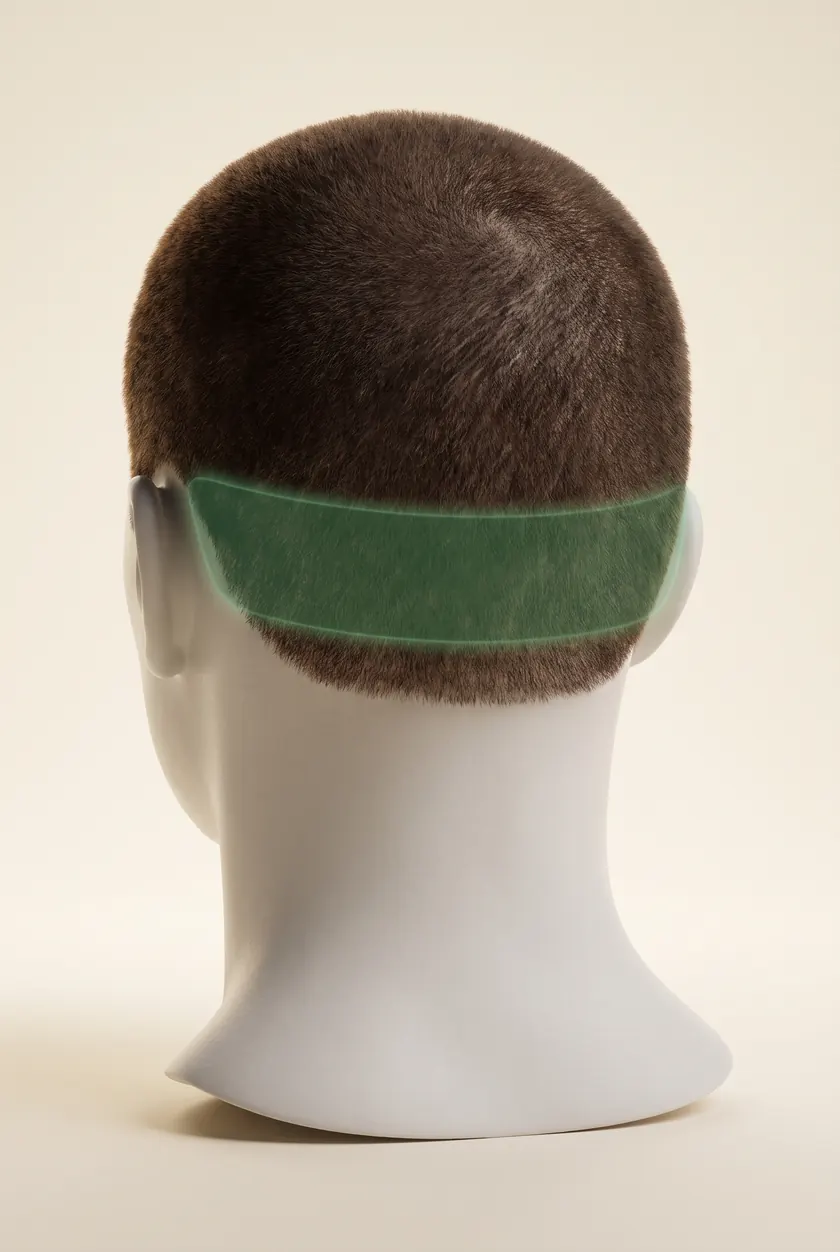
Repair has no fresh supply of hair. Whether a graft softens a line, fills a thin patch or covers a scar, it comes from the donor region the first procedure has already drawn on. That is why the donor is measured before anything else.
The ceiling is lower when a large number of grafts has already been taken, the back shows thin or moth-eaten patches, extraction was concentrated in one zone, or there has been more than one previous procedure. Why donor hair is a one-time budget explains the arithmetic.
Signs of more room to work:
Realistic limits
Every repair plan includes a written ceiling, so you know what will and will not change before you agree to anything. As a general guide, problem by problem:
Removing grafts
Grafts come out one at a time. Not every follicle survives to be re-used, every extraction site leaves a tiny mark, and a follicle that is not fully removed can occasionally regrow. For hairs that only need to go, laser hair removal may suit selected cases, depending on hair colour and skin type.
Pigment instead of grafts
Scalp micropigmentation places pigment in the skin to reduce the contrast between hair and scalp. It adds no hair and spends no donor, but it fades over the years and needs touch-ups. If it would help more than further surgery, the doctor will say so.
At the Rohini clinic
Consultations and corrective procedures at Rohini are carried out by registered medical practitioners, with more time spent on assessment than for a first transplant.

Step 01
Bring the operative note, graft count and technique if you have them. The transplanted area, the hairline and the donor are examined and photographed.

Step 02
What can improve, what cannot, the likely number of stages and the cost factors for each, set down before anything is booked.

Step 03
Often removal and redistribution first, as a day case under local anaesthetic; then regrowth and a review at Rohini before density, softening or scar work.
Recovery and risks
Recovery after corrective work closely follows a first transplant. Reviews between stages take place at the Rohini clinic; directions to the Rohini clinic and its hours are on the clinic page.
Swelling and crusting usually settle within one to two weeks. Wash as you were shown on the day.
Transplanted hair, and some of the hair around it, can shed after a further procedure. It usually regrows.
Medication does not change the grafts, but it helps protect the hair around them. See hair fall treatment in Rohini.
Why a second operation is harder
Risks, plainly
Lower graft survival in scar tissue, small marks where grafts are removed, temporary shedding of nearby hair, and the general surgical risks of infection and poor growth. Results vary, and no repair outcome can be promised. The guide to hair transplant repair options covers these in more depth.
A staged repair means more than one healing fortnight, so it is worth planning each around Delhi’s seasons. These are general practicalities; your written aftercare comes first.
More in hair transplant recovery in Delhi.
Cost guidance
Repair is quoted only after examination, and estimates vary more than for a first transplant. Working in previously operated skin is slower, graft for graft, so correction usually costs more than a first procedure of similar size.
The fault being corrected
Removal work
Grafts available
Number of stages
Scar tissue
Treatment alongside
The estimate is itemised and in writing, with the cost factors set out for each stage. Where grafts are added, the pricing works as it does for a first transplant: graft count multiplied by a per-graft rate, plus what the estimate includes. Instalment options through third-party lenders may be available — ask at the consultation, and see cost and EMI options.
How graft-based pricing works: hair transplant cost in Rohini
Who you will see
Treatment at the Rohini clinic is carried out by registered medical practitioners. Every doctor at DenceSpot is listed below with their qualifications.
Dr. Nyra
MBBS, MD (Dermatology)
Further reading
Plain-language articles on hair loss and its treatment. Each article shows its own author and review details.
Why surgery in your early twenties carries particular risks, what a stable pattern of loss means, and why age matters less than donor supply and future loss.
Whether a hair transplant is possible with diabetes, high blood pressure or a heart condition, what is checked first, and which medicines need planning.
When light walking, the gym, swimming, helmets, smoking and alcohol fit back into the recovery weeks, and the reasons behind each wait.
Visit the clinic
Repair consultations, staged corrective work and the reviews between stages all take place at our clinic in North-West Delhi. The clinic card below has the phone number, hours and a map link.
Our clinic
Rohini, Delhi
Every treatment below is carried out at the Rohini clinic, and each starts with an examination and a written plan. See the Rohini clinic page for directions and hours.
Cost guides for the Rohini clinic: Hair transplant cost in Rohini · PRP treatment cost in Rohini · Beard transplant cost in Rohini.
Rohini, Delhi
Bring your operative note and any photographs from before the first procedure. The result is examined, your remaining donor hair is measured, and you leave with a written ceiling for what can change, not a promise.