Alopecia Barbae: Round Bald Patches in the Beard
Why smooth round patches appear in the beard, how alopecia barbae differs from a naturally patchy beard, and why a transplant waits while it is active.
Written by the DenceSpot Clinic team

Smooth, round bald patches that appear in a beard over a few weeks are most often alopecia areata, which in the beard is called alopecia barbae. It is an autoimmune condition: the immune system attacks hair follicles and stops them producing hair, but it does not destroy them, so the hair can regrow. It is not contagious, it often improves, it can come back, and a transplant is not done while it is active.
This article explains how alopecia barbae looks, how it differs from a beard that has simply never filled in and from fungal infection, which treatments a doctor may consider, and why the beard is not grafted while the condition is active.
What alopecia barbae is
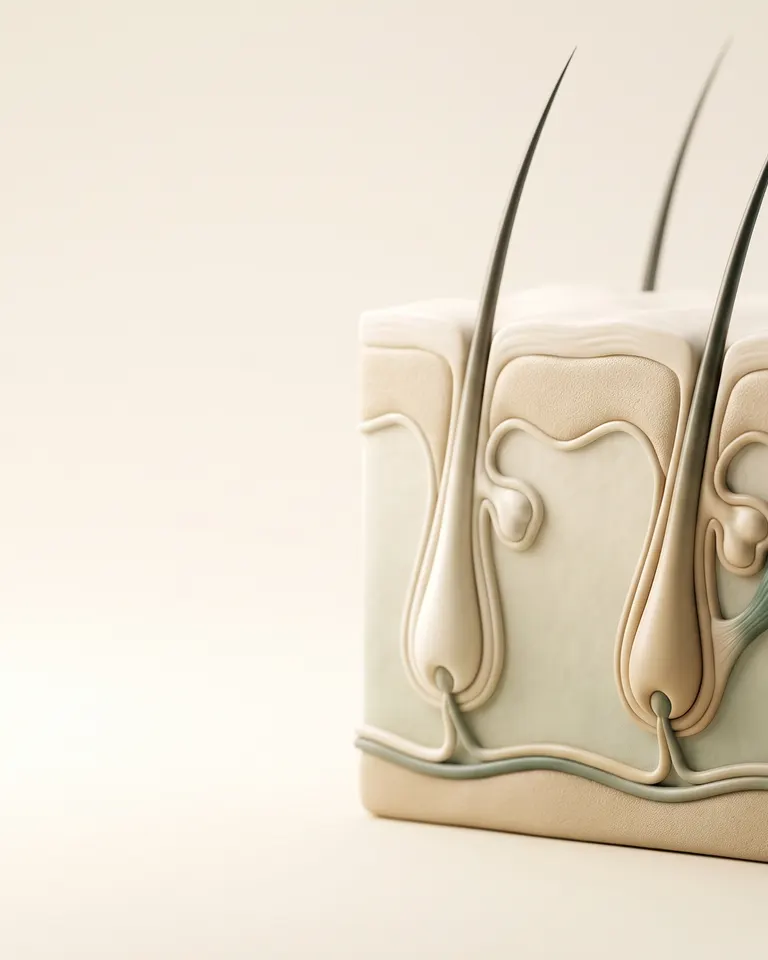
Alopecia areata is a common autoimmune condition. Immune cells gather around the root of growing hairs and push the follicles into a resting state, so hair falls out in well-defined patches. The skin is not scarred and the follicles remain alive, which is why regrowth is possible. The American Academy of Dermatology lists alopecia barbae, patchy hair loss in the beard, as one of its recognised forms.
It can begin at any age. It sometimes runs in families, and DermNet's reference page on alopecia areata notes links with other autoimmune and allergic conditions, including thyroid disease, vitiligo and atopy such as eczema or hay fever. The beard can be the only area affected, or patches can appear on the scalp, eyebrows or body as well, at the same time or later.
What the patches look like
The typical picture is easy to describe and easy to mistake for something else.
- Smooth, round or oval patches. The skin inside the patch looks normal: not red, not scaly, not scarred. It is often surprisingly smooth to touch.
- A clear edge. Hair around the patch looks normal, and the boundary is well defined.
- A fairly quick onset. Patches tend to appear over days or weeks, often noticed while trimming or shaving, in areas where hair used to grow.
- Exclamation-mark hairs. At the edge of an active patch there may be short, broken hairs that are thicker at the tip and narrower near the skin, like an exclamation mark. DermNet describes them as characteristic of alopecia areata. They are tiny and most easily seen under magnification.
- Few symptoms. Most patches do not itch or hurt, though some people notice mild tingling or itch before hair falls.
- White or fine regrowth. When hair returns, the AAD notes it may at first be white or finer than before, and its usual colour often comes back over time. A white tuft in a beard can be the first sign of recovery rather than a new problem.
Patches can be single or several, and neighbouring patches sometimes join. Some people also have small pits or ridges in the fingernails, which DermNet notes tends to go with more extensive disease.
How it differs from a patchy beard and from fungal infection
Three things commonly cause gaps in a beard, and they are handled very differently. The single most useful question is whether hair used to grow there.
| Feature | Alopecia barbae | Genetically patchy beard | Tinea barbae (fungal) |
|---|---|---|---|
| History | Hair lost where it used to grow | Hair never filled in | Hair lost in an inflamed area |
| Onset | Over days to weeks | Present since the beard developed; may slowly improve | Over days to weeks |
| Skin in the gap | Smooth and normal-looking | Normal, often with fine light hairs | Red, swollen, scaly or crusted, often with pustules |
| Shape | Round or oval, sharp edge | Irregular, often similar on both sides | Irregular, sometimes a raised lump |
| Hairs at the edge | Exclamation-mark hairs in active patches | Normal hairs thinning gradually into the gap | Hairs that break or pull out easily |
| How it is confirmed | Examination and trichoscopy | Examination and photographs over time | Skin scrapings and plucked hairs for microscopy and culture |
| Usual approach | Observation or medical treatment; no surgery while active | Time; sometimes medication or, once settled, a transplant | Antifungal medicine, usually by mouth |
A beard that never filled in
A genetically patchy beard has gaps that have been there since the beard first grew. They are often roughly symmetrical, typically on the upper cheeks or between moustache and chin, and fine hairs can often be seen inside them in good light. Many such beards keep filling in through the twenties, as when a beard fully grows in explains, and whether a patchy beard is worth waiting on covers how to track it.
Fungal infection of the beard
Tinea barbae is a fungal infection of the beard area. DermNet's page on tinea barbae describes it as usually very inflamed, with red lumpy areas, pustules and crusting around the hairs, and notes that the hairs can be pulled out easily. It most often comes from contact with infected animals. It is confirmed by examining skin scrapings and plucked hairs under the microscope and in culture, and it is usually treated with antifungal medicine taken by mouth.
Mixed creams containing a steroid are easy to buy in India and are often applied to any rash on the face. On a fungal infection they can suppress the redness while the fungus spreads, a pattern DermNet calls tinea incognito, which makes it harder to recognise. That is one reason an unexplained patch should be examined before anything is applied to it.
Other causes
Hair pulling or picking leaves irregular patches of hairs broken at different lengths. Scars from acne, injury or surgery leave hairless skin with a different texture. Inflamed follicles and razor bumps cause redness and spots rather than smooth patches. A doctor can usually separate all of these at one examination, with trichoscopy, the magnified view of the skin and hair roots, showing features that a mirror cannot. Where the history suggests it, blood tests such as thyroid function may be checked.
Treatments a doctor may consider
Treatment depends on how many patches there are, how long they have been present, how quickly they are changing and how much they bother you. A 2023 review of beard hair loss in the Journal of Clinical Medicine noted that no randomised trials have tested treatments for alopecia areata in the beard specifically, so doctors generally follow the approach used for the scalp. In general terms, the options are:
- Observation with review. Small, limited patches have a reasonable chance of regrowing without treatment. Choosing to watch means photographs and scheduled reviews, not being sent away.
- Treatment applied to or injected into the patches. Corticosteroids applied to the skin or injected into a patch are the most common first-line treatments for limited disease. Frequency and duration are individual decisions.
- Other topical treatments. Minoxidil is sometimes used alongside other treatment, and contact immunotherapy, which deliberately provokes a mild skin reaction, is an option in some cases.
- Treatment for extensive or persistent disease. Medicines taken by mouth that act on the immune system, including a newer group called JAK inhibitors, may be considered under close medical supervision, with monitoring.
- Practical measures. Shaving or keeping the beard short can make patches far less noticeable while treatment takes its course.
PRP is not an established treatment for alopecia areata, and neither is a transplant during active disease. If either is offered as the answer to active patches, it is reasonable to ask what evidence supports it.
Your own case
Smooth, round patches appearing in your beard?
A consultation examines the patches and their edges under magnification, checks for fungal infection and other causes, looks at the scalp, eyebrows and nails, and sets out whether watching or treatment makes sense for your own case.
Recurrence: why it can come back
Alopecia areata follows an unpredictable course. The AAD notes that hair often falls out again after regrowing, that most relapses happen within five years, and that many happen within a year of regrowth. DermNet adds that people may go through several cycles of loss and regrowth, and that hair loss may return when treatment stops.
Relapse does not mean that treatment failed or that you did something wrong. It is the nature of the condition. In practice it means:
- keeping dated photographs, so a new patch is noticed early and compared fairly;
- having a new patch reviewed promptly rather than waiting to see if it spreads;
- checking the scalp, eyebrows and nails from time to time, since other areas can be affected later;
- treating any long period of regrowth as good news rather than as proof that the condition has gone for good.
Why a transplant is not done while it is active
A beard transplant moves follicles from the scalp into the beard. In active alopecia areata that is the wrong answer, for three reasons.
- The grafts can be attacked too. The immune process does not distinguish between hair that was already there and hair that was surgically moved. Grafts placed into active disease can be lost in the same way.
- The patches may regrow anyway. Alopecia areata can improve on its own or with treatment, and operating intervenes in something that may resolve, or flare again, regardless.
- Donor hair is finite. Grafts spent inside an active autoimmune process cannot be put back, and that supply may be needed later for the scalp.
That is why our clinics will not perform a beard transplant while the condition is active, and the same applies to the scalp and the eyebrows. It is not a lifetime exclusion. Where the condition has been assessed, treated and genuinely stable for a sustained period, surgery can be reconsidered cautiously and individually. It is not a promise, and it should never be the reason to delay treating the condition now. What a beard transplant realistically delivers covers the procedure for those who do later become candidates.
When to see a doctor
- A smooth, round patch appears in your beard, or new patches follow the first.
- A patch is enlarging, or patches are joining together.
- You notice patches on the scalp, eyebrows or body, or changes in your nails.
- The area is red, painful, crusted or pustular, which suggests infection and needs prompt treatment.
- A cream you applied made the area look different, or it improved and then spread.
- The hair loss is affecting your mood or confidence. That is a valid reason in itself.
Getting it assessed
At our clinics in Sector 39, Gurugram and Rohini, Delhi, a registered medical practitioner examines beard patches under magnification, separates alopecia areata from a patchy beard and from infection, and discusses whether watching or treatment suits your case. Alopecia areata treatment at our Gurugram clinic and alopecia areata treatment at our Rohini clinic set out how the condition is assessed and managed. If the beard is later stable and a transplant becomes a reasonable question, beard transplant in Gurugram and beard transplant in Rohini explain how candidacy is decided.
Alopecia barbae: more questions
Will the hair in my beard patches grow back?
Often, yes. The follicles are not destroyed, so regrowth is possible, and small patches sometimes regrow without treatment. Regrowth can take months, the first hairs are often white or fine, and some patches do not regrow fully. Nobody can predict the course of an individual case with certainty.
Is alopecia barbae contagious?
No. It is an autoimmune condition, not an infection, and it cannot be passed on by sharing a razor, a towel or a pillow. Fungal infection of the beard, which can also cause patches, is different: it is an infection, most often caught from animals, and is treated with antifungal medicine.
Does stress cause alopecia barbae?
Many people notice patches during or after a stressful period, but the link is not fully established. Alopecia areata is an autoimmune condition, and an inherited tendency plays a part. Framing it as a stress problem tends to add guilt without adding treatment.
Should I shave off my beard if I have patches?
That is a personal choice, and many men find a clean shave or very short stubble the easiest way to make patches less noticeable while they are treated. Shaving does not make the condition better or worse. Take photographs before you shave, because the extent of the patches is useful to the doctor.
Can I use an over-the-counter cream on the patches?
It is better not to until the patches have been diagnosed. Creams that contain a steroid can mask a fungal infection and let it spread, and antifungal creams do nothing for alopecia areata. A doctor can usually tell the two apart at examination, with a skin scraping if needed.
Can I have a beard transplant into alopecia areata patches?
Not while the condition is active. Grafts placed into active disease can be attacked in the same way as the hair that was lost, and donor hair is finite. Surgery is only reconsidered, cautiously and individually, where the condition has been assessed, treated and genuinely stable for a sustained period, and it is not a promise even then.
Does alopecia barbae mean I will lose my scalp hair too?
Not necessarily. Some people only ever have beard patches, while others develop patches on the scalp or elsewhere at the same time or later. It is worth checking your scalp, eyebrows and nails, and having any new patch reviewed early.
Medical disclaimer. Information on this website is general patient education. It is not medical advice and does not create a doctor-patient relationship. Suitability, graft numbers and treatment plans are decided only after an in-person examination by a registered medical practitioner. Outcomes differ from person to person, and no particular outcome, density or timeline can be promised.
Related treatment
Considering beard transplant treatment?
This article is patient education. What applies to your own case is decided after an examination — the treatment page sets out how that works, what it costs and what to expect.