Patient stories

Case Studies, With the Interval Stated Every Time

Every case here is a patient treated at this clinic who gave written consent to be shown. The hair is never digitally altered, the interval is always stated, and one case is deliberately labelled as procedure-day documentation rather than a result. There are not many, and that is the honest position.

  • Written consent for every case shown
  • Hair never digitally altered
  • The interval stated on every image
  • Gurugram · Mon–Sat · 10:00 – 20:00
DenceSpot Clinic, Sector 39, Gurugram

Every case treated by

Dr. Nyra

MBBS, MD (Dermatology) · Owner & Chief Consultant, DenceSpot Clinic

Consent in writing

Given freely, and withdrawable at any time.

Interval always stated

You know how long after surgery each image is.

No retouching

Hair is never digitally added or thickened.

Our own patients

Treated here, by the doctor who would treat you.

Nobody is paid

No discounts or fees in exchange for appearing.

The cases

Documented Cases From Our Gurgaon Clinic

Results vary between patients. No case here predicts what is achievable for you, which depends on your own donor supply, pattern of loss and hair characteristics.

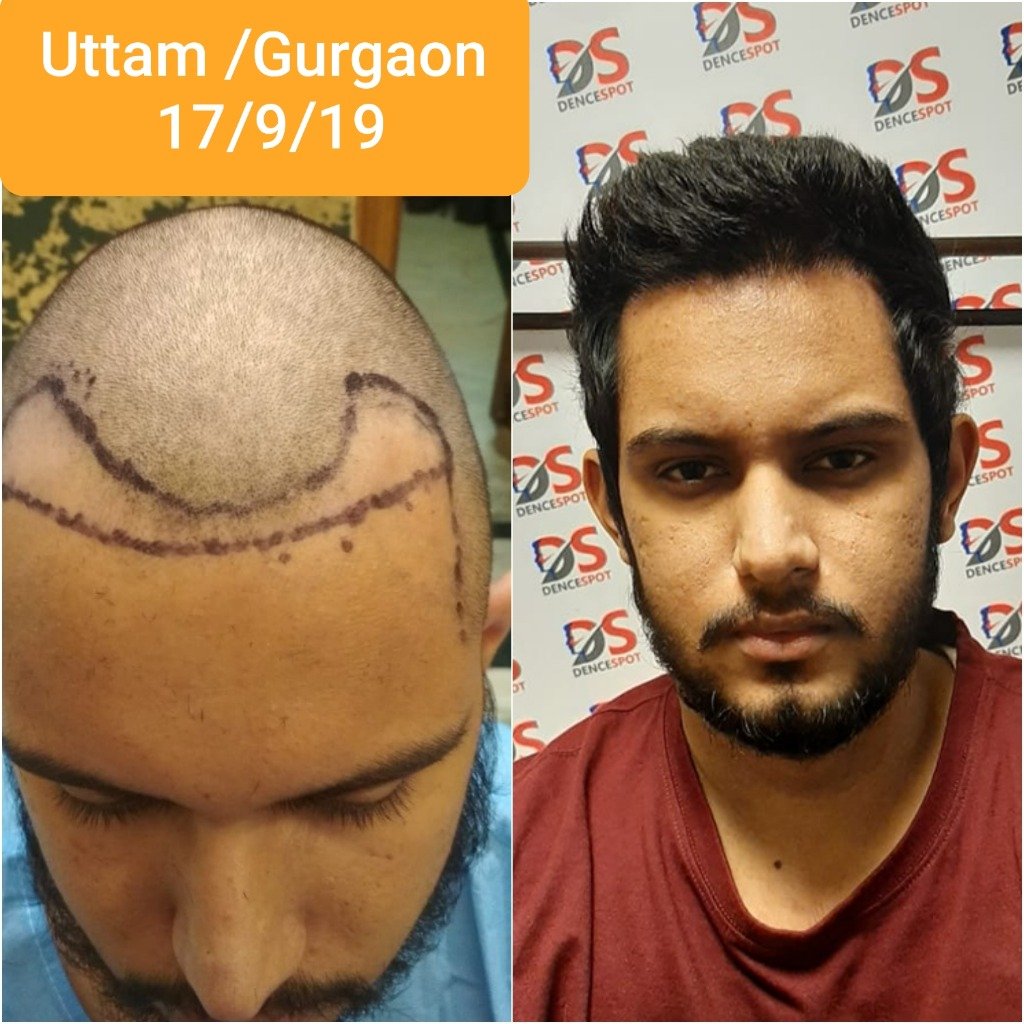
Uttam — Hairline and Temple Restoration, FUE hair transplant

Before & after result

Uttam — Hairline and Temple Restoration

FUE hair transplant · Gurugram

A receding hairline with temple recession, restored with an age-appropriate hairline design and graft placement across the frontal zone.

The frontal hairline and temples were rebuilt using follicular unit extraction. The line was designed to suit the face at a mature position rather than restored to an adolescent hairline, and photographed at twelve months, which is the point at which a transplant can fairly be judged.

Reviewed at 12 months
About FUE hair transplant ›

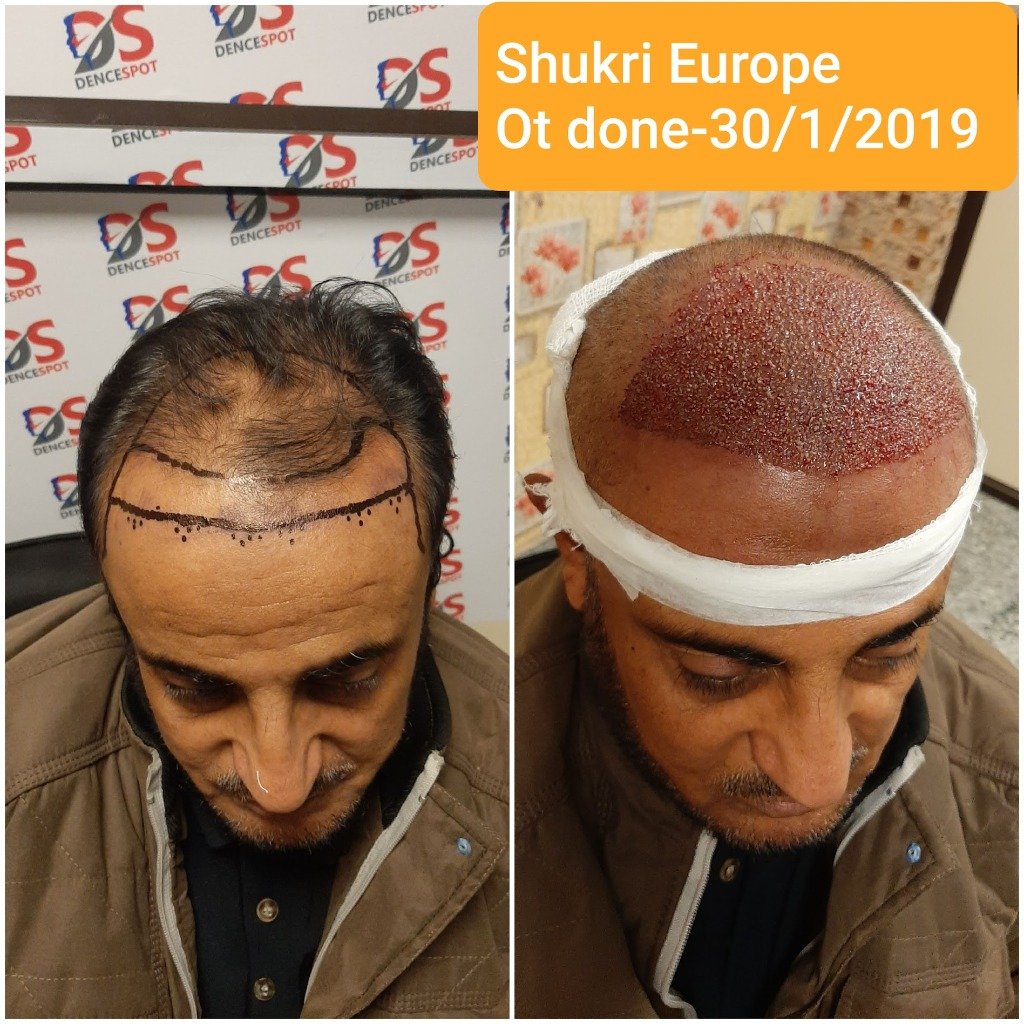
Shukri — Frontal Zone, Photographed on the Day of Surgery, Micro-FUE, 2,800 grafts

On the day of surgery — not a result

Shukri — Frontal Zone, Photographed on the Day of Surgery

Micro-FUE, 2,800 grafts · International patient

Hairline design and 2,800 grafts, photographed minutes after placement. Nothing has grown yet, so this documents the work rather than the outcome.

This is included deliberately as an example of what a procedure-day photograph actually shows. The grafts are in place and the design is visible, but growth begins months later. Clinics that present images like this as before-and-after results are showing you surgery, not an outcome.

Photographed on the day of surgery

How a hairline is designed ›

Why this page is short

A small library is the honest kind

Publishing a case requires a patient who is happy to be shown, photographed properly at a stated interval, and willing to sign consent. Many people decline, which is entirely their right, and hair loss is a private matter for a lot of patients.

We could fill this page tomorrow with purchased case libraries or stock photography, as is common in this industry. It would look considerably more impressive and it would tell you nothing about us. This grows as patients consent.

If you would like to see more images, our photo gallery and results page carry further material under the same standards, and our patient reviews are what people have said in their own words.

Our standards

The Rules We Apply to Our Own Photographs

Elsewhere on this site we tell you how to read a clinic's before-and-after images sceptically. It would be inconsistent not to state what we hold ourselves to.

The interval is always stated. A hair transplant is judged at roughly ten to twelve months. An image without a stated interval could be from any point in that timeline, and the difference is enormous.

Procedure-day photographs are labelled as such. Freshly placed grafts look dense and dramatic, and nothing has grown. One case on this page exists specifically to show what that looks like and to name it accurately.

The hair is not digitally altered. No thickening, no filling in, no adjustment of density. Cropping for layout is the only editing applied.

Consent is real and withdrawable. Patients are asked, may decline without any effect on their care, and can withdraw later.

Apply these anywhere

  • Is the interval since surgery stated?
  • Do lighting and angle match between images?
  • Is hair length and styling consistent?
  • Was the case done by the person treating you?
  • Is it labelled if it is procedure-day?
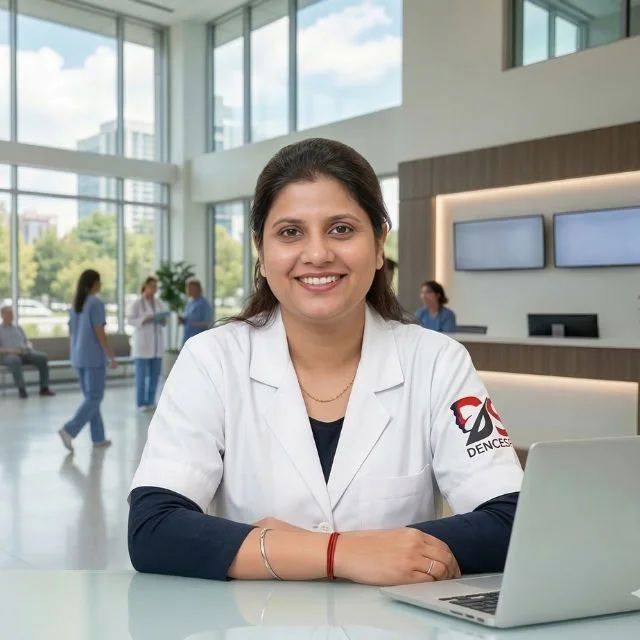
Dr. Nyra — professional portrait

Who performs and reviews this treatment

Dr. Nyra, MBBS, MD (Dermatology)

Owner & Chief Consultant, DenceSpot Clinic

Qualified MBBS from Dr. D. Y. Patil Medical College, and holds an MD in Dermatology. Three years of clinical work in Germany followed — two at Bio Hair Clinic and one at St. Georg Klinikum Eisenach — before establishing DenceSpot in Gurugram.

Why one of the two cases on this page is labelled as not being a result: procedure-day photographs are the most persuasive images in hair restoration and the least informative. The grafts are visible, the design is visible, the scalp looks transformed, and none of it has grown. Publishing one with an honest label does more for a prospective patient than another twelve-month comparison would, because it teaches them what to ask about every image they are shown elsewhere.

Qualification

MBBS, MD (Dermatology)

Training

3 years, Germany

Specialization

Dermatology

Meet Your Doctor

Medically reviewed by Dr. Nyra · last reviewed August 2026

FAQs

About These Case Studies

Results vary between patients. What is achievable in your case is established at assessment, against your own donor supply and pattern of loss.

Ask on WhatsApp
Why are there so few cases here?

Because every case published is one we have treated and have written consent to show. Patients are entitled to privacy and many decline, which is their right. A larger gallery would be easy to produce and would not be honest, so the library grows slowly as consent is given.

Are the photographs edited?

The hair is never digitally altered. Photographs are taken at the clinic and published as they were captured. Where an image has been cropped for layout, that is all that has been done to it.

When are result photographs taken?

A hair transplant is judged at roughly ten to twelve months, and that is when a case is photographed as a result. Images taken earlier show a procedure part-way through its timeline, which is why one case here is labelled as the day of surgery rather than as an outcome.

Why include a case that is not a result?

Because it demonstrates something useful. Procedure-day photographs look impressive and are widely presented as results, and knowing what one actually shows makes you a harder person to mislead. Labelling it honestly is the point of including it.

Will I get the same result?

No case here predicts your outcome. Results depend on your donor supply, your pattern and stage of loss, your hair characteristics and how you heal, and those vary substantially. Photographs show what was achieved for one person, not what is available to everyone.

How should I read before-and-after photographs generally?

Check that lighting, angle, hair length and styling are consistent between the two images, and that the interval is stated. Ask whether the case was performed by the person who would perform yours. Our guide on reading before-and-after photographs covers the details.

Can I speak to a previous patient?

We will not pass on patient contact details, because consent to publish a photograph is not consent to be contacted by strangers. What you can do is read our patient reviews and ask us directly at consultation about cases similar to yours.

Do you pay patients to appear here?

No. Cases are published with consent and without payment or discount in exchange. A paid testimonial is advertising, and it should be labelled as such wherever you encounter it.

How do I know these are your own patients?

Ask at your consultation. Stock photography and purchased case libraries are common in this industry, and the reasonable check is to ask any clinic directly whether the cases shown were performed by the person who will perform yours, and to note how readily they answer.

Can I have my own case published?

Only if you want it. You will be asked, you can decline without it affecting your care in any way, and you can withdraw consent later. Photographs are taken as part of routine clinical records regardless, because that is how progress is assessed.

Where can I see more photographs?

Our photo gallery and results page carry further images, with the same standards applied to intervals and to labelling.

What should I look for in my own case?

Shedding within the first weeks, growth from around three to four months, and a fuller picture at roughly ten to twelve months. Progress is assessed against your own baseline photographs at review, not against someone else's case.

Visit the clinic

Where These Cases Were Treated

Every case shown was treated at our Sector 39 clinic in Gurugram by the same doctor who would assess you. Patients travel to us from across Gurugram and neighbouring parts of South Delhi.

Address
1123, Sector 39 Road, Jharsa, C Block, Sector 39,
Gurugram, Haryana 122003
Hours
Mon–Sat · 10:00 – 20:00Sunday · closed
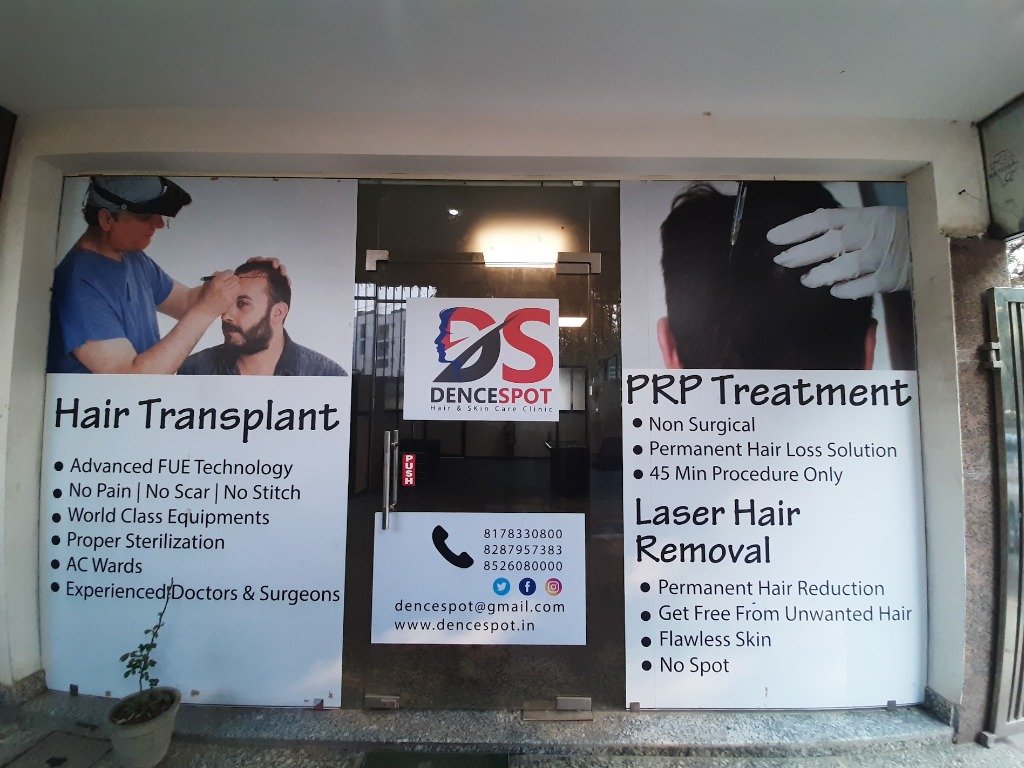
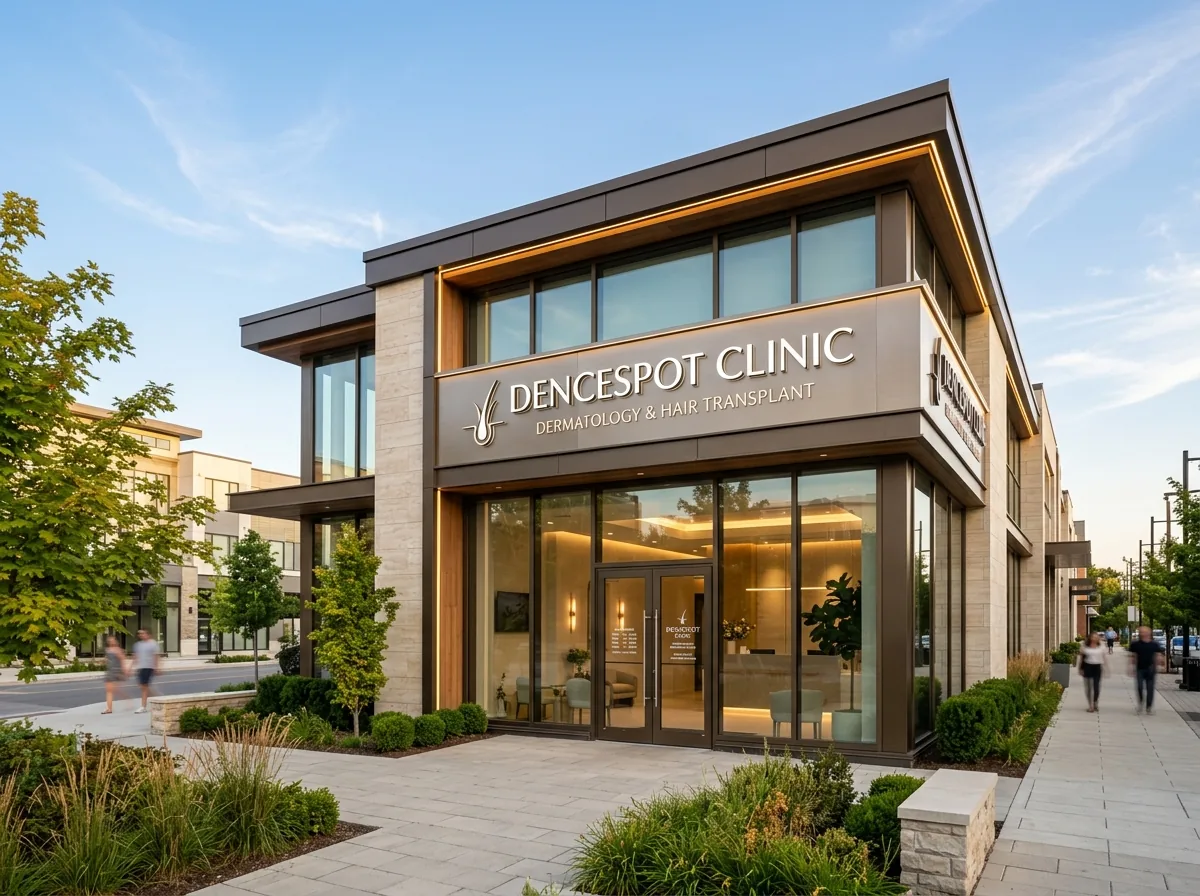
DenceSpot Clinic shopfront on Sector 39 Road, Jharsa, Gurugram, showing the hair transplant and PRP treatment signage

Getting here

  • Sector 39 Road in Jharsa, opposite Medanta – The Medicity. The clinic is on the main road, so any driver or ride-hail app can be given the Medanta gate as the landmark.

Next step

Ask What Is Realistic for Your Own Case

Bring photographs of your own hair and we will tell you what your donor area can actually support. You will get an assessment, an honest view of what is achievable, and a written plan — not a promise based on someone else's result.

Suitability is determined after clinical assessment. This page is patient education and does not constitute medical advice.

Quick enquiry

Your details are used only to arrange your consultation.

Call WhatsApp