Iron, Vitamin D, B12 and Zinc: Which Deficiencies Cause Hair Loss?
Which deficiencies are linked to hair fall, which tests show them, why supplements without a test can backfire, and how long regrowth takes.
Written by the DenceSpot Clinic team

Iron deficiency is the nutritional cause of hair fall with the clearest evidence, and a sharp drop in protein or calories, as in crash dieting, is another well-recognised trigger. True zinc or biotin deficiency also causes hair loss, but both are uncommon. Vitamin D and vitamin B12 are often low in people with hair loss, yet the evidence that either causes it, or that correcting them regrows hair, is weak. Low B12 is also one of the checks for grey hair that starts early.
That ranking matters because many hair supplements lead with biotin, the nutrient with the weakest case, and say little about iron or protein. This article looks at the nutrients themselves; choosing the tests and reading a borderline report are covered in the blood tests worth doing for hair fall.
How a deficiency affects hair
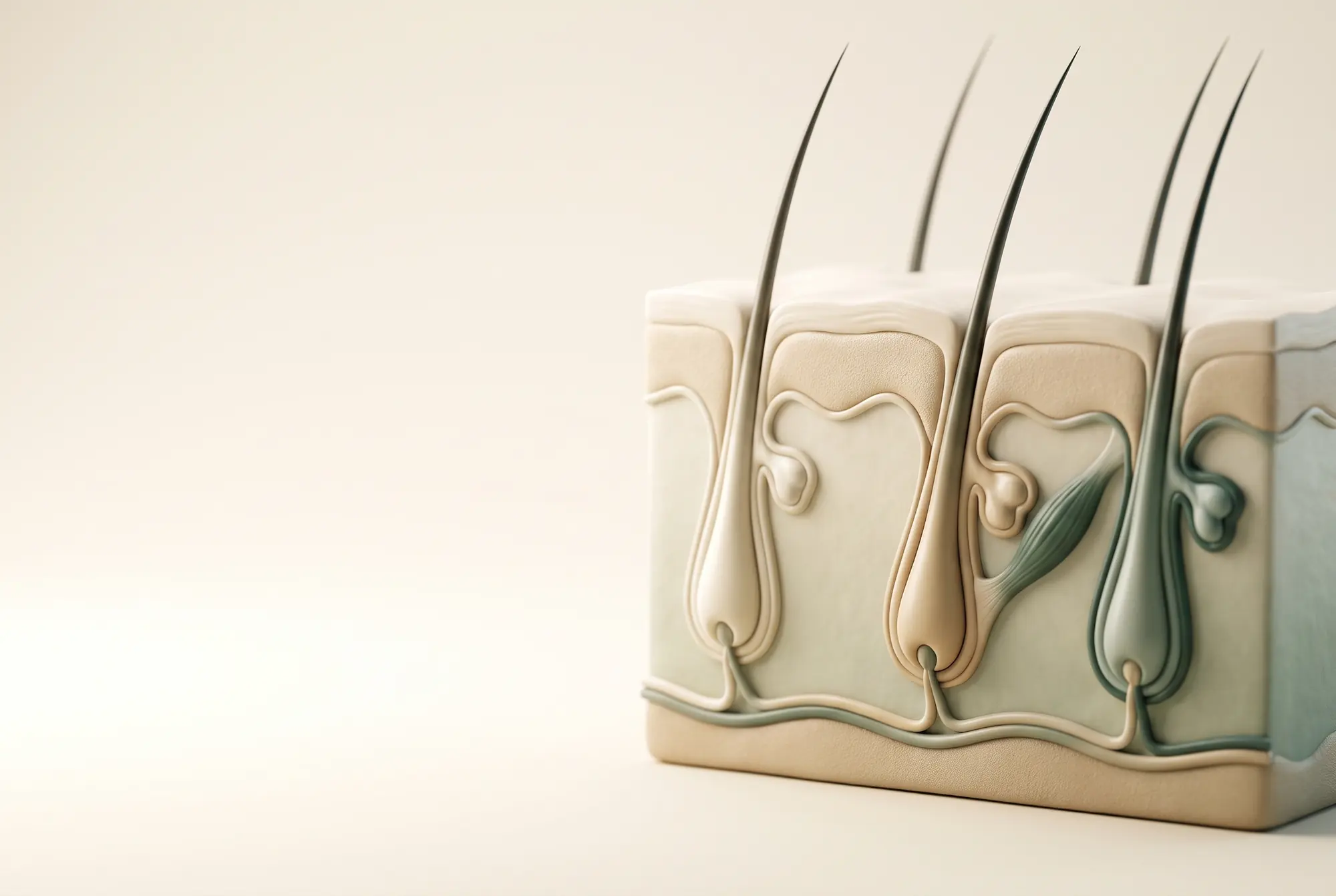
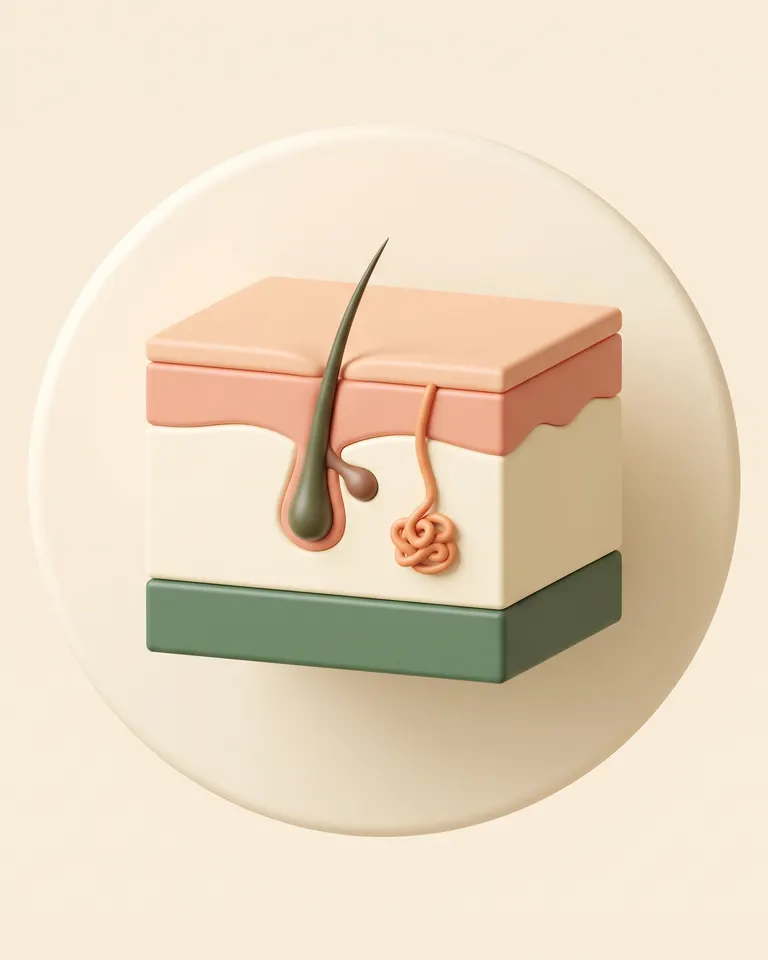
Hair follicles are among the most active tissues in the body, producing new cells continuously through a growth phase that lasts years. When the body is short of what it needs, hair is not a priority. A significant deficiency can push a larger share of follicles than usual into their resting phase, and those hairs then fall out together. This is telogen effluvium, and DermNet's page on telogen effluvium lists nutritional deficiency, weight loss and unusual diets among its recognised triggers.
The shedding is diffuse, coming from the whole scalp rather than one patch or the hairline, and delayed, typically becoming noticeable two to four months after the shortage began, which is why a diet change or heavy blood loss is so often missed as the cause. A deficiency does not cause pattern hair loss, although it can add a shed on top of it. Telogen effluvium versus pattern hair loss explains how the two are told apart.
Nutrient by nutrient: how strong is the link?
A 2019 review of vitamins and minerals in non-scarring hair loss by Almohanna and colleagues, published in Dermatology and Therapy, describes the research as extensive but conflicting, and treats deficiencies as a modifiable risk factor rather than a common single cause. Its findings, with a few other sources, are summarised here.
Iron and ferritin: the clearest link
Iron deficiency is the deficiency most often found alongside diffuse shedding, particularly in women who menstruate, after pregnancy, and on diets low in iron. Most authors agree that iron should be replaced when hair loss and iron deficiency occur together. They disagree over the grey zone, a ferritin that is low but still inside the laboratory range, where studies conflict and the result needs a doctor's reading in context. India's fifth National Family Health Survey (2019–21) found more than half of women aged 15 to 49 anaemic, so iron is rarely an unreasonable thing to check.
Protein and calories: well established when intake drops sharply
Hair is made mainly of a protein called keratin. Severe malnutrition causes marked hair changes, but the more common story is a crash diet, a very restrictive eating plan, rapid weight loss after illness or surgery, or eating poorly through a difficult few months. The link is strong for a real shortfall, but there is no evidence that protein powder added to an adequate diet does anything for hair.
Zinc: real when deficient, uncertain otherwise
Established zinc deficiency causes hair loss, and the review notes that hair regrows once zinc is replaced. Such deficiency is uncommon, and is more likely with poor absorption from the gut, after weight-loss surgery, with long-term heavy drinking or on a very restricted diet. In ordinary shedding and pattern loss, zinc levels have been inconsistent across studies, and the review does not recommend routine zinc screening for them. Too much zinc has its own problem: taken in high doses for long periods, it can cause copper deficiency.
Biotin: a rare deficiency, heavily marketed
Biotin deficiency does cause hair thinning, but it is rare, because biotin is present in many foods. It is seen with an inherited enzyme disorder that usually shows itself in infancy, with long-term use of certain anti-seizure medicines, with prolonged feeding by drip without added biotin, and with eating raw egg white in large amounts over a long time. The Almohanna review found no evidence-based data that biotin supplements promote hair growth in people who are not deficient.
Vitamin D: an association, not a proven cause
Low vitamin D is common in people with hair loss, and common in urban India generally. A 2024 systematic review and meta-analysis in Frontiers in Nutrition found the association statistically clearest in alopecia areata and female pattern hair loss. It has not been shown that low vitamin D causes the hair loss, and there is no conclusive evidence that supplements regrow hair. Correcting a documented deficiency is still worthwhile for bone and general health.
Vitamin B12: weak evidence for hair
Low B12 matters for the blood and the nerves, and it is more likely on a vegetarian diet. Its link with hair loss is weak. The review found that studies mostly showed no meaningful difference between people with hair loss and those without, and concluded that the data are not sufficient to recommend screening or supplements for hair alone. It is often checked anyway, because a deficiency deserves treatment in its own right.
Which test shows each deficiency
Not every nutrient has a useful blood test, and some results need care to interpret.
| Nutrient | Link with hair loss | Usual test | Worth knowing |
|---|---|---|---|
| Iron | The clearest of the group | Ferritin, with a full blood count | Infection and inflammation raise ferritin, which can hide low stores |
| Protein and calories | Strong when intake falls sharply | Diet and weight history; no single test | Blood protein levels often stay normal until a shortfall is severe |
| Zinc | Clear in true deficiency; uncertain otherwise | Serum zinc, when the history suggests it | Levels fall during infection and vary with the time of day and meals |
| Biotin | Clear in true deficiency, which is rare | Not routinely tested; suspected from the history | Supplements can distort other test results |
| Vitamin D | An association only | 25-hydroxyvitamin D | Low results are common, so a low level rarely explains the hair by itself |
| Vitamin B12 | Weak | Serum B12, with further tests if borderline | Matters for the blood and nerves regardless of the hair |
The strength of the link should shape what is done with a result. A low ferritin in someone who is shedding is usually acted on, with the hair expected to benefit. A low vitamin D is corrected for general health, without expecting it to explain the hair. Normal results point towards a cause blood cannot show, which is when the scalp examination matters most.
Why supplements without a test can mislead or harm
Taking a hair supplement "just in case" feels harmless, but it has three real drawbacks.
Too much of some nutrients causes hair loss
Excess vitamin A is a recognised cause of hair loss, usually from high-dose supplements rather than food. Excess selenium causes hair loss and brittle nails. In 2008, a liquid supplement sold in the United States contained about 200 times the selenium stated on its label, and hair loss was among the most common symptoms in the 201 people identified in the published investigation of that outbreak. Iron taken without a need causes side effects and can be harmful in some conditions, very high doses of vitamin D over long periods can raise blood calcium, and several hair, skin and nail products taken together can quietly double the same ingredients.
Biotin can distort blood tests, including thyroid tests
Many laboratory immunoassays use biotin as part of their chemistry, so high levels of biotin in the blood can push some results falsely high and others falsely low. The US Food and Drug Administration has warned about this since 2017, prompted partly by a falsely low result on a heart attack test. Thyroid tests are among those affected, and the pattern biotin produces can resemble an overactive thyroid in someone whose thyroid is normal. Thyroid problems and hair loss explains what those tests are looking for.
Guessing delays the real answer
A supplement started before testing can partly correct a deficiency before anyone has measured it, and it tends to postpone the examination that would find a cause blood cannot show, such as pattern hair loss or alopecia areata.
Your own case
Is a deficiency part of your hair fall?
A consultation puts your diet, timeline and scalp examination together, so that only the tests you need are requested and a low result is read in context rather than treated by guesswork.
How long regrowth takes after a deficiency is corrected
Slower than most people expect, because three delays stack up.
- Correction takes time. Iron stores in particular rebuild over months, not days, and the doctor will usually repeat the test to confirm the level has recovered rather than assume it.
- Shedding settles gradually. Hairs already pushed into the resting phase still fall. DermNet describes telogen effluvium tapering back to normal over six to nine months in most cases, and notes that recovery is sometimes incomplete.
- New hair grows slowly. Scalp hair grows roughly a centimetre a month, so new hairs take months to add visible volume.
As a rough guide, which varies from person to person, shedding tends to ease over the first three to six months after a deficiency is corrected, with visible improvement in density over six to twelve months. Judge progress against photographs taken at the start, in the same light. If shedding continues well beyond that despite normal levels, the deficiency was probably not the whole story, and the scalp should be examined for pattern loss or another cause. After childbirth the timeline overlaps with ordinary postpartum shedding, which hair fall after pregnancy covers.
When to see a doctor
- Shedding has continued for more than about three months, or is heavy enough to worry you.
- You have symptoms that suggest a deficiency: tiredness, breathlessness, pale skin, heavy periods, numbness or tingling, or a sore tongue.
- The hair fall followed a crash diet, rapid weight loss, weight-loss surgery or a long illness.
- You notice patches, a receding hairline, a widening part, or redness, scaling or pain on the scalp, which point away from a deficiency.
- You are taking several supplements, or high doses of any, and the shedding has not improved.
If you are unsure whether to start with a dermatologist or a general physician, who should assess hair fall sets out what each is trained to do.
Getting it assessed
The order that works is history and examination first, then targeted tests, then treatment of what is found. Consultations at our clinics in Sector 39, Gurugram and Rohini, Delhi are with registered medical practitioners and cover your diet and timeline, a scalp examination with trichoscopy, and blood tests where indicated. The hair fall treatment page for Gurugram and the hair fall treatment page for Rohini, Delhi explain how that works. To organise your symptoms beforehand, the six-question hair loss self-assessment is a reasonable start, though it is not a diagnosis.
Vitamin deficiency and hair loss FAQs
Which deficiency most commonly causes hair fall?
Iron deficiency is the one most often found to contribute to diffuse shedding, particularly in women who menstruate, after pregnancy and on diets low in iron. A sharp drop in protein or calories, as in crash dieting, is another well-recognised trigger. Other deficiencies are found less often.
Can low vitamin D cause hair loss?
Low vitamin D is common in people with several kinds of hair loss, and the association is clearest in alopecia areata and female pattern hair loss. That is a link, not proof of cause, and there is no conclusive evidence that vitamin D supplements regrow hair. A documented deficiency is still worth correcting for bone and general health.
Does biotin help hair grow?
Only in people who are genuinely deficient, which is rare. A review of vitamins and minerals in hair loss published in Dermatology and Therapy found no evidence-based data that biotin promotes hair growth in people without a deficiency. High-dose biotin can also distort several laboratory tests, including thyroid tests.
Should I take a hair vitamin just in case?
Generally not. Supplements help when they correct a deficiency you actually have. Without one, there is little evidence they help hair, some ingredients cause hair loss in excess, and biotin can make blood results unreliable. Test first, then treat what is found.
How long after starting iron will my hair fall stop?
Usually a few months rather than weeks. Iron stores rebuild gradually, and hairs already in their resting phase still fall, so shedding eases slowly and new growth takes longer to show. Your doctor will usually repeat the blood test to confirm the stores have recovered, and if shedding continues despite a corrected result, another cause should be looked for.
Can a vegetarian diet cause hair loss?
A well-planned vegetarian diet does not cause hair loss by itself. It does make low iron stores and low vitamin B12 more likely, and some vegetarian diets are short of protein. If you are vegetarian and shedding, those are reasonable things to check; see the blood tests worth doing for hair fall.
Can too many supplements cause hair loss?
Yes. Excess vitamin A and excess selenium are both recognised causes of hair loss. In 2008, a liquid supplement in the United States that contained far more selenium than its label stated caused hair loss in most of the people affected. Taking several hair, skin and nail products together can double up the same ingredients without anyone noticing.
Medical disclaimer. Information on this website is general patient education. It is not medical advice and does not create a doctor-patient relationship. Suitability, graft numbers and treatment plans are decided only after an in-person examination by a registered medical practitioner. Outcomes differ from person to person, and no particular outcome, density or timeline can be promised.
Related treatment
Considering hair fall treatment?
This article is patient education. What applies to your own case is decided after an examination — the treatment page sets out how that works, what it costs and what to expect.