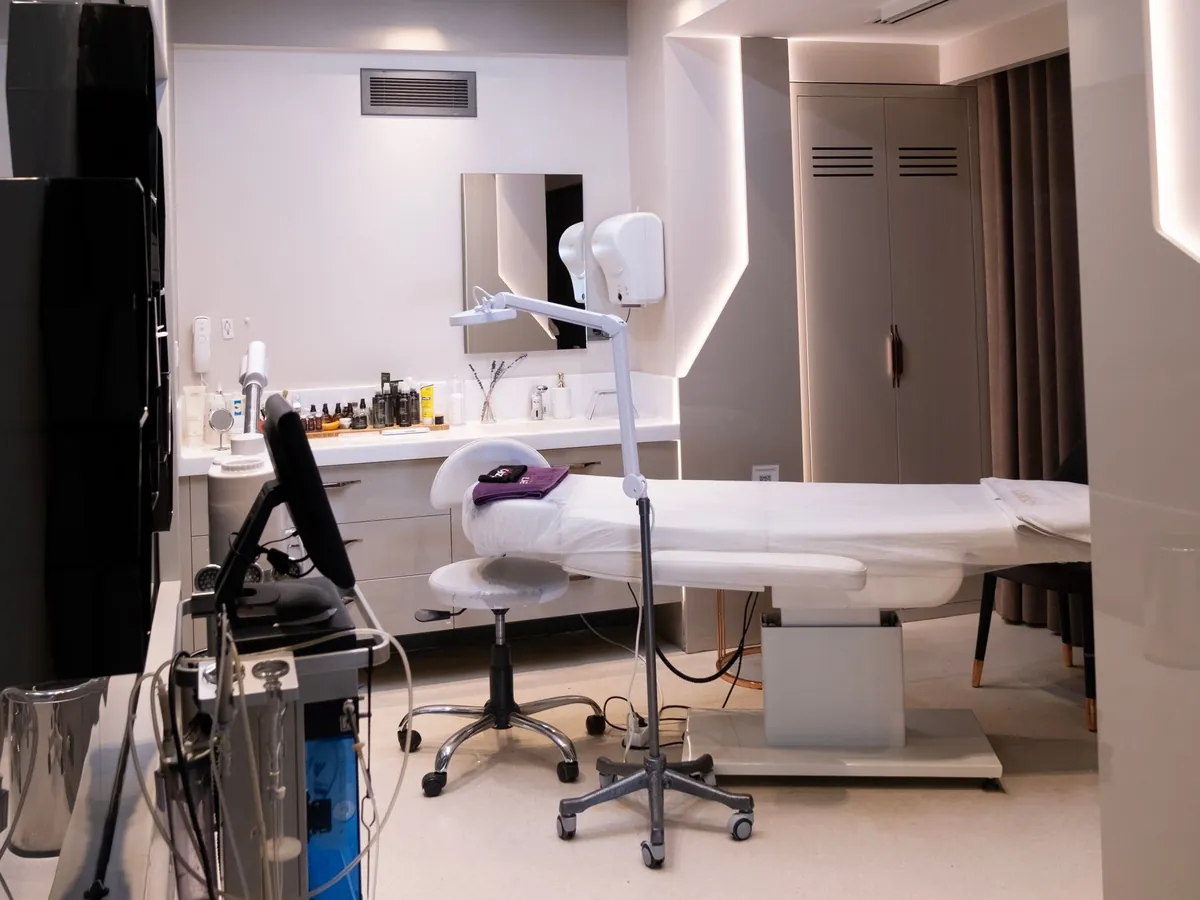
Representative image of a clinic treatment room with a treatment couch, lamp and equipment

Representative image

Rohini, North-West Delhi

Laser Hair Removal in Delhi

Laser hair removal for the face and body at our Rohini clinic, planned around your skin type and hair colour after an assessment by a doctor — with a patch test before the first full session.

  • Skin & hair assessed first
  • Patch test before a session
  • Face & body areas
  • Written course plan

Image: representative, not the Rohini clinic

About the treatment

How Laser Hair Removal Works

Laser light is absorbed by the dark pigment in a hair, and the heat it makes travels down to the follicle and reduces its ability to grow a new hair. Only follicles that are actively growing a hair respond, and hairs grow in staggered cycles, so a course of sessions several weeks apart is needed. Laser reduces hair rather than removing every hair for good: regrowth is usually finer and lighter, and occasional top-ups are common.

In Delhi, DenceSpot’s laser hair removal is carried out at the Rohini clinic, after your skin and hair have been assessed by a registered medical practitioner.

Usual Gap Between Sessions

General patient-education ranges, not a schedule.

Usual gap between laser hair removal sessions by area — general ranges for patient education
AreaGap
Upper lip and chin 4–6 weeks
Jawline and neck 4–6 weeks
Underarms 6–8 weeks
Arms 6–8 weeks or more
Legs 6–8 weeks or more
Back and shoulders 6–8 weeks or more
Chest and abdomen 6–8 weeks or more
Bikini line 6–8 weeks or more

Most areas take six or more sessions. Your own gaps are set at the assessment.

  • Patch test firstUsually before the first full session
  • A course of sessionsOften six or more
  • Back to workUsually the same day
  • RegrowthFiner and lighter; top-ups later

Why DenceSpot

Why Choose DenceSpot for Laser Hair Removal in Delhi?

How each course is handled at the Rohini clinic, from the first assessment to the written plan.

  • Doctor-Assessed Skin & Hair
  • Patch Test Before a Full Session
  • Written Course Plan
  • Rohini Clinic, North-West Delhi
  • Open Mon–Sun, 10:00 – 20:00
  • Cost Explained Before You Start

Area by area

Laser Hair Removal by Area

Facial areas are usually treated at shorter gaps than the body, and each area responds a little differently. The gaps and session numbers below are general ranges, not this clinic’s fixed protocol; yours are set at the assessment.

Laser hair removal by treatment area: usual gap between sessions, usual number of sessions and notes. General ranges for patient education, not this clinic’s protocol.
AreaUsual gapSessions (general range)Worth knowing
Upper lip and chin 4–6 weeks Often more than six, with later top-ups Often hormone-related, so more sessions are common. Threading stops well before the course begins.
Jawline and neck 4–6 weeks Often more than six if growth is hormonal Chosen by women with hormonal hair and by men with ingrown hairs after shaving.
Underarms 6–8 weeks Usually six or more Dense, dark hair that tends to respond well. No deodorant on the day.
Arms 6–8 weeks or more Six or more; finer hair may need more Forearm hair is often finer, and less predictable, than coarse hair elsewhere.
Legs 6–8 weeks or more Usually six or more A large area, so each session runs longer; lower legs tan easily.
Back and shoulders 6–8 weeks or more Usually six or more Broad areas of coarse hair, mostly in men; sessions take longer.
Chest and abdomen 6–8 weeks or more Six or more; more if growth is hormonal In women, new hair here is worth raising, as it can point to a hormonal cause.
Bikini line 6–8 weeks or more Usually six or more Skin here is often darker and more tender, so settings are kept cautious.

Not treated: the eyebrows or anywhere close to the eyes, because of the risk to sight. Tattoos are avoided, and moles are usually covered.

Our doctors

Meet the Doctors at DenceSpot

Every laser course starts with an assessment of your skin and hair by a doctor. The doctor who will see you at the Rohini clinic is named at your consultation, and you can ask about their qualifications, registration and experience with laser on your skin type.

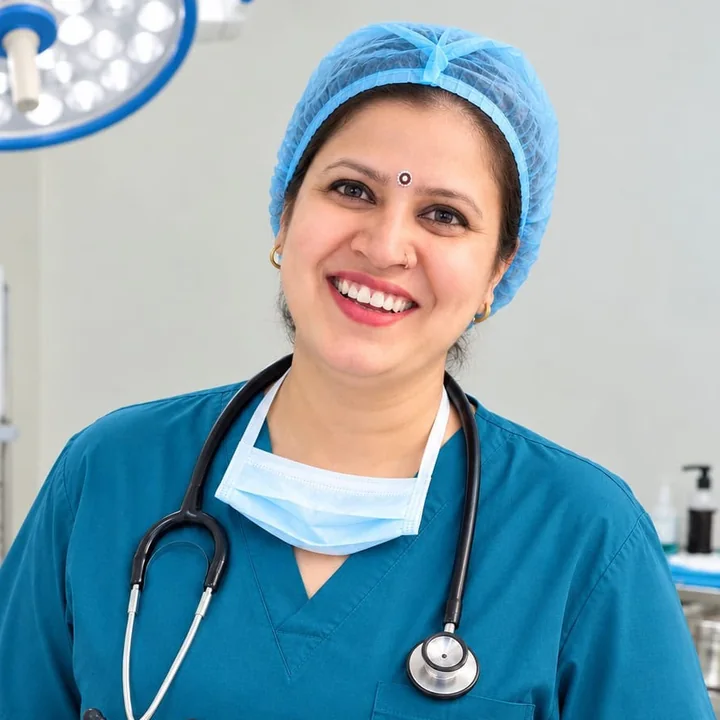
Dr. Nyra, MBBS, MD (Dermatology), at DenceSpot Clinic

Dr. Nyra

MBBS, MD (Dermatology)

Owner & Chief Consultant
  • Trained at Dr. D. Y. Patil Medical College
  • 3 years of clinical work in Germany
  • 8 years of experience
  • Consults at Rohini, Delhi
View profile of Dr. Nyra
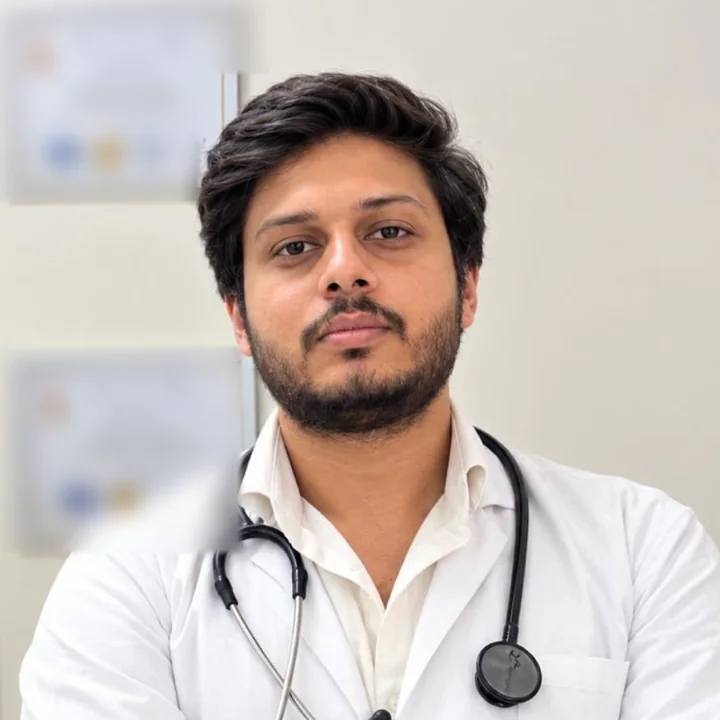
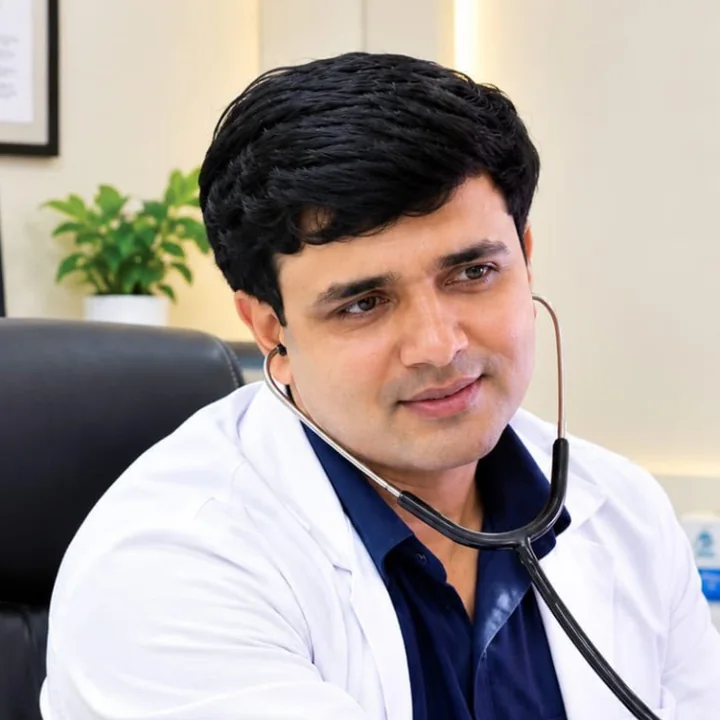
Dr. Akash at DenceSpot Clinic

Dr. Akash

  • Trained at Universitätsmedizin Neumarkt a. M. Campus Hamburg (UMCH)
  • 1-year fellowship in hair restoration, D. Y. Patil
  • 10 years of experience
  • Consults at Rohini, Delhi

Skin type

Laser on Indian Skin Types

Laser works because the dark pigment in a hair absorbs its light. Skin carries pigment too, and Indian skin covers a wide range of tones, so the darker the skin, the more carefully the settings are chosen to heat the follicle without marking the skin around it.

Skin Type and Hair Colour

The contrast between hair and skin matters most. Longer wavelengths pass the pigment at the skin’s surface more readily, so they are generally considered for darker skin types.

  • Dark, coarse hair on lighter-brown skin responds most predictably
  • Darker skin can be treated, more cautiously
  • Grey, white, red and blonde hair responds poorly
Laser on Indian skin in Rohini

The Patch Test

A small spot is treated at the planned settings and looked at again a few days later, before a whole area is treated. It matters most on darker or recently tanned skin.

  • A discreet spot in or near the area to be treated
  • Checked again after a few days
  • Any reaction changes the settings, or the plan
The patch test on Indian skin

How the Settings Are Chosen

  • Your skin type, and any tan or pigmentation
  • The colour and thickness of the hair
  • The area, and how thin its skin is
  • Medicines that make skin more sensitive to light
  • How your skin reacted to the patch test and the last session

Ask which laser and wavelength is planned for your skin type at the consultation. Facial hair from PCOS or another hormonal cause needs medical assessment too: see laser for PCOS facial hair.

Procedure

How a Laser Hair Removal Course Runs

Five stages at the Rohini clinic, from the first visit to the occasional top-up.

  1. 01

    Consultation & Skin Assessment

    Skin type, hair colour and thickness, medicines and any hormonal history looked at by a doctor.

  2. 02

    Patch Test

    A small spot treated at the planned settings and checked again a few days later.

  3. 03

    Written Course Plan

    The areas, a range of sessions, the gap between visits and what affects the cost.

  4. 04

    Laser Sessions

    Eye protection for everyone in the room, then overlapping pulses with cooling.

  5. 05

    Aftercare & Top-ups

    Shaving only between visits, sun care, and an occasional maintenance session later.

More in what the patch test checks on Indian skin and why laser reduces hair rather than removing it for good.

Cost

Laser Hair Removal Cost in Delhi

There is no fixed headline price, because no two courses treat the same areas over the same number of sessions. The cost is explained after your assessment at the Rohini clinic, with the factors behind it set out in your plan, before you commit to a course.

Areas treatedWhich areas, and how many in one session.
Size of each areaAn upper lip takes minutes; both legs or a back far longer.
Number of sessionsFiner, lighter or hormone-driven hair usually needs more.
Skin and hairDarker skin is treated more cautiously, which can add sessions.
Top-ups laterSome hair usually returns; maintenance is priced separately.

On “per session” prices: the number of sessions your hair needs matters as much as the rate. Ask any clinic for the likely range of sessions and what a top-up costs.

Laser Compared With Other Methods

General patient education.

Laser hair removal compared with shaving, threading, waxing and creams — general patient education
MethodLastsWorth knowing
Shaving A day or two Cuts the hair at the surface; fine between laser sessions.
Threading and waxing A few weeks Pull out the root, so they stop for a laser course.
Hair removal creams A few days Dissolve the hair at the surface; can irritate skin.
Laser Months, with top-ups Reduces regrowth over a course; it does not clear every hair.

What Your Written Plan Sets Out

  • The areas to be treated
  • A likely range of sessions
  • The gap between visits for each area
  • How to prepare before each session
  • What affects the cost of the course
  • When a top-up may be needed

A medical check for a hormonal cause, or skin treatment for pigmentation, is named separately if your plan needs it.

Patient reviews

Reviews of Our Rohini Clinic on Google

Reviews of DenceSpot’s Rohini clinic are on its Google Business Profile, unedited and in each reviewer’s own words. This page does not reproduce testimonials.

FAQs

Laser Hair Removal in Delhi: FAQs

General patient education. Anything specific to your skin, hair, health or budget is answered at the consultation.

Who is suitable for laser hair removal?

Dark, coarse hair tends to respond most predictably, because the laser needs pigment in the hair to absorb its light. Grey, white, red and blonde hair responds poorly or not at all. Darker skin can often be treated, more cautiously and after a patch test, and new or increasing facial hair in women is worth checking for a hormonal cause such as PCOS first. Suitability is decided at an assessment of your skin and hair.

How many sessions will I need?

Often six or more, because only follicles that are actively growing a hair respond to each session. Facial areas are usually treated every four to six weeks and body areas every six to eight weeks or more. Facial, finer or hormone-driven hair often needs more sessions, and some hair usually returns later, so occasional top-ups are common. These are general ranges; yours are set at the assessment.

Can laser hair removal be done on Indian skin?

Often, yes, as long as the wavelength and settings suit the skin. Indian skin covers a wide range of tones, and the darker the skin, the higher the risk of burns and of darker or lighter patches, so settings are kept cautious and a patch test usually comes first. Ask which laser and wavelength is planned for your skin type.

Is a patch test needed?

Usually, yes. A small spot is treated at the planned settings and looked at again a few days later, before a whole area is treated. On darker or recently tanned skin the wait matters more, because a reaction can take time to show. What the patch test checks on Indian skin explains it in more detail.

Does laser hair removal hurt?

Most people describe a quick, hot sting with each pulse rather than constant pain. Cooling takes the edge off, thin-skinned areas such as the upper lip sting more, and the skin may stay warm and pink for a few hours.

How much does laser hair removal cost in Delhi?

There is no fixed headline price, because the cost follows which areas are treated, how large they are and how many sessions your skin and hair are likely to need. At the Rohini clinic it is explained after your assessment, with the factors set out in your plan, before you commit to a course. Instalment options through third-party lenders may be available; see cost and EMI options.

Book a consultation

Book a Laser Hair Removal Consultation in Delhi

Meet the doctor at the Rohini clinic for an assessment of your skin and hair, a patch test where appropriate and a written plan for the course. You are not asked to book a course on the day.

Address
Dencespot Clinic, Delhi (Rohini)North-West Delhi (Near Outer Ring Road / Rohini)
Hours
Mon–Sun · 10:00 – 20:007 days a week, Sunday included

Book Your Consultation

The Rohini clinic replies during opening hours (Mon–Sun · 10:00 – 20:00).

Your details are used only to arrange your consultation.

Suitability is decided after clinical assessment. This page is patient education and is not medical advice.

Serving Patients Across Delhi

Call WhatsApp