Microneedling Works Best as a Partner, Not a Treatment on Its Own
The evidence that makes microneedling interesting is about using it alongside topical treatment, not instead of it. That distinction gets flattened in most marketing and it is the whole point. Added to a proper treatment plan it may help. Added to nothing, it is unlikely to be what changes your outcome.
- Offered as an adjunct, not a standalone cure
- Diagnosis established before any course
- Response measured against baseline photographs
- Gurugram · Mon–Sat · 10:00 – 20:00
Assessed & performed by
Dr. Nyra
MBBS, MD (Dermatology) · Owner & Chief Consultant, DenceSpot Clinic
Diagnosis first
Treatable causes found before needling anything.
Positioned honestly
An adjunct, and we say so.
Done sterilely
The skin is being broken, so hygiene is not optional.
Photographed
Measured against a baseline, not impressions.
Home use advised on
Told what is safe, rather than left to guess.
The basics, plainly
What Microneedling Does to a Scalp
Very fine needles create a large number of tiny, controlled injuries across the treatment area. Two things are meant to follow from that.
The first is biological. Controlled injury provokes a wound-healing response in the surrounding tissue, and the interest in hair medicine is in what that response might do around the follicles. This is the mechanism most often described in marketing, and it is also the one with the least direct evidence attached when microneedling is used alone.
The second is more straightforward and probably more important. The needles create temporary channels through the outer layer of skin, and a topical treatment applied to that scalp can reach deeper than it would through intact skin. Better delivery of a treatment that already works is a plausible and modest claim.
That second mechanism is the reason this page positions microneedling the way it does. It is a way of making something else work better, and it needs that something else to exist.
The distinction that gets collapsed
"With topical" is not "instead of"
The published work that makes microneedling interesting in hair loss looks at it combined with topical treatment.
Marketing routinely reports that as evidence for microneedling, full stop, and sells it as a standalone course.
It is a small change in wording and a large change in meaning, and it is worth holding onto when you are comparing clinics.
Safety
About Home Dermarollers
Devices are cheap and widely sold, and this is where most of the harm in this area actually happens. If you are going to do it at home, do it having asked rather than having guessed.
Needle length is not a preference
Longer is not better. Length determines depth, and depth determines both the effect and the risk. Buying the longest available because it sounds more effective is the most common error people make.
Hygiene is the actual risk
You are creating hundreds of openings in your skin. A device that is not properly cleaned and stored, or used more often than the skin can recover from, is how infection and irritation happen.
Not everything should be driven deeper
Applying a topical to freshly needled skin changes how much is absorbed, and some products cause significant irritation used this way. What you apply, and when, needs to be part of the plan rather than an assumption.
Not on an inflamed scalp
Rolling over active infection, inflammation, or an autoimmune scalp condition makes things worse. If your scalp is red, sore or flaking, that needs diagnosing before anything is rolled across it.
If you are already doing this, say so at consultation. It is far more useful to be told what length and frequency make sense for your scalp, and what to apply afterwards, than to be told simply to stop.
Suitability
Where It Fits in a Plan
It fits where there is already a diagnosis and an established treatment for it, and the question is whether anything can reasonably be added. That is a legitimate question and microneedling is a legitimate answer to it.
It does not fit as a first move for someone whose hair loss has not been investigated, or as a substitute for treatment that has evidence behind it. It is also not the treatment for an autoimmune condition such as alopecia areata, and it should not be performed over inflamed or infected skin.
Where there is a tendency to keloid or abnormal scarring, it needs particular caution, and medication affecting bleeding or healing is reviewed before any session.
Reasonable to consider
- Alongside established topical treatment
- Where the diagnosis is already clear
- Combined with PRP where that suits the plan
- As an addition, with modest expectations
Not appropriate
- Active scalp infection or inflammation
- Autoimmune or inflammatory scalp disease
- A tendency to keloid or abnormal scarring
- Undiagnosed hair loss, as a first step
The process
How a Course Runs
Step 01
Assessment
Diagnosis established, reversible causes investigated, scalp examined, and the existing treatment plan reviewed before anything is added to it.
Step 02
Baseline photographs
Standardised images first, because a slow adjunct treatment cannot be judged without something to compare against.
Step 03
Sessions
A course spaced weeks apart to allow recovery between, with what is applied afterwards planned rather than improvised.
Step 04
Review
Compared against baseline. If nothing is changing, the adjunct is stopped rather than repeated indefinitely.
After a session
What to Expect and What to Avoid
The scalp is red and tender afterwards, typically for a day or so, and pinpoint bleeding during the procedure is expected rather than a complication.
Because the skin barrier has been temporarily breached, the period immediately afterwards matters. Sweat, chlorinated water, sun exposure and irritating products all reach the tissue more readily than usual, and the aftercare instructions exist to keep that window uneventful.
Infection is uncommon but possible with any procedure that breaks the skin. Spreading redness, increasing pain, heat or fever should be reported promptly rather than waited out.
Usual and expected
- Redness for a day or so
- Tenderness of the scalp
- Pinpoint bleeding during the session
- Mild tightness afterwards
Briefly avoid
- Heavy sweating and the gym
- Swimming pools, saunas and steam
- Direct sun on the scalp
- Any product not on your instructions
Who performs and reviews this treatment
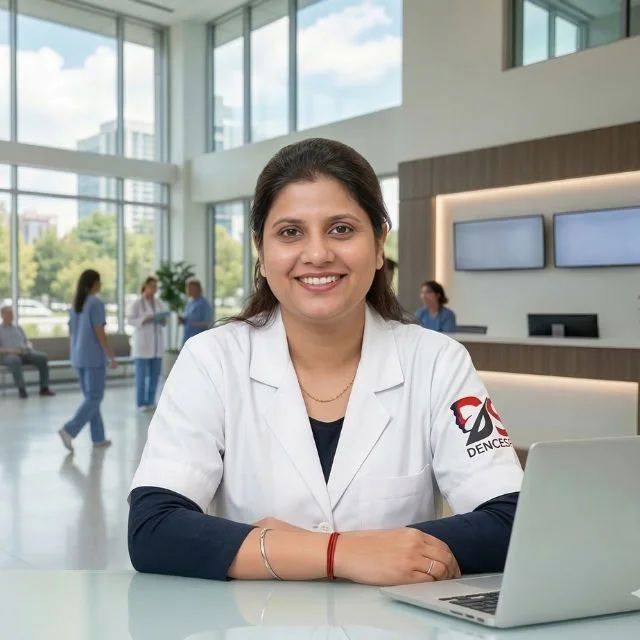
Dr. Nyra, MBBS, MD (Dermatology)
Owner & Chief Consultant, DenceSpot Clinic
Qualified MBBS from Dr. D. Y. Patil Medical College, and holds an MD in Dermatology. Three years of clinical work in Germany followed — two at Bio Hair Clinic and one at St. Georg Klinikum Eisenach — before establishing DenceSpot in Gurugram.
Why this is offered as an addition rather than a headline treatment: microneedling is cheap to deliver, easy to sell as a course, and the evidence people cite for it is largely evidence for using it together with a topical treatment. Presenting it as a standalone answer to hair loss takes a modest, plausible adjunct and turns it into a substitute for a diagnosis. The clinically useful version is to establish why the hair is falling, treat that properly, and then decide whether needling adds anything worth paying for.
Qualification
MBBS, MD (Dermatology)
Training
3 years, Germany
Specialization
Dermatology
Cost guidance
Hair Microneedling Cost in Gurgaon
Priced per session, with the course planned from your assessment and quoted afterwards in writing alongside the rest of your plan.
Sessions in the course
Planned from diagnosis, adjusted by response
Area treated
A defined region or the whole affected scalp
Combined with PRP
Often used together, and costed accordingly
Underlying treatment
The therapy this supports, costed separately
Avoid prepaid packages bought before an assessment. An adjunct treatment should be reviewable and stoppable, and you should not be committed to a year of it before anyone has looked at your scalp.
Start With the Diagnosis
Send photos of the parting, crown and hairline in daylight, and tell us what treatment you are currently on, including anything you are doing at home.
Send photos on WhatsApp Book an assessmentYour details are used only to arrange your consultation.
Visit the clinic
Scalp Treatments at Our Gurgaon Clinic
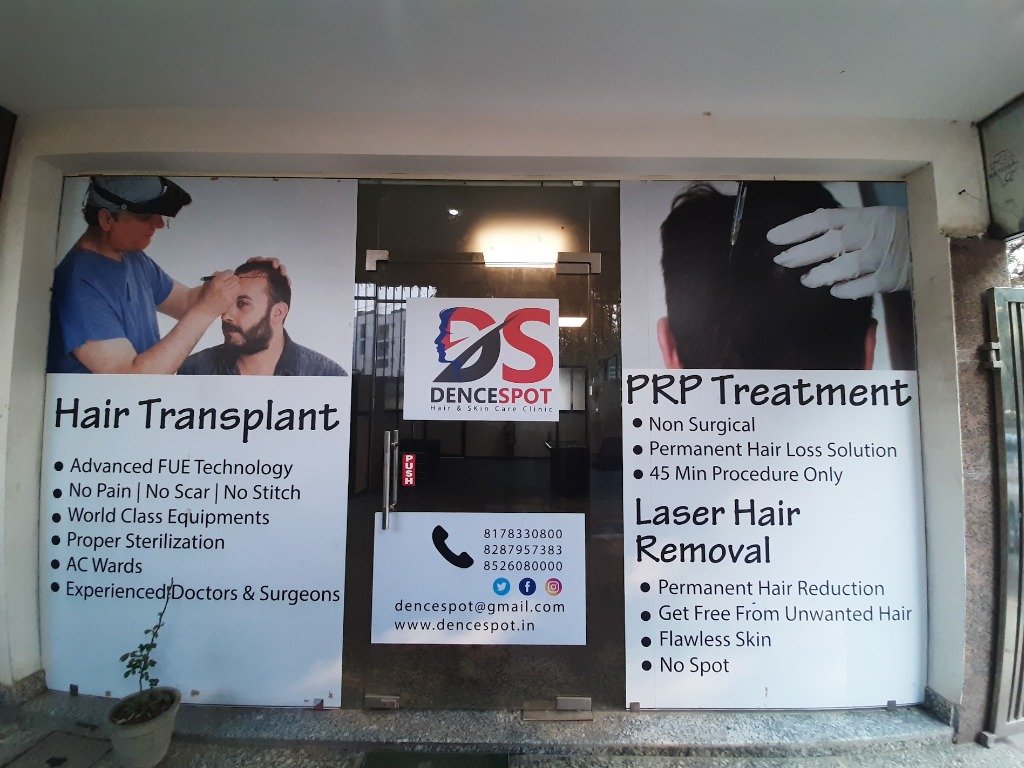
Assessment, treatment and every review happen at our Sector 39 clinic in Gurugram, with the same doctor throughout. Patients travel to us from across Gurugram and neighbouring parts of South Delhi.
- Address
- 1123, Sector 39 Road, Jharsa, C Block, Sector 39,
Gurugram, Haryana 122003 - Phone
- +91 81783 30800
- Message +91 81783 30800
- dencespot@gmail.com
- Hours
- Mon–Sat · 10:00 – 20:00Sunday · closed
Getting here
Next step
Get the Plan Right Before Adding Anything to It
Come in for a proper assessment. You will get a diagnosis, treatment matched to it, and an honest view on whether microneedling would add enough to be worth your money and your time.
Suitability is determined after clinical assessment. This page is patient education and does not constitute medical advice.
Quick enquiry