LED Therapy for Hair: Real, Modest, and Very Slow
Low-level light therapy has a genuine evidence base and a genuinely small effect. It supports thinning hair over many months of consistent use. Most people who buy a device abandon it after eight weeks because nothing visible happened — which is exactly when nothing visible was ever going to have happened.
- Diagnosis established before any device is bought
- Realistic timeline stated at the start
- Supports thinning hair, not bald scalp
- Gurugram · Mon–Sat · 10:00 – 20:00
Assessed & planned by
Dr. Nyra
MBBS, MD (Dermatology) · Owner & Chief Consultant, DenceSpot Clinic
Diagnosis first
Before you spend anything on a device.
Honest timeline
Months. Told upfront, not discovered later.
Modest claims
Support for thinning hair, not transformation.
Well tolerated
Non-invasive, and usually easy to live with.
Told when it is pointless
Established baldness needs a different answer.
The basics, plainly
What Light Therapy Is
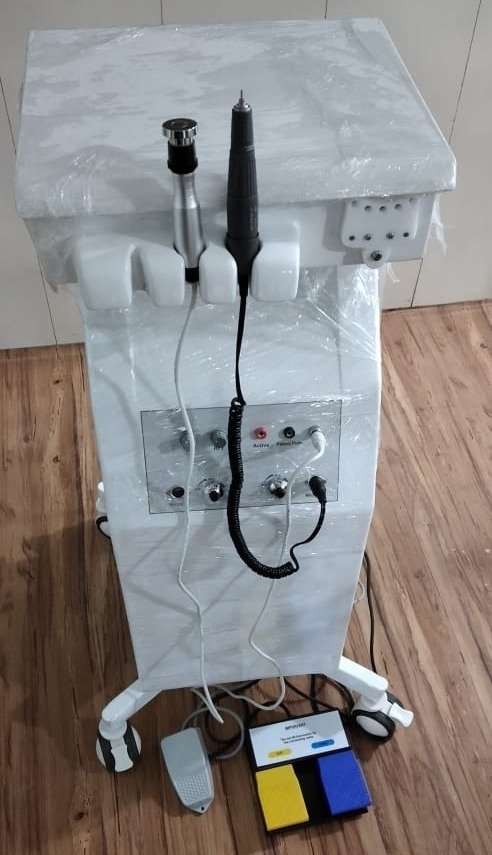
Light of particular wavelengths is delivered to the scalp, either in clinic with a panel or at home through a cap, helmet or comb. The intention is to support follicles that are still present and still working, rather than to do anything to skin where the follicles have gone.
It goes by several names — low-level light therapy, low-level laser therapy, red light therapy — and devices differ substantially in specification, coverage and price. Those differences matter, which is one reason a general claim about "LED therapy" is less useful than it sounds.
What can be said fairly is that this category has a more developed evidence base than several treatments sold alongside it, and that the effect it demonstrates is modest. Both halves of that sentence are true, and marketing tends to keep the first and drop the second.
It is non-invasive, does not break the skin, and is generally well tolerated. For people who cannot or would rather not use medication, that tolerability is a real part of its appeal.
The realistic outcome
What "it works" means here
Reduced shedding, and some improvement in the quality and calibre of hair that is thinning but still growing.
Not regrowth of a bald crown. Not a visible transformation. Not a replacement for surgery where the loss is established.
Set against that description, it is a reasonable thing to add to a plan. Set against the photographs used to sell devices, it will disappoint.
The thing that decides whether it works
Adherence Is the Entire Treatment
With most treatments, missing some doses reduces the benefit. With this one, the pattern of use largely is the benefit, and the way people fail with it is remarkably consistent.
Month one to two
Used diligently. Nothing visible happens, because nothing visible happens this early in any hair treatment. Enthusiasm is still high.
Month two to three
Use becomes intermittent. The device is still on the shelf. The mirror still looks the same, and the schedule starts slipping.
Month four onwards
Abandoned, at roughly the point where a response would first have become measurable. The money is spent and the trial was never actually run.
Which leads to a blunt question
Will you genuinely use it?
It is worth answering honestly before spending money, because a device used sporadically for three months delivers nothing at all — you will have bought the object and not the treatment.
If the honest answer is that you will not keep it up, that is useful information and not a moral failing. It means your money is better spent on something with a lower adherence burden, and that conversation is more valuable than a sale.
Suitability
Who It Suits
It suits people with thinning hair rather than established baldness, who have a diagnosis, and who are realistic about a slow and modest effect over a long period.
It is a particularly reasonable option for people who cannot take, or prefer not to take, medication for pattern hair loss. That is a legitimate choice, and having something tolerable to offer in that situation matters.
It is not the treatment for an area that is genuinely bald, for undiagnosed hair loss, or for autoimmune conditions such as alopecia areata. Photosensitivity, photosensitising medication and any history of skin cancer on the scalp all need reviewing before starting.
Reasonable to consider
- Thinning hair with follicles still present
- Alongside established medical treatment
- Where medication is unsuitable or unwanted
- Supporting native hair after a transplant
Not appropriate
- Established baldness with follicles gone
- Active scalp infection or inflammation
- Autoimmune scalp conditions
- Undiagnosed hair loss, as a first move
The process
How It Is Approached Here
Step 01
Assessment
Diagnosis, stage of loss, and investigation of reversible causes — before any conversation about devices or sessions.
Step 02
The honest conversation
Whether light therapy suits your stage of loss, what it realistically does, and whether the adherence it requires fits your life.
Step 03
Baseline photographs
Taken before starting. With a slow, subtle treatment this is the only way to know later whether it did anything.
Step 04
Long review
Reviewed over months against the baseline, with adherence discussed frankly, because that is usually the variable that explains the result.
Buying a device
Before You Spend Money on Hardware
Home devices are widely sold at wildly varying prices, and people frequently buy one before anyone has established why their hair is falling. If the cause is iron deficiency or a thyroid problem, a light cap will do nothing about it, and months will pass.
Devices also differ in coverage, specification and how practical they are to use daily. A device that is uncomfortable, awkward or inconvenient is a device that will not be used, and given how much adherence matters here, practicality is a clinical consideration rather than a comfort one.
The sensible order is: get assessed, establish the diagnosis, decide whether light therapy has a role in your plan at all, and then ask what to buy. That sequence costs a consultation and can save a great deal more.
Ask before buying
- Is light therapy right for my stage of loss?
- What am I realistically expecting, and by when?
- How often would I need to use it?
- What else should be in the plan alongside it?
Also worth reading
Hair fall treatment — how the diagnosis is made.
Hair PRP treatment — another supportive option.
Hair transplant — where the loss is established.

Who performs and reviews this treatment
Dr. Nyra, MBBS, MD (Dermatology)
Owner & Chief Consultant, DenceSpot Clinic
Qualified MBBS from Dr. D. Y. Patil Medical College, and holds an MD in Dermatology. Three years of clinical work in Germany followed — two at Bio Hair Clinic and one at St. Georg Klinikum Eisenach — before establishing DenceSpot in Gurugram.
Why the conversation here is mostly about adherence rather than about light: this treatment has a modest, real effect that only appears after many months of consistent use, and almost every disappointed patient stopped before the point at which a response could have been measured. Establishing the diagnosis first, being honest that the effect is small, and asking bluntly whether someone will actually keep it up is more useful than any claim about wavelengths. For a patient who will not sustain it, the right advice is to spend the money elsewhere.
Qualification
MBBS, MD (Dermatology)
Training
3 years, Germany
Specialization
Dermatology
Cost guidance
What It Costs
Cost depends on whether treatment is delivered in clinic or through a home device, and home devices vary enormously in price. The more useful question is whether it belongs in your plan at all, which is settled at assessment.
In-clinic or at home
Two quite different cost structures
Device specification
Coverage and build vary widely across the market
Duration of use
This is a long-term commitment, not a course
Treatment alongside
Usually part of a broader plan, costed separately
The most expensive version of this treatment is an unused device bought before a diagnosis. The consultation that prevents that is the cheapest part of the whole process.
Ask Before You Buy
Send photos of the parting, crown and hairline in daylight, and tell us what you are considering buying. You may be told it is not right for your stage of loss, which is worth knowing first.
Send photos on WhatsApp Book an assessmentYour details are used only to arrange your consultation.
Visit the clinic
Hair Loss Assessment at Our Gurgaon Clinic
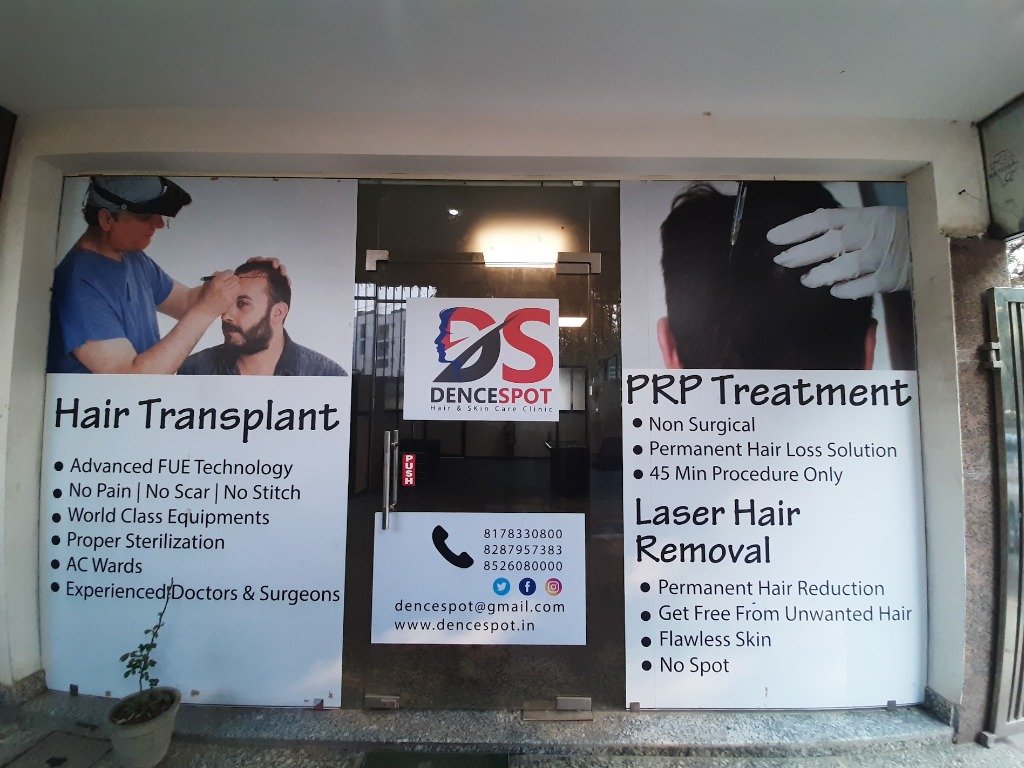
Assessment, planning and every review happen at our Sector 39 clinic in Gurugram, with the same doctor throughout. Patients travel to us from across Gurugram and neighbouring parts of South Delhi.
- Address
- 1123, Sector 39 Road, Jharsa, C Block, Sector 39,
Gurugram, Haryana 122003 - Phone
- +91 81783 30800
- Message +91 81783 30800
- dencespot@gmail.com
- Hours
- Mon–Sat · 10:00 – 20:00Sunday · closed
Getting here
Next step
Find Out If It Is Worth It Before You Buy a Device
Come in and have your stage of hair loss assessed. You will get a diagnosis, an honest view of what light therapy would and would not do for you, and a plan that puts your money where it will actually count.
Suitability is determined after clinical assessment. This page is patient education and does not constitute medical advice.
Quick enquiry