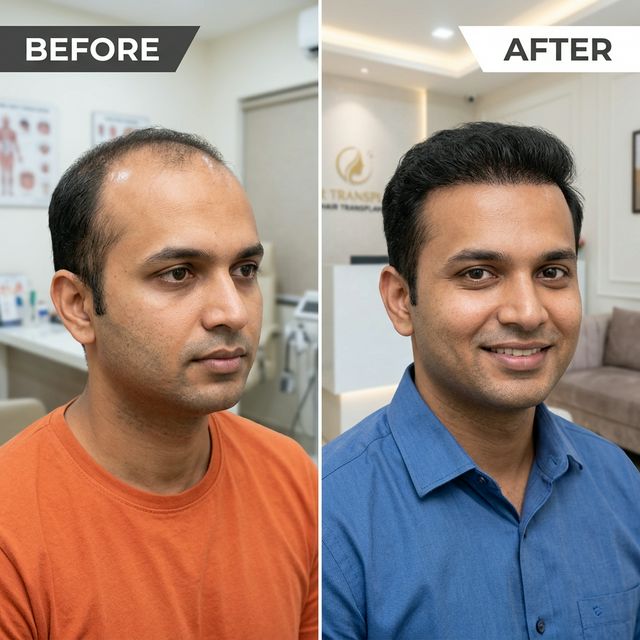
Thick and strong hair is not just about looking good — it is also a sign of overall health. However, in today's lifestyle, maintaining thick and strong hair has become a real challenge. Let us explore how you can make your hair thicker and stronger, both from the inside and the outside.
Every time you run a comb through your hair and notice strands falling out, or see thinning hair in the mirror, it can cause anxiety. This feeling is extremely common in India, whether you are in your 20s or your 40s. The good news is that how to make hair thicker is a question that science has answered, and effective solutions are readily available.
In this article, we will cover both angles — internal factors (nutrition, hormones, sleep) and external factors (products, treatments, daily care). Because thick and strong hair can only be achieved through an inside-out approach.
Internal Factors — Building Thicker Hair from Within
Nutrition: The Foundation of Hair Thickness
Your hair reflects what you eat. If your diet lacks essential nutrients, your hair will become thin and weak — no matter how expensive your shampoo is. Understanding the essential vitamins and nutrition for hair health is the first step.
Protein — The Building Block: Hair is composed of approximately 90% keratin protein. A daily intake of 50-60 grams of protein is essential. The best sources include eggs (the most complete protein), paneer, lentils and kidney beans, chicken, fish, and soybean. If you are vegetarian, ensure you maintain variety in your protein sources rather than relying on just one.
Iron — The Oxygen Carrier: Iron carries oxygen in the blood to all parts of the body, including the hair follicles. Iron deficiency is at epidemic levels in India, especially among women. Spinach, beetroot, dates, pomegranate, and jaggery should be part of your daily diet. Consume Vitamin C alongside (such as lemon or amla) to enhance iron absorption.
Biotin (Vitamin B7): Biotin directly boosts keratin production. A daily intake of 30-100 mcg is recommended. It is found naturally in almonds, walnuts, eggs, and mushrooms. While biotin deficiency is rare, it can cause significant hair weakening when present.
Zinc: Zinc is essential for hair tissue growth and repair. Its deficiency can make the hair shaft thinner. Pumpkin seeds, cashews, and chickpeas are excellent sources. The recommended daily intake is 8-11 mg of zinc.
Omega-3 Fatty Acids: These reduce inflammation in the scalp and nourish the hair follicles. They are found in flaxseeds, walnuts, chia seeds, and fatty fish. Make sure to include at least one tablespoon of flaxseed in your daily diet.
Hormonal Balance — The Silent Hair Thinner
Hormones have a significant impact on hair thickness. DHT (Dihydrotestosterone) in men and androgen imbalance in women are two of the major causes of hair thinning.
Thyroid disorders (both hypothyroidism and hyperthyroidism) can cause hair thinning. PCOS is a common cause of hair thinning in women. If you suspect a hormonal issue, be sure to get blood tests done — including TSH, Free T3/T4, Testosterone, and DHEA-S.
Sleep and Stress — Underrated Factors
Sleep deprivation reduces the release of growth hormone — the very hormone responsible for repairing hair cells. Getting 7-8 hours of quality sleep is non-negotiable for achieving thicker hair.
Chronic stress elevates cortisol levels, which pushes hair follicles into a premature resting phase. Telogen effluvium — stress-related hair shedding — is extremely common. Whether it is yoga, meditation, or exercise, find a way to manage your stress effectively.
External Factors — Products and Care That Make Hair Thicker
Products That Help Thicken Hair
Sulfate-Free Shampoo: Sulfates strip the natural oils from hair, leaving it dry and thin. A sulfate-free formula provides gentle cleansing without stripping away moisture.
Protein Treatments: A monthly protein treatment — whether done at a salon or at home (such as an egg mask or keratin treatment) — physically thickens the hair shaft by repairing the damaged cuticle.
Leave-in Conditioner: A lightweight leave-in conditioner provides a protective layer that shields hair from environmental damage. Apply it only to the mid-lengths and ends, not the roots.
Hair Oils: A weekly scalp massage with rosemary, castor, and coconut oil boosts blood circulation and nourishes the follicles. This ancient Indian practice is now backed by scientific evidence.
Heat Damage — The Silent Thickness Killer
Daily use of hair straighteners, curling irons, or blow dryers progressively thins the hair shaft. Heat breaks down the protein bonds in hair, causing it to become weak and thin.
Solutions: Always use a heat protectant spray. Keep the temperature below 180 degrees Celsius. Limit heat tool usage to no more than twice a week. Prefer air drying whenever possible. Read more about hair damage and hair fall prevention in detail.
Need a Professional Hair Thickness Analysis?
At DenceSpot Clinic, we use advanced trichoscopy to assess the health of every follicle. After an accurate diagnosis, we create a targeted treatment plan that truly delivers results.
Book Hair AnalysisClinical Treatments — Proven Medical Solutions for Thicker Hair
When nutrition and home care are not enough — especially in cases of moderate to severe thinning — clinical treatments can be a game-changer. These are medically proven methods:
PRP (Platelet-Rich Plasma) Therapy
In PRP hair treatment, concentrated growth factors are extracted from your own blood and injected into the scalp. This activates hair follicle stem cells, improves blood supply, and increases the diameter of the hair shaft.
Results: Studies have shown that PRP can achieve a 20-30% increase in hair diameter. Significant improvement is typically visible after 4-6 monthly sessions. One maintenance session every 4-6 months helps sustain results. Learn more about the PRP treatment process in detail.
Microneedling for Hair Strengthening
In scalp microneedling, tiny needles create controlled micro-injuries. This triggers a wound healing response — boosting collagen production, releasing growth factors, and activating stem cells.
The combination of microneedling and PRP is the most popular treatment at DenceSpot for achieving thicker hair. Through the micro-channels, PRP reaches the follicles directly, multiplying the results.
LED Light Therapy
Low-Level LED therapy is completely painless — no needles and no downtime. Red light (630-670 nm) and near-infrared light energize the mitochondria of hair follicle cells. This increases ATP (cellular energy) production, allowing follicles to grow stronger and thicker hair.
LED therapy is especially effective for early-stage thinning and for enhancing the results of PRP and microneedling. It is a gentle yet powerful addition to any hair thickening protocol.
Hair Transplant — For Severe Cases
If hair loss is advanced and there are significant bald areas, hair transplant surgery offers a permanent solution. The modern FUE technique transplants individual follicles to achieve a natural, thick look. The results last a lifetime.
Daily Routine for Thicker, Stronger Hair
Here is a practical daily routine that can help improve hair thickness:
Morning: Start with a protein-rich breakfast (eggs or paneer) along with a biotin supplement (as advised by your doctor). Spend 5 minutes on a gentle scalp massage. Detangle gently using a wide-tooth comb.
Hair Wash Days (2-3 times/week): Use a sulfate-free shampoo followed by a lightweight conditioner (applied only to the ends). Apply a protein mask once a month. Do a weekly oil massage (rosemary + coconut oil) the night before wash day.
Evening: Practice stress management for 15 minutes through meditation or a walk. Use a silk or satin pillowcase — cotton pillowcases cause friction that damages hair. Sleep with hair in a loose braid or bun.
Weekly: Apply a deep conditioning treatment. Exfoliate the scalp using a gentle scrub or a salicylic acid-based scalp tonic. Address dandruff control if there are any scalp issues.
Monthly: Get a hair trim — removing split ends helps reduce breakage. Attend a clinical treatment session if you are on an ongoing treatment plan.
Thick and Strong Hair — A Long-Term Commitment
One thing must be clearly understood — hair thickness does not increase overnight. It is a gradual process that takes a minimum of 3-6 months. However, if you follow the right steps — proper nutrition from within, appropriate care from outside, and clinical treatments when needed — the results will certainly follow.
At DenceSpot Clinic, we have successfully improved hair thickness for thousands of patients. View real transformations in our before-and-after results. Also read our complete guide to hair growth tips and hair density improvement guide to further expand your knowledge.
If you are serious about achieving thicker, stronger hair, start today. Combining hair treatments with skin care treatments such as hydrafacial can bring about a dramatic improvement in your overall appearance. You deserve healthy, thick hair — and it is absolutely achievable.
Get Your Personalized Plan for Thicker, Stronger Hair
Our hair specialists at DenceSpot will create a personalized thickening and strengthening plan tailored to your specific needs. Start your journey today.
Get Your Plan NowFrequently Asked Questions
Can thin hair be made permanently thick and strong?
Yes, with proper nutrition, lifestyle changes, and clinical treatments, hair can become permanently thicker and stronger. The key lies in consistent effort and treating the underlying cause.
Which vitamins are essential for strengthening hair?
Biotin, Vitamin D, Iron, Zinc, Vitamin E, and Omega-3 fatty acids are the most essential. A deficiency in any of these can make hair weak and thin. Get a blood test done and take supplements as advised by your doctor.
Can hair damaged by heat recover its thickness?
Yes, but it takes time. To repair heat-damaged hair, stop using heat tools, apply protein treatments, and deep condition regularly. The new hair that grows in will be healthy and thick.
How much thicker does hair get with PRP treatment?
Studies show that PRP can increase hair diameter by 20-30%. Significant thickness improvement is typically visible after 4-6 sessions. Maintenance sessions help sustain long-term results.
Can a daily routine improve hair thickness?
Absolutely! Proper sleep, stress management, gentle hair care, scalp massage, and a balanced diet — these daily habits collectively make a significant difference within 3-6 months.
What is the difference between microneedling and LED therapy for hair?
Microneedling creates controlled micro-injuries to trigger a healing response and boost collagen production. LED therapy uses light energy to enhance cellular metabolism. Both are effective, and combining them yields even better results.