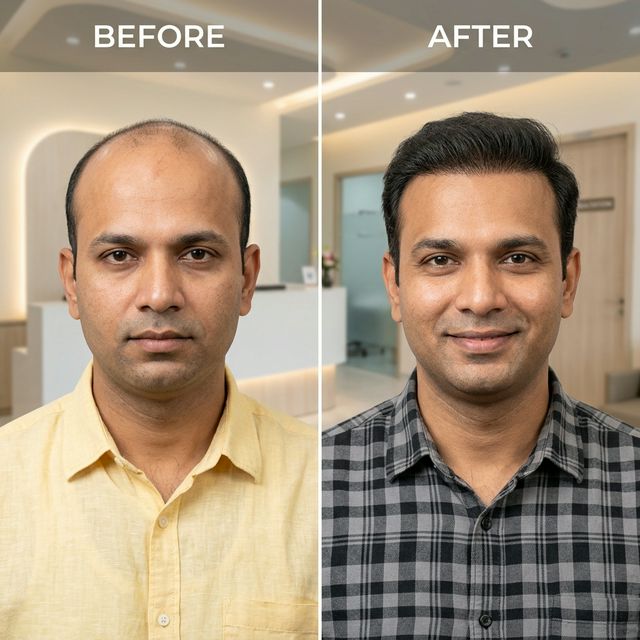
Thick, healthy hair is something everyone desires — yet the reality is that a large number of Indians struggle with thinning hair. The good news is that today, both natural remedies and modern clinical treatments are available that genuinely deliver results.
If you are searching for how to get thicker hair, you have come to the right place. In this guide, we cover both approaches — natural home remedies you can try at home, and advanced clinical treatments performed under a dermatologist's supervision. Each has its own role, and the best results are often achieved by combining the two.
The Science of Hair Thickness — Why Is Hair Thick or Thin?
Hair thickness primarily depends on the size of the hair follicle. A larger follicle produces a thicker strand. While follicle size is largely determined by genetics, it is not fixed. Hormones, nutrition, blood circulation, and external factors all influence follicle size.
The hair shaft consists of three layers:
Medulla: The innermost layer — this is present only in thick hair. In thin hair, the medulla is absent or incomplete.
Cortex: The middle layer — this determines the hair's strength, colour, and thickness. It is composed of protein (keratin).
Cuticle: The outermost layer — this serves as a protective shield. A damaged cuticle makes hair appear weak and thin.
To achieve thicker hair, it is essential to keep all three layers healthy. Learn more about hair thickness and density improvement in our dedicated guide.
Natural Remedies for Thicker Hair — Home Treatments That Work
1. Rosemary Oil — Nature's Minoxidil
Scientific studies have found rosemary oil to be as effective as minoxidil (an FDA-approved hair growth medication). It boosts blood circulation in the scalp and stimulates hair follicles. Learn more about the benefits of hair growth oils in our detailed article.
How to use: Mix 5–6 drops of rosemary oil with 2 tablespoons of coconut or jojoba oil. Massage it into the scalp and wash it off after 1–2 hours. Repeat 2–3 times per week.
2. Castor Oil — A Hair Thickening Powerhouse
Castor oil contains ricinoleic acid, which increases blood flow to the scalp and stimulates prostaglandin E2 production — a hormone that plays a key role in hair growth. It is one of the most popular natural hair thickening remedies available.
How to use: Since castor oil is quite thick, mix it with coconut oil in a 1:1 ratio before applying. Leave it on overnight and wash it off in the morning.
3. Egg Mask — A Protein Treatment at Home
Eggs are a powerhouse of protein — and hair is primarily made of protein. An egg mask delivers protein directly to the hair shaft, making it thicker and stronger. It also provides biotin, which is essential for hair health.
How to use: Beat 2 eggs and mix in 1 tablespoon of olive oil. Apply to the hair, leave it on for 30 minutes, then rinse with cold water (hot water will cause the egg to cook). Use once a week.
4. Aloe Vera — A Scalp Healer
Aloe vera helps maintain the scalp's pH balance, reduces dandruff, and unclogs hair follicles. It contains proteolytic enzymes that remove dead skin cells and promote healthy hair growth.
How to use: Apply fresh aloe vera gel directly to the scalp. Leave it on for 45 minutes and wash with a mild shampoo. This also helps with dandruff control.
5. Onion Juice — A Sulfur Boost
Onion juice is rich in sulfur, which boosts collagen production and stimulates hair regrowth. While the smell can be quite strong, the results are impressive — studies have shown hair regrowth in 86.9% of participants.
How to use: Extract the juice from an onion, apply it to the scalp, leave it on for 15–30 minutes, then wash with shampoo. Repeat 2–3 times per week.
The Best of Both Worlds — Natural and Clinical Combined
At DenceSpot Clinic, we combine natural care with advanced treatments for maximum results. Book a consultation to receive your personalised plan.
Get Your Personalized PlanClinical Treatments for Thicker Hair — When Natural Methods Are Not Enough
Natural remedies are effective but have their limitations. If thinning is moderate to severe, clinical treatments should be considered. These treatments are medically proven and deliver faster, more dramatic results.
PRP (Platelet-Rich Plasma) Therapy
PRP hair treatment has become the gold standard for achieving thicker hair. Platelets are extracted from your own blood and injected in a concentrated form into the scalp. These growth factors rejuvenate hair follicles — activating dormant follicles and making existing hair thicker.
Learn about the complete PRP treatment process in our detailed blog. Results typically become visible after 3–4 sessions.
Microneedling Treatment
Scalp microneedling involves creating controlled micro-injuries on the scalp using a derma roller or derma pen. This triggers the body's wound healing response — boosting collagen production, improving blood flow, and releasing growth factors.
The combination of microneedling and PRP delivers the most powerful results. The micro-channels created by the needles allow PRP to reach the follicles directly.
LED Light Therapy
LED light therapy is entirely non-invasive — no needles and no pain. Red and near-infrared light wavelengths stimulate the mitochondria of hair follicle cells, increasing cellular energy (ATP) production. This improves the hair growth cycle and promotes thicker hair growth.
Hair Transplant for Severe Cases
If hair loss is very severe and bald patches are visible, hair transplant surgery is the most effective permanent solution. The modern FUE technique involves extracting individual follicles from the donor area and transplanting them into thinning areas. The results look natural and last a lifetime.
Diet Plan for Thicker Hair — What to Eat Every Day
Your daily diet forms the foundation for thicker hair. Make sure to include the following foods:
Breakfast: 2 eggs (protein + biotin) + a handful of almonds (Vitamin E + biotin) + a glass of milk or yoghurt. For a vegetarian option, try a paneer paratha with green chutney.
Lunch: Dal and rice or rajma and rice (protein + iron) + spinach (iron + folate) + salad with lemon (Vitamin C for iron absorption). Be sure to include green vegetables.
Snacks: Mixed nuts + seeds (pumpkin seeds, flaxseeds, sunflower seeds). A fruit — especially amla, guava, or orange (Vitamin C). Read more about the essential vitamins for hair health in our detailed guide.
Dinner: Grilled chicken or fish (protein + omega-3) + vegetables + roti. For vegetarians, include tofu, soybean, or mushroom.
Hydration: Drink 3–4 litres of water daily. Green tea is also beneficial — it contains antioxidants that help protect hair follicles.
When to See a Doctor — Warning Signs
Trying natural remedies is a great first step, but professional help is essential in certain situations:
Losing more than 100 strands daily — this exceeds the normal range and warrants investigation.
Sudden thinning — abrupt hair thinning can be a sign of a hormonal or medical issue.
Patchy hair loss — this could indicate alopecia areata, which requires treatment.
Visible scalp — if your parting is widening or your scalp is becoming visible through the hair.
No improvement after trying home remedies for more than 3 months — a clinical evaluation is strongly recommended.
At DenceSpot Clinic, we perform a detailed scalp analysis using trichoscopy to identify the exact problem. View our before-and-after results to see the level of improvement our patients have achieved.
Remember — thick hair is a journey, not a destination. With consistent effort — whether natural or clinical — you can definitely improve the thickness of your hair. Explore more hair growth tips and begin your journey today. Combining skin care with hair care can dramatically improve your overall appearance.
Your Journey to Thicker Hair Starts Here
The experienced dermatologists at DenceSpot will recommend the right combination of natural and clinical approaches for you. You will receive a clear roadmap from your very first consultation.
Start Your Thick Hair JourneyFrequently Asked Questions
Is it possible to achieve thicker hair naturally?
Yes, natural remedies such as oils, a proper diet, and scalp massage can improve hair thickness. However, for severe thinning, clinical treatments tend to be more effective.
Which oil is best for thicker hair?
Rosemary oil is the most scientifically proven oil for improving hair thickness. Castor oil and coconut oil are also highly effective. Using them in combination yields the best results.
Does an egg mask truly make hair thicker?
Yes, eggs contain protein and biotin that strengthen and thicken the hair shaft. Applying an egg mask once a week can produce a visible difference within 2 to 3 months.
Which is better for clinical treatment — PRP or microneedling?
Both are effective but work in different ways. PRP provides growth factors, while microneedling enhances absorption and triggers healing. A combination of the two delivers the best results.
When should you consult a doctor for hair thinning?
If your hair has been thinning for more than 3 months, you are losing over 100 strands daily, or you notice patches — consult a dermatologist immediately. Early treatment leads to better outcomes.
Can supplements help make hair thicker?
Biotin, iron, zinc, and Vitamin D supplements can improve hair health. However, it is important to first confirm any deficiencies through a blood test and then take supplements under a doctor's guidance.