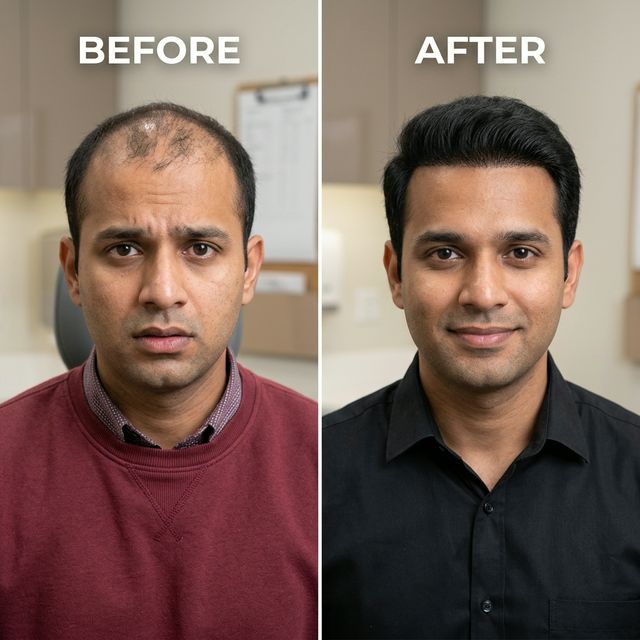
Is your hair long but lacking volume? Can you see your scalp along the parting? This is a hair density problem — and it is different from hair fall. Density refers to the number of hairs per square centimeter of your scalp. In this guide, we explain how to increase hair density using proven medical and natural methods that actually work.
Hair density is a topic that people often confuse with hair growth, but the two are quite different. Your hair may be long yet thin — meaning the density is low. At DenceSpot Clinic in Gurgaon, we offer specialized treatments for density improvement that are scientifically proven. Let us first understand what hair density actually is and why it decreases.
What Is Hair Density? — Understanding the Basics
Hair density refers to the number of hair follicles per square centimeter on your scalp. Normal density is approximately 100-150 hairs per sq cm. In Indians, the average is around 100-120 hairs per sq cm.
Hair density can be divided into three categories: Low density — the scalp is easily visible, especially at the parting. Medium density — the scalp is slightly visible when the hair is parted. High density — the scalp is barely visible, and the hair appears very thick and full.
A simple way to check your density is to make a ponytail. If the circumference of the ponytail is less than 2 inches, you have low density; 2-3 inches indicates medium density; and 3+ inches suggests high density.
Why Does Hair Density Decrease? — Causes
1. Genetics — The Biggest Factor
Your natural hair density is largely determined by genetics. If your parents have low density, yours is likely to be similar. However, falling below your genetic baseline is preventable, and lost density is partially recoverable.
2. Androgenetic Alopecia (Pattern Hair Loss)
This is the most common cause of density loss in both men and women. The DHT hormone causes follicles to shrink — first the hair becomes thin (miniaturization), and eventually the follicle stops producing hair altogether. Receding hairline and forehead hair loss is one of its most common symptoms.
3. Nutritional Deficiencies
Deficiencies in iron, zinc, Vitamin D, biotin, and protein weaken the follicles and cause density to drop. This is extremely common in India, particularly among women. Be sure to read our complete nutrition guide for hair.
4. Telogen Effluvium
After stress, illness, surgery, or hormonal changes, a large amount of hair can fall out suddenly. While this condition is temporary, it significantly reduces density. Our hair fall prevention guide covers this topic in detail.
5. Scalp Conditions
Chronic dandruff, psoriasis, and seborrheic dermatitis all cause scalp inflammation, which damages the follicles. It is essential to seek professional dandruff treatment if you are experiencing these problems.
How to Increase Hair Density with Natural Methods
Diet — Build Density from Within
Protein: Consume 1.2-1.5g of protein per kg of body weight daily. Include eggs, fish, chicken, paneer, lentils, and soybean in your diet. Without adequate protein, new hair strands grow thin and weak.
Iron: Iron deficiency directly impacts hair density. Low hemoglobin means less oxygen, which means less energy for the follicles, resulting in thinner hair. Include spinach, dates, jaggery, pomegranate, and red meat (for non-vegetarians) in your diet.
Biotin: This vitamin is essential for keratin production. It is found in nuts, eggs, sweet potatoes, and mushrooms. Supplements can also be taken (5000 mcg daily, as advised by your doctor).
Zinc: Zinc is necessary for hair tissue growth and repair. It is found in pumpkin seeds, chickpeas, and cashews. A deficiency leads to hair thinning.
Omega-3: Its anti-inflammatory properties help keep the scalp healthy. It is found in salmon, walnuts, and flaxseeds.
Oil Massage — Boost Circulation
Regular oil massage increases blood flow, which delivers more nutrients to the follicles. Among the best hair oils for growth, castor oil is particularly effective for thickness. Rosemary oil has been proven in studies to improve density.
Massage technique for density: Use your fingertips (not nails) to massage in circular motions for 5-10 minutes daily. Focus especially on thinning areas. Oil is optional but beneficial.

Chemical-Free Hair Care
Harsh chemicals damage follicles and reduce density. Use sulfate-free shampoo, avoid silicone-based products, and adopt chemical-free hair growth methods.
Want to Get Your Hair Density Analysed?
At DenceSpot Clinic, we use advanced trichoscopy to measure the exact density of your scalp. Each area is analysed individually to create a personalized density improvement plan.
Book Hair Density AssessmentClinical Treatments for Hair Density — Proven Results
When natural methods alone are not enough, clinical treatments can make a real difference. At DenceSpot Clinic, we offer the following proven treatments:
1. PRP Therapy — Growth Factor Injection
PRP (Platelet-Rich Plasma) treatment in Gurgaon is the most popular and effective clinical method for increasing hair density. Platelets are extracted from your own blood, concentrated, and injected into thinning areas.
How PRP increases density: Dormant follicles are activated — these follicles were essentially "asleep" and are now "awakened." Miniaturized follicles begin to thicken — thin hair starts becoming thicker. Blood supply improves, delivering more nutrition to the follicles. A new hair growth cycle is stimulated.
Results: Studies have shown that PRP can improve hair count per sq cm by up to 30-40%. Significant density improvement is typically visible after 4-6 monthly sessions. Be sure to read our detailed guide on PRP.
2. Microneedling — Collagen + Growth Factors
Microneedling treatment involves using a derma roller or derma pen to create controlled micro-injuries on the scalp. Here is what it triggers:
Wound healing response — the body automatically releases growth factors. Collagen production — the follicle environment improves. Stem cell activation — new hair follicle formation becomes possible. Better absorption — absorption of topical treatments (such as minoxidil) increases by up to 5 times.
The PRP + microneedling combination is considered the gold standard for density improvement. Microneedling creates channels through which PRP penetrates deeply. The results are significantly better than when either treatment is used individually.
3. LED Light Therapy — Cellular Energy Boost
LED (Low-Level Light) therapy uses specific wavelengths (usually 650-670nm red light) to energize the mitochondria of follicular cells. This increases cellular metabolism, which prolongs the hair growth cycle and improves density.
LED therapy is completely painless, requires no downtime, and is administered in weekly sessions. As a standalone treatment, it provides mild improvement, but when combined with PRP and microneedling, it delivers excellent results.
4. Hair Transplant — Permanent Density Addition
When it comes to permanently increasing hair density, hair transplant surgery is unmatched. In this procedure, DHT-resistant follicles are extracted from the donor area (back of the head) and transplanted into thinning areas.
How density transplant works: At DenceSpot, we perform high-density transplants in which 40-60 grafts are placed per sq cm. These are strategically positioned between existing hairs so that overall density increases naturally.
Important: Transplanted hair is permanent — it will last a lifetime because these follicles are DHT-resistant. However, maintenance treatments (such as PRP) are still necessary for existing thinning hair. View real density improvement results in our patient results gallery.
A Complete Plan for Hair Density Improvement
At DenceSpot, we follow this approach:
Phase 1 (Month 1-3): Conduct blood tests and scalp analysis. Address nutritional deficiencies. Begin PRP therapy (monthly). Optimize diet and hair care routine.
Phase 2 (Month 3-6): Introduce PRP + microneedling combination. Add LED therapy. Follow hair growth optimizing methods. Monitor progress through trichoscopy.
Phase 3 (Month 6-12): Evaluate results. Plan for hair transplant if needed. Set a maintenance schedule. Establish long-term lifestyle habits.
Daily Routine for Density Improvement
Follow this daily routine alongside clinical treatments for maximum results:
Morning: Have a protein-rich breakfast (eggs, oats). Take supplements (biotin, iron, Vitamin D — as prescribed). Perform a 3-5 minute scalp massage.
Evening: Apply an oil massage (on alternate days). Follow hair growth tips. Practice stress management through meditation or exercise.
Weekly: Apply a deep conditioning hair mask. Exfoliate the scalp. Monthly: Attend a clinical treatment session at DenceSpot. Take progress photos for comparison.
Common Mistakes That Reduce Hair Density
Avoid these mistakes:
Tight hairstyles daily: Ponytails, buns, and braids can lead to traction alopecia. Heat styling without protection: Hair dryers and straighteners weaken the hair. Crash dieting: Sudden calorie restriction can trigger massive hair fall. Ignoring scalp health: Dandruff, excess oiliness, and dryness all affect the follicles. Delaying action: The longer you wait, the harder it becomes to recover lost density.
Want Thicker, Denser Hair? Consult Our Experts
DenceSpot Clinic in Gurgaon offers advanced trichoscopy, PRP therapy, microneedling, and high-density hair transplant — all under one roof. We will create a personalized plan to improve your hair density.
Book Your Density Consultation NowFrequently Asked Questions
Can hair density actually be increased?
Yes, absolutely. Miniaturized and dormant follicles can be reactivated through PRP therapy, microneedling, and proper nutrition. Hair transplant allows new follicles to be permanently added to thinning areas.
What is normal hair density per sq cm?
Normal hair density is approximately 100-150 hairs per square centimeter. In Indians, the average is around 100-120 hairs per sq cm. This varies based on age, genetics, and ethnicity.
How long does it take to see density improvement?
PRP therapy typically shows improvement within 3-4 months. Microneedling results appear in 2-3 months. Diet and supplements take 4-6 months to show effects. Hair transplant final results are visible in 9-12 months.
Does PRP increase hair density?
Yes, PRP is clinically proven to increase hair density. Studies show that PRP significantly increases hair count per sq cm, especially in thinning areas. Noticeable results are typically achieved within 4-6 sessions.
Can diet alone improve hair density?
If hair thinning is caused by nutritional deficiency, then yes — proper diet can improve density. However, if the cause is genetic hair loss, diet alone will not be sufficient, and clinical treatments will also be necessary.
Is hair transplant good for increasing density?
Hair transplant is the most permanent method for increasing density. Extra follicles are specifically transplanted into thinning areas. At DenceSpot, we perform high-density transplants for natural-looking fullness.