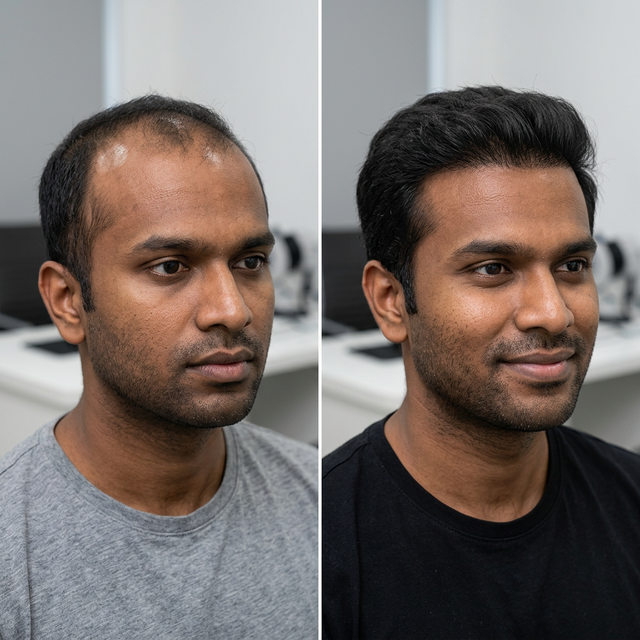
PRP (Platelet-Rich Plasma) therapy is one of the most effective non-surgical treatments for hair loss, but its success depends heavily on how often you do it. Getting the frequency right is the difference between transformative results and wasted money. This guide breaks down the ideal PRP schedule for every stage of hair loss, so you can plan your treatment with confidence.
If you have been researching what is PRP and whether it can help your thinning hair, you have probably come across conflicting advice about how frequently sessions should be done. Some clinics recommend monthly sessions, others say quarterly, and some patients wonder whether doing it more often leads to faster results. The truth is that PRP frequency is not one-size-fits-all. It depends on the severity of your hair loss, your body's response, and the treatment phase you are in.
At DenceSpot Clinic in Gurgaon, we have treated thousands of patients with PRP and have refined our treatment protocols based on clinical outcomes. In this comprehensive guide, we share the exact frequency schedules we use, backed by dermatological research and real patient results.
Why PRP Frequency Matters for Hair Growth
PRP works by delivering concentrated growth factors from your own blood directly into weakened hair follicles. These growth factors stimulate dormant follicles, extend the active growth phase (anagen), and improve blood supply to the scalp. However, the effects of a single PRP session are not permanent. The growth factors get absorbed and metabolized over time, and without timely reinforcement, the stimulated follicles can slip back into a resting or miniaturized state.
Think of PRP like watering a plant. A single watering session will not save a drought-stressed plant. You need consistent, properly spaced watering to help the plant establish strong roots and thrive. Similarly, hair follicles need repeated doses of growth factors at the right intervals to truly regenerate.
Research published in the Journal of Cutaneous and Aesthetic Surgery has shown that patients who followed a structured PRP schedule had significantly better outcomes compared to those who received sessions irregularly. The cumulative effect of properly spaced sessions is what drives meaningful hair regrowth. Each session builds upon the previous one, progressively strengthening the follicles until they can sustain thicker, longer hair on their own with minimal maintenance.
This is also why understanding how long PRP takes to work is important. Results are not instant. They build gradually over multiple sessions, and the frequency at which those sessions are delivered directly impacts the quality and speed of results.
The Standard PRP Treatment Schedule
Based on clinical evidence and our experience at DenceSpot Clinic, the standard PRP treatment protocol is divided into three distinct phases. Each phase serves a specific purpose and has its own optimal frequency.
Phase 1: Initial Loading Phase (Every 3 to 4 Weeks)
The initial phase is the most intensive part of PRP treatment. During this phase, you receive 3 to 4 sessions spaced 3 to 4 weeks apart. The goal is to flood the scalp with growth factors repeatedly over a short period, creating a strong regenerative stimulus that wakes up dormant follicles and kickstarts the hair growth cycle.
Why 3 to 4 weeks apart? This spacing is based on the biology of the hair follicle cycle. After a PRP injection, the growth factors begin working immediately, stimulating cell proliferation in the dermal papilla. The follicular response takes approximately 2 to 3 weeks to manifest at the cellular level. By delivering the next session at 3 to 4 weeks, you catch the follicle just as it is responding and give it another powerful boost before the effect of the previous session fades.
Most patients start noticing reduced hair fall by the end of the second or third session. New baby hairs along the hairline and thinning areas typically become visible by the end of the initial phase.
Phase 2: Consolidation Phase (Every 2 to 3 Months)
After completing the initial loading phase, you transition to the consolidation phase. During this period, you receive 2 to 3 additional sessions spaced 2 to 3 months apart. The purpose of this phase is to reinforce the gains made during the initial phase and allow the newly stimulated follicles to establish a stable growth pattern.
During the consolidation phase, the follicles that were awakened during the initial phase are now actively growing. They are transitioning from thin, miniaturized vellus hairs to thicker, pigmented terminal hairs. This transformation takes time and continued support. The 2 to 3 month spacing is sufficient to maintain growth factor levels while giving the follicles room to mature naturally.
Patients typically see the most dramatic visual improvement during this phase. Hair density increases noticeably, thinning areas begin to fill in, and the overall hair quality improves significantly in terms of shine, texture, and strength.
Phase 3: Maintenance Phase (Every 4 to 6 Months, Ongoing)
Once you have completed the initial and consolidation phases, you enter the maintenance phase. This involves a single PRP session every 4 to 6 months, continued indefinitely. Since hair loss is a progressive condition driven by genetics and hormones, ongoing maintenance is essential to preserve the results you have achieved.
Without maintenance sessions, the benefits of PRP will gradually diminish over 6 to 12 months. The follicles that were strengthened will slowly begin to miniaturize again under the influence of DHT and other hair loss factors. Understanding how long PRP treatment lasts helps set realistic expectations about why maintenance is non-negotiable.
The maintenance frequency can be adjusted based on individual response. Some patients do well with sessions every 6 months, while others with more aggressive hair loss may need them every 4 months. Your dermatologist will advise based on periodic scalp assessments.
PRP Frequency Based on Hair Loss Severity
Not everyone needs the same PRP schedule. The severity of your hair loss, measured using the Norwood scale for men and the Ludwig scale for women, plays a major role in determining the ideal frequency.
Mild Hair Loss (Norwood 1-2 / Ludwig 1)
If you are in the early stages of hair thinning with a slightly receding hairline or minimal diffuse thinning, you may need fewer initial sessions. Many patients with mild hair loss respond well to just 3 initial sessions spaced 4 weeks apart, followed by maintenance every 5 to 6 months. The follicles are still relatively healthy at this stage and respond quickly to growth factor stimulation.
Early intervention with PRP at this stage yields the best long-term results. You are essentially preventing significant hair loss before it starts, which is far more effective than trying to reverse advanced thinning later.
Moderate Hair Loss (Norwood 3-4 / Ludwig 2)
Moderate hair loss requires the standard protocol described above: 3 to 4 initial sessions every 3 to 4 weeks, consolidation every 2 to 3 months, and maintenance every 4 to 6 months. At this stage, a significant number of follicles are miniaturized but still alive, meaning they can be rescued with consistent PRP therapy.
For moderate hair loss, we often recommend combining PRP with microneedling to enhance growth factor penetration and improve results. The number of PRP sessions needed can vary. Read our detailed guide on how many PRP sessions are needed for a more thorough breakdown.
Severe Hair Loss (Norwood 5+ / Ludwig 3)
Severe hair loss presents a more challenging scenario for PRP therapy. At this stage, many follicles have permanently died and cannot be revived by any treatment. However, PRP can still benefit the remaining miniaturized follicles and is particularly valuable when combined with other treatments.
For severe hair loss, we recommend a more aggressive initial phase: 4 to 6 sessions every 3 weeks, followed by consolidation every 6 to 8 weeks, and maintenance every 3 to 4 months. We strongly advise combining PRP with a hair transplant for patients at Norwood 5 and above. PRP serves as an excellent adjunct therapy that protects native hair while supporting transplanted grafts.
What Happens If You Space PRP Sessions Too Far Apart
One of the most common mistakes patients make is spacing their PRP sessions too far apart, especially during the critical initial phase. This happens for various reasons: busy schedules, financial constraints, or simply underestimating the importance of timing.
When sessions are spaced too far apart, you lose the cumulative benefit that makes PRP effective. Here is what happens at the follicular level:
- Growth factor levels drop below the therapeutic threshold: The growth factors delivered during a PRP session are metabolized within 3 to 5 weeks. If the next session comes too late, the follicle returns to its weakened state before receiving reinforcement.
- Follicles re-enter the resting phase: Follicles that were just starting to shift from telogen (resting) to anagen (growth) may slip back into telogen if the stimulus is not maintained. This essentially resets your progress.
- Each session starts from scratch: Instead of building upon the previous treatment, each widely spaced session essentially acts as a standalone treatment with limited cumulative benefit. You end up spending the same amount of money for significantly inferior results.
- Overall treatment duration increases: Patients who skip or delay sessions often end up needing more total sessions to achieve the same results that a disciplined schedule would have produced faster.
If you genuinely cannot maintain the recommended schedule, it is better to discuss with your dermatologist and create a modified plan rather than randomly skipping sessions. Even a slightly adjusted schedule is better than completely irregular treatments.
What Happens If You Do PRP Too Often
On the opposite end of the spectrum, some patients wonder whether doing PRP more frequently will accelerate results. Can you do PRP every week or every two weeks for faster hair growth? The short answer is no, and here is why.
Doing PRP too frequently leads to several problems:
- Diminishing returns: Hair follicles have a biological limit to how quickly they can respond to growth factor stimulation. Bombarding them with PRP every week or two does not make them grow faster. There is a minimum response time that cannot be shortened, typically 3 to 4 weeks.
- Increased inflammation: Each PRP injection causes controlled micro-inflammation in the scalp, which is actually part of the healing and regeneration process. However, if sessions are too frequent, the inflammation does not have time to resolve properly, leading to chronic low-grade inflammation that can actually be counterproductive to hair growth.
- Unnecessary cost: PRP sessions are not inexpensive. Doing them more frequently than needed means spending more money without any additional benefit. At DenceSpot Clinic, we believe in honest, evidence-based treatment plans that deliver maximum results without unnecessary expenditure.
- Patient fatigue and discomfort: Each session involves a blood draw and scalp injections. While the procedure is well-tolerated, doing it too frequently can lead to bruising, soreness, and general treatment fatigue that causes patients to abandon the protocol altogether.
The 3 to 4 week spacing during the initial phase is the sweet spot identified by clinical research. It provides enough time for the follicles to respond while maintaining consistent growth factor stimulation. Trust the science and follow the recommended protocol.
Not Sure About Your PRP Schedule? Let Us Help
Every scalp is different, and the ideal PRP frequency depends on your specific hair loss pattern, severity, and goals. Our dermatologists at DenceSpot Clinic will create a personalised treatment calendar tailored to your needs and budget.
Book Free ConsultationPersonalised PRP Schedules: Men, Women, and Post-Transplant Patients
While the standard PRP protocol provides an excellent baseline, the ideal frequency should be personalised based on several factors. Here is how PRP schedules differ across different patient groups.
PRP Frequency for Men
Men with androgenetic alopecia (male pattern baldness) typically follow the standard protocol. However, men with particularly aggressive hair loss, especially those in their early twenties with a strong family history, may benefit from more frequent maintenance sessions every 3 to 4 months rather than the standard 4 to 6 months. This is because DHT-driven hair loss in young men tends to progress faster and requires more consistent intervention.
Men who are also taking finasteride or minoxidil alongside PRP may be able to extend their maintenance intervals slightly, as the medications provide additional follicular protection between sessions.
PRP Frequency for Women
Women generally respond very well to PRP, and the standard protocol works effectively for most female patients. However, there are specific scenarios where the frequency should be adjusted:
- Postpartum hair loss: Women experiencing hair shedding after pregnancy may benefit from starting PRP earlier and doing 4 to 5 initial sessions instead of 3 to 4, as the hormonal shift can cause significant telogen effluvium.
- Menopausal hair thinning: Women going through menopause may need more frequent maintenance sessions (every 3 to 4 months) during the transition period, which can then be reduced once hormone levels stabilize.
- PCOS-related hair loss: Women with polycystic ovary syndrome often experience hair thinning due to elevated androgens. PRP combined with hormonal management may require a modified schedule based on how well the underlying condition is controlled.
PRP Frequency After Hair Transplant
PRP plays a critical role in post-transplant care. After a hair transplant, PRP helps improve graft survival rates, accelerates healing, and protects existing native hair from continued thinning. The typical post-transplant PRP schedule is:
- First session: 2 to 4 weeks after surgery, once the scalp has healed sufficiently.
- Initial course: 3 to 4 sessions every 4 weeks post-surgery to support graft establishment and promote robust blood supply to the transplanted area.
- Maintenance: Every 3 to 4 months for the first year, then every 4 to 6 months ongoing. This protects the native hair surrounding the transplanted grafts, which is crucial for maintaining a natural-looking result long-term.
Seasonal Adjustments
In India, seasonal changes can affect hair loss patterns. Many patients experience increased shedding during the monsoon season and seasonal transitions. Some dermatologists recommend scheduling a PRP session just before known high-shedding seasons to preemptively strengthen follicles. At DenceSpot, we often advise patients to align their maintenance sessions with these seasonal patterns for optimal protection.
How Your Doctor Decides PRP Frequency
A good dermatologist does not prescribe the same PRP schedule to every patient. The ideal frequency is determined through a combination of clinical assessment tools and ongoing monitoring.
Initial Scalp Assessment
Before starting PRP, your doctor will conduct a thorough scalp examination. This includes assessing the pattern and extent of hair loss, checking the scalp for inflammation, dandruff, or other conditions that may affect treatment, and evaluating the density of miniaturized versus terminal hairs. This baseline assessment determines whether you need a standard or modified PRP schedule.
Trichoscopy and Digital Mapping
Advanced clinics like DenceSpot use trichoscopy, a specialized magnification technique that allows the dermatologist to examine individual follicular units at high magnification. Trichoscopy reveals the ratio of thin to thick hairs, follicular unit density, the presence of peripilar signs indicating active miniaturization, and vascular patterns around the follicles. These findings help determine the intensity and frequency of treatment needed. A scalp with a high proportion of miniaturized but still-living follicles will respond differently compared to one with significant follicular dropout.
Response Monitoring and Schedule Adjustment
PRP frequency is not set in stone. After every 2 to 3 sessions, your dermatologist should reassess your response. This includes repeat trichoscopy to compare against baseline, patient-reported changes in hair fall and density, photographic documentation under standardized conditions, and pull test results to assess shedding rates. Based on these findings, the schedule may be tightened if the response is slow or relaxed if the follicles are responding exceptionally well. This adaptive approach ensures you get the best possible results without over-treatment or under-treatment.
Combining PRP with Other Treatments and Its Effect on Frequency
PRP is highly effective on its own, but combining it with complementary treatments can enhance results and potentially influence the treatment frequency. Here are the most common combination protocols we use at DenceSpot Clinic.
PRP with Microneedling
Microneedling creates tiny channels in the scalp that dramatically improve the absorption of PRP growth factors. When performed together, the growth factors penetrate deeper into the dermal papilla, increasing their regenerative effect. Studies have shown that PRP combined with microneedling produces better results than either treatment alone.
When combining these treatments, the sessions are typically done on the same day. The microneedling is performed first, followed immediately by PRP application. The combined session frequency remains the same as standalone PRP, but some patients achieve satisfactory results with slightly fewer total sessions because of the enhanced absorption.
PRP with Minoxidil
Minoxidil is a topical medication that improves blood flow to the scalp and extends the hair growth phase. When used alongside PRP, minoxidil provides continuous daily support between PRP sessions. This combination can allow some patients to extend their maintenance PRP intervals to every 5 to 6 months instead of 4, as the minoxidil provides ongoing follicular stimulation between sessions.
However, minoxidil should not be applied to the scalp for 24 to 48 hours before and after a PRP session to avoid interference with the treatment.
PRP with Hair Transplant
As discussed earlier, PRP is an excellent complement to hair transplant surgery. Some surgeons even apply PRP directly to the grafts during the transplant procedure to improve graft survival rates. Post-transplant PRP frequency follows the schedule outlined in the personalised schedules section above. The combination ensures that transplanted grafts establish well while native hair is protected from further thinning.
PRP with Low-Level Laser Therapy (LLLT)
Low-level laser therapy uses red light wavelengths to stimulate mitochondrial activity in hair follicle cells. Combining LLLT (which can be done at home with FDA-cleared devices) with PRP provides complementary mechanisms of action. LLLT can be used between PRP sessions to maintain follicular stimulation, potentially allowing for slightly longer intervals between PRP sessions during the maintenance phase.
PRP Frequency Recommendations at DenceSpot Clinic
At DenceSpot Clinic in Gurgaon, we have developed evidence-based PRP protocols refined through years of clinical practice and thousands of patient treatments. Here is a summary of our recommended PRP frequency guidelines:
- Mild hair loss (early thinning): 3 initial sessions every 4 weeks, then maintenance every 5 to 6 months. Estimated total sessions in the first year: 4 to 5.
- Moderate hair loss (visible thinning): 4 initial sessions every 3 to 4 weeks, 2 to 3 consolidation sessions every 2 to 3 months, then maintenance every 4 to 6 months. Estimated total sessions in the first year: 6 to 8.
- Severe hair loss (advanced thinning with transplant): 4 to 6 initial sessions every 3 weeks, consolidation every 6 to 8 weeks, maintenance every 3 to 4 months. Estimated total sessions in the first year: 8 to 10.
- Post-transplant support: 3 to 4 sessions starting 2 to 4 weeks post-surgery at 4-week intervals, then every 3 to 4 months for the first year, and every 4 to 6 months ongoing.
Every patient at DenceSpot receives a customised treatment calendar during their first consultation. We factor in your hair loss severity, budget, lifestyle, and treatment goals to create a realistic, sustainable plan. Our dermatologists also provide flexibility in scheduling and work with patients who have demanding work schedules or travel frequently.
We use the advanced double-spin PRP preparation method, which yields a higher concentration of platelets and growth factors compared to single-spin systems. This means each session delivers maximum therapeutic value, and our patients often achieve results faster than average timelines reported in clinical literature.
If you are considering PRP therapy and want to understand the exact schedule and costs involved, we encourage you to book a consultation at our clinic. We will assess your scalp, explain the recommended protocol in detail, and give you a clear timeline of what to expect.
Start Your PRP Treatment with a Personalised Plan
Stop guessing and start growing. Our dermatologists will create a customised PRP schedule based on your unique hair loss pattern, severity, and goals. Get a complete treatment calendar with transparent pricing at your first visit.
Book Free ConsultationFrequently Asked Questions
How often should you do PRP for hair?
The standard PRP schedule involves sessions every 3 to 4 weeks during the initial phase for 3 to 4 sessions, followed by consolidation sessions every 2 to 3 months, and then maintenance sessions every 4 to 6 months indefinitely to sustain results.
Can I do PRP for hair every week?
No, doing PRP every week is not recommended. Hair follicles need time to respond to the growth factors delivered during each session. Spacing sessions at least 3 to 4 weeks apart gives follicles time to regenerate and enter the active growth phase before the next treatment.
What happens if I stop PRP sessions?
If you stop PRP sessions entirely, the benefits will gradually fade over 6 to 12 months as hair loss is a progressive condition. The follicles that were strengthened will slowly begin to miniaturize again. Regular maintenance sessions every 4 to 6 months help preserve the results long-term.
Is PRP frequency different for men and women?
The initial treatment frequency is generally the same for both men and women. However, women with hormonal hair loss may benefit from additional sessions around periods of hormonal change such as postpartum or menopause. Men with aggressive androgenetic alopecia may need more frequent maintenance sessions.
How often should I do PRP after a hair transplant?
After a hair transplant, PRP is typically started 2 to 4 weeks post-surgery and repeated every 4 weeks for 3 to 4 sessions to support graft survival and accelerate healing. Maintenance sessions every 3 to 4 months are then recommended to protect both transplanted and native hair.
Does the severity of hair loss affect PRP frequency?
Yes, patients with more severe hair loss often require more frequent initial sessions and longer treatment courses. Mild hair loss may respond well to 3 to 4 initial sessions, while moderate to severe cases may need 6 or more sessions with closer spacing in the initial phase.
How long do PRP results last between sessions?
After the initial course, PRP results typically last 4 to 6 months before a maintenance session is needed. The longevity depends on the severity of hair loss, your overall health, and whether you are combining PRP with other treatments like minoxidil or microneedling.
Can I combine PRP with microneedling and how does it affect frequency?
Yes, combining PRP with microneedling enhances absorption and results. When combined, the sessions can sometimes be spaced slightly further apart because the synergistic effect amplifies the growth factor delivery. Your dermatologist will adjust the frequency based on your scalp response.