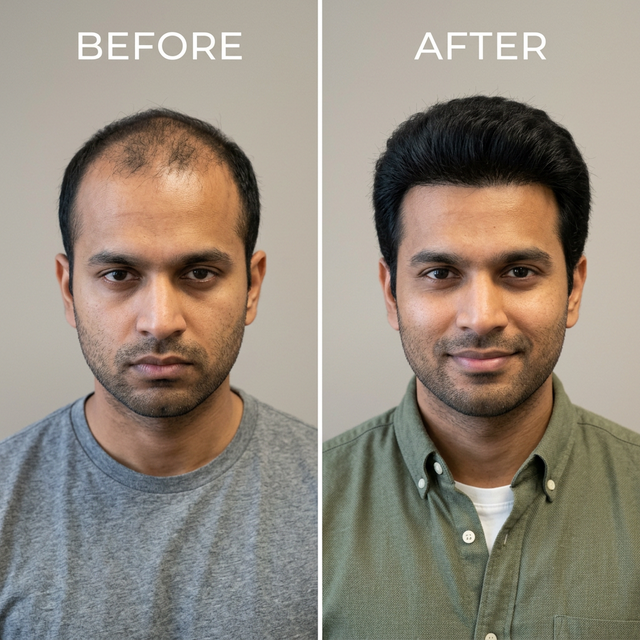
PRP therapy (Platelet-Rich Plasma therapy) is a regenerative medical treatment in which a concentrated portion of the patient's own blood — rich in platelets and growth factors — is injected into damaged or ageing tissue to accelerate natural healing and cell regeneration. It is widely used in hair restoration, facial rejuvenation, orthopedic medicine, sports injury recovery, and dentistry.
If you have been researching treatments for hair loss, joint pain, or skin ageing, you have likely come across PRP therapy. Over the last decade, this treatment has moved from elite sports clinics to mainstream dermatology practices, and for good reason. It harnesses your body's own biology rather than relying on synthetic chemicals, making it one of the safest regenerative procedures available today.
In this comprehensive guide, we break down everything you need to know about PRP therapy — from the science behind it and the different types that exist, to the step-by-step procedure, realistic results timeline, and costs in India.
A Brief History of PRP Therapy
The concept of using concentrated blood components for healing dates back to the 1970s, when haematologists first developed platelet-rich plasma for transfusion medicine. By the 1980s, PRP found its way into oral and maxillofacial surgery, where dentists used it to promote jawbone regeneration after extractions.
The real breakthrough came in the early 2000s when professional athletes began using PRP injections to speed up recovery from ligament tears, muscle strains, and tendon injuries. High-profile cases in football, cricket, and tennis brought PRP into the public spotlight. Since then, dermatologists and trichologists have refined the technique for hair restoration and skin rejuvenation, making it one of the most sought-after non-surgical treatments worldwide.
Today, PRP therapy is backed by hundreds of published clinical studies and is offered in reputed clinics across India, including DenceSpot Clinic in Gurgaon.
How PRP Therapy Works: The Science Explained
To understand PRP therapy, you first need to understand what platelets do. Platelets are tiny blood cells best known for clotting, but they serve a far more important biological function: tissue repair.
Each platelet contains alpha granules loaded with powerful growth factors, including:
- PDGF (Platelet-Derived Growth Factor): Stimulates cell replication, blood vessel formation, and collagen synthesis.
- TGF-beta (Transforming Growth Factor): Promotes extracellular matrix formation and regulates immune cell activity.
- VEGF (Vascular Endothelial Growth Factor): Triggers the formation of new blood vessels, improving blood supply to treated areas.
- EGF (Epidermal Growth Factor): Stimulates skin cell growth, wound healing, and collagen production.
- FGF (Fibroblast Growth Factor): Drives tissue repair and cell differentiation.
- IGF (Insulin-like Growth Factor): Regulates cell growth and plays a role in hair follicle cycling.
Normal blood contains roughly 150,000 to 350,000 platelets per microlitre. In PRP, this concentration is elevated to 3 to 5 times the baseline level. When this concentrated plasma is injected into a target area — whether it is a thinning scalp, an ageing face, or an injured tendon — these growth factors activate dormant stem cells, stimulate collagen production, and promote new blood vessel growth.
For hair loss specifically, PRP works by prolonging the anagen (active growth) phase of the hair cycle, increasing blood supply to miniaturised follicles, and thickening the dermal papilla. You can read more about how this applies to hair in our detailed guide on what is PRP for hair.
Types of PRP Therapy
Not all PRP preparations are the same. The composition of the final product varies based on the preparation method, and this has a meaningful impact on treatment outcomes. There are three main types:
1. Pure PRP (P-PRP)
Also called leukocyte-poor PRP, this preparation contains a high concentration of platelets with minimal white blood cells (leukocytes). It is the most commonly used form in dermatology, hair restoration, and facial aesthetics. The low leukocyte content means less post-injection inflammation, making it gentler on delicate tissue like the scalp and facial skin.
2. Leukocyte-Rich PRP (L-PRP)
This variant contains a higher concentration of white blood cells alongside the platelets. The additional leukocytes trigger a stronger inflammatory response, which can be beneficial in orthopedic applications where controlled inflammation helps initiate tendon or ligament repair. It is commonly used for sports injuries, chronic tendinopathies, and joint conditions.
3. Leukocyte-Poor PRP (LP-PRP)
Similar to pure PRP but prepared using double-spin centrifugation methods that further reduce white blood cell content. This ultra-refined version is preferred for sensitive areas and patients prone to post-treatment swelling. It is increasingly popular in cosmetic dermatology and intra-articular injections for osteoarthritis.
The type of PRP used at DenceSpot Clinic is selected based on the individual patient's condition, treatment goals, and the area being treated. During your consultation, our specialists determine which preparation will deliver the best results for your specific case.
Applications of PRP Therapy
PRP therapy has proven effective across a surprisingly wide range of medical and cosmetic applications:
Hair Restoration
This is one of the most popular applications of PRP in India. PRP injections into the scalp stimulate dormant hair follicles, increase hair thickness, and reduce hair fall. It is effective for androgenetic alopecia (male and female pattern baldness), telogen effluvium, and as a complementary treatment after hair transplant surgery. Our complete guide on PRP hair treatment as a natural way to regrow hair covers this in detail.
Facial Rejuvenation (Vampire Facial)
When applied to the face — either through micro-injections or combined with microneedling — PRP stimulates collagen production, improves skin texture, reduces fine lines, and evens out skin tone. Facial PRP treatment is particularly popular among patients who prefer natural anti-ageing methods over synthetic fillers.
Orthopedics and Sports Medicine
PRP injections are used to treat chronic tendon injuries (tennis elbow, Achilles tendinopathy), ligament sprains, muscle tears, and early-stage osteoarthritis. The growth factors accelerate tissue repair and reduce inflammation in injured joints and tendons.
Dentistry
Oral surgeons use PRP to promote bone regeneration after tooth extractions, dental implant procedures, and jaw reconstruction surgeries. It significantly reduces healing time and improves implant success rates.
Wound Healing
PRP is applied to chronic non-healing wounds, surgical incisions, and burn injuries to speed up tissue repair and reduce scarring.
Considering PRP Therapy for Hair or Skin?
Get a personalised assessment from our PRP specialists at DenceSpot Clinic, Gurgaon. We will recommend the right type and treatment plan for your specific concern.
Book Free ConsultationPRP Therapy Procedure: Step-by-Step
The PRP therapy procedure is straightforward and typically completed within 45 to 60 minutes. Here is what happens during a standard session:
Step 1: Consultation and Assessment
Before the procedure, the doctor evaluates your medical history, current medications, and the condition being treated. Blood tests may be recommended to rule out any platelet disorders or infections. A detailed scalp or skin analysis is conducted depending on the treatment area.
Step 2: Blood Collection
A small amount of blood — typically 15 to 30 ml — is drawn from your arm, similar to a routine blood test. This is a quick and painless process that takes less than 5 minutes.
Step 3: Centrifugation
The collected blood is placed in a specialized centrifuge machine that spins at high speed for 10 to 15 minutes. This separates the blood into three layers: red blood cells at the bottom, platelet-poor plasma at the top, and platelet-rich plasma in the middle. The PRP layer — a golden-yellow concentrate — is carefully extracted.
Step 4: Preparation and Activation
The extracted PRP may be further processed or activated depending on the protocol. Some clinics add calcium chloride to activate the platelets before injection. The final PRP concentrate contains 3 to 5 times the normal platelet concentration.
Step 5: Numbing the Treatment Area
A topical anaesthetic cream is applied to the treatment area 20 to 30 minutes before injections. For scalp treatments, a nerve block may also be administered for added comfort.
Step 6: PRP Injection
Using fine needles, the PRP is injected into the target area at multiple points. For hair restoration, injections are placed across the thinning zones of the scalp at a depth of about 1 to 2 mm. For facial rejuvenation, PRP may be injected or applied after microneedling. The injection process takes approximately 15 to 20 minutes.
Step 7: Post-Treatment Care
There is no downtime after PRP therapy. Patients can return to normal activities immediately. However, it is advisable to avoid washing the treated area for 24 hours, refrain from strenuous exercise for 48 hours, and stay away from blood-thinning medications for a few days before and after the procedure.
Benefits of PRP Therapy
PRP therapy offers several advantages over conventional treatments, which explains its growing popularity in India and worldwide:
- 100% Natural: Uses your own blood, eliminating the risk of allergic reactions or immune rejection.
- Minimally Invasive: No surgery, no incisions, no stitches. Just a simple blood draw and micro-injections.
- Zero Downtime: Walk in during your lunch break and return to work immediately after.
- Versatile: Effective for hair loss, skin ageing, joint pain, sports injuries, and more.
- Clinically Proven: Supported by extensive published research across multiple medical specialties.
- Complementary: Can be safely combined with other treatments such as hair transplant, microneedling, and mesotherapy for enhanced results.
- Long-lasting Results: With maintenance sessions, the benefits of PRP therapy can last 12 to 18 months or longer.
- Affordable: Significantly less expensive than surgical alternatives, especially in India.
Risks and Side Effects
Because PRP is derived from your own blood, it is one of the safest medical procedures available. However, like any injection-based treatment, there are minor risks to be aware of:
- Mild Pain or Discomfort: Some patients experience soreness at the injection site, which resolves within a day or two.
- Swelling and Redness: Temporary swelling is common, especially with facial PRP. It typically subsides within 24 to 48 hours.
- Bruising: Minor bruising may occur at the blood draw site or injection points.
- Infection: Extremely rare when performed in a sterile clinical environment by trained professionals.
- Nerve or Tissue Injury: Very uncommon and almost always avoidable with proper technique.
Serious complications are exceptionally rare. PRP therapy is not recommended for patients with blood disorders (thrombocytopenia, platelet dysfunction syndrome), active infections, cancer, chronic liver disease, or those on anticoagulation therapy. Pregnant and breastfeeding women should also avoid PRP.
PRP Therapy vs Other Treatments
Understanding how PRP compares to alternative treatments helps you make an informed decision:
PRP vs Minoxidil (Topical Medication)
Minoxidil requires daily application for life and causes side effects like scalp irritation and unwanted facial hair growth in some users. PRP requires only periodic sessions and has virtually no systemic side effects. However, minoxidil is cheaper on a per-month basis and can be used at home. Many patients use both together for maximum benefit.
PRP vs Finasteride (Oral Medication)
Finasteride is a prescription drug that blocks DHT, the hormone responsible for male pattern baldness. While effective, it carries risks of sexual side effects including decreased libido and erectile dysfunction. PRP has no such hormonal side effects. For patients who cannot tolerate finasteride, PRP is an excellent alternative.
PRP vs Hair Transplant
A hair transplant is a surgical procedure that physically relocates hair follicles from a donor area to bald regions. It is the definitive solution for advanced hair loss but involves surgery, recovery time, and higher cost. PRP is best for early to moderate hair loss and is frequently used as a complementary treatment before and after transplant to improve graft survival and overall density.
PRP vs Steroid Injections (for Joint Pain)
Corticosteroid injections provide quick pain relief for joint conditions but do not promote actual tissue healing. Repeated steroid injections can even weaken tendons over time. PRP, on the other hand, stimulates genuine tissue repair, making it a better long-term solution for chronic musculoskeletal conditions.
Who Should Consider PRP Therapy?
PRP therapy may be right for you if you fall into any of the following categories:
- Early to Moderate Hair Loss: Men and women experiencing thinning hair, receding hairlines, or reduced hair density. PRP works best when follicles are still alive but miniaturised.
- Post Hair Transplant Patients: To enhance graft survival, speed up healing, and improve the overall density achieved by surgery.
- Skin Ageing Concerns: Those looking for a natural alternative to chemical fillers for reducing fine lines, improving skin texture, and restoring a youthful glow.
- Chronic Joint or Tendon Pain: Patients with osteoarthritis, tennis elbow, rotator cuff injuries, or plantar fasciitis who have not responded to conventional physiotherapy.
- Athletes with Sports Injuries: For faster recovery from muscle tears, ligament sprains, and tendon injuries.
PRP is not suitable for individuals with platelet disorders, active cancer, systemic infections, or those on blood-thinning medications. Always consult a qualified specialist before proceeding.
PRP Therapy Results: What to Expect and When
Managing expectations is important with PRP therapy. This is not an overnight fix — it works with your body's natural healing timeline.
- Weeks 1 to 2: Initial healing. Mild shedding may occur in hair PRP patients (a normal sign that follicles are resetting their growth cycle).
- Weeks 3 to 6: Reduced hair fall becomes noticeable. Skin patients may see improved texture and subtle glow.
- Months 2 to 3: Baby hairs begin appearing in treated areas. Skin shows improved firmness and reduced fine lines.
- Months 3 to 6: Significant improvement in hair thickness and density. This is when most patients notice a visible difference.
- Months 6 to 12: Peak results achieved with the full course of treatment. Maintenance sessions every 6 to 12 months preserve and build on the gains.
Individual results vary based on age, severity of the condition, overall health, and consistency with the prescribed treatment schedule. Patients who combine PRP with a healthy diet, proper hair care, and any recommended medications tend to see the best outcomes.
PRP Therapy Cost in India
One of the biggest advantages of getting PRP therapy in India is the cost. Compared to Western countries where a single session can cost USD 500 to 2,000, PRP in India is remarkably affordable:
- Scalp PRP (per session): Rs 3,000 to Rs 12,000
- Facial PRP / Vampire Facial (per session): Rs 4,000 to Rs 15,000
- Joint PRP (per session): Rs 5,000 to Rs 20,000
- Full Course (3-4 sessions): Rs 10,000 to Rs 40,000
The cost varies depending on the city, clinic infrastructure, the expertise of the doctor, and the type of PRP preparation used. At DenceSpot Clinic in Gurgaon, we offer transparent pricing with no hidden charges. Our PRP treatment packages are designed to be accessible while maintaining international standards of safety and efficacy.
To get an exact quote tailored to your condition, contact our team for a free consultation.
Ready to Start Your PRP Journey?
Whether it is hair loss, skin ageing, or chronic pain — PRP therapy at DenceSpot Clinic uses your body's own healing power to deliver real, lasting results. Book your free assessment today.
Book Free ConsultationFrequently Asked Questions
What is PRP therapy used for?
PRP therapy is used across multiple medical fields including hair restoration, facial rejuvenation, orthopedic injuries, sports medicine, and dentistry. It promotes natural healing using the patient's own concentrated platelets and growth factors.
How many PRP therapy sessions are needed for hair loss?
Most patients need 3 to 4 initial sessions spaced 3 to 4 weeks apart, followed by maintenance sessions every 6 to 12 months. The exact number depends on the severity of hair loss and individual response.
Is PRP therapy painful?
PRP therapy causes minimal discomfort. A topical numbing cream is applied before injections, so most patients describe the sensation as a mild pinch. The blood draw from the arm is similar to a routine blood test.
How long does a PRP therapy session take?
A complete PRP therapy session typically takes 45 to 60 minutes from start to finish. This includes the blood draw, centrifugation process, and the injection procedure itself.
Are there any side effects of PRP therapy?
Since PRP uses your own blood, serious side effects are extremely rare. Some patients may experience mild swelling, redness, or tenderness at the injection site, which usually resolves within 24 to 48 hours.
How much does PRP therapy cost in India?
PRP therapy in India typically costs between Rs 3,000 and Rs 15,000 per session, depending on the treatment area, clinic reputation, and city. In Gurgaon, a single PRP session for hair loss generally ranges from Rs 4,000 to Rs 10,000.
When will I see results from PRP therapy?
Initial improvements such as reduced hair fall can be noticed within 4 to 6 weeks. Visible hair thickening and regrowth typically become apparent after the 3rd or 4th session, around 3 to 6 months from the start of treatment.
Can PRP therapy be combined with hair transplant?
Yes, PRP therapy is frequently combined with hair transplant surgery. It is used before transplant to strengthen existing hair, and after transplant to accelerate graft survival and healing. Many surgeons recommend this combination for optimal results.