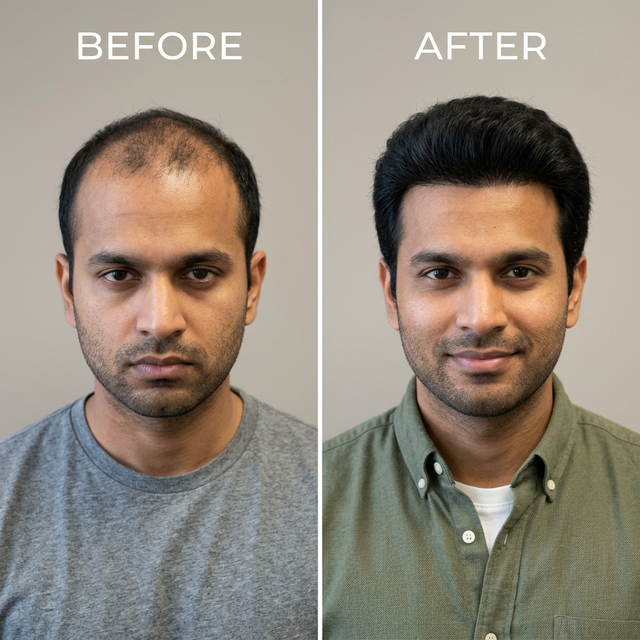
"How long does PRP take to work?" — this is the single most common question we hear from patients considering Platelet-Rich Plasma therapy for hair loss at our clinic. The honest answer is that PRP is not an overnight fix. It works by stimulating your body's natural healing and hair growth processes, which means results develop gradually over weeks and months. In this comprehensive guide, we break down the PRP hair treatment results timeline week by week, so you know exactly what to expect and when.
If you have been researching PRP for hair loss, you have probably come across a wide range of claims — some promising instant results, others saying it takes a year. The reality lies somewhere in between, and it depends heavily on your individual condition, the quality of the treatment, and how consistently you follow your treatment plan. At DenceSpot Clinic in Gurgaon, we have treated hundreds of patients with PRP therapy, and we have seen consistent patterns in how results develop. Let us share that knowledge with you.
Before we dive into the timeline, it helps to understand how PRP actually works on your hair follicles. If you are completely new to PRP, we recommend reading our what is PRP guide first for a thorough foundation.
How PRP Works on Hair Follicles
PRP, or Platelet-Rich Plasma, is a concentrated solution derived from your own blood. A small sample of blood is drawn, processed in a centrifuge to separate the platelet-rich layer, and then injected directly into the scalp at the level of your hair follicles. The concentrated platelets contain powerful growth factors — including Platelet-Derived Growth Factor (PDGF), Vascular Endothelial Growth Factor (VEGF), Transforming Growth Factor (TGF-beta), and Epidermal Growth Factor (EGF) — that trigger a cascade of biological events in the scalp.
Here is what these growth factors do at the follicular level. First, they increase blood supply to the hair follicles by stimulating the formation of new blood vessels (angiogenesis). Better blood flow means more oxygen and nutrients reach the follicle. Second, they reactivate dormant follicles that have entered the resting phase (telogen) prematurely due to conditions like Androgenetic Alopecia. The growth factors signal these follicles to re-enter the active growth phase (anagen). Third, they extend the anagen phase, meaning your hair grows for a longer period before entering the shedding phase. This results in thicker, longer, and stronger hair strands over time. Fourth, they reduce inflammation around the follicles, which is a significant contributing factor in many types of hair loss.
Understanding this biological process is crucial because it explains why PRP takes time to work. You are not simply covering up hair loss — you are fundamentally changing the environment around your hair follicles so they can grow healthier hair. This biological transformation does not happen in a day or even a week. It follows your body's natural healing and growth cycles, which operate on their own timeline. For a deeper understanding of the therapy itself, read our guide on PRP therapy.
PRP Results Timeline: Week by Week
Based on clinical evidence and our extensive experience treating patients at DenceSpot Clinic, here is a detailed week-by-week breakdown of what happens after you begin PRP treatment for hair loss.
Week 1 to 2: Initial Healing and Possible Mild Shedding
The first two weeks after your initial PRP session are all about the healing response. You may notice mild redness, tenderness, or slight swelling at the injection sites on your scalp. This is completely normal and typically resolves within 24 to 48 hours.
During this period, some patients experience what is known as shock shedding — a temporary increase in hair fall. This can be alarming if you are not expecting it, but it is actually a positive sign. The growth factors in PRP are stimulating your follicles to push out weak, thin, miniaturised hairs to make way for stronger, healthier strands that will replace them. Think of it as your scalp clearing out the old to make room for the new.
At this stage, there are no visible improvements in hair density or thickness. Your scalp is working beneath the surface — new blood vessels are forming, stem cells are being activated, and the cellular environment around your follicles is being optimised. Patience during these early weeks is essential.
Week 3 to 4: Reduced Hair Fall Begins
By the third to fourth week after your first session, most patients notice a meaningful reduction in daily hair fall. You will see fewer hairs on your pillow in the morning, less hair in your comb or brush, and reduced shedding during washing. This is one of the earliest tangible signs that PRP is working.
The growth factors have had enough time to strengthen the attachment of existing hair strands to their follicles and improve blood supply to the scalp. Your second PRP session is typically scheduled around this time, which builds upon the foundation laid by the first session.
While you will not yet see new hair growth or significant thickening at this point, the reduction in hair fall is an important and encouraging milestone. It means the treatment is having a measurable biological effect on your hair follicles.
Month 2 to 3: Baby Hairs Appear and Scalp Health Improves
This is when things start getting exciting. Between the second and third month, after completing 2 to 3 PRP sessions, many patients begin to notice fine, soft baby hairs (vellus hairs) sprouting in areas of thinning. These tiny new hairs are a clear indication that previously dormant follicles have been reactivated and are beginning to produce hair again.
You may also notice improvements in overall scalp health during this period. The scalp often looks healthier, with reduced dryness, less flaking, and a better skin tone. Some patients report that their existing hair feels softer and more manageable. These improvements are a result of the enhanced blood circulation and reduced inflammation triggered by PRP.
It is important to understand that the baby hairs you see at this stage are thin and may not be immediately visible to others. They are the early signs of regrowth, and over the coming months, these hairs will gradually become thicker, longer, and more pigmented as the follicles continue to strengthen.
Month 3 to 4: Noticeable Thickening After 3rd and 4th Session
After completing your 3rd and 4th PRP sessions, the cumulative effect of the treatment becomes more apparent. This is typically the stage where patients start seeing results that are visible not just to them but also to family members, friends, and colleagues.
The baby hairs that appeared earlier are now beginning to mature — they are getting thicker, longer, and darker. Your existing hair strands are also thicker due to the improved nourishment of the follicles. The overall appearance of your hair starts to look fuller and healthier.
Many patients describe this as the turning point — the moment when they feel confident that the treatment is truly working. Clinical measurements at this stage often show a measurable increase in hair count and hair shaft diameter compared to the baseline. If your dermatologist has been taking clinical photographs, the difference between your starting point and the 3 to 4 month mark is usually clearly visible. To understand the full treatment schedule, read our guide on how many PRP sessions are needed.
Month 4 to 6: Significant Density Improvement
The period from month 4 to 6 is where most patients experience the most dramatic improvement. By this time, you have completed the initial course of 3 to 4 PRP sessions, and the cumulative effect of multiple treatments has had time to fully manifest.
Hair density is noticeably improved. Areas that were previously visibly thin now have substantially more coverage. The hair that has regrown is approaching its full terminal thickness, and the overall volume and body of your hair is significantly better than it was at the start of treatment.
At this stage, patients often report receiving compliments about their hair from people who were not aware they were undergoing treatment. Styling becomes easier because there is more hair to work with, and the scalp is less visible through the hair. This is the period when many of our patients at DenceSpot express the greatest satisfaction with their results.
Month 6 to 12: Peak Results with Maintenance
Between 6 and 12 months, with maintenance sessions every 4 to 6 months, PRP results reach their peak. The hair regrowth has fully matured, density is at its maximum, and the overall quality of your hair — including texture, shine, and strength — is significantly improved compared to your pre-treatment state.
Maintenance sessions are critical during this period. Because conditions like Androgenetic Alopecia are progressive, the underlying hormonal and genetic factors that caused your hair loss are still present. Regular maintenance PRP sessions keep the growth factors in your scalp topped up, ensuring that your follicles remain active and healthy.
Patients who commit to a long-term maintenance plan consistently achieve the best results. At our clinic, we have patients who have been on PRP maintenance for over two years and continue to maintain excellent hair density with sessions every 4 to 6 months.
What to Expect After Your First PRP Session
Your first PRP session is a significant step, and knowing what to expect can help you feel prepared and confident. The procedure itself takes approximately 45 to 60 minutes from start to finish. Here is a detailed breakdown of the immediate post-session experience.
During the first few hours: You may experience mild scalp tenderness, slight swelling, or a feeling of tightness at the injection sites. Some patients notice small bumps where the injections were administered. These are all normal and typically subside within a few hours.
Within 24 to 48 hours: Any redness or swelling should resolve completely. You can wash your hair after 24 hours using a gentle, sulphate-free shampoo. Avoid vigorous scalp massage or scratching for 2 to 3 days.
During the first week: You can return to your normal routine immediately — PRP requires no downtime. Avoid intense physical exercise, saunas, steam rooms, and swimming pools for 48 hours. Avoid applying chemical hair products, hair dye, or harsh styling products for at least one week.
After the first week: Your scalp will feel completely normal. As mentioned earlier, some mild shedding may occur during weeks 1 to 2 as the growth factors activate your follicles. Do not panic — this is a sign the treatment is working beneath the surface.
Why PRP Does Not Work Overnight
It is natural to want quick results, especially when you are dealing with the emotional impact of hair loss. But understanding why PRP cannot work overnight will help you set realistic expectations and stay committed to the treatment plan.
The fundamental reason PRP takes time is that it works through biological healing processes that follow your body's natural timeline. Here is what needs to happen at the cellular level before you see visible results:
Angiogenesis (new blood vessel formation): The growth factors in PRP stimulate the creation of new blood vessels around your hair follicles. This process — called angiogenesis — takes several weeks to establish a meaningful improvement in blood supply. New capillaries do not form instantly; they grow gradually as endothelial cells multiply and organise into functional vessels.
Follicle reactivation: Dormant hair follicles that have entered the telogen (resting) phase need to be signalled to re-enter the anagen (growth) phase. This transition does not happen overnight. The follicle needs to receive sustained signals from the growth factors, rebuild its internal structure, and begin producing a new hair shaft. This process alone can take 6 to 12 weeks.
Hair growth rate: Even after a follicle has been reactivated, human hair grows at an average rate of approximately 1 centimetre per month, or roughly 0.3 to 0.4 millimetres per day. So even when new growth begins, it takes time for the hair to become long enough and thick enough to be visually noticeable.
Cumulative effect of multiple sessions: A single PRP session delivers a powerful dose of growth factors, but the effect is amplified and sustained through multiple sessions. Each subsequent session reinforces and builds upon the previous one. This is why a course of 3 to 4 sessions is recommended rather than a single treatment — the biological changes become progressively more robust with each session.
When you put all of these biological processes together, it becomes clear why 3 to 6 months is the realistic timeframe for visible PRP results. Your body is doing extraordinary work beneath the surface — it simply needs time to complete it.
Want to Know Your Personal PRP Timeline?
Every patient's hair loss is different. At DenceSpot Clinic Gurgaon, our dermatologists assess your specific condition and provide a realistic, personalised results timeline. Book a free consultation to get started.
Book Free ConsultationFactors That Influence How Fast PRP Works
While the general timeline outlined above applies to most patients, the speed and degree of your PRP results can vary based on several key factors. Understanding these factors can help you optimise your treatment outcomes.
Age: Younger patients tend to respond faster and more robustly to PRP therapy. This is because their cells are more active, their healing capacity is greater, and their hair follicles are generally in better condition. Patients in their 20s and 30s often see noticeable results within 2 to 3 months, while those in their 40s and 50s may need 4 to 6 months. That said, age alone does not determine outcomes — we have seen excellent results in patients across all age groups.
Stage of Hair Loss: The earlier you begin PRP treatment, the better the results. Patients with early-stage thinning (Norwood 1 to 3 in men, Ludwig 1 to 2 in women) typically respond much faster than those with advanced hair loss. This is because in early stages, the hair follicles are weakened but still alive and capable of being revitalised. In advanced stages where follicles have been permanently miniaturised or destroyed, PRP alone may have limited effectiveness, and a hair transplant may be more appropriate.
Overall Health and Nutritional Status: Your body's ability to respond to PRP is directly linked to your overall health. Patients who are well-nourished, with adequate levels of iron, zinc, vitamin D, biotin, and protein, tend to see faster and better results. Nutritional deficiencies — particularly iron deficiency, which is very common in Indian women — can significantly slow down the response to PRP. A comprehensive blood work-up before starting PRP helps identify and address any deficiencies.
Lifestyle Factors: Smoking constricts blood vessels and reduces the oxygen supply to your scalp, directly counteracting the benefits of PRP. Excessive alcohol consumption, chronic stress, poor sleep, and a sedentary lifestyle can all impair your body's healing response. Patients who maintain a healthy lifestyle see faster and more sustained results.
Platelet Count and Quality: The effectiveness of PRP depends on the concentration and quality of platelets in your blood. Patients with naturally higher platelet counts tend to produce more potent PRP. Certain medications — such as anti-inflammatory drugs and blood thinners — can affect platelet function and should be discussed with your doctor before treatment.
Consistency of Treatment: This is perhaps the most controllable factor. Patients who complete the full recommended course of 3 to 4 sessions at the prescribed intervals (every 3 to 4 weeks) and follow through with maintenance sessions see significantly better results than those who skip sessions or have irregular gaps between treatments. PRP is a cumulative therapy — consistency is the key to maximising results.
How to Maximise Your PRP Results
Beyond simply showing up for your sessions, there are several proactive steps you can take to enhance and accelerate your PRP results.
Optimise Your Nutrition: Focus on a protein-rich diet that includes eggs, lean meats, fish, lentils (dal), paneer, soybean, and nuts. Ensure adequate intake of iron (spinach, pomegranate, jaggery), zinc (pumpkin seeds, chickpeas), vitamin D (sunlight exposure, fortified foods), and biotin (almonds, sweet potatoes). These nutrients are the building blocks your hair follicles need to grow healthy hair. If blood tests reveal deficiencies, your dermatologist may recommend specific supplements.
Quit Smoking: If you smoke, stopping is one of the most impactful things you can do for your PRP results. Smoking reduces blood flow to the scalp by constricting blood vessels, directly undermining the angiogenesis that PRP stimulates. Studies have shown that smokers have significantly poorer outcomes with PRP compared to non-smokers.
Follow the Treatment Schedule Strictly: Do not skip sessions or extend the gap between treatments beyond what your dermatologist recommends. Each PRP session builds on the previous one, and irregular treatment interrupts the cumulative biological process. Set reminders, plan ahead, and prioritise your sessions.
Practice Good Scalp Care: Use a gentle, sulphate-free shampoo and avoid harsh chemical treatments on your hair during the treatment period. Keep your scalp clean and free from product buildup. Consider incorporating microneedling as a complementary treatment — when combined with PRP, microneedling creates micro-channels in the scalp that allow the growth factors to penetrate deeper, potentially accelerating results.
Manage Stress: Chronic stress is a well-documented cause of hair loss, particularly Telogen Effluvium. High cortisol levels push hair follicles into the resting phase prematurely, working against the effects of PRP. Incorporate stress management practices such as regular exercise, meditation, adequate sleep (7 to 8 hours), and work-life balance into your daily routine.
Stay Hydrated: Adequate water intake is essential for healthy blood circulation and cellular function. Aim for 2.5 to 3 litres of water daily, especially in the Indian climate where dehydration is common. Good hydration supports the transport of nutrients and growth factors to your hair follicles.
Avoid Unnecessary Heat and Chemical Styling: Minimise the use of hair dryers on high heat, straighteners, curling irons, and chemical treatments like rebonding or colouring during your PRP treatment period. These can damage the hair shaft and follicle, counteracting the strengthening effects of PRP.
When PRP May Not Work
While PRP is an effective treatment for many types of hair loss, it is important to be transparent about situations where results may be limited or the treatment may not be suitable.
Complete Baldness (Norwood 6 to 7): In areas where the scalp has been completely bald for many years, the hair follicles may have been permanently destroyed. PRP cannot create new follicles — it can only strengthen and reactivate existing ones. For complete baldness, a hair transplant is a more appropriate solution, and PRP can be used as a complementary treatment to enhance transplant results.
Scarring Alopecia: Conditions like Lichen Planopilaris, Frontal Fibrosing Alopecia, and other forms of scarring alopecia destroy the hair follicle and replace it with scar tissue. Once the follicle is scarred, PRP cannot revive it. Early intervention in scarring alopecia may slow progression, but established scarred areas will not respond to PRP.
Alopecia Areata (Autoimmune): PRP has shown mixed results for Alopecia Areata, an autoimmune condition where the immune system attacks hair follicles. Some patients see improvement, while others do not respond. PRP is generally used as a supplementary treatment for Alopecia Areata alongside immunotherapy and corticosteroid treatments.
Underlying Medical Conditions: Uncontrolled thyroid disorders, severe iron deficiency anaemia, hormonal imbalances (such as PCOS in women), and chronic systemic illnesses can all limit the effectiveness of PRP. It is essential to diagnose and manage these underlying conditions alongside PRP treatment for optimal results. At DenceSpot Clinic, we always conduct a thorough medical evaluation before recommending PRP.
Unrealistic Expectations: PRP cannot regrow a full head of hair on a significantly bald scalp. It is most effective for early to moderate thinning and works best as part of a comprehensive hair restoration plan. Patients who expect overnight transformation or results equivalent to a hair transplant from PRP alone may feel disappointed. Setting realistic expectations during your consultation is a key part of our approach at DenceSpot.
Poor Compliance: Patients who complete only one or two sessions and then discontinue treatment are unlikely to see significant results. PRP requires commitment to the full treatment course and ongoing maintenance. Skipping sessions or abandoning treatment prematurely is one of the most common reasons patients report that PRP "did not work" for them.
PRP Results at DenceSpot Clinic, Gurgaon
At DenceSpot Clinic in Gurgaon, we have established a strong track record of delivering consistent PRP results for our patients. Our approach is built on three pillars: advanced technology, experienced dermatologists, and personalised treatment planning.
Advanced PRP Technology: We use the latest generation centrifuge systems that produce a high-concentration, high-quality PRP with optimal platelet counts. The quality of PRP matters enormously — a poorly prepared PRP with low platelet concentration will deliver inferior results regardless of how many sessions you undergo. Our equipment and protocols ensure that every PRP injection we administer contains the maximum concentration of growth factors.
Experienced Dermatologists: Our doctors have extensive experience in administering PRP for hair loss and understand the nuances of injection depth, distribution pattern, and volume required for different areas of the scalp. The skill of the injecting physician is a critical but often overlooked factor in PRP success.
Personalised Treatment Plans: We do not believe in a one-size-fits-all approach. Every patient receives a thorough evaluation that includes hair and scalp analysis, blood work to check for nutritional deficiencies and hormonal imbalances, and a detailed medical history review. Based on this assessment, we create a customised treatment plan that may include PRP alone or PRP combined with other therapies such as microneedling, nutritional supplementation, or medical therapy.
Realistic Counselling: We set honest expectations from day one. During your initial consultation, we will assess your hair loss pattern and severity and provide a realistic timeline for what you can expect. We show you before-and-after photographs of actual patients (with their consent) who had similar hair loss patterns, so you have a clear picture of achievable outcomes.
If you are considering PRP treatment and want to understand how long it will take to see results for your specific situation, we invite you to book a free consultation at DenceSpot Clinic. Our team will evaluate your condition, explain the expected timeline, and create a treatment plan tailored to your needs.
Start Your PRP Journey at DenceSpot
Get a personalised hair loss assessment, realistic results timeline, and a customised PRP treatment plan from Gurgaon's trusted hair restoration experts. Your first consultation is free.
Book Free ConsultationFrequently Asked Questions
How long does PRP take to work for hair loss?
PRP typically takes 3 to 6 months to show visible results for hair loss. Most patients notice reduced hair fall within 4 to 6 weeks of the first session. New baby hairs and noticeable thickening usually appear after the 3rd or 4th session, around the 2 to 3 month mark. Peak results with maximum density improvement are seen between 6 to 12 months with consistent maintenance sessions.
Can I see PRP results after just one session?
After a single PRP session, you will not see visible hair regrowth. However, many patients notice a reduction in active hair shedding within 3 to 4 weeks of the first treatment. PRP is a cumulative therapy — each session builds upon the previous one. A minimum of 3 to 4 sessions spaced 3 to 4 weeks apart is required to see meaningful visible improvement in hair density.
Why is my hair still falling after PRP treatment?
It is normal to experience some hair shedding in the first 1 to 2 weeks after PRP. This is called shock shedding, and it occurs because the growth factors stimulate the hair follicles to push out weak, miniaturised hairs to make way for stronger, healthier strands. This temporary shedding is actually a positive sign that the treatment is activating your follicles. If shedding continues beyond 3 to 4 weeks, consult your dermatologist.
How many PRP sessions are needed to see results?
Most dermatologists recommend 3 to 4 initial sessions spaced 3 to 4 weeks apart to see visible results. After completing the initial course, maintenance sessions every 4 to 6 months help sustain and build upon the results. Some patients with advanced thinning may require 5 to 6 sessions in the initial phase for optimal improvement.
Does PRP work permanently for hair?
PRP does not provide permanent results in a single treatment course. Because hair loss conditions like Androgenetic Alopecia are progressive, the underlying cause continues even after successful PRP treatment. However, with regular maintenance sessions every 4 to 6 months, patients can sustain their results for years. PRP combined with a healthy lifestyle and proper hair care provides long-lasting improvement.
What factors affect how fast PRP works?
Several factors influence how quickly PRP shows results. These include the stage and severity of hair loss (earlier stages respond faster), your age (younger patients tend to respond better), overall health and nutritional status, platelet count and quality, lifestyle factors such as smoking and stress levels, and consistency in following the recommended treatment schedule. Patients who combine PRP with good nutrition and scalp care see faster results.
Is PRP more effective when combined with other treatments?
Yes, PRP results can be enhanced when combined with complementary treatments. Microneedling with PRP improves absorption and stimulates additional collagen production. PRP before and after a hair transplant improves graft survival and accelerates healing. Combining PRP with a proper hair care regimen, minoxidil, or nutritional supplements can further boost results. Your dermatologist will recommend the best combination for your specific condition.
At what stage of hair loss does PRP work best?
PRP works best for early to moderate stages of hair loss, specifically Norwood stages 1 to 4 in men and Ludwig stages 1 to 2 in women. At these stages, the hair follicles are weakened but still alive and capable of being reactivated by the growth factors in PRP. In advanced baldness where follicles have been permanently destroyed, PRP alone may not be sufficient, and a hair transplant may be recommended alongside PRP therapy.