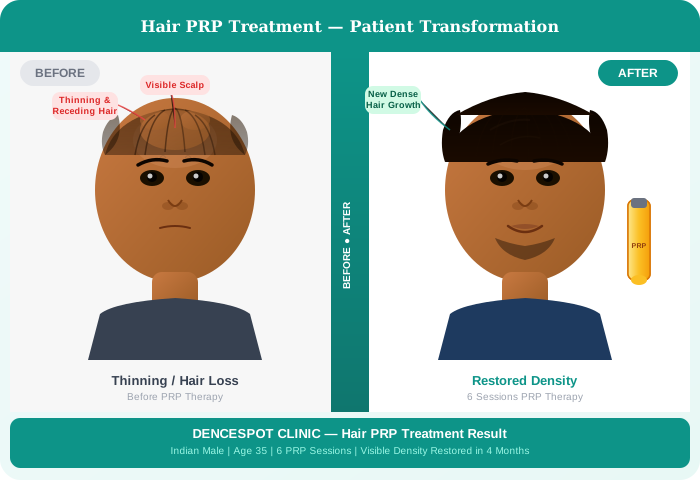
PRP hair treatment is a non-surgical, clinically proven procedure in which a concentrated portion of your own blood -- rich in platelets and growth factors -- is injected into the scalp to activate dormant hair follicles, reduce hair fall, and stimulate natural hair regrowth. It is one of the most effective treatments available today for early to moderate hair loss in both men and women.
If you have been searching for a safe, minimally invasive way to address thinning hair without going under the knife, PRP (Platelet-Rich Plasma) therapy deserves a serious look. Backed by over a decade of clinical research and widely used at leading hair clinics across India, PRP has helped thousands of patients regain thicker, healthier hair. In this comprehensive guide, we cover everything you need to know -- from the science behind PRP to the procedure itself, expected results, costs, and how it compares with other popular hair loss treatments.
What Does PRP Hair Treatment Involve?
PRP stands for Platelet-Rich Plasma. Platelets are tiny blood cells that play a crucial role in healing and tissue regeneration. When concentrated and injected into the scalp, they release powerful growth factors that wake up weakened or dormant hair follicles and push them back into the active growth phase (anagen phase).
The treatment uses your own blood, which means there is virtually no risk of allergic reactions or rejection. A small sample of blood is drawn, processed in a centrifuge to separate the platelet-rich layer, and then carefully injected into the areas of the scalp experiencing hair thinning or loss. The entire session takes about 45-60 minutes and requires no downtime, so you can return to your daily routine immediately.
The Science Behind PRP for Hair Growth
Understanding why PRP works requires a basic understanding of how hair grows. Each hair on your scalp goes through a cycle of growth (anagen), regression (catagen), rest (telogen), and shedding (exogen). In conditions like androgenetic alopecia, the growth phase becomes progressively shorter while the rest phase lengthens, causing follicles to produce thinner, shorter hairs until they eventually stop producing visible hair altogether.
PRP intervenes in this process by delivering a concentrated dose of growth factors directly to the follicle. Key growth factors in PRP include:
- PDGF (Platelet-Derived Growth Factor): Stimulates cell replication and blood vessel formation around the follicle
- TGF-beta (Transforming Growth Factor): Promotes tissue repair and new collagen formation in the scalp
- VEGF (Vascular Endothelial Growth Factor): Improves blood supply to the follicle, delivering more oxygen and nutrients
- EGF (Epidermal Growth Factor): Stimulates cell growth and differentiation, encouraging follicles to re-enter the anagen phase
- FGF (Fibroblast Growth Factor): Supports the dermal papilla cells at the base of the follicle, which are essential for hair production
Research published in the Journal of Cutaneous and Aesthetic Surgery and the International Journal of Trichology has shown that PRP significantly increases hair count, hair thickness, and the proportion of follicles in the active growth phase. A 2019 meta-analysis of 11 randomized controlled trials confirmed that PRP therapy leads to statistically significant improvement in hair density compared to placebo.
PRP Hair Treatment Procedure: Step by Step
Here is exactly what happens during a professional PRP hair treatment session at a clinic like DenceSpot:
- Step 1 - Consultation and Scalp Assessment: Your dermatologist examines your scalp, evaluates the pattern and grade of hair loss, and determines whether you are a good candidate for PRP. A trichoscopy (digital scalp analysis) may be performed to assess follicle health.
- Step 2 - Blood Collection: A small sample of blood (typically 15-20 ml) is drawn from your arm, similar to a routine blood test. This is quick and nearly painless.
- Step 3 - Centrifugation: The blood sample is placed in a specialized centrifuge machine that spins at high speed for 10-15 minutes. This separates the blood into three layers: red blood cells at the bottom, a "buffy coat" of platelets and white blood cells in the middle, and platelet-poor plasma on top. The platelet-rich middle layer is carefully extracted.
- Step 4 - Activation (Optional): In some protocols, the PRP is activated with calcium chloride or thrombin to trigger the release of growth factors before injection. At DenceSpot, we use advanced preparation techniques to maximize growth factor concentration.
- Step 5 - Numbing the Scalp: A topical anaesthetic cream or nerve block is applied to the treatment area to minimize discomfort during injections.
- Step 6 - PRP Injections: Using a fine needle, the dermatologist injects the PRP into the scalp at multiple points across the thinning areas. Injections are placed at the level of the hair follicle root (about 1-2 mm deep) in a systematic grid pattern to ensure even coverage.
- Step 7 - Post-Treatment Care: The scalp is gently cleaned. You receive aftercare instructions and can leave the clinic immediately. Most patients experience mild redness or tenderness that fades within 24-48 hours.
Types of Hair Loss PRP Can Treat
PRP is not a one-size-fits-all solution, but it is effective for several types of hair loss:
Androgenetic Alopecia (Male and Female Pattern Hair Loss)
This is the most common type of hair loss and the condition where PRP has the strongest evidence base. PRP can slow down miniaturization of follicles caused by DHT (dihydrotestosterone) and stimulate regrowth in thinning areas. It works best in early to moderate stages (Norwood 2-4 in men, Ludwig 1-2 in women). Learn more about controlling hair fall.
Telogen Effluvium
This temporary but distressing form of hair shedding -- often triggered by stress, illness, surgery, or nutritional deficiency -- responds well to PRP. The growth factors help push resting follicles back into the active phase more quickly than they would recover on their own.
Alopecia Areata
While PRP is not a first-line treatment for this autoimmune condition, studies have shown promising results when used alongside conventional therapies. PRP can help stimulate regrowth in patchy areas and may modulate the local immune response.
Thinning Hair Without a Clear Diagnosis
Many patients, especially women in their 30s and 40s, experience diffuse thinning without meeting the strict criteria for pattern baldness. PRP is particularly useful here because it improves overall scalp health, blood circulation, and follicle vitality. For more strategies, see our guide on how to increase hair density.
PRP Hair Treatment with Microneedling
One of the most effective ways to enhance PRP results is to combine it with microneedling. Microneedling (also called collagen induction therapy) uses tiny needles to create controlled micro-injuries on the scalp surface. This achieves two things:
- Enhanced Absorption: The micro-channels created by microneedling allow PRP to penetrate deeper into the scalp and reach the dermal papilla cells more effectively
- Additional Stimulation: The micro-injuries themselves trigger a wound-healing response that releases additional growth factors, compounding the effect of PRP
- Collagen Remodelling: Microneedling promotes collagen production around the follicle, creating a healthier environment for hair growth
A landmark 2013 study published in the International Journal of Trichology found that patients receiving microneedling plus minoxidil showed significantly better results than minoxidil alone. When PRP is added to the protocol, the results can be even more impressive. At DenceSpot, our combination protocol of PRP with microneedling has shown excellent outcomes for patients with early to moderate hair thinning.
Ready to Stop Hair Loss with PRP?
Get a personalized PRP treatment plan from our expert dermatologists at DenceSpot Clinic, Gurgaon. We use advanced PRP preparation techniques for maximum growth factor concentration and results.
Book Free ConsultationPRP After Hair Transplant
PRP plays a valuable role before and after hair transplant surgery. Here is why many leading transplant surgeons, including our team at DenceSpot, recommend PRP as part of the transplant journey:
- Before Transplant: PRP sessions can strengthen existing hair and improve scalp health, creating a better environment for transplanted grafts
- During Transplant: Some surgeons soak the grafts in PRP solution before implantation, which may improve graft survival rate
- After Transplant: PRP accelerates healing of the donor and recipient areas, reduces post-surgical inflammation, and can improve the growth rate and thickness of transplanted hairs
- Long-Term Maintenance: Regular PRP sessions after transplant help protect existing native hair from further thinning, ensuring the overall result looks natural for years to come
For a deeper understanding, read our article on what PRP is and how it works.
PRP Hair Treatment Results: Month-by-Month Timeline
Setting realistic expectations is critical. Here is what most patients experience at DenceSpot:
- Month 1 (After 1st-2nd Session): Reduced hair fall is the first noticeable change. Many patients report finding fewer hairs on their pillow and in the shower drain. The scalp may feel slightly tighter and healthier.
- Month 2-3 (After 3rd-4th Session): Fine baby hairs (vellus hairs) begin to appear in thinning areas. Existing hair starts to feel thicker and stronger. Scalp health visibly improves.
- Month 4-6 (Completing Initial Course): Noticeable improvement in hair density. Baby hairs grow longer and begin to mature into terminal (thick) hairs. Friends and family may start commenting on the difference.
- Month 6-9 (Maintenance Phase): Significant improvement in overall coverage and density. Hair quality improves with better texture, shine, and manageability.
- Month 9-12 (Long-Term Results): Maximum results from the initial treatment course become apparent. Periodic maintenance sessions help sustain and build upon the gains.
It is important to understand that PRP is not an overnight miracle. Patience and consistency with the treatment schedule are essential for optimal results.
How Many PRP Sessions Are Needed?
The number of sessions depends on the severity of hair loss, your age, and how your body responds to the treatment. Here is a general guideline:
- Initial Treatment Phase: 4-6 sessions, spaced 3-4 weeks apart
- Booster Phase: 2-3 sessions over the next 3 months
- Maintenance Phase: 1 session every 3-6 months to sustain results
Some patients with early-stage thinning may see excellent results with just 3-4 sessions, while those with more advanced hair loss may need the full course plus additional maintenance. Your dermatologist at DenceSpot will create a personalized protocol based on your trichoscopy results and treatment response.
PRP Hair Treatment Cost in India
One of the advantages of getting PRP treatment in India is that it is significantly more affordable than in Western countries while maintaining the same clinical standards. Here is a breakdown:
- Per Session Cost: Rs 3,000 to Rs 8,000 depending on the city and clinic
- Full Course (4-6 Sessions): Rs 15,000 to Rs 40,000
- Advanced PRP (A-PRP/GFC): Rs 6,000 to Rs 15,000 per session (uses advanced preparation methods for higher platelet concentration)
- PRP with Microneedling: Rs 5,000 to Rs 12,000 per session
At DenceSpot Clinic in Gurgaon, we offer competitive pricing with transparent billing and no hidden charges. The cost varies based on the treatment area, the PRP preparation method used, and whether combination therapy is recommended. We also offer package deals for the full treatment course.
Compared to the ongoing monthly cost of medications like minoxidil and finasteride over several years, or the one-time cost of a hair transplant (Rs 40,000 to Rs 2,00,000+), PRP offers a middle-ground option that is both effective and budget-friendly.
PRP vs Minoxidil vs Finasteride: How Do They Compare?
Each of these treatments works differently, and understanding their strengths helps you make an informed choice:
PRP Hair Treatment
- How it Works: Delivers growth factors directly to the follicle through injections
- Application: In-clinic procedure every 3-4 weeks initially
- Results Timeline: 3-6 months for visible improvement
- Side Effects: Minimal (mild scalp soreness for 1-2 days)
- Best For: Early to moderate hair loss in both men and women
Minoxidil (Topical)
- How it Works: Vasodilator that increases blood flow to the scalp and extends the growth phase
- Application: Applied twice daily to the scalp at home
- Results Timeline: 4-6 months of daily use
- Side Effects: Scalp irritation, unwanted facial hair growth, initial shedding phase
- Best For: Vertex thinning, diffuse hair loss
Finasteride (Oral)
- How it Works: Blocks the enzyme 5-alpha-reductase, reducing DHT levels that cause follicle miniaturization
- Application: Daily oral tablet (prescription only)
- Results Timeline: 6-12 months of consistent use
- Side Effects: Potential sexual side effects (reduced libido, erectile issues in 1-2% of men), not suitable for women of childbearing age
- Best For: Male pattern baldness (androgenetic alopecia)
Many dermatologists recommend a combination approach. For example, PRP combined with minoxidil and low-level laser therapy can produce results that are significantly better than any single treatment used alone.
Who Should Avoid PRP Hair Treatment?
While PRP is safe for most people, certain individuals should avoid or postpone the treatment:
- Active Scalp Infections: Any bacterial, fungal, or viral infection on the scalp must be treated first
- Blood Disorders: Conditions like thrombocytopenia (low platelet count), platelet dysfunction syndrome, or haemodynamic instability
- Cancer or Chemotherapy: Active cancer patients or those on chemotherapy should not undergo PRP
- Chronic Liver Disease: Liver conditions can affect platelet function and PRP quality
- Anticoagulant Medications: Blood thinners like warfarin or heparin can affect both the treatment and results
- Pregnancy and Breastfeeding: PRP is generally avoided during pregnancy and lactation as a precaution
- Autoimmune Conditions: Certain autoimmune diseases may need careful evaluation before PRP
- Unrealistic Expectations: PRP cannot restore a completely bald scalp. If follicles are permanently destroyed, a hair transplant is the better option
PRP Hair Treatment Before and After: What to Expect
Before you begin PRP treatment, here is what you should prepare for and anticipate:
Before Your First Session
- Stop blood-thinning supplements (fish oil, vitamin E, aspirin) at least 5-7 days before the procedure, as advised by your doctor
- Avoid smoking and alcohol for at least 3 days before treatment, as these can affect platelet quality
- Eat a nutritious meal and stay well-hydrated on the day of treatment
- Wash your hair with a gentle shampoo before arriving at the clinic
After Your Session
- Avoid washing your hair for at least 6-8 hours post-treatment
- Do not apply any chemical products, hair dye, or harsh styling products for 48 hours
- Avoid intense exercise, saunas, or steam rooms for 24-48 hours
- Mild redness, swelling, or tenderness at injection sites is normal and resolves quickly
- You can resume normal daily activities, including work, immediately after the session
Tips to Maximize Your PRP Hair Treatment Results
Getting PRP is just one part of the equation. Here is how to ensure you get the best possible outcome from your treatment:
- Follow the Full Treatment Schedule: Skipping sessions or extending gaps between them reduces the cumulative effect. Consistency is key.
- Maintain a Nutrient-Rich Diet: Hair needs protein, iron, zinc, biotin, and vitamins A, D, and E to grow. Include eggs, leafy greens, nuts, fish, and lentils in your daily diet.
- Stay Hydrated: Proper hydration supports blood quality and platelet function, which directly affects PRP quality.
- Manage Stress: Chronic stress is a major trigger for hair loss. Practice stress management through exercise, meditation, or yoga.
- Avoid Smoking: Smoking reduces blood flow to the scalp and damages follicle health. Quitting will amplify your PRP results.
- Use Recommended Products: Your dermatologist may prescribe supportive products like a gentle shampoo, minoxidil, or supplements to complement the PRP.
- Protect Your Scalp: Avoid excessive heat styling, tight hairstyles, and harsh chemical treatments that stress the hair.
- Consider Combination Therapy: Ask your dermatologist about adding microneedling or LED light therapy to your PRP plan for enhanced results.
- Be Patient: Hair grows slowly, at roughly 1 cm per month. Give the treatment at least 4-6 months before evaluating results.
Start Your PRP Hair Treatment at DenceSpot
Our experienced dermatologists use advanced PRP preparation techniques to deliver superior growth factor concentration. Get a detailed scalp analysis and customized treatment plan at our Gurgaon clinic.
Book Free ConsultationThe Bottom Line
PRP hair treatment is a scientifically backed, minimally invasive procedure that harnesses your body's own healing mechanisms to fight hair loss and promote regrowth. It is safe, effective for a wide range of hair loss conditions, and offers a practical middle ground between daily medications and surgical hair transplant. Whether you are experiencing early thinning or looking to maintain results after a transplant, PRP can be a powerful addition to your hair restoration strategy.
The key to success with PRP lies in choosing an experienced clinic, following the recommended treatment schedule, and supporting the process with healthy lifestyle habits. At DenceSpot Clinic in Gurgaon, we combine PRP with advanced diagnostic tools and complementary therapies to deliver the best possible results for every patient.
If you are dealing with hair loss and want to explore whether PRP is right for you, book a free consultation with our team today.
Frequently Asked Questions
What is PRP hair treatment?
PRP (Platelet-Rich Plasma) hair treatment is a non-surgical procedure where a concentrated portion of your own blood, rich in growth factors, is injected into the scalp to stimulate dormant hair follicles and promote natural hair regrowth.
How many PRP sessions are needed for hair regrowth?
Most patients need 4-6 initial sessions spaced 3-4 weeks apart, followed by maintenance sessions every 3-6 months. Your dermatologist will customize the plan based on the severity of your hair loss.
Is PRP hair treatment painful?
PRP involves minimal discomfort. A topical numbing cream is applied to the scalp before injections, so most patients describe the sensation as mild pressure or tiny pinpricks. There is no downtime after the procedure.
How much does PRP hair treatment cost in India?
PRP hair treatment in India typically costs between Rs 3,000 and Rs 8,000 per session depending on the city, clinic reputation, and whether advanced techniques like A-PRP or GFC are used. A full course of 4-6 sessions may range from Rs 15,000 to Rs 40,000.
When will I see results from PRP hair treatment?
Most patients notice reduced hair fall within 4-6 weeks. Visible new hair growth usually becomes apparent by 3-4 months, with significant improvement in density and thickness by 6-9 months after starting the treatment.
Can PRP regrow hair on a completely bald scalp?
PRP works best on areas where hair follicles are still present but dormant or miniaturized. It cannot regrow hair on completely bald areas where follicles have been permanently destroyed. In such cases, a hair transplant combined with PRP gives the best results.
Are there any side effects of PRP hair treatment?
Since PRP uses your own blood, the risk of allergic reactions is virtually zero. Minor side effects include temporary scalp tenderness, mild swelling, or redness at the injection sites, which typically resolves within 24-48 hours.
Can PRP be combined with other hair loss treatments?
Yes, PRP works excellently when combined with microneedling, minoxidil, low-level laser therapy, or as a post-hair transplant recovery booster. Combination therapy often delivers faster and more significant results than any single treatment alone.