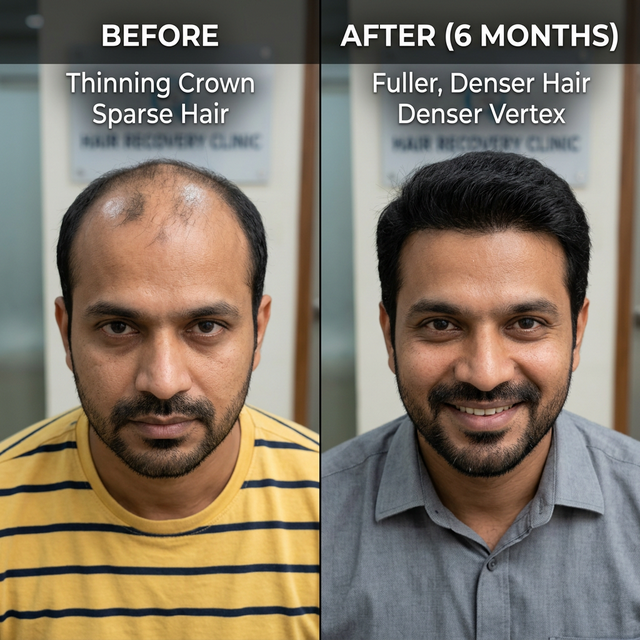
PRP for hair loss is a non-surgical treatment that uses concentrated platelets from your own blood to reactivate weakened hair follicles, reduce hair fall, and stimulate new hair growth. It is one of the most scientifically backed regenerative therapies available today for both men and women experiencing thinning hair.
If you have been noticing your hairline receding, your parting getting wider, or more hair strands on your pillow every morning, you are not alone. Hair loss affects millions of Indians, and the search for an effective, safe solution often leads people to PRP therapy. In this comprehensive guide, we explain everything you need to know about PRP for hair loss, from the science behind it to the number of sessions you need and what results you can realistically expect.
Understanding Hair Loss: Why Does It Happen?
Before understanding how PRP works, it is important to understand why hair falls in the first place. Hair loss is not a single condition. It has many types, each with different causes and patterns.
Androgenetic Alopecia (Pattern Baldness)
This is the most common type of hair loss in both men and women. In men, it follows the Norwood scale pattern, starting with a receding hairline and thinning at the crown. In women, it causes diffuse thinning across the top of the scalp. The root cause is a hormone called DHT (dihydrotestosterone), which gradually shrinks hair follicles until they stop producing visible hair. Genetic sensitivity to DHT determines how early and how severely this happens.
Telogen Effluvium
This type of hair loss is triggered by stress, illness, surgery, crash dieting, nutritional deficiencies, or hormonal changes like pregnancy and thyroid disorders. A large number of hair follicles suddenly shift from the growth phase (anagen) to the resting phase (telogen), resulting in rapid, diffuse shedding. The good news is that telogen effluvium is usually temporary, and PRP can speed up the recovery process significantly.
Alopecia Areata
This is an autoimmune condition where the body's immune system mistakenly attacks hair follicles, causing patchy bald spots. While PRP is not the primary treatment for severe alopecia areata, studies show it can help in mild to moderate cases by reducing inflammation and stimulating regrowth in affected patches.
Understanding your specific type of hair loss is the first step toward choosing the right treatment. At DenceSpot Clinic, we conduct a thorough scalp analysis and blood work before recommending any treatment plan. If you want a detailed understanding of how to control hair fall, we have written a complete guide on that as well.
How PRP Fights Hair Loss: The Science
PRP stands for Platelet-Rich Plasma. Platelets are the tiny cells in your blood that are responsible for clotting and healing. But beyond clotting, platelets contain powerful proteins called growth factors. These growth factors play a critical role in tissue repair and regeneration throughout the body.
When concentrated PRP is injected into the scalp, it delivers a high dose of these growth factors directly to weakened hair follicles. Here is what happens at the cellular level:
- PDGF (Platelet-Derived Growth Factor): Stimulates cell growth and new blood vessel formation around follicles, improving nutrient supply to the hair root.
- VEGF (Vascular Endothelial Growth Factor): Creates new blood vessels (angiogenesis) around the follicle, increasing oxygen and nutrient delivery to dormant hair roots.
- TGF-beta (Transforming Growth Factor): Regulates the hair growth cycle and promotes the transition of follicles from the resting phase back to the active growth phase.
- EGF (Epidermal Growth Factor): Stimulates the proliferation of dermal papilla cells, which are the stem cells responsible for hair production.
- FGF (Fibroblast Growth Factor): Promotes tissue repair and extends the duration of the active growth phase (anagen), allowing each hair to grow longer and thicker.
In simple terms, PRP acts like a concentrated dose of fertilizer for your hair follicles. It wakes up sleeping follicles, strengthens miniaturized hairs, extends the growth phase, and improves the overall quality and thickness of existing hair. This is why PRP is considered one of the most effective non-surgical approaches for stopping hair loss and regrowing hair.
Clinical Evidence Supporting PRP for Hair Loss
PRP is not a marketing gimmick. It is backed by a growing body of clinical research published in peer-reviewed dermatology journals.
- 2014 Study (Journal of Cutaneous and Aesthetic Surgery): Researchers found that PRP-treated areas showed a significant increase in hair count and hair thickness compared to untreated areas after 3 months of treatment.
- 2015 Randomized Controlled Trial (Dermatologic Surgery): This study demonstrated that PRP injections led to a statistically significant increase in mean hair count, total hair density, and terminal hair density in patients with androgenetic alopecia.
- 2017 Meta-Analysis (International Journal of Dermatology): A comprehensive review of multiple studies concluded that PRP therapy leads to statistically significant improvements in hair density and hair diameter in patients with pattern hair loss.
- 2019 Study (Stem Cells Translational Medicine): This research showed that PRP activates Wnt signaling pathways in dermal papilla cells, which is a key molecular pathway for hair follicle development and cycling.
- 2021 Systematic Review (Journal of Cosmetic Dermatology): Confirmed that PRP is a safe and effective treatment for androgenetic alopecia, with the double-spin preparation method yielding the best results due to higher platelet concentration.
While individual results vary, the evidence consistently shows that PRP can increase hair count by 20 to 30 percent and improve hair thickness by 15 to 25 percent in responsive patients.
PRP for Male Pattern Baldness
Male pattern baldness (androgenetic alopecia) is the most common reason men seek PRP treatment. The effectiveness of PRP depends largely on the stage of hair loss, measured using the Norwood scale:
- Norwood 2-3 (Early Stage): This is the ideal stage for PRP. The hairline is beginning to recede and there is mild thinning at the crown. Follicles are still alive but miniaturized. PRP can reverse much of the thinning at this stage, and results are often dramatic.
- Norwood 3-4 (Moderate Stage): Noticeable recession and crown thinning. PRP can still produce good results by thickening existing miniaturized hairs and slowing further progression. Combining PRP with minoxidil or microneedling enhances results at this stage.
- Norwood 5-6 (Advanced Stage): Significant baldness with large areas of smooth, shiny scalp. PRP alone may not produce satisfactory results because many follicles have permanently died. A hair transplant is often the better option at this stage, with PRP used as a supportive treatment post-transplant.
- Norwood 7 (Severe Stage): Extensive baldness with only a horseshoe-shaped ring of hair remaining. PRP is not effective for the bald areas. Hair transplant surgery is the primary treatment option.
The key message is this: the earlier you start PRP, the better the results. If you are noticing early signs of thinning, do not wait until the hair loss becomes advanced. Visit a qualified dermatologist for assessment.
PRP for Female Hair Loss
Women often respond exceptionally well to PRP therapy. Female pattern hair loss is different from male pattern baldness. Instead of a receding hairline, women typically experience diffuse thinning across the entire top of the scalp, with the frontal hairline usually preserved.
PRP is particularly effective for female hair loss because:
- Women rarely experience complete follicle death: The follicles become miniaturized but remain alive, making them highly responsive to PRP growth factors.
- Hormonal hair loss after pregnancy or menopause: PRP helps rebalance the hair growth cycle disrupted by hormonal changes, speeding recovery from postpartum shedding and menopausal thinning.
- Telogen effluvium recovery: Many women experience stress-related or nutritional-deficiency-related hair shedding. PRP accelerates the transition of follicles from the resting phase back to the growth phase.
- Fewer treatment options: Unlike men who can use finasteride, women have limited medical options for hair loss. PRP provides a safe, effective alternative without hormonal side effects.
Women undergoing PRP typically see noticeable improvement in hair density and reduced shedding within 3 to 4 months of starting treatment. For a comprehensive approach to managing hair fall, read our guide on hair fall and hair loss prevention.
Concerned About Hair Loss? Get Expert Help Today
Do not wait until hair loss becomes advanced. Our dermatologists at DenceSpot Clinic will assess your scalp, identify the root cause, and create a personalized PRP treatment plan tailored to your hair loss pattern.
Book Free ConsultationThe PRP for Hair Loss Procedure: Step by Step
Understanding the procedure helps set realistic expectations and reduces anxiety before your first session. Here is exactly what happens during a PRP hair treatment session:
Step 1: Blood Collection (5 Minutes)
A small amount of blood (typically 15 to 20 ml) is drawn from your arm, just like a routine blood test. This is the only part of the procedure that involves a needle in a non-scalp area.
Step 2: Centrifugation and Preparation (15 Minutes)
The blood sample is placed in a specialized centrifuge machine that spins at high speed to separate the blood into three layers: red blood cells at the bottom, platelet-poor plasma at the top, and the golden PRP layer in the middle. At DenceSpot, we use the double-spin method, which yields a platelet concentration 5 to 7 times higher than baseline blood, ensuring maximum growth factor delivery.
Step 3: Scalp Preparation (5 Minutes)
The scalp is cleaned with an antiseptic solution. A topical numbing cream is applied to the treatment area and left on for about 15 to 20 minutes to minimize discomfort during injections.
Step 4: PRP Injection (20 to 30 Minutes)
Using a fine needle, the concentrated PRP is injected into the scalp at the level of the hair follicles. Injections are placed approximately 1 cm apart across the thinning areas. Most patients describe the sensation as mild pressure or tiny pinpricks. The numbing cream ensures the procedure is well-tolerated.
Step 5: Post-Treatment Care
There is no downtime. You can return to your daily activities immediately. We advise patients to avoid washing hair for 24 hours, avoid heavy exercise for 48 hours, and refrain from applying any hair products or oils for 24 hours after the procedure.
PRP Combined Treatments for Better Results
While PRP alone is effective, combining it with other treatments can significantly enhance results, especially for moderate to advanced hair loss. Here are the most effective combination approaches:
Microneedling + PRP
Microneedling for hair creates thousands of micro-channels in the scalp using fine needles. When performed immediately before PRP injection, these channels allow the growth factors to penetrate deeper and more uniformly into the dermal papilla layer. Studies show that microneedling combined with PRP can improve hair count by up to 40 percent, which is significantly higher than either treatment alone. This combination also activates the Wnt signaling pathway and stimulates stem cell activity in the follicle bulge region.
PRP + Minoxidil
Minoxidil is a topical medication that improves blood flow to hair follicles. When used between PRP sessions, it helps maintain the vascular improvements initiated by PRP growth factors. Starting minoxidil 48 hours after a PRP session and continuing daily use between sessions creates a synergistic effect where both treatments complement each other. Many dermatologists consider this the gold standard non-surgical protocol for pattern hair loss.
PRP After Hair Transplant
PRP plays a valuable role after hair transplant surgery. When administered during or shortly after a transplant, PRP improves the survival rate of transplanted grafts, reduces healing time, strengthens existing native hair in non-transplanted areas, and promotes faster growth of transplanted follicles. Most hair transplant surgeons now recommend PRP as a standard part of the post-transplant care protocol.
PRP + LED Therapy
Low-level LED light therapy uses specific wavelengths of red light to stimulate cellular energy production in hair follicles. When combined with PRP, LED therapy enhances the metabolic activity of follicles already activated by growth factors, leading to thicker and stronger hair growth.
Expected Results for Different Hair Loss Stages
Setting realistic expectations is crucial for patient satisfaction. Here is what you can expect from PRP based on your current hair loss stage:
- Mild Thinning (Norwood 2 / Ludwig 1): Excellent response. Expect 25 to 35 percent improvement in hair density. Hair fall reduction typically noticed within 4 to 6 weeks. Visible thickening within 3 months.
- Moderate Thinning (Norwood 3-4 / Ludwig 2): Good response. Expect 15 to 25 percent improvement in density. Best results when combined with microneedling or minoxidil. Visible improvements within 4 to 6 months.
- Advanced Thinning (Norwood 5 / Ludwig 3): Moderate response. PRP alone may produce only 10 to 15 percent improvement. Should be combined with other treatments. Hair transplant may be needed for bald areas.
- Severe Baldness (Norwood 6-7): Limited response in completely bald areas. PRP is primarily useful for maintaining remaining hair and supporting transplanted grafts. Hair transplant is the primary treatment.
How Many PRP Sessions Do You Need for Hair Loss?
The number of sessions depends on the severity of your hair loss and your treatment goals. Here is a general framework:
Initial Treatment Phase
Most patients require 4 to 6 sessions during the initial phase, spaced 3 to 4 weeks apart. This intensive loading phase delivers a high concentration of growth factors to the scalp repeatedly, ensuring that dormant follicles receive consistent stimulation. By the end of this phase, most patients notice a significant reduction in hair fall and the beginning of new hair growth.
Maintenance Sessions
After the initial phase, maintenance sessions are essential to sustain results. We recommend one session every 4 to 6 months. Hair loss is a progressive condition, and without maintenance, the benefits of PRP will gradually diminish over 6 to 12 months. Think of it like going to the gym: you need to keep exercising to maintain your fitness.
Long-Term Protocol
For optimal long-term results, most patients at DenceSpot follow this schedule: 4 to 6 initial sessions over 4 to 6 months, followed by one booster session every 4 months during the first year, and then one session every 6 months in subsequent years. This protocol provides sustained improvement and prevents further progression of hair loss.
PRP for Hair Loss Cost in India
The cost of PRP for hair loss in India varies based on several factors:
- Per Session Cost: Rs 3,000 to Rs 8,000 per session is the typical range across India. In metro cities like Delhi, Gurgaon, and Mumbai, the average cost is Rs 4,000 to Rs 7,000 per session.
- Preparation Method: The double-spin method, which yields higher platelet concentration, may cost slightly more than the single-spin method but produces significantly better results.
- Total Treatment Cost: For a complete initial course of 4 to 6 sessions, expect a total investment of Rs 16,000 to Rs 42,000. Annual maintenance (2 to 3 sessions) adds Rs 8,000 to Rs 21,000 per year.
- Combination Treatments: If combining PRP with microneedling or LED therapy, the per-session cost may increase by Rs 1,000 to Rs 3,000.
At DenceSpot Clinic in Gurgaon, we offer transparent pricing with no hidden charges. We also provide package deals for the full treatment course that make PRP more affordable. Contact us for current pricing and offers.
When PRP May Not Work for Hair Loss
While PRP is effective for many people, it is important to understand its limitations. PRP may not produce satisfactory results in the following situations:
- Complete Baldness: If hair follicles have completely died and the scalp is smooth and shiny, PRP cannot create new follicles. It can only revive dormant or miniaturized ones.
- Scarring Alopecia: Conditions like lichen planopilaris or frontal fibrosing alopecia destroy follicles permanently through scarring. PRP cannot regenerate scarred follicles.
- Severe Autoimmune Conditions: While mild alopecia areata may respond to PRP, severe or rapidly progressing autoimmune hair loss often requires immunosuppressive treatment first.
- Active Scalp Infections: Conditions like severe dandruff, fungal infections, or folliculitis must be treated before starting PRP to ensure proper response.
- Blood Disorders: Patients with platelet dysfunction, thrombocytopenia, or those on blood-thinning medications may not produce effective PRP.
- Unrealistic Expectations: PRP improves hair density and thickness significantly, but it will not give you the same hair density you had at age 18. Understanding realistic outcomes is essential for satisfaction.
Alternative Treatments If PRP Is Not Enough
If PRP alone does not meet your expectations, or if your hair loss is too advanced for PRP to be effective on its own, several alternative and complementary treatments are available:
- Hair Transplant Surgery: The gold standard for advanced hair loss. FUE and FUT techniques permanently relocate hair follicles from the donor area to bald or thinning regions. PRP is often used alongside transplants for better graft survival.
- Microneedling Therapy: Even without PRP, scalp microneedling stimulates collagen production and activates growth pathways. It is a cost-effective option that can be performed regularly.
- Low-Level LED Therapy: LED light therapy is a painless treatment that uses red and near-infrared light to stimulate follicle activity. It is ideal as a maintenance treatment between PRP sessions or for patients who prefer non-injection treatments.
- Medical Therapy: Minoxidil (topical) and finasteride (oral, for men) remain the FDA-approved first-line medications for pattern hair loss. They work well in combination with PRP.
- Nutritional Optimization: Sometimes hair loss is driven by iron deficiency, vitamin D deficiency, or thyroid imbalance. Correcting these through supplementation and diet changes can dramatically improve hair health. Our guide on how to stop hair loss and regrow hair naturally covers this in detail.
Ready to Start Your PRP Journey?
Every day you wait, more follicles weaken. Book a free scalp assessment at DenceSpot Clinic Gurgaon and find out if PRP is the right treatment for your hair loss. Our experts will create a customized treatment plan based on your unique hair loss pattern.
Book Free ConsultationFinal Thoughts
PRP for hair loss is one of the most researched, safest, and most effective non-surgical treatments available in modern dermatology. It uses your body's own healing power to fight hair loss from within, without chemicals, without surgery, and without significant side effects. Whether you are a man dealing with early pattern baldness or a woman experiencing diffuse thinning, PRP can make a meaningful difference in your hair density and confidence.
The key to success with PRP is starting early, completing the full treatment course, and maintaining results with periodic sessions. At DenceSpot Clinic in Gurgaon, our dermatologists have extensive experience in administering PRP with the advanced double-spin technique, ensuring you receive the highest concentration of growth factors for the best possible results.
If you are tired of watching your hair thin and want to take action, book a consultation today. The sooner you start, the more hair you can save.
Frequently Asked Questions
What is PRP for hair loss?
PRP (Platelet-Rich Plasma) for hair loss is a non-surgical treatment that uses concentrated growth factors from your own blood to stimulate dormant hair follicles, reduce hair fall, and promote new hair growth. It is one of the most effective treatments for early to moderate hair thinning.
How many PRP sessions are needed for hair loss?
Most patients need 4 to 6 initial PRP sessions spaced 3 to 4 weeks apart. After the initial course, maintenance sessions every 4 to 6 months are recommended to sustain results and keep follicles active.
Does PRP work for male pattern baldness?
Yes, PRP works well for early to moderate male pattern baldness, specifically Norwood stages 2 to 4. It helps thicken miniaturized hairs and slows further progression. For advanced baldness with completely smooth scalp, PRP alone may not be sufficient.
Is PRP effective for female hair loss?
PRP is highly effective for female pattern hair loss and diffuse thinning. Women often respond better than men because their hair loss tends to involve miniaturization rather than complete follicle loss. Results include reduced shedding and visible thickening within 3 to 4 months.
What is the cost of PRP for hair loss in India?
PRP for hair loss costs between Rs 3,000 to Rs 8,000 per session in India, depending on the city, clinic, and preparation method used. At DenceSpot Clinic in Gurgaon, we offer competitive pricing with advanced double-spin PRP preparation for maximum growth factor concentration.
Are PRP results permanent for hair loss?
PRP results are long-lasting but not permanent because hair loss is a progressive condition. Regular maintenance sessions every 4 to 6 months help sustain results. Combining PRP with minoxidil or microneedling can extend the benefits significantly.
Does PRP for hair loss have any side effects?
PRP has minimal side effects since it uses your own blood. Common temporary effects include mild scalp soreness, slight swelling at injection sites, and occasional bruising. These resolve within 24 to 48 hours. There is no risk of allergic reaction or rejection.
When should I expect results from PRP for hair loss?
Most patients notice reduced hair fall within 4 to 6 weeks of starting PRP. Visible new hair growth and thickening typically appear after 3 to 4 months. Full results are usually seen after completing the initial course of 4 to 6 sessions.