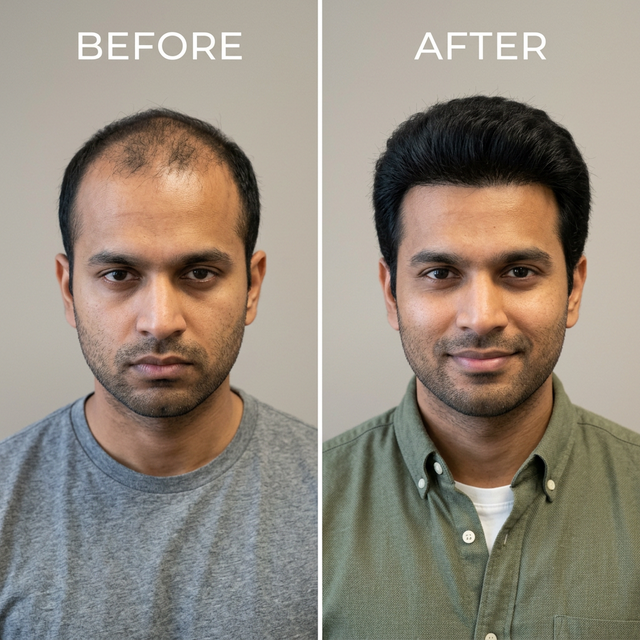
At DenceSpot Clinic, How Prp Works For Hair is a very common point of discussion. PRP works for hair growth by delivering a concentrated dose of your own platelet-derived growth factors directly into the scalp, where they activate dormant follicles, stimulate new blood vessel formation, and extend the hair growth phase — resulting in thicker, stronger, and more abundant hair over time.
When exploring How Prp Works For Hair, it is crucial to understand all the facts. If you have been researching hair loss treatments, you have likely come across PRP (Platelet-Rich Plasma) therapy. But how does PRP actually work for hair? Is there real science behind it, or is it just another trend? In this article, we break down the biological mechanisms, the clinical evidence, and the specific ways PRP interacts with your hair follicles to promote regrowth.
Understanding the Hair Growth Cycle First
To understand how PRP works for hair, you first need to understand how hair grows. Every hair on your scalp follows a cycle with four distinct phases:
Many patients ask us about How Prp Works For Hair during their consultations. Anagen (Growth Phase) — 2 to 7 years: This is when the hair actively grows. The follicle is deeply rooted, well-nourished, and producing a thick, pigmented hair shaft. About 85-90% of the hair on your scalp is in this phase at any given time.
Many patients ask us about How Prp Works For Hair during their consultations. Catagen (Regression Phase) — 2 to 3 weeks: The follicle shrinks, detaches from the blood supply, and the hair stops growing. This is a transitional phase.
Telogen (Resting Phase) — 3 to 4 months: The hair remains in the follicle but is no longer growing. The follicle is dormant. About 10-15% of your hair is in this phase at any time.
Exogen (Shedding Phase): The old hair falls out and the follicle begins a new anagen phase, starting the cycle again.
In conditions like androgenetic alopecia (pattern baldness), the anagen phase becomes progressively shorter while the telogen phase lengthens. Follicles produce thinner, shorter hairs with each cycle until they eventually become so miniaturized that they stop producing visible hair altogether. This is called follicle miniaturization — and it is exactly what PRP targets.
How PRP Intervenes in Hair Loss
PRP therapy works by delivering a concentrated payload of growth factors directly to the base of your hair follicles. These growth factors trigger multiple biological responses that collectively reverse miniaturization and stimulate regrowth. Here is what happens:
1. Growth Factor Release — The Core Mechanism
Platelets are tiny blood cells primarily known for their role in clotting. But they also carry over 30 bioactive proteins called growth factors that are essential for tissue repair and regeneration. When concentrated PRP is injected into the scalp, these platelets degranulate (break open) and release their growth factors directly into the follicular environment.
The key growth factors involved in hair regrowth include:
- PDGF (Platelet-Derived Growth Factor): Stimulates cell replication in the dermal papilla — the control centre of the hair follicle. PDGF also promotes the formation of new blood vessels (angiogenesis) around the follicle, improving nutrient delivery
- VEGF (Vascular Endothelial Growth Factor): The primary driver of new blood vessel formation. VEGF creates a denser capillary network around follicles, ensuring they receive more oxygen, nutrients, and hormonal signals needed for growth
- TGF-beta (Transforming Growth Factor): Promotes tissue repair and collagen formation in the scalp. TGF-beta helps remodel the extracellular matrix around follicles, creating a healthier environment for hair production
- EGF (Epidermal Growth Factor): Stimulates cell growth and differentiation. EGF specifically acts on keratinocytes — the cells that make up the hair shaft — encouraging follicles to re-enter the anagen phase
- FGF (Fibroblast Growth Factor): Supports the fibroblast cells in the dermal papilla, which are essential for signalling the follicle to produce hair. FGF also helps maintain follicle size and prevents further miniaturization
- IGF-1 (Insulin-like Growth Factor): Plays a critical role in regulating the hair growth cycle and maintaining the anagen phase for a longer duration
2. Angiogenesis — Building New Blood Supply
One of the most important effects of PRP is the creation of new blood vessels around hair follicles. Hair follicles are among the most metabolically active structures in the human body — they need a constant supply of oxygen, amino acids, vitamins, and minerals to produce hair.
In hair loss conditions, the blood supply to follicles gradually deteriorates. The capillary network thins, and follicles become starved. VEGF and PDGF in PRP stimulate the formation of new capillaries, effectively rebuilding the blood supply infrastructure around each treated follicle. This is why patients often notice their existing hair becoming healthier and shinier even before new growth appears — the improved blood flow benefits all follicles in the treated area.
3. Stem Cell Activation in the Follicle Bulge
Each hair follicle contains a reservoir of stem cells in a region called the bulge. These stem cells are responsible for regenerating the follicle with each new growth cycle. In hair loss conditions, these stem cells can become quiescent (inactive).
PRP growth factors activate these dormant stem cells, stimulating them to proliferate and differentiate into the cells needed to rebuild the follicle. This is a key reason why PRP can reactivate follicles that have stopped producing visible hair — the stem cells are still there, they just need the right signals to wake up.
4. Anti-Inflammatory Effect
Chronic low-grade inflammation around hair follicles (perifollicular inflammation) is increasingly recognized as a contributing factor in hair loss. PRP contains anti-inflammatory cytokines and growth factors that help reduce this inflammation, creating a calmer, healthier environment for hair growth.
This anti-inflammatory effect is particularly beneficial for patients with scalp conditions like dandruff or seborrheic dermatitis that contribute to inflammation-related hair fall.
5. Extension of the Anagen Phase
PRP growth factors signal the dermal papilla cells to keep the follicle in the active growth phase for longer. This means each hair grows for a longer period before entering the resting phase, resulting in longer, thicker hair shafts. Over multiple treatment cycles, the cumulative effect is a noticeable increase in overall hair density and coverage.
Want PRP to Work for Your Hair?
At DenceSpot Clinic, we use advanced PRP preparation techniques that maximize growth factor concentration — giving your follicles the strongest possible stimulation. Book a free consultation for a personalized assessment.
Book Free ConsultationClinical Evidence: Does PRP Actually Work for Hair?
PRP for hair is not just theoretical — it is backed by a growing body of clinical research:
2019 Meta-Analysis (Dermatologic Surgery): A review of 11 randomized controlled trials involving over 600 patients found that PRP treatment led to statistically significant increases in hair density and hair count compared to placebo. The analysis concluded that PRP is an effective treatment for androgenetic alopecia.
2014 Study (British Journal of Dermatology): Researchers found that PRP-treated scalp areas showed a 33.6% increase in the number of hairs compared to the control side after three sessions. Hair diameter also increased significantly.
2015 Italian Study (Stem Cells Translational Medicine): A controlled study demonstrated that PRP-treated areas had significantly higher hair density, hair diameter, and terminal hair ratio at 6 and 12 months compared to untreated areas.
2017 Indian Study (Journal of Cutaneous and Aesthetic Surgery): Researchers in India found that PRP treatment resulted in a statistically significant increase in mean hair count per cm² — from 71.1 at baseline to 93.2 at 12 weeks, representing a 31% improvement.
Which Types of Hair Loss Does PRP Work Best For?
Androgenetic Alopecia (Pattern Baldness)
This is where PRP has the strongest evidence. In pattern baldness, follicles miniaturize due to DHT (dihydrotestosterone) sensitivity. PRP growth factors counteract this miniaturization by stimulating the dermal papilla, improving blood supply, and extending the growth phase. PRP works best in early to moderate stages — Norwood 2-4 in men and Ludwig 1-2 in women. Learn more about controlling hair fall effectively.
Telogen Effluvium
This temporary but distressing form of diffuse shedding — often triggered by stress, illness, surgery, or nutritional deficiency — responds particularly well to PRP. The growth factors push a large number of resting follicles back into the active growth phase simultaneously, accelerating recovery.
Alopecia Areata
While not a first-line treatment for this autoimmune condition, PRP has shown promising results in clinical trials. The anti-inflammatory properties of PRP may help modulate the local immune response, while growth factors stimulate regrowth in patchy areas.
Post-Transplant Enhancement
PRP is increasingly used after hair transplant surgery to improve graft survival, accelerate healing, and enhance the growth of transplanted follicles. The improved blood supply created by PRP helps transplanted grafts establish themselves more quickly in their new location.
Factors That Affect How Well PRP Works for Your Hair
PRP does not work equally well for everyone. Several factors influence the outcome:
Stage of Hair Loss: Early to moderate hair loss responds significantly better than advanced baldness. If follicles are completely destroyed, PRP cannot regenerate them.
Platelet Quality: Your platelets' ability to deliver growth factors depends on your overall health. Smoking, poor nutrition, chronic illness, and certain medications can reduce platelet quality and PRP effectiveness. Smoking alone can reduce PRP results by 30-40%.
PRP Preparation Method: Double-spin centrifugation, advanced kits, and proper handling produce higher platelet concentrations and more growth factors per session. This is why clinic choice matters.
Treatment Consistency: PRP works through cumulative effect. Skipping sessions or taking long gaps between treatments reduces the overall impact. A full course of 4-6 initial sessions followed by regular maintenance is essential.
Age: Younger patients generally respond better because their follicles have undergone less damage and have more stem cell reserves. However, PRP can benefit patients across all age groups when follicles are still viable.
Underlying Cause: If hair loss is driven by an untreated medical condition (thyroid disorder, iron deficiency, hormonal imbalance), PRP results will be limited until the root cause is addressed. A proper diagnosis is essential before starting treatment.
PRP Combined with Other Treatments — Enhanced Results
PRP is powerful on its own, but combining it with complementary treatments can significantly amplify results:
PRP + Microneedling: Microneedling creates micro-channels in the scalp that allow PRP to penetrate deeper. The micro-injuries also trigger an additional wound-healing response with more growth factor release. Studies show this combination produces superior results compared to either treatment alone.
PRP + Minoxidil: Minoxidil improves blood flow to the scalp as a vasodilator. Combined with PRP's direct growth factor delivery, the two treatments work synergistically to stimulate follicles through different pathways.
PRP + LED Therapy: Low-level LED light therapy enhances cellular energy production (ATP) in follicle cells, providing the energy needed to respond to PRP growth factors more effectively.
PRP + Nutritional Support: Ensuring adequate levels of protein, iron, zinc, biotin, and vitamins D and B12 provides the raw materials follicles need to convert PRP stimulation into actual hair production. Read about essential vitamins for healthy hair.
Timeline: When Does PRP Start Working for Hair?
Patience is critical with PRP. Here is a realistic timeline:
Week 2-4 (After 1st Session): The biological response has begun at the cellular level, but no visible changes yet. Reduced hair fall may be the first sign.
Month 2-3 (After 2nd-3rd Session): Fine baby hairs (vellus hairs) may start appearing. Existing hair may feel slightly thicker and healthier. Hair fall continues to decrease.
Month 4-6 (After 4th-6th Session): Noticeable improvement in hair density. Baby hairs grow longer and begin maturing into terminal (thick) hairs. Friends and family may start noticing the difference.
Month 6-9 (Maintenance Phase): Significant improvement in coverage and density. Hair quality improves — better texture, shine, and strength.
Month 9-12: Maximum results from the initial treatment course. Periodic maintenance sessions sustain and build on the gains. For a detailed week-by-week breakdown, read our guide on how long PRP takes to work.
Start Your PRP Hair Growth Journey
At DenceSpot Clinic, we combine advanced PRP with complementary therapies for maximum hair regrowth. Get a free scalp analysis and personalized treatment plan from our expert dermatologists.
Book Free ConsultationFrequently Asked Questions
How does PRP stimulate hair growth?
PRP contains concentrated growth factors (PDGF, VEGF, EGF, TGF-beta, FGF) that activate dormant hair follicles, stimulate new blood vessel formation around follicles, extend the anagen (growth) phase of the hair cycle, and promote cell proliferation in the dermal papilla. This combination of effects leads to thicker, stronger hair regrowth.
How effective is PRP for hair growth?
Clinical studies show PRP increases hair density by 20-30% after a full treatment course. A 2019 meta-analysis of 11 randomized controlled trials confirmed statistically significant improvement in hair count and thickness compared to placebo. Results vary based on the stage of hair loss, with early to moderate cases responding best.
Can PRP regrow hair on a bald scalp?
PRP works best where hair follicles are still present but dormant or miniaturized. It cannot regrow hair in areas where follicles have been permanently destroyed. For completely bald areas, a hair transplant combined with PRP gives the best results.
How long does it take for PRP to show results on hair?
Most patients notice reduced hair fall within 4-6 weeks. Visible new hair growth typically appears by 3-4 months, with significant improvement in density and thickness by 6-9 months. Full results from the initial treatment course are usually seen by 9-12 months.
Does PRP work for female hair loss?
Yes, PRP is particularly effective for female pattern hair loss and diffuse thinning. Women often respond well to PRP because their hair loss is frequently caused by follicle miniaturization rather than complete follicle destruction, giving PRP viable follicles to stimulate.
Is PRP better than minoxidil for hair growth?
PRP and minoxidil work through different mechanisms and can complement each other. PRP delivers growth factors directly to follicles while minoxidil improves blood flow as a vasodilator. Studies suggest PRP may produce more significant improvements in hair density, but combining both often yields the best results.
Why does PRP not work for some people?
PRP may show limited results if hair loss is too advanced (follicles permanently destroyed), platelet quality is poor (due to smoking, poor nutrition, or certain medications), the treatment protocol is inadequate (too few sessions or low platelet concentration), or the underlying cause of hair loss is not addressed (e.g., thyroid issues, iron deficiency).
Does PRP increase hair thickness or just hair count?
PRP improves both. Growth factors stimulate miniaturized follicles to produce thicker terminal hairs (increasing thickness) and reactivate dormant follicles to produce new hairs (increasing count). Studies show measurable improvement in both hair diameter and density after PRP treatment.