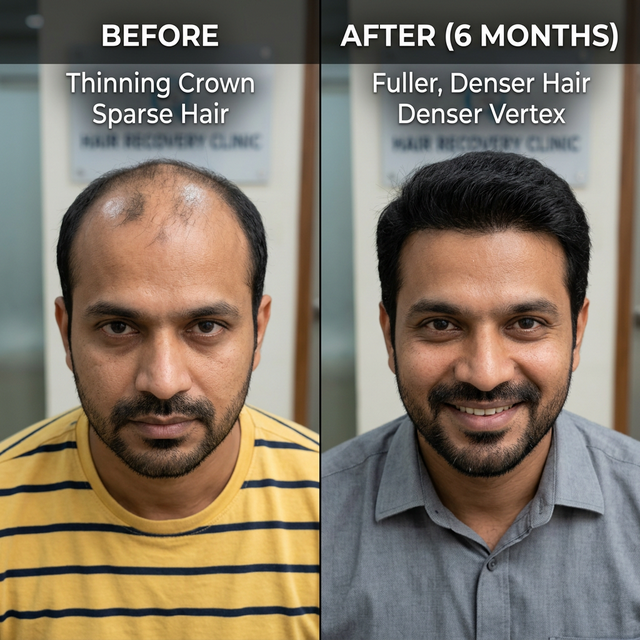
PRP (Platelet-Rich Plasma) hair treatment is one of the most effective non-surgical solutions for hair loss available today — but one of the most common questions patients ask is: how long does PRP hair treatment last? The honest answer is that results typically last 12 to 18 months with proper maintenance, though individual timelines vary based on several factors. In this guide, we break down the complete duration picture so you can plan your PRP hair treatment in Gurgaon with realistic expectations.
If you are considering PRP for hair loss or have already started your treatment journey, understanding how long the results will last is essential for budgeting, planning maintenance sessions, and setting realistic goals. Unlike a one-time surgical procedure, PRP works by harnessing your body's own regenerative capacity — and like most biological treatments, its effects require periodic reinforcement.
In this comprehensive guide, we cover everything you need to know about PRP hair treatment duration — from the initial treatment timeline and peak results window to the factors that influence longevity and practical strategies to make your results last as long as possible.
Understanding PRP Hair Treatment Duration
Before we discuss how long PRP lasts, it helps to understand what PRP actually does at the follicular level. PRP (Platelet-Rich Plasma) is a concentration of your own blood platelets that contains powerful growth factors including PDGF, VEGF, TGF-beta, and EGF. When injected into the scalp, these growth factors stimulate dormant hair follicles, increase blood supply to the dermal papilla, and prolong the anagen (active growth) phase of the hair cycle.
The key point to understand is that PRP does not create new hair follicles — it revitalises existing ones that have become miniaturised or dormant due to androgenetic alopecia, nutritional deficiencies, or other causes of hair loss. This distinction is important because it directly determines how long the treatment lasts.
Since PRP works by stimulating biological processes rather than permanently altering follicle structure, the effects are sustained as long as the growth factors continue to influence the hair cycle. Once the concentration of growth factors diminishes over time, the follicles gradually revert to their pre-treatment state — unless you undergo maintenance sessions to reinforce the results.
Think of it this way: PRP is like a high-quality fertiliser for your hair. It nourishes and strengthens the roots, promotes healthier growth, and protects against further miniaturisation. But just as a garden needs periodic feeding, your hair follicles benefit from regular PRP reinforcement to maintain their improved state.
How Long Do PRP Results Last After Initial Treatment?
Based on clinical evidence and our experience treating hundreds of patients at DenceSpot Clinic, here is what you can realistically expect in terms of PRP duration:
- Short-term effects (1 to 3 months): Reduced hair fall, improved hair texture, and early signs of new vellus hair growth. These initial benefits begin appearing after the first or second session.
- Medium-term effects (3 to 12 months): Visible improvement in hair density, thicker individual hair shafts, and noticeable regrowth in previously thinning areas. This is when patients see the most dramatic improvements.
- Long-term effects (12 to 18 months): With the full initial course completed, results typically sustain for 12 to 18 months. Some patients with milder hair loss and good overall health may retain benefits for up to 24 months.
A 2019 study published in the Journal of Cutaneous and Aesthetic Surgery found that patients who completed a full course of PRP therapy maintained statistically significant improvements in hair density for up to 12 months after the final session. Another study in Dermatologic Surgery reported that 80% of patients retained noticeable improvement at the 15-month mark when they adhered to a maintenance schedule.
It is worth noting that "lasting" does not mean the results remain at their peak intensity throughout this period. The maximum benefit is typically observed at 6 to 12 months, after which there is a gradual, slow decline if no maintenance sessions are performed. The decline is not sudden — it is a progressive return toward baseline over several months.
The PRP Treatment Timeline
Understanding the complete PRP treatment timeline helps you appreciate why the results last as long as they do and when key milestones occur. To learn more about the overall process, read our guide on PRP therapy.
Phase 1: Initial Treatment Course (Months 1 to 4)
The foundation of PRP hair treatment is the initial course, which typically consists of 3 to 4 sessions spaced 3 to 4 weeks apart. Each session involves drawing a small amount of your blood, processing it in a centrifuge to isolate the platelet-rich layer, and injecting it into the thinning areas of your scalp.
During this phase, you may actually experience a brief period of increased hair shedding after the first session. This is completely normal and is known as the "shedding phase" — it occurs because PRP pushes resting follicles into a new growth cycle, and old hairs must fall out to make way for stronger new ones. This temporary shedding typically lasts 2 to 4 weeks and resolves on its own.
By the end of the second session, most patients notice a significant reduction in daily hair fall. By the third or fourth session, fine baby hairs begin appearing in previously thinning areas. For a detailed breakdown of session requirements, see our guide on how many PRP sessions are needed for hair.
Phase 2: Results Building Period (Months 4 to 6)
After completing the initial course, the growth factors deposited during your sessions continue working. Hair follicles that were stimulated during treatment are now actively producing thicker, stronger hairs. The baby hairs that appeared during Phase 1 begin maturing into terminal hairs with better pigmentation and diameter.
This is often the phase where patients are most excited because visible changes become apparent to others — friends, family, and colleagues may start commenting on the improvement. Hair feels fuller when you run your fingers through it, and the scalp becomes less visible through the hair.
Phase 3: Peak Results (Months 6 to 12)
This is the golden window of PRP treatment. Hair density is at its highest, individual strands are at their thickest, and the overall appearance of your hair is at its best. Clinical photographs taken at this stage typically show the most dramatic before-and-after difference.
During peak results, patients commonly report improved hair volume, better scalp coverage, stronger hair that is less prone to breakage, and an overall healthier appearance. For patients who want to understand the timeline in more detail, our article on how long PRP takes to work provides additional insights.
Phase 4: Maintenance Phase (Month 12 Onwards)
Without maintenance sessions, PRP results begin gradually declining after the 12-month mark. The growth factors from the initial treatment course have been metabolised, and hair follicles slowly return to their pre-treatment behaviour. This is where maintenance sessions become critical.
A single PRP maintenance session every 6 to 12 months can sustain the improvements achieved during the initial course. Some patients with aggressive hair loss patterns may benefit from sessions every 4 to 6 months, while those with milder conditions may only need annual touch-ups.
Why PRP Results Are Not Permanent
To understand why PRP is not a one-time permanent fix, it helps to understand the nature of hair loss itself.
The most common cause of hair loss in both men and women is androgenetic alopecia — a genetically determined condition in which hair follicles become progressively sensitive to dihydrotestosterone (DHT), a derivative of testosterone. DHT binds to androgen receptors in susceptible follicles, causing them to miniaturise over time. The follicles do not die immediately — they shrink, produce thinner and shorter hairs, and eventually stop producing visible hairs altogether.
PRP counteracts this process by flooding the follicles with growth factors that stimulate cell proliferation, improve blood supply, and extend the growth phase of the hair cycle. However, PRP does not alter the genetic programming of the follicle or permanently eliminate DHT sensitivity. The follicle's underlying susceptibility to DHT remains unchanged.
This is why PRP results are sustained rather than permanent. As long as the growth factor stimulation continues through maintenance sessions, the follicles remain in their improved state. Once the stimulation stops, the natural progression of androgenetic alopecia resumes — though often at a slower pace than before treatment, as the follicles have been strengthened during the PRP course.
Other factors that contribute to the non-permanent nature of PRP results include:
- Ongoing hormonal changes: Hormone levels fluctuate with age, stress, and health conditions, continuing to influence follicle behaviour.
- Natural ageing: Hair follicle function declines with age regardless of treatment.
- Environmental factors: Pollution, UV damage, and chemical exposure continue to affect scalp and hair health.
- Nutritional status: Dietary deficiencies can undermine the benefits of PRP if not addressed concurrently.
Factors That Affect How Long PRP Lasts
Not every patient experiences the same duration of PRP results. Several factors influence how long your specific results will last:
1. Genetics and Hair Loss Pattern
Patients with aggressive androgenetic alopecia (Norwood Grade 5 and above in men or Ludwig Grade 2 and above in women) tend to experience faster regression after PRP treatment compared to those with milder hair loss. This is because the underlying genetic drive toward follicle miniaturisation is stronger, requiring more frequent reinforcement.
2. Age at the Time of Treatment
Younger patients — particularly those in their 20s and early 30s — generally enjoy longer-lasting PRP results. Their follicles are more responsive to growth factor stimulation, there are more viable follicles to work with, and the regenerative capacity of their tissues is higher. Patients above 50 can still benefit from PRP, but may require more frequent maintenance sessions.
3. Stage of Hair Loss
PRP works best on follicles that are miniaturised but still alive. If you begin treatment early — when thinning is just becoming noticeable — the results tend to be more robust and longer-lasting. Waiting until advanced baldness has set in means there are fewer viable follicles to stimulate, which limits both the extent and duration of results.
4. Underlying Health Conditions
Conditions such as thyroid disorders, iron deficiency anaemia, polycystic ovary syndrome (PCOS), autoimmune diseases, and chronic stress can all accelerate hair loss and reduce the longevity of PRP results. Managing these conditions concurrently with PRP treatment significantly improves outcomes.
5. Lifestyle Factors
Smoking constricts blood vessels and reduces oxygen delivery to hair follicles, directly undermining the vascular improvements that PRP provides. Similarly, excessive alcohol consumption, chronic sleep deprivation, and a nutrient-poor diet can all shorten the duration of PRP benefits. Patients who maintain a healthy lifestyle consistently report better and longer-lasting results.
6. Quality of PRP Preparation
Not all PRP is created equal. The concentration of platelets in the final preparation, the centrifugation method used, and whether the PRP is activated before injection all influence efficacy and duration. At DenceSpot Clinic, we use advanced double-spin centrifugation to achieve optimal platelet concentrations of 4 to 6 times baseline, ensuring maximum growth factor delivery.
7. Complementary Treatments
Patients who combine PRP with other evidence-based treatments — such as minoxidil, low-level laser therapy, or microneedling — tend to experience longer-lasting results. These complementary approaches work through different mechanisms, providing multi-pathway support for hair follicle health.
Wondering How Long PRP Will Last for You?
Every patient's hair loss is unique. Get a personalised assessment and customised PRP treatment plan from our specialists at DenceSpot Clinic, Gurgaon. We will tell you exactly what to expect for your specific case.
Book Free ConsultationHow to Make PRP Results Last Longer
While PRP results are not permanent, there are proven strategies to maximise the duration of your results and get the best return on your investment:
1. Follow the Recommended Maintenance Schedule
This is the single most important factor. After completing your initial course, schedule maintenance PRP sessions as recommended by your dermatologist — typically every 6 to 12 months. Skipping maintenance sessions is the most common reason patients lose the gains they achieved during the initial treatment course. Think of it as servicing a car: regular maintenance keeps everything running smoothly, while neglect leads to gradual deterioration.
2. Eat a Protein-Rich, Nutrient-Dense Diet
Hair is primarily made of a protein called keratin, and your body needs adequate protein, iron, zinc, biotin, vitamin D, and omega-3 fatty acids to support healthy hair growth. Indian diets can sometimes be deficient in protein and iron, particularly for vegetarians. Ensure your daily diet includes dal, paneer, eggs (if non-vegetarian), nuts, seeds, green leafy vegetables, and seasonal fruits. Your dermatologist may also recommend specific supplements based on blood test results.
3. Use Prescribed Topical Treatments
Minoxidil (available as a topical solution or foam) is one of the most well-researched medications for hair loss and works synergistically with PRP. While PRP stimulates follicles through growth factors, minoxidil improves blood flow to the follicles through a different mechanism. Using both together extends the duration and quality of results significantly. Your doctor will advise on the appropriate concentration and formulation for your case.
4. Consider Microneedling as a Complement
Microneedling (dermaroller or dermapen) creates controlled micro-injuries in the scalp that trigger the body's wound healing response, including the release of additional growth factors. When combined with PRP, microneedling enhances the absorption and efficacy of the treatment. Studies show that PRP combined with microneedling produces superior results compared to PRP alone, with longer duration of benefit.
5. Quit Smoking and Limit Alcohol
Smoking is one of the worst habits for hair health. It reduces blood flow to the scalp, increases oxidative stress on hair follicles, and accelerates premature ageing of the skin and hair. If you are investing in PRP treatment, quitting smoking will dramatically improve both the quality and longevity of your results. Similarly, excessive alcohol consumption depletes B vitamins and zinc — both essential for hair growth — and should be moderated.
6. Manage Stress Effectively
Chronic stress triggers telogen effluvium — a condition where a large number of hair follicles prematurely enter the resting phase, leading to diffuse hair shedding. This can directly counteract the benefits of PRP. Incorporate stress management practices such as regular exercise, meditation, adequate sleep (7 to 8 hours), and work-life balance to protect your PRP investment.
7. Protect Your Scalp
Avoid harsh chemical treatments (aggressive hair colouring, chemical straightening), excessive heat styling, and tight hairstyles that create traction on the follicles. Use a gentle, sulphate-free shampoo and keep your scalp clean and well-moisturised. Sun protection for the scalp — particularly in thinning areas — is also important, as UV damage can impair follicle function.
8. Address Underlying Medical Conditions
If you have thyroid imbalances, PCOS, iron deficiency, or vitamin D deficiency, these must be treated concurrently with PRP for optimal and lasting results. Untreated medical conditions can override the benefits of PRP and significantly shorten the duration of improvement.
PRP Hair Treatment vs Permanent Solutions
Patients often ask how PRP compares to hair transplant surgery, which is considered the most permanent solution for hair loss. Here is an honest comparison:
- Hair Transplant: Surgically relocates DHT-resistant follicles from the back and sides of the scalp to bald or thinning areas. The transplanted hair is permanent and grows for life. However, hair transplant is a surgical procedure with higher cost (Rs 40,000 to Rs 2,00,000+ depending on grafts), recovery time (7 to 14 days), and is only suitable for patients with adequate donor hair. It also does not prevent further loss of existing non-transplanted hair.
- PRP Treatment: Non-surgical, minimal downtime, lower cost per session (Rs 4,000 to Rs 10,000), and works by strengthening existing hair. However, results are not permanent and require maintenance sessions. PRP is ideal for early to moderate hair loss and as a complementary treatment to transplant.
The best approach for many patients is a combination of both. A hair transplant provides permanent restoration in areas of complete baldness, while PRP maintains and strengthens the remaining native hair, prevents further miniaturisation, and improves the overall density of the transplanted area. At DenceSpot Clinic, we frequently recommend this combined approach for patients with moderate to advanced hair loss.
For patients with early-stage hair loss (Norwood Grade 2 to 3), PRP alone may be sufficient to halt progression and restore density, delaying or potentially eliminating the need for transplant surgery altogether.
What Happens If You Stop PRP Treatment
This is one of the most important questions patients ask, and we believe in giving straightforward answers. If you stop PRP treatment entirely — both the initial course and maintenance sessions — here is what typically happens:
Months 1 to 3 After Stopping
Initially, you may not notice any significant change. The growth factors from your last session are still present in the tissue, and hair follicles that were in the growth phase continue producing normally. Most patients feel comfortable during this period.
Months 3 to 6 After Stopping
Gradual changes begin. Hair fall may increase slightly compared to the levels you experienced during active treatment. Some of the finer baby hairs that grew during PRP may start becoming thinner or shedding. The improvements in hair texture and shine may begin to diminish.
Months 6 to 12 After Stopping
The regression becomes more noticeable. Hair density decreases as follicles that were stimulated by PRP return to their miniaturised state. The rate of loss depends on your genetic predisposition — patients with aggressive androgenetic alopecia may see faster regression, while those with milder conditions may retain some benefit for longer.
Beyond 12 Months
Most patients return close to their pre-treatment baseline by 12 to 18 months after discontinuing PRP. It is important to note that you do not typically end up worse than where you started — PRP does not cause rebound hair loss. You simply return to where your natural hair loss trajectory would have taken you.
The good news is that PRP treatment can be restarted at any time. If you take a break and then decide to resume, your follicles will respond to the growth factor stimulation again, and the treatment will be effective. You may need to repeat the initial course of 3 to 4 sessions rather than just a single maintenance session if the gap has been longer than 18 months.
PRP Treatment Plans at DenceSpot Clinic, Gurgaon
At DenceSpot Clinic in Gurgaon, we take a highly personalised approach to PRP hair treatment. We understand that every patient's hair loss is different, and a cookie-cutter treatment plan simply does not deliver optimal results. Here is what sets our approach apart:
- Comprehensive Initial Assessment: Before recommending PRP, we conduct a thorough evaluation including trichoscopy (magnified scalp analysis), blood tests to check for nutritional deficiencies and hormonal imbalances, and a detailed medical history review. This helps us identify and address any underlying factors that could affect PRP longevity.
- Advanced PRP Preparation: We use state-of-the-art double-spin centrifugation to produce high-concentration PRP with 4 to 6 times the baseline platelet count. Higher platelet concentration translates to more growth factors and better, longer-lasting results.
- Customised Treatment Protocols: Based on your hair loss pattern, severity, age, and health profile, we design a treatment plan tailored to your specific needs. This includes the number of initial sessions, the interval between sessions, and a personalised maintenance schedule.
- Combination Therapy Options: When appropriate, we combine PRP with microneedling, GFC (Growth Factor Concentrate), low-level laser therapy, or prescribed medications to maximise results and extend their duration.
- Long-term Follow-up: We do not just treat and forget. Our team schedules regular follow-up assessments with clinical photographs and trichoscopy comparisons so you can objectively track your progress and we can adjust your treatment plan as needed.
- Transparent Pricing: We offer clear, upfront pricing with no hidden charges. Our PRP packages include the initial course and maintenance sessions at competitive rates, making long-term treatment financially accessible.
Whether you are just beginning to notice hair thinning or have been dealing with hair loss for years, our team will create a plan designed to deliver the most durable results possible. Contact us today for a free consultation and personalised treatment recommendation.
Get a Personalised PRP Duration Estimate
How long PRP will last depends on your unique hair loss profile. Visit DenceSpot Clinic for a free trichoscopy assessment and get a customised treatment plan with realistic timelines for your specific case.
Book Free ConsultationFrequently Asked Questions
How long does PRP hair treatment last?
PRP hair treatment results typically last 12 to 18 months after completing the initial course of 3 to 4 sessions. However, since PRP does not permanently cure the underlying cause of hair loss, maintenance sessions every 6 to 12 months are recommended to sustain results long-term.
Do PRP results for hair go away if I stop treatment?
Yes, if you discontinue PRP treatment entirely, the benefits gradually fade over 6 to 12 months and hair loss resumes its natural progression. The rate of reversal depends on your genetics, age, and the underlying cause of hair loss.
How often do I need PRP maintenance sessions?
After the initial course of 3 to 4 sessions, most patients benefit from a single maintenance session every 6 to 12 months. Your dermatologist will adjust the frequency based on your individual response and the severity of your hair loss.
Can I make PRP hair treatment results last longer?
Yes. Following a protein-rich diet, avoiding smoking and excessive alcohol, using prescribed topical treatments like minoxidil, practising good scalp hygiene, and attending scheduled maintenance sessions all help extend the longevity of PRP results.
Is PRP hair treatment permanent?
No, PRP hair treatment is not permanent. It stimulates hair growth and slows hair loss, but it does not alter the genetic programming of your hair follicles. Ongoing maintenance sessions are needed to preserve the results achieved.
How long does it take to see results from PRP hair treatment?
Most patients notice reduced hair fall within 4 to 6 weeks. Visible improvements in hair thickness and new growth typically appear after the 3rd session, around 3 to 4 months. Peak results are usually seen between 6 and 12 months after starting treatment.
Does PRP last longer when combined with a hair transplant?
PRP and hair transplant complement each other well. While the transplanted hair is permanent, PRP helps maintain the health and density of surrounding native hair. Combining both treatments provides more comprehensive and longer-lasting overall results.
At what age does PRP hair treatment last the longest?
Younger patients in their 20s and 30s with early-stage hair loss tend to experience longer-lasting PRP results because their follicles are more responsive and less miniaturised. However, PRP can be effective at any age when follicles are still viable.