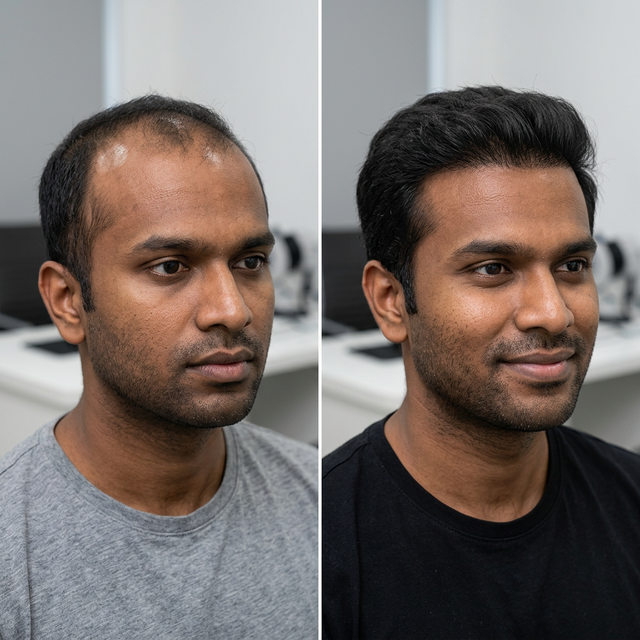
One of the most common questions patients ask before starting PRP therapy is whether it will actually make their hair thicker. The short answer is yes -- clinical evidence consistently shows that Platelet-Rich Plasma therapy increases individual hair strand diameter, reverses miniaturization of weakened follicles, and produces measurably thicker, stronger hair over a course of treatment sessions.
Thinning hair is not simply about losing strands. In many cases, the real problem is that existing hairs are becoming progressively finer and weaker -- a process dermatologists call follicular miniaturization. This is the hallmark of androgenetic alopecia, and it is the reason why your hair may look sparse even before significant shedding begins. PRP hair treatment targets this process at its root, making it one of the most effective non-surgical options for restoring hair thickness. In this guide, we break down the science, the clinical evidence, and what you can realistically expect from PRP when your goal is thicker hair.
Understanding Hair Thickness vs Hair Density
Before discussing how PRP works, it is important to understand the distinction between hair thickness and hair density, as these are two different measurements that both contribute to how full your hair looks.
Hair thickness (also called hair calibre or strand diameter) refers to the width of each individual hair shaft. A thick hair strand typically measures 60-100 micrometres in diameter, while a thin or miniaturized hair may measure as little as 20-40 micrometres. When dermatologists talk about PRP making hair thicker, they are referring to an increase in this individual strand diameter.
Hair density refers to the number of hair strands per square centimetre of scalp. A healthy scalp has roughly 100-150 follicular units per square centimetre. Hair loss conditions reduce this count as follicles become dormant or die.
PRP addresses both of these factors. It increases the diameter of existing hair strands by strengthening the follicle, and it can also improve density by reactivating dormant follicles and pushing them back into the growth phase. However, when patients ask "does PRP make hair thicker," they are most often asking about strand diameter -- and the evidence here is particularly strong. For a comprehensive look at both metrics, read our guide on how to increase hair density.
How PRP Reverses Hair Miniaturization
Hair miniaturization is the central mechanism of pattern hair loss. Under the influence of dihydrotestosterone (DHT) and other factors, hair follicles gradually shrink. Each successive hair growth cycle produces a thinner, shorter, and less pigmented strand until the follicle eventually produces only a barely visible vellus hair -- or stops producing hair altogether.
PRP interrupts this downward spiral through several mechanisms:
- Dermal Papilla Stimulation: The dermal papilla is the cluster of specialized cells at the base of the follicle that controls hair growth. PRP growth factors directly stimulate these cells, increasing their size and activity. A larger, more active dermal papilla produces a thicker hair shaft.
- Angiogenesis Around the Follicle: VEGF (Vascular Endothelial Growth Factor) in PRP promotes the formation of new blood vessels around the follicle. This improved blood supply delivers more oxygen, nutrients, and hormones to the follicle, supporting the production of a thicker, healthier strand.
- Prolonged Anagen Phase: PRP extends the active growth phase of the hair cycle, giving each strand more time to grow longer and thicker before entering the resting and shedding phases.
- Collagen and Extracellular Matrix Support: Growth factors like TGF-beta and PDGF promote collagen production and strengthen the extracellular matrix surrounding the follicle. This structural support helps the follicle maintain its size and produce a robust hair shaft.
- Anti-Inflammatory Effects: Chronic scalp inflammation contributes to follicle weakening. PRP contains anti-inflammatory cytokines that reduce perifollicular inflammation, creating a healthier environment for thick hair growth.
Understanding what PRP is and how it works at the cellular level helps explain why it is so effective at reversing the thinning process rather than merely slowing it down.
Clinical Evidence on Hair Thickness Improvement
Multiple peer-reviewed studies have measured the effect of PRP on hair strand diameter, providing objective evidence that PRP does make hair thicker:
- Gentile et al. (2015): This controlled study published in Stem Cells Translational Medicine found that PRP-treated areas showed a significant increase in mean hair thickness compared to untreated control areas. Trichoscopy measurements confirmed an average increase in strand diameter of approximately 20-25% after three sessions.
- Alves and Grimalt (2018): A randomized, double-blind, placebo-controlled trial demonstrated that PRP-treated patients showed statistically significant improvements in hair thickness and total hair density compared to placebo-injected patients at 6 and 12 months.
- Gupta and Carviel (2017): A systematic review of PRP studies in the British Journal of Dermatology concluded that PRP consistently improves hair calibre and density across multiple study designs and patient populations.
- Schiavone et al. (2020): A study using advanced trichoscopy imaging showed that PRP increased the proportion of thick terminal hairs while decreasing the proportion of thin vellus hairs, directly demonstrating reversal of miniaturization.
The consistency of these findings across different research groups, study designs, and patient populations provides strong evidence that PRP genuinely increases hair strand thickness. The improvements are not just subjective -- they are measurable under trichoscopy and microscopic analysis.
The Role of Growth Factors in Hair Thickening
The thickening effect of PRP comes down to the concentrated cocktail of growth factors delivered directly to the follicle. Each plays a specific role in rebuilding strand diameter:
- PDGF (Platelet-Derived Growth Factor): Stimulates proliferation of dermal papilla cells, which are the primary determinant of hair shaft thickness. More active dermal papilla cells produce a wider, stronger hair strand.
- VEGF (Vascular Endothelial Growth Factor): Creates new capillary networks around the follicle, ensuring adequate nutrient and oxygen delivery to support the metabolically demanding process of producing a thick hair strand.
- FGF (Fibroblast Growth Factor): Supports the structural cells surrounding the follicle and promotes the production of keratin -- the protein that forms the hair shaft itself.
- IGF-1 (Insulin-Like Growth Factor): Plays a critical role in the hair cycle by promoting cell survival and preventing premature transition from the growth phase to the resting phase.
- EGF (Epidermal Growth Factor): Stimulates the proliferation of matrix cells in the hair bulb, which directly contributes to the formation of a thicker hair shaft.
The concentration of these growth factors in PRP is typically 3-5 times higher than in normal circulating blood. This concentrated delivery is what makes PRP more effective at thickening hair than simply improving scalp blood flow through general measures.
Want Thicker, Stronger Hair?
Our dermatologists at DenceSpot Clinic use advanced PRP preparation techniques to maximize growth factor concentration and deliver measurable thickening results. Get a free trichoscopy analysis to assess your hair calibre today.
Book Free ConsultationWho Benefits Most from PRP for Hair Thickening?
While PRP can benefit a wide range of patients, certain profiles see the most dramatic thickening results:
Early to Moderate Androgenetic Alopecia
Patients in the early stages of pattern hair loss (Norwood 2-4 in men, Ludwig 1-2 in women) respond best to PRP. At this stage, follicles are miniaturized but still alive and capable of producing thicker hairs when properly stimulated. The earlier you start PRP, the more follicles you can rescue from progressive thinning.
Diffuse Thinning Without Significant Baldness
Women and men experiencing overall thinning -- where the hair looks flat and limp but there are no obvious bald patches -- are excellent candidates for PRP thickening. The treatment can transform fine, wispy hairs back into fuller, more robust strands across the entire scalp.
Post-Telogen Effluvium Recovery
After a period of stress-related shedding, regrown hairs often come back thinner than before. PRP accelerates the recovery process and helps these regrowing strands achieve their full potential thickness more quickly.
Hair Transplant Patients
PRP is increasingly used after hair transplant surgery to improve the thickness and quality of both transplanted and existing native hairs. The growth factors help transplanted grafts produce thicker strands and protect surrounding native hair from further miniaturization.
Who May See Limited Thickening Results
Patients with completely bald areas where follicles have been permanently destroyed will not see thickening in those zones, as there are no follicles left to stimulate. Similarly, individuals with naturally very fine hair due to genetics (rather than hair loss) should expect modest rather than dramatic improvements in strand diameter.
PRP vs Other Hair Thickening Treatments
How does PRP compare to other treatments that claim to thicken hair? Here is an honest comparison:
PRP vs Minoxidil for Thickness
Minoxidil (Rogaine) is a vasodilator that increases blood flow to the scalp. It can improve hair thickness to some degree, but its primary mechanism is different from PRP. Minoxidil extends the anagen phase and increases follicle size through improved blood flow, while PRP delivers concentrated growth factors that directly stimulate dermal papilla cells. Studies comparing the two suggest that PRP produces greater improvements in strand diameter, especially when used in combination with microneedling.
PRP vs Low-Level Laser Therapy
Low-level laser therapy (LLLT) stimulates cellular metabolism in the follicle through photobiomodulation. It can improve hair thickness, but the effect is generally more modest than PRP. LLLT works best as a complementary treatment alongside PRP rather than as a standalone thickening solution.
PRP vs Thickening Shampoos and Topicals
Over-the-counter thickening products coat the hair shaft to create the appearance of thicker hair, but they do not change the actual diameter of the strand being produced by the follicle. PRP, by contrast, increases the true biological thickness of each new hair that grows. The difference is between a cosmetic illusion and a genuine structural improvement.
PRP vs GFC (Growth Factor Concentrate)
GFC therapy is a newer variation that uses a different preparation method to extract growth factors. Early studies suggest comparable thickening results to PRP, though the evidence base for PRP is much larger and more established. Both work through similar mechanisms of growth factor delivery to the follicle.
Timeline for Thickness Results with PRP
Understanding the timeline helps set realistic expectations and keeps you motivated through the treatment process:
- Weeks 1-4 (After 1st Session): No visible thickness change yet, but the biological process has begun. Growth factors are being absorbed by follicles and starting to stimulate dermal papilla cells. You may notice reduced hair shedding during this period.
- Months 1-3 (After 2nd-4th Sessions): The earliest signs of improvement appear. Hair may feel slightly stronger and more resilient when you run your fingers through it. Fine baby hairs begin appearing in thinning areas. Trichoscopy measurements may show early increases in strand diameter.
- Months 3-6 (Completing Initial Course): This is when most patients notice visible thickening. Existing hairs look and feel denser. The ratio of thick terminal hairs to thin vellus hairs improves measurably. Styling becomes easier as hair holds volume better.
- Months 6-9 (Maintenance Phase): Significant thickening is apparent. Hair has more body, volume, and coverage. Friends and family are likely to comment on the improvement. Trichoscopy confirms increased average strand diameter.
- Months 9-12 (Peak Results): Maximum thickening from the initial treatment course is achieved. Continued maintenance sessions every 3-6 months help sustain and gradually build upon these gains over time.
It is worth noting that hair grows at approximately 1 centimetre per month. Since PRP thickens the new growth emerging from the follicle, it takes several months for enough new thick growth to replace older thin growth and create a visible difference in overall appearance.
Tips to Maximize Hair Thickening from PRP
Getting PRP treatment is the foundation, but these strategies can significantly enhance your thickening results:
- Complete the Full Treatment Course: Skipping sessions or extending the gap between them weakens the cumulative effect. Each session builds on the previous one, so consistency is essential for maximum thickening.
- Combine with Microneedling: Microneedling creates micro-channels in the scalp that allow PRP to penetrate deeper and reach the dermal papilla more effectively. Studies show that the PRP plus microneedling combination produces superior thickening results compared to PRP alone.
- Prioritize Protein Intake: Hair is made of keratin, a protein. Ensuring adequate dietary protein (at least 50-60 grams per day from sources like eggs, fish, lentils, and dairy) gives your follicles the raw material they need to produce thicker strands.
- Address Nutritional Deficiencies: Iron, zinc, biotin, vitamin D, and ferritin deficiencies all contribute to hair thinning. A blood test before starting PRP can identify and address these deficiencies, allowing PRP to work on a stronger foundation.
- Manage DHT Levels: If your thinning is driven by androgenetic alopecia, your dermatologist may recommend finasteride or a topical anti-androgen alongside PRP to reduce the DHT that is causing miniaturization in the first place.
- Quit Smoking: Smoking constricts blood vessels in the scalp and introduces toxins that damage follicles. Quitting improves PRP efficacy and supports thicker hair growth.
- Use a Gentle Hair Care Routine: Harsh shampoos, excessive heat styling, and tight hairstyles stress the hair shaft and can negate the thickening gains from PRP. Switch to a sulphate-free shampoo and minimize heat exposure.
- Consider LED Therapy as an Add-On: Low-level laser or LED therapy between PRP sessions provides ongoing stimulation to the follicle, maintaining momentum between treatments and supporting the thickening process.
- Stay Hydrated and Manage Stress: Dehydration affects blood quality and platelet function, while chronic stress triggers hormonal changes that accelerate thinning. Both factors directly impact how well PRP works.
Get Measurably Thicker Hair at DenceSpot
Our advanced PRP protocols are designed to maximize hair thickening results. We use trichoscopy to measure your strand diameter before and after treatment, so you can see the real difference. Visit our Gurgaon clinic for a personalized assessment.
Book Free ConsultationThe Bottom Line
The evidence is clear: PRP does make hair thicker. By delivering a concentrated dose of growth factors directly to weakened follicles, PRP reverses the miniaturization process that causes hair strands to become progressively finer. Clinical studies consistently demonstrate measurable increases in hair shaft diameter, and thousands of patients at clinics worldwide have experienced the transformation from thin, wispy hair to visibly thicker, stronger strands.
The key to achieving the best thickening results lies in starting treatment early (before follicles are permanently lost), completing the full course of sessions, and supporting the process with proper nutrition, complementary treatments, and healthy lifestyle habits. At DenceSpot Clinic in Gurgaon, we combine advanced PRP preparation techniques with trichoscopy monitoring to track your thickening progress objectively and adjust your treatment plan for optimal results.
If your hair is thinning and you want to restore real, measurable thickness -- not just the illusion of it -- book a free consultation with our team to find out how PRP can help you.
Frequently Asked Questions
Does PRP actually make hair thicker?
Yes, clinical studies confirm that PRP increases individual hair strand diameter by delivering concentrated growth factors directly to the follicle. Patients typically notice measurably thicker hair strands within 3-6 months of starting treatment, as miniaturized follicles are revitalized and begin producing stronger terminal hairs.
How long does it take for PRP to thicken hair?
Most patients begin to notice improved hair texture and thickness between 3 and 6 months after starting PRP therapy. Initial changes in hair fall reduction occur within 4-6 weeks, while measurable increases in strand diameter typically become apparent after the third or fourth session.
Is PRP better than minoxidil for thickening hair?
PRP and minoxidil work through different mechanisms. PRP delivers growth factors directly to follicles to reverse miniaturization, while minoxidil improves blood flow to the scalp. Many dermatologists recommend combining both for superior thickening results, as they complement each other effectively.
How many PRP sessions are needed to see thicker hair?
Most patients require 4-6 initial sessions spaced 3-4 weeks apart to achieve noticeable thickening. Maintenance sessions every 3-6 months help sustain the results. The exact number depends on the severity of hair thinning and individual response to treatment.
Can PRP reverse hair miniaturization?
PRP has been shown to partially reverse hair miniaturization by stimulating dormant follicles and increasing the proportion of thick terminal hairs relative to thin vellus hairs. It is most effective when follicles are still present but weakened, rather than permanently destroyed.
Does PRP work for fine or naturally thin hair?
PRP can improve the thickness of genetically fine hair to some extent by optimizing follicle health and nutrient delivery. However, it is most effective for hair that has become thin due to conditions like androgenetic alopecia or telogen effluvium, rather than hair that has always been naturally fine.
What growth factors in PRP help thicken hair?
Key growth factors include PDGF (Platelet-Derived Growth Factor) which stimulates cell replication, VEGF (Vascular Endothelial Growth Factor) which improves blood supply to follicles, and FGF (Fibroblast Growth Factor) which supports dermal papilla cells. Together, these promote stronger, thicker hair production.
Can I combine PRP with other treatments for maximum thickness?
Yes, combining PRP with microneedling, low-level laser therapy, or topical treatments like minoxidil can significantly enhance thickening results. Microneedling in particular improves PRP absorption and triggers additional growth factor release, making the combination more effective than either treatment alone.