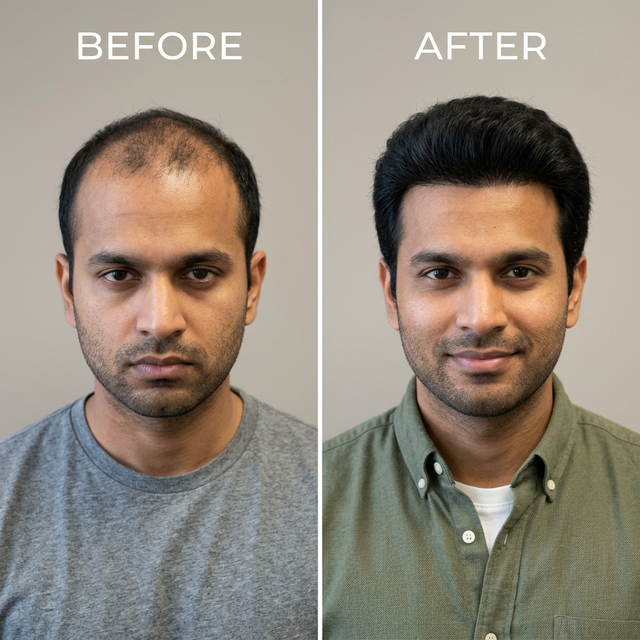
PRP treatment is a non-surgical regenerative medical procedure that uses a concentrated preparation of your own blood platelets to accelerate healing, stimulate tissue repair, and promote natural growth in hair follicles and skin cells. Widely used across dermatology, orthopaedics, and aesthetic medicine, PRP has become one of the most sought-after treatments for hair loss and facial rejuvenation in India.
If you have been searching for "what is PRP treatment" and want a clear, medically accurate explanation, this guide covers everything you need to know. From the science behind platelet-rich plasma to the step-by-step process, applications, eligibility, costs, and expected results, we break it all down in simple language so you can make an informed decision about your health and appearance.
PRP Treatment Meaning and Full Form
PRP stands for Platelet-Rich Plasma. It is a component of your blood that contains a high concentration of platelets, typically 3 to 5 times more than what circulates normally. Platelets are tiny blood cells best known for clotting, but they also carry hundreds of bioactive proteins called growth factors. These growth factors, including Platelet-Derived Growth Factor (PDGF), Transforming Growth Factor-beta (TGF-b), Vascular Endothelial Growth Factor (VEGF), and Epidermal Growth Factor (EGF), play a critical role in wound healing, collagen synthesis, and cellular regeneration.
When this concentrated plasma is injected into a targeted area, it triggers a cascade of biological processes that repair damaged tissue, stimulate dormant hair follicles, and rejuvenate ageing skin. To learn more about the basics, you can also read our detailed guide on what is PRP and what is PRP injection.
How Does PRP Treatment Work?
The science behind PRP treatment is rooted in your body's natural healing mechanism. Here is what happens at a cellular level when PRP is administered:
- Platelet Concentration: A small volume of blood is drawn and processed in a centrifuge to separate plasma layers. The platelet-rich layer is isolated, yielding a concentration that is 3 to 5 times higher than baseline levels in whole blood.
- Growth Factor Release: Once injected, the concentrated platelets undergo degranulation, releasing alpha granules packed with growth factors. These proteins bind to receptors on stem cells, osteoblasts, fibroblasts, and endothelial cells in the target tissue.
- Tissue Regeneration: Growth factors stimulate new blood vessel formation (angiogenesis), increase collagen production, accelerate cell division, and reduce inflammation. In the scalp, this revives miniaturized hair follicles and extends the growth phase (anagen) of the hair cycle.
- Sustained Healing: Unlike synthetic treatments, PRP provides a sustained release of growth factors over several days, creating a prolonged healing environment that supports long-term tissue repair and regeneration.
Because PRP is derived entirely from your own blood (autologous), there is virtually no risk of allergic reaction, immune rejection, or disease transmission. This makes it one of the safest regenerative therapies available today.
PRP Treatment Process: Step-by-Step
Understanding the complete PRP treatment process helps set realistic expectations and reduces anxiety before your appointment. Here is exactly what happens during a typical PRP session at DenceSpot Clinic in Gurgaon:
Step 1: Consultation and Assessment
Every PRP journey begins with a thorough consultation. Our dermatologist examines your scalp or skin condition, reviews your medical history, checks for contraindications such as blood disorders or active infections, and determines whether PRP is the right treatment for your specific concern. If you are seeking PRP for hair loss, a trichoscopy or hair density analysis may be performed to establish a baseline for tracking progress.
Step 2: Blood Collection
A small sample of blood, typically 15 to 20 millilitres (about 3 to 4 teaspoons), is drawn from your arm using a standard venipuncture technique. This is no different from a routine blood test and takes less than two minutes. The blood is collected in specialised PRP tubes that contain an anticoagulant to prevent premature clotting.
Step 3: Centrifugation and Platelet Separation
The blood sample is placed in a medical-grade centrifuge machine that spins at a specific speed (usually 1,500 to 3,000 RPM) for 8 to 12 minutes. This spinning process separates the blood into three distinct layers: red blood cells at the bottom, a buffy coat (white blood cells and platelets) in the middle, and platelet-poor plasma at the top. The platelet-rich layer is carefully extracted, yielding approximately 3 to 6 millilitres of concentrated PRP.
Step 4: Preparation and Activation
In some advanced protocols, the PRP is activated with calcium chloride or thrombin to initiate the release of growth factors before injection. At DenceSpot Clinic, we use the latest preparation techniques to ensure optimal platelet yield and viability for every patient.
Step 5: Application and Injection
Before injection, the treatment area is cleaned and a topical anaesthetic (numbing cream) is applied for 20 to 30 minutes to minimize discomfort. The PRP is then injected using fine needles (30 or 32 gauge) into the targeted area. For scalp treatment, injections are placed at multiple points across thinning zones at a depth of about 1 to 2 millimetres. For facial treatments, PRP may be injected directly, applied after microneedling, or used as a mask. The entire injection process takes 15 to 30 minutes depending on the area being treated.
Step 6: Post-Treatment Care
After the procedure, you can return to your normal activities immediately. There is no significant downtime. However, the following aftercare guidelines help optimize results:
- Avoid washing the treated area for 12 to 24 hours
- Do not apply harsh chemicals, dyes, or heat styling tools for 48 hours
- Avoid strenuous exercise, saunas, and swimming pools for 24 to 48 hours
- Do not take blood-thinning medications (aspirin, ibuprofen) for 3 to 5 days unless prescribed by your doctor
- Mild redness, swelling, or tenderness at injection sites is normal and resolves within a day or two
Ready to Experience PRP Treatment?
Our expert dermatologists at DenceSpot Clinic use advanced PRP protocols tailored to your unique needs. Book a free consultation to find out if PRP is right for you.
Book Free ConsultationApplications of PRP Treatment
PRP treatment is remarkably versatile. While it gained mainstream popularity for hair restoration, its regenerative properties make it effective across multiple medical and aesthetic conditions.
PRP for Hair Loss
This is the most common application of PRP in India. PRP injections into the scalp stimulate dormant hair follicles, increase blood supply to the hair root, and extend the active growth phase of the hair cycle. It is effective for androgenetic alopecia (male and female pattern baldness), diffuse thinning, and post-transplant recovery. PRP is often combined with microneedling to enhance absorption and stimulate deeper follicular activity. Read our complete guide on PRP hair treatment as a natural way to regrow hair.
PRP for Facial Rejuvenation
Often called the "vampire facial," PRP facial treatment stimulates collagen and elastin production in the skin, reducing fine lines, wrinkles, and dullness. The growth factors improve skin texture, tone, and elasticity, giving the face a natural, youthful glow without synthetic fillers or chemicals.
PRP for Acne Scars
PRP promotes collagen remodelling in scarred tissue, helping to fill in and smooth out acne scars over multiple sessions. When combined with microneedling or fractional laser therapy, PRP significantly accelerates scar improvement and reduces recovery time.
PRP for Skin Tightening
As we age, collagen production declines, leading to sagging skin. PRP injections stimulate fibroblast activity and new collagen synthesis, resulting in firmer, tighter skin. This is particularly effective for the under-eye area, nasolabial folds, jawline, and neck.
PRP for Wound Healing
In surgical and orthopaedic settings, PRP is used to accelerate healing of chronic wounds, tendon injuries, ligament tears, and post-operative recovery. The concentrated growth factors create an optimal environment for tissue repair, reducing healing time by up to 50 percent in some studies.
Who Is Eligible for PRP Treatment?
PRP treatment is suitable for a wide range of individuals, but not everyone qualifies. Here is a general eligibility overview:
Good Candidates for PRP
- Individuals experiencing early to moderate hair thinning or pattern baldness
- Men and women aged 18 to 65 in good general health
- People with skin concerns such as fine lines, acne scars, or dull complexion
- Patients recovering from hair transplant surgery who want to boost graft survival
- Those with adequate platelet counts and no active blood disorders
- Non-smokers or those willing to quit temporarily before and after treatment
Who Should Avoid PRP
- Individuals with blood disorders such as thrombocytopenia, platelet dysfunction syndrome, or haemophilia
- Patients on long-term anticoagulant or antiplatelet therapy
- Those with active infections, sepsis, or skin infections at the treatment site
- People with cancer or undergoing chemotherapy
- Individuals with chronic liver disease or hepatic insufficiency
- Pregnant or breastfeeding women
- Those with unrealistic expectations about results
A detailed consultation at DenceSpot Clinic ensures that PRP is safe and appropriate for your individual circumstances before any treatment begins.
Benefits of PRP Treatment
PRP treatment offers several advantages over conventional therapies, making it a preferred choice for patients and dermatologists alike:
- 100% Natural: Uses your own blood, eliminating the risk of allergic reactions or rejection
- Minimally Invasive: No surgery, no incisions, and no general anaesthesia required
- Zero Downtime: Most patients resume their daily routine immediately after the session
- Versatile Applications: Effective for hair loss, skin rejuvenation, scar treatment, and wound healing
- Scientifically Backed: Supported by numerous clinical studies and peer-reviewed research
- Safe Track Record: Used in medicine for over two decades with an excellent safety profile
- Compatible with Other Treatments: Can be combined with microneedling, hair transplants, laser therapy, and topical medications for enhanced outcomes
- Progressive Improvement: Results continue to improve over weeks and months as collagen rebuilds and follicles strengthen
PRP Treatment Side Effects and Risks
PRP is one of the safest aesthetic treatments available, but like any medical procedure, it carries minor risks. Understanding these helps you make a fully informed decision:
Common Side Effects (Mild and Temporary)
- Redness and warmth at the injection site, lasting 12 to 24 hours
- Mild swelling or puffiness, especially with facial PRP
- Tenderness or soreness in the treated area for 1 to 2 days
- Minor bruising at the blood draw site or injection points
- Temporary headache after scalp PRP (uncommon)
Rare Risks
- Infection at the injection site (extremely rare with proper sterile technique)
- Nerve injury (avoided by experienced practitioners who know facial and scalp anatomy)
- No improvement in condition (possible if the underlying cause is not PRP-responsive)
At DenceSpot Clinic, we follow strict sterilization protocols and use only medical-grade PRP kits to ensure your safety at every step.
How to Prepare for PRP Treatment
Proper preparation maximizes your PRP results. Follow these guidelines in the days leading up to your appointment:
- 1 Week Before: Stop taking blood-thinning supplements such as fish oil, vitamin E, and flaxseed oil. Discontinue aspirin and ibuprofen unless medically necessary (consult your doctor first).
- 3 Days Before: Avoid alcohol consumption as it can affect platelet function and increase bruising risk.
- 1 Day Before: Stay well hydrated by drinking at least 2 to 3 litres of water. Good hydration improves blood draw quality and platelet yield.
- Day of Treatment: Eat a healthy, protein-rich meal before your appointment. Avoid caffeine on the morning of treatment. Wash your hair or cleanse your face thoroughly before arriving at the clinic.
- What to Bring: Any recent blood test reports, a list of current medications, and your medical history if it is your first visit.
PRP Treatment Results: Before and After Timeline
PRP is not an overnight solution. Since it works by stimulating your body's natural regenerative processes, results develop gradually. Here is a realistic timeline based on clinical observations:
For Hair PRP
- Week 1 to 2: Mild shedding may occur as weak hairs make way for new, stronger growth. This is a normal and positive sign.
- Month 1 to 2: Reduced hair fall is noticed. Hair feels slightly thicker at the root.
- Month 3 to 4: Visible improvement in hair density and thickness. New baby hairs appear along the hairline and in thinning areas.
- Month 6: Significant improvement in overall hair volume. Before and after photographs show clear difference.
- Month 12 and Beyond: Continued improvement with maintenance sessions every 4 to 6 months.
For Skin PRP
- Week 1: Initial glow and improved skin texture as superficial healing occurs.
- Week 2 to 4: Collagen synthesis begins. Skin feels firmer and more supple.
- Month 2 to 3: Visible reduction in fine lines, acne scars, and pigmentation.
- Month 6: Optimal results with continued collagen remodelling and improved skin elasticity.
Individual results vary based on age, health, severity of the condition, and adherence to the recommended treatment schedule. Consistency is the key to achieving the best possible outcomes.
PRP Treatment Cost in India
PRP treatment cost in India varies depending on several factors including the city, clinic reputation, technology used, and the area being treated. Here is a general cost overview:
- Scalp PRP (per session): Rs 3,000 to Rs 10,000
- Facial PRP (per session): Rs 4,000 to Rs 12,000
- PRP with Microneedling (per session): Rs 5,000 to Rs 15,000
- Full course (3 to 4 sessions): Rs 10,000 to Rs 40,000
The cost is influenced by the quality of the PRP kit, the centrifuge technology, whether advanced protocols like double-spin or leukocyte-rich PRP are used, and the expertise of the treating dermatologist. At DenceSpot Clinic in Gurgaon, we offer transparent pricing with no hidden charges, and our PRP protocols are designed to deliver maximum platelet concentration for optimal results.
Compared to surgical options like hair transplant, PRP is significantly more affordable while still delivering meaningful improvement, especially for early-stage hair loss.
PRP Treatment vs Other Regenerative Therapies
With the growing interest in regenerative medicine, patients often ask how PRP compares to newer therapies like stem cell treatment and exosome therapy. Here is an honest comparison:
PRP vs Stem Cell Therapy
Stem cell therapy uses undifferentiated cells (often harvested from fat tissue or bone marrow) that can develop into various cell types. While promising, stem cell treatments for hair and skin are still largely experimental, significantly more expensive (Rs 50,000 to Rs 2,00,000 per session), and not widely regulated in India. PRP, on the other hand, has decades of clinical evidence, established safety data, and regulatory acceptance. For most patients, PRP remains the more practical and proven choice.
PRP vs Exosome Therapy
Exosomes are tiny vesicles derived from stem cells that carry signalling molecules to promote healing. Exosome therapy is an emerging field with exciting preliminary results, but it lacks the long-term clinical data that PRP has accumulated. Exosome treatments are also considerably more expensive and less widely available. PRP continues to be the gold standard for regenerative dermatological treatments, and many experts recommend it as the foundation upon which newer therapies can be added.
PRP vs Microneedling Alone
Microneedling creates controlled micro-injuries that stimulate collagen production. While effective on its own, combining microneedling with PRP dramatically enhances results. The micro-channels created by microneedling allow PRP to penetrate deeper into the skin or scalp, delivering growth factors directly to the target cells. Studies show that PRP plus microneedling produces significantly better outcomes than either treatment alone.
How to Choose the Right Clinic for PRP Treatment
The effectiveness of PRP treatment depends heavily on how it is prepared and administered. Not all PRP is created equal. Here is what to look for when selecting a clinic:
- Qualified Dermatologist: Ensure the treatment is performed or supervised by a board-certified dermatologist or trichologist with specific training in PRP protocols.
- Medical-Grade Equipment: The clinic should use FDA-approved or CE-marked PRP kits and a high-quality centrifuge that delivers consistent platelet concentration.
- Customized Protocol: Avoid clinics that offer a one-size-fits-all approach. The PRP concentration, injection depth, injection pattern, and number of sessions should be tailored to your individual condition.
- Sterile Environment: The clinic must follow hospital-grade sterilization and infection control protocols.
- Before and After Evidence: Ask to see documented before and after results from previous patients treated at the clinic.
- Transparent Pricing: A reputable clinic will provide clear pricing with no hidden fees or upselling pressure.
- Follow-Up Care: Look for clinics that offer structured follow-up visits to track your progress and adjust the treatment plan as needed.
At DenceSpot Clinic in Gurgaon, we tick every box on this list. Our team of experienced dermatologists uses advanced double-spin PRP technology, customized treatment plans, and comprehensive follow-up protocols to ensure you achieve the best possible results.
Start Your PRP Journey at DenceSpot Clinic
Whether you are dealing with hair loss, ageing skin, or acne scars, PRP treatment can help your body heal itself naturally. Consult our experts in Gurgaon to get a personalized treatment plan.
Book Free ConsultationFrequently Asked Questions
What is PRP treatment in simple words?
PRP treatment is a medical procedure where a concentrated portion of your own blood, rich in platelets and growth factors, is injected into the scalp or skin to stimulate natural healing, tissue regeneration, and cell growth.
Is PRP treatment painful?
PRP treatment involves mild discomfort during injections, but a topical numbing cream is applied beforehand to minimize pain. Most patients describe the sensation as a slight pinch or pressure. The entire process is well-tolerated.
How many PRP sessions are needed for visible results?
Most patients require 3 to 4 initial sessions spaced 3 to 4 weeks apart. Noticeable improvement typically appears after the second or third session. Maintenance sessions every 4 to 6 months help sustain results long-term.
What is the cost of PRP treatment in India?
PRP treatment in India generally costs between Rs 3,000 and Rs 12,000 per session, depending on the clinic, the area being treated, and the technology used. DenceSpot Clinic offers competitive pricing with advanced PRP protocols.
Are there any side effects of PRP treatment?
Since PRP uses your own blood, the risk of allergic reactions is extremely low. Common side effects include mild swelling, redness, or tenderness at the injection site, which usually resolves within 24 to 48 hours.
Can PRP treatment be combined with other procedures?
Yes, PRP is frequently combined with microneedling, hair transplant surgery, and dermal fillers for enhanced results. At DenceSpot Clinic, we often pair PRP with microneedling for hair to maximize follicle stimulation and growth factor absorption.
Who should avoid PRP treatment?
PRP treatment is not recommended for individuals with blood disorders, active infections, cancer, chronic liver disease, or those on blood-thinning medications. Pregnant and breastfeeding women should also avoid PRP. A thorough consultation is essential before treatment.
How long do PRP treatment results last?
PRP results typically last 6 to 12 months after completing the initial course of sessions. Regular maintenance sessions every 4 to 6 months help sustain and improve outcomes over time. Individual results vary based on age, health, and the condition being treated.