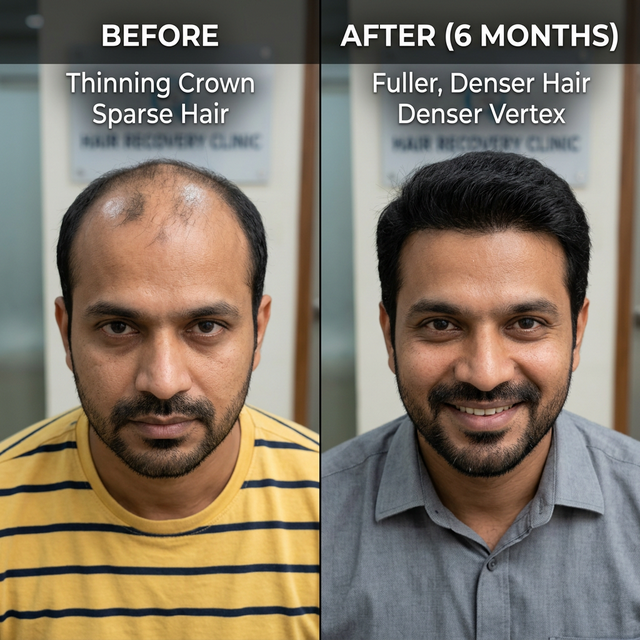
Understanding How Prp Is Done can significantly impact your final results. "What exactly happens during a PRP session? Will it hurt? How long does it take?" These are the most common questions patients ask before their first PRP appointment at DenceSpot Clinic. In this guide, we walk you through every step of the PRP procedure so you know exactly what to expect.
At DenceSpot Clinic, How Prp Is Done is a very common point of discussion. PRP (Platelet-Rich Plasma) therapy has become one of the most popular non-surgical treatments for hair loss in India. Yet despite its growing popularity, many patients feel anxious about the procedure simply because they do not know what it involves. Understanding the process removes the uncertainty and helps you prepare properly for better results. Here is the complete step-by-step breakdown of how PRP treatment is done at a professional clinic.
Before the Procedure: Preparation Phase
Understanding How Prp Is Done can significantly impact your final results. The PRP journey begins well before you sit in the treatment chair. Proper preparation is essential to ensure the highest quality platelet concentrate and the best possible results.
Pre-Treatment Consultation
Many patients ask us about How Prp Is Done during their consultations. Your dermatologist will conduct a thorough assessment before recommending PRP. This includes examining your scalp, reviewing your medical history, and performing a trichoscopy (digital scalp analysis) to evaluate follicle health and hair density. This step determines whether you are a suitable candidate for PRP and helps the doctor create a customized treatment plan. Learn more about what PRP hair treatment involves.
Pre-Appointment Instructions
In the days leading up to your PRP session, your clinic will provide specific instructions:
- 5-7 days before: Stop blood-thinning supplements such as fish oil, vitamin E, and aspirin (unless medically required — consult your prescribing doctor)
- 3 days before: Avoid alcohol and smoking, as both affect platelet quality and blood flow
- Day of treatment: Eat a nutritious, protein-rich meal and drink plenty of water. Good hydration improves blood quality and makes the draw easier
- Before arriving: Wash your hair with a gentle, residue-free shampoo. Avoid applying oils, serums, or styling products
Step 1: Blood Collection (5 Minutes)
At DenceSpot Clinic, How Prp Is Done is a very common point of discussion. The procedure begins with a simple blood draw from your arm — exactly like a routine blood test. A trained technician or nurse draws approximately 15-20 ml of blood using a sterile syringe. This is a very small amount (for reference, a standard blood donation takes 450 ml).
At DenceSpot Clinic, How Prp Is Done is a very common point of discussion. The blood is collected into specialized tubes that contain an anticoagulant to prevent clotting during processing. The entire draw takes about 5 minutes and involves minimal discomfort — just a brief pinprick sensation.
Step 2: Centrifugation — Separating the Platelet-Rich Layer (10-15 Minutes)
This is the critical science behind PRP. The blood tubes are placed into a centrifuge machine — a device that spins at high speed (typically 1,500-3,000 RPM) to separate blood components by density.
After spinning for 10-15 minutes, the blood separates into three distinct layers:
- Bottom layer: Red blood cells (heaviest — these are discarded)
- Middle layer: The "buffy coat" — a thin layer rich in platelets and white blood cells. This is the PRP
- Top layer: Platelet-poor plasma (PPP — lighter, with fewer platelets)
The platelet-rich middle layer is carefully extracted using a syringe. This concentrated PRP contains 3-5 times the normal platelet concentration found in regular blood. Some advanced clinics, including DenceSpot, use a double-spin technique to achieve even higher concentrations of up to 7-8 times normal levels.
Single-Spin vs Double-Spin PRP
Single-spin: The blood is centrifuged once. This produces a moderate platelet concentration and is the standard method used at most clinics. It is faster but yields a lower growth factor concentration.
Double-spin: The blood undergoes two rounds of centrifugation. The first spin separates red blood cells; the second concentrates the platelets further. This produces a significantly higher platelet count and more growth factors per ml of PRP.
Step 3: PRP Activation (Optional — 2-3 Minutes)
In some protocols, the extracted PRP is activated before injection. Activation triggers the platelets to release their growth factors immediately upon injection rather than gradually.
Common activation agents include:
- Calcium chloride: The most commonly used activator
- Thrombin: A natural clotting protein
- Collagen: Sometimes used as an alternative activator
Not all clinics activate PRP — some prefer to inject it in its non-activated form, allowing the body's natural processes to trigger platelet degranulation. Both approaches have clinical support, and your dermatologist will choose the method best suited to your condition.
Step 4: Scalp Numbing (10 Minutes)
Before the injections begin, your scalp is numbed to minimize discomfort. There are two common numbing methods:
Topical Anaesthetic Cream: A numbing cream (usually containing lidocaine) is applied generously to the treatment area and left on for 10-15 minutes. This is the most common method and is sufficient for most patients.
Nerve Block Injection: For patients who are particularly sensitive, a local anaesthetic may be injected at specific nerve points around the scalp. This provides deeper numbness but is rarely necessary.
While the numbing cream takes effect, your dermatologist prepares the PRP for injection and marks the treatment zones on your scalp.
Step 5: PRP Injection into the Scalp (15-20 Minutes)
This is the core of the procedure. Using a fine-gauge needle (30-32 gauge), the dermatologist injects small amounts of PRP into the scalp at multiple points across the thinning or balding areas.
How the Injections Are Administered
- Injection depth: 1-2 mm below the skin surface, targeting the level of the hair follicle root (dermal papilla)
- Pattern: A systematic grid pattern is followed, with injection points spaced approximately 1 cm apart to ensure even distribution
- Number of injections: Typically 50-100 micro-injections per session, depending on the size of the treatment area
- Volume per injection: 0.05-0.1 ml of PRP per injection point
During the injection phase, you may feel mild pressure, tiny pinpricks, or a slight stinging sensation despite the numbing. Most patients describe it as a 3-4 out of 10 on the discomfort scale — definitely tolerable. Some areas of the scalp (particularly the temples and crown) may be slightly more sensitive than others.
The dermatologist works systematically across the treatment area, ensuring that every thinning zone receives adequate PRP coverage. The entire injection phase takes 15-20 minutes.
Step 6: Post-Injection Care (5 Minutes)
Once all injections are complete, the scalp is gently cleaned. There is no bandaging required. Your dermatologist will review aftercare instructions with you:
- Avoid touching or scratching the scalp for several hours
- Do not wash your hair for at least 6-8 hours
- Avoid hair dye, chemical treatments, and harsh styling products for 48 hours
- Skip intense exercise, saunas, and steam rooms for 24-48 hours
- Use a gentle, sulfate-free shampoo when you resume washing
- Mild redness, swelling, or tenderness at injection sites is completely normal and resolves within 24-48 hours
You can leave the clinic immediately and resume normal daily activities, including work. There is zero downtime — this is one of PRP's biggest advantages over surgical options like hair transplant.
Ready to Experience PRP at DenceSpot?
Our advanced PRP preparation techniques deliver superior growth factor concentration for better results. Book a free consultation to get your scalp assessed and a personalized treatment plan.
Book Free ConsultationWhat Happens Inside Your Scalp After PRP Injection?
Understanding the biological response helps you appreciate why PRP works. Here is what happens at the cellular level after PRP is injected:
Immediate (0-24 hours): Platelets begin degranulating — releasing their stored growth factors including PDGF, VEGF, TGF-beta, EGF, and FGF. These growth factors bind to receptors on hair follicle cells and trigger regenerative signalling cascades.
Days 1-7: Growth factors stimulate new blood vessel formation (angiogenesis) around the follicles, improving oxygen and nutrient delivery. Inflammation at injection sites resolves. Stem cells in the follicle bulge are activated.
Weeks 2-4: Dormant follicles begin transitioning from the resting phase (telogen) to the growth phase (anagen). Existing miniaturized follicles start to enlarge. Collagen remodelling improves the follicular microenvironment.
Months 2-6: New baby hairs (vellus hairs) emerge in treated areas. Existing hairs grow thicker and stronger. Hair fall rate decreases significantly. With each subsequent PRP session, the cumulative effect strengthens. Read more about the science of how PRP works for hair growth.
Advanced PRP Techniques Used at Top Clinics
Not all PRP treatments are created equal. Here are the advanced techniques that set premium clinics apart:
A-PRP (Autologous Conditioned PRP)
Uses specialized kits and preparation methods to produce a more concentrated, leukocyte-reduced PRP. This results in less inflammation at injection sites and potentially higher growth factor delivery.
GFC (Growth Factor Concentrate)
An advanced form of PRP where growth factors are extracted and concentrated even further. GFC contains pure growth factors without red blood cells, white blood cells, or other cellular components, reducing the risk of post-injection discomfort.
PRP with Microneedling
After PRP injections, microneedling is performed on the scalp. The micro-channels created by the needles allow additional PRP to penetrate deeper and also trigger a wound-healing response that amplifies the growth factor effect.
PRP with Biotin or Nutrient Boosters
Some protocols add biotin, zinc, or other hair-supporting nutrients to the PRP solution before injection. This delivers essential micronutrients directly to the follicle alongside the growth factors. Learn about vitamins essential for healthy hair.
PRP Session Schedule: How Many and How Often?
A single PRP session initiates the healing process, but consistent treatment is needed for optimal results:
Initial Phase (Month 1-4): 4-6 sessions spaced 3-4 weeks apart. This builds up the cumulative growth factor effect and gives follicles repeated stimulation to re-enter the growth cycle.
Booster Phase (Month 5-8): 2-3 additional sessions spaced 6-8 weeks apart. This consolidates the gains from the initial phase and supports continued follicle strengthening.
Maintenance Phase (Ongoing): 1 session every 3-6 months. Hair loss is a progressive condition, so periodic maintenance helps sustain results long-term. Read our detailed guide on how many PRP sessions are needed.
Common Concerns About the PRP Procedure
Will I See Blood on My Scalp?
There may be tiny dots of blood at the injection points immediately after the procedure. These are cleaned off before you leave and disappear completely within hours. There is no visible bleeding or wound.
Can I Drive Home After PRP?
Yes, absolutely. PRP does not involve sedation or general anaesthesia. You are fully alert throughout the procedure and can drive, work, or carry on with your day immediately after.
Will My Scalp Look Different After the Session?
Mild redness is common for a few hours. Some patients experience slight swelling, particularly if the forehead or hairline area was treated. This resolves within 24-48 hours and is easily concealed with a hat or cap if desired.
Can I Colour or Style My Hair After PRP?
Wait at least 48 hours before applying any chemical treatments including hair dye, keratin, or rebonding. Avoid heat styling tools for 24 hours. After 48 hours, you can resume your normal hair care routine.
Get Your PRP Treatment at DenceSpot Clinic
Our experienced dermatologists use advanced PRP preparation and injection techniques to deliver the best possible results. Book a free scalp analysis and consultation today.
Book Free ConsultationFrequently Asked Questions
How long does the PRP procedure take?
A typical PRP session takes 45-60 minutes from start to finish. This includes blood draw (5 minutes), centrifugation (10-15 minutes), scalp numbing (10 minutes), and injections (15-20 minutes). You can return to work or daily activities immediately after.
Is the PRP procedure painful?
Most patients describe PRP as mildly uncomfortable rather than painful. A topical numbing cream or local anaesthetic is applied before injections. You may feel slight pressure or tiny pinpricks during the injection phase. Any discomfort subsides within minutes after the session.
How much blood is drawn for PRP?
Typically 15-20 ml of blood is drawn, which is much less than a standard blood donation. This small amount is sufficient to produce a concentrated platelet-rich plasma layer after centrifugation.
How many injections are given during one PRP session?
Depending on the treatment area, 50-100 micro-injections are administered in a systematic grid pattern across the thinning zones. Each injection delivers a tiny amount of PRP directly to the follicle level.
What should I do before my PRP appointment?
Stop blood-thinning supplements (fish oil, vitamin E, aspirin) 5-7 days before. Avoid smoking and alcohol for 3 days prior. Eat a nutritious meal and stay hydrated on the day of treatment. Wash your hair with a gentle shampoo before arriving.
Can I wash my hair after PRP treatment?
Avoid washing your hair for at least 6-8 hours after PRP. When you do wash, use a gentle shampoo and lukewarm water. Avoid hot water, harsh chemical products, and hair dye for 48 hours after the session.
How soon can I exercise after PRP?
Avoid intense exercise, saunas, and steam rooms for 24-48 hours after PRP. Light walking is fine immediately. Heavy sweating can irritate the injection sites and potentially reduce the effectiveness of the treatment.
Is PRP done differently at different clinics?
Yes, PRP preparation methods vary. Some clinics use single-spin centrifugation while others use double-spin for higher platelet concentration. Advanced techniques like A-PRP (Autologous PRP) or GFC (Growth Factor Concentrate) offer enhanced results. At DenceSpot, we use advanced preparation protocols for maximum growth factor concentration.