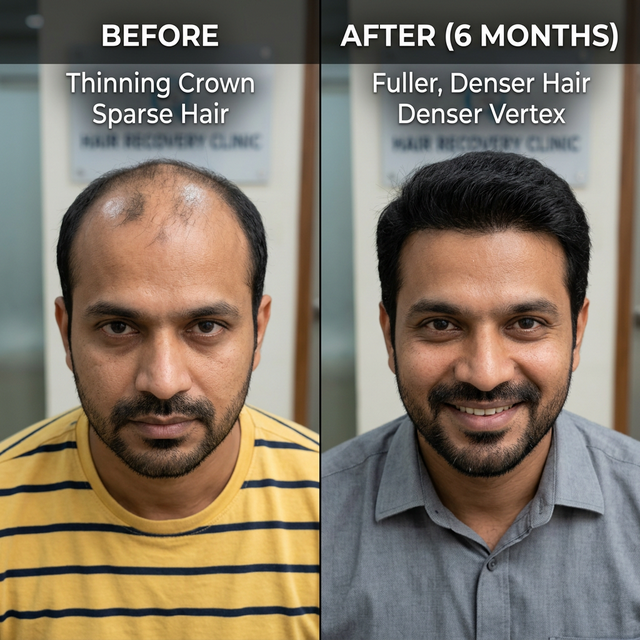
PRP stands for Platelet-Rich Plasma — it is a medical treatment in which a concentrated solution of platelets is extracted from your own blood and injected into a targeted area of the body to promote natural healing and tissue regeneration. PRP is widely used for hair regrowth, skin rejuvenation, facial aesthetics, and joint pain relief. Because it uses your body's own biological material, it is considered one of the safest regenerative therapies available today.
If you have been searching for answers about PRP treatment — what it is, how it works, whether it is right for you, and what kind of results you can expect — you are in the right place. In this complete beginner guide, we will explain everything about Platelet-Rich Plasma therapy in simple language, so you can make an informed decision about your health and appearance.
At DenceSpot Clinic in Gurgaon, we perform PRP therapy for hair loss, facial rejuvenation, and other aesthetic concerns every week. We have seen firsthand how this treatment transforms lives — from restoring thinning hair to giving patients a renewed sense of confidence. Let us walk you through everything you need to know.
What Does PRP Stand For? Understanding the Full Form
PRP full form is Platelet-Rich Plasma. To understand what this means, let us break it down into its components:
Platelets are a type of blood cell that plays a critical role in wound healing and tissue repair. They are the first responders when your body suffers an injury. Platelets rush to the site, form a clot to stop bleeding, and then release growth factors — specialized proteins that signal surrounding cells to start repairing and regenerating tissue.
Plasma is the liquid component of your blood. It is a pale yellow fluid that makes up about 55 percent of your total blood volume. Plasma carries red blood cells, white blood cells, platelets, nutrients, hormones, and proteins throughout your body.
Platelet-Rich Plasma, therefore, is a portion of your plasma that has been processed to contain a significantly higher concentration of platelets than normal blood — typically 3 to 5 times higher. This concentrated solution is packed with growth factors such as Platelet-Derived Growth Factor (PDGF), Transforming Growth Factor (TGF), Vascular Endothelial Growth Factor (VEGF), and Epidermal Growth Factor (EGF). These growth factors are the reason PRP is so effective at stimulating healing and regeneration.
How Does PRP Treatment Work? The Science Behind It
The science behind PRP is grounded in your body's natural healing mechanism. When you cut your finger or scrape your knee, your body sends platelets to the injured area. These platelets release growth factors that trigger a cascade of healing events — new blood vessel formation, collagen production, cell multiplication, and tissue repair.
PRP therapy harnesses this same biological process, but in a targeted and amplified way. By concentrating your platelets and injecting them directly into a specific area — such as a thinning scalp, aging skin, or an injured joint — the treatment delivers a powerful dose of growth factors exactly where they are needed most.
For hair loss specifically, PRP works by stimulating dormant or weakened hair follicles. The growth factors increase blood supply to the follicle, extend the growth phase (anagen phase) of the hair cycle, and promote the production of thicker, healthier hair strands. Multiple clinical studies published in dermatology journals have confirmed that PRP can increase hair count, hair thickness, and the overall strength of hair roots. You can learn more about this in our detailed PRP for hair regrowth guide.
The PRP Procedure: Step-by-Step Process
One of the biggest advantages of PRP therapy is that the procedure is straightforward, minimally invasive, and can be completed within 45 to 60 minutes. Here is exactly what happens during a PRP session at a clinic:
Step 1: Blood Collection
A small amount of blood — usually 10 to 20 millilitres, similar to a routine blood test — is drawn from a vein in your arm. This is the same process as any standard blood draw, and it takes only a couple of minutes.
Step 2: Centrifugation (Processing)
The collected blood is placed into a specialized centrifuge machine that spins at high speed. This spinning separates the blood into three layers: red blood cells at the bottom, platelet-poor plasma at the top, and a thin golden layer of Platelet-Rich Plasma in the middle. This PRP layer is carefully extracted using a syringe.
Step 3: Preparation of the Treatment Area
The treatment area — whether it is your scalp, face, or another body part — is cleaned and numbed using a topical anaesthetic cream or local anaesthesia. This ensures minimal discomfort during the injection process.
Step 4: PRP Injection
The concentrated PRP is then injected into the targeted area using fine needles. For hair treatment, the injections are made directly into the scalp at the level of the hair follicles, focusing on areas of thinning or hair loss. For facial treatments, the PRP is injected into specific areas of the face or applied after microneedling.
Step 5: Post-Treatment Care
After the procedure, you can return to your normal activities almost immediately. There is no downtime. Your doctor will provide specific aftercare instructions, such as avoiding washing your hair for 24 hours (for scalp PRP) or avoiding direct sun exposure (for facial PRP).
Uses of PRP Treatment — Where Is It Applied?
PRP therapy is remarkably versatile. While it gained mainstream popularity for hair loss treatment, its applications extend across multiple medical and aesthetic fields:
PRP for Hair Loss and Hair Regrowth
This is the most popular use of PRP in India. PRP for hair is effective for both men and women experiencing Androgenetic Alopecia (pattern baldness), Telogen Effluvium (stress-related hair fall), and general hair thinning. It strengthens existing hair, reactivates dormant follicles, and is also used as a complementary treatment after a hair transplant to improve graft survival and accelerate healing. If you are struggling with hair fall, our complete hair fall control guide covers all your options in detail.
PRP for Face and Skin Rejuvenation (Vampire Facial)
PRP facial treatment, often called the "Vampire Facial," involves applying PRP to the face after a microneedling session. The growth factors penetrate deep into the skin, boosting collagen and elastin production. This helps reduce fine lines, wrinkles, acne scars, enlarged pores, and uneven skin tone. The result is smoother, firmer, and more youthful-looking skin.
PRP for Under-Eye Dark Circles
The delicate skin under the eyes is one of the first areas to show signs of aging and fatigue. PRP injections in this area help improve skin thickness, reduce pigmentation, and diminish the hollow appearance that causes dark circles.
PRP for Joint Pain and Sports Injuries
Orthopaedic surgeons and sports medicine specialists use PRP to treat conditions such as knee osteoarthritis, tennis elbow, rotator cuff injuries, ligament sprains, and Achilles tendon problems. The growth factors accelerate tissue repair and reduce inflammation, offering pain relief and improved function.
PRP for Wound Healing
In surgical and post-surgical settings, PRP is used to speed up the healing of chronic wounds, surgical incisions, and skin grafts. It is particularly useful for patients with diabetes or other conditions that impair normal wound healing.
Interested in PRP Treatment? Talk to Our Experts
At DenceSpot Clinic Gurgaon, we offer advanced PRP therapy for hair regrowth, skin rejuvenation, and more. Get a personalized assessment and treatment plan from our experienced dermatologists.
Book Free ConsultationBenefits of PRP Treatment
PRP therapy offers a wide range of benefits that make it a preferred choice for both patients and doctors:
100 Percent Natural: Since PRP is derived from your own blood, there is no risk of allergic reactions, rejection, or transmission of diseases. It is as natural as a treatment can get.
Minimally Invasive: Unlike surgery, PRP involves only injections. There are no incisions, no stitches, and no general anaesthesia required.
No Downtime: You can resume your daily routine immediately after the procedure. Most patients return to work the same day.
Stimulates Natural Healing: Rather than introducing foreign substances into your body, PRP simply amplifies your body's existing repair mechanisms.
Versatile Applications: From hair loss to facial aging to joint pain, PRP can address multiple concerns with the same core technology.
Clinically Proven: Numerous peer-reviewed studies and clinical trials have demonstrated the effectiveness of PRP for hair regrowth and skin rejuvenation.
Gradual and Natural-Looking Results: Results develop progressively over weeks and months, ensuring a natural appearance rather than a sudden, obvious change.
Side Effects and Risks of PRP
Because PRP is an autologous treatment (derived from your own body), the risk of serious side effects is very low. However, as with any medical procedure involving injections, there are some potential minor side effects to be aware of:
Mild Pain or Discomfort: Some patients experience soreness at the injection sites, which typically resolves within a few hours to a day. Swelling and Redness: Temporary swelling, redness, or a warm sensation at the treatment area is common and subsides within 24 to 48 hours. Bruising: Minor bruising can occur at the blood draw site or injection points, especially in patients with thinner skin. Infection: While extremely rare, there is always a slight risk of infection with any injection-based procedure. This risk is minimized when the treatment is performed in a sterile, clinical environment by trained professionals. Headache: A few patients report a mild headache after scalp PRP, which typically resolves with a simple over-the-counter pain reliever.
It is important to note that PRP does not involve any synthetic chemicals, drugs, or foreign biological material. This is one of the key reasons it has such a strong safety profile compared to many other cosmetic and medical treatments.
Who Is a Good Candidate for PRP Treatment?
PRP works best for certain individuals. Here is a breakdown of who is most likely to benefit:
Ideal candidates for PRP hair treatment include: Men and women with early to moderate stage hair thinning or pattern baldness, individuals experiencing Telogen Effluvium (temporary hair shedding due to stress, illness, or hormonal changes), patients who have recently undergone a hair transplant and want to enhance results, and people who prefer a non-surgical approach to stopping hair loss and regrowing hair.
Ideal candidates for PRP skin treatment include: Individuals with fine lines, early wrinkles, or dull skin, patients looking to reduce acne scars or improve skin texture, and anyone seeking a natural anti-aging treatment without Botox or fillers.
PRP may not be suitable for: Individuals with blood disorders such as platelet dysfunction syndrome or thrombocytopenia, people with active skin infections or diseases at the treatment site, patients with uncontrolled diabetes or liver conditions, those undergoing chemotherapy or on blood-thinning medications, and pregnant or breastfeeding women.
A thorough consultation and medical evaluation is always conducted before PRP treatment at DenceSpot Clinic to ensure the therapy is appropriate and safe for each individual patient.
PRP Treatment Cost in India
The cost of PRP treatment in India varies based on several factors, including the city, the reputation and expertise of the clinic, the area being treated, and the number of sessions required.
General cost range for PRP in India: A single PRP session for hair typically costs between 3,000 and 15,000 rupees. For facial PRP or the Vampire Facial, the cost may range from 5,000 to 20,000 rupees per session. Orthopaedic PRP for joints can range from 5,000 to 25,000 rupees depending on the complexity.
Factors that affect PRP cost: The technology and equipment used (newer centrifuge systems yield higher quality PRP), the expertise and qualifications of the treating doctor, the geographic location of the clinic (metro cities tend to be slightly more expensive), whether additional treatments like microneedling are combined with PRP, and the number of sessions in a treatment package.
At DenceSpot Clinic in Gurgaon, we believe in transparent pricing with no hidden costs. During your consultation, we provide a clear breakdown of the treatment plan and associated costs so you know exactly what to expect.
PRP Results Timeline — What to Expect and When
Patience is important with PRP treatment. Because it works by stimulating your body's natural processes, results develop gradually. Here is a realistic timeline:
Week 1 to 2: You may notice mild redness or sensitivity at the treatment site. This is a normal part of the healing response. No visible hair growth or skin changes are expected at this stage.
Week 3 to 6: For hair PRP, you should begin to notice a reduction in active hair shedding. Your existing hair may start to feel slightly stronger. For facial PRP, you may notice improved skin texture and a subtle glow.
Month 2 to 3: This is when more noticeable changes begin. Fine baby hairs may start appearing in areas of thinning. Skin will look visibly smoother and more even-toned. This is also when the second and third PRP sessions are typically completed.
Month 3 to 6: Significant improvement becomes apparent. Hair appears thicker and denser. Facial skin shows reduced fine lines and improved elasticity. Most patients report being very satisfied with their results at this stage.
Month 6 to 12: With maintenance sessions, results continue to improve and stabilize. Hair density reaches its peak, and skin maintains its youthful appearance. Ongoing maintenance every 4 to 6 months helps sustain results long-term.
It is important to understand that individual results vary based on age, the severity of the condition, overall health, and adherence to the recommended treatment schedule. Patients who combine PRP with a healthy lifestyle, proper nutrition, and good hair care practices tend to see the best outcomes.
PRP vs Other Treatments — How Does It Compare?
PRP vs Hair Transplant: A hair transplant is a surgical procedure that relocates hair follicles from a donor area to a balding area. It is ideal for advanced hair loss. PRP, on the other hand, is a non-surgical treatment that strengthens existing follicles. Many patients benefit from combining both — PRP before and after a transplant to maximize results.
PRP vs Minoxidil: Minoxidil is a topical medication applied daily to stimulate hair growth. While effective, it requires lifelong daily application and can cause scalp irritation. PRP provides results through periodic sessions without daily maintenance.
PRP vs Mesotherapy: Mesotherapy involves injecting a cocktail of vitamins, minerals, and medications into the scalp. While similar in approach, PRP uses your own biological growth factors rather than synthetic compounds, making it a more natural option.
PRP vs Microneedling: Microneedling creates micro-injuries in the scalp to stimulate healing and collagen production. When combined with PRP, the two treatments work synergistically — microneedling creates channels that allow PRP to penetrate deeper, enhancing the overall effectiveness of both treatments.
Ready to Start Your PRP Journey?
Whether you are dealing with hair thinning, skin aging, or simply want to explore what PRP can do for you, our team at DenceSpot Clinic is here to guide you. Book a free consultation and get a personalized treatment plan today.
Book Free ConsultationFrequently Asked Questions
What is the full form of PRP?
PRP stands for Platelet-Rich Plasma. It is a concentrated solution derived from your own blood that contains a high number of platelets and growth factors. These growth factors stimulate tissue repair and cell regeneration, making PRP effective for hair regrowth, skin rejuvenation, and joint healing.
Is PRP treatment painful?
PRP treatment involves minimal discomfort. A numbing cream or local anaesthesia is applied to the treatment area before the injections. Most patients describe the sensation as a mild pinching feeling. The entire procedure is well-tolerated, and any minor soreness at the injection site typically subsides within a few hours.
How many PRP sessions are needed for hair regrowth?
For hair regrowth, most dermatologists recommend 3 to 4 initial sessions spaced 3 to 4 weeks apart. After the initial course, maintenance sessions are advised every 4 to 6 months to sustain and build upon the results. The exact number of sessions depends on the severity of hair loss.
Are there any side effects of PRP therapy?
Since PRP uses your own blood, the risk of allergic reactions or serious side effects is extremely low. Common and temporary side effects include mild swelling, redness, tenderness, or bruising at the injection site. These typically resolve within 24 to 48 hours. Infection is very rare when the procedure is performed in a sterile clinical environment.
How much does PRP treatment cost in India?
In India, the cost of a single PRP session generally ranges from 3,000 to 15,000 rupees, depending on the city, the clinic, the area being treated, and the technology used. In Gurgaon, at DenceSpot Clinic, we offer competitive pricing with transparent costs and no hidden charges. A consultation will provide you with an accurate cost estimate.
Can PRP be combined with a hair transplant?
Yes, PRP and hair transplant complement each other very well. PRP is often administered before and after a hair transplant to improve graft survival, accelerate healing, and enhance overall hair density. Many surgeons at leading clinics, including DenceSpot, recommend this combination for optimal results.
Who should avoid PRP treatment?
PRP is not recommended for individuals with blood disorders such as platelet dysfunction or thrombocytopenia, active infections or skin diseases at the treatment site, uncontrolled diabetes, liver disease, cancer or those undergoing chemotherapy, and pregnant or breastfeeding women. A thorough medical evaluation is always conducted before treatment.
When will I see results after PRP treatment for hair?
Most patients begin to notice a reduction in hair fall within 4 to 6 weeks of the first session. Visible new hair growth and increased thickness typically become apparent after the 3rd or 4th session, around the 2 to 3 month mark. Maximum results are usually seen between 6 to 12 months with consistent maintenance sessions.