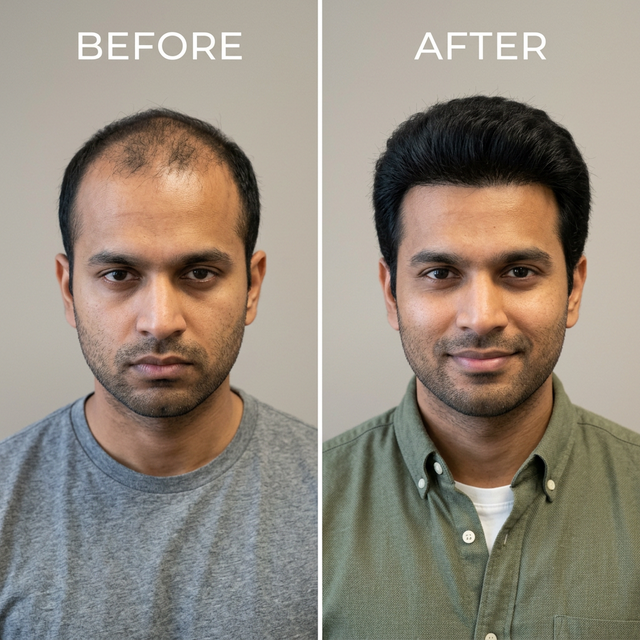
"Is PRP better than hair transplant?" — this is one of the most common questions we hear at DenceSpot Clinic in Gurgaon. The honest answer is that neither treatment is universally better than the other. PRP and hair transplant are fundamentally different procedures designed for different stages and types of hair loss. Choosing the right one depends on your individual condition, your goals, your budget, and how far your hair loss has progressed. In this comprehensive guide, we break down both treatments side by side so you can make a truly informed decision.
At DenceSpot Clinic, Is Prp Better Than Hair Transplant is a very common point of discussion. Hair loss affects millions of people across India, and the search for the right treatment can feel overwhelming. With so much conflicting information available online, it is easy to get confused about whether you should invest in PRP therapy or go straight to a hair transplant. The truth is, both treatments have distinct strengths, limitations, and ideal use cases. Understanding these differences is the key to choosing the path that will give you the best results.
When exploring Is Prp Better Than Hair Transplant, it is crucial to understand all the facts. At DenceSpot Clinic, we offer both PRP therapy and hair transplant surgery, so we have no bias toward either treatment. Our goal is always to recommend what will work best for each individual patient based on a thorough evaluation. Let us walk you through everything you need to know about PRP versus hair transplant.
How PRP Works for Hair Loss
When exploring Is Prp Better Than Hair Transplant, it is crucial to understand all the facts. PRP (Platelet-Rich Plasma) is a non-surgical treatment that uses your body's own healing mechanisms to combat hair loss. A small amount of blood is drawn from your arm, processed in a centrifuge to concentrate the platelets and growth factors, and then injected directly into the areas of your scalp experiencing thinning or hair fall.
When exploring Is Prp Better Than Hair Transplant, it is crucial to understand all the facts. The concentrated growth factors in PRP — including Platelet-Derived Growth Factor (PDGF), Vascular Endothelial Growth Factor (VEGF), and Transforming Growth Factor (TGF) — work by increasing blood supply to the hair follicles, extending the active growth phase (anagen phase) of the hair cycle, and stimulating dormant follicles to begin producing hair again. The entire procedure takes approximately 45 to 60 minutes and requires no downtime whatsoever. You can learn more about the treatment process in our complete guide to PRP.
PRP is most effective for individuals with early to moderate hair thinning where the follicles are still alive but weakened. It strengthens existing hair, reduces shedding, and can reactivate dormant follicles — but it cannot create new follicles or restore hair in areas where follicles have permanently died.
How Hair Transplant Works
Hair transplant is a surgical procedure that involves extracting healthy hair follicles from a donor area — typically the back and sides of the head where hair is genetically resistant to balding — and implanting them into areas of thinning or baldness. The two primary techniques used today are FUE (Follicular Unit Extraction) and FUT (Follicular Unit Transplantation).
In FUE, individual follicular units are extracted one by one using a micro-punch tool, leaving minimal scarring. In FUT, a thin strip of scalp is removed from the donor area, and follicular units are dissected from this strip under a microscope. At DenceSpot Clinic, we primarily perform advanced FUE procedures for their precision and minimal scarring.
Hair transplant is a more intensive procedure that typically takes 4 to 8 hours, is performed under local anaesthesia, and involves a recovery period of 7 to 14 days. However, the results are permanent — the transplanted hair follicles continue to grow hair for a lifetime because they retain their genetic resistance to the hormones that cause pattern baldness.
PRP vs Hair Transplant: Detailed Comparison
Let us compare these two treatments across every factor that matters to patients making this decision.
Cost Comparison
PRP: A single PRP session in Gurgaon typically costs between 3,000 and 15,000 rupees. The initial course involves 3 to 4 sessions spaced 3 to 4 weeks apart, followed by maintenance sessions every 4 to 6 months. The total first-year cost generally ranges from 12,000 to 60,000 rupees, with ongoing annual maintenance costs of 6,000 to 30,000 rupees.
Hair Transplant: The cost of a hair transplant depends largely on the number of grafts required. In Gurgaon, prices typically range from 40,000 to 2,00,000 rupees or more for a single procedure. While this is a larger upfront investment, it is largely a one-time cost with permanent results.
Verdict: PRP is more affordable in the short term, but the ongoing maintenance costs accumulate over the years. Hair transplant requires a larger upfront investment but delivers permanent results without recurring expenses. For patients with early hair loss, PRP offers excellent value. For advanced hair loss requiring a transplant, the one-time surgical cost may be more economical in the long run.
Pain and Comfort
PRP: Involves minimal discomfort. A topical numbing cream is applied before the injections, and most patients describe the sensation as mild pinching. The procedure is very well-tolerated, and patients walk out of the clinic feeling normal.
Hair Transplant: Performed under local anaesthesia, so the procedure itself is not painful. However, the anaesthesia injections at the start can cause temporary discomfort. Post-operatively, patients may experience soreness, tightness, swelling, and mild pain at both the donor and recipient sites for several days. Pain medication is prescribed for the recovery period.
Verdict: PRP is significantly more comfortable both during and after the procedure. Hair transplant involves more physical discomfort, especially during the recovery phase.
Downtime and Recovery
PRP: Zero downtime. You can return to work, exercise, and all normal activities immediately after the session. The only precaution is to avoid washing your hair for 24 hours and to stay away from harsh chemical treatments for a few days.
Hair Transplant: Requires 7 to 14 days of recovery. During the first week, you will need to avoid strenuous physical activity, direct sun exposure, and swimming. The transplanted area will have small scabs that fall off naturally within 10 to 14 days. Most patients take at least 3 to 5 days off work. Full return to all activities, including contact sports, typically takes 3 to 4 weeks.
Verdict: PRP wins decisively on convenience and downtime. It fits easily into a busy schedule, whereas a hair transplant requires planning and time off.
Not Sure Which Treatment Is Right for You?
At DenceSpot Clinic Gurgaon, our hair restoration specialists evaluate your hair loss stage, scalp condition, and goals to recommend the most effective treatment — whether that is PRP, hair transplant, or a combination of both.
Book Free ConsultationResults Timeline
PRP: Initial reduction in hair fall is noticeable within 4 to 6 weeks. Visible improvement in hair thickness and new growth typically appears after the 3rd or 4th session, around the 2 to 3 month mark. Optimal results are seen at 6 to 12 months with consistent treatment. For a detailed breakdown of the timeline, read our guide on how long PRP results last.
Hair Transplant: The transplanted hair initially falls out within 2 to 4 weeks (this is normal and expected — it is called shock shedding). New growth begins around the 3 to 4 month mark. Noticeable improvement is visible at 6 months, and final results with full density are achieved at 12 to 18 months after the procedure.
Verdict: PRP delivers faster initial improvements in hair quality and shedding reduction. However, hair transplant delivers more dramatic and transformative results over the long term, especially for patients with significant hair loss.
Longevity of Results
PRP: Results are temporary and maintenance-dependent. Without ongoing sessions every 4 to 6 months, the benefits gradually diminish as the underlying hair loss condition continues. PRP does not cure hair loss — it manages it. The number of sessions required varies by individual, and you can read more about this in our guide on how many PRP sessions are needed.
Hair Transplant: Results are permanent. The transplanted follicles are taken from areas resistant to DHT (the hormone responsible for pattern baldness), so they continue to grow hair indefinitely in their new location. However, it is important to note that a hair transplant does not stop ongoing hair loss in non-transplanted areas — additional treatment such as PRP or medication may be needed to protect your existing native hair.
Verdict: Hair transplant wins on longevity with permanent results. PRP requires ongoing commitment but offers continuous improvement when maintained properly.
Who Is the Ideal Candidate?
PRP is ideal for: Men and women with early to moderate hair thinning (Norwood stage 1 to 3 for men, Ludwig stage 1 for women), patients experiencing diffuse thinning across the scalp, individuals with Telogen Effluvium or stress-related hair loss, patients who want to delay or avoid surgery, younger patients in the early stages of hair loss, and post-transplant patients looking to enhance and maintain results.
Hair transplant is ideal for: Men and women with advanced hair loss (Norwood stage 3 to 7 for men, Ludwig stage 2 to 3 for women), patients with stable hair loss patterns and adequate donor hair, individuals with clearly defined bald patches or receding hairlines, patients seeking a permanent one-time solution, and those who have not achieved satisfactory results with non-surgical treatments alone.
When Is PRP the Better Choice?
PRP is the better choice when your hair loss is in its early stages and your follicles are still active. If you are noticing increased shedding, gradual thinning on the crown, or a slightly receding hairline — but your scalp still has visible hair coverage — PRP can be remarkably effective at halting the progression and restoring thickness.
PRP is also the better option if you want to avoid surgery entirely, if you have a limited budget for hair restoration, or if your lifestyle does not permit the downtime associated with a transplant. For women experiencing diffuse thinning — a pattern of hair loss where the thinning is spread across the entire scalp rather than concentrated in patches — PRP is often the primary recommended treatment because a transplant may not be suitable for this pattern.
Additionally, PRP is the preferred choice as a preventive measure. If you have a family history of baldness and are starting to see early signs of thinning, beginning PRP therapy early can significantly slow the progression of hair loss and preserve your existing hair for years longer than it would last without treatment.
When Is Hair Transplant the Better Choice?
Hair transplant is the better choice when hair loss has progressed to the point where there are clearly bald areas on the scalp with no remaining active follicles. In these areas, no amount of PRP, medication, or topical treatment can regrow hair because the follicles simply no longer exist. A transplant is the only way to restore hair coverage in these regions.
A transplant is also the better option for patients who want a permanent, one-time solution and are willing to invest the time and money upfront rather than committing to ongoing maintenance sessions. For men with a significantly receded hairline or large bald areas on the crown, a well-executed hair transplant at a reputable clinic can be truly life-changing.
The Best of Both Worlds: Combining PRP and Hair Transplant
At DenceSpot Clinic, we frequently recommend combining PRP and hair transplant for patients who want the most comprehensive results possible. This combined approach is increasingly recognized as the gold standard in modern hair restoration, and here is why it works so well:
PRP before transplant: Administering PRP sessions in the weeks leading up to a hair transplant strengthens the scalp, improves blood flow, and creates an optimal environment for graft survival. Studies show that pre-transplant PRP can increase graft take rates significantly.
PRP after transplant: Post-transplant PRP sessions accelerate the healing process, reduce inflammation, promote faster growth of the transplanted follicles, and help protect and strengthen the existing native hair surrounding the transplanted grafts. This dual benefit ensures that your transplant results look natural and dense.
Ongoing PRP maintenance: Even after a successful transplant, the hair loss process continues in non-transplanted areas. Regular PRP maintenance sessions help preserve your remaining native hair, delaying or preventing the need for a second transplant procedure in the future.
Quick Comparison Summary
Procedure type: PRP is non-surgical with injections only, while hair transplant is a surgical procedure requiring local anaesthesia.
Duration: PRP takes 45 to 60 minutes per session. Hair transplant takes 4 to 8 hours.
Pain level: PRP involves mild discomfort. Hair transplant involves moderate discomfort during recovery.
Downtime: PRP has zero downtime. Hair transplant requires 7 to 14 days of recovery.
Results timeline: PRP shows improvement in 2 to 3 months. Hair transplant shows final results at 12 to 18 months.
Longevity: PRP results require maintenance every 4 to 6 months. Hair transplant results are permanent.
Cost: PRP costs 3,000 to 15,000 rupees per session. Hair transplant costs 40,000 to 2,00,000 rupees total.
Best for: PRP is best for early to moderate thinning. Hair transplant is best for advanced baldness.
Can be combined: Yes — combining both treatments delivers the most comprehensive and lasting results.
Get a Personalized Hair Restoration Plan
Every patient's hair loss is unique. At DenceSpot Clinic Gurgaon, we assess your specific condition and recommend the treatment — or combination of treatments — that will deliver the best results for you. Book your free consultation today.
Book Free ConsultationFrequently Asked Questions
Is PRP better than hair transplant for early hair loss?
Yes, for early-stage hair thinning and mild hair loss, PRP is generally the better option. It is non-surgical, requires no downtime, and works by strengthening existing hair follicles. Hair transplant is typically recommended for advanced hair loss where follicles are already dead and cannot be revived.
Can I get PRP and hair transplant together?
Absolutely. Combining PRP with hair transplant is one of the most effective strategies for hair restoration. PRP is administered before the transplant to strengthen the scalp and after the procedure to improve graft survival, accelerate healing, and enhance overall density. Most leading clinics, including DenceSpot, recommend this combined approach.
Which is more expensive — PRP or hair transplant?
Hair transplant is significantly more expensive as a one-time procedure, typically costing between 40,000 and 2,00,000 rupees or more depending on the number of grafts. PRP costs between 3,000 and 15,000 rupees per session, with 3 to 4 initial sessions recommended. However, PRP requires ongoing maintenance sessions every 4 to 6 months, so the long-term cost adds up over time.
How long do PRP results last compared to hair transplant?
Hair transplant results are permanent because the transplanted follicles are genetically resistant to balding. PRP results typically last 6 to 12 months before a maintenance session is needed. Without maintenance, the benefits of PRP gradually diminish over time as the underlying hair loss condition continues.
Is PRP painful compared to hair transplant?
PRP involves minimal discomfort — most patients describe it as a mild pinching sensation, and the procedure takes about 45 to 60 minutes. Hair transplant is a surgical procedure performed under local anaesthesia that can take 4 to 8 hours. While not intensely painful during the procedure, the post-operative recovery involves more discomfort, swelling, and soreness compared to PRP.
Can PRP regrow hair on a completely bald scalp?
No. PRP works by stimulating and strengthening existing hair follicles that are weak or dormant. It cannot revive follicles that are completely dead or create new follicles. For areas of complete baldness, a hair transplant is the appropriate treatment to restore hair coverage.
What is the success rate of PRP vs hair transplant?
PRP has a success rate of approximately 70 to 80 percent in reducing hair fall and improving hair density in suitable candidates with early to moderate hair loss. Hair transplant has a graft survival rate of 90 to 95 percent when performed by an experienced surgeon. Both treatments have high success rates when used for the right indications.
How do I decide between PRP and hair transplant?
The decision depends on the stage of your hair loss, your budget, and your goals. If you have early to moderate thinning with active follicles, PRP is an excellent non-surgical option. If you have advanced baldness with large areas of permanent hair loss, a hair transplant is more appropriate. A consultation with a hair restoration specialist at DenceSpot Clinic can help you determine the best treatment plan.