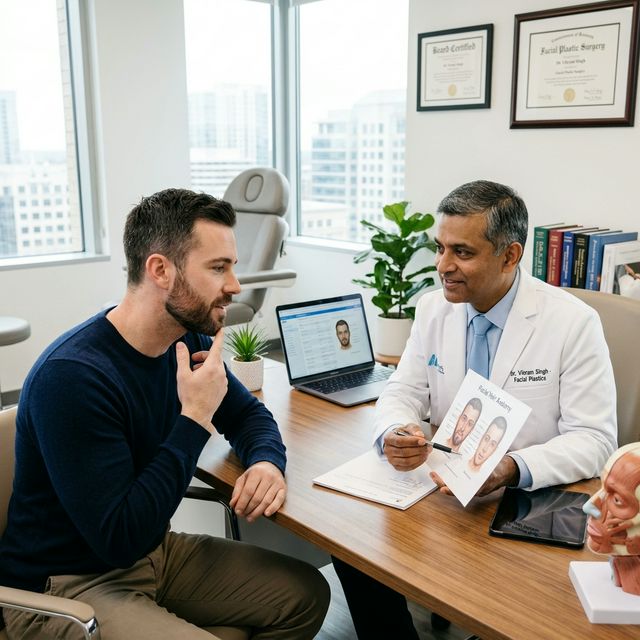
Is Beard Transplant Safe is a common topic of discussion. Thousands of men suffer from severely patchy beards, bare cheeks, and disconnected jawlines due to genetics. While the promise of a thick, permanent beard is alluring, the single biggest hesitation is always medical anxiety. The most common question asked during consultations is simply: "Is a beard transplant safe?"
Is Beard Transplant Safe is a common topic of discussion. At DenceSpot Clinic Gurgaon, patient safety and impeccable aesthetic outcomes are the core pillars of our surgical practice. A surgical beard transplant is an extraordinarily detailed, highly artistic medical procedure. In this massive 1,500-word deep dive, we are going to bluntly strip away the marketing, meticulously outline the clinical FUE process, answer exactly what issues a transplant cures, and establish exactly how safe it is.
Understanding the Modern FUE Method
Is Beard Transplant Safe is a common topic of discussion. To understand the safety of the procedure, you must understand exactly how it is performed today. Twenty years ago, beard transplants relied on "FUT" (Follicular Unit Transplantation), where a surgeon literally cut a massive, brutal strip of skin out of the back of your head with a scalpel. This caused severe scarring and an agonizing recovery.
Is Beard Transplant Safe is a common topic of discussion. Today, DenceSpot Clinic exclusively utilizes Advanced FUE (Follicular Unit Extraction). FUE is a massive leap forward in surgical safety and aesthetic outcome.
- Extraction (No Scalpels): Using a microscopic punch tool (often less than 0.8mm in diameter), the surgeon gently extracts individual hair follicles one by one from the back of the scalp. There are absolutely no scalpels, no large incisions, and zero stitches required.
- Implantation: Using identical micro-tools, Dr. Nyra creates microscopic slits in the bald patches of your beard and elegantly slides the extracted hair follicles into place at precise, natural angles.
Is Beard Transplant Safe is a common topic of discussion. Because there are no major incisions, the safety profile of an FUE beard transplant is astronomically higher than traditional cosmetic surgeries.
Is there a Risk of Rejection?
Is Beard Transplant Safe is a common topic of discussion. When people think of "transplants" (like a kidney or liver), they fear that their body’s immune system will violently reject the foreign organ, requiring lifelong immunosuppressive drugs.
This is a complete non-issue with beard transplants. A beard transplant is strictly an autologous graft. This means the donor material (the hair follicle) is 100% your own DNA, harvested from your own body. Your immune system recognizes the follicle perfectly. There is an absolute zero percent risk of bodily autoimmune rejection. This is exactly why a beard transplant provides permanent, lifelong results safely.
The 3 Managed Risks & Side Effects
While an FUE beard transplant is classified as a safe, minimally-invasive outpatient procedure, it is still surgery. When performed in a sterile clinical environment by a board-certified surgeon, the severe risks are effectively mitigated. However, you will experience guaranteed mild side effects during healing.
1. Post-Operative Swelling & Redness
The facial skin is incredibly vascular (full of blood vessels). By making hundreds of tiny micro-incisions to implant the new hair, localized trauma occurs. You will absolutely experience visible swelling and redness on the cheeks and jawline for the first 3 to 5 days. This is a normal, healthy immune response to heal the micro-wounds, but it requires social downtime. You can learn exactly how microneedling trauma also triggers extreme healing on a smaller scale.
2. The Micro-Crusting (Scabs)
Within 24 hours of the surgery, tiny blood clots will form at the base of every single newly implanted hair follicle. These dry into dark, pin-point scabs covering the beard area. This looks intimidating, but it is nature's band-aid. These crusts must be allowed to fall off naturally during washing over the next 7 to 10 days. Scratching them off early risks ripping the newly implanted follicle entirely out of the skin.
3. The Dreaded "Shock Loss"
Around week 3 to 4, patients often panic because the newly transplanted beard hairs suddenly fall out. This is perfectly safe and expected. The trauma of the transfer forces the follicle into an aggressive resting state. The follicle sheds the hair shaft, rests beneath the skin for 2 months, and then begins eternally cycling brand new, permanent terminal hairs. Just like the shedding phase famously experienced with Minoxidil, you must simply wait it out.
| Potential Risk | Frequency with FUE | How DenceSpot Mitigates It |
|---|---|---|
| Autoimmune Rejection | 0% (Zero) | We strictly transfer your own native, autologous DNA hair follicles. |
| Severe Bacterial Infection | Incredibly Rare (< 1%) | Procedures happen in hyper-sterile OT; post-op oral antibiotics provided. |
| Terrible Visible Scarring | Very Low (with FUE) | We use <0.8mm micro-punches. No scalpel, no stitches required. |
| Cobblestone Skin Appearance | Low (Technique dependent) | Dr. Nyra uses microscopic, impossibly flat incision angles so the follicle seats flush. |
The Anesthesia: Pain and Comfort
One of the primary safety concerns is the pain of the procedure. Beard transplants are performed entirely under Local Anesthesia. This is exactly what a dentist uses. You are fully awake, alert, and capable of watching television on your phone or holding a conversation with the surgical staff.
The only discomfort is the initial numbing injections administered to the donor area and the cheeks. Once numbness sets in, you will not feel a single microscopic incision or extraction for the entire 4-to-6 hour duration. You walk into the clinic in the morning and walk out that same afternoon under your own power, making it incredibly safe compared to heavy general anesthesia surgeries.
When is a Beard Transplant UNSAFE?
The procedure is fundamentally safe, but the execution determines the disaster. A beard transplant becomes highly unsafe and aesthetically ruinous when performed by unqualified hands in third-party "black market" clinics.
- The "Cobblestone" Disaster: If a poorly trained technician makes the implantation slits too deep or implants grafts containing 3-4 hairs (instead of single solitary hairs) directly into the cheek, the skin will heal with massive, raised, bumpy bumps called "cobblestoning." It looks horrific and is incredibly difficult to fix.
- Awkward Growth Angles: Native beard hair naturally points sharply downwards against the face. If an untrained tech implants the follicles pointing outwards at a 90-degree angle, the beard will grow straight out like a porcupine. It destroys the aesthetic. This requires deep anatomical study and artistry to correct genetic gaps naturally.
Ensuring Success: Post-Op Care
Your actions immediately following the surgery strictly control the safety and final survival rate of the grafts. By day 3, the grafts have taken root into the blood supply. You must heavily regulate your diet, understanding exactly what amino-acid heavy foods promote supreme wound cellular recovery, and actively avoiding vitamin bottlenecks in Keratin synthesis. You must avoid severe physical exertion and heavy seating for ten days to prevent blood pressure spikes that could "pop" the tiny grafts out of their slits. Follow all hyper-strict aftercare protocols provided.
If you are not quite ready for full surgery but possess existing (yet incredibly weak) facial hair, 100% natural, clinical PRP Therapy offers a risk-free biological boost. Patients love massive success rates of PRP, and the relatively rapid thickening timeline of PRP results. Be sure to review our world-class surgical precision in our Beard Transplant Gallery.
Ready to Safely Achieve the Perfect Beard?
Stop worrying about unsafe black-market clinics. At DenceSpot Clinic Gurgaon, your facial symmetry and absolute surgical safety are our highest priorities. Consult with Dr. Nyra today to discover how our precise FUE Beard Transplants deliver safe, permanent, breathtaking aesthetic results.
Book a Free Private Consultation NowFrequently Asked Questions
Is an FUE beard transplant generally safe?
Yes, when performed by a board-certified hair restoration surgeon in a sterile clinic, an FUE beard transplant is an incredibly safe, minimally invasive outpatient procedure performed under local anesthesia.
Will a beard transplant leave horrible scars on my face?
No. Modern FUE techniques use micromotor punches smaller than 0.8mm. The tiny implantation sites on the face heal remarkably fast, leaving virtually microscopic, invisible scars once fully healed.
What are the most common side effects of beard transplants?
The most common immediate side effects are localized swelling, redness, and mild crusting around the implanted follicles for the first week. Post-operative infection is extremely rare with antibiotics.
How long does it take for a beard transplant to fully heal?
The micro-crusts on the face will fall off within 7 to 10 days. The donor area on the back of the head heals in a similar timeframe. The face appears totally normal within two weeks.
Can my body reject the transplanted beard hair?
No. Because the surgeon is transplanting your own genetic hair (harvested from the back of your head), there is absolute zero risk of autoimmune rejection, unlike organ transplants.