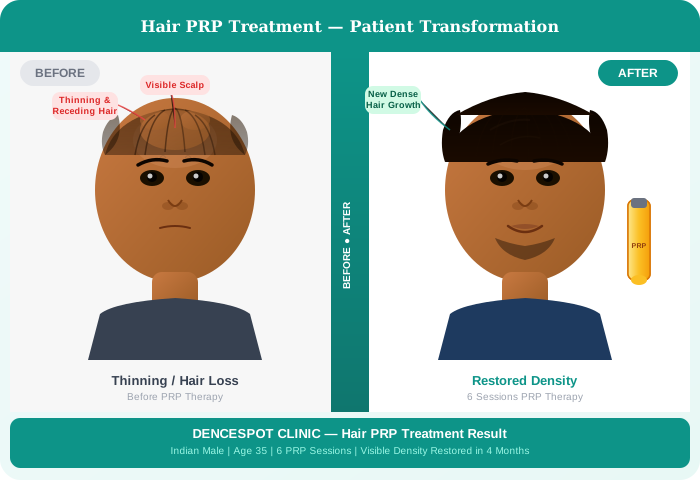
When exploring Does Prp Restore Hairline, it is crucial to understand all the facts. A receding hairline is one of the most visible and emotionally distressing signs of hair loss. PRP (Platelet-Rich Plasma) therapy has gained significant attention as a non-surgical option for hairline restoration -- but it is critical to understand what it can and cannot do. This guide provides an honest, evidence-based assessment of PRP for hairline recession so you can make an informed decision.
The topic of Does Prp Restore Hairline is highly relevant for anyone considering treatment. If your hairline has started creeping backward and you are researching non-surgical options, PRP therapy is likely on your radar. It is one of the most widely discussed treatments in hair restoration today, and for good reason -- clinical evidence supports its ability to stimulate hair growth and thicken existing hair. But when it comes specifically to the hairline, the picture is more nuanced than many clinics will tell you. The hairline is a unique zone with its own challenges, and PRP works better in some situations than others. Here is a thorough, realistic breakdown.
Why Hairlines Recede in the First Place
Understanding Does Prp Restore Hairline can significantly impact your final results. Before understanding whether PRP can help your hairline, it is essential to understand why hairlines recede. The vast majority of hairline recession in men is caused by androgenetic alopecia -- male pattern baldness. This condition is driven by a combination of genetics and the hormone DHT (dihydrotestosterone).
Many patients ask us about Does Prp Restore Hairline during their consultations. DHT binds to androgen receptors on hair follicles in genetically susceptible areas of the scalp. The frontal hairline and temples are among the most DHT-sensitive zones on the head. When DHT attaches to these follicles, it triggers a process called follicular miniaturization: the hair growth cycle shortens, the follicle physically shrinks, and each successive hair it produces becomes finer, shorter, and lighter in colour. Eventually, the follicle stops producing visible hair altogether and may become permanently dormant or fibrosed (scarred over).
Many patients ask us about Does Prp Restore Hairline during their consultations. This process happens gradually over years or decades. In early stages, the follicles are still alive but weakened. In advanced stages, the follicles are essentially gone. This distinction is the single most important factor in determining whether PRP therapy can help your hairline.
Can PRP Really Restore a Hairline?
Understanding Does Prp Restore Hairline can significantly impact your final results. The honest answer is: it depends on the stage of your recession. PRP delivers a concentrated dose of growth factors directly to the scalp, which can stimulate weakened follicles and push them back into an active growth phase. Research published in the Journal of Cutaneous and Aesthetic Surgery and multiple meta-analyses have confirmed that PRP increases hair count, hair diameter, and the density of actively growing follicles.
However, PRP has a fundamental limitation that applies to every area of the scalp, including the hairline: it can only work on follicles that still exist. PRP cannot regenerate follicles that have been permanently destroyed or scarred over. It revitalizes -- it does not resurrect. This is not a shortcoming of the treatment; it is a biological reality that applies to every non-surgical hair loss therapy currently available.
For a deeper understanding of how PRP works at the cellular level, read our guide on what PRP hair treatment involves.
When PRP Works for Hairline Restoration
PRP is most effective for the hairline in the following scenarios:
Early Recession with Miniaturized Follicles (Norwood 1-3)
If your hairline has started to thin or recede slightly, but you can still see fine, wispy hairs along the frontal hairline and temples, those miniaturized follicles are excellent candidates for PRP. The growth factors in PRP -- including PDGF, VEGF, and EGF -- can reverse the miniaturization process in these weakened follicles, causing them to produce thicker, longer, more visible hairs over the course of several months.
Patients in this category often see meaningful improvement: the hairline appears denser, the thin border zone fills in, and the visual appearance of recession is reduced. This is where PRP delivers its best results for the hairline.
Post-Transplant Hairline Support
After a hair transplant, PRP is frequently used to improve graft survival, accelerate healing, and protect the native hair surrounding the transplanted hairline. In this context, PRP is not restoring the hairline on its own but supporting and enhancing the surgical result.
Women with Frontal Thinning
Female pattern hair loss often affects the frontal hairline differently than in men. Women tend to retain their frontal hairline longer but experience diffuse thinning along the part line and frontal zone. PRP can be particularly effective here because there are typically many miniaturized follicles to work with.
When PRP Alone Is Not Enough for Hairline
It is equally important to understand the situations where PRP will not deliver the results you are hoping for:
Advanced Recession (Norwood 4 and Above)
If your hairline has receded significantly and the frontal scalp is smooth with no visible fine hairs, the follicles in that area have likely been permanently destroyed. No amount of PRP injections can bring them back. In these cases, patients who undergo PRP hoping to restore a well-defined hairline will be disappointed. Being upfront about this is essential -- and any clinic that promises PRP can regrow a fully receded hairline is not being honest with you.
Long-Standing Complete Baldness at the Temples
The temporal points (the corners of the hairline) are often the first to go in male pattern baldness and the most resistant to non-surgical treatment. If your temple points have been fully receded for years, PRP is unlikely to make a visible difference in those specific areas.
Scarring Alopecia Affecting the Hairline
Conditions like frontal fibrosing alopecia (FFA) cause scarring that permanently destroys follicles along the hairline. PRP cannot reverse scarring-type hair loss. If you suspect your hairline recession has an unusual pattern or is accompanied by redness or itching, see a dermatologist for a proper diagnosis before pursuing any treatment.
Concerned About Your Hairline?
Get an honest assessment from our expert dermatologists at DenceSpot Clinic, Gurgaon. We use trichoscopy and digital scalp analysis to determine whether PRP, a transplant, or a combination approach is right for your hairline.
Book Free ConsultationThe Best Approach: PRP Combined with Hair Transplant for Hairline
For many patients with moderate to advanced hairline recession, the most effective strategy is not PRP or transplant -- it is both. Here is how the combination works:
- Hair Transplant Recreates the Hairline Frame: An FUE (Follicular Unit Extraction) or FUT procedure surgically moves DHT-resistant follicles from the back of the scalp to the frontal hairline, restoring a natural, well-defined frame. This is the only way to place new hair in areas where follicles no longer exist.
- PRP Protects and Enhances: PRP sessions before and after the transplant serve multiple purposes. Pre-transplant PRP strengthens existing miniaturized hairs in the transition zone. Post-transplant PRP improves graft survival rates, accelerates healing, and reduces inflammation. Ongoing PRP maintenance protects native hair behind the transplanted hairline from continued recession.
- Microneedling Amplifies Results: Adding scalp microneedling to the PRP protocol creates micro-channels that improve PRP absorption and trigger additional growth factor release through the wound-healing response.
This combined approach delivers the most natural-looking and long-lasting hairline restoration available today. At DenceSpot, we frequently use this protocol for patients seeking comprehensive hairline improvement. For more on separating fact from fiction about transplants, see our guide on hair transplant myths vs facts.
Clinical Evidence: What Studies Say About PRP and the Hairline
While most PRP studies measure overall scalp hair density rather than hairline-specific outcomes, several findings are directly relevant:
- A 2019 meta-analysis of 11 randomized controlled trials confirmed that PRP significantly increases hair density and hair diameter compared to placebo. The improvements were most pronounced in areas with active miniaturization -- exactly the type of follicle often found along a mildly receding hairline.
- A 2020 study in Dermatologic Surgery demonstrated that PRP combined with microneedling produced statistically superior results to either treatment alone, with patients showing increased hair count and thicker individual hair shafts at the 6-month mark.
- Research on PRP as a post-transplant adjunct has shown improved graft survival rates (some studies reporting up to 15% better survival) and faster growth onset in the transplanted hairline zone.
- A 2021 study in the International Journal of Trichology found that patients with early androgenetic alopecia (Norwood 2-3) showed the most robust response to PRP therapy, reinforcing that early intervention at the hairline level yields the best non-surgical results.
The evidence is clear: PRP works, but it works best when follicles are still viable. The earlier you begin treatment after noticing hairline recession, the better your chances of meaningful improvement.
What to Expect Realistically: A Hairline-Specific Timeline
The frontal hairline tends to respond more slowly to PRP than the crown or mid-scalp because the follicles in this area are under greater DHT pressure and are often more miniaturized by the time patients seek treatment. Here is a realistic timeline for PRP hairline treatment:
- Weeks 1-6 (Sessions 1-2): Reduced hair shedding is typically the first sign. The hairline itself will not look visibly different yet. The scalp may feel slightly healthier and less irritated.
- Months 2-4 (Sessions 3-5): Fine vellus (baby) hairs may begin to appear along the hairline border. Existing thin hairs start to thicken slightly. Progress is subtle and best documented with clinical photographs rather than mirror checks.
- Months 4-8 (Completing Course + Boosters): The most noticeable improvement period. Miniaturized hairs along the hairline become thicker and more pigmented. The hairline appears denser and the visual recession is softened. This is not a dramatic before-and-after transformation but a meaningful, natural-looking improvement.
- Months 8-12 (Maintenance Phase): Peak results from the initial treatment course. Maintenance sessions every 3-6 months are essential to sustain gains, as the underlying hormonal process of androgenetic alopecia continues.
Maximizing Your Hairline Results with PRP
If you and your dermatologist determine that PRP is appropriate for your hairline, here is how to get the best possible outcome:
- Start Early: The single most important factor is timing. The more viable follicles present along the hairline, the more PRP has to work with. Do not wait until the hairline is fully receded to seek treatment.
- Complete the Full Course: PRP requires cumulative sessions to deliver results. Stopping after 2-3 sessions because you do not see dramatic changes yet is the most common reason for perceived treatment failure. Commit to 4-6 sessions minimum.
- Add Microneedling: Ask your dermatologist about combining PRP with microneedling. The evidence for this combination is stronger than for PRP alone.
- Consider Complementary Medical Therapy: For men, finasteride or dutasteride can reduce DHT levels systemically, slowing the hormonal attack on hairline follicles while PRP works to strengthen them. Minoxidil applied to the hairline can further boost results. This multi-pronged approach addresses hair loss from multiple angles simultaneously.
- Maintain Scalp Health: A healthy scalp environment supports better PRP outcomes. Avoid harsh chemical products on the frontal hairline, manage dandruff or seborrheic dermatitis if present, and keep the scalp clean. For broader hair care strategies, see our complete guide to controlling hair fall.
- Follow Maintenance Schedules: Androgenetic alopecia is a progressive condition. Without maintenance sessions, the gains from PRP will gradually diminish. Plan for ongoing quarterly or biannual sessions as part of your long-term hair health strategy.
- Be Honest with Yourself About Expectations: If your dermatologist recommends a transplant for your hairline, take that advice seriously. PRP is a powerful tool but it has clear biological limits. Using it where it works and opting for surgery where it is needed is the smartest approach to hairline restoration.
Get a Personalized Hairline Restoration Plan
Whether you need PRP, a hair transplant, or a combination approach, our team at DenceSpot Clinic will give you an honest assessment and a customized plan. No overselling -- just the right treatment for your specific situation.
Book Free ConsultationThe Bottom Line
PRP can improve a receding hairline -- but only when viable hair follicles are still present. For early-stage recession (Norwood 1-3) with miniaturized hairs along the frontal hairline, PRP offers a genuine, evidence-backed path to thicker, denser hair and a visually improved hairline. For advanced recession where follicles have been permanently lost, PRP alone will not deliver the transformation you want, and a hair transplant becomes the appropriate solution.
The most effective hairline restoration strategies often combine PRP with surgical and medical treatments for a comprehensive approach. Whatever your situation, the most important step is getting an accurate diagnosis and an honest assessment from a qualified dermatologist. At DenceSpot Clinic in Gurgaon, we believe in transparency -- we will tell you what PRP can do for your hairline and, just as importantly, when you need something more.
If you are noticing early signs of hairline recession, the time to act is now. Book a free consultation with our team and find out exactly where you stand.
Frequently Asked Questions
Can PRP restore a receding hairline?
PRP can improve a receding hairline in early stages (Norwood 1-3) where hair follicles are miniaturized but still alive. It thickens existing thin hairs and can reactivate recently dormant follicles along the hairline. However, it cannot regrow hair in areas where follicles have been permanently lost.
How many PRP sessions are needed for hairline improvement?
Most patients need 4-6 initial sessions spaced 3-4 weeks apart to see visible hairline improvement. The frontal hairline area often requires the full course plus 2-3 booster sessions, as it tends to respond more slowly than the crown or mid-scalp.
Is PRP or hair transplant better for hairline restoration?
It depends on the degree of recession. For early thinning with miniaturized hairs still present, PRP can produce meaningful improvement. For advanced recession (Norwood 4+) where the hairline has fully receded, a hair transplant is the only way to recreate a defined hairline. Many patients benefit from both -- a transplant to restore the frame and PRP to maintain density.
How long do PRP results last on the hairline?
PRP results on the hairline typically last 6-12 months after completing the initial course. Because androgenetic alopecia is progressive, maintenance sessions every 3-6 months are essential to sustain the gains. Without maintenance, the hairline will gradually return to its pre-treatment state.
Does PRP work for temple recession?
PRP can slow temple recession and thicken miniaturized hairs in the temple area during early stages. However, the temporal points are among the first areas to lose follicles permanently in male pattern baldness, so results depend heavily on how much viable follicle tissue remains. Early intervention gives the best outcomes.
Can women use PRP for hairline thinning?
Yes, PRP is effective for women experiencing hairline thinning or a widening part along the frontal hairline. Female pattern hair loss typically preserves the frontal hairline better than male pattern baldness, so women often respond well to PRP in this area.
What happens if PRP does not work for my hairline?
If PRP does not produce satisfactory hairline improvement after a full course of treatment, your dermatologist may recommend a hair transplant (FUE or FUT) to surgically restore the hairline. PRP can then be used post-transplant to improve graft survival and protect remaining native hair.
Is PRP for the hairline painful?
The hairline area can be slightly more sensitive than the crown during PRP injections because the skin is thinner. However, a topical numbing cream or nerve block is applied before the procedure, so most patients report only mild discomfort. Any tenderness resolves within 24-48 hours.