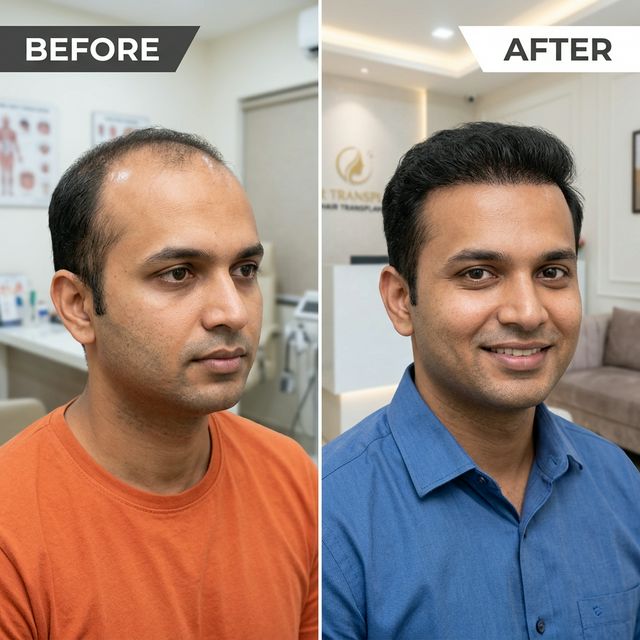
Many patients ask us about Is Prp Effective For Hair Growth during their consultations. "Is PRP actually effective for hair growth, or will I be disappointed?" This is perhaps the most practical question patients ask at DenceSpot Clinic Gurgaon. In this article, we provide a data-driven answer based on clinical trials, our own patient outcomes, and practical experience.
When exploring Is Prp Effective For Hair Growth, it is crucial to understand all the facts. Effectiveness is not a yes-or-no question — it depends on multiple factors including your hair loss type, stage, age, health, and the quality of PRP treatment you receive. This guide gives you the complete picture so you can make an informed decision.
Clinical Trial Data: How Effective Is PRP for Hair Growth?
Let us look at the hard numbers from published clinical trials:
Hair Density Improvements
- Gentile et al. (2015): 45.9% increase in hair density in PRP-treated areas vs control — the most cited study in PRP hair research.
- Cervelli et al. (2014): 33.6 more hairs per cm² in PRP-treated scalp areas after 3 sessions.
- Rodrigues et al. (2019): 29% improvement in hair density vs 2% in placebo — a compelling difference.
- Aggregate data: Across multiple studies, PRP produces a 20-45% improvement in hair density for responding patients.
Hair Thickness Improvements
- Average increase in individual hair shaft diameter: 20-30%
- Conversion of vellus (thin) to terminal (thick) hairs documented in trichoscopy studies
- Hair caliber improvements sustained for 6-12 months with maintenance
Hair Fall Reduction
- Daily hair shedding reduced by 50-70% in responding patients
- Improvement typically noticeable within 4-6 weeks of first session
- Sustained with ongoing maintenance treatment
The Effectiveness Spectrum: Where Do You Fall?
Many patients ask us about Is Prp Effective For Hair Growth during their consultations. Based on clinical data and our experience at DenceSpot, here is how we classify expected effectiveness:
Highly Effective (70-90% response rate)
- Early-stage thinning (Norwood 2-3 for men, Ludwig 1-2 for women)
- Hair loss onset within 5 years
- Age 20-40
- Good overall health and platelet count
- Committed to full treatment protocol (3-4+ sessions)
These patients typically see a clear, satisfying improvement that they and others notice.
Moderately Effective (40-60% response rate)
- Moderate thinning (Norwood 4-5)
- Hair loss lasting 5-10 years
- Age 40-55
- Minor nutritional deficiencies present
Understanding Is Prp Effective For Hair Growth can significantly impact your final results. These patients see improvement in hair thickness and reduced shedding, though density improvement may be more modest.
Limited Effectiveness (10-30% response rate)
- Advanced baldness (Norwood 6-7)
- Hair loss lasting 10+ years
- Significant medical conditions affecting blood quality
- Scarring alopecia
For these patients, PRP alone is unlikely to produce satisfying results. A hair transplant combined with PRP is typically recommended.
What Makes PRP More or Less Effective?
Factors That Increase Effectiveness
- Higher platelet concentration: Double-spin centrifugation yielding 5-8x concentration produces superior results compared to single-spin methods.
- Early intervention: Starting PRP at the first signs of thinning maximizes the number of viable follicles available for reactivation.
- Combination therapy: Adding microneedling to PRP enhances growth factor absorption and adds wound-healing stimulation.
- Proper nutrition: Adequate iron, vitamin D, B12, and zinc levels support better platelet function and follicle response. Eating the right foods for hair growth supports PRP effectiveness.
- Full protocol compliance: Completing all recommended sessions and maintenance appointments.
Factors That Reduce Effectiveness
- Low platelet count: Thrombocytopenia or blood disorders reduce PRP potency.
- Smoking: Smoking impairs blood flow and reduces the quality of growth factors in platelets.
- Chronic stress: Elevated cortisol counteracts the positive effects of PRP on follicles.
- Poor-quality PRP preparation: Single-spin or inadequately processed PRP contains fewer growth factors.
- Incomplete protocol: Stopping after 1-2 sessions before the full loading phase is complete.
PRP Effectiveness Timeline for Hair Growth
Week 1-2: Cellular Activation
Growth factors begin stimulating follicle stem cells. Increased blood vessel formation around follicles begins. No visible changes yet — but the process has started beneath the scalp surface.
Week 3-6: Reduced Shedding
The first measurable sign of effectiveness. Daily hair fall decreases significantly. Follicles begin transitioning from resting to growth phase. This is when many patients feel the first sense of hope.
Month 2-3: Hair Quality Improvement
Existing hair feels stronger, has more body, and appears healthier. Trichoscopy measurements show increased hair shaft diameter. The foundation for visible regrowth is being built.
Month 3-5: Visible New Growth
Fine vellus hairs appear in thinning areas. These gradually thicken into visible terminal hairs. Hair density begins measurably improving. This is the stage where most patients confirm that PRP is working for them.
Month 6-12: Peak Effectiveness
With maintenance sessions, results reach their maximum potential. Hair density and thickness are at their best. Before-and-after photographs show clear improvement. Maintaining a good hair care routine helps sustain these results.
How DenceSpot Maximizes PRP Effectiveness
- Pre-Treatment Optimization: Blood work and nutritional assessment to ensure your body is primed for the best PRP response.
- Advanced Preparation: FDA-approved double-spin centrifugation for optimal platelet concentration.
- Strategic Injection Protocol: Customized injection mapping based on your specific thinning pattern and trichoscopy findings.
- Combination Approach: Integration with microneedling, LED therapy, or medical management based on individual needs.
- Objective Monitoring: Digital trichoscopy measurements at each session to track effectiveness scientifically — not just subjectively.
Maximize Your Hair Growth Potential
The effectiveness of PRP depends on your individual factors. Get a personalized assessment to understand what PRP can achieve for your specific hair growth goals.
Book Growth AssessmentFrequently Asked Questions
How effective is PRP for hair growth on a scale of 1-10?
For suitable candidates (early to moderate thinning), PRP effectiveness rates about 7-8 out of 10. For advanced baldness, it drops to 3-4 out of 10. The key factor is how many viable dormant follicles remain on your scalp.
Is one session of PRP effective for hair growth?
A single PRP session provides some benefit, but it is not enough for visible results. Clinical studies consistently show that 3-4 sessions are needed for meaningful hair growth improvement. Think of it like exercise — one gym session does not build fitness.
Is PRP more effective than laser therapy for hair growth?
Clinical trials generally show PRP produces more robust hair growth improvements than low-level laser therapy alone. However, combining both treatments creates a synergistic effect that outperforms either individually.
At what age is PRP most effective for hair growth?
PRP tends to be most effective in patients aged 20-45 with recent-onset hair thinning. Younger patients typically have more viable dormant follicles and better platelet quality, leading to stronger growth responses.
Is PRP effective for hair growth in the front of the head?
The frontal hairline shows moderate response to PRP. It is more effective at thickening existing miniaturized hairs than regrowing hair in areas of complete recession. For frontal restoration, combining PRP with a transplant is often recommended.
Can PRP be effective without maintenance sessions?
Initial results from PRP can last 6-12 months, but without maintenance sessions, the benefits gradually diminish as the natural hair loss process continues. Regular maintenance every 4-6 months preserves and builds upon the growth achieved.