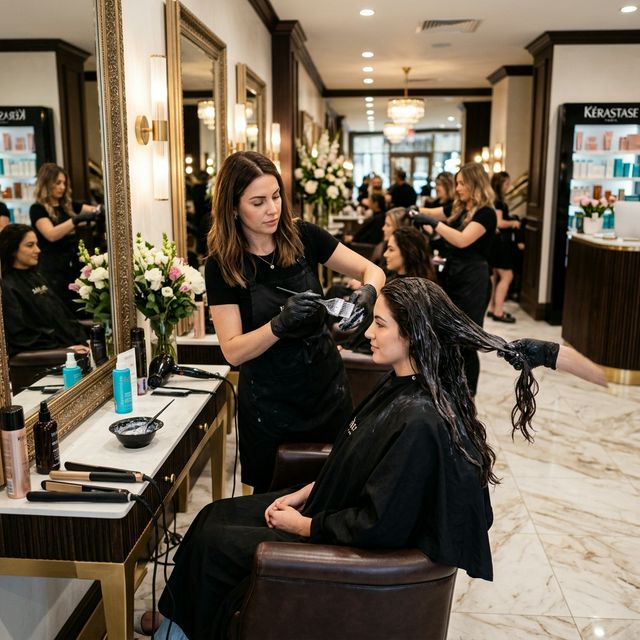
Straight, sleek hair is a look that never goes out of style. But if you have naturally curly or wavy hair, achieving that smooth finish often feels like a battle against your own biology. The good news is that you do not always need expensive salon treatments or damaging chemicals. In this complete guide, we explore how to straighten hair naturally at home using safe, effective methods that actually work.
Whether you are looking for a temporary transformation for a special occasion or a long-term shift in your hair texture, there are options for everyone. From simple kitchen ingredients to professional-grade treatments, we will cover every method — along with their pros, cons, and realistic expectations. At DenceSpot Clinic Gurgaon, we always believe in giving our patients honest, science-backed advice, and this guide is no different.
Why Is Your Hair Naturally Curly or Wavy?
Before we dive into straightening methods, it helps to understand why some people have curly hair and others have straight hair. The answer lies in the shape of your hair follicle and the structure of the hair shaft itself.
Follicle shape: Straight hair grows from round follicles, while curly hair grows from oval or asymmetrical follicles. The more oval the follicle, the curlier the hair. Disulfide bonds: These are chemical bonds within the hair's cortex that determine its shape. Curly hair has more disulfide bonds arranged in a curved pattern. Keratin distribution: The protein keratin is distributed unevenly in curly hair, creating bends and waves. Genetics: Hair texture is primarily determined by genetics. If your parents have curly or wavy hair, you are very likely to have it as well. Humidity and environment: Hydrogen bonds in hair are sensitive to moisture. Humid conditions cause straight hair to wave and curly hair to frizz even more.
Understanding this science is important because it sets realistic expectations. Natural methods can relax and loosen curls, but they work by temporarily altering hydrogen bonds — not the permanent disulfide bonds. For permanent changes, chemical or professional treatments are required.
Natural Home Methods to Straighten Hair
These natural remedies are safe, affordable, and free from harsh chemicals. They work best on wavy to mildly curly hair. If you have very tight curls, natural methods will soften and loosen the texture rather than making hair pin-straight. Consistency is key — most of these methods show noticeable results after 3 to 4 weeks of regular use.
1. Milk Spray — The Easiest Natural Straightener
Milk contains casein and whey proteins that coat the hair shaft, smooth the cuticle, and add weight to pull curls downward. It is one of the simplest ways to get straight hair naturally.
How to use: Pour fresh whole milk into a spray bottle. Spritz it generously onto clean, damp hair from roots to tips. Comb through with a wide-tooth comb to distribute evenly. Leave it on for 30 minutes, then rinse with cool water and a mild shampoo. For enhanced results, add one tablespoon of honey to the milk. Honey acts as a natural humectant that locks in moisture and smooths frizz. Use this treatment 2 to 3 times a week for best results.
2. Coconut Milk and Lemon Juice Treatment
Coconut milk is rich in healthy fats and proteins that deeply condition the hair, relax the shaft, and reduce the curl pattern. When combined with lemon juice, it creates a mildly acidic solution that helps flatten the cuticle layer, resulting in smoother, straighter-looking hair.
How to use: Extract fresh coconut milk from a grated coconut or use canned coconut cream. Mix one cup of coconut milk with the juice of half a lemon. Refrigerate this mixture for 2 to 3 hours until a creamy layer forms on top. Apply this cream generously to your hair, focusing on the lengths and ends. Cover with a shower cap and leave it on for 45 minutes to one hour. Rinse with cool water and follow with a gentle shampoo. This treatment works beautifully alongside the right hair oils for added nourishment.
3. Banana, Honey, and Olive Oil Mask
This is a powerhouse DIY hair straightening mask that combines the smoothing properties of banana, the moisture-locking ability of honey, and the conditioning power of olive oil. Together, they create a treatment that tames frizz and relaxes waves significantly.
How to use: Take 2 ripe bananas and blend them into a completely smooth paste — ensure there are no lumps, as banana chunks are difficult to wash out. Add 2 tablespoons of raw honey and 2 tablespoons of extra virgin olive oil. Mix thoroughly until you have a creamy consistency. Apply this mask to damp hair, section by section, from roots to tips. Cover with a shower cap and leave it on for 30 to 40 minutes. Rinse thoroughly with lukewarm water and shampoo. Use this mask once a week for visible smoothing results within a month.
4. Aloe Vera Gel as a Natural Straightener
Aloe vera is a natural smoothing agent. Its gel-like consistency coats the hair shaft, reduces frizz, and helps maintain a straighter appearance as the hair dries. It also deeply hydrates without making hair greasy. If you are also working on achieving silky hair, aloe vera is an excellent choice.
How to use: Scoop fresh aloe vera gel from the leaf or use pure, organic aloe vera gel without added fragrances. Apply a generous amount to freshly washed, damp hair. Comb through with a fine-tooth comb to distribute evenly and encourage a straight pattern. Allow your hair to air-dry naturally without touching it. Once dry, you will notice smoother, more manageable hair with less frizz. For an even better straightening effect, mix 2 tablespoons of aloe vera gel with 1 tablespoon of coconut oil before applying.
5. Hot Oil Treatment for Straighter Hair
Hot oil treatments have been used for centuries across cultures for hair conditioning, and they double as an excellent natural hair straightening method. The heat opens the hair cuticle, allows the oil to penetrate deeply, and the weight of the oil pulls the curl down.
How to use: Choose your oil — coconut oil, olive oil, or a blend of both works best. Warm the oil gently until it is comfortably hot but not scalding. Section your hair and apply the warm oil from roots to tips using your fingertips. Massage the scalp for 5 to 10 minutes to boost circulation. Wrap your hair in a warm towel or shower cap and leave it on for 30 to 45 minutes. Wash with a mild, sulfate-free shampoo. Repeat 2 times a week. Hot oil treatments not only help straighten hair at home but also improve overall hair health, reduce breakage, and add shine.
6. Celery Juice Rinse
Celery is a lesser-known but surprisingly effective natural straightening agent. It contains nutrients and water content that help flatten the hair cuticle and reduce puffiness in wavy and curly hair.
How to use: Chop 4 to 5 celery stalks and blend them with half a cup of water. Strain the juice through a fine cloth. After shampooing, pour the celery juice over your hair as a final rinse. Do not wash it out — simply let your hair air-dry. Comb through gently while the juice is still wet to encourage a straighter drying pattern. Use this rinse after every wash for best results. Celery juice also helps with frizz control, making it a dual-purpose remedy.
Want Professionally Straight Hair Without Damage?
At DenceSpot Clinic, our hair experts assess your hair type and recommend the safest straightening approach — whether natural, heat-based, or professional. Book a free consultation today.
Book Free Hair ConsultationDIY Hair Straightening Masks — Detailed Recipes
Beyond the individual ingredients above, combining multiple natural elements can create more potent straightening masks. Here are two highly effective DIY hair straightening masks with detailed instructions.
Egg and Olive Oil Straightening Mask
Eggs are rich in protein and biotin, which strengthen and smooth the hair shaft. Combined with olive oil, this mask delivers intense conditioning that relaxes waves and adds brilliant shine.
Ingredients: 2 whole eggs, 2 tablespoons of olive oil, 1 tablespoon of honey. Instructions: Whisk the eggs thoroughly and add olive oil and honey. Mix until smooth. Apply to clean, damp hair from roots to tips. Cover with a shower cap and leave on for 30 minutes. Rinse with cool water only — hot water will cook the egg in your hair. Follow with a mild shampoo. Use once a week. Proper nutrition also plays a major role in hair quality — read our guide on vitamins for healthy hair.
Rice Water and Castor Oil Straightening Mask
Rice water contains inositol, a carbohydrate that repairs damaged hair and smooths the cuticle. Combined with castor oil's thick, heavy consistency, this mask weighs down curls and promotes straighter-looking hair.
Ingredients: Half a cup of fermented rice water (soak rice in water for 24 hours and strain), 1 tablespoon of castor oil. Instructions: Mix the rice water and castor oil thoroughly. Apply to damp hair, ensuring full coverage. Leave on for 20 to 30 minutes. Rinse with cool water and shampoo gently. Use twice a week for best results.
Blow-Dry Technique for Straight Hair
If you want faster and more visible results than natural masks alone, a proper blow-dry technique with a round brush is the most effective heat-based method that you can do at home. When done correctly, it gives salon-quality straight hair with volume and shine.
Step 1 — Preparation: Wash your hair and towel-dry until it is about 70 to 80 percent dry. Apply a heat protectant spray evenly throughout your hair — this is non-negotiable to prevent damage. Step 2 — Section your hair: Clip your hair into 4 to 6 sections depending on thickness. Start with the bottom sections and work your way up. Step 3 — The technique: Take one section and place the round brush underneath, close to the roots. Point the dryer nozzle downward along the hair shaft — always blow air from roots to tips, never the other direction. Pull the brush slowly through the section while following with the dryer. Repeat each section 2 to 3 times until completely dry and smooth. Step 4 — Cool shot: Once a section is dry, use the cool shot button on your dryer to set the style. Cold air seals the cuticle and locks in the straight shape. Step 5 — Finishing: Once all sections are done, apply a small amount of anti-frizz serum or a few drops of argan oil to add shine and prevent humidity from causing reversion.
Pro tips: Use a dryer with at least 1800 watts for efficiency. A ceramic or ionic dryer reduces frizz better than a basic model. Never hold the dryer too close to your hair — maintain at least 6 inches of distance. A boar bristle round brush gives the smoothest results.
Professional Straightening Options
When natural methods and blow-drying are not delivering the level of straightness you desire, professional treatments offer more dramatic and longer-lasting results. Here is a detailed comparison of the most popular options.
1. Keratin Treatment
A keratin treatment infuses liquid keratin protein into the hair cuticle, smoothing the outer layer and reducing frizz and curl. It does not make hair pin-straight but rather gives a smoother, more relaxed version of your natural texture.
Duration of results: 3 to 5 months. Pros: Significantly reduces frizz and styling time, maintains some natural body and movement, adds shine and softness, works on all hair types. Cons: Contains formaldehyde in some formulations (always ask for a formaldehyde-free version), requires sulfate-free shampoo to maintain results, can be expensive (typically 5,000 to 15,000 rupees depending on hair length), hair cannot be washed or tied up for 48 to 72 hours after treatment.
2. Hair Rebonding
Rebonding is a permanent chemical straightening method. It works by breaking the natural disulfide bonds in your hair and restructuring them into a straight configuration. This gives pin-straight, sleek results.
Duration of results: Permanent on treated hair — new growth will retain your natural texture. Pros: Delivers the most dramatic straightening effect, results are long-lasting, ideal for very curly or coarse hair. Cons: Highly damaging to hair structure — hair becomes weaker and more prone to breakage, regular touch-ups needed as new hair grows in, hair can look unnaturally flat and lifeless, the process takes 4 to 7 hours, costs typically range from 4,000 to 12,000 rupees.
3. Hair Botox Treatment
Hair botox is not actual botulinum toxin — it is a deep conditioning treatment that fills in damaged areas of the hair fibre with proteins, amino acids, and vitamins. It smooths texture and reduces frizz without breaking any chemical bonds.
Duration of results: 2 to 4 months. Pros: No harsh chemicals involved, repairs damage while straightening, suitable for thin and damaged hair, adds volume and body while smoothing. Cons: Results are less dramatic than keratin or rebonding, shorter-lasting than other methods, multiple sessions needed for best results, costs typically range from 3,000 to 10,000 rupees.
4. Hair Smoothening
Smoothening is a semi-permanent treatment that uses chemicals to relax curl patterns and eliminate frizz. It is milder than rebonding and gives more natural-looking results.
Duration of results: 4 to 6 months. Pros: More natural-looking than rebonding, less damaging than full rebonding, effective on all hair types, results last longer than keratin. Cons: Still involves chemicals that can damage hair over time, requires sulfate-free aftercare products, costs typically range from 3,500 to 10,000 rupees, maintenance touch-ups needed every few months.
For personalized advice on which treatment suits your hair type, you can also explore our skin treatments page — we take a holistic approach to beauty at DenceSpot.
Hair Care After Straightening — Essential Routine
Regardless of whether you use natural methods, heat styling, or professional treatments, proper aftercare is crucial to maintain your results and keep your hair healthy.
Switch to sulfate-free shampoo: Sulfates strip the hair of moisture and natural oils, causing straightened hair to revert faster. A gentle, sulfate-free shampoo preserves both the straightening effect and hair health. Deep condition weekly: Straightening — especially chemical and heat-based methods — depletes moisture from the hair. A weekly deep conditioning mask restores hydration, prevents brittleness, and keeps hair looking sleek. Use a leave-in conditioner: Apply a lightweight leave-in conditioner after every wash. This creates a protective barrier against humidity and environmental damage. Limit heat exposure: If you have had a professional treatment, avoid using flat irons and curling tools for at least 2 weeks. When you do use heat tools later, always apply a heat protectant first. Avoid chlorine and salt water: Swimming pools and ocean water can strip straightening treatments from hair and cause dryness. Wear a swimming cap or apply a protective oil before swimming. Regular trims: Get your hair trimmed every 6 to 8 weeks. Split ends travel up the hair shaft and can make straightened hair look ragged and frizzy.
Tips for Maintaining Straight Hair Longer
Getting your hair straight is only half the battle. Keeping it that way — especially in a humid climate like India's — requires smart habits and the right products.
Sleep on silk or satin: Cotton pillowcases create friction that roughs up the hair cuticle and encourages frizz. A silk or satin pillowcase allows your hair to glide smoothly, preserving the straight style overnight. Avoid touching your hair: The natural oils from your hands transfer to your hair and can cause it to look greasy and lose its shape. Resist the urge to run your fingers through your hair throughout the day. Use anti-humidity products: An anti-frizz serum or spray with silicone creates a humidity-resistant barrier around each strand. Apply a small amount after styling and carry it with you for touch-ups during the day. Tie hair loosely at night: Wrap your hair in a loose, low bun or ponytail before sleeping. Avoid tight elastics that leave dents and creases in straight hair. Dry shampoo between washes: Instead of washing your hair every day — which can strip straightening treatments — use a dry shampoo to absorb oil and refresh your style. This can extend the time between washes to 3 or 4 days. Avoid heavy products: Heavy waxes, gels, and creams weigh hair down and attract dust. Stick to lightweight serums and sprays that add shine without residue. Protect from rain and humidity: Carry an umbrella or scarf during monsoon season. Even a few minutes of humidity exposure can undo hours of straightening effort.
Get a Customized Hair Straightening Plan
Every hair type is different. At DenceSpot Clinic Gurgaon, our experts analyse your hair texture, health, and goals to recommend the safest and most effective straightening approach for you. Schedule your free consultation today.
Book Your Appointment NowFrequently Asked Questions
Can I straighten my hair naturally without heat?
Yes, several natural methods can help straighten hair without heat. Milk spray, coconut milk with lemon juice, banana and honey masks, and aloe vera gel all work as natural straighteners. While results are temporary and milder than chemical treatments, consistent use over weeks can noticeably reduce curl and frizz.
How long do natural hair straightening methods last?
Natural methods typically last until your next hair wash, which is around 2 to 4 days depending on humidity and your hair type. For longer-lasting results, you would need to combine natural methods with blow-dry techniques or consider professional treatments like keratin or smoothening.
Is coconut milk effective for straightening hair?
Coconut milk is one of the most popular natural straightening remedies. The healthy fats in coconut milk weigh down curly hair and help relax the hair shaft. When combined with lemon juice, it creates a conditioning treatment that softens hair and reduces wave patterns over time with regular use.
What is the difference between keratin treatment and rebonding?
Keratin treatment coats the hair with a protein layer to reduce frizz and loosen curls while keeping some natural movement. It lasts 3 to 5 months. Rebonding permanently breaks and restructures the hair bonds for pin-straight results but is more damaging. Keratin is gentler, while rebonding gives a more dramatic straightening effect.
Can straightening damage my hair permanently?
Natural and heat-based straightening methods cause minimal to no permanent damage when done correctly. However, chemical treatments like rebonding and repeated use of flat irons at high temperatures can cause lasting damage including breakage, split ends, and protein loss. Always use heat protectant and follow up with deep conditioning treatments.
How can I keep my hair straight for longer after styling?
To maintain straight hair longer, use a silk or satin pillowcase while sleeping, avoid humidity as much as possible, apply a light anti-frizz serum daily, avoid touching your hair excessively, tie your hair in a loose low ponytail at night, and use dry shampoo between washes instead of wetting your hair.