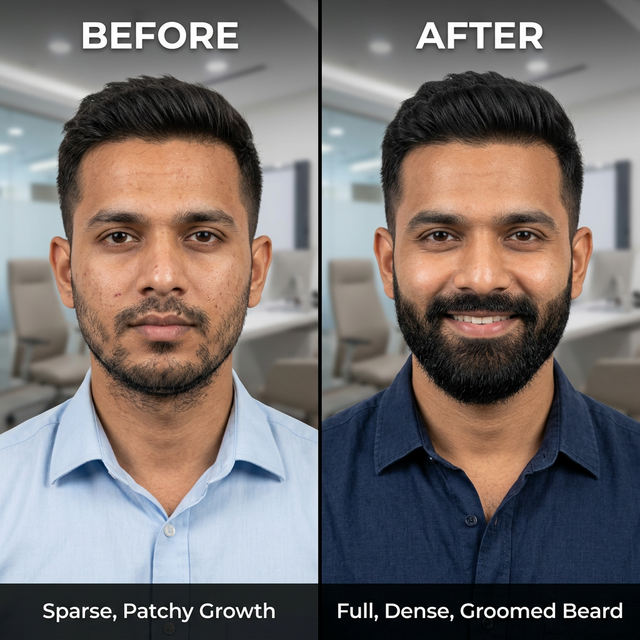
How To Grow Beard Faster is a common topic of discussion. Every man wonders how to grow a beard faster at some point. Whether you are struggling with a patchy beard, slow growth, dealing with uncontrollable itchiness, or just starting your beard journey, understanding the science behind facial hair is the first critical step to success.
How To Grow Beard Faster is a common topic of discussion. At DenceSpot Clinic Gurgaon, we specialize in advanced hair and facial hair restoration. Every day, we see patients who have spent thousands of rupees on useless beard oils, "miracle" serums, and over-the-counter supplements that simply do not work. In this comprehensive guide, we break down the physiological facts about beard growth. We completely debunk the oldest myths in the book (spoiler alert: no, shaving does not make it grow faster), and we give you actionable, science-backed tips—ranging from diet and lifestyle tweaks to proven medical treatments like Beard Transplants.
The Anatomy and Science: How Fast Does a Beard Actually Grow?
How To Grow Beard Faster is a common topic of discussion. To understand how to grow a beard faster, you must first understand how hair grows in the first place. Human hair—whether on your scalp, your body, or your face—does not grow continuously. It grows in a specific, genetically predetermined cycle. The hair cycle has three distinct phases, and knowing them can vastly improve how you maintain hair health.
- Anagen (The Growth Phase): This is when your hair is actively growing from the follicle. For scalp hair, this phase can last years. For beard hair, the anagen phase typically lasts anywhere from two to six months to several years, depending entirely on your genetics. The length of this phase determines your terminal beard length.
- Catagen (The Transitional Phase): This is a short phase lasting a few weeks where the hair stops growing and detaches from the blood supply in the skin.
- Telogen (The Resting Phase): The hair sits dormant in the follicle for a few months before eventually shedding, making way for a new anagen hair to begin growing.
How To Grow Beard Faster is a common topic of discussion. Facial hair growth is primarily driven by genetics and two vital male androgens (hormones): Testosterone and Dihydrotestosterone (DHT). While testosterone essentially primes the hair follicle and dictates the thickness of the facial hair shaft, DHT is what promotes the linear growth (speed and length) of the facial hair.
How To Grow Beard Faster is a common topic of discussion. On average, human beard hair grows at a rate of 0.3 to 0.5 millimeters per day, which translates to about ½ inch per month. You cannot magically change your genetic growth rate, but you can optimize your internal health to ensure your body is consistently producing hair at the maximum possible speed allowed by your DNA.
| Growth Phase | Timeframe | What to Expect & What to Do |
|---|---|---|
| The "Awkward Phase" & Itch | Weeks 1 - 3 | Stubble appears. Skin may become incredibly itchy as sharp clipped hairs curl back towards the face. Keep the skin aggressively moisturized and resist shaving. |
| Patchy Definition | Weeks 4 - 6 | Beard starts to take true shape. Patchy areas and cowlicks become very obvious. Begin brushing daily to train the hair follicles to lay flat downwards. |
| The "Fill-In" Stage | Months 2 - 3 | This is where the magic happens. Longer hairs begin to cover patchier spots. What looked like a terrible, patchy beard at Week 4 suddenly looks like a respectable, substantial beard. |
| Full Terminal Beard | Months 4+ | Maximum baseline density achieved. You have now established exactly what your genetics are capable of. It is now time to aggressively style, trim, and shape the beard to suit your jawline. |
Debunking Beard Myths: Shaving Does NOT Make It Grow Thicker
How To Grow Beard Faster is a common topic of discussion. This is arguably the most pervasive myth in male grooming. Many teenagers and young men repeatedly shave their face every day under the assumption that it will stimulate the hair follicles to grow a thicker, darker, and fuller beard. This is scientifically false.
When you shave, you are taking a razor and slicing the hair shaft at the thickest part of the hair near the surface of the skin. A natural hair tapers at the end (the tip is thinner than the base). When you cut off the tapered tip, the hair grows back with a blunt tip. As this blunt hair grows out, it feels much coarser and temporarily looks darker. However, the razor has absolutely zero biological effect on the hair follicle living millimeters beneath the skin. Shaving will not speed up your growth rate, nor will it create new hair follicles.
7 Natural & Lifestyle Ways to Grow a Beard Faster
If you want to maximize your beard growth potential, you need to create the perfect biological environment for your hair follicles to thrive. Here are seven completely natural lifestyle adjustments you can make right now.
1. Optimize Your Diet for Maximum Keratin Production
Hair is made almost entirely of a tough protein called keratin. If your diet is extremely poor, loaded with processed sugars, and fundamentally lacks protein or essential vitamins, your body will triage its resources. It will restrict hair growth in order to preserve vital nutrients for your internal organs (heart, liver, brain). To grow a beard faster, you must focus heavily on foods for hair growth, specifically those high in:
- Biotin (Vitamin B7): Biotin is the building block of keratin. Eggs, nuts, seeds, and sweet potatoes are incredible natural sources of Biotin.
- Vitamins A, C, and E: Found in dark leafy greens (spinach), citrus fruits, and avocados. These vitamins help your body produce healthy sebum—a natural oil created by your body that lubricates the beard hair and skin.
- Zinc and Iron: Trace minerals found in oysters, red meat, and legumes. Zinc is directly tied to healthy testosterone production. If you want to dive deeper into nutrition, check out which vitamins are essential for hair growth.
2. Aggressive Skincare Routine: Exfoliation is Key
Ingrown hairs and blocked pores act as physical barriers that prevent your beard hairs from breaking through the skin surface. If the skin on your face is covered in dead skin cells and dried oil (sebum), your facial hair will struggle to emerge, causing itchy, painful red bumps (folliculitis).
To prevent this, wash your face twice a day with a gentle, non-stripping cleanser. More importantly, exfoliate once or twice a week using a chemical exfoliant (like Salicylic acid) or a gentle physical scrub. By removing dead skin cells and ensuring the pores are wide open, you encourage unobstructed, faster follicular growth. Determining your hair porosity and skin type can also dictate how often you need to moisturize vs. exfoliate.
3. Maximize Your Sleep to Maximize Testosterone
Your body does not build muscle when you are in the gym; it builds muscle when you are sleeping. The exact same biological principle applies to your beard. Testosterone is released into your bloodstream primarily during REM and deep sleep cycles.
Chronic sleep deprivation (getting less than 7-8 hours of quality sleep a night) dramatically lowers testosterone levels, which directly translates to significantly slower, thinner beard growth. A well-rested body has the energy surplus required to dedicate resources to non-essential functions like facial hair production.
4. Manage Stress to Lower Cortisol
High levels of constant, chronic stress flood your body with cortisol. Cortisol is the primary "stress hormone," and it is well documented that elevated cortisol actively negatively impacts testosterone production. Furthermore, cortisol restricts blood vessels (vasoconstriction), which physically reduces the amount of blood, oxygen, and nutrients reaching the hair follicles on your face. Try mindful meditation, yoga, or simple breathing exercises to keep cortisol low.
5. Exercise Regularly: Heavy Lifting & Cardio
Exercise attacks slow beard growth from two crucial angles. First, cardiovascular exercise (running, cycling, swimming) improves total body blood circulation—meaning a higher volume of oxygen and nutrient-rich blood is delivered straight to the hair follicles on your cheeks, neck, and jawline.
Second, heavy resistance training (weightlifting, powerlifting) triggers your body to release a surplus of testosterone and DHT—the very androgen hormones responsible for accelerating facial hair growth. Compound movements involving large muscle groups (squats, deadlifts, bench press) cause the largest spikes in serum testosterone.
6. Moisturize with High-Quality Beard Oil
Let's clear up another myth: beard oils will not magically spawn new hair follicles out of thin air. However, high-quality beard oils containing carrier oils like Jojoba, Argan, and Sweet Almond are absolutely essential for a faster, healthier growing beard.
As your beard grows longer, the hairs wick away moisture from your skin, leaving the skin underneath dry, flaky, and intensely itchy (the dreaded "beardruff"). By massaging beard oil down to the roots and skin daily, you hydrate the skin and soften the hair shaft. This eliminates the unbearable itch, prevents the hair from becoming brittle and snapping off early, and ensures the facial hair you do grow stays thick and healthy to the tip.
7. Micro-needling (Derma-rolling) for the Beard
Micro-needling involves rolling a device covered in hundreds of tiny titanium needles (usually 0.5mm) across the beard area. This creates micro-punctures in the skin. The body responds to these microscopic injuries by rushing nutrient-rich blood to the area and boosting collagen and keratin production to heal the microscopic "wounds."
Clinical studies have shown that combining micro-needling once or twice a week with topical treatments drastically improves facial hair density compared to using topical serums alone.
Medical & Clinical Interventions for Patchy Beards
It is critically important to be highly realistic. If you are past your mid-to-late 20s and you are still struggling with severe patchiness, bare cheeks, or a disconnected mustache and goatee, natural remedies and lifestyle changes may simply not be enough. Severe patchiness is almost always dictated by a lack of genetic hair follicles in those specific areas of the face. You simply cannot grow hair where the follicle biologically does not exist.
However, modern dermatology, aesthetic medicine, and advanced beard transplant techniques offer highly effective, permanent solutions to jumpstart and restore a full, masculine beard.
Minoxidil (Rogaine) for Beard Growth
Minoxidil is an FDA-approved topical medication used globally to treat male pattern baldness on the scalp. While it is technically an off-label use for the face, tens of thousands of men successfully use 5% liquid or foam Minoxidil on their jaws to stimulate beard growth.
Minoxidil acts as a vasodilator, dramatically widening the blood vessels and increasing blood flow directly to the follicle. This forces dormant vellus hairs (the tiny, invisible peach-fuzz hairs on your face) to transition into thick, dark, terminal hairs. The drawback? You must apply it consistently twice a day for 6 to 12 months. If you stop applying the serum before those vellus hairs fully transition into permanent terminal hairs, the new hair will fall out.
Beard PRP Therapy (Platelet-Rich Plasma)
If you have existing but thin, weak facial hair, clinical PRP Treatment can be incredibly beneficial. PRP therapy involves drawing a small amount of your own blood, spinning it in a specialized centrifuge to extract the highly concentrated growth factors and platelets, and injecting this potent serum directly into the patchy areas of your beard.
The growth factors act as a highly concentrated organic fertilizer, aggressively stimulating dormant follicles and forcing thin, weak hairs to grow thicker, darker, and significantly faster. Patients often wonder does PRP really work? The answer is an overwhelming yes for both scalp and facial hair. Discover exactly how long PRP takes to show results.
The Ultimate Solution: Beard Transplant (FUE)
If you have completely bare patches on your cheeks or a weak jawline where no hair has ever grown, the only biological, permanent solution is a Follicular Unit Extraction (FUE) Beard Transplant. Just as patients wonder if scalp beard transplants are permanent, beard transplants offer the same incredible lifelong longevity.
During a Beard Transplant at DenceSpot Clinic, our expert team extracts healthy, DHT-resistant hair follicles one-by-one from the back of your scalp (the donor area). Using extreme precision and artistic design, these follicles are then implanted directly into the patchy, sparse areas of your beard at the correct angle and direction to perfectly mimic natural facial hair growth.
The transplanted hairs will briefly shed after a few weeks, but the vital follicle remains firmly rooted inside the skin. Within 3 to 4 months, brand new, permanent facial hair will begin growing. By month 12, you will have a thick, dense, full beard that you can completely shave down, trim, and style for the rest of your life.
To see how transformative this procedure can be, look at our Gallery of Patient Transformations.
Final Verdict: Patience vs. Science
Growing a formidable beard is a marathon, not a sprint. The journey to grow a beard faster requires an organized combination of patience (giving it at least 2 to 3 months to fill in), excellent hygiene habits, aggressive skin care, and recognizing when you need professional medical help.
If you are a young man under 25, the best advice is simply to wait. Your testosterone levels are still stabilizing, and your beard will naturally continue to fill in and mature well into your late twenties. However, if you are older, endlessly frustrated by patchy, sparse growth that ruins your confidence, and tired of trying useless serums and oils that yield zero real-world results—it is time to rely on medical science.
Tired of Struggling with a Patchy Beard?
Stop wasting time and money on ineffective snake-oil beard growth serums and sketchy home remedies. Consult with Dr. Nyra at DenceSpot Clinic Gurgaon today to find out if you are a candidate for life-changing clinical beard restoration, PRP therapy, or an FUE Beard Transplant.
Book a Free Consultation NowFrequently Asked Questions
How long does it take to grow a full beard?
An average beard grows about half an inch per month. Depending on your genetics, it typically takes 2 to 4 months of uninterrupted growth to achieve a full, dense beard.
Does shaving make your beard grow faster?
No. This is a common myth. Shaving cuts the hair at the thickest part of the shaft, making it appear thicker when it grows back, but it does not change the actual growth rate, density, or color of the hair follicles.
What foods help grow a beard faster?
Foods rich in protein, Biotin (Vitamin B7), Vitamin D, Zinc, and Iron support healthy testosterone levels and keratin production. Eggs, nuts, lean meats, spinach, and avocados are excellent for beard growth.
Does Minoxidil work for beard growth?
Yes, off-label use of Minoxidil (typically 5%) has been shown to stimulate beard follicles and improve density in many men. However, results take 3-6 months and must be maintained until the hairs become terminal.
At what age does your beard stop filling in?
Most men see their maximum natural beard density between the ages of 25 and 30. If your beard remains patchy after 30, it is unlikely to fill in naturally without clinical intervention like a beard transplant.