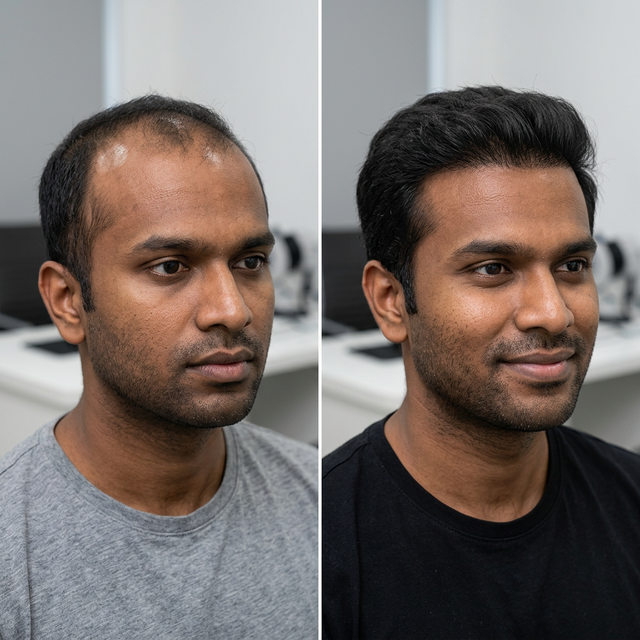
The topic of How Does Prp Work is highly relevant for anyone considering treatment. PRP (Platelet-Rich Plasma) therapy works by concentrating your blood's natural healing agents — platelets and their growth factors — and delivering them directly to damaged or weakened tissue. This triggers a cascade of biological responses including cell regeneration, new blood vessel formation, and stem cell activation that collectively repair and rejuvenate the treated area.
At DenceSpot Clinic, How Does Prp Work is a very common point of discussion. PRP therapy is used across dermatology, orthopaedics, dentistry, and sports medicine. But what exactly makes it work? In this article, we go deep into the science — the platelet biology, the growth factor signalling, the cellular mechanisms, and the clinical evidence that supports PRP as a legitimate medical treatment. Whether you are considering PRP for hair growth, skin rejuvenation, or joint healing, understanding the science will help you make an informed decision.
The Biology of Platelets — Where PRP Begins
The topic of How Does Prp Work is highly relevant for anyone considering treatment. Platelets (thrombocytes) are small, disc-shaped blood cells produced in the bone marrow. Most people know them for their role in blood clotting — when you cut yourself, platelets rush to the site and form a plug to stop bleeding. But clotting is only part of the story.
Many patients ask us about How Does Prp Work during their consultations. Platelets are also biological first responders for tissue repair. They carry within them hundreds of bioactive molecules stored in structures called alpha granules. When platelets are activated (by injury, or in the case of PRP, by injection into tissue), these alpha granules release their contents — a concentrated cocktail of growth factors, cytokines, and proteins that orchestrate the entire healing process.
Understanding How Does Prp Work can significantly impact your final results. Normal blood contains 150,000-400,000 platelets per microlitre. PRP concentrates this to 1,000,000+ platelets per microlitre — roughly 3-8 times the baseline level. This supraphysiological concentration means that when PRP is injected, the target tissue receives a far more powerful healing signal than what normal blood circulation can deliver.
The Growth Factor Cascade — How PRP Triggers Regeneration
When exploring How Does Prp Work, it is crucial to understand all the facts. When concentrated platelets are injected into the scalp (or any target tissue), they undergo a process called degranulation — the alpha granules fuse with the platelet membrane and release their contents. Within minutes, over 30 different bioactive proteins flood the local tissue environment. Here are the most important ones for hair growth:
PDGF (Platelet-Derived Growth Factor)
PDGF is one of the first growth factors released. Its primary roles are to stimulate cell division (mitogenesis) in the dermal papilla cells at the base of each hair follicle, promote the formation of new blood vessels (angiogenesis) to improve nutrient delivery, and attract mesenchymal stem cells to the injection site for tissue repair. In the context of hair loss, PDGF essentially tells the follicle's control centre to start producing hair again.
VEGF (Vascular Endothelial Growth Factor)
VEGF is the master regulator of blood vessel formation. It stimulates endothelial cells (the cells that line blood vessels) to proliferate and form new capillaries. For hair follicles, this means a denser network of tiny blood vessels delivering oxygen, amino acids, vitamins, and minerals directly to the follicle root. Research has shown that follicles with better blood supply produce thicker, stronger hair and remain in the growth phase longer.
TGF-beta (Transforming Growth Factor Beta)
TGF-beta plays a dual role in tissue repair. It promotes collagen synthesis and extracellular matrix remodelling — essentially rebuilding the structural scaffolding around hair follicles. It also modulates the immune response, reducing chronic inflammation that can damage follicles over time.
EGF (Epidermal Growth Factor)
EGF stimulates the proliferation of epithelial cells, including the keratinocytes that form the hair shaft. It also plays a role in transitioning follicles from the telogen (resting) phase back into the anagen (growth) phase — a critical step in reversing hair loss.
FGF (Fibroblast Growth Factor)
FGF supports the dermal papilla fibroblasts — the cells that send the signals controlling hair growth. When these cells are healthy and active, they maintain follicle size and prevent miniaturization. FGF in PRP helps sustain dermal papilla function and keep follicles producing thick, terminal hairs.
IGF-1 (Insulin-like Growth Factor 1)
IGF-1 is a potent mitogen that promotes cell survival and proliferation. In hair biology, IGF-1 helps maintain the anagen phase and prevents premature catagen entry. Studies have shown that IGF-1 receptor activation in follicle cells is essential for normal hair cycling.
The 5 Biological Mechanisms of PRP Therapy
The growth factors described above do not work in isolation — they trigger interconnected biological mechanisms that collectively drive tissue regeneration:
Mechanism 1: Cell Proliferation
Growth factors like PDGF, EGF, and IGF-1 bind to specific receptors on target cells (dermal papilla cells, keratinocytes, fibroblasts) and activate intracellular signalling pathways (primarily the MAPK and PI3K/Akt pathways). These pathways stimulate DNA replication and cell division, increasing the number of active cells in the follicle. More active cells means more hair production capacity.
Mechanism 2: Angiogenesis (New Blood Vessel Formation)
VEGF and PDGF stimulate endothelial cell migration and proliferation, forming new capillary sprouts that connect into functional blood vessels. This process, called angiogenesis, creates a denser vascular network around each follicle. Improved blood supply means more oxygen, more nutrients, and better waste removal — all essential for sustained hair growth.
Mechanism 3: Stem Cell Recruitment and Activation
PRP growth factors attract mesenchymal stem cells (MSCs) from surrounding tissue and bone marrow to the injection site. They also activate the resident stem cells in the hair follicle bulge region. These stem cells are the source of new follicle cells during each growth cycle. By activating them, PRP ensures the follicle has the cellular raw material to produce hair.
Mechanism 4: Anti-Apoptotic Effect (Cell Survival)
Some growth factors in PRP (particularly IGF-1 and certain forms of FGF) activate anti-apoptotic pathways — essentially telling cells not to self-destruct. In hair loss, follicle cells can undergo premature apoptosis (programmed cell death), leading to follicle regression. PRP helps keep these cells alive longer, extending the productive life of each follicle.
Mechanism 5: Extracellular Matrix Remodelling
TGF-beta and PDGF promote the remodelling of the extracellular matrix (ECM) — the structural framework surrounding cells. A healthy ECM provides mechanical support, stores growth factors, and facilitates cell-to-cell communication. PRP-driven ECM remodelling creates a more supportive environment for follicle function and hair production.
Experience Science-Backed PRP at DenceSpot
Our dermatologists use advanced PRP preparation protocols that deliver maximum growth factor concentration for superior results. Book a free consultation and scalp analysis today.
Book Free ConsultationPRP for Hair vs PRP for Skin vs PRP for Joints — Same Science, Different Applications
The core mechanism of PRP is identical regardless of application — concentrated growth factors trigger regeneration. But the clinical application and expected outcomes differ:
PRP for Hair (Scalp Injections)
Growth factors target hair follicle cells, stimulating dormant follicles, improving blood supply to the scalp, and extending the growth phase. The goal is increased hair density and thickness. Learn more about PRP hair treatment in detail.
PRP for Skin (Facial Rejuvenation — "Vampire Facial")
Growth factors stimulate collagen and elastin production in the dermis, improve skin texture and tone, reduce fine lines, and accelerate healing. PRP is often combined with microneedling for facial rejuvenation. Read about PRP treatment for face.
PRP for Joints and Tendons (Orthopaedic Use)
Growth factors promote cartilage repair, reduce joint inflammation, and accelerate tendon healing. PRP is widely used in sports medicine for conditions like tennis elbow, rotator cuff injuries, and knee osteoarthritis.
The versatility of PRP across such different applications is actually powerful validation of the underlying science — the growth factor mechanism is fundamental to human biology.
What Makes Good PRP? The Quality Factors
Not all PRP is equal. The effectiveness of PRP therapy depends heavily on the quality of the final product:
Platelet Concentration: Higher concentration means more growth factors. Advanced preparation methods achieve 5-8x baseline concentration versus 2-3x with basic single-spin methods. Research suggests a minimum of 1,000,000 platelets/ml is needed for therapeutic effect.
Leukocyte Content: PRP can be leukocyte-rich (L-PRP) or leukocyte-poor (LP-PRP). For hair treatment, leukocyte-poor PRP is generally preferred as white blood cells can cause additional inflammation at injection sites.
Red Blood Cell Contamination: Good PRP preparation minimizes red blood cell contamination. RBCs in PRP can cause pain, inflammation, and potentially damage cells through iron-mediated oxidative stress.
Activation Status: Whether PRP is activated (with calcium chloride or thrombin) or non-activated before injection affects the rate and pattern of growth factor release. Both approaches have clinical support.
Volume and Injection Technique: The amount of PRP injected, the depth of injection, and the distribution pattern all affect results. Experienced clinicians who understand the anatomy and pathology of hair loss deliver PRP more effectively.
The Evidence Base: Key Clinical Studies on PRP
PRP's scientific credibility rests on a substantial body of peer-reviewed research:
Gentile et al. (2015) — Stem Cells Translational Medicine: This controlled study demonstrated that PRP increased hair density by an average of 33.6% and increased follicle number in the treated scalp half compared to the control half. Results were sustained at 12-month follow-up.
Alves & Grimalt (2018) — Dermatologic Surgery: A meta-analysis of 11 RCTs involving 655 patients concluded that PRP treatment results in statistically significant increases in hair density compared to placebo, with a mean difference in hair count that favoured PRP treatment.
Gupta & Carviel (2017) — Journal of Cosmetic Dermatology: Reviewed the literature on PRP for androgenetic alopecia and concluded that PRP is a safe, effective treatment with minimal side effects, recommending it as a viable option for patients seeking non-surgical hair restoration.
Cervelli et al. (2014) — Clinical Implant Dentistry and Related Research: One of the early landmark studies showing that PRP significantly increases hair density. The three-treatment protocol showed progressive improvement at each follow-up point.
Limitations of PRP — What Science Tells Us
Being scientifically honest about PRP means acknowledging its limitations:
Cannot resurrect dead follicles: PRP works on dormant or miniaturized follicles — those that still have stem cells and some cellular infrastructure. Completely destroyed follicles (long-term baldness) cannot be revived. In such cases, a hair transplant is the appropriate solution.
Results vary between individuals: Genetic factors, overall health, age, and the specific characteristics of your hair loss all influence outcomes. Not every patient will experience the same degree of improvement.
Requires maintenance: PRP is not a one-time cure. Hair loss is typically progressive, so periodic maintenance sessions are needed to sustain results. Learn about how long PRP results last.
Standardization challenges: PRP preparation methods vary widely between clinics. This means that the quality and potency of PRP can differ significantly, which is why choosing an experienced clinic with advanced preparation methods is crucial.
Get Science-Backed PRP Treatment
At DenceSpot Clinic, we combine advanced PRP science with clinical expertise to deliver optimal results. Our preparation protocols ensure maximum platelet concentration and growth factor delivery. Book your consultation today.
Book Free ConsultationFrequently Asked Questions
What is the science behind PRP?
PRP works through platelet biology. Platelets contain alpha granules packed with over 30 growth factors. When concentrated PRP is injected into tissue, platelets degranulate and release these growth factors, triggering cell proliferation, angiogenesis (new blood vessel formation), collagen synthesis, and stem cell activation — all essential for tissue repair and regeneration.
How does PRP differ from regular blood?
Regular blood contains approximately 150,000-400,000 platelets per microlitre. PRP concentrates this to 3-8 times the normal level through centrifugation. This concentrated dose delivers significantly more growth factors per injection, creating a much stronger regenerative response than what normal blood circulation can provide.
Does PRP work for all types of tissue repair?
PRP is used across multiple medical fields — orthopaedics (joint and tendon injuries), dermatology (skin rejuvenation and hair growth), dentistry (post-surgical healing), and wound care. The underlying mechanism is the same: concentrated growth factors accelerate the body natural healing and regeneration processes.
How does PRP compare to stem cell therapy?
PRP and stem cell therapy are complementary but different. PRP provides growth factor signals that activate existing stem cells in the tissue. Stem cell therapy introduces new stem cells. PRP is simpler, more affordable, and uses your own blood. For hair loss, PRP activates the follicle bulge stem cells that are already present in your scalp.
Is the science behind PRP proven?
Yes. PRP has been studied in hundreds of clinical trials across multiple specialties. For hair loss specifically, a 2019 meta-analysis of 11 randomized controlled trials confirmed statistically significant improvements in hair density and count. The biological mechanisms are well-understood and supported by peer-reviewed research.
Why does PRP need multiple sessions to work?
Hair follicles respond to PRP stimulation gradually. Each session delivers a fresh dose of growth factors that builds on the previous one. The cumulative effect over 4-6 sessions creates sustained follicle activation, progressive improvement in blood supply, and a stable shift of follicles from the resting phase to the growth phase.
Can PRP cause any harm to hair follicles?
No. Since PRP is derived from your own blood, it is biocompatible and non-toxic. There is no risk of allergic reaction, rejection, or follicle damage. The growth factors in PRP are the same ones your body naturally produces — PRP simply delivers them in a higher concentration directly where they are needed.
Does the quality of PRP preparation matter?
Absolutely. The platelet concentration, preparation method (single-spin vs double-spin), and handling technique all significantly affect the quality and quantity of growth factors in the final PRP product. Clinics using advanced preparation methods typically achieve 5-8x platelet concentration versus 2-3x with basic methods, which translates to better clinical outcomes.