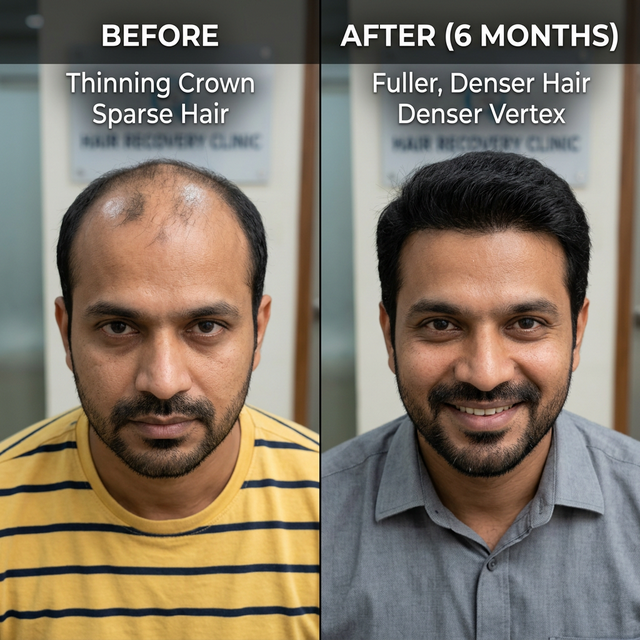
PRP (Platelet-Rich Plasma) therapy is not only a treatment for existing hair loss -- it is increasingly recognized by dermatologists as a powerful preventive strategy. By delivering concentrated growth factors directly to the scalp, PRP strengthens vulnerable follicles, extends the active growth phase of hair, and slows the miniaturization process that leads to progressive thinning. For patients who act early, PRP can be a decisive intervention in preserving hair density before significant loss occurs.
Most people associate PRP with regrowing hair that has already been lost. While PRP is certainly effective for that purpose, a growing body of clinical evidence suggests that its greatest value may lie in prevention. The question is no longer simply whether PRP can regrow hair, but whether it can stop you from losing it in the first place. In this guide, we examine what experts and clinical research reveal about PRP as a preventive treatment for hair loss, who benefits most from early intervention, and how to build a long-term strategy around it.
How Hair Loss Happens: Understanding the Process PRP Targets
Before understanding how PRP prevents hair loss, it helps to understand what drives the loss itself. The most common form of hair loss -- androgenetic alopecia -- affects approximately 50 percent of men by age 50 and up to 40 percent of women during their lifetime. It is driven by a hormone called dihydrotestosterone (DHT), which binds to receptors on genetically susceptible hair follicles and triggers a process called follicular miniaturization.
During miniaturization, the hair growth cycle gradually shifts. The anagen (active growth) phase shortens from its normal duration of 2-6 years down to just a few months. The telogen (resting) phase lengthens. With each successive cycle, the follicle produces a thinner, shorter, and less pigmented hair until it eventually stops producing visible hair altogether. This process is gradual, which is why early intervention is so critical -- by the time hair loss becomes visually obvious, a significant number of follicles have already undergone substantial miniaturization.
Other forms of hair loss, including telogen effluvium triggered by stress or illness, nutritional deficiency-related thinning, and post-partum hair fall, follow different mechanisms but share a common feature: weakened follicles that have shifted out of the active growth phase. For a comprehensive look at the causes and solutions for hair fall, see our complete guide to controlling hair fall.
Can PRP Actually Prevent Hair Loss? What the Evidence Shows
The short answer is yes -- PRP has demonstrated a clear ability to slow hair loss progression and, in many patients, halt it entirely when used early and consistently. The mechanism behind this is well understood. When PRP is injected into the scalp, the concentrated platelets release a cascade of growth factors that act directly on the hair follicle and its surrounding tissue:
- PDGF (Platelet-Derived Growth Factor) stimulates the proliferation of dermal papilla cells, which are the master regulators of the hair growth cycle. Healthier dermal papilla cells mean a stronger, longer growth phase.
- VEGF (Vascular Endothelial Growth Factor) promotes the formation of new blood vessels around follicles, improving the delivery of oxygen, nutrients, and hormones essential for hair maintenance.
- TGF-beta and EGF (Transforming and Epidermal Growth Factors) support tissue repair, collagen remodeling, and cellular differentiation in the scalp environment.
- FGF (Fibroblast Growth Factor) helps maintain the structural integrity of the follicle and the connective tissue sheath that supports it.
These growth factors collectively create an environment that resists the miniaturization process. Follicles that are beginning to weaken receive the biological signals they need to remain in the active growth phase longer, produce thicker hair shafts, and maintain their structural health. To learn more about the fundamentals of PRP and how it works, read our detailed article on what PRP is.
Clinical Evidence Supporting PRP for Hair Loss Prevention
Multiple clinical studies have directly measured the preventive capacity of PRP therapy. A 2019 meta-analysis published in Dermatologic Surgery, which pooled data from 11 randomized controlled trials, found that PRP-treated patients showed statistically significant improvements in hair density and a measurable reduction in hair shedding compared to placebo groups. Critically, patients with earlier-stage hair loss showed the most robust response.
A 2020 study in the Journal of Cosmetic Dermatology followed patients with early androgenetic alopecia over 12 months and found that those receiving regular PRP sessions maintained or increased their baseline hair count, while the untreated control group experienced continued decline. The researchers concluded that PRP is most effective when used as a preventive or early-intervention treatment rather than a rescue therapy for advanced baldness.
Another study published in the International Journal of Trichology demonstrated that PRP increased the percentage of follicles in the anagen (growth) phase by up to 30 percent and decreased the telogen (resting) follicle count, providing direct evidence that PRP shifts the hair cycle in favour of growth and retention. For additional insight into PRP as a clinical treatment, see our guide on what PRP hair treatment involves.
PRP as Preventive Treatment vs. Restorative Treatment
There is an important distinction between using PRP to prevent hair loss and using it to restore hair that has already been lost. Understanding this difference helps set appropriate expectations:
Preventive PRP
When used preventively, PRP is applied to areas where hair is beginning to thin but the follicles are still active and capable of producing hair. The goal is to strengthen these follicles, extend their growth phase, and protect them from further miniaturization. Preventive PRP is most effective in patients with Norwood stage 1-3 hair loss in men or Ludwig stage 1 in women. At this stage, the follicles are still responsive to growth factor stimulation, and the treatment can maintain current density for years with regular maintenance sessions.
Restorative PRP
When used restoratively, PRP aims to reactivate follicles that have become dormant or severely miniaturized. This is a harder task because the follicles have already undergone significant structural decline. While PRP can still produce meaningful results in moderate hair loss, the response tends to be less dramatic than when the treatment is started early. In advanced cases where follicles have been permanently destroyed, PRP alone cannot regenerate hair, and a hair transplant becomes the more appropriate intervention.
The key takeaway is that PRP delivers its strongest and most reliable results when used as a preventive measure. Waiting until hair loss is advanced significantly reduces the treatment's potential impact.
When to Start PRP for Hair Loss Prevention
The ideal time to start PRP is at the earliest signs of hair thinning or increased shedding. Specific indicators that suggest you may benefit from preventive PRP include:
- Noticeable increase in daily hair fall -- finding more hair on your pillow, in the shower drain, or on your comb than usual
- Widening of the hair part line -- a gradual broadening of the central part, especially in women
- Visible scalp through the hair -- particularly in areas like the crown, temples, or frontal region
- Family history of pattern baldness -- genetic predisposition is the strongest risk factor, and starting PRP before visible loss begins can be a proactive strategy
- Receding hairline in early stages -- slight temple recession in men (Norwood 1-2) is the ideal window for intervention
- Post-event hair shedding -- after pregnancy, illness, surgery, or extreme stress, PRP can help the scalp recover faster and prevent the temporary shedding from becoming chronic
A trichoscopy examination at a clinic like DenceSpot can detect early miniaturization that is not yet visible to the naked eye, allowing treatment to begin even before you notice obvious thinning. For more on early prevention strategies, see our article on hair fall and hair loss prevention.
Combining PRP with Other Preventive Strategies
PRP is most powerful when it forms part of a comprehensive prevention plan rather than being used in isolation. Dermatologists at leading clinics typically recommend combining PRP with one or more of the following:
Microneedling
Scalp microneedling creates controlled micro-injuries that trigger the scalp's wound-healing response and enhance PRP absorption. Studies show that microneedling combined with PRP produces significantly better outcomes than either treatment alone, making it one of the most effective preventive protocols available today.
Minoxidil
Topical minoxidil works as a vasodilator, increasing blood flow to the scalp. When used alongside PRP, the improved circulation enhances the delivery and effectiveness of PRP growth factors. Many dermatologists prescribe low-dose minoxidil (2-5 percent) as a daily complement to periodic PRP sessions.
DHT Blockers
For men with androgenetic alopecia, finasteride or dutasteride can reduce the DHT levels that drive follicular miniaturization. Combining a DHT blocker with PRP addresses hair loss from two angles: reducing the hormonal attack on follicles while simultaneously strengthening them with growth factors.
Nutritional Optimization
Deficiencies in iron, zinc, vitamin D, biotin, and protein are common contributors to hair thinning. Correcting these deficiencies through diet or supplementation ensures that follicles have the raw materials they need to respond optimally to PRP treatment. A balanced diet rich in lean proteins, leafy greens, nuts, and seeds supports the biological processes that PRP initiates.
Scalp Health Management
Conditions like seborrheic dermatitis, dandruff, and scalp inflammation create a hostile environment for hair growth. Treating underlying scalp conditions with medicated shampoos or topical treatments ensures that PRP can work in a healthy scalp environment.
Concerned About Thinning Hair? Act Early.
The best time to address hair loss is before it becomes visible. Get a comprehensive trichoscopy assessment and personalized PRP prevention plan from our expert dermatologists at DenceSpot Clinic, Gurgaon.
Book Free ConsultationWho Benefits Most from Preventive PRP?
While PRP can benefit a wide range of patients, certain groups stand to gain the most from using it as a preventive measure:
- Men in their 20s and 30s with early recession or thinning: This is the demographic where PRP prevention delivers the most dramatic long-term value. Starting treatment at Norwood stage 1-2 can delay or prevent progression to more advanced stages for years.
- Women with diffuse thinning: Female pattern hair loss tends to present as overall thinning rather than distinct bald patches, making it particularly well-suited to PRP treatment. Since women cannot safely use finasteride, PRP is often the cornerstone of their prevention plan.
- Patients with a strong family history: If pattern baldness runs in your family, preventive PRP can be started even before significant loss occurs, based on trichoscopy findings showing early miniaturization.
- Post-hair transplant patients: After a hair transplant, PRP is essential for protecting the native (non-transplanted) hair surrounding the grafts. Without preventive treatment, these native hairs may continue to thin, eventually creating an unnatural contrast with the transplanted area.
- Patients recovering from telogen effluvium: After a period of stress-induced shedding, PRP can accelerate recovery and prevent the temporary condition from triggering a longer-term pattern of hair loss.
Limitations of PRP for Hair Loss Prevention
While PRP is a powerful preventive tool, it is important to understand its boundaries:
- PRP cannot override genetics entirely. If you are genetically predisposed to significant hair loss, PRP can slow the process substantially but may not stop it indefinitely without complementary treatments like DHT blockers.
- Results require maintenance. PRP is not a one-time fix. The preventive benefits depend on periodic maintenance sessions, typically every 4-6 months. Stopping treatment may allow hair loss to resume its natural course.
- PRP cannot revive dead follicles. Once a follicle has been permanently destroyed, no amount of PRP can bring it back. This is why early intervention is so important -- once follicles are lost, the only option is surgical transplantation.
- Response varies between individuals. Factors such as age, the extent of miniaturization, platelet quality, overall health, and lifestyle habits all influence how well a patient responds to PRP. Approximately 15-20 percent of patients are classified as "poor responders" who may see limited benefit.
- PRP is not a substitute for treating underlying conditions. If hair loss is driven by thyroid dysfunction, autoimmune disease, nutritional deficiency, or medication side effects, these underlying causes must be addressed alongside PRP for optimal results.
Protect Your Hair Before It Is Too Late
Our dermatologists at DenceSpot use advanced PRP preparation techniques and comprehensive scalp diagnostics to create prevention plans that deliver lasting results. Do not wait for visible thinning -- take action now.
Book Free ConsultationThe Bottom Line
PRP therapy is one of the most effective non-surgical tools available for preventing hair loss, particularly when started early. The clinical evidence is clear: PRP strengthens existing follicles, extends the growth phase, improves scalp vascularity, and slows the miniaturization process that underlies the vast majority of hair loss cases. Patients who begin PRP at the first signs of thinning -- and maintain a consistent treatment schedule -- stand the best chance of preserving their hair density for the long term.
However, PRP works best as part of a comprehensive approach. Combining it with microneedling, appropriate medications, nutritional support, and good scalp hygiene maximizes its preventive potential. If you have a family history of hair loss or have noticed early signs of thinning, do not wait until the problem becomes advanced. Early intervention with PRP is the most effective strategy you can adopt.
At DenceSpot Clinic in Gurgaon, we specialize in preventive hair loss strategies built around advanced PRP therapy, detailed trichoscopy diagnostics, and individualized treatment plans. Book a free consultation with our team to find out whether preventive PRP is right for you.
Frequently Asked Questions
Can PRP actually prevent hair loss?
Yes, clinical evidence shows that PRP can slow down and in many cases prevent further hair loss. The growth factors in PRP strengthen existing follicles, extend the active growth phase, and improve scalp blood supply, which collectively reduce ongoing hair thinning and shedding.
How early should I start PRP to prevent hair loss?
The earlier you begin, the better the results. Dermatologists recommend starting PRP at the first signs of thinning, typically Norwood stage 1-2 in men or Ludwig stage 1 in women. Early intervention allows PRP to protect follicles before they become too miniaturized to respond to treatment.
How many PRP sessions are needed to prevent hair loss?
For preventive purposes, most patients begin with 4-6 initial sessions spaced 3-4 weeks apart, followed by maintenance sessions every 4-6 months. This schedule keeps growth factor levels in the scalp consistently elevated to protect hair follicles long-term.
Is PRP better than minoxidil for preventing hair loss?
Both are effective, but they work through different mechanisms. PRP delivers growth factors directly to follicles while minoxidil increases blood flow to the scalp. Many dermatologists recommend using both together for the strongest preventive effect, as they complement each other well.
Does PRP work for preventing hair loss in women?
Yes, PRP is particularly effective for women experiencing early-stage diffuse thinning or female pattern hair loss. Since women have fewer pharmaceutical options compared to men, PRP is often a first-line preventive treatment for women at risk of progressive hair thinning.
Are PRP results for hair loss prevention permanent?
PRP results are long-lasting but not permanent without maintenance. The preventive benefits persist as long as you continue periodic maintenance sessions, typically every 4-6 months. Stopping treatment entirely may allow hair loss to resume its natural progression over time.
Can PRP prevent hair loss after a hair transplant?
Absolutely. PRP is widely recommended after hair transplant surgery to protect native (non-transplanted) hair from continued thinning. Regular PRP sessions help preserve the density of surrounding hair, ensuring the transplant result looks natural and balanced for years.
What is the cost of preventive PRP treatment in India?
Preventive PRP in India costs between Rs 3,000 and Rs 8,000 per session. A full initial course of 4-6 sessions ranges from Rs 15,000 to Rs 40,000, with maintenance sessions every 4-6 months thereafter. DenceSpot Clinic in Gurgaon offers competitive pricing with transparent billing.