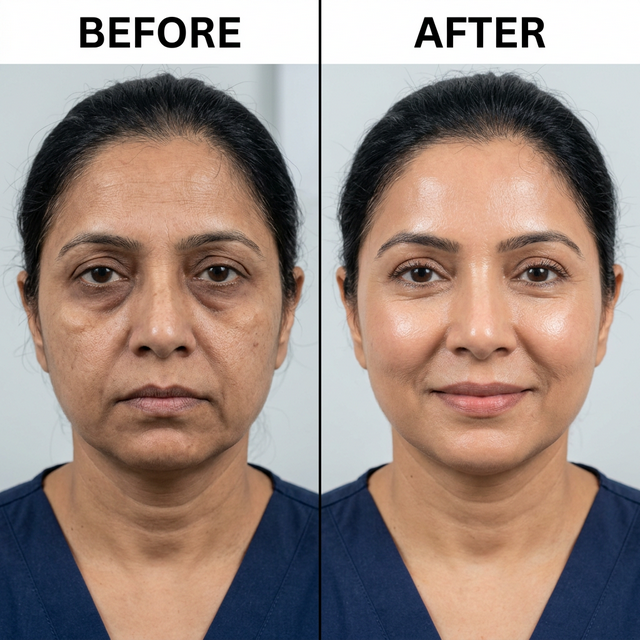
PRP treatment for face, also known as the vampire facial, is a non-surgical skin rejuvenation procedure that uses concentrated platelets from your own blood to stimulate collagen production, repair damaged tissue, and restore a youthful, radiant glow. It is one of the most sought-after skin treatments in Gurgaon for patients looking for natural anti-aging solutions without chemicals or synthetic fillers.
Over the past decade, PRP therapy has moved from orthopaedic medicine into the world of aesthetic dermatology. Originally used to accelerate wound healing in surgical patients, dermatologists quickly recognised its potential for facial skin renewal. Today, thousands of men and women across India choose PRP facial treatment in Gurgaon to address concerns ranging from fine lines and wrinkles to stubborn acne scars and dull, uneven skin tone.
In this comprehensive guide, the DenceSpot Clinic team covers everything you need to know about PRP treatment for face, including how it works, what benefits you can expect, the step-by-step procedure, recovery timeline, cost in India, and how it compares to other popular facial treatments.
What Does PRP Facial Treatment Involve?
PRP stands for Platelet-Rich Plasma. Platelets are tiny blood cells that play a crucial role in healing. When concentrated and re-introduced into the skin, they release growth factors, including PDGF (Platelet-Derived Growth Factor), TGF (Transforming Growth Factor), and VEGF (Vascular Endothelial Growth Factor). These proteins signal your body to produce new collagen, elastin, and healthy skin cells.
A small amount of blood is drawn from your arm, processed in a centrifuge to separate the platelet-rich layer, and then either injected directly into targeted facial areas or applied topically after microneedling. The entire process uses your own biological material, which virtually eliminates the risk of allergic reactions or rejection.
If you want a broader understanding of platelet-rich plasma therapy, our detailed guide on what is PRP covers the science behind the treatment in greater depth.
How PRP Rejuvenates Facial Skin
The magic of PRP lies in its ability to activate your body's own repair mechanisms. Here is what happens beneath the surface after PRP is introduced into your facial skin:
Collagen Stimulation
Growth factors from the concentrated platelets stimulate fibroblasts, the cells responsible for producing collagen and elastin. As new collagen fibres form over the following weeks, the skin becomes firmer, plumper, and more elastic. This natural collagen boost is the primary reason PRP is so effective against fine lines, wrinkles, and sagging.
Accelerated Cell Renewal
PRP speeds up the turnover of skin cells. Old, damaged cells on the surface are replaced faster by fresh, healthy ones. This process gradually improves skin texture, reduces pigmentation irregularities, and brings about a naturally brighter complexion.
Improved Blood Supply
VEGF in the platelet concentrate promotes the formation of new blood vessels (angiogenesis). Better blood flow means more oxygen and nutrients reach the skin cells, which supports long-term skin health and a natural, healthy glow from within.
Tissue Repair and Scar Remodelling
For patients with acne scars or other textural damage, PRP triggers a controlled healing response that breaks down scar tissue and replaces it with healthier, more organised collagen. This makes PRP one of the most effective non-surgical treatments for atrophic acne scarring.
PRP for Face Benefits
PRP facial treatment offers a wide range of benefits, making it suitable for various skin concerns. Here are the most significant advantages:
Anti-Aging and Fine Lines Reduction
PRP directly addresses the root cause of aging skin: declining collagen. By stimulating new collagen synthesis, PRP softens crow's feet, forehead lines, smile lines, and other fine wrinkles. Unlike Botox, which temporarily freezes muscles, PRP actually improves the quality and structure of the skin itself.
Improved Skin Texture and Natural Glow
Patients consistently report smoother, more even skin texture after a course of PRP sessions. The accelerated cell renewal brings a luminous, dewy quality to the complexion that looks completely natural. This is particularly beneficial for individuals with dull, tired-looking skin.
Under-Eye Dark Circle Treatment
The delicate under-eye area often shows signs of aging first. PRP injections in this region thicken the thin skin, improve blood circulation, and reduce the appearance of dark hollows. Many patients see noticeable improvement in under-eye darkness after just 2 to 3 sessions.
Acne Scar Improvement
Rolling scars, boxcar scars, and ice-pick scars all respond to PRP therapy. The growth factors remodel the scarred tissue from within, gradually smoothing out depressions and uneven surfaces. For deeper scars, PRP is often combined with microneedling for enhanced penetration and results.
Open Pore Reduction
Enlarged pores are a common concern, especially in the Indian climate where heat and humidity aggravate the issue. PRP tightens the skin around pore openings by boosting collagen in the dermal layer, making pores appear visibly smaller over successive treatments.
Wrinkle Reduction on Neck and Decolletage
PRP is not limited to the face alone. Many patients extend the treatment to the neck and chest area, where skin tends to thin and wrinkle with age. The regenerative benefits work equally well on these areas.
PRP Facial vs Vampire Facial vs Microneedling with PRP
These terms are often used interchangeably, which creates confusion. Here is the difference:
PRP Facial (PRP Injections): The dermatologist injects PRP directly into specific areas of the face using fine needles. This method allows precise targeting of deep wrinkles, under-eye hollows, and specific problem zones. It delivers PRP deeper into the skin layers.
Vampire Facial (Microneedling + PRP): This is a combination treatment. First, the skin is treated with a microneedling device that creates thousands of tiny micro-channels. PRP is then applied topically so it penetrates through these channels. The microneedling itself triggers a wound-healing response, and when combined with PRP, the results are amplified significantly.
Microneedling Without PRP: Standard microneedling uses the same device but applies a hydrating serum instead of PRP. While effective for mild textural concerns, it lacks the powerful growth-factor boost that PRP provides.
At DenceSpot Clinic, your dermatologist will recommend the most appropriate method based on your skin condition, goals, and budget. Many patients benefit from a combination approach.
Ready to Rejuvenate Your Skin Naturally?
Experience the transformative power of PRP facial treatment at DenceSpot Clinic in Gurgaon. Our experienced dermatologists create personalised treatment plans tailored to your unique skin concerns.
Book Free ConsultationPRP for Face: Step-by-Step Procedure
Understanding what happens during a PRP facial session helps patients feel comfortable and prepared. Here is the complete step-by-step process:
Step 1: Consultation and Skin Assessment
Your dermatologist examines your facial skin, discusses your concerns, reviews your medical history, and determines whether PRP is the right treatment for you. A customised treatment plan is created based on your specific needs.
Step 2: Blood Draw
A small amount of blood (typically 10 to 20 ml) is drawn from a vein in your arm, similar to a routine blood test. This is quick and virtually painless.
Step 3: Centrifugation
The blood sample is placed in a medical-grade centrifuge that spins at high speed for approximately 10 to 15 minutes. This separates the blood into three layers: red blood cells at the bottom, a platelet-poor plasma layer on top, and the golden platelet-rich plasma in the middle.
Step 4: Numbing Cream Application
A topical anaesthetic cream is applied to the treatment area and left on for 20 to 30 minutes. This ensures the procedure is comfortable.
Step 5: PRP Application
Depending on the chosen method, the PRP is either injected directly into the skin using fine needles at multiple points across the face, or applied topically after microneedling. The entire application takes about 20 to 30 minutes.
Step 6: Post-Treatment Care
A soothing serum or moisturiser is applied. Your dermatologist provides aftercare instructions and schedules your next session.
Recovery and Downtime After PRP Facial
One of the biggest advantages of PRP treatment for face is the minimal downtime. Here is what to expect:
- First 2 to 6 hours: Mild redness, similar to a sunburn. Some patients notice slight swelling at injection sites.
- 24 to 48 hours: Redness subsides. Minor bruising may occur at injection points but is easily covered with makeup after 24 hours.
- Day 3 to 5: Skin may feel slightly dry or flaky as the healing process accelerates cell turnover. This is normal and temporary.
- Day 7 onwards: Skin begins to look fresher and more radiant as the initial healing phase completes.
Most patients return to work and social activities the very next day. Avoid direct sun exposure, heavy exercise, saunas, and swimming pools for 48 hours after the treatment. Do not apply makeup for at least 12 hours.
PRP for Face: Results Timeline
PRP works by triggering biological processes that take time. Unlike treatments that offer instant but temporary results, PRP produces gradual, long-lasting improvements:
- Week 1 to 2: Initial glow and subtle improvement in skin hydration as the healing response kicks in.
- Week 3 to 4: Noticeable improvement in skin texture. Early signs of collagen production begin to show.
- Month 2 to 3: Significant improvement in fine lines, skin firmness, and acne scar appearance. This is when most patients see the most dramatic change.
- Month 4 to 6: Peak results. Collagen remodelling continues, and the skin looks its best. Wrinkles are visibly reduced, and the complexion is even and glowing.
Results from a complete course of PRP sessions typically last 12 to 18 months, depending on your age, skin condition, lifestyle, and maintenance routine.
How Many PRP Sessions Are Needed for Face?
The number of sessions depends on the severity of your skin concerns:
- Mild concerns (dull skin, early fine lines): 2 to 3 sessions spaced 3 to 4 weeks apart.
- Moderate concerns (wrinkles, acne scars, dark circles): 3 to 4 sessions spaced 3 to 4 weeks apart.
- Severe concerns (deep wrinkles, significant scarring): 4 to 6 sessions, potentially combined with microneedling or other treatments.
After the initial course, a single maintenance session every 6 to 12 months helps sustain results and continue supporting collagen health.
PRP for Face vs Other Popular Treatments
How does PRP compare to other facial rejuvenation options? Here is an honest comparison:
PRP vs Botox
Botox is a muscle relaxant that smooths dynamic wrinkles (those caused by facial expressions). PRP improves overall skin quality, texture, and firmness. Botox works instantly but wears off in 3 to 6 months. PRP takes weeks to show results but lasts longer and addresses skin health at a deeper level. Many patients opt for both for comprehensive facial rejuvenation.
PRP vs Dermal Fillers
Fillers add volume instantly using hyaluronic acid or similar substances. PRP stimulates your body to produce its own volume through collagen. Fillers are ideal for deep folds and volume loss, while PRP is better for overall skin quality, fine lines, and texture. They complement each other beautifully when used together.
PRP vs Chemical Peels
Chemical peels remove damaged outer skin layers to reveal fresher skin underneath. PRP works from within by stimulating regeneration. Peels are excellent for pigmentation and superficial concerns, while PRP addresses deeper structural issues like collagen loss and scarring. For certain patients, a chemical peel at the right depth followed by PRP a few weeks later can deliver outstanding results.
PRP vs HydraFacial
HydraFacial is a surface-level cleansing, exfoliating, and hydrating treatment with zero downtime and instant glow. PRP is a deeper regenerative therapy that creates long-term structural improvements. HydraFacial is perfect for maintenance between PRP sessions. Learn more about the benefits of HydraFacial and how it transforms your skin.
PRP for Face Side Effects
Because PRP uses your own blood, the risk of serious side effects is extremely low. However, some patients may experience:
- Mild redness and swelling: This is the most common reaction and resolves within 24 to 48 hours.
- Minor bruising: Small bruises may appear at injection sites, especially under the eyes. These fade within 3 to 5 days.
- Tenderness: Slight sensitivity in the treated area for a day or two.
- Temporary dryness or peeling: As the skin renews itself, mild flaking may occur around day 3 to 5.
- Infection (very rare): When performed in a sterile clinical environment by a trained professional, infection risk is negligible.
Serious complications such as allergic reactions are virtually unheard of since the treatment uses autologous material (your own blood). Always ensure the procedure is performed at a reputable clinic with proper sterilisation protocols.
Who Is an Ideal Candidate for Face PRP?
PRP facial treatment is suitable for a wide range of patients. You are a good candidate if you:
- Have early to moderate signs of facial aging such as fine lines, wrinkles, or loss of firmness.
- Want to treat acne scars, enlarged pores, or uneven skin texture.
- Have dark circles or under-eye hollowness.
- Prefer natural treatments that use your body's own healing ability.
- Want to improve overall facial skin quality and radiance.
- Are in good general health with no bleeding disorders or active infections.
PRP may not be recommended for individuals with:
- Active skin infections or open wounds on the face.
- Blood clotting disorders or those on blood-thinning medications.
- Chronic liver disease or low platelet count.
- Active cancer treatment.
- Pregnancy or breastfeeding.
A thorough consultation with your dermatologist at DenceSpot Clinic ensures the treatment is safe and appropriate for you.
PRP for Face Cost in India
The cost of PRP treatment for face in India varies based on several factors:
- City and clinic reputation: Metro cities like Gurgaon, Delhi, and Mumbai tend to charge more due to higher operational costs and the availability of experienced specialists.
- Doctor's expertise: Treatments performed by experienced dermatologists or plastic surgeons may cost more but deliver significantly better results.
- Treatment method: PRP injections alone may cost less than a vampire facial (microneedling + PRP).
- Number of sessions: Clinics often offer discounted packages for multiple sessions.
As a general range, PRP facial treatment in India costs between Rs 5,000 and Rs 15,000 per session. A complete course of 3 to 4 sessions may range from Rs 15,000 to Rs 50,000 depending on the complexity of treatment.
At DenceSpot Clinic in Gurgaon, we offer transparent pricing with no hidden charges. Our team will provide a detailed cost estimate during your free consultation.
Combining PRP with Other Facial Treatments
PRP works exceptionally well as a standalone treatment, but combining it with complementary procedures can amplify results significantly:
PRP + HydraFacial
A HydraFacial session performed a week before PRP deeply cleanses the skin, removes dead cells, and opens pores. This creates a clean canvas that allows PRP to penetrate more effectively. Alternating between HydraFacial and PRP on a monthly rotation is an excellent long-term skin maintenance strategy.
PRP + Carbon Facial
A carbon facial (carbon laser peel) uses a carbon lotion and laser to deeply purify pores, reduce oiliness, and stimulate mild collagen renewal. When followed by PRP treatment a couple of weeks later, the combined collagen stimulation from both procedures delivers enhanced skin tightening and glow.
PRP + Microneedling
This is the classic vampire facial combination. Microneedling creates controlled micro-injuries that trigger a wound-healing response. When PRP is applied immediately after, the growth factors penetrate deep into the skin through the micro-channels. This combination is considered the gold standard for acne scar treatment and overall facial rejuvenation.
PRP + Chemical Peels
A light chemical peel can be performed 2 to 3 weeks before PRP to remove surface damage and pigmentation. The subsequent PRP session then works on the freshly revealed skin layer, boosting collagen and healing at a deeper level.
Transform Your Skin at DenceSpot Clinic
Whether you are dealing with wrinkles, acne scars, dark circles, or simply want healthier, glowing skin, our PRP facial treatment delivers real, lasting results. Consult our skin specialists today.
Book Free ConsultationFinal Thoughts
PRP treatment for face is one of the safest, most natural, and most effective skin rejuvenation procedures available today. By harnessing the healing power of your own blood, it stimulates collagen production, improves skin texture, reduces wrinkles, treats acne scars, and delivers a radiant glow that looks and feels completely natural.
Whether you choose PRP injections, a vampire facial, or a combined treatment protocol, the key to excellent results lies in choosing an experienced dermatologist and a well-equipped clinic. At DenceSpot Clinic in Gurgaon, our team combines medical expertise with advanced technology to deliver personalised PRP facial treatments that truly transform skin.
If you are considering PRP for your face, the first step is a professional skin assessment. Contact DenceSpot Clinic today to schedule your free consultation and discover what PRP can do for your skin.
Frequently Asked Questions
What is PRP treatment for face?
PRP (Platelet-Rich Plasma) treatment for face is a non-surgical skin rejuvenation procedure where concentrated platelets from your own blood are injected into the facial skin to stimulate collagen production, improve texture, and restore a youthful glow.
How many PRP sessions are needed for face?
Most patients require 3 to 4 sessions spaced 3 to 4 weeks apart for optimal results. After that, a single maintenance session every 6 to 12 months is recommended to sustain the benefits.
Is PRP facial treatment painful?
A topical numbing cream is applied before the procedure, so most patients experience only mild discomfort. The treatment is well-tolerated by the vast majority of individuals.
How long do PRP face results last?
Results from a full course of PRP sessions can last 12 to 18 months. Longevity depends on your skin condition, age, lifestyle habits, and whether you follow a proper skincare routine.
What is the downtime after PRP facial?
Downtime is minimal. You may experience mild redness and swelling for 24 to 48 hours. Most people return to normal activities the next day.
Can PRP treat acne scars on the face?
Yes. PRP is highly effective for acne scars. The growth factors stimulate collagen remodelling, gradually filling in depressed scars and improving overall skin texture over multiple sessions.
Is PRP better than Botox for the face?
They serve different purposes. Botox relaxes muscles to reduce dynamic wrinkles, while PRP rejuvenates skin quality from within by boosting collagen. Many patients combine both for comprehensive anti-aging results.
What is the cost of PRP treatment for face in India?
PRP facial treatment in India typically costs between Rs 5,000 and Rs 15,000 per session depending on the clinic, city, and expertise of the doctor. At DenceSpot Clinic in Gurgaon, we offer competitive pricing with personalised treatment plans.