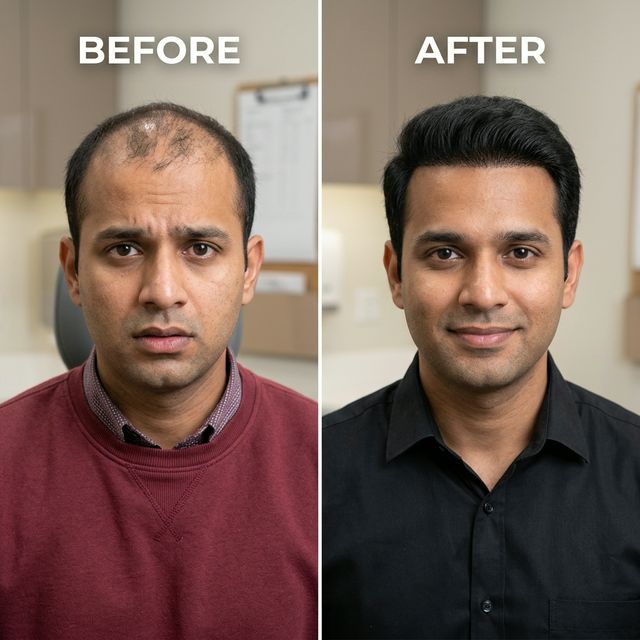
At DenceSpot Clinic, Does Prp Work is a very common point of discussion. "Does PRP actually work, or am I wasting my money?" — We hear this question daily at DenceSpot Clinic. In this article, we give you an honest, no-nonsense answer backed by clinical evidence and real patient experience.
When exploring Does Prp Work, it is crucial to understand all the facts. The internet is full of conflicting opinions about PRP. Some swear it transformed their hair; others say it did nothing. The truth, as always, lies in the details — who it works for, how it should be done, and what realistic expectations look like. Let us break it down honestly.
The Short Answer: Yes, PRP Works — With Caveats
When exploring Does Prp Work, it is crucial to understand all the facts. PRP (Platelet-Rich Plasma) therapy is a scientifically validated treatment. It is supported by:
- Over 20 published randomized controlled trials
- Multiple meta-analyses confirming statistically significant results
- Recognition by major dermatological associations worldwide
- Thousands of documented patient success stories globally
Understanding Does Prp Work can significantly impact your final results. However — and this is important — PRP is not a miracle cure. It works significantly better for some patients than others, and the quality of treatment matters enormously.
What "Working" Actually Looks Like
When we say PRP works, here is what patients can realistically expect:
Reduced Hair Fall (Weeks 2-6)
The earliest sign that PRP is working is a noticeable decrease in daily hair shedding. Patients who were finding 80-150 hairs on their pillow, in the shower, or on their comb typically report a 50-70% reduction in shedding within the first month.
Improved Hair Quality (Months 2-3)
Before new growth appears, existing hair begins to feel different — stronger, thicker, with more body. This is because PRP stimulates the matrix cells that produce keratin, improving the quality of hair that is already growing. Your hair health improves from the roots.
Visible New Growth (Months 3-5)
Fine baby hairs (vellus hairs) begin appearing in previously thinning areas. These gradually thicken into visible terminal hairs over the following months. Trichoscopy measurements at DenceSpot confirm an average increase of 20-35 hairs per cm² in responding patients.
Noticeable Density Improvement (Months 5-8)
This is when results become obvious to the patient and others. Hair looks fuller, the scalp is less visible, and overall volume improves. Photographs taken before treatment show a clear difference when compared side by side.
Why PRP Works for Some and Not Others
The most honest thing we can tell you is that PRP does not work equally for everyone. Here is why:
It Works Best When Follicles Are Still Alive
PRP reactivates dormant follicles — it does not create new ones. If your follicles have permanently atrophied (complete baldness for 10+ years), PRP cannot bring them back. The earlier you start treatment, the more follicles are available to respond.
Platelet Quality Varies
Your body's own platelet count and quality affect PRP potency. Patients with low platelet counts, chronic illness, or poor nutrition may produce less effective PRP. This is why we recommend blood work before starting treatment and advise optimizing nutrition for hair health.
Preparation Method Matters
Not all PRP is the same. The centrifugation technique, kit quality, and platelet concentration significantly affect outcomes. A single-spin method producing 2x concentration will yield inferior results compared to a double-spin method achieving 7-8x concentration.
Protocol Compliance Is Critical
A single PRP session is like going to the gym once and expecting to be fit. The full protocol — typically 3-4 sessions spaced 3-4 weeks apart — is necessary for meaningful results. Patients who skip sessions or abandon treatment early often report PRP "did not work."
Real Patient Scenarios
Scenario 1: Early Thinning — Excellent Results
A 28-year-old male with 2 years of crown thinning (Norwood 2-3). After 4 PRP sessions combined with microneedling, he saw a 40% increase in crown density. Hair fall reduced from 100+ to under 30 hairs per day. This is the ideal PRP candidate.
Scenario 2: Moderate Hair Loss — Good Results
A 35-year-old female with diffuse thinning for 4 years. After 4 PRP sessions, her hair density improved by approximately 25%, and hair thickness increased noticeably. She continues maintenance sessions every 5 months with sustained results.
Scenario 3: Advanced Baldness — Limited Results
A 45-year-old male with Norwood 5 baldness for 12 years. PRP thickened hair in the crown area by about 15%, but did not restore the bald vertex or temples. For such patients, we recommend hair transplant surgery with PRP as a supportive treatment.
How to Maximize Your Chances of PRP Working
- Start early: The sooner you begin PRP after noticing thinning, the more follicles are available to respond.
- Complete the full course: Commit to 3-4 initial sessions. Do not judge results from a single session.
- Choose an experienced clinic: Platelet concentration, injection technique, and treatment protocol all affect outcomes.
- Maintain overall health: Good nutrition, adequate sleep, and stress management support better PRP response.
- Follow maintenance schedule: Regular follow-up sessions every 4-6 months sustain and build upon initial results.
- Consider combination therapy: PRP combined with microneedling, LED therapy, or medical management often produces superior results.
Find Out If PRP Will Work for You
The only way to know for certain is a professional assessment. Our dermatologists evaluate your scalp, hair loss pattern, and health to give you an honest prediction of PRP effectiveness.
Book Honest AssessmentFrequently Asked Questions
Does PRP really work or is it a scam?
PRP is not a scam — it is a scientifically validated treatment supported by peer-reviewed clinical trials and meta-analyses. However, results vary between individuals, and it does not work for everyone. The key is proper patient selection and realistic expectations.
How quickly does PRP start working?
Most patients notice reduced hair fall within 4-6 weeks. Visible new growth typically begins around month 3-4. Full results are usually visible by month 6-8 with consistent treatment sessions.
Does PRP work better than hair transplant?
PRP and hair transplant serve different purposes. PRP strengthens and regrows thinning hair non-surgically. Hair transplant moves hair follicles to bald areas. They are complementary — not competing — treatments. Many patients benefit from both.
Why did PRP not work for me?
PRP may show limited results due to advanced follicle death, insufficient sessions, low platelet concentration, underlying health issues, or unrealistic expectations. A consultation can help identify the cause and explore alternative or combination approaches.
Does PRP work for receding hairline?
PRP shows moderate results for receding hairlines. It can thicken miniaturized hairs at the hairline edge and slow further recession. For significant recession, combining PRP with a hair transplant typically delivers the best outcome.
How long do PRP results last?
Results from a full PRP course can last 6-12 months. Maintenance sessions every 4-6 months help sustain and build upon the gains. Without maintenance, hair may gradually return to its pre-treatment state over 12-18 months.