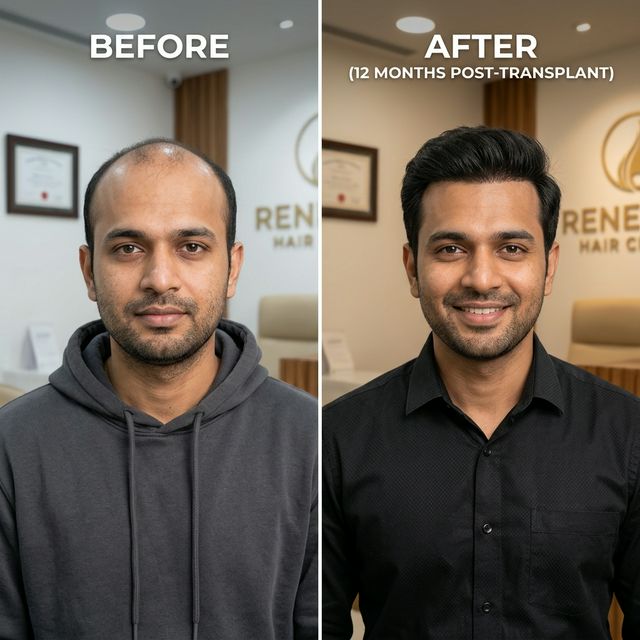
A hair transplant in Gurgaon can be genuinely life-changing—but only when every variable is managed correctly. Thousands of patients every year undergo the procedure and walk away disappointed, not because the science failed them, but because preventable errors were made before, during, or after surgery. Understanding why outcomes fall short is the first step to ensuring yours doesn't.
Hair restoration has advanced tremendously over the last two decades. FUE, DHI, and robotic-assisted extraction have replaced older, scar-heavy strip methods. The technology is excellent. Yet suboptimal results remain a real and common problem. This guide examines every major reason why patients fail to achieve the density, coverage, and natural appearance they expected—and what you can do to protect yourself from that outcome.
The Number-One Culprit: Choosing the Wrong Clinic
In an unregulated market flooded with low-cost "hair transplant packages," the single biggest driver of poor results is the choice of clinic. Many facilities advertise attractive prices but cut corners on the most critical elements: the skill of the surgeon, the quality of the extraction tools, and the sterility of the environment.
A hair transplant is a microsurgical procedure. Each graft—a unit containing one to four hair follicles—must be extracted, stored, and implanted with extreme precision. When this work is delegated to undertrained technicians, graft damage rates rise sharply. Even a 10–15% reduction in viable grafts can make the difference between a full-looking result and a patchy, sparse one.
Before booking anywhere, visit the clinic in person. Ask to speak directly with the surgeon who will perform your procedure. Review before-and-after photographs from patients with a similar hair loss grade to yours. Reading about common hair transplant mistakes patients make during clinic selection can save you from costly regret.
Mismatched Technique for Your Hair Type
Not every technique suits every patient. FUE (Follicular Unit Extraction) and DHI (Direct Hair Implantation) each have specific indications. FUE offers flexibility in large-session coverage; DHI allows for denser implantation without prior channel creation. Some patients with curly or coarse donor hair are better served by one approach over the other.
Beyond the extraction method, the angle, depth, and direction of implantation must be customised to your existing hair growth pattern. Grafts placed at the wrong angle produce hair that grows in an unnatural direction—one of the most common aesthetic complaints after surgery. A skilled surgeon will spend meaningful time designing your hairline and planning the implantation map before a single graft is touched.
Patients who have already undergone a poorly planned procedure may also benefit from supplementary treatments. Scalp microneedling can stimulate dormant follicles around transplanted zones and improve the overall texture and density of the scalp, sometimes reducing the need for a corrective transplant session.
Unrealistic Density Expectations
One of the most emotionally charged sources of disappointment is the gap between a patient's expectation and what is biologically achievable. The donor area—typically the back and sides of the scalp—has a finite number of follicles. A surgeon cannot transplant grafts that do not exist.
Most patients have a donor density of roughly 60–80 follicular units per square centimetre. The recipient (bald) area requires a certain density to look visually full, typically around 25–40 FU/cm². When the bald area is very large and the donor supply is limited, full coverage to maximum density is simply not possible in a single session.
Ethical surgeons explain this honestly. They prioritise the frontal hairline—the zone most visible to others—and work backward strategically. When you consult with a clinic and they promise you the full, thick head of hair you had at 18 regardless of your current hair loss grade, that is a warning sign. Understanding your hair transplant eligibility and what density is genuinely achievable for your donor profile is foundational to managing expectations correctly.
Shock Loss: The Phase That Panics Patients
Shock loss is one of the most misunderstood phases of the hair transplant journey—and the most common reason patients assume their procedure has failed. In the weeks following surgery, both transplanted and surrounding native hairs can shed. This is a normal physiological response to surgical trauma. The follicles themselves are not lost; they enter a resting (telogen) phase before beginning new growth cycles.
The problem is that this shedding phase, which typically peaks at 2–6 weeks and can persist through month three, looks alarming. Patients compare their scalp to pre-surgery photographs and conclude that the procedure was a disaster. Without proper counselling, many seek second opinions, start aggressive self-treatments, or lose faith in the process entirely.
The truth is that final results from a hair transplant are not visible until 9–14 months post-operation. Hair grows slowly—roughly 1–1.5 cm per month—and newly transplanted follicles take time to establish vascular supply and enter the anagen (growth) phase. Patience, combined with proper aftercare, is non-negotiable.
Graft Survival: What Determines How Many Take Root
Graft survival rate—the percentage of transplanted follicles that successfully establish and produce permanent hair—is the technical backbone of a good result. In expert hands, survival rates of 90–95% are achievable. In less skilled environments, they can drop to 60–70%, which translates directly to disappointing density.
Several factors influence graft survival:
- Time out of body: Grafts are living tissue. Every minute they spend outside the scalp increases cellular stress. Proper preservation in chilled, isotonic solutions (such as HypoThermosol or Ringer's Lactate) is critical.
- Handling technique: Forceps contact with the follicle bulb causes trauma. Skilled technicians minimise direct follicle contact during sorting and implantation.
- Recipient site depth and width: Channels that are too deep or too wide compromise the vascular interface the graft needs to survive.
- Post-op blood supply: The scalp must maintain good circulation. Smoking, alcohol, and tight headwear in the first two weeks all impair perfusion and must be strictly avoided.
The Role of Post-Operative Nutrition
Hair is one of the most nutritionally demanding tissues in the body. After surgery, follicles are in a vulnerable state and their ability to establish and grow is directly influenced by the nutrients available in your bloodstream. Patients who neglect post-operative nutrition often see slower, sparser growth than those who prioritise it.
Key nutrients for graft recovery and hair growth include protein (the building block of keratin), biotin, zinc, iron, Vitamin D, and Omega-3 fatty acids. A diet rich in eggs, lean meats, legumes, leafy greens, and fatty fish supports all of these. Crash dieting or severe caloric restriction in the months following surgery is strongly discouraged, as caloric deficits directly suppress hair growth cycles.
To learn more about specific nutrients that fuel hair growth and protect existing follicles, our guide on how to prevent hair loss through diet and lifestyle covers this in detail.
PRP as a Post-Transplant Booster
Platelet-Rich Plasma (PRP) therapy has emerged as one of the most clinically validated adjuncts to hair transplant surgery. PRP involves drawing a small amount of your own blood, centrifuging it to concentrate the growth factors, and injecting the resulting plasma into the scalp. These growth factors—PDGF, VEGF, EGF, and TGF-beta—directly stimulate follicular stem cells and improve vascular supply to grafts.
Studies consistently show that patients who undergo PRP sessions in the months following transplant surgery achieve higher graft survival rates, earlier onset of growth, and greater final density compared to those who rely on surgery alone. Most protocols recommend 3 PRP sessions at monthly intervals, beginning around 1 month post-operation once the scalp has healed sufficiently.
At DenceSpot, we offer advanced PRP hair treatment as part of our comprehensive post-transplant support programme. Combining surgical precision with biological growth enhancement is at the core of our approach to delivering results that last.
The Critical Importance of Follow-Up Appointments
Many clinics, particularly budget providers, consider their job done the moment you leave on procedure day. This is a fundamental failure of clinical responsibility. The post-operative period is when most of the factors that determine long-term results are still in flux, and regular follow-up is the only way to catch problems early.
In the first week, your surgeon should assess for signs of infection, oedema (fluid retention in the forehead), and folliculitis (inflammation around transplanted grafts). At the 1-month mark, shock loss should be monitored and patient anxiety addressed with evidence-based counselling. At months 3, 6, and 12, progress photographs should be compared to baseline, density should be assessed with a trichoscope, and any additional interventions—such as PRP or medications—should be adjusted accordingly.
If a clinic does not offer structured follow-up care, that is a serious red flag. Transformative results require an ongoing clinical relationship, not a one-day transaction.
How DenceSpot Gurgaon Ensures Your Results
At DenceSpot, our approach to hair transplant outcomes is built on a multi-layered framework of precision, transparency, and continuity of care. Every patient begins with a comprehensive trichoscopic scalp analysis and a frank, detailed consultation where we map your donor density, estimate graft requirements, and set outcome expectations grounded in your individual biology—not in marketing promises.
Our surgical team uses the latest micro-punch FUE instruments, graft-preservation protocols, and DHI Choi implanters where indicated. We do not delegate surgical work to unqualified technicians. Every implantation decision is made by our lead surgeon.
Post-operatively, we schedule every patient for a structured follow-up series and provide a written aftercare protocol covering hygiene, nutrition, activity restrictions, and medication. We also offer in-house PRP hair treatment sessions as part of recovery packages and can complement results with scalp microneedling where additional stimulation is beneficial.
If you want to understand the full landscape before committing, we recommend reading about hair transplant myths that may be shaping your expectations. Then, when you are ready, schedule a consultation with our team and let science—not guesswork—guide your restoration journey.
Don't Leave Your Results to Chance
At DenceSpot Clinic Gurgaon, we combine surgical precision, advanced graft preservation, and structured post-operative support to give every patient the best possible outcome. Book your free consultation and let us show you exactly what your restoration can look like.
Book Free ConsultationFrequently Asked Questions
Why does my transplanted hair look thin even after a year?
If density appears lower than expected at 12 months, possible causes include a lower-than-average graft survival rate due to handling errors, insufficient grafts placed per square centimetre, or ongoing native hair loss in surrounding areas. A trichoscopic review with your surgeon can identify the cause and determine whether a top-up session or supplementary PRP therapy would help.
Is shock loss after hair transplant permanent?
No. Shock loss is almost always temporary. The follicles enter a resting phase due to surgical trauma but retain their ability to regrow. In the vast majority of patients, shock-lost hairs return by months 4–6. Permanent loss of native hairs due to surgical trauma is rare and typically only occurs when the procedure is performed too aggressively or without adequate spacing between grafts.
Can PRP therapy really improve hair transplant results?
Yes, and the clinical evidence is robust. Multiple randomised controlled trials have demonstrated that adjunct PRP therapy following hair transplant surgery improves graft survival rates, accelerates the onset of new growth, and increases final hair shaft thickness. At DenceSpot, we recommend a minimum of three monthly PRP sessions beginning 4–6 weeks after surgery.
What foods should I eat after a hair transplant to improve results?
Focus on high-protein foods (eggs, chicken, lentils), iron-rich sources (spinach, red meat), biotin (nuts, sweet potato), zinc (pumpkin seeds, shellfish), and Omega-3 fatty acids (fatty fish, walnuts). Avoid crash dieting, excessive alcohol, and high-sugar processed foods for at least the first six months post-surgery, as these can suppress hair growth cycles.
How do I know if my clinic is giving me a realistic density expectation?
A trustworthy clinic will measure your donor density with a trichoscope, calculate how many grafts your donor area can safely provide, map the recipient area's size, and then give you a specific estimate of achievable density in FU/cm². If a clinic simply promises "full coverage" or "natural thickness" without this analysis, be cautious. Ask for the numbers in writing before you commit.