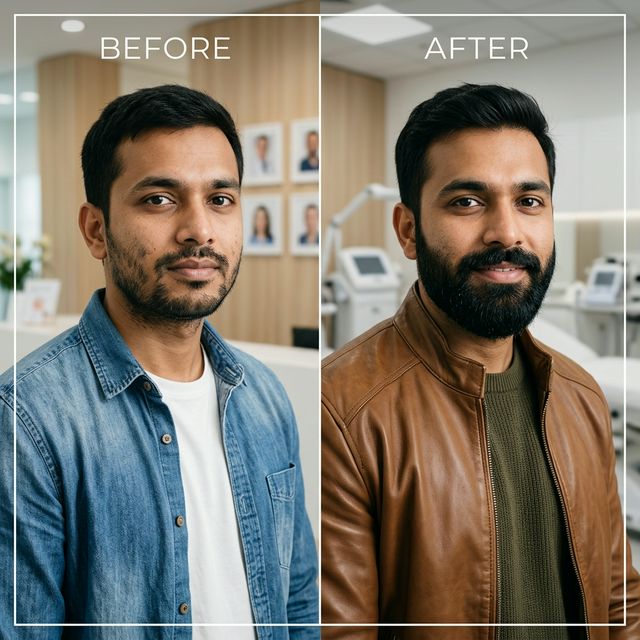
At DenceSpot Clinic, Is Prp Good For Hair is a very common point of discussion. Is PRP actually good for your hair, or are there better options? At DenceSpot Clinic Gurgaon, patients ask this question every day. Here is our comprehensive, balanced answer covering benefits, limitations, and who benefits most.
At DenceSpot Clinic, Is Prp Good For Hair is a very common point of discussion. With dozens of hair loss treatments available — from oils and shampoos to medications and surgery — understanding where PRP fits can be confusing. This guide helps you understand whether PRP is a good choice for your specific situation.
Why PRP Is Considered Good for Hair — The Key Benefits
1. 100% Natural Treatment
When exploring Is Prp Good For Hair, it is crucial to understand all the facts. PRP uses nothing but your own blood. No synthetic chemicals, no drugs, no foreign substances enter your body. The concentrated platelets contain your body's own growth factors — PDGF, VEGF, TGF-β, and EGF — that naturally promote tissue repair and cell growth. For patients who prefer avoiding medications like finasteride or minoxidil, PRP offers a genuinely natural alternative.
2. Scientifically Proven Results
Unlike many hair loss "treatments" that rely on anecdotal evidence, PRP is backed by rigorous clinical research. Meta-analyses of randomized controlled trials consistently show significant improvements in hair density (20-45%) and thickness (20-30%). This level of evidence puts PRP among the most credible non-surgical hair treatments.
3. Minimal Side Effects
Because PRP comes from your own blood, the risk profile is remarkably low. Compare this to finasteride (which can cause sexual side effects) or minoxidil (which can cause scalp irritation and unwanted facial hair). PRP's only common side effects are temporary scalp soreness and mild redness — both resolving within 24-48 hours.
4. No Daily Commitment
Minoxidil requires daily application — twice a day — for life. Finasteride requires a daily pill. PRP sessions are spaced weeks to months apart, making it far more convenient for busy lifestyles. After the initial 3-4 sessions, maintenance is only needed every 4-6 months.
5. Works for Both Men and Women
Many hair loss treatments are gender-specific — finasteride is only approved for men, for example. PRP is equally effective for both genders. Women with female pattern hair loss often respond exceptionally well to PRP therapy.
6. Complementary to Other Treatments
PRP works synergistically with other treatments. It enhances the results of microneedling, LED therapy, and even hair transplant surgery. It is not an either-or decision — PRP can be added to virtually any hair care regimen.
7. No Downtime
PRP is a lunchtime procedure. The entire session takes 30-45 minutes, and you can return to work immediately afterward. There is no bandaging, no recovery period, and no activity restrictions (except avoiding hair washing for 24 hours).
Who Is PRP Especially Good For?
Young Adults with Early Thinning
If you are in your 20s or 30s and noticing early signs of thinning, PRP is one of the best interventions you can choose. Early treatment preserves more follicles and can significantly delay or prevent advanced hair loss. Starting PRP early is investing in your hair's future.
Women with Diffuse Hair Thinning
Female pattern hair loss responds remarkably well to PRP. The diffuse thinning pattern means there are many dormant follicles throughout the scalp — all potential targets for PRP reactivation. Women often see more uniform, noticeable improvement than men with pattern baldness.
Post-Hair Transplant Patients
PRP accelerates healing after hair transplant surgery, improves graft survival rates, and strengthens native hair around the transplanted area. Many leading transplant surgeons include PRP in their standard post-operative protocol.
Patients Seeking Drug-Free Treatment
For those who cannot or prefer not to take finasteride (due to side effect concerns) or apply minoxidil daily, PRP provides an evidence-based alternative that does not involve any pharmaceutical drugs.
Patients with Stress-Related or Seasonal Hair Loss
Telogen effluvium (stress-related hair shedding) and seasonal hair loss respond well to PRP because the follicles are healthy but temporarily disrupted. PRP helps these follicles return to the active growth cycle more quickly. Addressing the root causes of sudden hair fall alongside PRP yields the best results.
When PRP Might Not Be the Best Choice
Being honest about limitations is just as important as highlighting benefits:
- Complete baldness (Norwood 6-7): For extensive baldness, a hair transplant is more appropriate. PRP can support but not replace transplantation in advanced cases.
- Tight budget with limited sessions: One PRP session alone rarely produces visible results. If you cannot commit to at least 3-4 sessions, the investment may not yield satisfactory returns.
- Blood disorders: Patients with platelet dysfunction, blood cancers, or those on blood-thinning medications may not be suitable candidates.
- Active scalp infections: Any active infection must be treated before PRP can be safely administered.
- Unrealistic expectations: PRP does not create a full head of hair from significant baldness. Setting realistic expectations with your dermatologist is essential.
PRP vs Popular Home Remedies — An Honest Comparison
Many patients try home remedies before considering clinical treatments. Here is how PRP compares:
- PRP vs Onion Juice: Onion juice has mild sulfur-based benefits, but cannot deliver concentrated growth factors to follicles the way PRP does.
- PRP vs Rosemary Water: Rosemary may mildly improve circulation, but PRP delivers 5-8x concentrated platelets directly to the follicle root.
- PRP vs Rice Water: Rice water conditions the hair shaft but does nothing for follicle health. PRP targets the root cause of thinning.
Home remedies are good for hair maintenance and conditioning, but for genuine hair regrowth, clinical treatments like PRP operate at a completely different level.
The DenceSpot PRP Experience
- Thorough Assessment: Trichoscopy, blood work, and medical history review before treatment.
- Premium Preparation: FDA-approved double-spin centrifugation for maximum platelet concentration.
- Comfort-Focused: Topical numbing cream applied before injections to minimize discomfort.
- Progress Tracking: Digital photography and trichoscopy at each session to objectively measure improvement.
- Honest Guidance: If PRP is not the right choice for you, we will tell you — and recommend alternatives.
Is PRP Right for Your Hair?
The best way to know is a professional assessment. Book a consultation and get an honest recommendation tailored to your specific hair loss pattern.
Book Free AssessmentFrequently Asked Questions
Is PRP safe for hair treatment?
Yes, PRP is one of the safest hair treatments available. Since it uses your own blood, there is virtually no risk of allergic reaction, infection, or rejection. Mild scalp soreness and redness after injections are the only common side effects, resolving within 24-48 hours.
Is PRP good for all hair types?
Yes, PRP works on all hair types — straight, wavy, curly, and coily. The treatment targets the follicle beneath the scalp, not the hair shaft itself. Hair type does not affect PRP effectiveness; the stage of hair loss and follicle health matter more.
Is PRP good for hair compared to home remedies?
PRP is significantly more effective than home remedies for hair loss. While natural remedies like onion juice or rosemary water may offer mild benefits, PRP delivers concentrated growth factors directly to follicles — a level of stimulation that no home remedy can match.
Is PRP good for hair thinning in young adults?
PRP is excellent for young adults (18-30) experiencing early thinning. Early intervention maximizes results because more follicles are still viable. Starting PRP early can prevent significant hair loss progression and reduce the need for surgical options later.
Are there any side effects of PRP on hair?
PRP has minimal side effects. The most common are mild pain during injection, temporary scalp tenderness, slight swelling, and occasional bruising at injection sites. These resolve within 1-2 days. Serious side effects are extremely rare.
How often should you get PRP for hair?
The standard protocol involves 3-4 initial sessions every 3-4 weeks, followed by maintenance sessions every 4-6 months. Your dermatologist may adjust the frequency based on your response and the severity of hair loss.